Krasnoyarsk Serial Killer Wins European Court Case

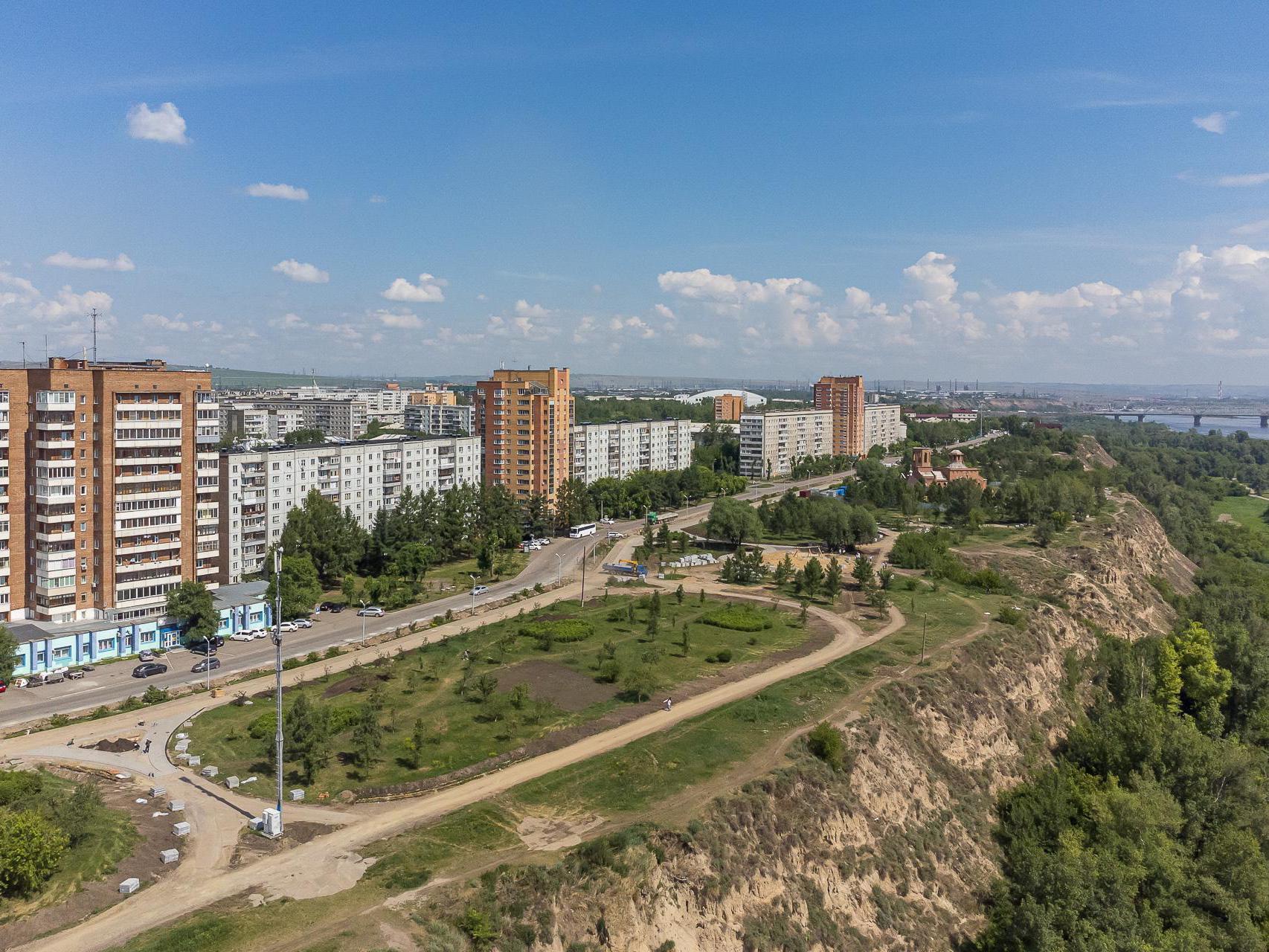
In mid-January, it became known that the namesake of the «Krasnoyarsk necrophile» had died — a serial strangler and rapist who operated in Zelenaya Roshcha (a neighborhood in Krasnoyarsk) in the late 1990s and in 2008. A year ago, his name was mentioned in search groups for those missing in the special military operation. NGS24.RU tells what is known about the maniac who was not noticed immediately.
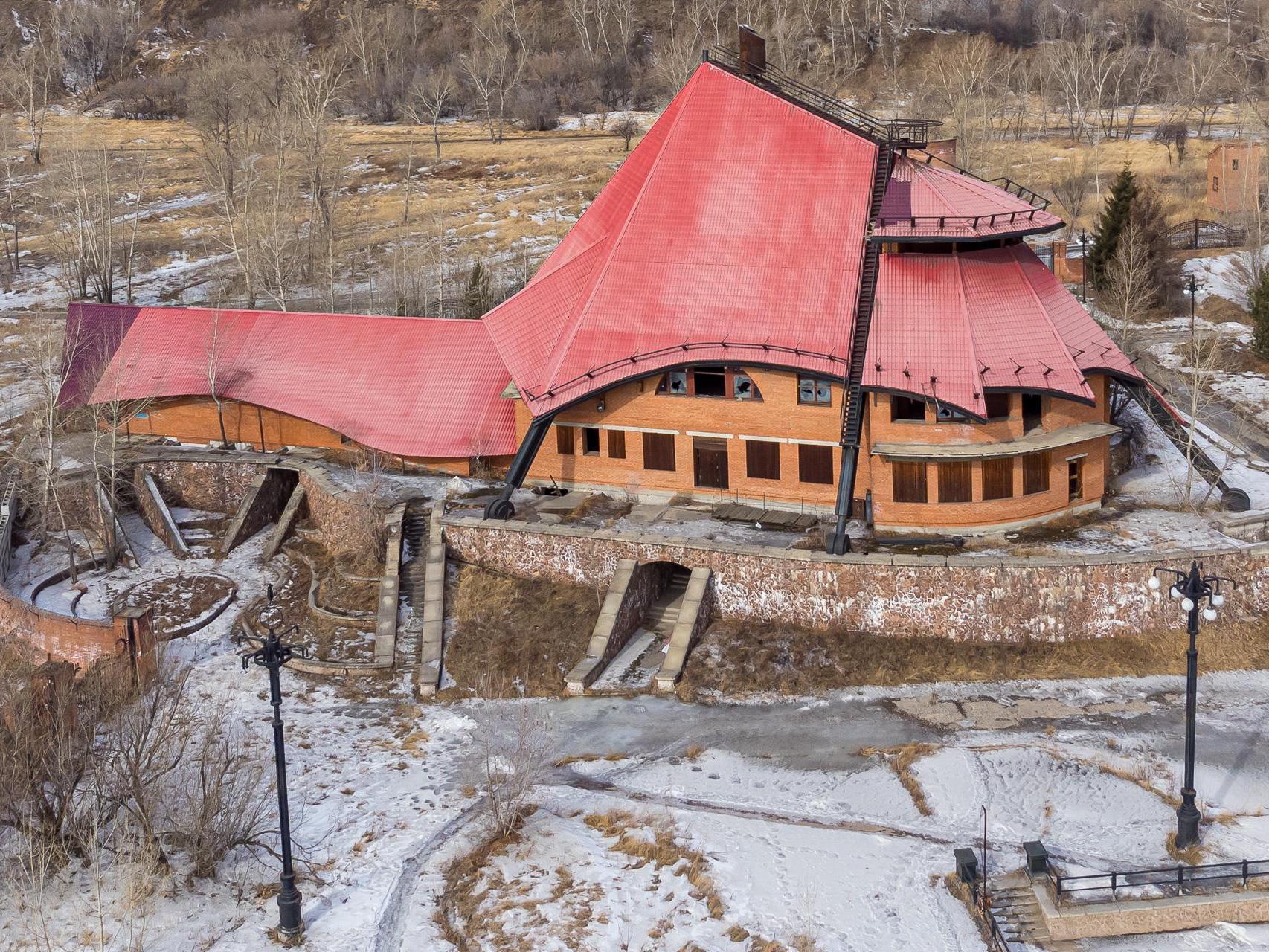
Near «Bykov»s Dacha«
On 5 October 2008, in Zelenaya Roshcha on the descent to the Yenisei River near the unfinished recreation base «Orlikha», better known as the «dacha» of former crime boss Anatoly Bykov (to which he actually has almost no relation), the body of a strangled woman was found. She was naked, with a bra wrapped around her neck, which was obviously used to strangle her. Also, judging by the position, the deceased had been raped.
Investigators from the Sovetsky District opened a criminal case and found that the victim was a resident of Krasnoyarsk who had gone missing on 21 September. On 7 October, the case was transferred to a more experienced investigative group for murder and banditry investigations at the Investigative Committee under the prosecutor«s office (at that time, the Investigative Committee and prosecutor»s office were one agency).
To identify a suspect, detectives analyzed similar cold cases, in true crime parlance, in the Sovetsky District of Krasnoyarsk. Investigators were interested in three instances: two murders of women committed back in 1999, and one very recent attempt — in August 2008.
The Strangler in Zelenaya Roshcha
The last days of summer 1999 in Krasnoyarsk were warm. With two days left before the start of the school year, on 30 August, near building No. 5b on Krasnodarskaya Street, close to School No. 5 in Zelenaya Roshcha, the body of a girl with signs of strangulation was discovered. Her panties were torn, indicating rape.
Checking the woman«s fingerprints in the database, operatives found that the victim was a local sex worker. After two months, the preliminary investigation into her case was suspended »due to failure to identify a person subject to criminal liability.«
Three months later, on 8 December 1999, a dead woman was found on the landing between the seventh and eighth floors in a panel building on Ustinovich Street in the same Zelenaya Roshcha. She had evidently also been raped: the body was in a «knee-elbow» position, with tights pulled down. A white cord was wrapped around her neck in two layers with a noose. The deceased was identified, but, as in the previous case, after two months the preliminary investigation was suspended, as no suspect was found.
The murdered girls were 20 and 26 years old. The strangulations with rapes in Zelenaya Roshcha were not linked by investigators into a series and were investigated separately, and soon they ceased for a long time.
Nine years later, on 28 August 2008, a local resident contacted the police. She reported that at night near house No. 20 on Ustinovich Street, an unknown man attacked her: threw a rope around her neck and tried to strangle her. When the woman lost consciousness, the stranger stole her bag and mobile phone. «Upon regaining consciousness, she felt pain in the anal area,» was dryly described on the Investigative Committee website.
The police opened a case on rape, and the stolen phone was «put on control.»
What is Zelenaya Roshcha. NGS24.RU asked Krasnoyarsk resident Alexander, who lived in Zelenaya Roshcha in his childhood and youth, to recall how the neighborhood was perceived in the 1990s and 2000s:
— The reputation of a dangerous place appeared in Roshcha from the very beginning (the first house here was delivered in 1963). A working-class outskirts grew far from the old districts, and then it was settled by former residents of Nikolaevka, who struggled to adapt to the new lifestyle.
The nineties did not change this status, but became a time of contrasts: a stray Dalmatian ran around the dumpsters on Tereshkova, while in the Brezhnevka apartments on Telman, European-style renovations were done, in the section houses on Bykovsky, cracks in the walls were fastened with staples, and rare new foreign cars stood in front of entrances where homeless people might live, constantly breaking light bulbs, urinating, drinking, or taking prohibited substances (my entrance reliably collected bingo).
On one hand, it was a «Krazovsky» district under the watch of the then-owners of the plant. Workers regularly received salaries, so there wasn«t the same spread of despair as in the factory neighborhoods on the right bank of Krasnoyarsk. On the other hand, a typical 1990s bedroom community where numerous children of the turbulent era sought entertainment as they could. Fights, thefts of hats and bags, scattered syringes behind almost every house — commonplace. As was the fact that in the evenings, Roshcha was very dark: there weren»t enough streetlights, and in addition, electricity was regularly cut off in the houses, and without light from windows, the streets were completely plunged into darkness.
The Phone Spoke
The experienced investigative group explained the long pause between the murders and attack in 1999 and 2008 by the fact that the presumed serial offender had obviously left Krasnoyarsk or was imprisoned for other crimes. The investigation began checking which residents of the Sovetsky District had been convicted during this period for serious crimes and were released in 2007–2008.
While working on this lead, in September 2008, the police recorded that the stolen mobile phone was activated. The SIM card on it belonged to a certain O. V. Pushnina, and the phone was used by her underage daughter. The girl explained that she found it on the street on Ulyanovsky Prospekt in Zelenaya Roshcha. The explanation seemed to satisfy the detectives, but the phone was, of course, confiscated from her.
Investigators meanwhile checked several people from the list of released residents. This yielded no results, so they remembered the girl and decided to clarify how exactly she ended up with the stolen mobile phone.
Detectives interviewed her friends and acquaintances. It turned out that for the last eight years, the girl had lived only with her mother. The woman divorced her father because in 2000 he was convicted for several thefts, robbery, attacks on women, and rapes. The man was released in July 2008, temporarily working at a car wash. After his release, he had almost no contact with his ex-wife, but sometimes met with his daughter. The man«s name was Sergei Pushnin.
By parameters, Pushnin quite fit the role of a suspect, but there was no evidence of his involvement in the crime at Ustinovich, 20. Then investigators decided to question his daughter in more detail, and this time the girl admitted that she did not find the phone — her father gave it to her and asked her not to tell anyone.
«I Took Out the Cord»
Based on the new data, on 25 February 2009, Sergei Pushnin was detained. During interrogation, he confessed that he strangled the woman near Ustinovich, 20 and took her bag with belongings and jewelry. According to Pushnin, he thought he had killed the woman. A little later, she identified him from a photo and in person, and during a verification of Pushnin«s testimony, her stolen bag was found.
Confirming the investigators« assumption, the man said that he also strangled the woman near »Bykov«s dacha» in October 2008. And later confessed to the murders in Zelenaya Roshcha in 1999. Ten years after the «suspension», in March 2009, the cold cases were resumed and combined into one proceeding. Investigators additionally interviewed witnesses, conducted new forensic examinations, verified testimonies on site, and even gave Pushnin a polygraph test. Everything confirmed that he knew the details of those old crimes.
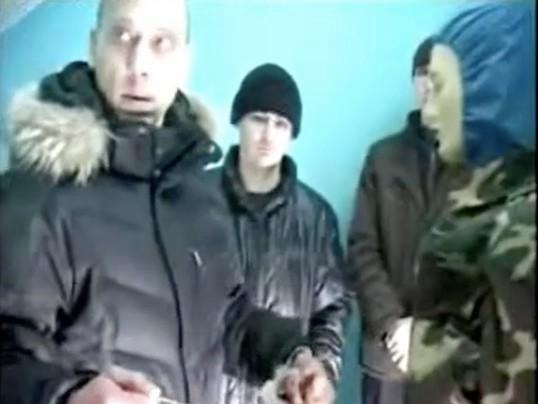
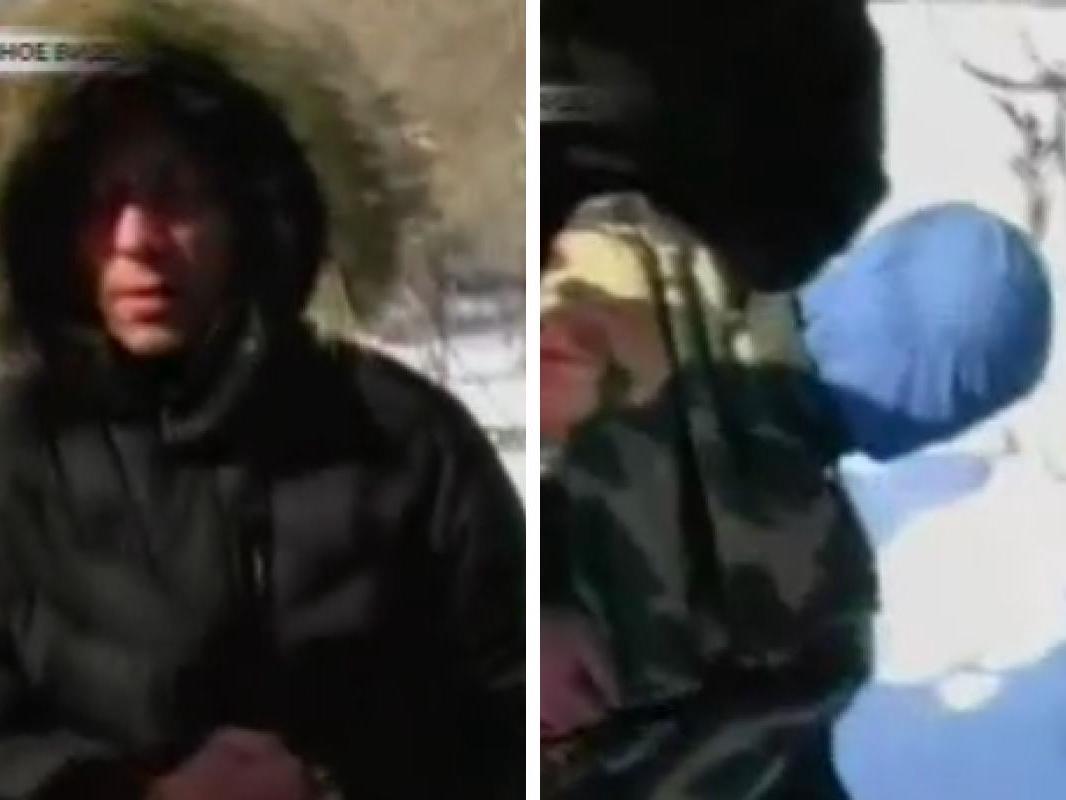
On the NGS24.RU website, operational video of an investigative experiment by the Ministry of Internal Affairs with Sergei Pushnin has been preserved. Judging by the setting, they were verifying his testimony about the murder of the second victim, who was found in the entrance of a nine-story building on Ustinovich in 1999. In the video, a shaven-headed Pushnin in a dark down jacket with a fur-trimmed hood, surrounded by witnesses and investigators, demonstrates on a mannequin how he strangled the girl.
— I took out the cord with the keys, — Pushnin recalls. — The cord was on the keys, on the keychain…
— That is, the same one that was shown in the previous [investigative experiment]? — the investigator clarifies.
— Yes. I threw a noose and tightened it.
— So she was facing…
— Yes, facing me.
— You threw the noose and started strangling?
— Yes.
— How long did you strangle?
— About a minute or a minute and a half.
— Did she scream, struggle?
— She just grabbed my hands and that«s it.
— What do you mean grabbed your hands? So she tried to push your hands away?
— Well, just, yes, she grabbed my hands and that«s it.
— Clutched?
— Yes.
— After your actions, did she show any signs of life? When you let go.
— No, nothing…
— So did she remain standing or fall? How was it?
— I laid her down, and she just like this (places the mannequin on the floor).
Acting head of the criminal police of the Main Directorate of Internal Affairs for the region, Yuri Altynov, told journalists that Pushnin «intensively prepared» for each crime and had his own distinct modus operandi. The maniac, according to Altynov«s words, would meet women on the streets in the evening, offer to walk them home, and in a deserted place throw a noose around their necks and strangle them. After the murders, he raped the dead bodies, for which some media dubbed him the »Krasnoyarsk necrophile.« He carried the body of the last victim to the embankment of Orlikha Spit near »Bykov«s dacha» and violated it there.
And Who is Pushnin
Popular blogger Alexander Faib in an interview with Sasha Sulim said that there is little information about Russian maniacs — at least about the «unpromoted» ones. This distinguishes Russian true crime from Western, where there is a mass of videos and reports from court hearings, interviews with the criminals themselves and investigators, books, documentaries, and other materials. Leonid Kanevsky won«t be enough for everyone.
Sergei Pushnin is exactly from the unpromoted, although there is a whole page on Wikipedia about him. But even there it is written that little is known about Pushnin«s early years. Sergei Pushnin was born on 23 October 1967 in Krasnoyarsk Krai. Childhood was allegedly »spent in a socially favorable environment,« after school he received a secondary special education, and in the mid-1980s was conscripted into the Soviet Army.
From court materials, it is known that in 1991, Sergei Pushnin underwent an operation, apparently needed due to tuberculosis he had at the time. And in the early 1990s, he married.
— In marriage, his wife bore him a child, however, due to the collapse of the USSR and the subsequent difficult socio-economic situation in the country, Pushnin began to experience employment problems, and the family — material difficulties, as a result of which he soon began to earn a living through thefts and robberies, — as if the author of the page was spinning commonplaces of the criminal«s biography.
Acting head of the criminal police of the Main Directorate of Internal Affairs for the region, Yuri Altynov, in 2010, however, confirmed that since the 1990s, Sergei Pushnin had been repeatedly held liable for property, serious, and especially serious crimes.
Trial and Possible Torture
The investigation and investigative experiments with Sergei Pushnin proceeded in the spring and summer of 2009. At the end of the year, his lawyers requested a psychiatric examination for their client. Pushnin was transferred to the Serbsky State Scientific Center for Social and Forensic Psychiatry, where specialists studied him for two months. Based on the examination results, Pushnin was found sane, although deviations in his psyche were identified. In December 2009, the criminal case was sent to the Krasnoyarsk Krai Court.
The trial began in the spring of 2010. During the hearings, Sergei Pushnin retracted his confessional statements and claimed that he had falsely accused himself because law enforcement officers tortured him.
According to Pushnin«s testimonies, after his arrest on 24 February 2009, he was beaten at the police department, including with electric shocks to his ears. This allegedly continued from 20:00 to 6:00. On 25 February, a medical examination found hematomas on his right arm from a blow with a blunt object. As Sergei Pushnin claimed, on 25 and 26 February, policemen continued to beat him, striking his head with a pistol. On the evening of the 26th, he was taken to a hospital, where medics identified a bruise on his forehead.
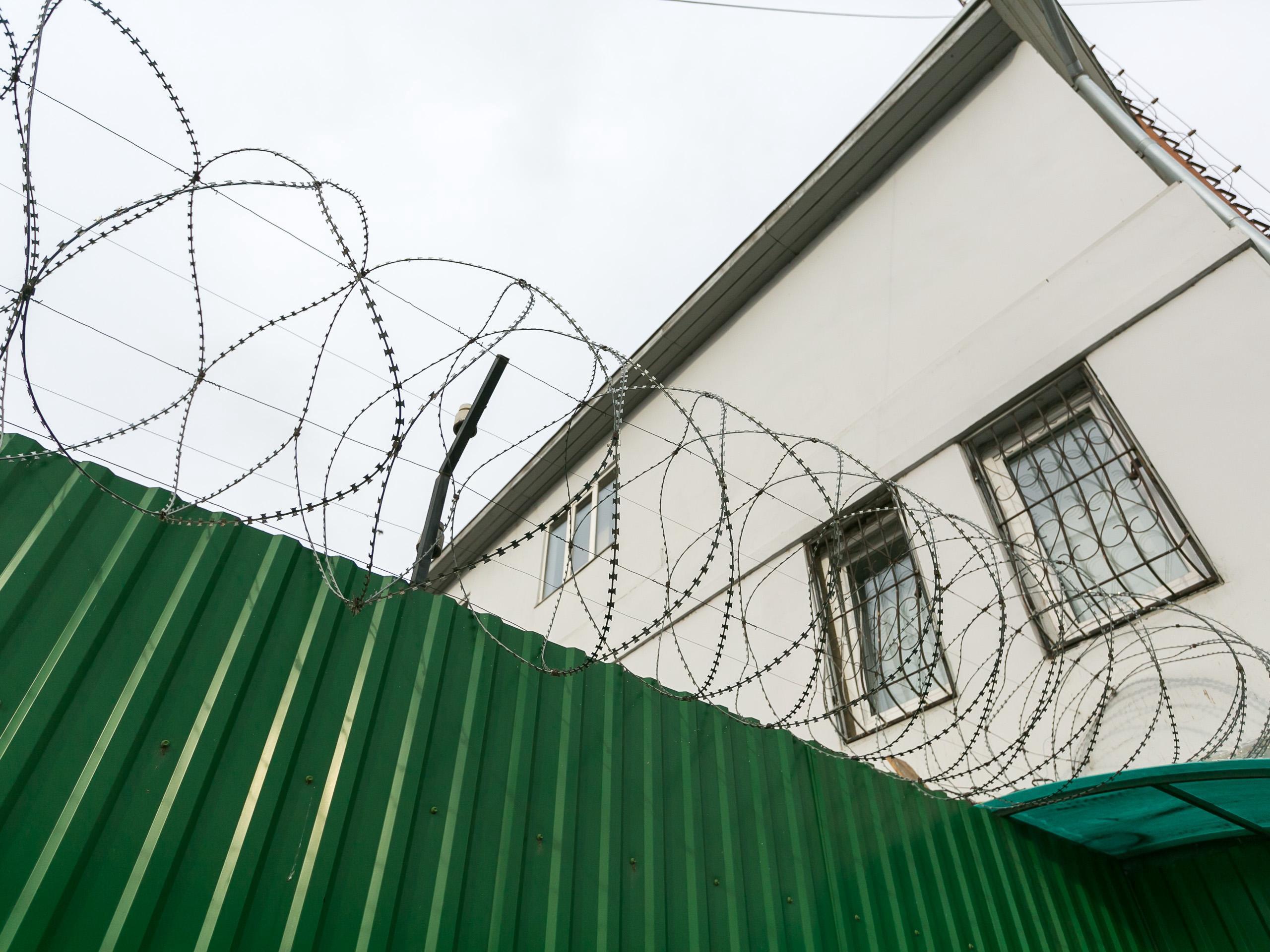
At a court hearing in July 2009, Pushnin complained to the judge about cruel treatment. After this, as Pushnin later claimed, in the pretrial detention center (SIZO), he was beaten with fists and feet by detention center staff, choked with a bag, and hung by his hands from a steel grate, where he hung for more than an hour.
A month later, on 27 August, according to a medical certificate and forensic examination conclusion, he had bruises and abrasions on his face, body, and right arm, which appeared within a day before the examination. Upon admission to the SIZO, he was also given a medical certificate stating a bruise around his right eye and a broken rib.
As Sergei Pushnin claimed, after speaking about the cruel treatment, an investigator threatened him, causing him to withdraw his complaint in court. But then Pushnin twice appealed to the prosecutor«s office and demanded an investigation into the crimes of law enforcement officers against him. The investigator twice refused to open a criminal case. The first time citing that Pushnin had already withdrawn the complaint, and the second — establishing that he did not obey lawful orders of police officers, so »physical force was applied« to him.
As the investigator concluded, Sergei Pushnin inflicted the injuries on himself or received them while resisting. Police officers, in turn, stated that Pushnin hit himself against a table in the department.
After several months of proceedings, on 29 July 2010, the krai court found Sergei Pushnin guilty of three murders and one attempt and sentenced him to 25 years of imprisonment.
Reached the ECHR
After the trial, Sergei Pushnin was transferred to Yeniseisk Prison No. 2. There he began to have health problems: in the 2010s, Pushnin was diagnosed with tuberculosis, his gallbladder was removed, he had kidney pain, and in the punishment cell (SHIZO), he several times pierced his chest with something sharp. This is known from court decisions — in prison, Sergei Pushnin actively sued. He chose the head of the medical unit, Tatyana Makarova, as his Nemesis — almost all lawsuits are filed against her, in addition to the prison and Federal Penitentiary Service (FSIN) administrations.
Pushnin, for example, blamed precisely the medic and prison leadership for him contracting tuberculosis. In January 2014, he pierced his chest and lung, was operated on, and then placed in a SHIZO with unsanitary conditions, which allegedly led to tuberculosis. However, Makarova and prison representatives countered that Sergei Pushnin had already had this disease in the early 1990s, meaning the infection had lived in him for many years and a relapse occurred.
Pushnin also complained that in prison after the operation, he was not given painkillers, not provided with five to six meals a day, denied bed rest, and not allowed to wear a quilted jacket indoors, as doctors recommended upon discharge. Sergei Pushnin demanded compensation for moral damages in court — the amounts grew from 15 thousand to 990 thousand rubles (approx. $200–$13,200 at current rates). However, all his applications in court were refused satisfaction or even consideration.
Together with two other cellmates, Sergei Pushnin accused Makarova and the prison of the head of the medical unit not isolating a fourth prisoner when he fell ill, apparently with chickenpox. The sick man was given green stuff, paracetamol, and aspirin and left in the cell with Pushnin and two cellmates (though all three, according to the court decision, had previously had this disease). In court, it was confirmed that Tatyana Makarova should have isolated the sick person, but even so, no grounds for compensation to Pushnin were found.
Moreover, Sergei Pushnin complained to the court about prison staff who on 30 April 2015 searched his cell and damaged a photo album and a picture of a close person, and also confiscated stationery and a TV. In court, prison representatives said there was no search that day, and the TV belonged to Pushnin«s cellmate, who took it when transferred to another cell, where he asked to go due to a conflict with Sergei.
Finally, in 2019, Sergei Pushnin filed a complaint with the European Court of Human Rights, demanding compensation for the very torture during the investigation of his case, because of which he confessed to the murders. In 2020, the ECHR upheld the complaint and awarded him compensation for moral suffering of 37 thousand euros. The European Court argued the decision by the fact that Russia refused to conduct an independent and thorough investigation into Pushnin«s complaints to the prosecutor»s office and did not provide the ECHR with all materials of the criminal case.
Death of the Namesake
In December 2024 and January 2025, posts about the disappearance of Sergei Pushnin were published in the public group «Search for Comrades and Missing Persons in the SMO.» The author was looking for his father; the posts reported that he last made contact on 9 November 2024, and from 14 November was listed as missing.
In early January, NGS24.RU found in the Russian inheritance cases registry information about the death of the exact namesake of Sergei Pushnin, whose date of birth matched the data of the serial killer and rapist. According to the registry, Pushnin died on 14 November 2024.