Ghosts of Stalingrad Book Stirs Historians' Debate
In Volgograd, historian Anton Alexandrov's new book 'Ghosts of Stalingrad' has sparked considerable debate in the professional community over its controversial claims.
Apr 25, 2026 0
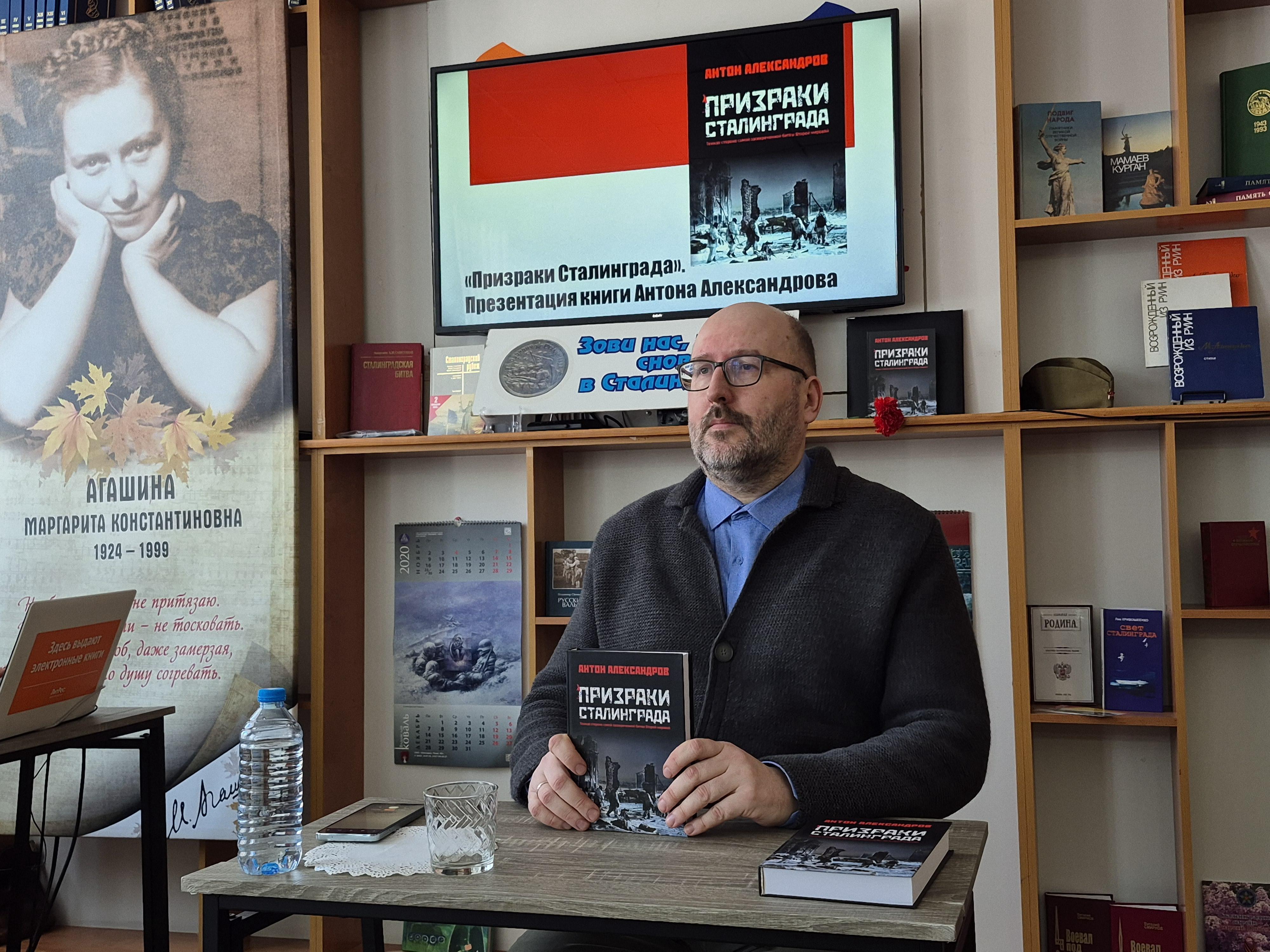

The new book threatens to split historians into two camps.
Source:
In Volgograd, at the Margarita Agashina Central Library, a presentation was held of a new book by renowned military historian and local historian Anton Alexandrov, titled «Ghosts of Stalingrad». He highlighted a little-known side of the Battle of Stalingrad that is unfamiliar to most city residents.
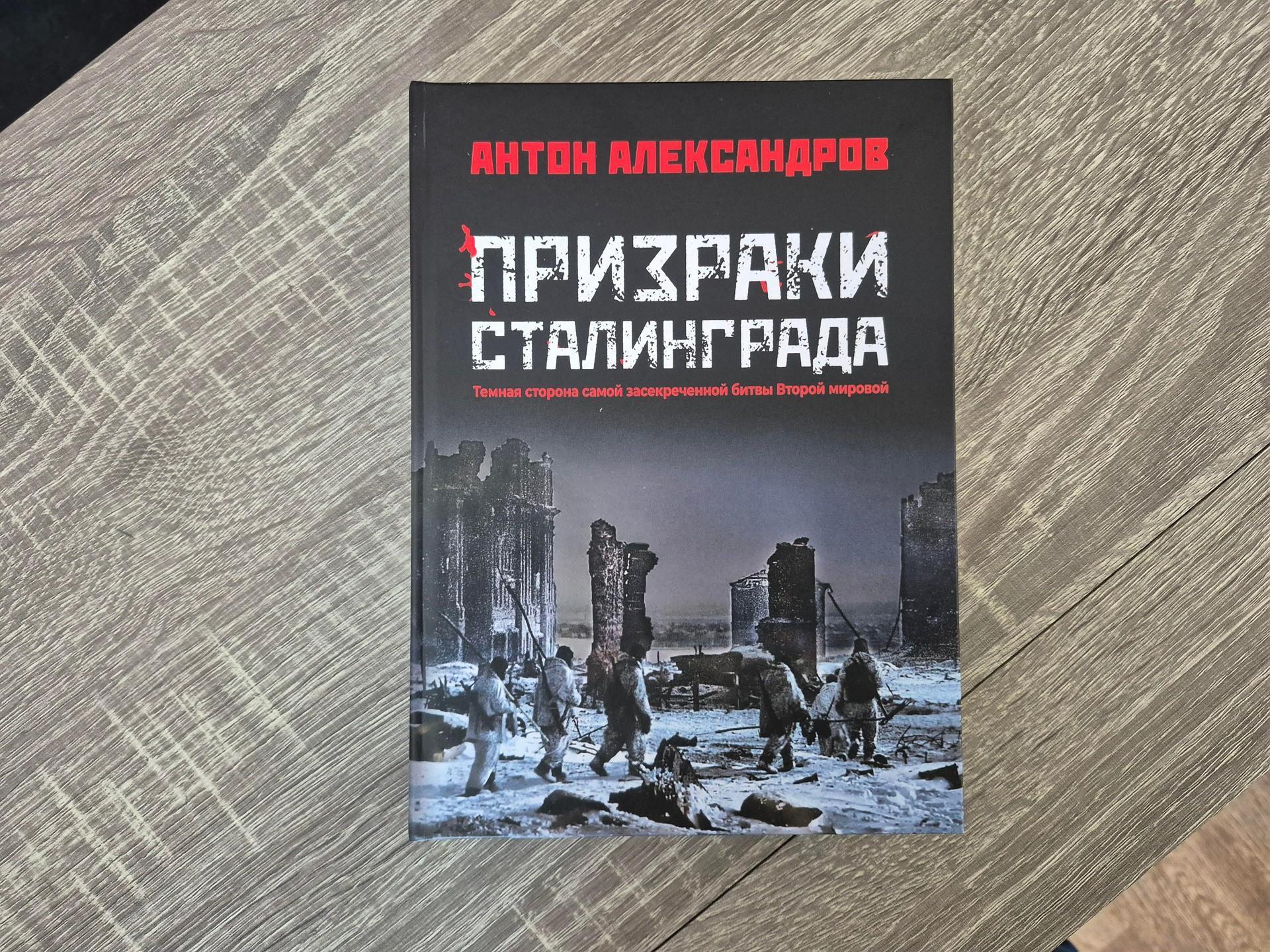
The work describes events in Stalingrad recorded in recently declassified documents.
Source:
Author Anton Alexandrov admits that, as a professional philosopher, he tried to comprehend the events in war-torn Stalingrad not from the perspective of dry dates, numbers, and «arrows on maps,» but by understanding the external and internal motives of the driving forces of the battle.
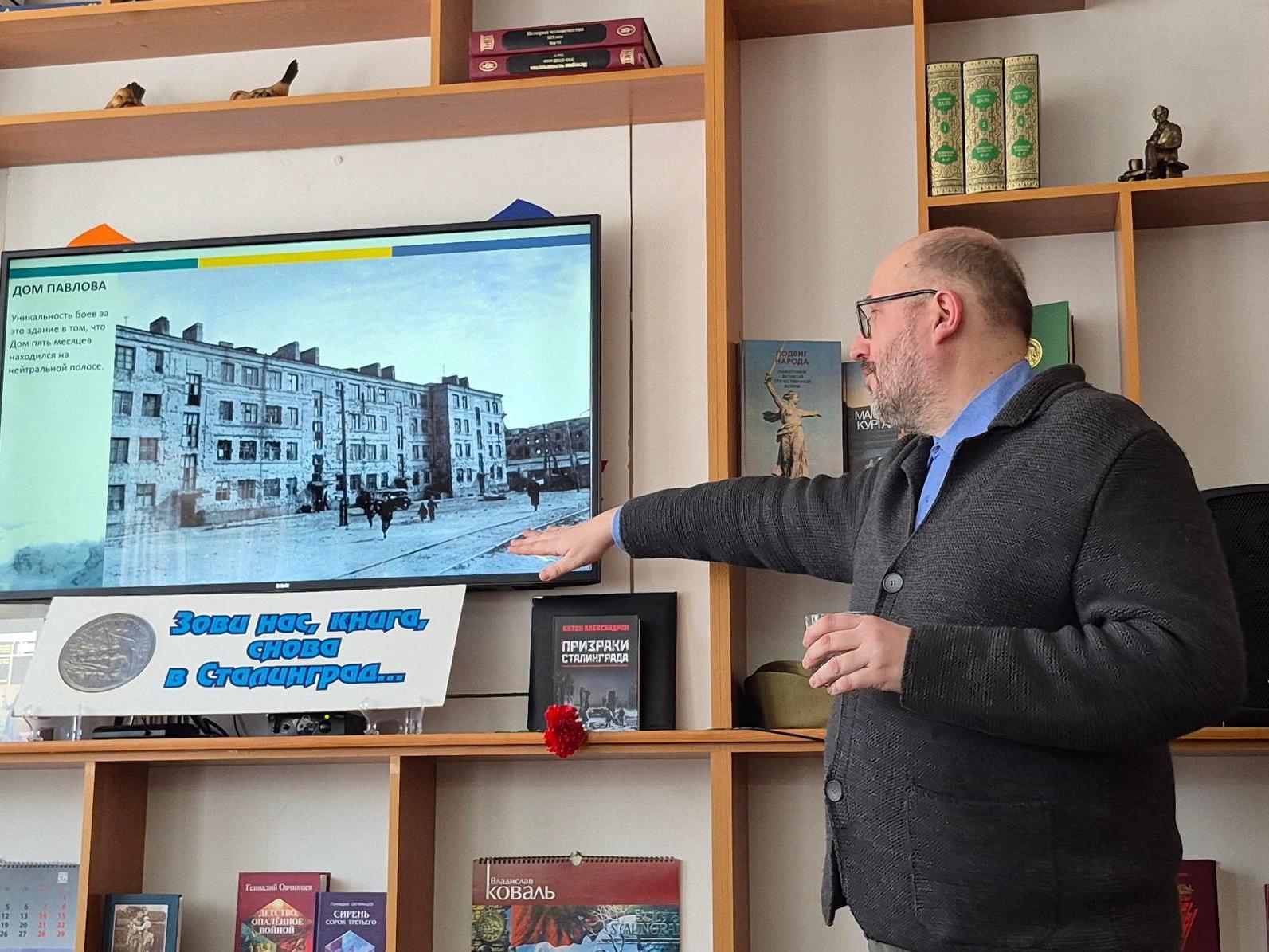
The writer was interested in facts that historians previously overlooked.
Source:
«I wanted to give a more voluminous, expanded picture of the Battle of Stalingrad, so that it would be more interesting and even emotionally rich, rather than just a listing of uninteresting and incomprehensible numbers,» says the author. «Besides, I have always been interested in related, quasi-political and quasi-cultural moments of history: propaganda, media, strategy, and all the coincidences that contributed to the outcome of the Battle of Stalingrad. And of course, I wanted to debunk all kinds of myths and legends that, still alive, continue to arise around this significant event in our history.»
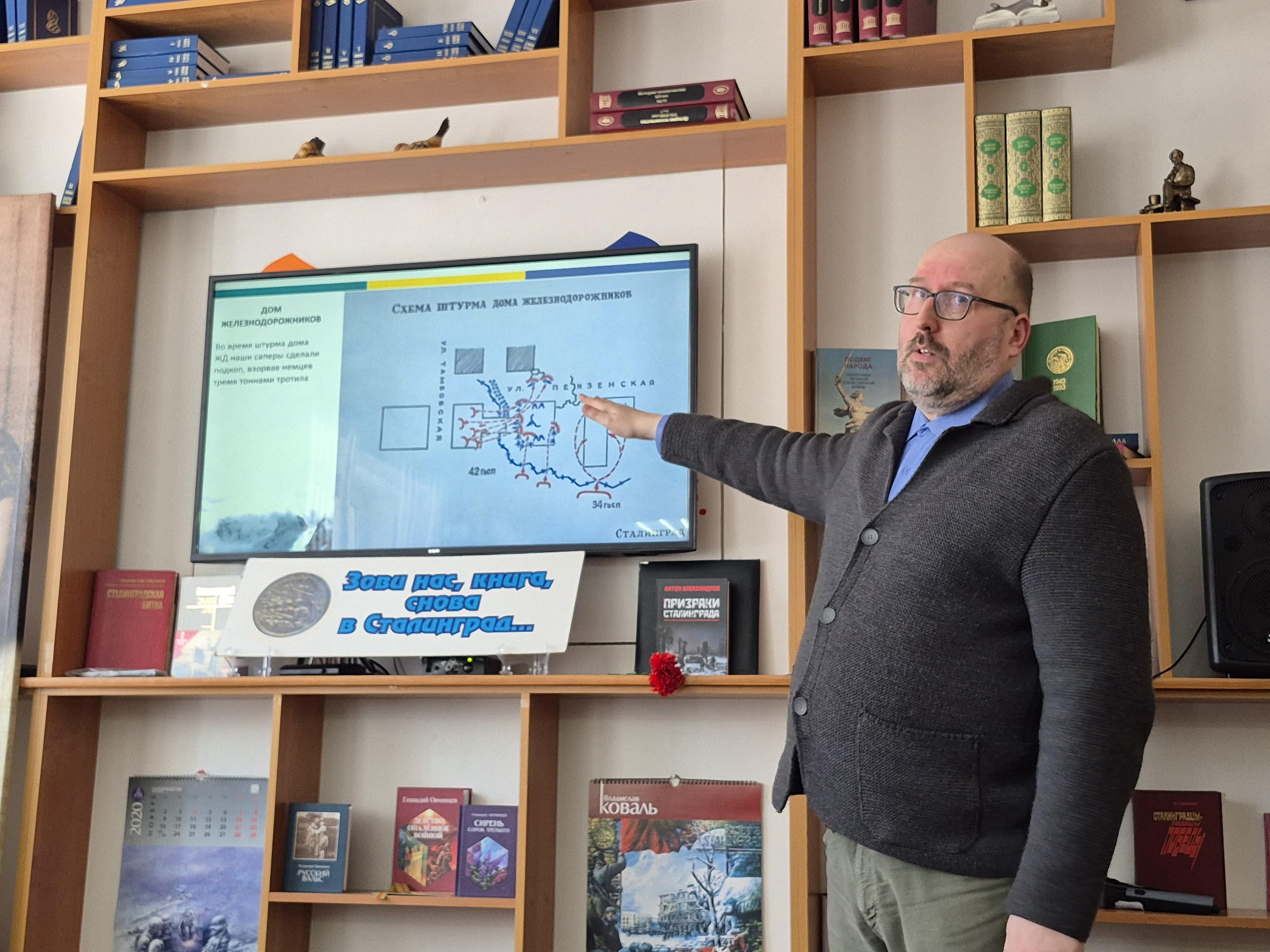
The military historian considers the storming of the Railway Workers« House no less heroic than the defense of Pavlov»s House.
Source:
According to Anton Alexandrov, his book is not a history textbook nor a chronological account of military operations. He recommends his work only to those already immersed in the context of the events in Stalingrad, not to be used as a history textbook.
In his work, the author relied on archival Soviet and German documents declassified in recent years.
«The archival revolution has made it possible to learn about the true history of the Battle of Stalingrad, which is still little studied and previously inaccessible to many specialists,» says Anton Alexandrov. «Thanks to this, we can get a more complete and objective picture of events. It can be said that we now live in the »fifth version« of the Battle of Stalingrad, which is written based on German documents, and it differs greatly from those before it. This in no way diminishes the feat of our people, but reveals new, previously unknown data.»
The author was inspired to work on the book by an interesting coincidence that kickstarted a major study.
«I wrote the book for exactly one year; I wanted to shed light on various inconsistencies and »dark spots.« It started when I was writing an article about the new form of military clothing. It was officially introduced on January 6, 1943, when shoulder boards appeared. I wanted to see how this was covered in the media. I began reading archives of all central newspapers, military ones too, and realized that nowhere, in no newspaper, in no report up to December 1, 1942, was the encirclement of Paulus»s army mentioned. Although, as we all know, the encirclement ring closed near Kalach on November 23, 1942.«
Anton Alexandrov conducted his research and realized that there seemed to be a complete ban on reports about the encirclement of the German commander. According to the author, this was done deliberately.
«There were not even hints of the words »encirclement« and »cauldron.« Apparently, Stalin was very worried that we would not be able to hold the cauldron,» recounts Anton Alexandrov. «The fact is that when Operation Uranus was being prepared, it was assumed that if we encircled Paulus, we would destroy him in a few days, literally a week, and everything would be over by early December,» he says. «But when it became clear around the 26th–27th that nothing would end so quickly, Stalin apparently decided not to say anything about it in the media. He did not want to lose face before the Allies and the people in case of failure, fearing that something might go wrong.»
Having discovered this moment, Anton Alexandrov was inspired to write a major work where he would for the first time tell about moments unnoticed by official history.
As soon as it appeared in the information space, Anton Alexandrov«s work generated great interest and became a subject of debate. Professional Volgograd tour guide Elena Avdeeva said that the book was received very ambiguously in the community of local historians.
«In the community of tour guides, the work did not find much resonance. Many were skeptical of the book because its author is not a professional historian,» she said. «The provocative title, the light style in which the book is written, the unpopular view of many facts provoked a wave of sharply negative criticism. I believe the book has become a »time bomb.« Anton has rocked the boat, and now negative comments may pour in on him, despite the fact that the work presents a fresh perspective and interesting facts.»
Read more