‘The World Has Narrowed to a Breath’: A Doctor’s ALS Journey


Pulmonologist and blogger Nina Ternovskaya calls herself a happy person. Her appearances every morning are eagerly awaited by her followers. There she is, cheerful and in pajamas, appearing on screen to wish everyone a good morning and show her breakfast. What«s so special about that, you might ask? In fact, every one of her »good mornings« is a small feat. The 33-year-old Nina has amyotrophic lateral sclerosis (ALS); the diagnosis was made two years ago. Since then, with each passing day, she loses the ability to speak, move, and breathe.
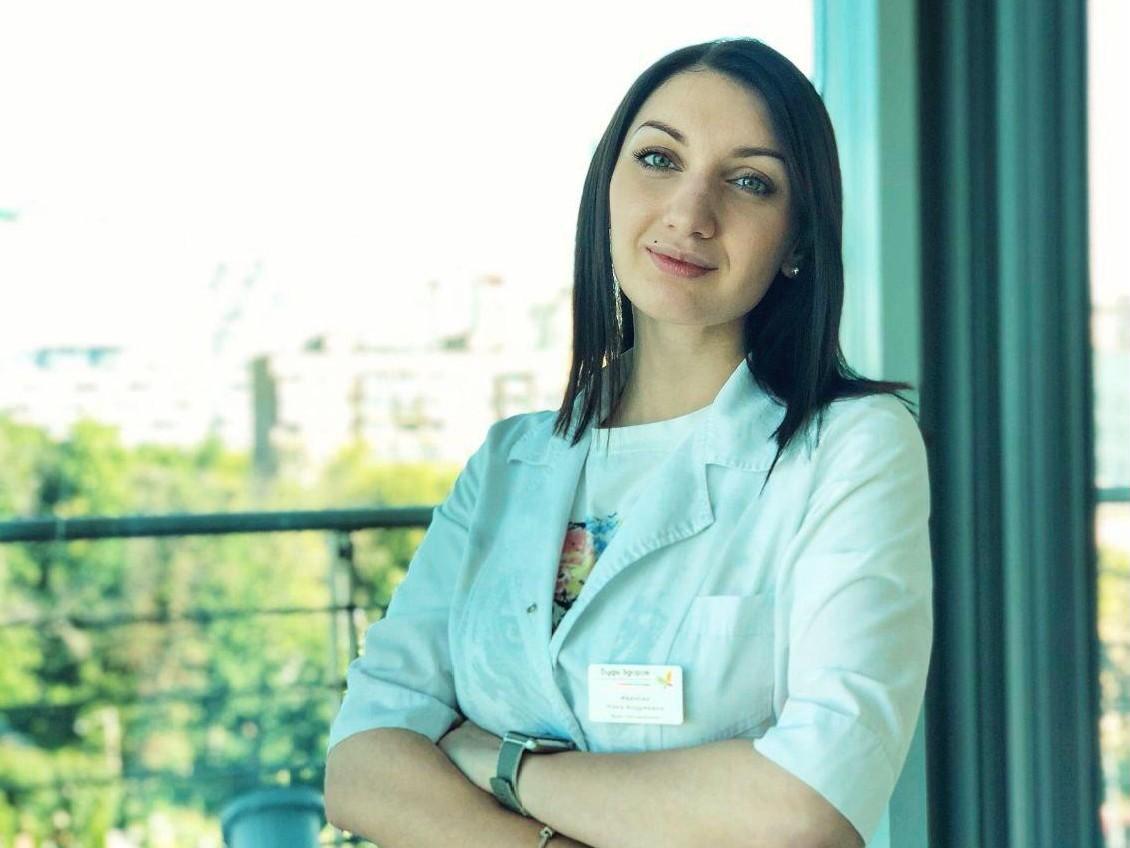
“I’ll answer your questions right away: no, it won’t get better. Everything has been tried, there is no treatment in any country in the world,” she warns. Nina has the same disease as British astrophysicist Stephen Hawking. He spent most of his life in a wheelchair, communicating and working with a speech synthesizer. But Nina says that such a life “holds no appeal for her.”

She and her husband live in Moscow, and they visit her parents in Saratov for holidays. In a conversation with a correspondent from 164.RU, Nina recalls the stages of her journey. She was born in the 90s and says everything was “like everyone else’s.”
“We lived poorly, had no money, there were drug addicts in the stairwell,” Nina laughs. “I went to school, did sports, played with toys as a doctor and teacher. As I grew up, I realized I wanted to heal or teach people. I was always tender-hearted. I graduated from medical university, entered residency, and ended up treating patients and teaching students. My goals and desires were fulfilled twofold. I am a happy person.”
Nina speaks slowly and with a nasal tone – due to weakness in the muscles of her speech apparatus, which the disease is slowly killing, a nasality has appeared. But the first signs of the illness were not that. First, she couldn’t spray hairspray. Then open a water bottle. But who hasn’t experienced that? She overdid it with sports, was tired after a shift. At that time, she worked in one of the capital’s military hospitals. Then she couldn’t manage to step up onto a curb – she fell flat, bruising her knees and chin. Then she found it difficult to move around the city as before. And she had always been active, lively, energetic…
They searched for the cause for a long time. They ruled out stroke, multiple sclerosis. Even the colleagues Nina consulted did not immediately suspect ALS. But finally, that moment arrived. On May 30, 2024, a council of doctors officially confirmed the diagnosis.
“I sent everyone a message with three words: ‘I have ALS’ and disconnected, there was hysteria,” Nina recalls. “As a doctor, I understood everything, but still wasn’t ready to hear it.”
They cried together with her husband, embracing.
“Of course, I cried more,” she smiles. “He is a man and strong in spirit, although it’s hard for him too, of course. We don’t cry anymore.”
Amyotrophic lateral sclerosis (ALS) – a progressive neurodegenerative disease of the central nervous system. It develops under the influence of several factors, causing complete destruction and death of motor neurons. First, the clinical picture of paralysis develops, then muscle atrophy sets in. The pathological process gradually involves one muscle group after another. When the diaphragmatic muscles are affected, the patient loses the ability to breathe independently and requires artificial ventilation of the lungs.
The life expectancy of a patient with ALS, according to various sources, ranges from 2 to 12 years.
“Living One Day at a Time”
Accepting the diagnosis was not easy. Nina admits that she wanted to jump out the window while she still had the strength. She thought with horror about becoming a burden to her family. How to live when you are locked in your body as if in cement? But she quickly pulled herself together.
“I thought my strength was in working for two days straight without sleep. But I learned that strength is in not breaking when your body becomes your main adversary,” the girl says. “At the same time, your soul and thoughts are locked in it, but you are maximally free. It’s like flying into an abyss at great speed. All material things have lost meaning, others’ opinions are uninteresting. Yes, I don’t want to die, but there is no other outcome.”
Nina speaks calmly about death: “When it’s near, it invigorates,” and admits that she regrets nothing.
“What’s the point of regretting anything? That’s for the weak. It depresses me that I can’t walk normally, can’t sit down and get up from the floor by myself, can’t sing songs like before – that’s true. But at the same time, I enjoy everything, except perhaps toxic people. I live here and now.”
Nina urges everyone to think about the present moment. Not to lose time, not to put things off, not to waste oneself on people who drain you. She writes a letter to her past self: “And then the day will come when you sign the disability papers. And the dismissal papers. And your world will narrow to the size of a room, then a bed, then a single breath.” And she gives herself advice. This letter, published in her blog, doesn’t sound sad because it has a life-affirming ending: “live now,” live in the moment.
“Now I don’t plan further than a week – there’s no point,” she says. “I rejoice every day that I’m alive, and that my illness isn’t progressing as fast as it could. Of course, I’d like to wake up and be healthy again. But alas and alack. So I do what I can, with what I have, where I am.”
In everyday matters, a housekeeper helps Nina; otherwise, it’s her husband and a friend who lives nearby. She was her resident, now practically – her right hand. She met her future husband Nikolai before the illness, and they married five years ago.
“When my diagnosis was already clear, he believed in me more than I did in myself at that moment. And he said: I don’t need a life without you, I will be with you, it’s my choice. That’s the most precious thing you can hear from a loved one.”
Nikolai says that he is delighted by Nina’s incredible strength and state of mind, he is happy that she is by his side. Even though now they can no longer walk until morning, dance, fool around, laugh loudly as before.
“Before, I thought a lot ahead – plans, goals, tasks. Now I try to live more one day at a time. We can’t know what will happen tomorrow, and be sure of that tomorrow.”
“A Special Mission”
Now, Nina’s day unfolds in such a way that, if you didn’t know about her illness, you might envy it.
“Since I’m not working now, my sleep and wake schedule has changed. I watch series, go for walks, visit beauty salons, restaurants, or some events. Every day – exercise, therapeutic physical training, taking pills, and working on myself. It helps a lot that I run a blog. I can share my knowledge and help people start valuing life. They are grateful to me, and that makes me even happier.”
At the same time, Nina does not hide that she takes antidepressants. But she emphasizes that the best antidepressants are her close people, whom she can still hug for now.
– Last question: do you feel your special mission?
“Yes, I do. I am a doctor and it’s not just a job, it’s my life. I want to help and I do help. And if I make one person happy, for me that is already a reward.”