The Dalnegorsk UFO crash: a 40-year-old Russian mystery

The number 611 has become practically a brand for the small town in the north of Primorye — Dalnegorsk. It is also called the Roswell of Primorsky Krai. All because of an unidentified luminous object that fell from the sky onto Izvestkovaya Hill. 40 years later, this unusual phenomenon is no longer discussed as fiercely, but in the 2000s it caused quite a stir.
The evening of January 29, 1986, made the small industrial town famous: American scientists and journalists analyzed it, wrote books about it, the military studied reports, mysticism enthusiasts made guesses, but no one was able to find out what really happened there.
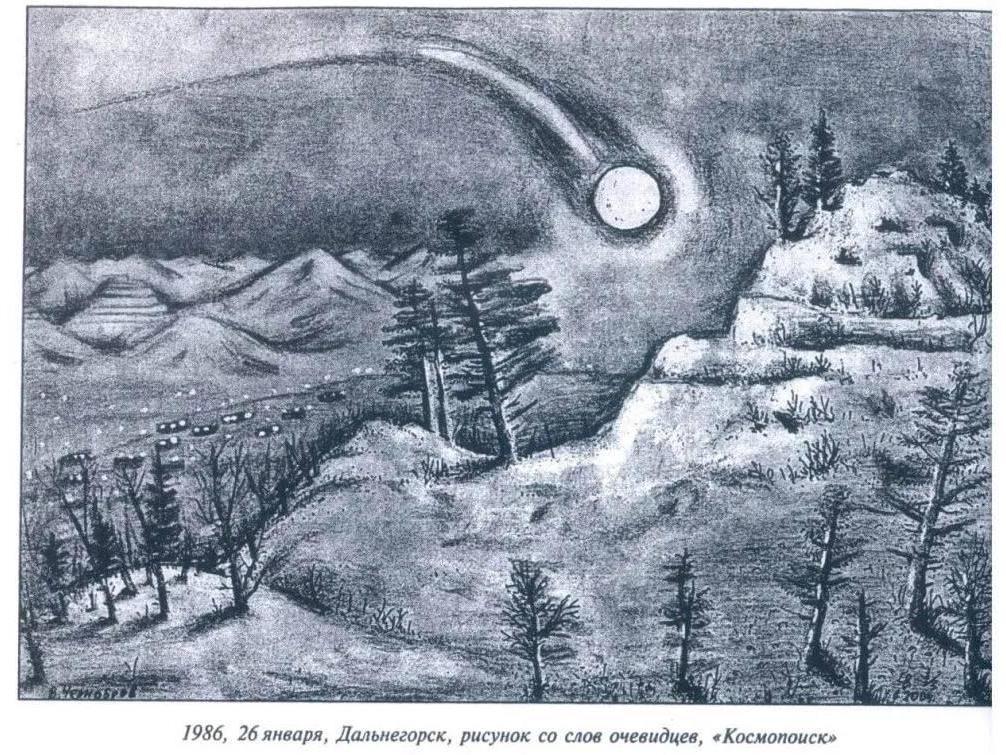
Imagine: winter, evening, a working town where metal is mined daily. Many residents are already home, some are just returning. Then a silent, glowing red ball flies across the sky. It moves parallel to the ground, then suddenly «dives» down, crashes, and catches fire. The altitude of this point above sea level — 611 meters — became its namesake, and the place — cult-like.
An eponym is a name or title that «gifted» itself to another object. Simply put: it«s when someone (a person, god, hero) or something (an event, place) is so strongly associated with a thing that its name becomes the name of that thing.
Whether to believe in UFOs or not is up to you; you can even visit the hill and dig through the archives preserved in Dalnegorsk. We«ve told you how to get there.
Melted stump and polished stone
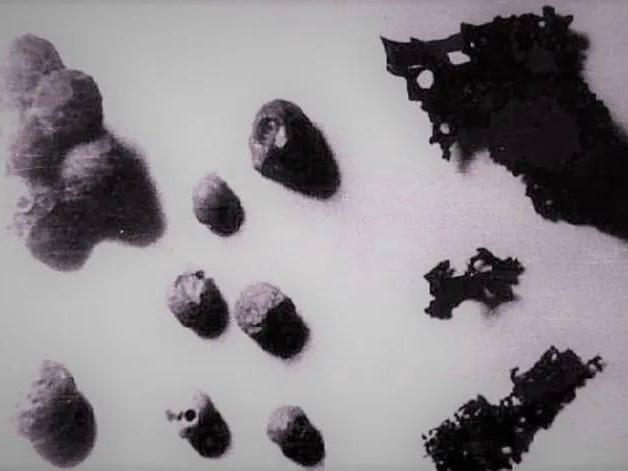
One of the first to arrive at the crash site was schoolteacher Valery Dvuzhilny, who dedicated part of his life to studying this mystery. He found at the crash site, if that«s what it was, strange solidified lead beads, quartz fibers, and a »mesh« of the finest tungsten threads. Also traces of high temperature without effect on neighboring vegetation.
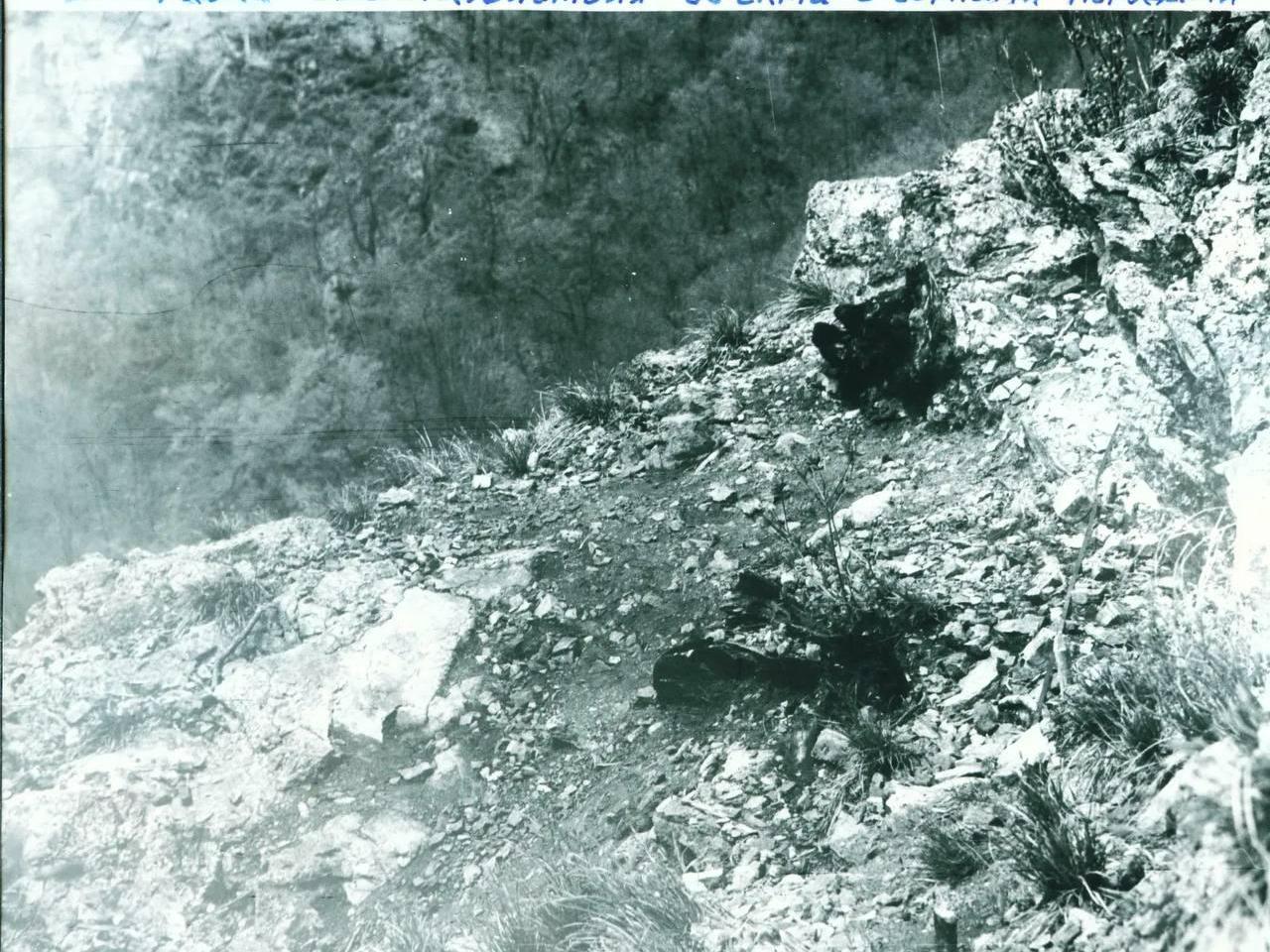
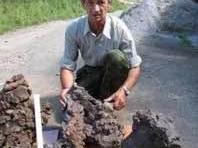
But what surprised him, and many other witnesses, was that there was no pile of debris as from an airplane, but several stones were smoothed out, as if they had been polished for a very long time. The most unusual thing witnesses noted was a stump — it was melted, not broken or cut. The snow there was scorched, and the slope was littered with blackened stones. It smelled of something chemical. Droplets of silvery metal were visible on the stones. But nothing unusual was found in these elements, and radiation was normal.
Then they studied the metal beads and found they consisted mainly of lead, but not local, from the Lake Baikal region. But the strangest thing — is that very mysterious «mesh». It turned out to be made of a black shiny material that does not dissolve in anything. Inside it, they found gold wire stitched with quartz threads.
Leningrad scientists said the «mesh» — is a product of high technology and such material simply does not exist in nature. One scientist clarified that this was clearly made by human hands, not nature. And the metal beads could only be cut with a diamond. They contained almost the entire periodic table. When melted, they turned into glass-like structures, as if they were some kind of parts.
Dvuzhilny, a former schoolteacher, retrained as a ufologist and even started publishing a newspaper about it — «Height 611».
A ufologist is a person engaged in studying UFOs (unidentified flying objects), collecting and analyzing evidence of encounters with them, often assuming their extraterrestrial origin. This field, called ufology, is considered a pseudoscience, as it is not recognized by official academic science, and its methods do not meet scientific standards.
«The UFO had something like an atomic reactor»
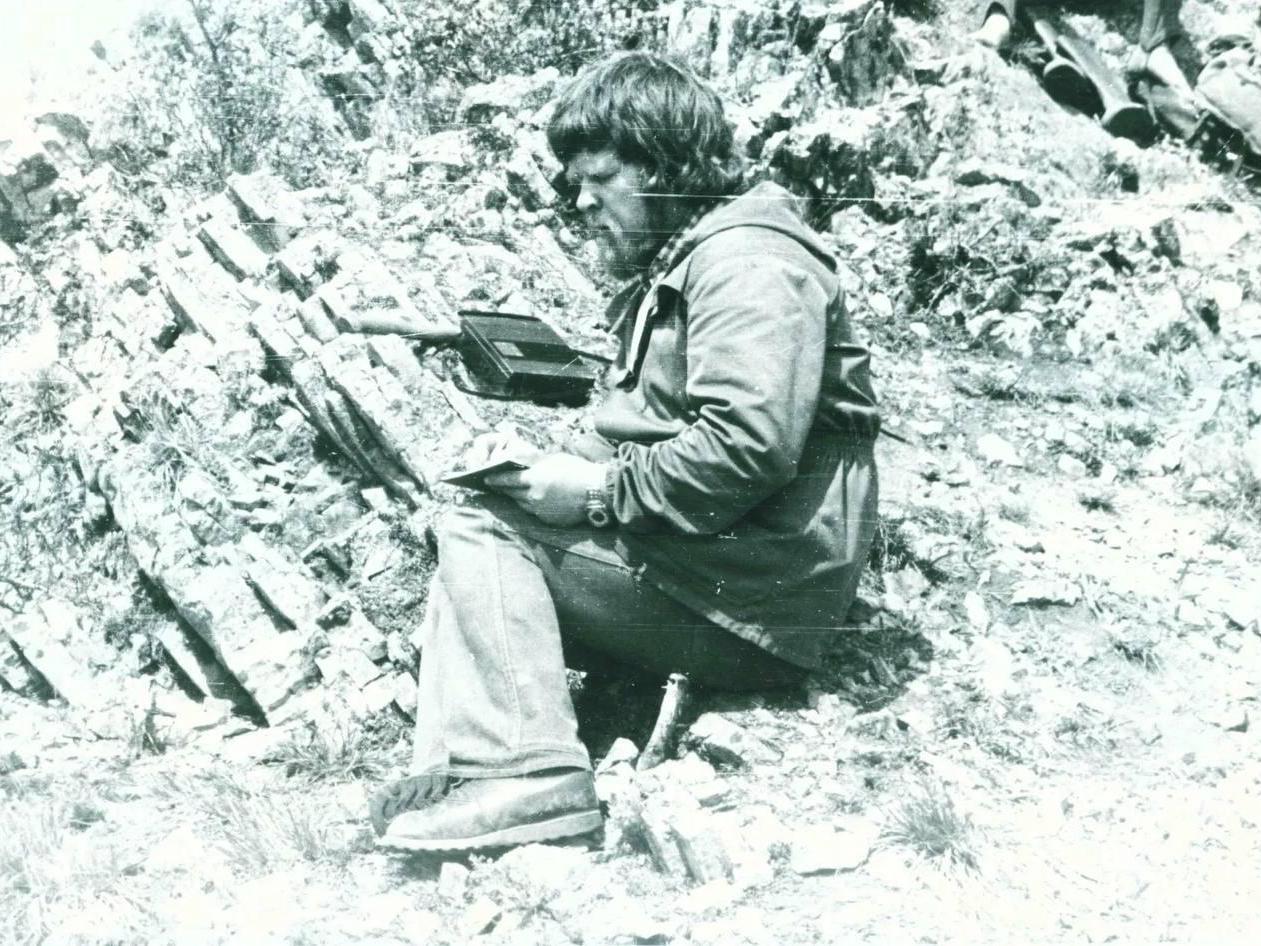
Valery Viktorovich Dvuzhilny is the key figure in this whole UFO story. He lived in Dalnegorsk, and people called him not just a «flying saucer hunter,» but a serious researcher. By education he was a biologist, but almost his entire life he dedicated to ufology and studying anomalous phenomena in Primorye.
He headed the Dalnegorsk branch of the Far Eastern Division of the Committee for the Study of Anomalous Aerial Phenomena under the USSR Academy of Sciences. He literally sifted the earth at the crash site, collecting those very «meshes» and metal droplets. He sent samples to dozens of research institutes across the USSR. Thanks to his persistence, it was possible to determine that the materials had an anomalous structure (for example, tungsten that did not melt at normal temperatures).
«With the help of X-ray analysis, a high content of cristobalite, a high-temperature quartz that forms at a temperature of 1450 degrees Celsius (2642°F), was revealed. Given this, one can no longer speak of the possibility of a forest fire (800–900 degrees Celsius / 1472–1652°F). To clarify the situation, we tried to reproduce the melting conditions. An oxygen-propane burner was used in the experiment. As a result of melting andesite at a temperature of 2000 degrees (3632°F), a dark brown, shiny, glass-like mass formed, but with a structure different from the rocks we discovered. The rock did not foam, which means the source acting on the foam-like stones did not have an open flame,» — quotes Dvuzhilny from a report on the website «Astrogalaxy».
He believed that the object that crashed at 611 meters was an unmanned reconnaissance probe of extraterrestrial origin that was interested in metal deposits and tectonic faults in the Dalnegorsk area.
In the end, Dvuzhilny became the author of many articles and reports, began publishing the newspaper «Height 611», where he published his works. One of his most famous publications was a detailed report on the 1986 incident, which spread around the world. In an interview with the Vladivostok newspaper, when asked: «Why is there so little metal in the crash area?» He suggested that «brothers in reason »clean up« major traces of accidents so they don»t fall into human hands for study, while «small stuff» remains.«
«The found metal alloys also contain high concentrations of rare earth metals — lanthanum, yttrium, samarium, gadolinium. These metals are used by earthlings mainly in nuclear energy — in nuclear reactors as neutron absorbers. It can be assumed that the UFO had something like an atomic reactor where these elements were used. The alloys also contain bromine, sulfur, mercury. The scientists» conclusion — these are clearly alloys of an artificial nature,« — asserted Dvuzhilny.
Part of Dvuzhilny«s archive and those very finds are kept in the Dalnegorsk museum. In addition, his article analyzing his theories about the reasons for UFO visits specifically to this region was published on the portal »Debri-DV«. Ufologists respected him even skeptics for the fact that he tried to rely on facts and results of laboratory analyses, not just witness accounts.
Unfortunately, finding complete original reports in the public domain is difficult. They were published mainly in small-circulation scientific collections and local newspapers, which can be found in the archive in Dalnegorsk.
As for the mysterious «mesh», Dvuzhilny described it this way:
«The thinnest (about 17 microns) threads woven into a complex spatial structure, consisting of tungsten. Although tungsten is refractory, the structure of the threads suggested technology uncharacteristic of that time. When attempts were made to melt or analyze them in laboratories, the material demonstrated anomalous stability or changed its properties in an unpredictable manner.»
According to his research, the stones were melted, indicating exposure to very high temperature. Also, unexpected impurities were found in them: lead, zinc, rubidium, cerium, and other rare earth elements. He wrote about his findings online as well; for example, a detailed report on the nature of the melted «andesites» and other finds is available on the portal «Astrogalaxy».
Valery Dvuzhilny died on October 23, 2014, after an illness. The editorial staff of Vladivostok«s »Komsomolskaya Pravda« wrote about him that before expressing bold versions, the man meticulously researched facts using all sorts of analyses, documents, conclusions of scientists and experts, went on expeditions, and pestered authorities.
It fell and the ground caught fire
According to stories published online, on the evening of January 29, 1986, people first saw a strange red-orange ball the size of half the Moon in the sky. It flew low, almost parallel to the ground, and made no sound. When the ball approached the hilltop, it began to descend and fell right on it. No one, except one schoolboy who was at the foot of the hill, heard the sound of the crash. He said there was a faint, dull thud, and also that the object had no tail, characteristic of a comet.
The website «Debri DV» in a March 10, 2009 article cites the recollections of Dalnegorsk mechanic Vladimir Kondakov. He was at the bus station when a ball flew over the city:
«The ball flew low, and it seemed it would knock down part of the smokestack of the »Dalpolymetal« processing plant. It was round, without any protrusions or depressions. It seemed made of metal and in color resembled slightly heated stainless steel. I thought it was some kind of military projectile. I didn»t hear any sounds. I saw it fall at the height, but also didn«t hear the sounds of the crash. The ground caught fire at that spot.»
Another unnamed witness, according to the publication, remembers going with the guys to the «Stroitel» stadium, planning to play hockey until dark.
«Then our goalkeeper shouts: »The Moon is falling!« I look, it»s true, falling! Then we saw it wasn«t the moon, but a huge bright orange ball, like an orange. It quickly flew from the direction of the TV tower past the state bank, the stadium, and the bus station towards the hills. No jet engine roar of turbines, nothing… Quietly like that. And then on the hill a bright flash of ultraviolet-fluorescent color. As if a dozen welders turned on their machines. And no sounds of explosion or impact. We threw down our sticks, peered until our eyes hurt, wondering what would happen next. In the morning my eyes hurt badly,» — quoted the author of «Debri DV» the interviewee.
Many witnesses compared the burning at the crash site to electric welding or a short circuit on a power line. And the hilltop burned for a long time.
It was a crashed flying spy
According to one legend, the UFO could have crashed due to a repeater installed in the crash area. It wasn«t functioning — shortly before, lightning struck right there. But this version led people to think that witnesses mistook ball lightning for a UFO, and the found lead droplets could be part of a cable (such were produced at a factory in Irkutsk at the time) left from the repeater.
There is another version related to military developments: the fallen object was a reconnaissance probe from an unfriendly country. It crashed and was forced to burn all traces behind it. Or even — an AAD (automatic drifting aerostat) reconnaissance apparatus with a thermite self-destruct device. This process is described in M. B. Gershtein«s book »Secrets of UFOs and Aliens« as very similar to what is associated with the UFO crash in Dalnegorsk.
Locals also said the rock was «two-headed» before the accident. The ball probably destroyed one of its peaks. This was linked to the idea that after all, neighbors from other galaxies had come to visit. The version of mysticism enthusiasts is this: aliens can create a portal between galaxies, they flew in, something broke, they tried to land or return home, but ended up crashing and burning.
After this, local publications reported that on November 28, 1987, Dalnegorsk residents saw 13 flying objects of different shapes — cigar-shaped, cylindrical, spherical, and they all moved absolutely silently. According to «Debri DV», one of the discs even hovered over the district military headquarters. Fighter jets were ordered to take to the sky, but when they took off, the UFOs disappeared. It is noted that they were specifically interested in the crash site — objects hovered over the hill and illuminated it with powerful beams of light. And in January 1989, local ufologists and casual observers recorded a UFO landing literally 200 meters (about 656 feet) from the crash site.
Residents claimed: when UFOs appeared, TV pictures disappeared, phones and radios didn«t work, and film did not capture the crash site or the objects themselves. This phenomenon suggested that searches for debris and remnants of that crashed ball were being conducted in Dalnegorsk.
Now residents laugh, saying, what would aliens want in Dalnegorsk?
«Vladivostok is more interesting, or over there in the Lazo direction along the ridges, what»s here? Mountains and a couple of houses. Unless they got lost, maybe they were flying to Japan,« — joked local resident Valeria.
Worth seeing with your own eyes
Even 40 years later, the crash site can spark interest. There is an opinion that «Height 611» adversely affects blood: white blood cell levels drop. The main feature: silicon samples collected at the incident site possess magnetism, which is not originally its property. To make a magnet from a mineral, a number of conditions must be met.
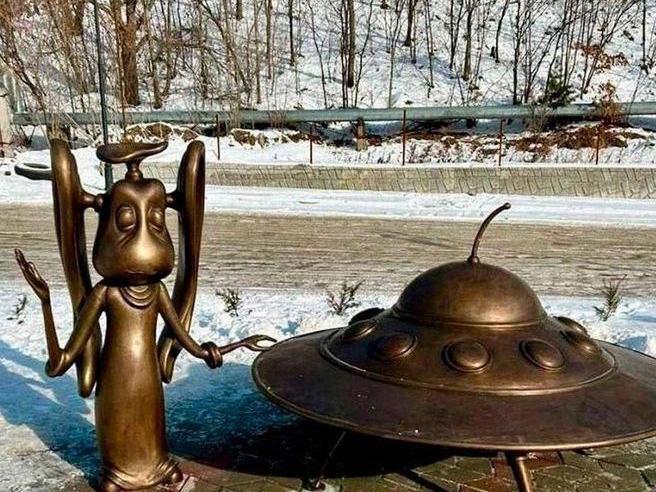
In the city center stands a monument in the form of an alien and a flying saucer, which priest Andrey Vasyakin in 2024 demanded to remove. But the Dalnegorsk administration did not listen to him.
«I»ve spoken with them more than once, but they completely ignore it. They say it«s an art object. But you can install something else. In Mariupol, for example, there is a huge stele dedicated to the profession of steelworkers. But here all these objects are demonized and ridiculed. And we just go on as if nothing happened and smile. How long can this go on? We have more of these demonic creatures than churches in Dalnegorsk,» — noted the priest.
But some, on the contrary, are sure that this story should be made into a brand and tourism developed. This will help the city develop, attract new funding. Every year a festival «611 Steps to the Stars» is held on the hilltop, there is a museum where remnants of meteorites and other objects fallen from space are collected.
Currently, on the territory of the ufological monument, covering 30 square meters in the open air, there is an art object — a model of an alien craft. It was made and installed by specialists from the city-forming enterprise «Dalpolymetal». The «Height 611» site is located 1.5 kilometers (about 0.93 miles) from the city bus station. Dalnegorsk Museum staff can accompany those wishing to visit this attraction.
How to get there?
By car from Vladivostok, the journey will take about 6.5–8 hours, you«ll need to travel almost 500 kilometers (about 311 miles) along the highway via Ussuriysk and Arsenyev. By bus it»s longer, regular routes run from Vladivostok bus station. It«s better to check current bus schedules on specialized online services, as they may change.
The trip costs from 3.7 thousand rubles (about $40 at current rates), buses No. 515, 503/6, 503, 650, 503/4 go to Dalnegorsk. You can leave in the morning, afternoon, and evening.
Izvestkovaya Hill is practically within the city, 1.5 kilometers (about 0.93 miles) from Dalnegorsk bus station. Usually the ascent starts from Korzhevskaya Street, 10. The path from the base takes from 40 minutes to 1.5 hours depending on pace. The route is accessible for people of any physical fitness, but there are several steep sections where you«ll have to sweat. The trail itself is well-trodden and visible during the day. But if you»re worried, you can book a tour at the museum.
At the height itself, there is a memorial plaque, an art object in the form of a model of an unidentified flying object. Also, a panoramic view of Dalnegorsk and its quarries, where various metals were mined, opens from the top.
Mentions in literature and film
Perhaps the largest and most detailed mention of this event is found in the book by American authors Paul Stonehill and Philip Mantle — «UFOs: Secrets of Russia» (16+). This is a compilation and comparison of several different cases that remain a mystery to humanity.
Mantle, former investigations director of the British UFO Research Association, told The Sun newspaper: «Some of our colleagues believe Russia has alien technology obtained as a result of this event, but so far they haven»t been able to understand it — exactly like their colleagues in Roswell in 1947.«
For several years after the event, expeditions arrived at the site from Japan, the USA, China, Canada, Belgium, and Sweden. Foreign specialists highly valued the found microscopic remnants. Ufologists also gathered at the site: they were confident in the object«s extraterrestrial origin. In 1994, the film company Paramount Pictures made a documentary about the Dalnegorsk phenomenon and the work of the Vladivostok Ufologists Association.