Myths and Reality of Free Apartments in the USSR
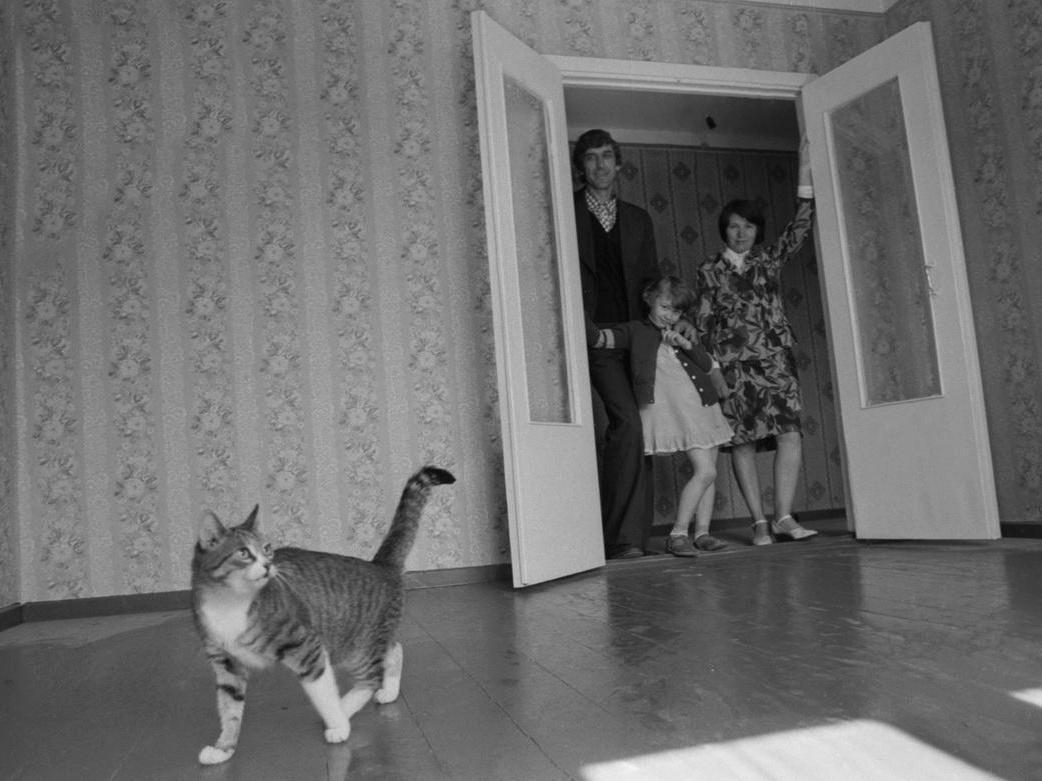

On social media and forums, nostalgic memories often surface of the USSR era when apartments were distributed for free. The modern generation, facing high housing prices and interest rates, wonders if a return to such a practice is possible. The idea of giving away apartments as before is supported by some public figures and developers, suggesting it at least for young or large families.
Efficiency Comparison: Subsidized Mortgage vs Direct Housing Distribution
Previous calculations showed that if the state, instead of subsidizing preferential mortgages, bought apartments from developers and distributed them, the number of families receiving housing could have been three times greater. Under the subsidized mortgage system, the state fixes the interest rate at 6%, compensating banks for the difference with the market rate. For example, from January 2019 to April 2021, about 1.5 trillion rubles (approximately $15 billion at current rates) were spent on this, allowing 2.7 million families to purchase housing.
However, with the increase in the key rate of the Central Bank of Russia and the rising cost of real estate, the burden on the budget grew. When the market rate reached 24%, and a family bought an apartment for 7.5 million rubles (about $75,000) with a down payment of 2.5 million rubles (about $25,000), the borrower overpaid the bank 5.5 million rubles (about $55,000), and the state compensated 24 million rubles (about $240,000).
From July 2024 until spring 2025, the state«s obligations under the family mortgage exceeded 33 trillion rubles (approximately $330 billion at current rates), while only 1.7 million families were provided with housing. From 1 February 2026, the program conditions are tightening: instead of the ability to take out separate loans for husband and wife, the principle of »one family — one mortgage« applies.
Readers« Experiences: How Apartments Were Received in Soviet Times
At the publication«s request, readers shared their family stories. For example, one user said that her grandfather and grandmother, who worked as builders in Tyumen, received three apartments: a three-room one for the parents, a two-room one for the son and his wife, and another three-room one for themselves. The keys were handed over immediately after the house was built.
Others recalled how apartments in St. Petersburg and Leningrad Region were allocated to janitors after 15-20 years of work. Often, housing was provided to factory workers, medical staff, police officers, and builders. On average, the wait took about 10 years, but some families ended up with 11 rooms for all.
Among the professions of those who received housing, the distribution was as follows:
- About half were enterprise workers or engineers.
- 17% worked in the construction industry.
- 15% were teachers, researchers, or doctors.
- 13% were military personnel.
- The rest were state farm workers.
Not all stories were rosy. Many waited for housing for over ten years, crammed into dormitories without hot water or in communal apartments. For example, one reader mentioned that her mother, a kindergarten teacher, to get a larger room, went to work as a laborer at a construction site.
Regional Differences: Was It Easier in the Provinces?
About 70% of comments that mentioned receiving apartments concerned regions, not Moscow or St. Petersburg. In the Caucasus, Kamchatka, or Stavropol Krai, housing was processed in 5-7 years. Those were especially lucky who moved to construction sites in remote areas, such as Buryatia or the North, where they could immediately be offered a house or apartment.
In large cities, queues stretched for decades. The parents of one reader, not waiting for an apartment in St. Petersburg, left to build the Bratsk Hydroelectric Power Station in 1956, lived in barracks, and only years later received their own housing in Yekaterinburg.
The Dark Side of the Soviet System: Queues, Conditions, and Dependence
Many recall that to get an apartment, one had to have an impeccable reputation, and any violation, for example, ending up in a sobering-up station, could deprive the right to be in the queue. Housing was often provided on a social rental basis, not as ownership, and was of low quality: without amenities, in dilapidated houses or communal apartments.
Some believe that years of working at an enterprise without the possibility to quit is a high price for an apartment, and modern mortgage, despite overpayments, offers more freedom.
The debate continues: some see the Soviet system as a social guarantee, others as a restriction of freedom. At the same time, many apartments received for free were later privatized and became property, which allows some to consider that experience positive.