Irkutsk Collector Opens Vintage Shop with Soviet-Era Finds
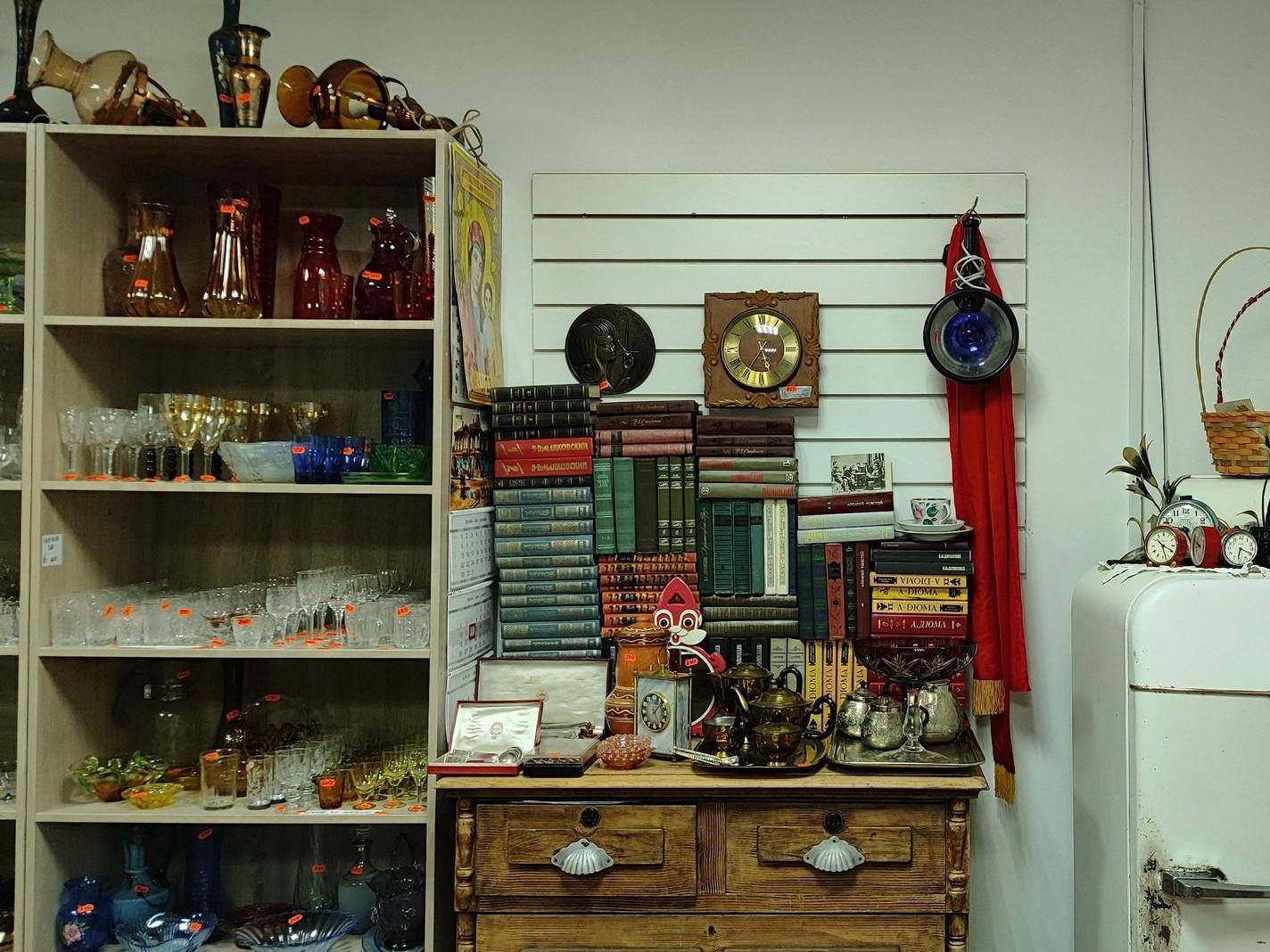

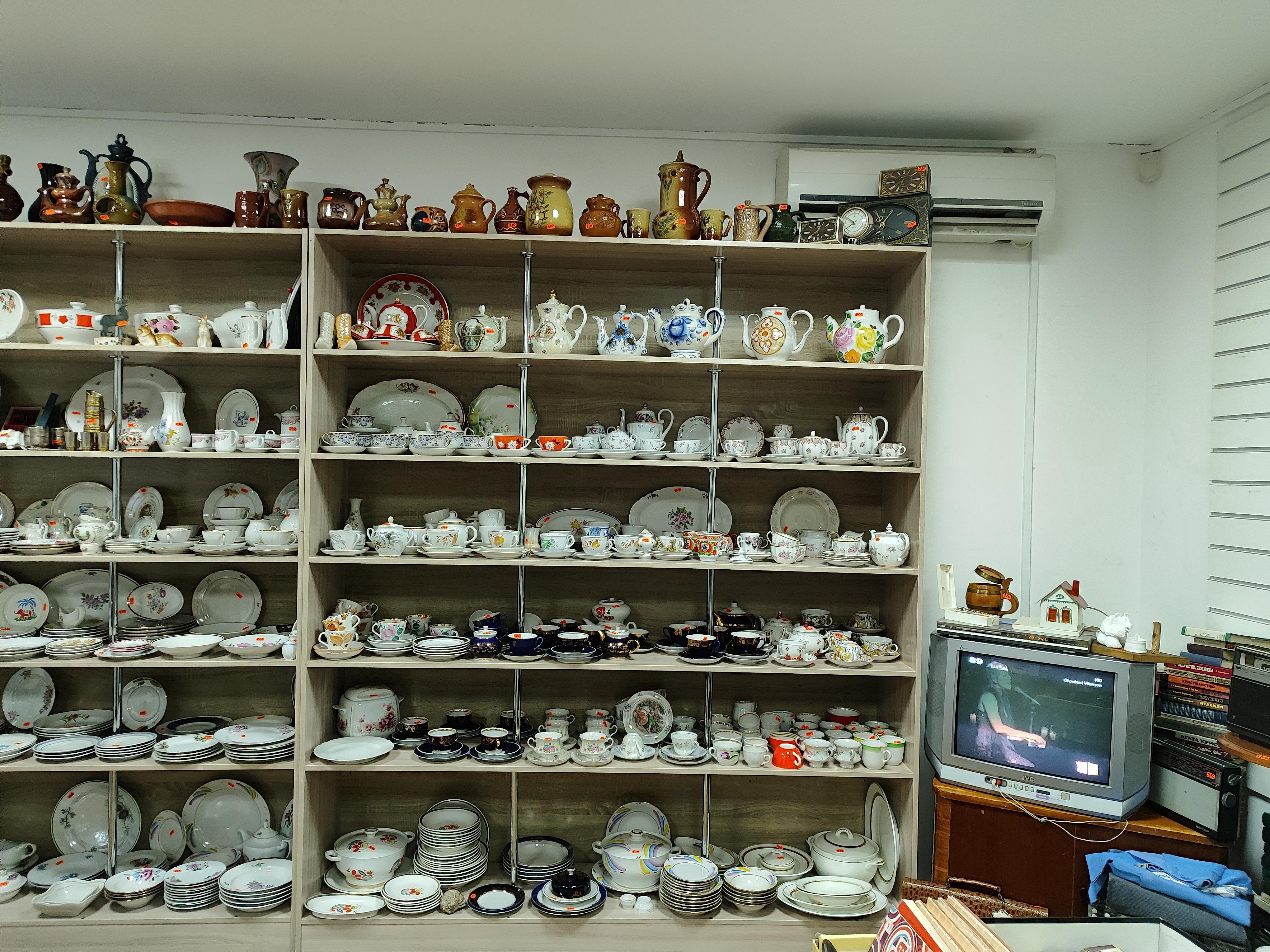
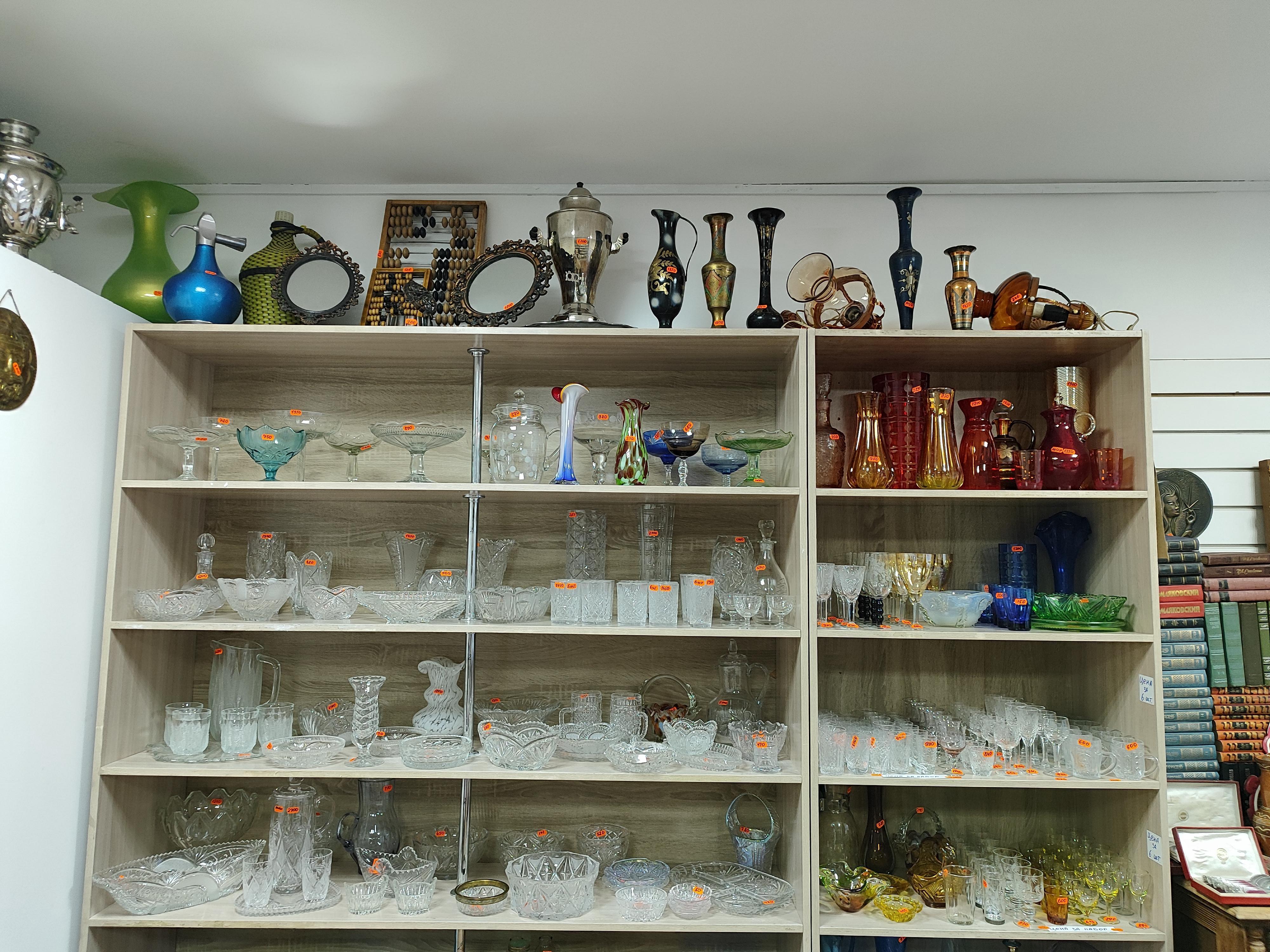
In late December 2025, a vintage dishware shop opened in the center of Irkutsk. It doesn«t have expensive collectible rarities like services from the Imperial Porcelain Factory or the German brand Meissen. But it does have crystal salad bowls in which mom used to put Olivier salad or herring under a fur coat on the New Year»s table, or porcelain cups from which you probably drank tea at your grandmother«s house.
The shop was opened by Irkutsk collector and blogger Alexander Agafonov. Several years ago, he started buying Soviet-era dishware for himself. But over time, the collection grew so large that there was no space to store it, so he began selling extra and duplicate cups, saucers, and teapots. Alexander shared his hobby and the trend for Soviet vintage with an IrCity journalist.
«Actually, my collecting began when I once visited the Museum on the Dump (now the Alexander Rastorguev Military History Museum. — Ed.). I suddenly liked old things and how they were all in one place, side by side. What especially surprised me was such a simple, it seemed, thing—a collection of ceramic mugs,» shares Alexander.
They hung in a row on shelves in a hangar equipped as a museum of retro items, and they fascinated the man.
«Individually, they might not have been anything special. But when I saw them together, and they were all different shapes, with different decorations, patterns. It seemed interesting to me. It all exuded a certain warmth. I saw my own beauty in it,» adds the interviewee.
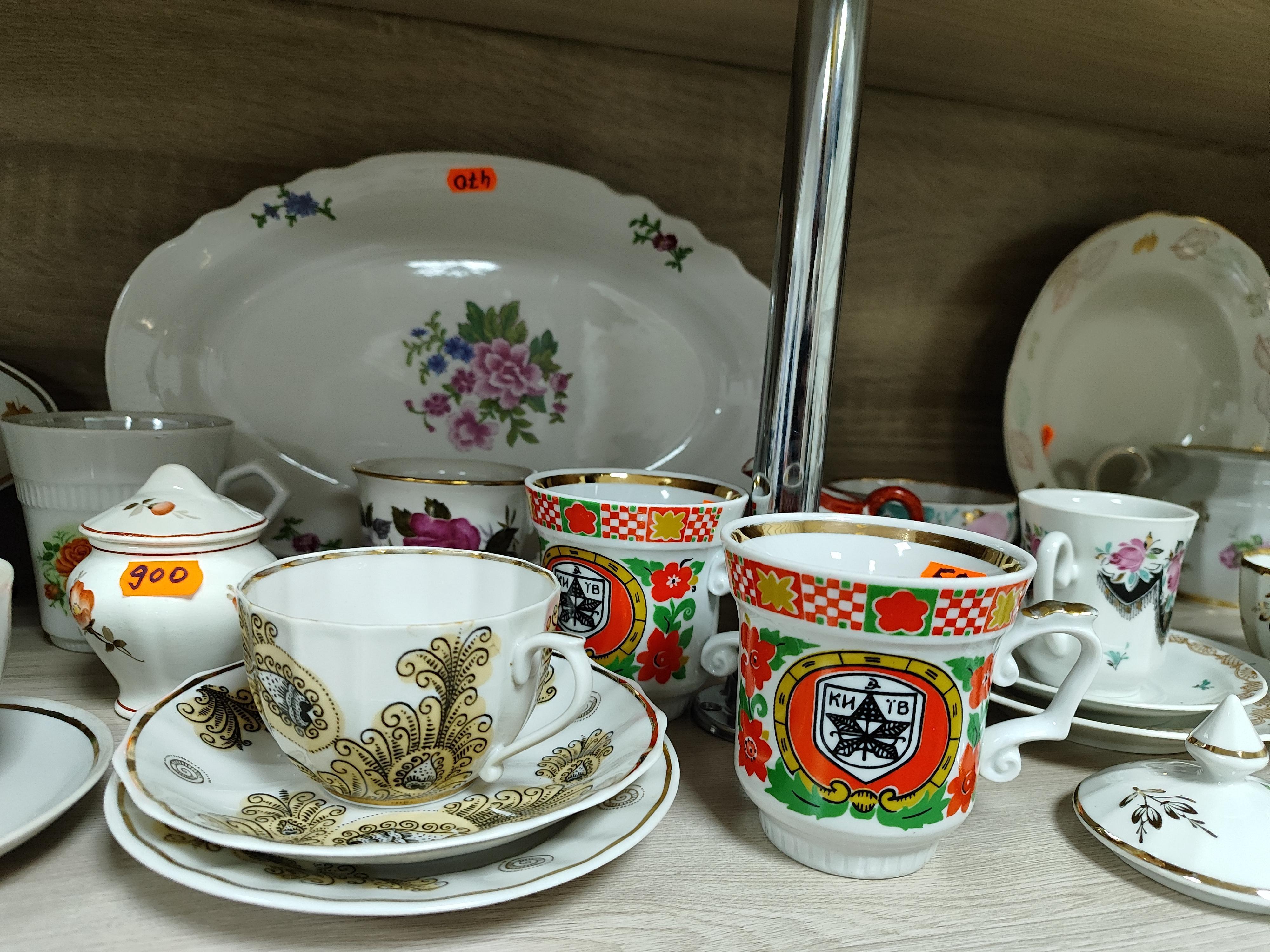
Alexander decided that he wanted to have a similar collection at home, and he started collecting beer mugs from the USSR era. It turned out that quite a few were produced at that time, at various factories across the country. Some were made for specific dates, others had coats of arms of Soviet cities, and still others—just curious decorations.
«I ordered these mugs online, bought them on Avito and in antique shops. I literally hunted for some specimens. I think I bought all the more or less interesting mugs and then moved on to porcelain,» continues the Irkutsk resident.
At first, porcelain dishware itself didn«t interest Alexander at all. But then he started delving into the topic, found out that not all porcelain is equal, and among the products of different factories and craftsmen, there are interesting specimens. After that, the collector began searching for items that interested him.
«Porcelain painted by hand is especially good because there will never be two identical cups. That is, they are maximally similar but not identical, even if the same master applied the pattern. There will always be a slightly different tilt of a leaf or thickness of a line. This is how hand-painting can always be distinguished from decal or airbrushing,» explains Alexander.
Since people often sell entire sets of dishware online without particularly sorting their contents, over time Alexander accumulated a lot of miscellaneous items. Sometimes from one address, the Irkutsk resident would bring back three huge boxes with things and dishware.
«Interesting items for the collection I kept, and the rest of the dishware just piled up until a certain critical mass was reached. Even though I live in a private house, one day there was nowhere to put it. Even the shed was full,» admits the interviewee.
Then Alexander started going on weekends to the same flea market at Rabochego Shtaba, where he bought his first ceramic mugs, and began selling dishware that he himself didn«t need. On the very first day, the man sold almost half of everything he had, and the revenue by the end of the day reached about 20,000 rubles (approximately $220 at current rates).
«I didn»t expect such a frenzy and live interest at all. Although back then, four years ago, we had more than democratic prices because we almost didn«t know anything yet. We put everything out cheaply,» admits Alexander.
Every weekend, the Irkutsk resident would take goods there, sell unwanted items, and with the proceeds, he would replenish both his collection and the assortment of his stall. A little later, he rented a covered pavilion at the same flea market so as not to freeze outside. There he traded for the last year and a half, until he found a building for rent in the center of Irkutsk.
«We opened here in the twenties of December. And you know, the frenzy is somehow completely incredible,» the collector marvels.
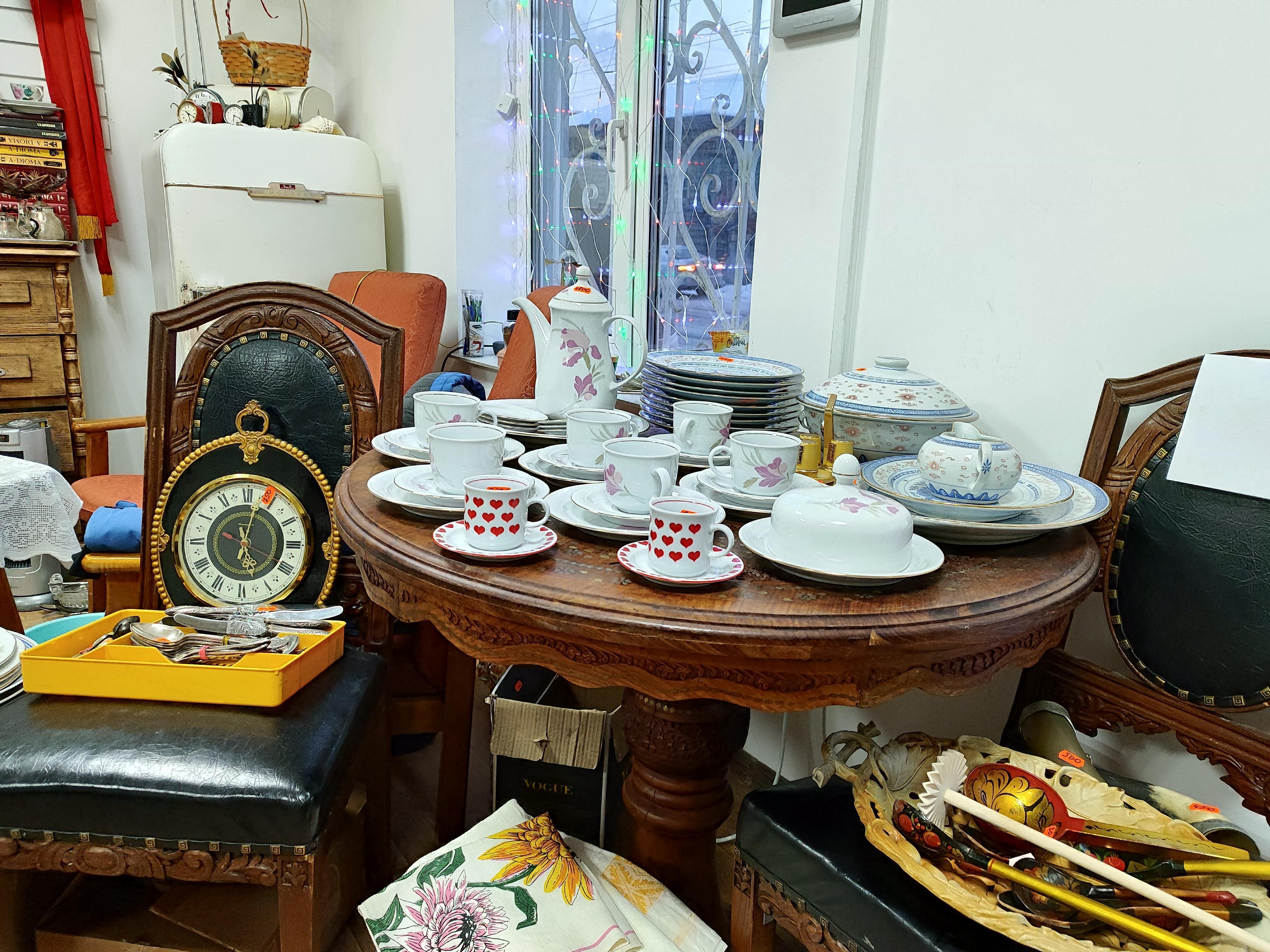
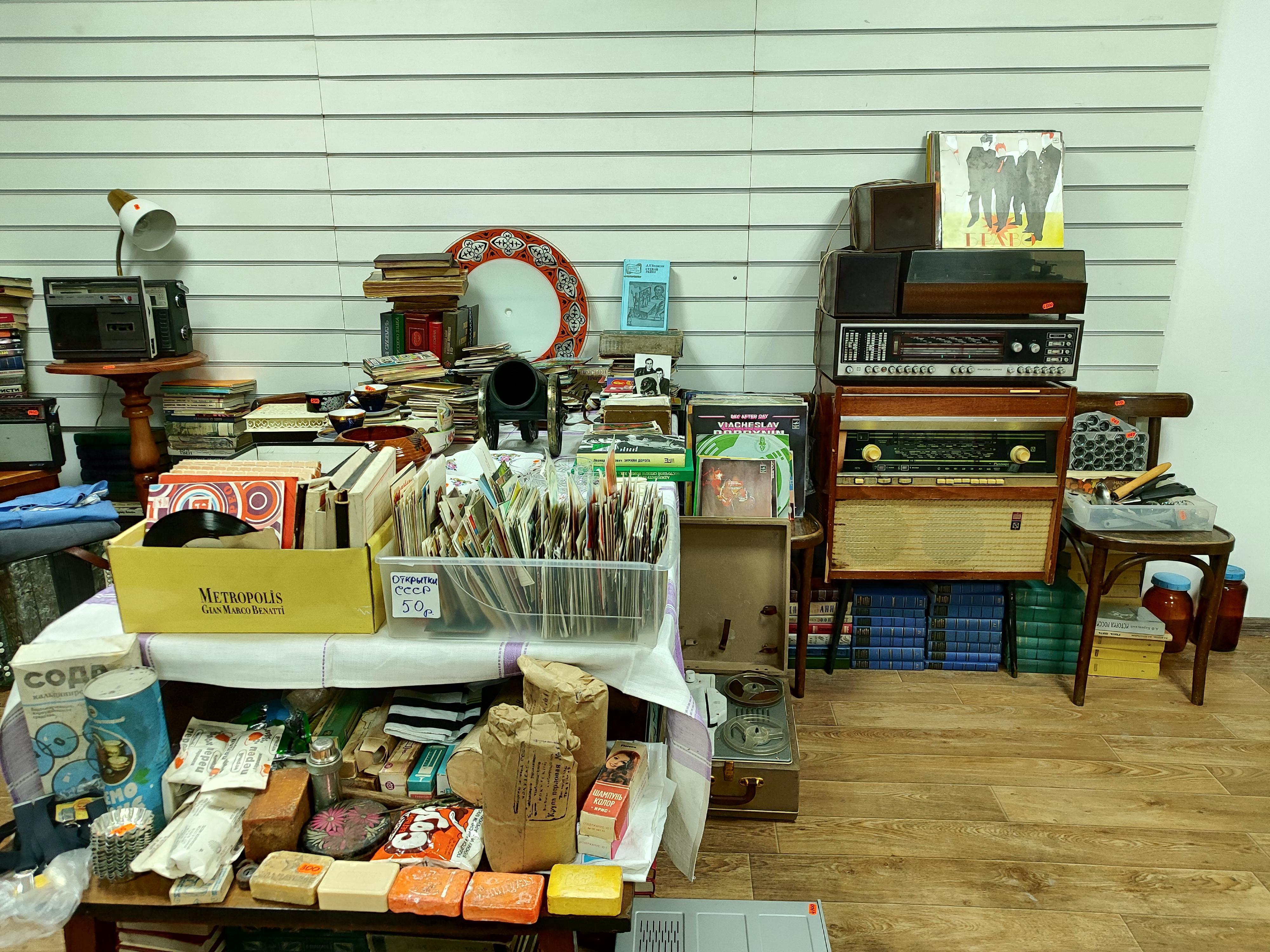
The interior of the vintage shop resembles (so far fragmentarily) the setting of a retro apartment. This similarity is intentional but not yet perfected, since Alexander doesn«t have the necessary set of furniture. For example, porcelain and crystal are displayed on modern shelving, not in Soviet »walls« as the shop owner would like. But the shop already has an antique chest of drawers, a pot-bellied Zil refrigerator, typical Soviet armchairs, and even a Rigonda radiogram.
«In the future, I want to turn this shop into a mini-version of a Soviet apartment. At the entrance, put a dressing table with vintage costume jewelry, perfume, a rack with vintage clothing. Further—the kitchen area with a refrigerator, stove, kitchen table, and dishware. A living room with these armchairs, a table, a bookshelf, a Soviet »wall« with crystal and various knick-knacks. I want people to be able to open any drawer or the same refrigerator, and inside—items of Soviet daily life,» shares Alexander«s plans.
According to his concept, the shop should become a place where people as if travel back in time and find themselves in a typical Soviet apartment.
Alexander Agafonov notes that the vintage shop is most popular with young people, although older generation visitors are not rare. But if older buyers more often ask for dishware «to complete sets,» meaning they want to supplement the services they have at home, then young people enthusiastically take both individual saucers or cups and entire sets.
«Soviet dishware is now experiencing a new wave of popularity. I connect this with the fact that young people who were born in the late nineties—early two-thousands grew up already with modern dishware. Around that time, people started changing their Soviet sets for something more modern, for example, »Luminark« was popular. These children saw retro dishware, if they were lucky, at their grandparents», so they want to touch all this again,« reasons the Irkutsk resident.
Therefore, young people gladly buy products from the Khaitinsky Porcelain Factory. There is a lot of it in the vintage shop. Alexander says that Khaitinsky clay is one of the purest, with no harmful impurities, salts, or metals. Therefore, it is considered safe and eco-friendly. The highlight is added by the fact that the Khaitinsky Factory no longer exists, so the supply of such dishware is essentially limited.
Also on the shelves is dishware made at the Tulun Glass Factory. These are various salad bowls, fruit bowls, vases, and glasses. They are interesting because the glass is colored. Even now, such items look dignified and modern.
Also in the shop, you can find a small amount of Czechoslovak crystal. The price for it is higher because such finds are rarer and owners often sell them for much more.
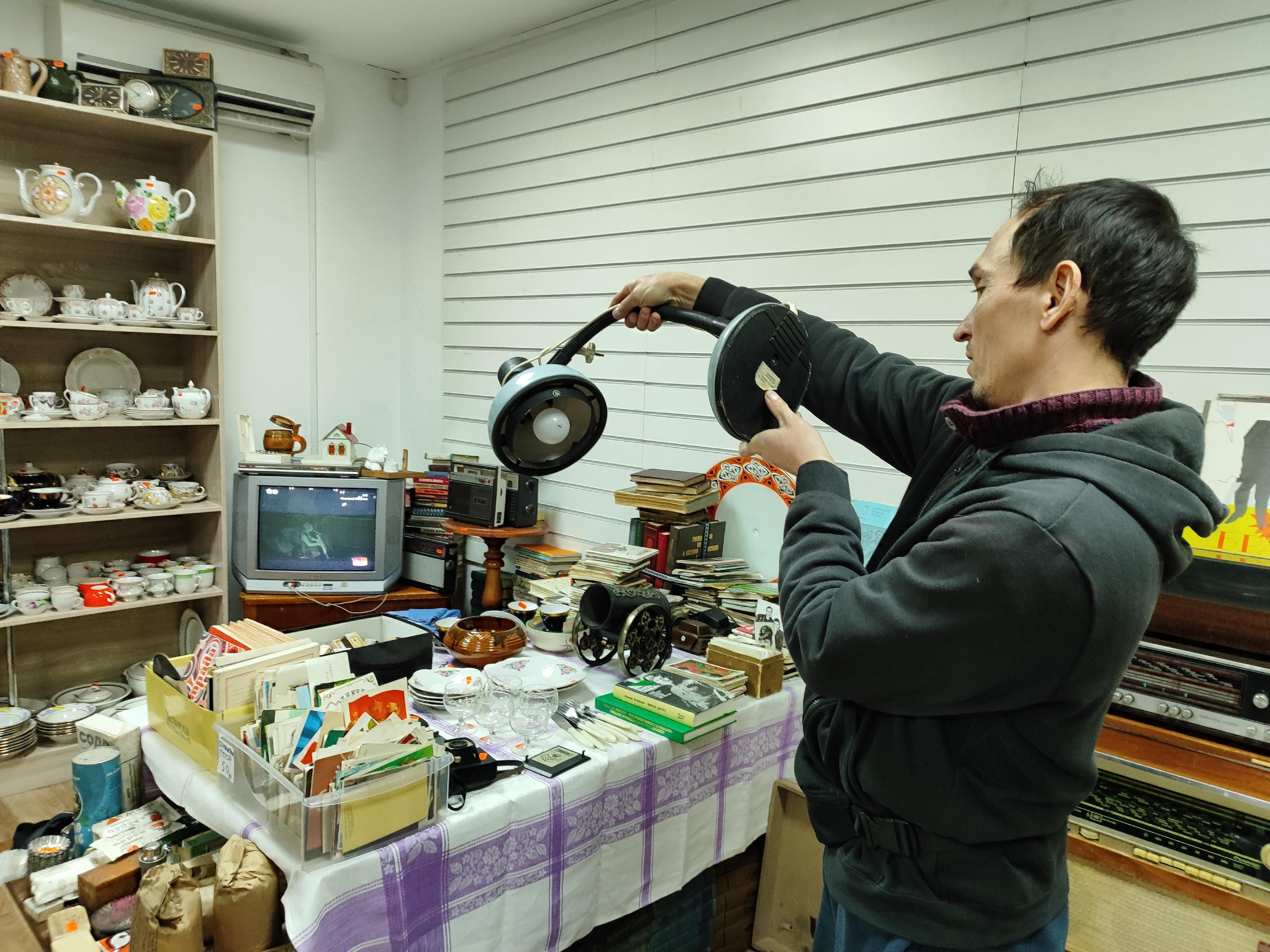
«Besides the dishware itself, we also have related vintage goods because many are interested in them too. Men come and ask about equipment. Some are interested in books and all sorts of trinkets: stamps, badges, postcards. We even have products for installation, for example, a pack of cereal, peppercorns, white meat sauce. There is soldier»s soap, dry shampoo, cotton wool, and many interesting things,« tells Alexander.
The value of all items in the shop, according to the Irkutsk resident, is not that the things have some special quality or are very rare. No, much of the assortment was produced in large batches, as they are consumer goods. The real value is elsewhere.
Alexander says that vintage integrates excellently into modern interiors. At his home, only the appliances are modern. Almost all the furniture and dishware are restored and tidied-up retro items.
«In all this, there is some warmth and soul,» considers Alexander.