New Pest Threatens Relict Pines in Sochi
Scientists have found that the Mediterranean bark beetle is damaging conifers along the entire Black Sea coast, putting the relict Pitsunda pine at risk.
Apr 26, 2026 0
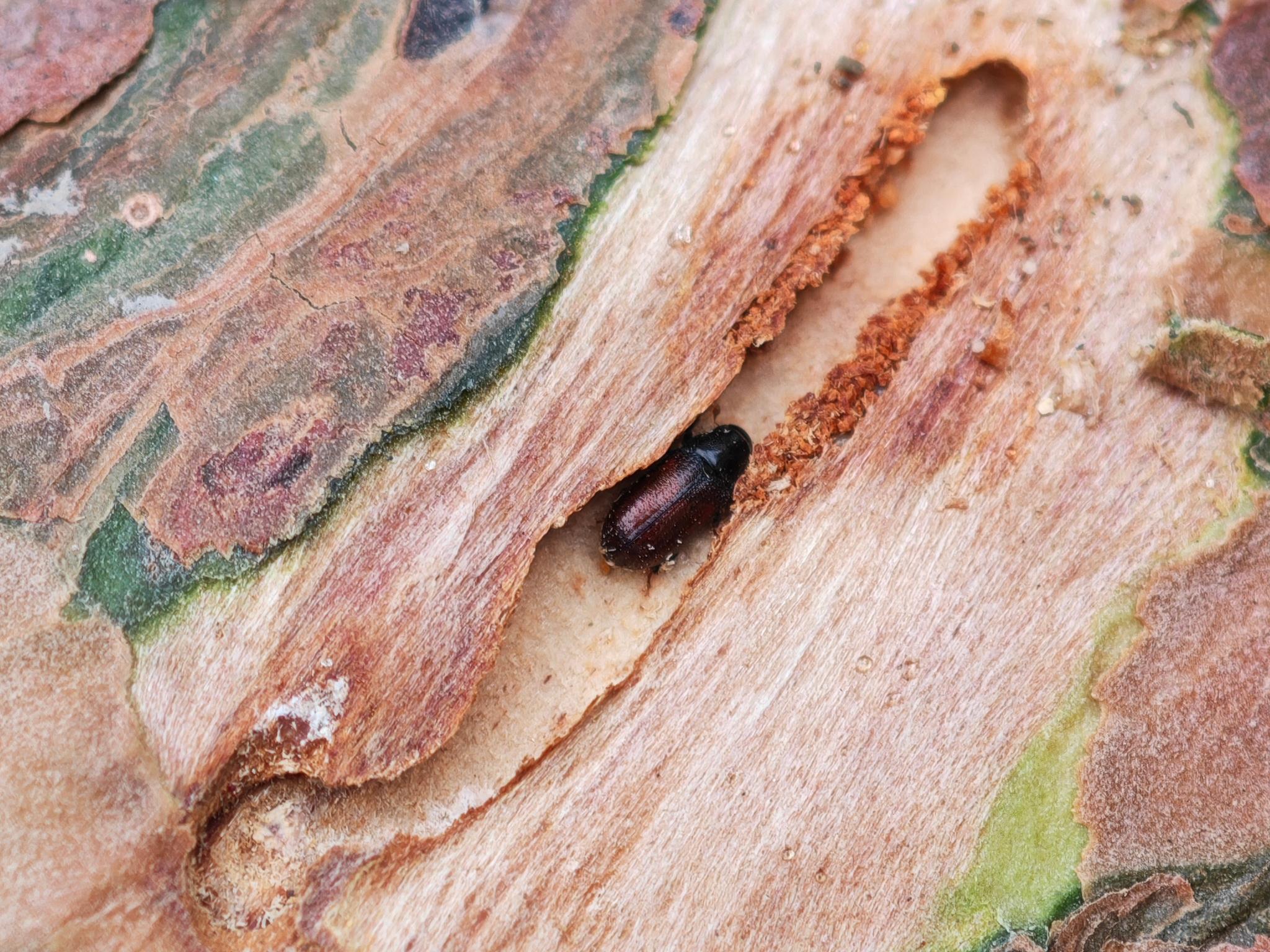

A small beetle could destroy the Red Data Book Pitsunda pine.
Source:
Scientists from the Subtropical Scientific Center of the Russian Academy of Sciences (RAS) conducted a series of field studies of coniferous species in Gelendzhik, Novorossiysk, Sochi, and also in the Pitsunda-Myussera Nature Reserve in Abkhazia. The work was carried out jointly with St. Petersburg State Forestry University, representatives of the Directorate of Natural Parks of Krasnodar Krai, and the Pitsunda-Myussera Nature Reserve. The scientists assessed pines for infestation by the Mediterranean bark beetle.
The studies confirmed that the pest is widespread in pine plantations along the entire Black Sea coast.
«The Mediterranean bark beetle has no winter dormancy period: even in January, the beetles remain active, continuing to fly, mate, and infest new trees, while the larvae feed under the bark. An interesting point was that the pest infests not only sections of the trunk with thick bark, but also quite thin branches. At the same time, it infests severely weakened, drying trees or cut/broken large branches,» said Natalya Karpun, chief researcher at the Plant Protection Department of the Subtropical Scientific Center of the RAS, Doctor of Biological Sciences.
They also examined juniper forests of the Shekharis cluster of the Markotkh Nature Park. There, a complex of stem pests and pathogens was studied, including the cypress jewel beetle and the juniper bark beetle. The dieback of junipers (including Red Data Book species) due to infestation by the cypress jewel beetle has been observed there since 2020.
One of the key reasons for the weakening of pines on the coast is called the prolonged drought of 2020. The subsequent years — 2021–2023, on the contrary, were characterized by excessive moisture at the beginning of the growing season. This led to the development of diseases: Diplodia blight, yellow spot of pine needles, which, like stem pests, caused the drying of trees in natural and artificial plantations.
«As a result of the research, information was obtained on the population characteristics of stem pests, the features of population development were refined, and samples of various life stages of insects were selected for further laboratory studies. The obtained data are necessary for developing effective strategies for protecting plantations. Of course, the research will continue,» said Natalya Karpun.
The Subtropical Scientific Center of the RAS plans to carry out this work together with colleagues from St. Petersburg State Forestry University and environmental agencies.
Read more