Abroad is a Myth? Soviet Artists on Display
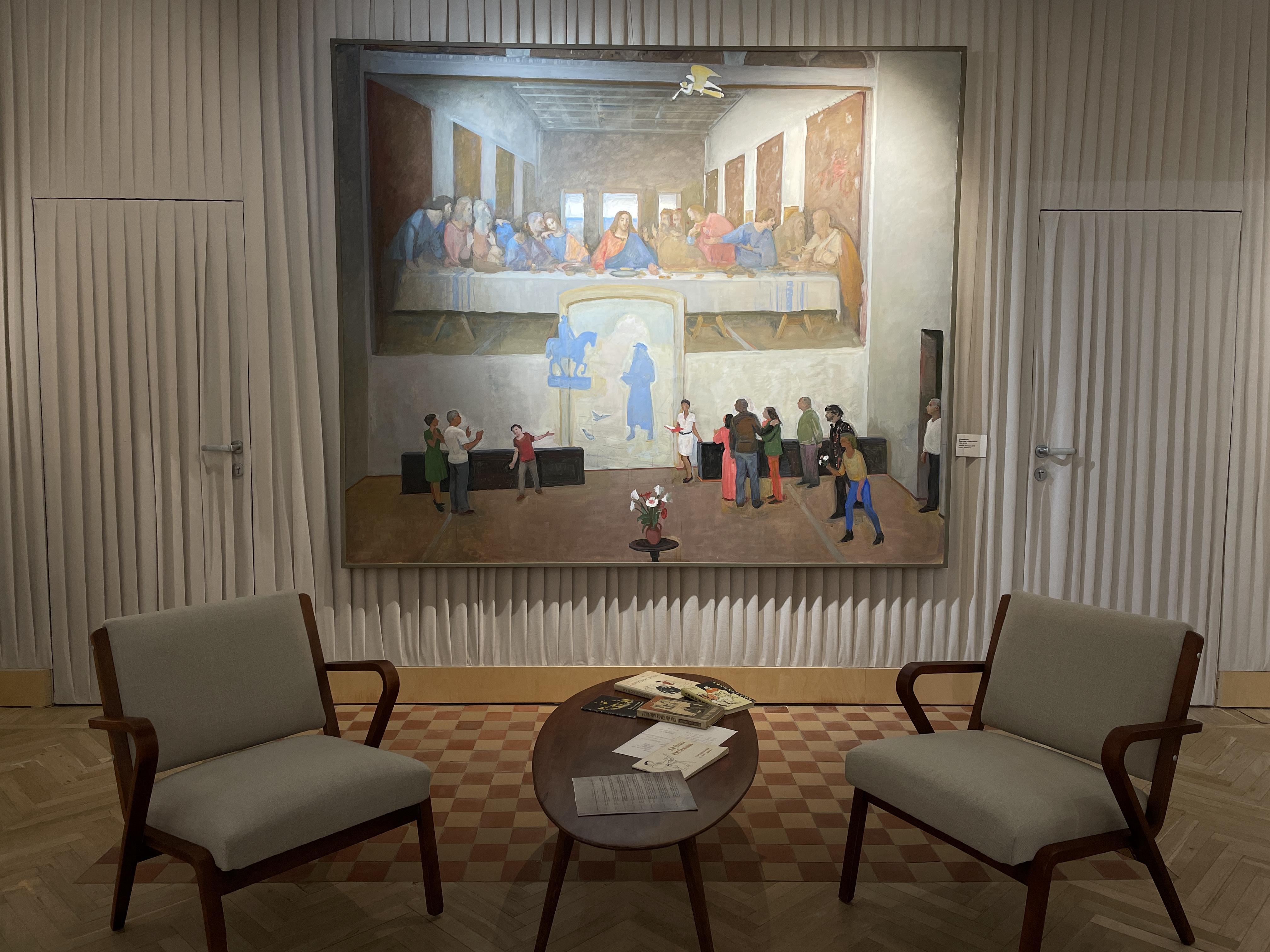

For Soviet citizens, Africa, Europe, and America long remained if not a myth, then a rare curiosity. During the Thaw, artists began to be sent on foreign assignments to see, remember, sketch, and then show the abroad back home.
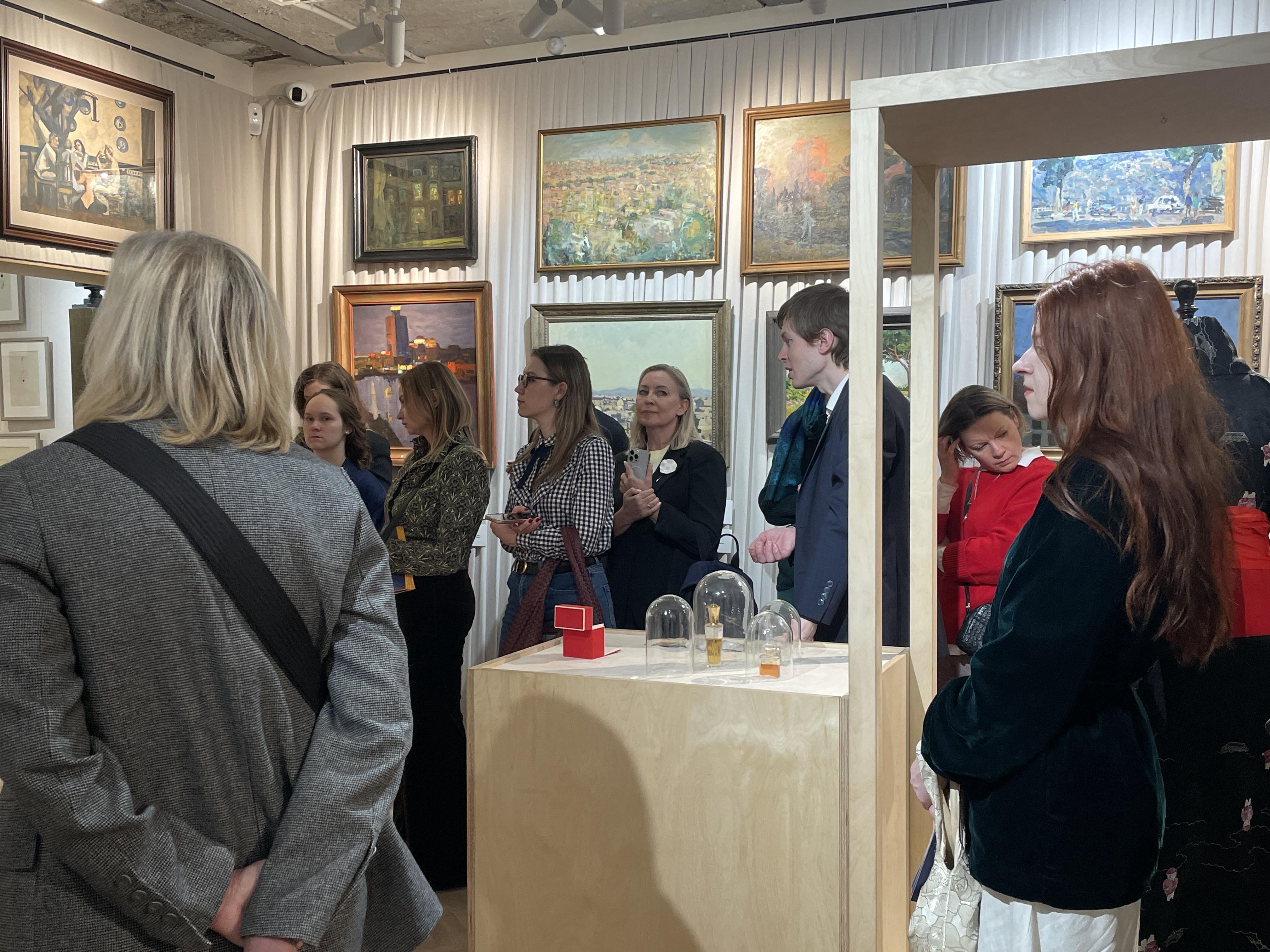
Today this experience is offered to modern Muscovites: the exhibition displays paintings, graphics, and études created during trips, along with items that artists brought back and kept in their studios and apartments. Sometimes not just items, but quirky little animals.
MSK1.RU visited the exhibition «Abroad is a Myth?!» (12+) and is ready to tell how Soviet artists saw life outside the USSR.
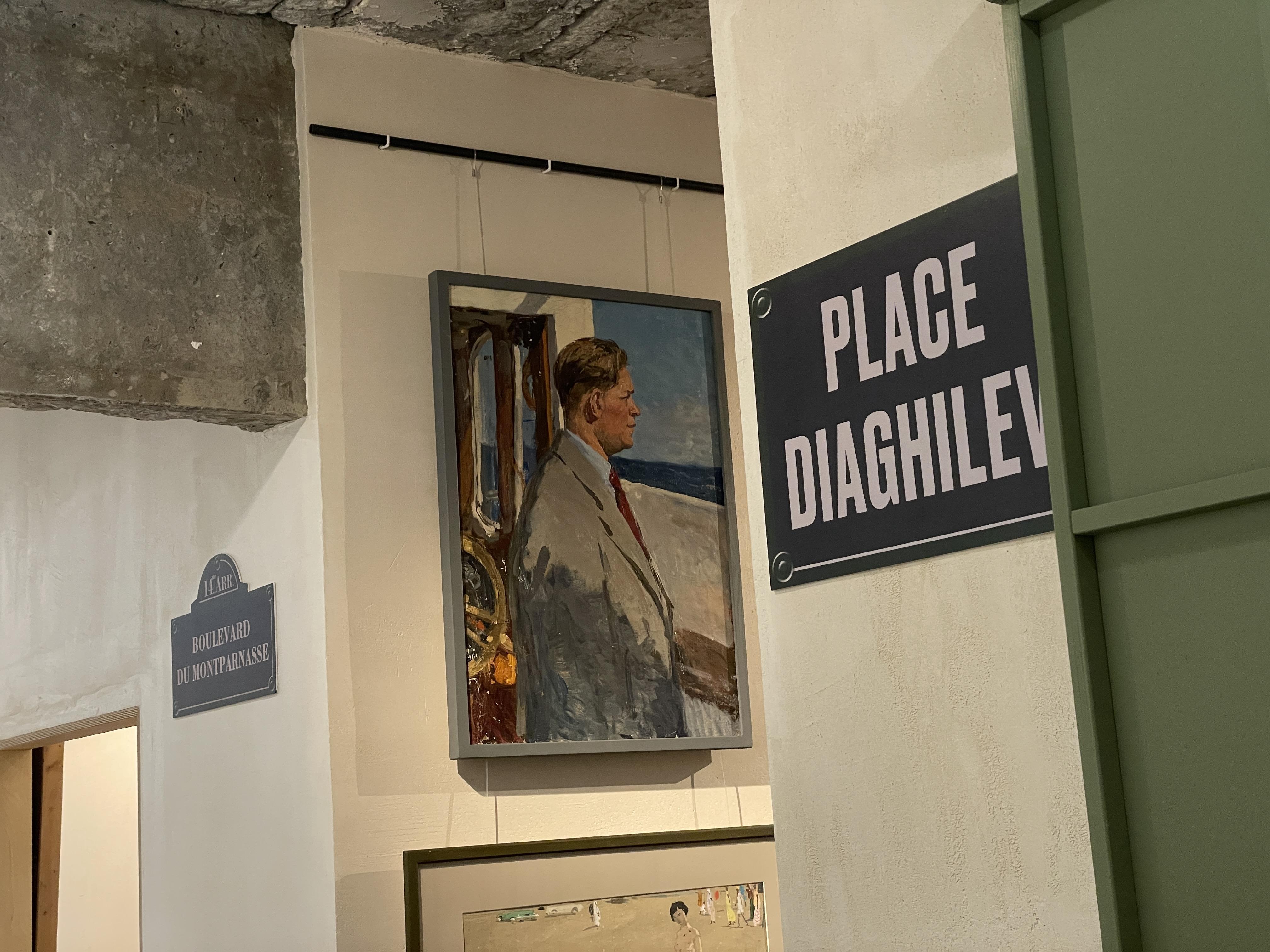
The starting point is 1956 — the return of the Soviet Union to the Venice Biennale and the cruise of the ship «Pobeda» around Europe. It is from this time that the abroad begins to appear in artistic practice not through descriptions and reproductions, but through personal impressions. The halls feature works made in Venice, Rome, Paris, London, later in the USA, Japan, India, African countries, and Latin America. The geography of the exhibition is vast, but attention is focused on private scenes and everyday details.
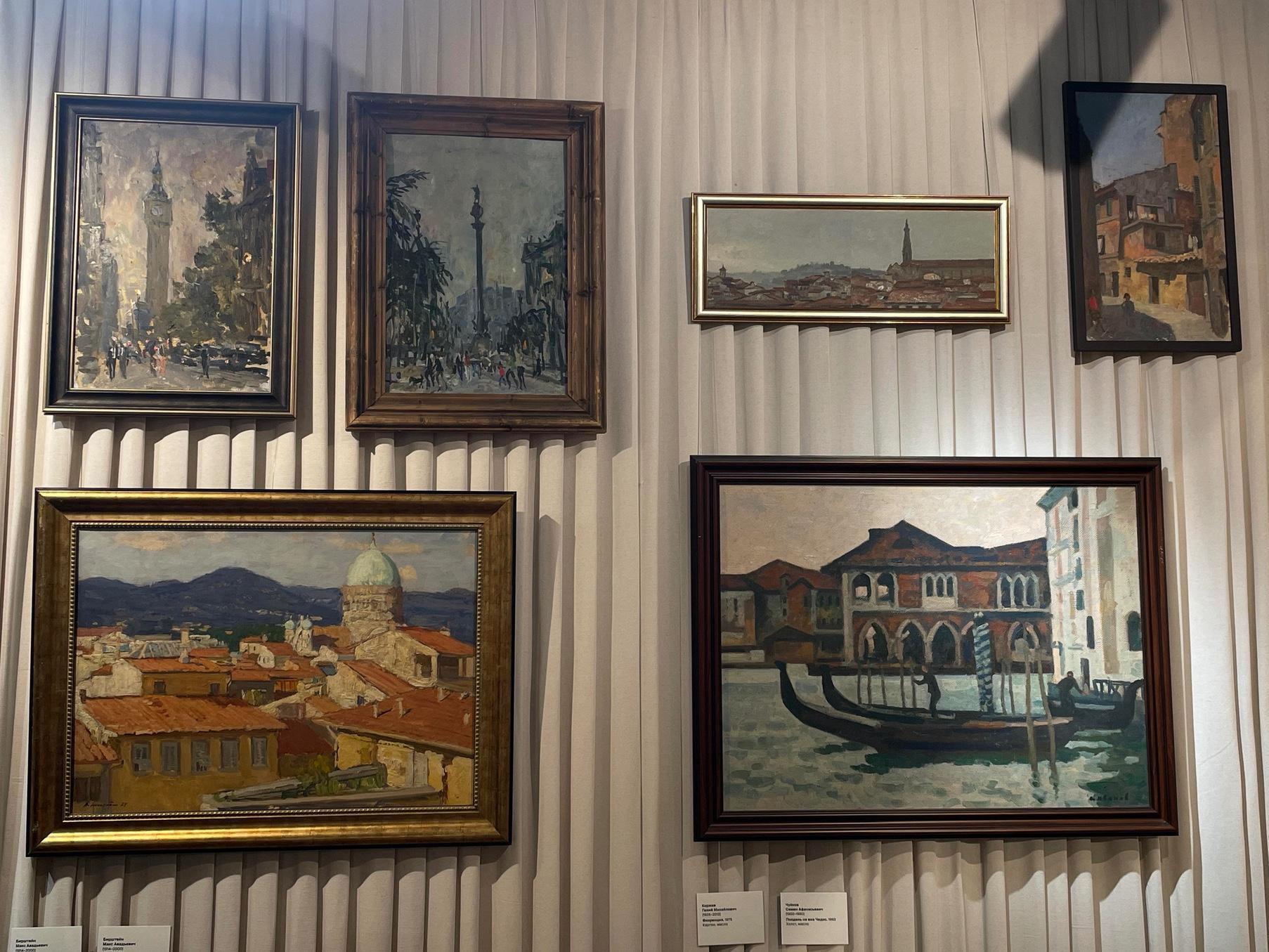
The first section is dedicated to the second half of the 1950s–1960s. The exhibition is arranged restrainedly: calm colors, clear hanging logic, small formats. This rhythm matches the character of the works themselves. They are quick observations and études — streets, embankments, museum halls, passersby, cafes. Urban views lack showiness and look like notes for memory, made between official events and the mandatory program.
The exhibition presents works by Gely Korzhev, Vitaly Goryaev, Dmitry Zhilinsky, Max Birshstein, Andrey Plotnov, Arkady Plastov, Viktor Ivanov, Tatyana Nazarenko, and other artists.
The exhibition contains many stories related to long and complex routes. Andrey Plotnov, who visited various parts of the world, is represented not only by paintings but also by objects he brought home. Among them is a handcrafted Japanese doll in a glass case, a fragile and difficult-to-transport item that was kept in the artist«s family for many years.
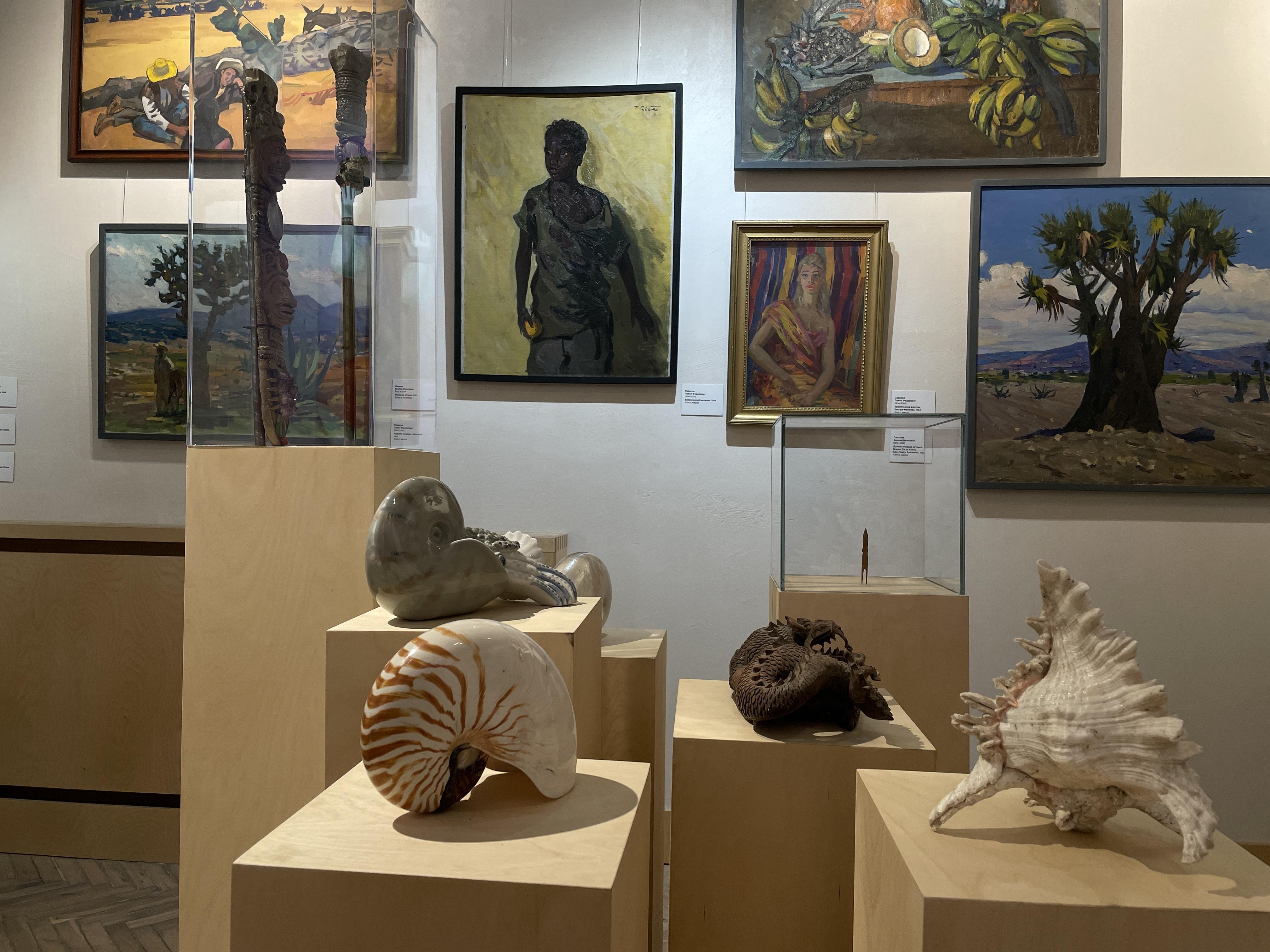
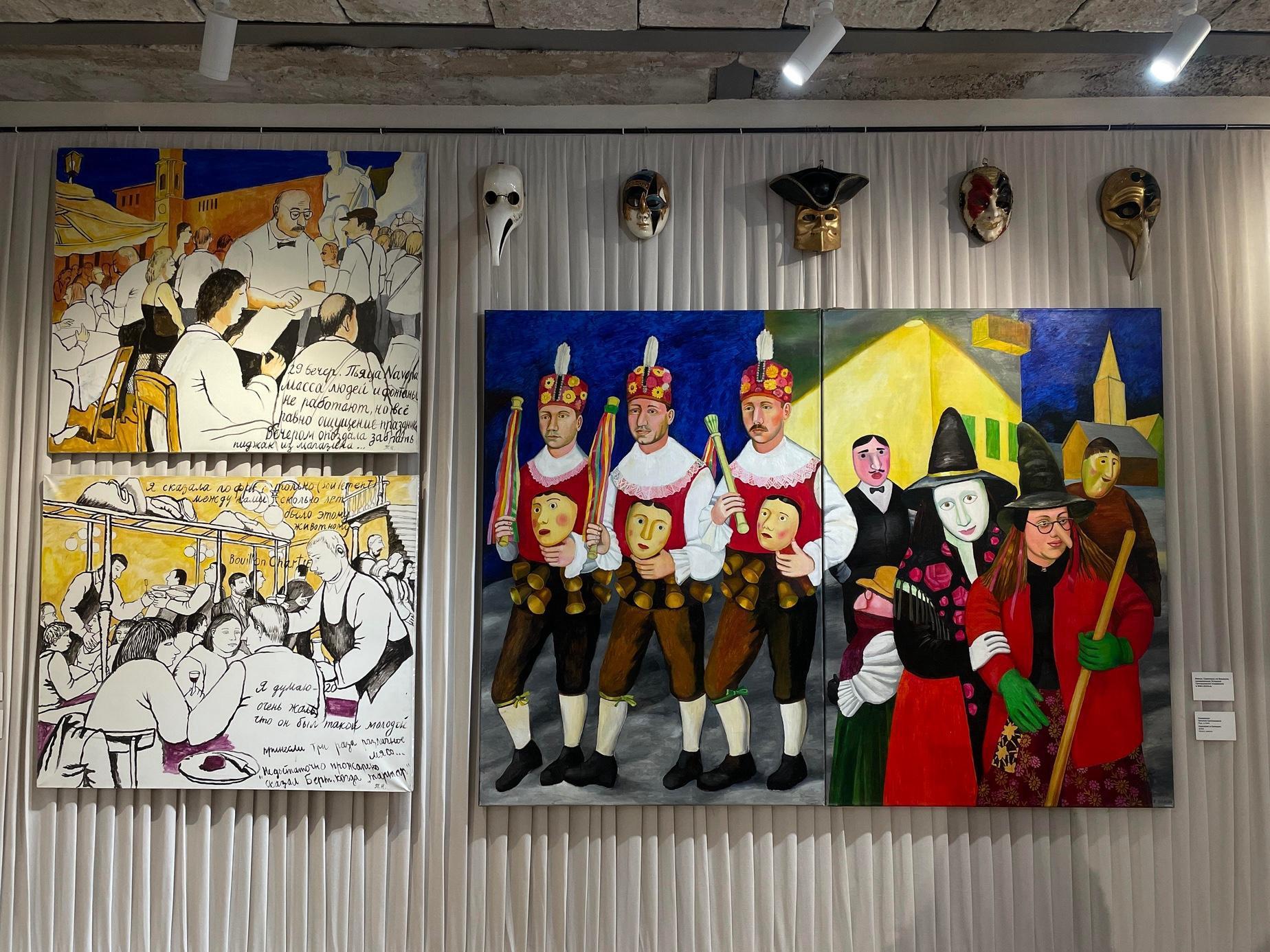
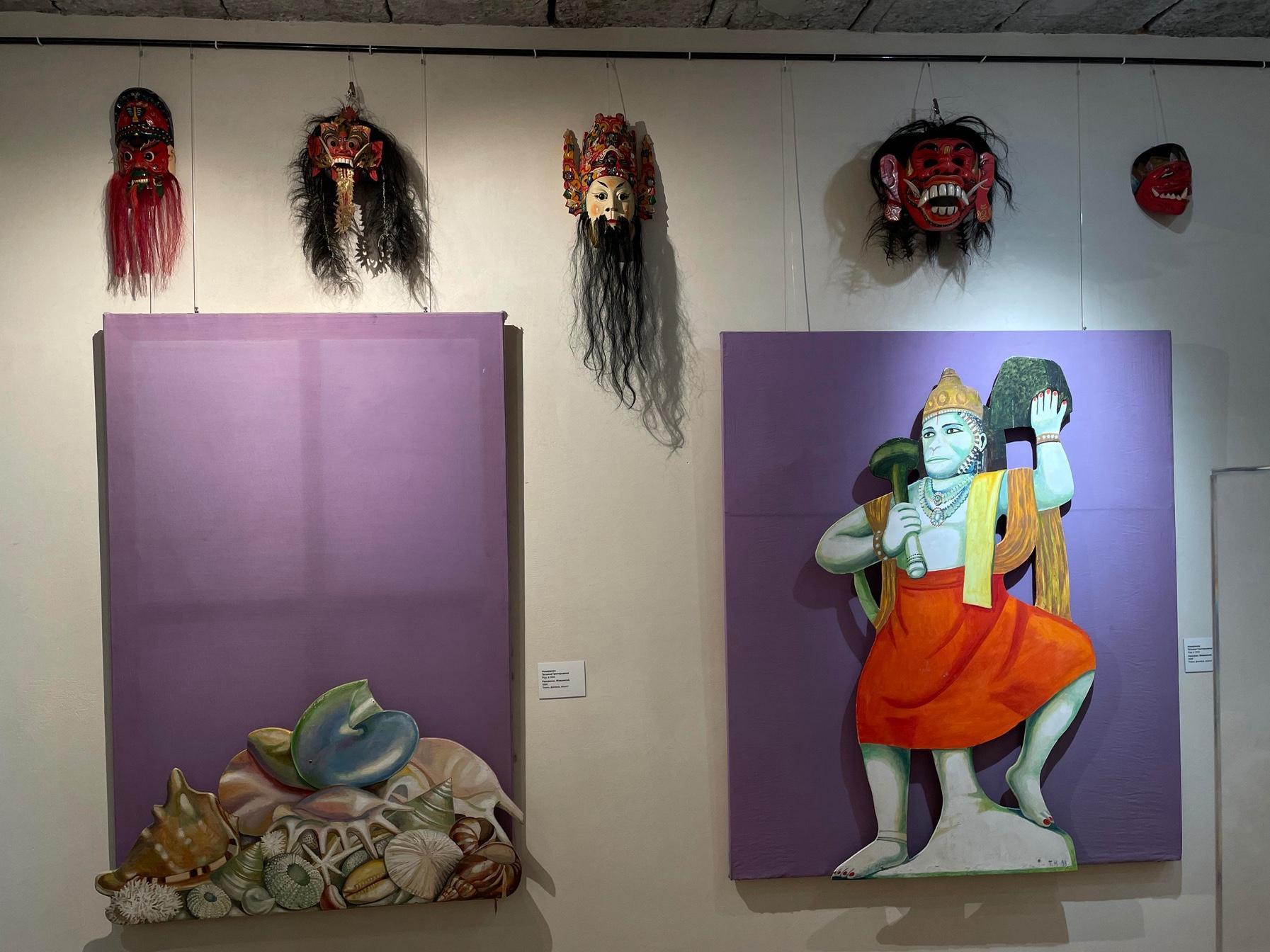
Souvenirs occupy a prominent place in the exhibition. Kimonos, Venetian masks, perfumes, records, books, and small items sit alongside paintings and graphics. These objects do not directly illustrate the paintings but complement the story of the trips, reminding of how impressions continued to live after returning — in everyday life, in the studio, in conversations with colleagues.
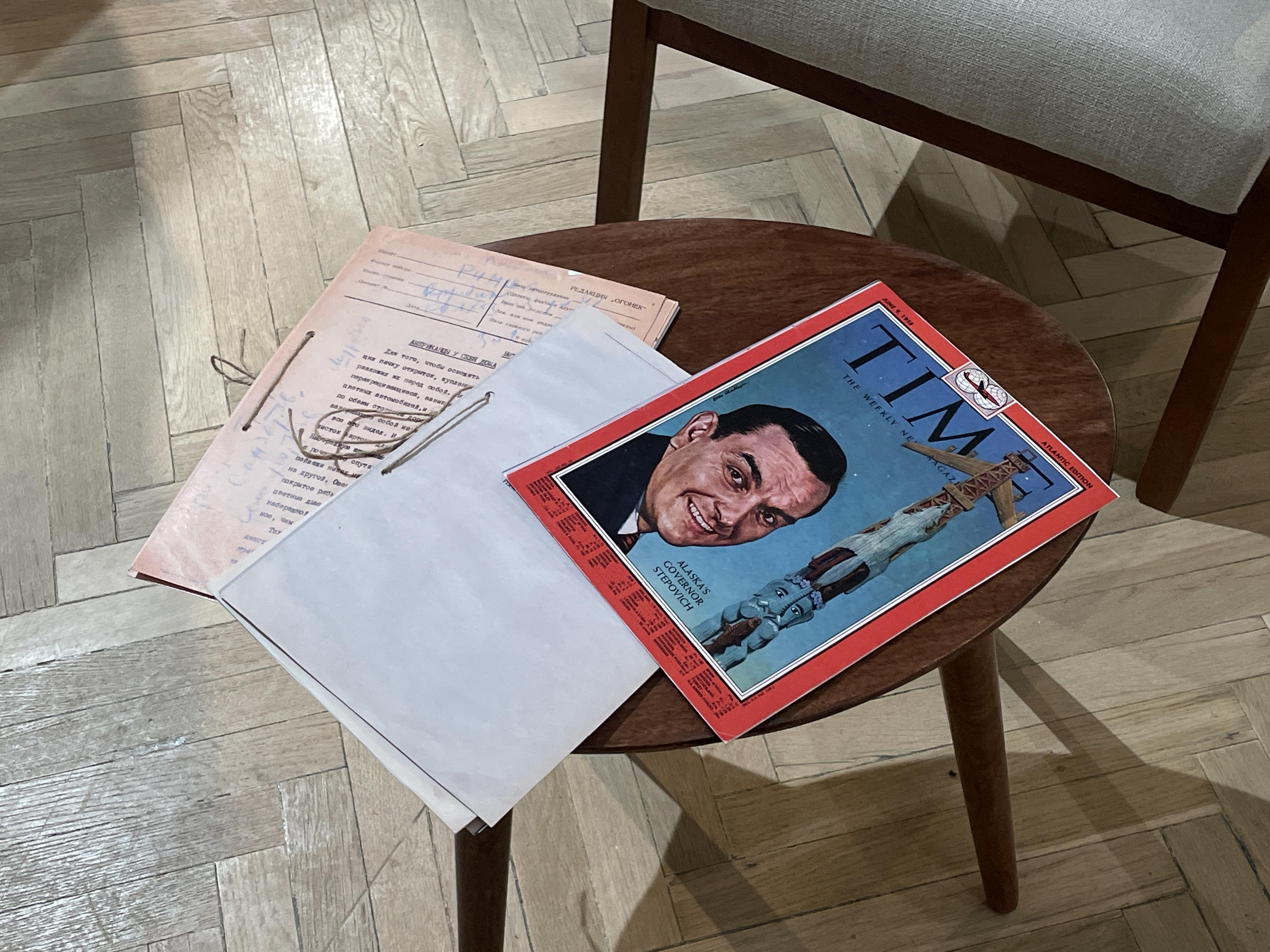
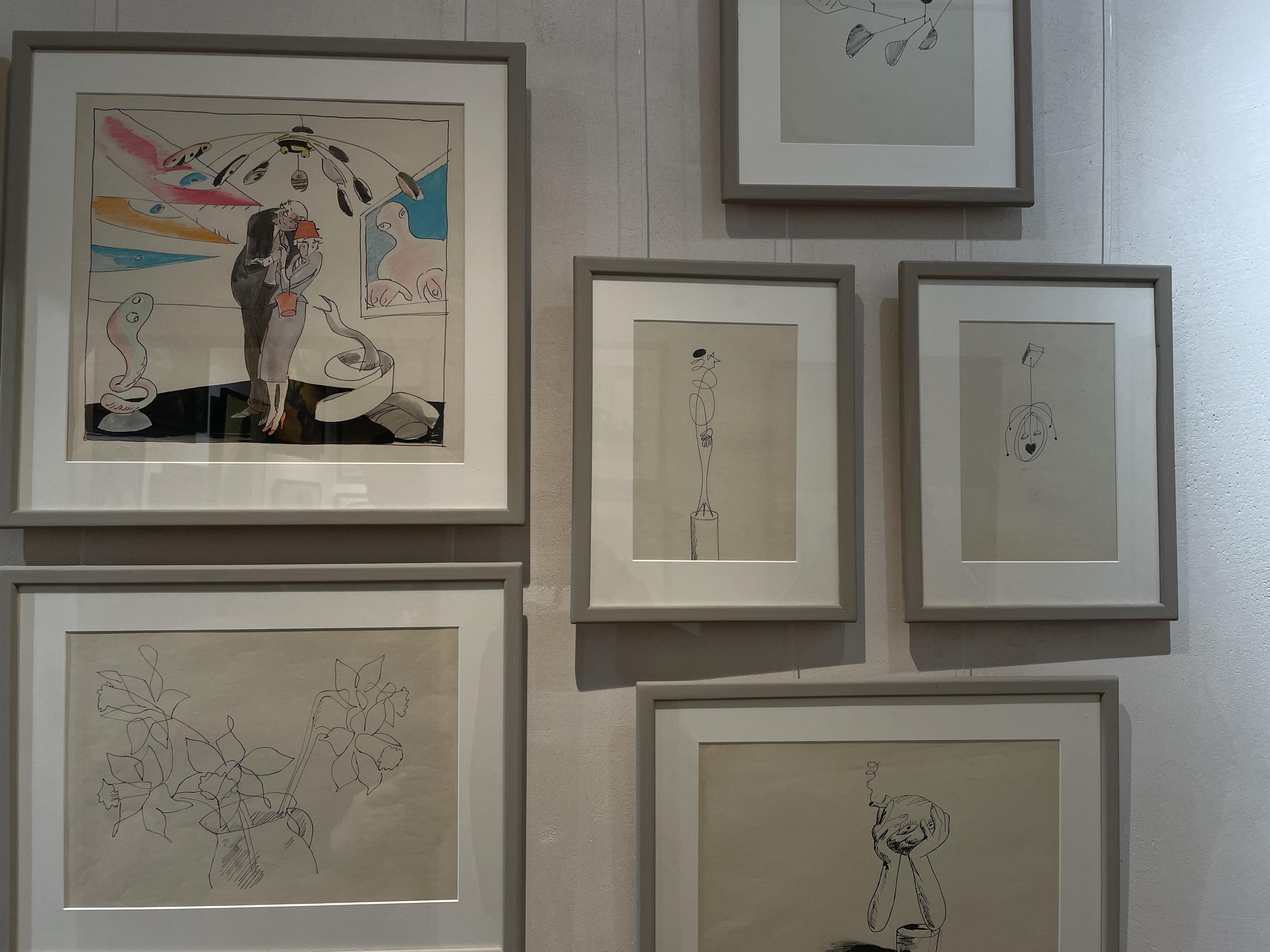
A separate block is dedicated to Vitaly Goryaev, who ended up in the USA in the late 1950s. Due to rare flights, the artist spent more time there than planned. His drawings capture urban scenes, fashion, everyday life. Women in full skirts, passengers with suitcases, street episodes — all appear alongside more hard-hitting sheets created before the trip.
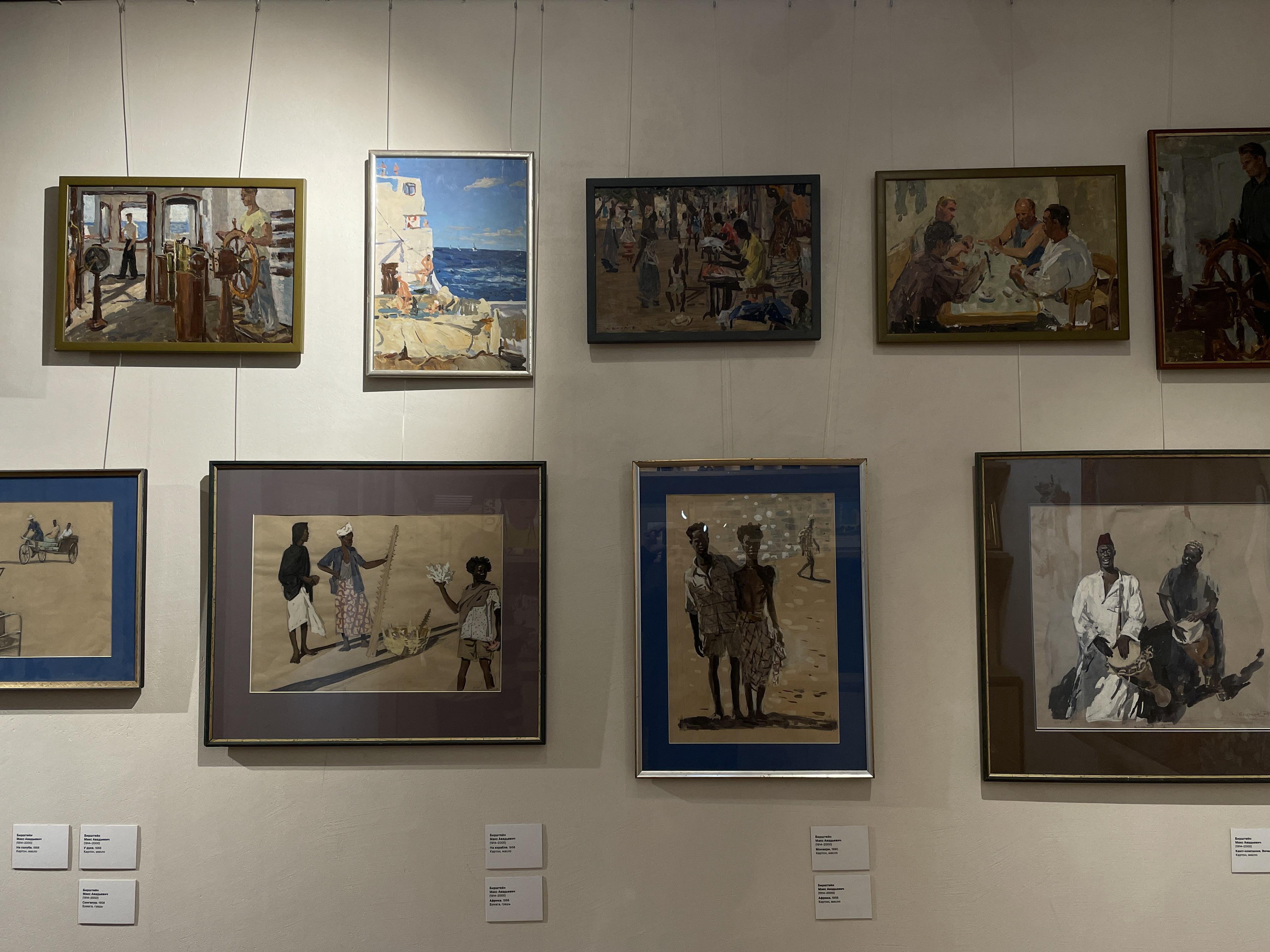
Max Birshstein is presented as an artist who sought his own ways to travel. In the mid-1950s, he hired on as a sailor on a cargo ship to get to Africa. His works are landscapes and portraits made on the road. Nearby are African figurines he brought with him, which long remained part of the family collection.
Among the exhibits are also quite unusual works. Animal sculptor Alexander Belashov returned from Brazil with a live flying fox named Chudik. At the border, he hid it under his sweater and thus smuggled it home. By the way, Chudik lived for many years in Belashov«s studio on Maslovka. It also became the subject of several of his sculptures.
The exhibition is arranged sequentially and without sharp transitions. Works, documents, and objects form a single story of how the abroad gradually became part of the artists« professional lives — through études, objects, chance encounters, and preserved details.
Every week on Fridays we publish weekend posters. These and other ideas for spending time in the capital can be found in the story «Where to Go in Moscow.»