Dead saiga found in apartment building yard in Volzhsky
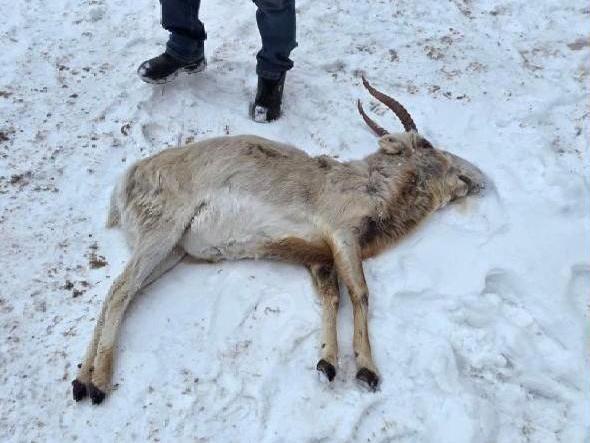

In the city of Volzhsky, Volgograd Region, in the morning, in the yard of a house on Olomoucká Street, 14, local residents found a dead saiga. Eyewitnesses initially mistook it for a pregnant female due to its rounded belly, but experts later determined it was a male.
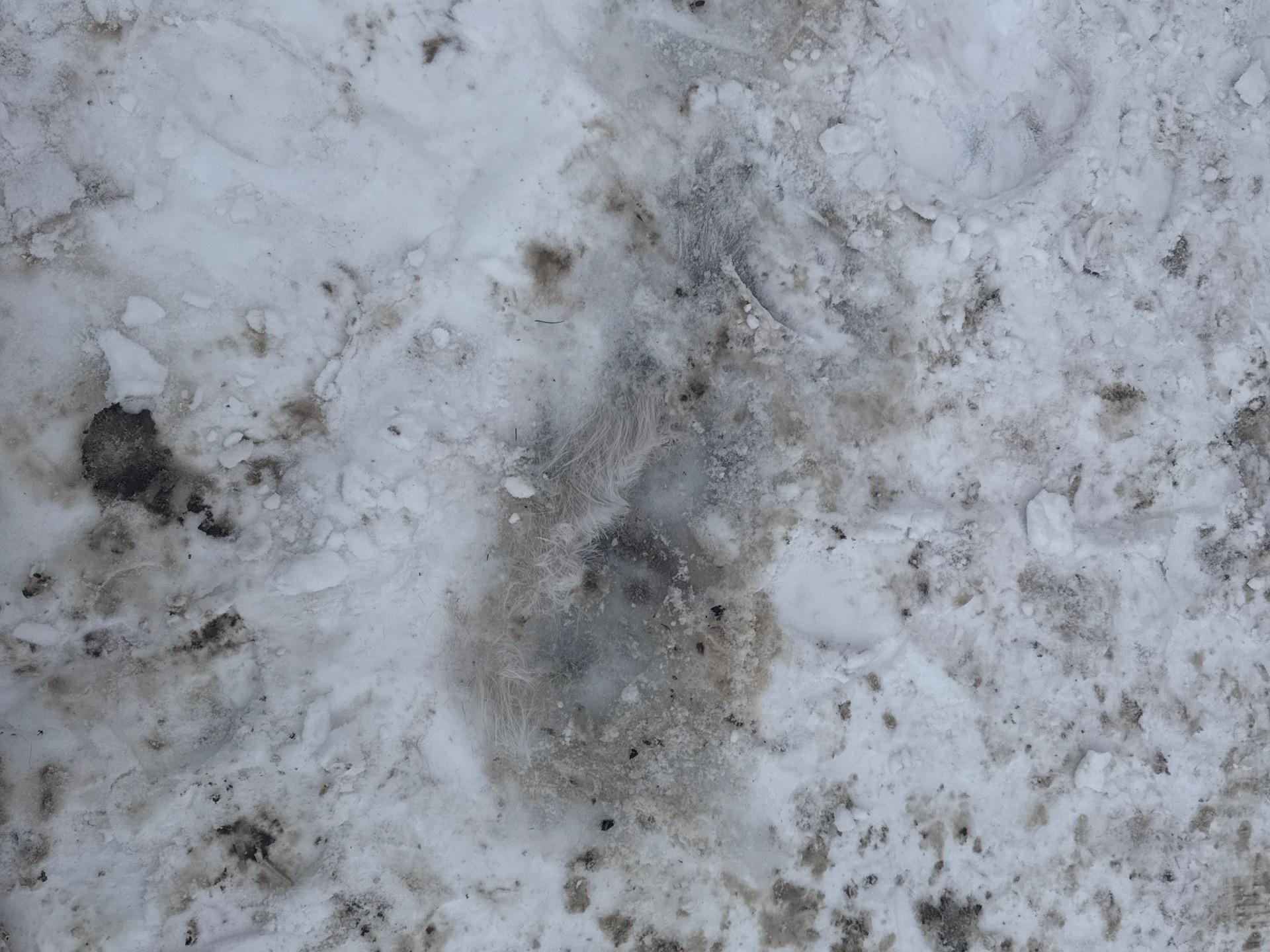
The unusual find in the yard of an apartment building caused bewilderment. After the police arrived at the scene, the animal«s body disappeared, and only frozen clumps of fur remained on the snow.
Biologist Victoria Fayfer, an assistant at the Department of Biology and Bioengineering of Volgograd State University (VolSU), after studying photographs, refuted the version about a female, commenting:
Judging by the horns, this is a male saiga with a swollen belly. The appearance of a saiga in the territory of Volzhsky is an unusual phenomenon. Usually, saigas are noted in several districts: Staropoltavsky, Pallassovsky, and Svetloyarsky districts. Most likely, the deceased animal belongs to the Volga-Ural population,
Fayfer«s colleague, biologist Nikolai Onistratenko, agreed with the assessment and suggested possible causes of death, stating:
An adult male. It seems to have died from the consequences of an injury. A veterinarian will say for sure. On the back — traces of impact. Maybe a large bird of prey with its claws. Maybe it injured itself on an obstacle, for example, while running under a metal-profile fence. Maybe a person intentionally injured it. From the photograph, one can only guess. A doctor will determine the cause,
The scientist also noted that wild animals occasionally enter cities, explaining:
This is called reverse urbanization. It is characteristic of a huge number of plant and small animal species — insects, birds, rodents. Large animals remain in the city or return to former habitats that have turned into urban landscapes, less often. Usually, we talk about hedgehogs, foxes, wolves, badgers. In recent years, bears and even tigers in the Far East have been drawn to urban outskirts and garbage dumps. Hoofed animals usually do not thrive in the city: they need freedom, space. Small hoofed animals are usually timid, which does not allow them to settle in a noisy, hurried city on a permanent basis,
According to him, in the urban environment, saigas face many threats, adding:
They are threatened by high-speed transport, tin and wire fences, manholes, and stray dogs. People often show aggression as well. Therefore, roe deer and saigas that wander into the city usually panic, rush through the streets, and try to escape to freedom. And often die under wheels, in chain-link fences, or in dogs« teeth. The surrounding steppes and gullies are their natural habitat, so they often end up on the outskirts. And Olomoucká Street is just located on the periphery of Volzhsky,
The saiga is a red-listed animal. For its killing, criminal liability is provided, with punishment in the form of imprisonment for up to four years. Illegal keeping, transportation, sale, and acquisition of saiga also entail criminal prosecution.
Earlier, a year and a half ago, thousands-strong herds of saigas migrated from Kazakhstan to Russian Trans-Volga region, causing damage to farmers« fields. At that time, experts claimed that the benefit from these animals exceeds the harm they cause.
Law enforcement and veterinary services are currently investigating the circumstances of what happened in Volzhsky.