Weekly News Digest: Asteroid, Snowstorm, and Russian Reforms


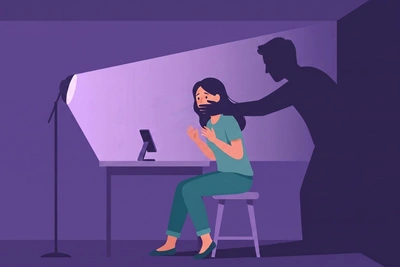
A new law would obligate mobile operators to cut communications during threats of drone attacks.
Every day, many events occur around the world, and it«s impossible to keep track of them all. That»s why we collect the most important ones in this digest. Today we sum up the past week, telling about incidents, bills, and what lies ahead.

Deadly winter storms across the US resulted in widespread power outages and dozens of fatalities.
Huge Asteroid Threatens Earth with Meteor Shower

Heavy snowfall and ice caused major disruptions to travel and daily life in multiple US states.
A 60-meter-wide asteroid, 2024 YR4, could collide with Earth«s natural satellite — the Moon — on 22 December 2032 with a probability of about 4%. Scientists suggest that the collision would be catastrophic: the explosion»s energy would be a million times more powerful than the 2013 impact, creating a crater about a kilometer in diameter and up to 260 meters deep. The flash would be visible from Earth.

Emergency services worked to clear roads and restore power after the severe winter weather.
For science, this is a unique opportunity to study the Moon«s internal structure and crater formation processes. However, the impact would eject up to 400 kg of lunar debris into space, which could cause a meteor storm with up to 20 million flashes per hour. The meteor shower could reach Earth.
There are two main risks:
Earth«s surface. Most fragments would burn up in the atmosphere, but there is a chance of individual particles falling, especially over sparsely populated regions of South America, North Africa, and the Arabian Peninsula. The fall of even a small fragment in an urbanized area could cause damage.
Orbital infrastructure. The stream of high-velocity debris poses a serious danger to satellites in near-Earth orbit. Considering the worst-case scenario, scientists imply this could trigger a cascade of collisions — the Kessler syndrome — which would render near space unusable for a long time.
Space organizations have already preliminarily discussed the possibility of a mission to deflect asteroid 2024 YR4. A final decision will be made after refining the asteroid«s trajectory and the probability of collision.
Snow Apocalypse in the US Leads to Dozens of Deaths
More than 80 people died in the US this week as a result of a powerful winter storm, according to the Associated Press news agency.
Many Americans experienced extremely low temperatures this week. Due to weather conditions, power outages followed. It all started on 26 January when a strong winter storm brought additional snowfall to the country«s northeast and coated parts of the south in ice.
Heavy snowfall covered an area about 2,100 kilometers long, stretching from Arkansas to New England. Snow depth exceeded 30 centimeters (about 1 foot). Due to adverse weather conditions, road and air travel was blocked: thousands of flights were canceled, and schools and government offices suspended operations.
According to ABC News, the winter storm affected about 200 million people. Intense snowfall also swept across the country — from New Mexico to New England on the East Coast. In some areas, snow depth reached almost 40 centimeters (about 1.3 feet).
Russians Receive Increases to Over 40 Benefits and Payments
The Social Fund has automatically indexed more than 40 social payments and benefits. All of them increased by 5.6%.
The increase affected recipients of already assigned payments: federal beneficiaries, families with children, insured citizens, victims of industrial accidents, and Russians with a maternity capital certificate whose funds they have not yet used.
You can find out exactly who is covered by the indexation, which payments have increased, and when the increased amounts will arrive here. We covered other changes in February in detail in this article.
FAS to Start Controlling Utility Tariffs
The Federal Anti-Monopoly Service (FAS) will receive new powers to control utility tariffs. The State Duma passed the corresponding bill in its first reading this week.
Now, FAS will be able to forcibly set economically justified prices for heat, water, and electricity if regional authorities ignore its directives. The initiative was prompted by systemic violations identified by the service.
According to Svetlana Razvorotneva, deputy head of the State Duma«s committee on construction and housing and utilities, 93 cases were recorded over the past two years where FAS decisions were not implemented. Over three years, the total amount of unjustified charges to consumers amounted to 102 billion rubles (approximately $1.1 billion at current rates).
The innovation will bring transparency to the «boiler» method of revenue distribution in the electric power industry, which has been a source of opaque manipulations. The new procedure will also help combat lobbying and the «human factor,» which have traditionally given the energy sector advantages over chronically underfunded water supply, Razvorotneva emphasized.
Tighter control will improve pricing. The main problem is chronic underfunding and wear and tear of utility infrastructure. Experts predict not only a decrease but also a leveling and increase in the justification of tariffs.
Residents Reminded of Rules for Posting in Building Chats
Posting residents« personal information in common chats without their consent carries a penalty of up to two years in prison or a fine of up to 200,000 rubles (approximately $2,200 at current rates). This was reported by State Duma deputy Alexander Yakubovsky, who emphasized that such chats are often considered public spaces, and the illegal dissemination of personal data can lead to serious liability.
Penalty:
under Article 13.11 of the Code of Administrative Offenses of the Russian Federation «Violation of the legislation of the Russian Federation in the field of personal data,» a fine of up to 15,000 rubles (approximately $160 at current rates).
under Article 137 of the Criminal Code of the Russian Federation «Violation of the inviolability of private life,» a fine of up to 200,000 rubles (approximately $2,200 at current rates) or deprivation of liberty for up to two years.
Personal data protected by law includes addresses, phone numbers, and other private information about people.
Furthermore, attempts to remain anonymous in messengers will not protect against liability, as screenshots of correspondence and testimony from chat participants will be accepted in court as evidence.
Innovations in Colleges and Universities
Russian colleges and technical schools plan to limit the number of paid places. The bill, to be developed by analogy with existing norms for universities, may be submitted to the State Duma before the end of the spring 2026 session. The goal of the initiative is to redirect applicants to labor and technical specialties most in demand on the job market.
The restrictions will primarily affect popular paid fields where, according to the authorities, there is an oversupply of personnel. Law, economics, media, and screen arts may be hit.
The government will now be able to approve a list of these specialties and determine the maximum number of paid places for them. The Ministry of Education will distribute quotas among educational institutions, not the colleges, as is currently the case.
According to experts, there are still risks in the initiative, as for many educational institutions, especially in the regions, income from fee-paying students is a critically important source of funding. Thus, reducing paid places could undermine the financial stability of colleges. And some applicants may go abroad to study.
This year, in addition to changes in colleges and technical schools, university admission rules will be adjusted. A key innovation will be the centralization of document submission through the «Gosuslugi» (State Services) portal. Applicants will also face updated terms for targeted training and an increase in the minimum Unified State Exam (EGE) scores for a number of subjects. You can read more about this here.
Changes will also affect Russians already receiving higher education. Russia is discussing the possibility of removing mentions of general qualifications from diplomas. The document proposes to indicate only specific specialties.
Universal Payment Code to Be Introduced in Russia, Visa and Mastercard Owners May Face Problems
Starting 1 September 2026, a single standard for cashless payments — the Universal Payment Code (UPC) — will appear in Russia. The Central Bank of Russia and the National Payment Card System launched the initiative aimed at combining various payment methods into a single QR code. This includes bank cards, the Faster Payments System, and the digital ruble.
Instead of many different codes at the checkout or on a receipt, a single universal code will be used. The client will only need to scan it with a smartphone and choose a preferred payment method in their app. All loyalty programs will remain in effect.
Despite this, experts note the risks of the UPC — a systemic failure. If this system becomes the single payment infrastructure for the entire country, its failure could simultaneously halt many operations across Russia.
Meanwhile, owners of Visa and Mastercard bank cards may face refusals when paying for goods at the checkout. This is because some POS terminals may reject transactions with such cards, although they partially retain their functionality. We explained the reasons for possible failures and how to avoid trouble here.
FSB to Fully Disconnect Communications During Drone Attack Threats
Mobile operators will be required to shut down communications during threats of drone attacks. The bill was passed in the State Duma this week. When disconnected, operators will not be held responsible for providing communication services. The bill«s goal is to protect the country and its citizens.
«The document obliges operators to suspend the provision of any communication services upon receiving a request from the FSB »for the purpose of protecting citizens and the state from emerging security threats.« It is also proposed to relieve operators of liability for failure to provide communication services if it is related to the operator»s compliance with the requirements of the FSB. That is, residents will still pay for services. «The operator is forced to do this. That is fair,»« explained Deputy Minister of Digital Development Ivan Lebedev.
The shutdown will occur according to special rules, which are classified. Lebedev assured that draft by-laws would be shown to deputies before the second reading.
This bill was supported by other deputies and voted on unanimously.
Authorities Change Mind About Blocking Popular Messengers
The State Duma proposed to legally prohibit the mass blocking of social networks and messengers for a wide range of users. Details were explained by deputy Sergei Obukhov.
The initiative involves amendments to the laws «On Information...» and «On Communications.» The goal is to reduce public irritation over the restriction of citizens« digital rights and prevent »digital lockdowns.«
The document was authored by 17 deputies. They believe that users rightly perceive the blocking of social networks and the slowing down of their work as a restriction of constitutional rights.
In the explanatory note, lawmakers pointed to the lack of official explanations when restricting the work of services such as Telegram and WhatsApp (owned by Meta corporation — an extremist organization whose activities are banned in Russia). The bill proposes to ban the blocking of the platforms themselves but retain the right of supervisory authorities to restrict access to specific prohibited information within them.
Animals May Be Sold for Owners« Debts
An expert warned that in Russia, pets could be sold for their owners« debts. Lawyer Lyudmila Alexandrova, in a conversation with Gorodskiye Media, explained that pets are considered property but have special features related to the prohibition of cruelty.
Seizing animals for the owner«s debts has been legally possible since 2021. However, there is an important nuance. This is done only if the owners use the pets as a tool for making a profit. This is stated in Article 446 of the Civil Procedure Code.
«That is, if you have Murzik, Barsik, Tuzik, or Bobik — they will not be taken. But if you are engaged in breeding pets with subsequent sale of kittens and puppies — that is already entrepreneurial activity,» the lawyer explained.
Professional breeders are in the risk zone. If they have large debts, and their social media pages are full of photos and ads for selling puppies and kittens. In this case, the animals may be considered valuable and included in the inventory of the debtor«s property.
«Simply owning a pedigree animal does not automatically mean you are necessarily making a profit — a bailiff must prove that. And the actions of a bailiff who is wrong can be appealed in court,» the lawyer explained.
Legally, if property (a cat or dog) is included in the inventory, the bailiff can seize it without the right of alienation. That is, it will be impossible to sell, gift, or take the pets away. However, they may be left with the owner for safekeeping. This gives the debtor motivation to settle with the creditor quickly.
Checking for Cancer to Become Easier
Russia wants to expand the medical check-up program and has proposed adding tests for genetic predisposition to cancer and cardiovascular diseases, as well as other serious illnesses. State Duma deputy Vladislav Davankov put forward this initiative.
«We consider it advisable to consider the possibility of including a basic genetic test in the medical check-up program. For example, we could introduce a comprehensive panel study to identify the most common mutations associated with a predisposition to oncological diseases,» the document says.
The deputy noted that currently, testing for predisposition to cancer and other serious diseases is not conducted during medical check-ups. Because of this, such diagnoses are made too late, leading to high mortality among the population. Timely testing for these diseases will help reduce mortality rates.
Proposal to Shorten the Working Day by One Hour
There is a proposal to shorten the working day by one hour for working mothers with many children. State Duma deputy Igor Antropenko believes this will help Russian women combine motherhood and a career.
«We know that with the birth of a child, a woman often loses out »in her career« and that it is difficult to return to work after several maternity leaves. I proposed to the Ministry of Labor to find an opportunity to shorten the working day by one hour for mothers with many children, and also to find a way to encourage organizations where parents with many children work,» the parliamentarian said.
The State Duma believes that adopting such a decision will encourage employers «not to be afraid» to hire a mother with many children. According to Antropenko, support for such women should be provided at the state level.
Less Work in February
Another short working week awaits Russians at the end of February. In 2026, 23 February — Defender of the Fatherland Day — falls on a Monday, giving three consecutive days off: from 21 to 23 February.
The holiday has deep historical roots: it was established in 1919 as Red Army and Navy Day, renamed in 1949 to Soviet Army and Navy Day, and in 1995 after the collapse of the USSR it received its modern name. It became an official day off in 2002.
Also in February 2026, Saint Valentine«s Day (14 February) and Maslenitsa (16–22 February) are celebrated. But these are not days off.
If you are planning a vacation for February, from a financial point of view it is not the most advantageous month for a holiday. We covered this in more detail in this article.
Other News
In addition to the weekly news digest, we collect the main events from the special military operation. You can read about how the situation on the battlefield changed and what political decisions were made this week here.
A lot of interesting things are also happening in the world of show business. Blogger Oksana Samoilova named the real reason for her divorce with rapper Dzhigan (Denis Ustimenko). The editor-in-chief of Russia Today (RT) Margarita Simonyan has stopped being shy about her real appearance and showed what she looks like without hair, and actor Nikita Kologrivy has a look-alike. We covered all the stories from the lives of stars in a separate article.