Child's Grave on Main Street in Ural Village of 1932 Murder

— A few years ago, a journalist came from Moscow. We went to the forest to the place where the boys were killed. On the way, he started filming me. He asked me to talk during the filming. And I«m walking and crying…
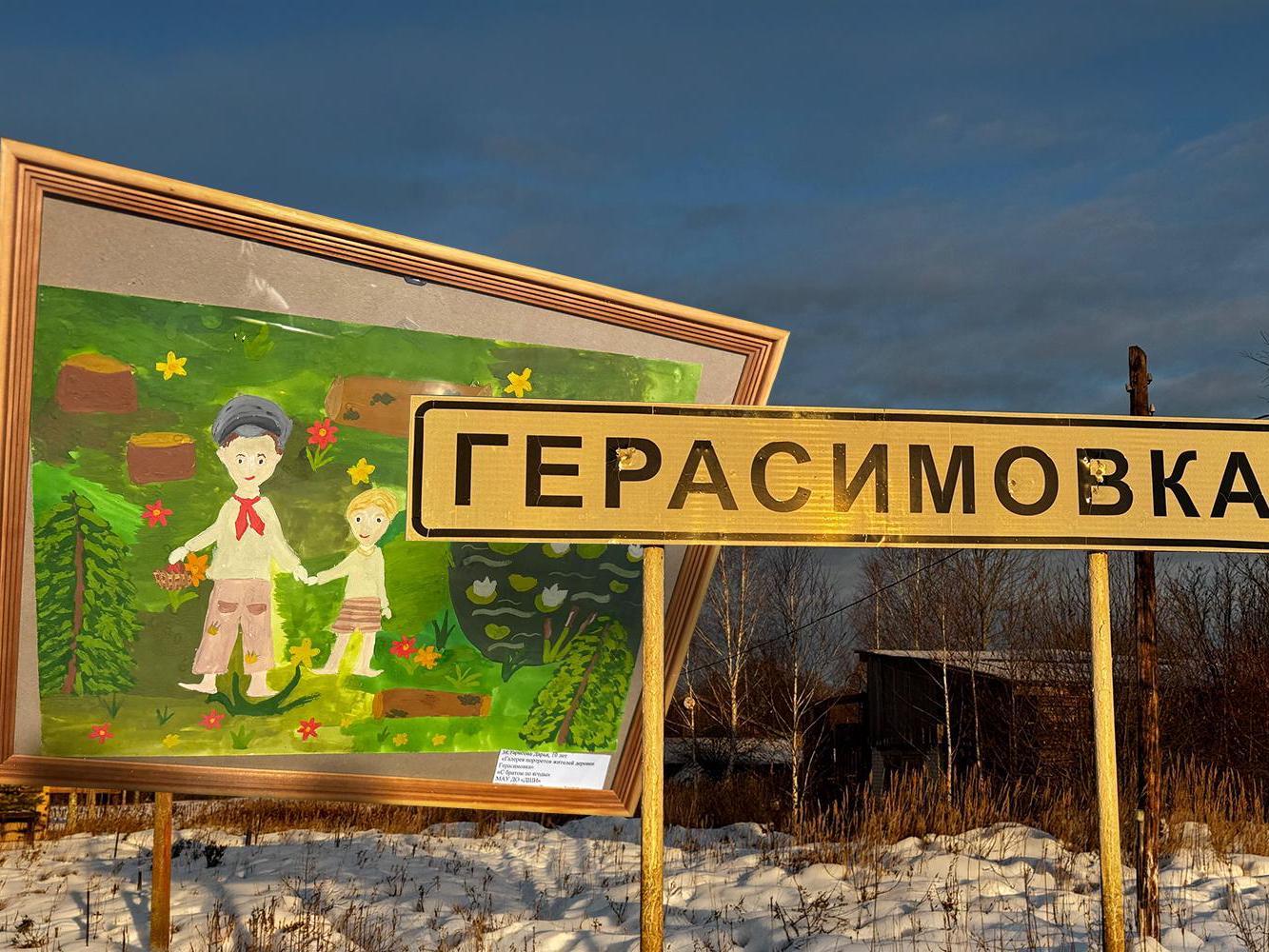
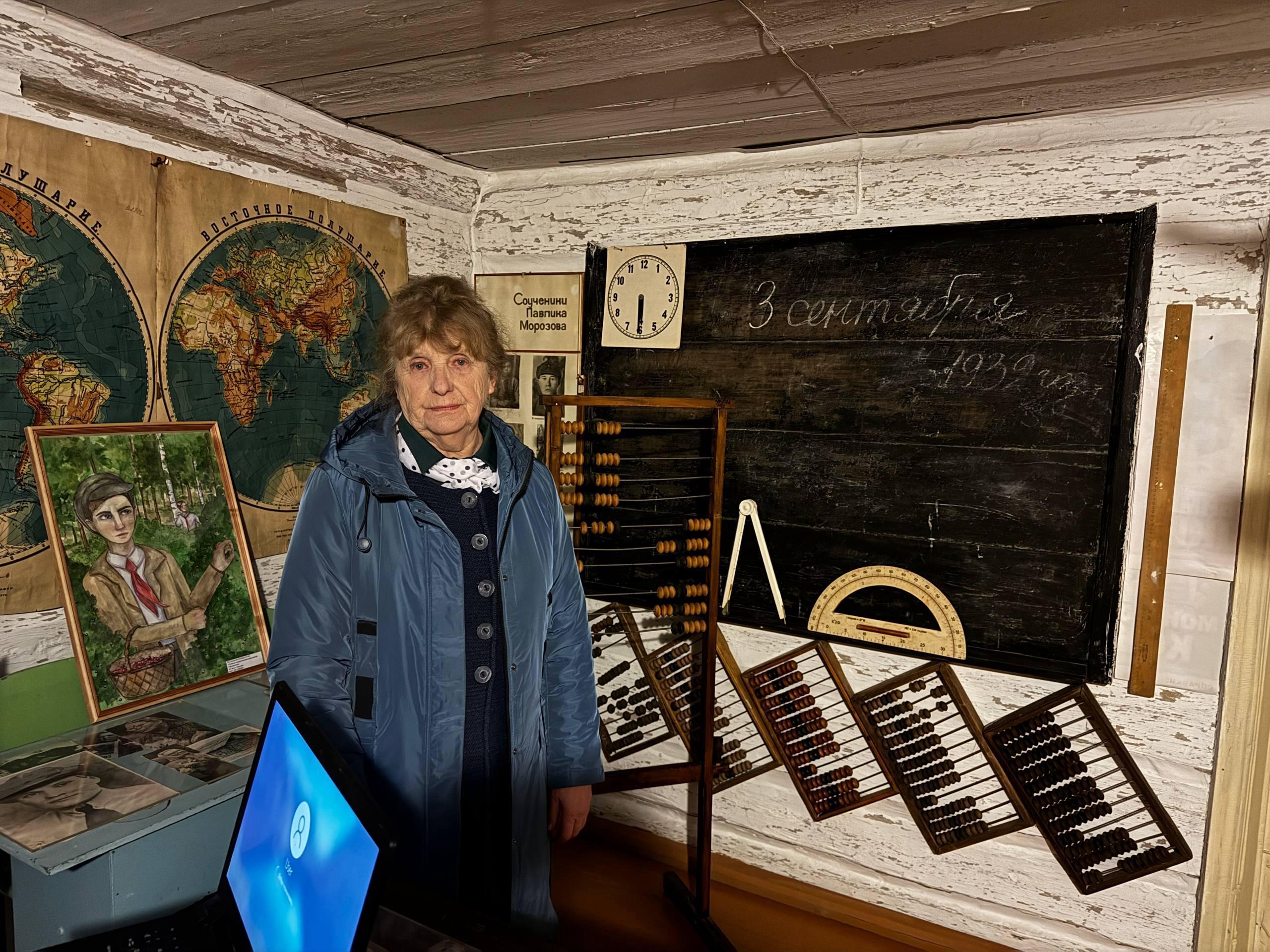
Nina Ivanovna is the director of the museum in the village of Gerasimovka in the Tavda district, 400 kilometers from Yekaterinburg. 93 years ago, on 3 September 1932, two children were killed here: 13-year-old Pavlik and his nine-year-old brother Fedya. Their surname was Morozov. This is how the whole country learned about Gerasimovka. Even foreigners came here on excursions. They still come. A report by Yelena Pankratyeva tells how the village lives today, why they have preserved the memory of Pavlik all these years, and what the director of the Pavlik Morozov Museum is striving for.
Who was Pavel «Pavlik» Morozov?
Pavel (Pavlik) Morozov (real name — Pavel Trofimovich Morozov) was a Soviet schoolboy who became famous as a «pioneer-hero». He was born on 14 November 1918 in the village of Gerasimovka, Turin Uyezd, Tobolsk Governorate. According to the Soviet version, Pavlik was one of the organizers of the first pioneer unit in the village. In 1931, at the height of the campaign against the kulaks, 13-year-old Pavel testified in court against his father, Trofim Morozov, who, as chairman of the village council, had cooperated with kulaks, helped them evade taxes, and hid grain that was to be handed over to the state. Reportedly based on this testimony, Trofim Morozov was sentenced to 10 years. On 3 September 1932, Pavlik Morozov was killed together with his younger brother Fedya. His father«s family members were found guilty of the crime. In the 1990s, when everything Soviet was being demolished and condemned, Pavlik was labelled a traitor. Many began to use his name as a common noun for informers with no morals.
The Centre of Life
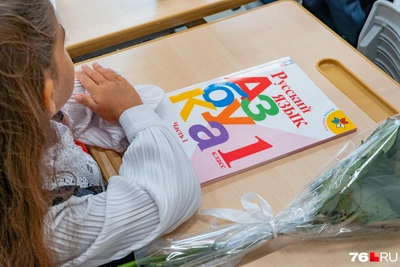
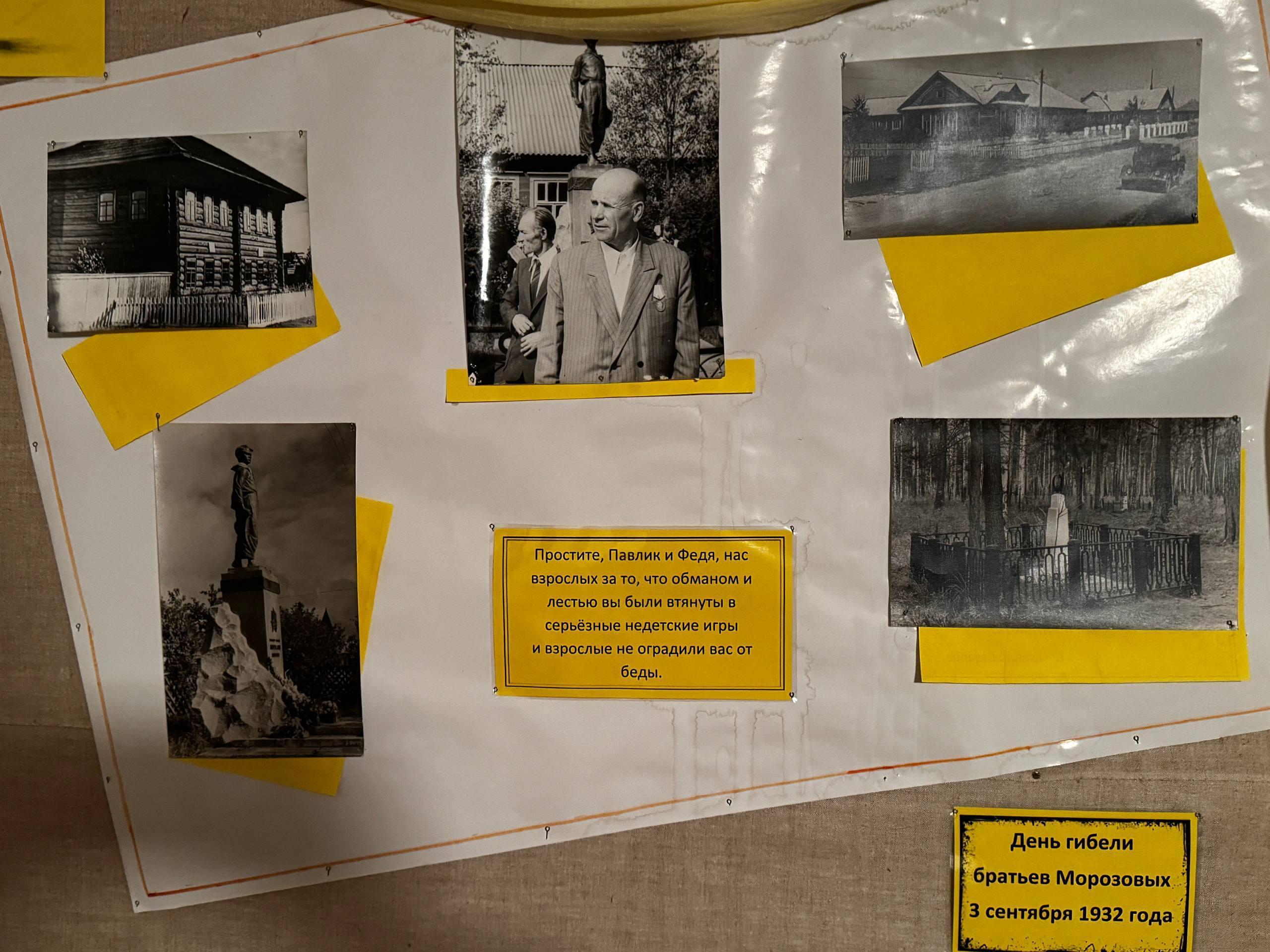
The road from Tavda to Gerasimovka is good and well-kept. 39 kilometers of smooth asphalt. But it«s not used very often. We didn»t meet a single car except for snowploughs. The village is empty. Two schoolchildren with backpacks walk along the roadside, apparently returning home after lessons. The main street here is named after Pavlik Morozov. At its very beginning is a child«s grave. Long ago, the remains of the murdered brothers were moved from the cemetery and solemnly reburied in the centre of the village. A monument was erected to the elder brother, Pavlik.
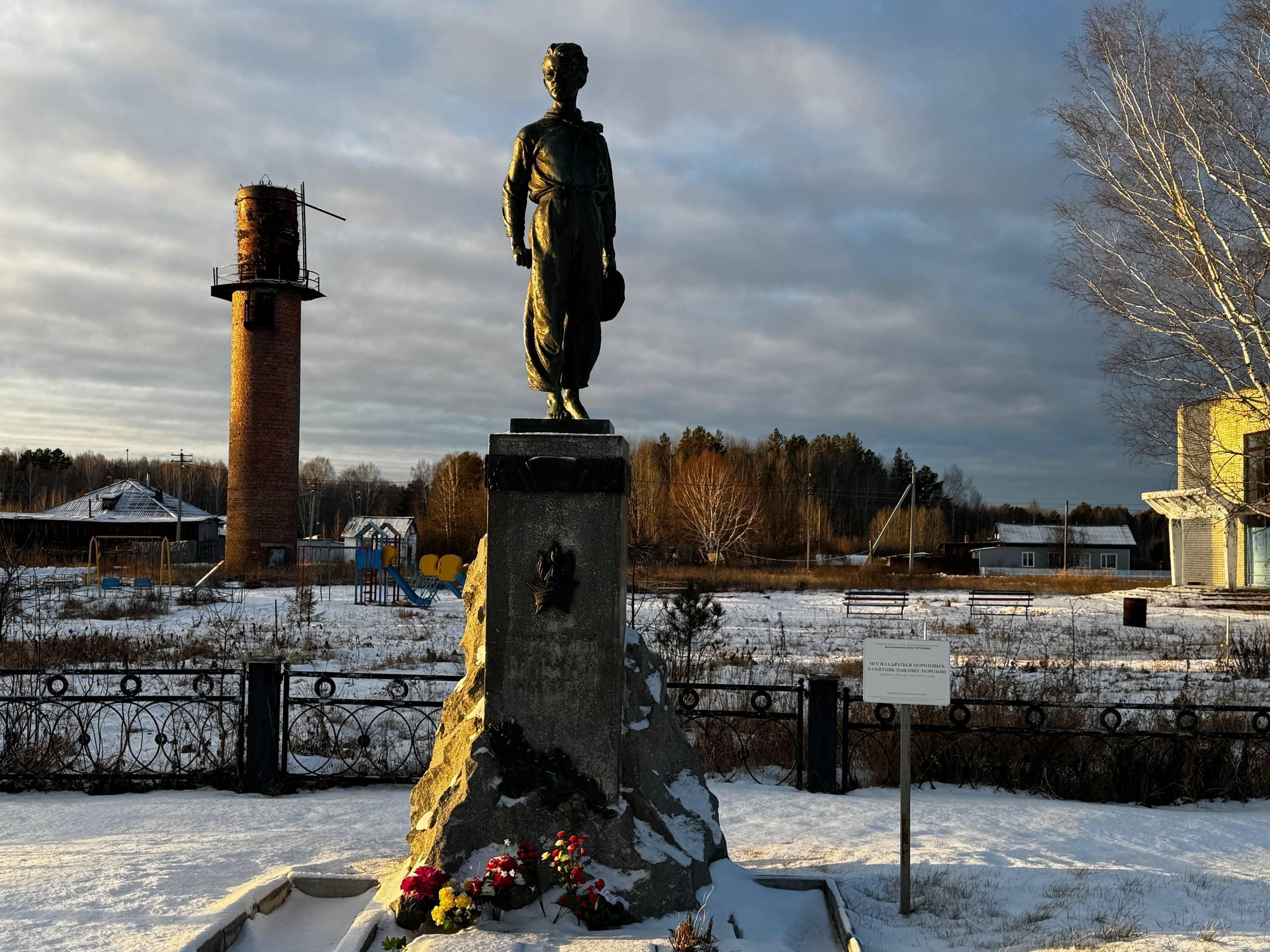
Opposite the monument and the grave, on the other side of the road, is the school. In the schoolyard, they are decorating a New Year tree. A man in blue work overalls on a stepladder hangs up decorations. This is Andrei Nikolayevich Fokin, the general director of the Gerasimovka rural administration — that«s the correct title of his position.
Andrei Fokin«s workplace is in the school building. The House of Culture and the village library are also located at the educational institution.
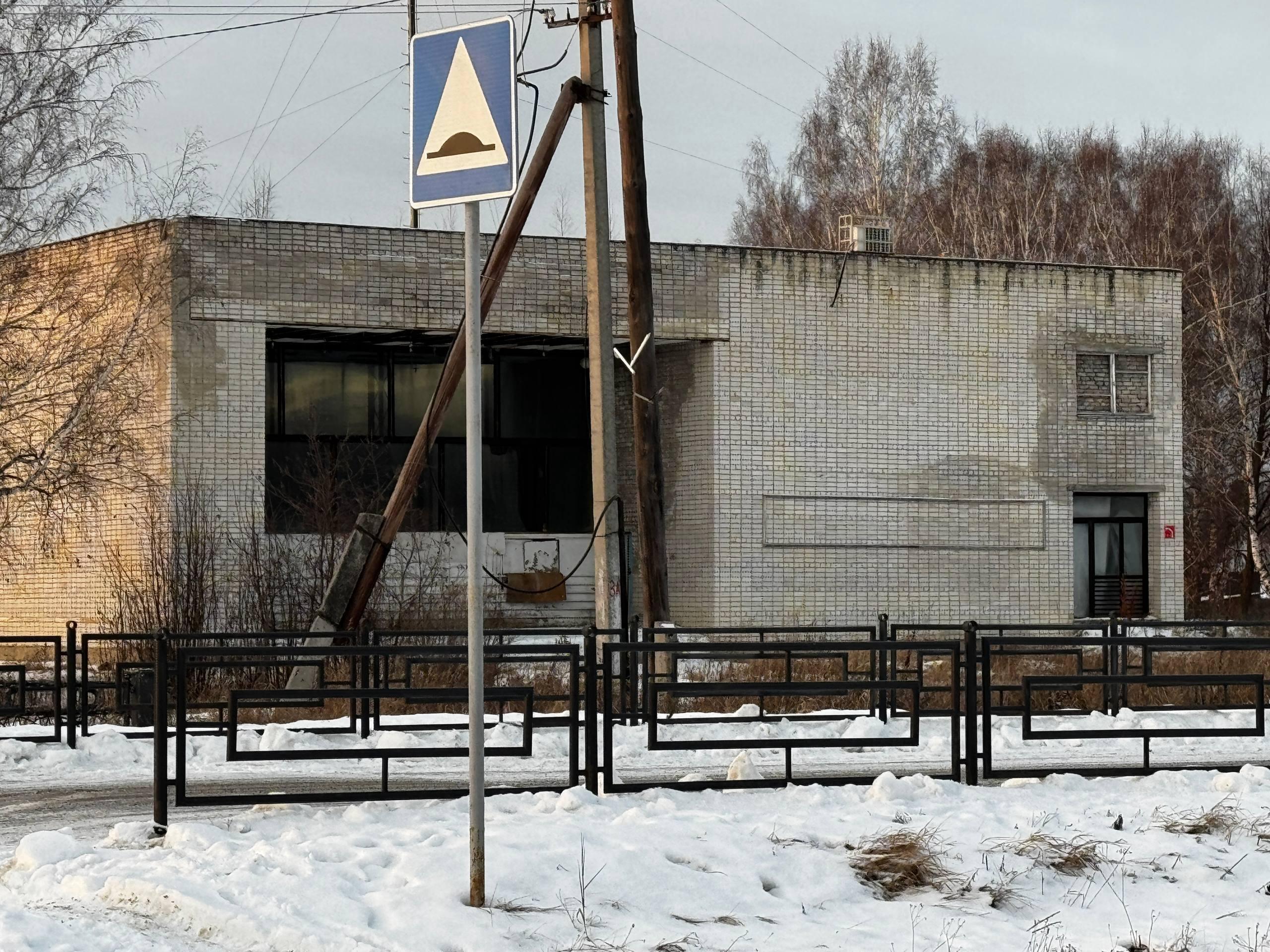
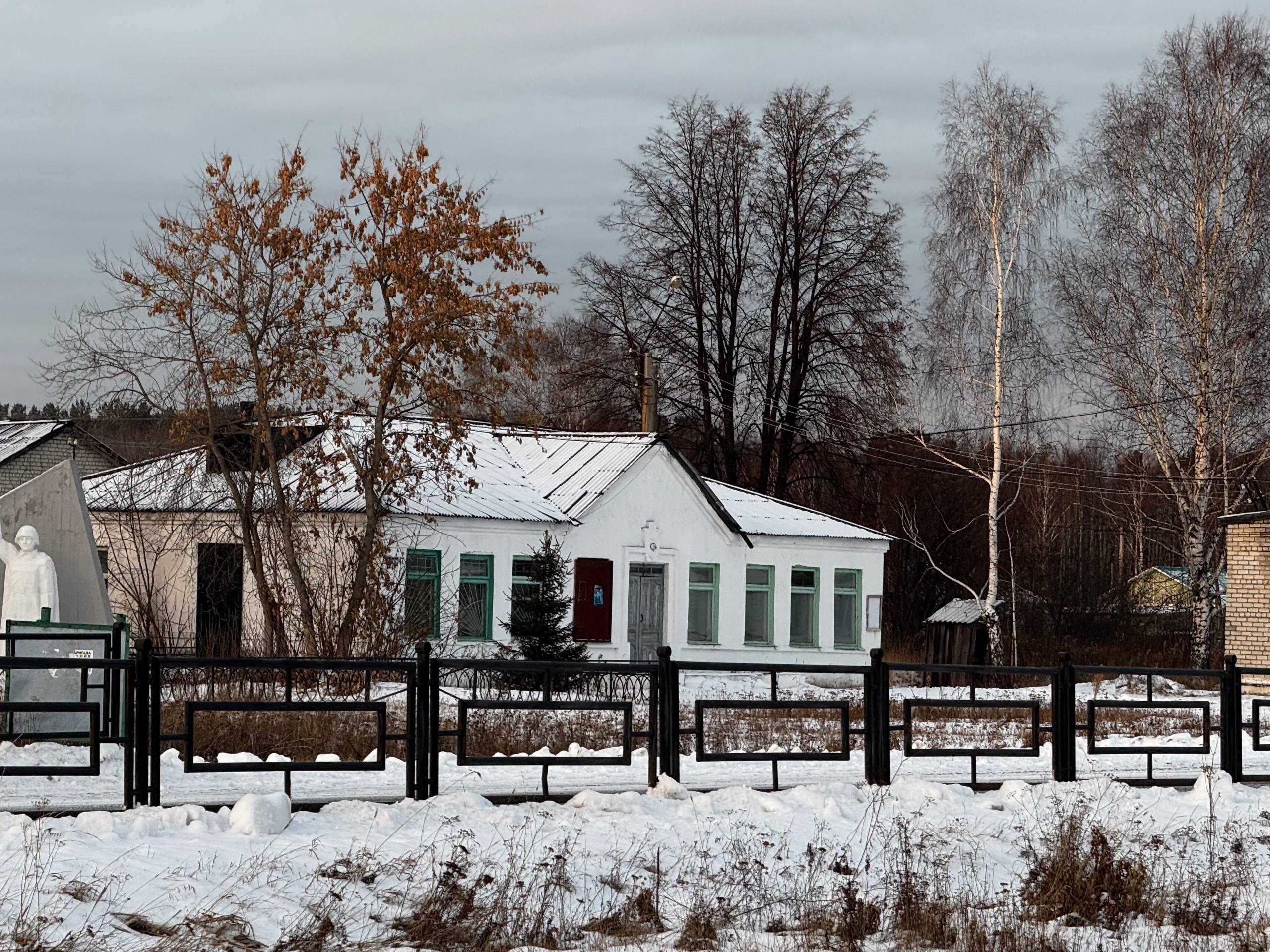
The large brick building of the House of Culture opposite the school is now abandoned, or rather mothballed. The whitewashed little house next to the former House of Culture, the administration building, also stands empty. Maintaining «extra» buildings is expensive and unprofitable. So they optimized, squeezed in, and moved to the school.
— The House of Culture was opened in 1984 for the 50th anniversary of the collective farm. For a village, it was luxurious, — Andrei Fokin recounts. — In the district, it was the most modern building, Tavda didn«t have anything like it.
During all the Soviet years, the village flourished thanks to the memory of Pavlik Morozov, who was considered a hero. Excursions to the museum named after him came to Gerasimovka en masse. They even brought foreigners. The settlement was a model village.
— The first asphalt road in the district was laid to our village. The children«s complex operated. At the entrance, there were flowerbeds, everything was tidy. The village had a beautiful face, — recalls Andrei Nikolayevich.
The collective farm in Gerasimovka has been gone for a long time. The kindergarten — a large two-story building — has already been dismantled. The canteen, visible from the schoolyard, is half-ruined. They also threaten to close the school every year. Children study here from 1st to 4th grade; it«s a branch, the main building is in the village of Gorodishche, 18 kilometers away.
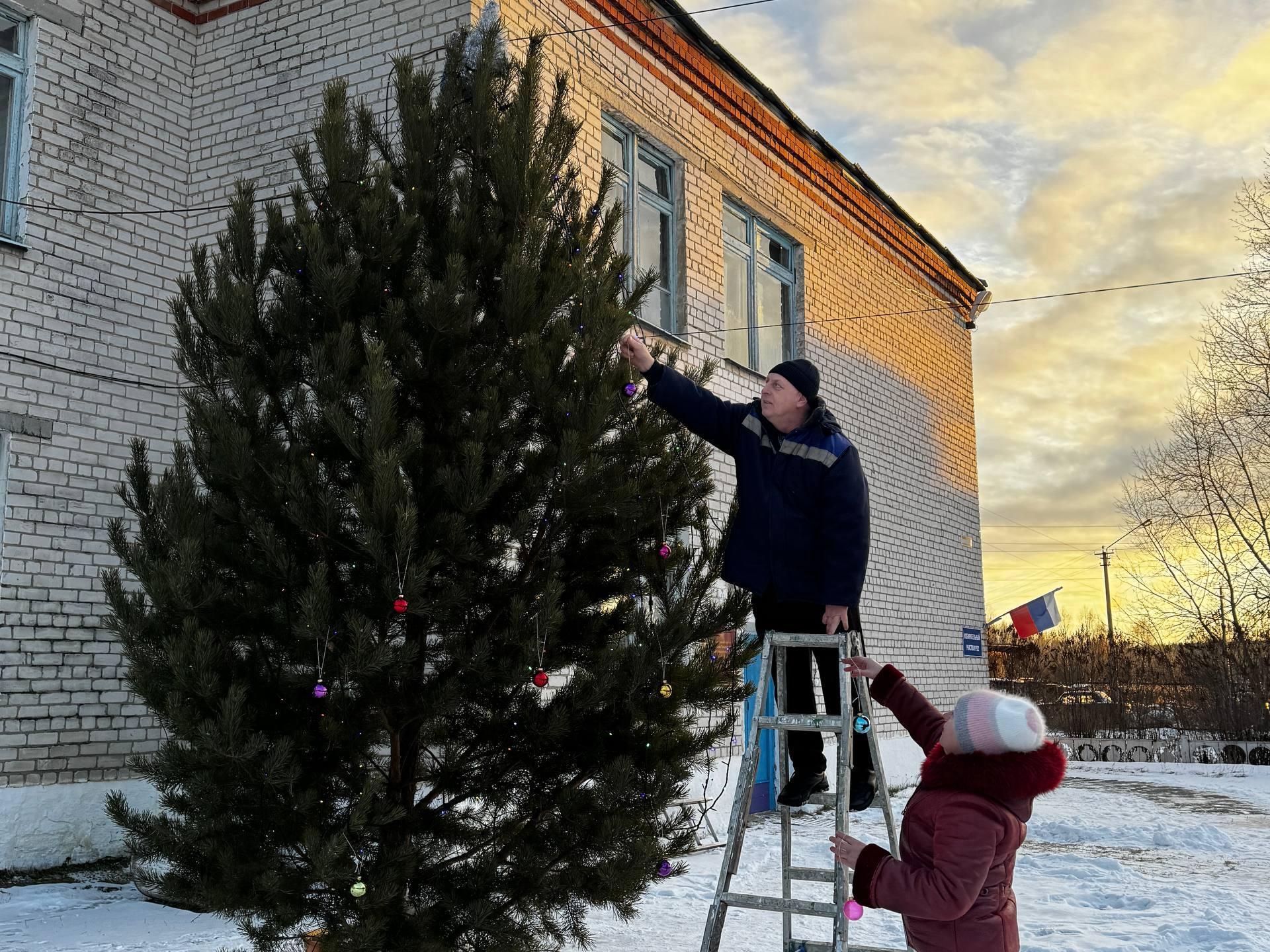
A year ago, they tried to finally cut the school in Gerasimovka due to too few pupils, only nine or ten people. They wanted to transfer the children to Gorodishche. But the residents wrote to Tatiana Merzlyakova, the Commissioner for Human Rights in Sverdlovsk Oblast. She helped defend the educational institution.
As it turned out, just in time. During the summer holidays, a hurricane tore the roof off the school in Gorodishche. During the repairs, all the younger students were transferred to Gerasimovka, and the older children were taken to Tavda, 40 kilometers away.
Currently, the Gerasimovka school has 28 students from four nearby villages, brought by a school bus. There are two teachers: the deputy head teaches English, the other subjects are taught by Natalya Vasilyevna Fokina, the head of the branch and the wife of the village head.
— The school in a village is the centre of life; if there«s no school, there»s no village. — Natalya Vasilyevna tells us. — Every year there are first-graders. We believe our school will live, and then there will be life in the village.
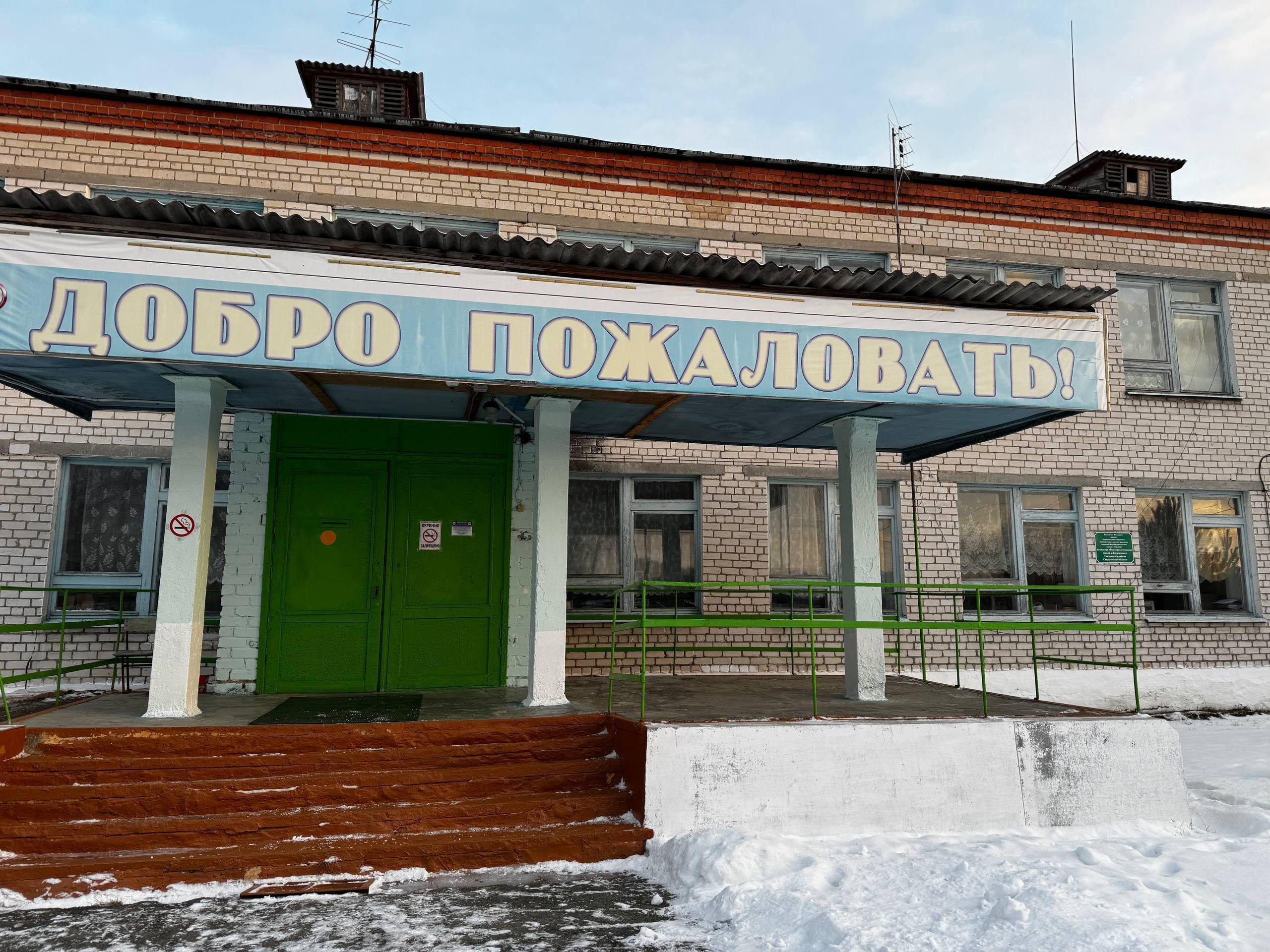
In the best times, in the 70s and 80s, about 800 residents lived in Gerasimovka. Now about 200. The village is shrinking. A common story for any settlement without work or industry.
In recent years, a small trickle of newcomers has still been making its way here. Families with children, including large ones, buy apartments here. You can manage with maternity capital and buy a home in a two-apartment house of 70–80 square meters with all amenities.
Husbands go north for shift work. Wives and children live here. People have high hopes for a new project: soon, construction of a highway to the north, to Khanty-Mansi Autonomous Okrug (KhMAO), will begin here.
— The new highway will pass through the territory of the Tavda urban district, — explained the Sverdlovsk Oblast Road Administration. — It will start from the village of Vladimirovka, at the 48th kilometer of the existing Tavda — Gerasimovka — Vladimirovka road. Further, the transport artery will go northeast, bypassing the settlement of Karabashka to the border of Sverdlovsk Oblast. The new road will boost the economy of the Tavda district, where timber harvesting and peat extraction will increase thanks to transit traffic. And these are additional jobs. Plus, infrastructure will appear: hotels, roadside cafes, and gas stations. The highway, built through the efforts of two regions, will shorten the route from Yugra to Yekaterinburg by 300–400 kilometers. Construction work will begin after 2025.
— And the village will come back to life, — Andrei Fokin is sure.
Andrei Nikolayevich is a native of Gerasimovka, a descendant of the very first settlers from Belarus who reached the Urals during the Stolypin reforms to settle these taiga-covered places. His paternal grandmother, Agafya Alexandrovna Kniga (her maiden name), was a cousin of Pavlik«s mother, Tatiana Semyonovna, and a blood aunt of Pavlik Morozov. Andrei Nikolayevich recalls:
— Grandmother didn«t talk much. She said Pavlik was an ordinary boy, a scamp. Everyone lived in poverty; their father left for another family, leaving the children with their mother. The whole village knew about that… Grandmother also said that (from the relatives convicted of the murder), they allegedly found a bloody knife and clothes behind the icon case. Whether that»s true or not, we don«t know; everyone believed the official version back then. Obviously, no examinations were conducted. And Nina Ivanovna, the museum director, is great. She knows a lot and tells it in a very interesting way.
The Town-Forming Museum
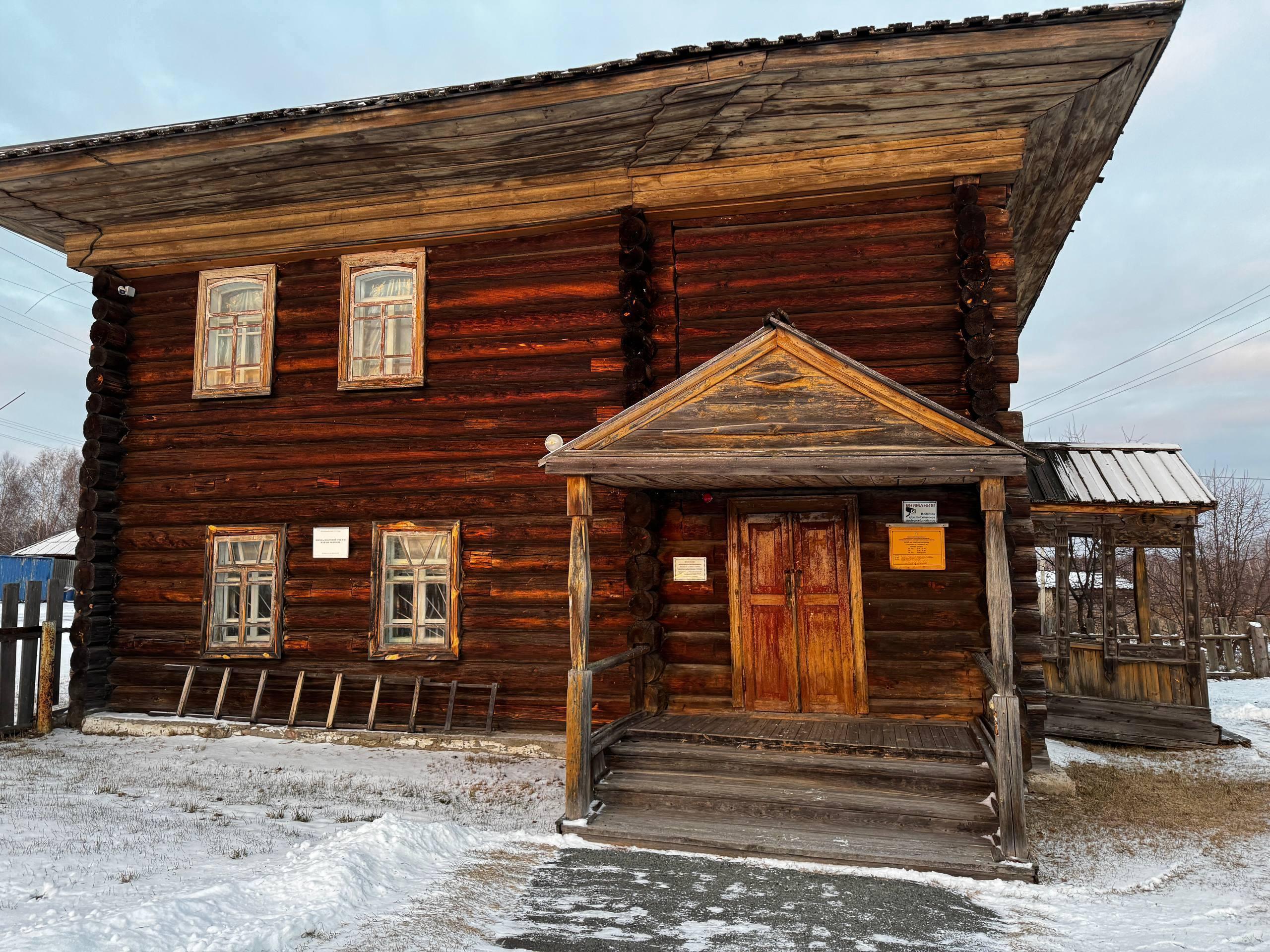
The former museum building — the house where Pavlik lived with his mother and brothers — burned down in a fire long ago. The Pavlik Morozov Museum today is a two-story izba (log house). This was the school where Pavlik, his brother Fedya, and their cousin Danil studied. He was executed on charges of killing the boys. The house needs restoration; the roof leaks.
Nina Ivanovna Kupratsevich has been running the museum since 2004. She is an honorary resident of the Tavda urban district. She lives in Tavda, where she created the city museum. Her daughter drove her to meet us. Nina Ivanovna«s family — children, granddaughter, sons-in-law — have all been touched by the tragic story of the Morozov brothers. Now they are the director»s main assistants — they drive her to work when guests and excursions come to the museum. They come here often, which is why the road is well-kept.
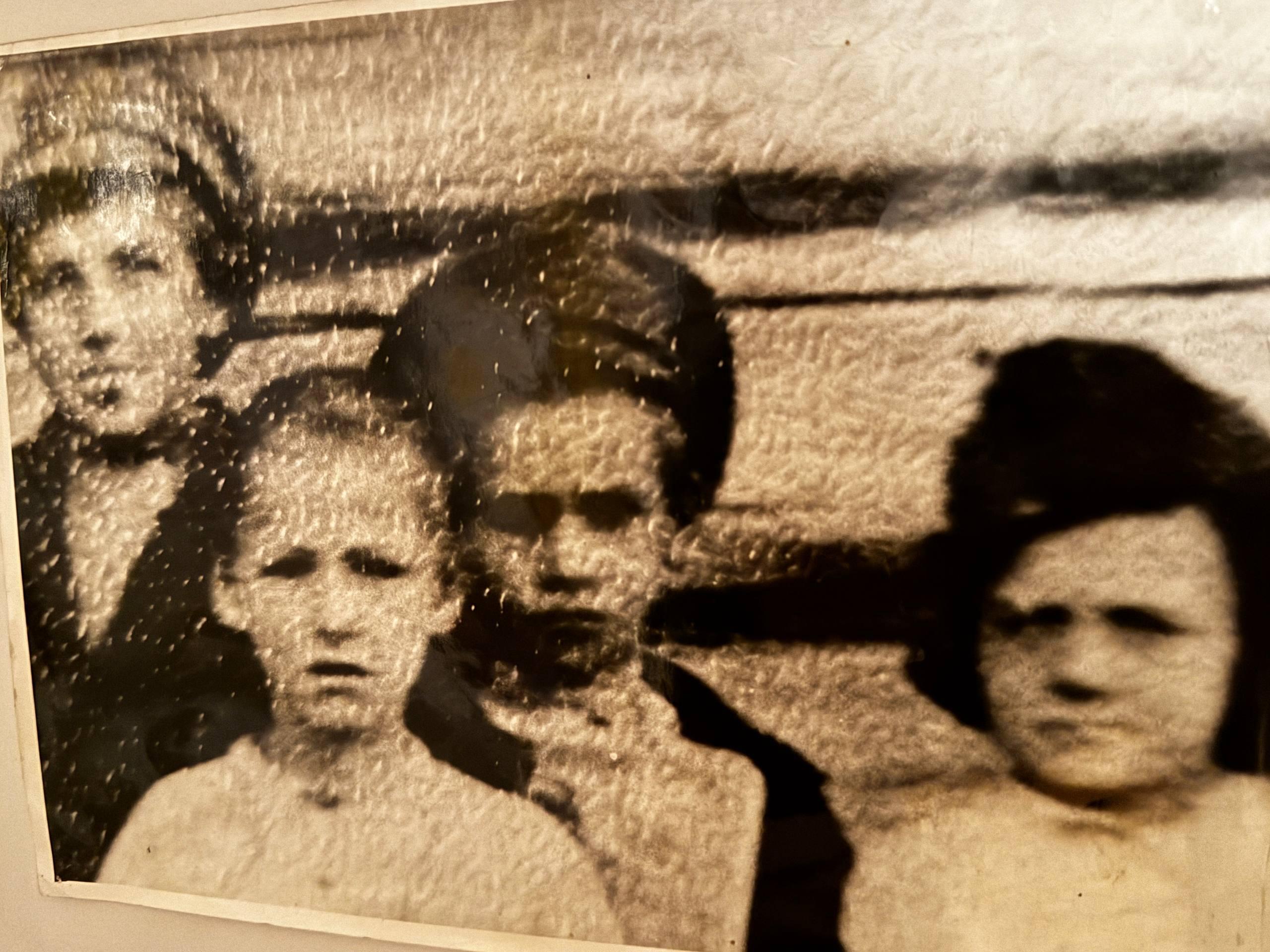
— When in the 90s attacks on Pavlik began and he was turned from a hero into a traitor, the fate of the museum was decided. The exhibition was dismantled. Everything was dying, — Nina Ivanovna recalls the beginning of her work. — We took under our protection both Pavlik and Fedya, his younger brother. As innocently murdered children. Some adults killed them, others slandered them…
In the 2000s, the Ural museum unexpectedly received money from the Soros Foundation* (recognized as an undesirable organization in the Russian Federation). Seven thousand dollars — which was 200,000 rubles at the time (approx. $7,000 at current rates). They had applied to the American billionaire«s fund from the Yekaterinburg »Memorial«* (by decision of the Russian Ministry of Justice, the organization was recognized as a foreign agent and liquidated in 2021).
The Soros Foundation is an international network of charitable organizations founded by billionaire George Soros. It supports projects in education, healthcare, human rights, democracy, and civil society. It ceased operations in Russia in 2003. In 2015, by decision of the Prosecutor General«s Office of the Russian Federation, the Soros Foundation was recognized as an undesirable organization in the Russian Federation.
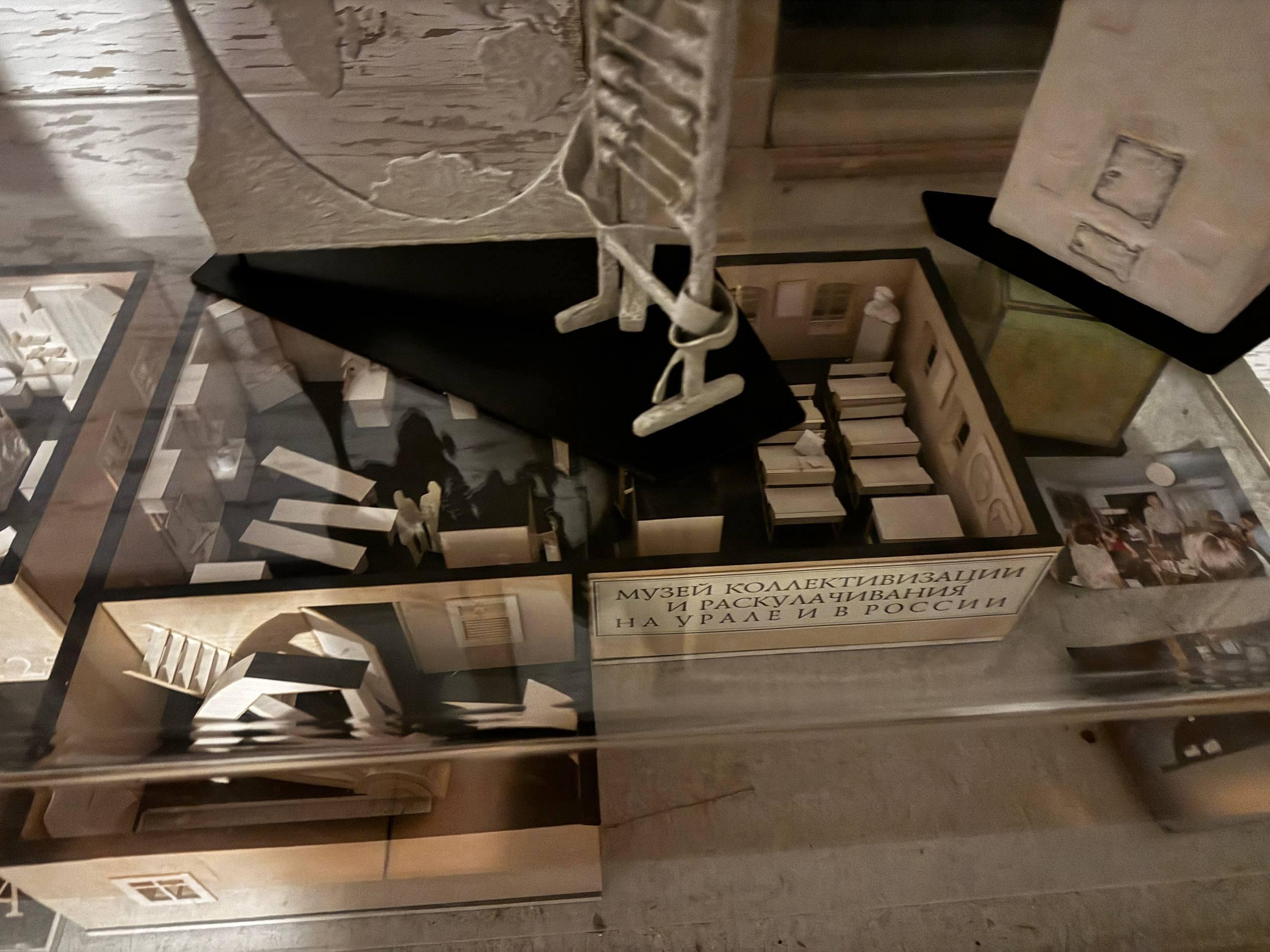
— The chairwoman was set against Pavlik, supporting the version that he was a traitor, that the hero myth was being destroyed, that this ruin showing people«s dislike for Pavlik should be preserved. We argued. Her idea was to create a museum of dekulakization and collectivization here, removing Pavlik»s name from the title. I was against it. — Nina Ivanovna recalls those times.
Nina Ivanovna has always been apolitical. For her, Pavlik is just a murdered child.
In the end, with the foreign fund«s money, they made a model for a future museum exhibition on dekulakization and collectivization. But in the end, it retained the name of the murdered schoolboy.
And all these years, Nina Ivanovna has been collecting the exhibition. It contains not only documents and photographs about the tragic story. But also a whole collection of various old items from peasant life. Coal irons, troughs, birch bark baskets, a baby cradle — some were donated by local residents she befriended over the years of work.
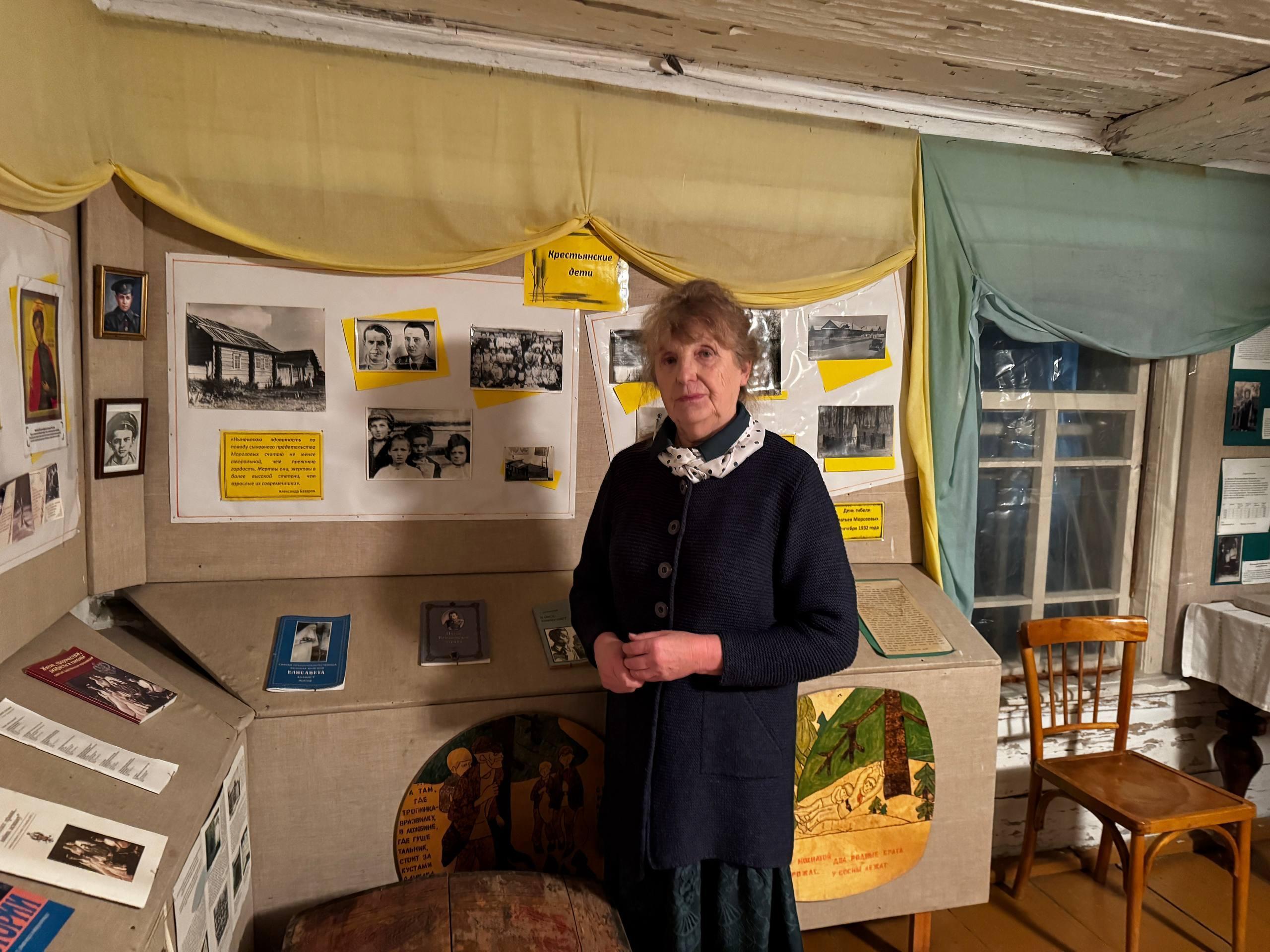
Nina Ivanovna also searched for relatives of the families involved in this tragedy, collecting memories from all residents of Gerasimovka and nearby villages.
— I thought, two-three-five years and I«ll prove it to everyone, tell the truth, but — we»re still fighting. We want to destroy stereotypes. The stereotype of Pavlik the hero and the stereotype of the traitor. He was not a hero. And he did not betray his father. Everything was completely different.
So what really happened?
Trofim Morozov, Pavlik«s father, was one of the few in the village who could read and write. That»s why he was appointed chairman of the village council. He was accused of trading forms of certificates to exiled settlers. In those years, dekulakized peasants from all over the country were brought to the remote Ural backwoods for logging. People tried to escape, got acquainted with chairmen, and by hook or by crook obtained certificates — identity papers, as peasants didn«t have passports then. Several such fugitives were caught, and they had certificates signed by Morozov. This formed the basis of the accusation.
— Pavlik did not write any statements against his father, — says Nina Ivanovna.
Trofim was brought to trial in Gerasimovka. According to the recollections of local residents, the arrested man«s wife, Tatiana Semyonovna, came to the trial, taking her eldest 13-year-old son Pavlik with her. In fact — she was his ex-wife, Trofim had left the family for a young neighbour, leaving his wife with four children. Pavel, as the eldest, had a hard time. All the housework from the age of 12 was on him.
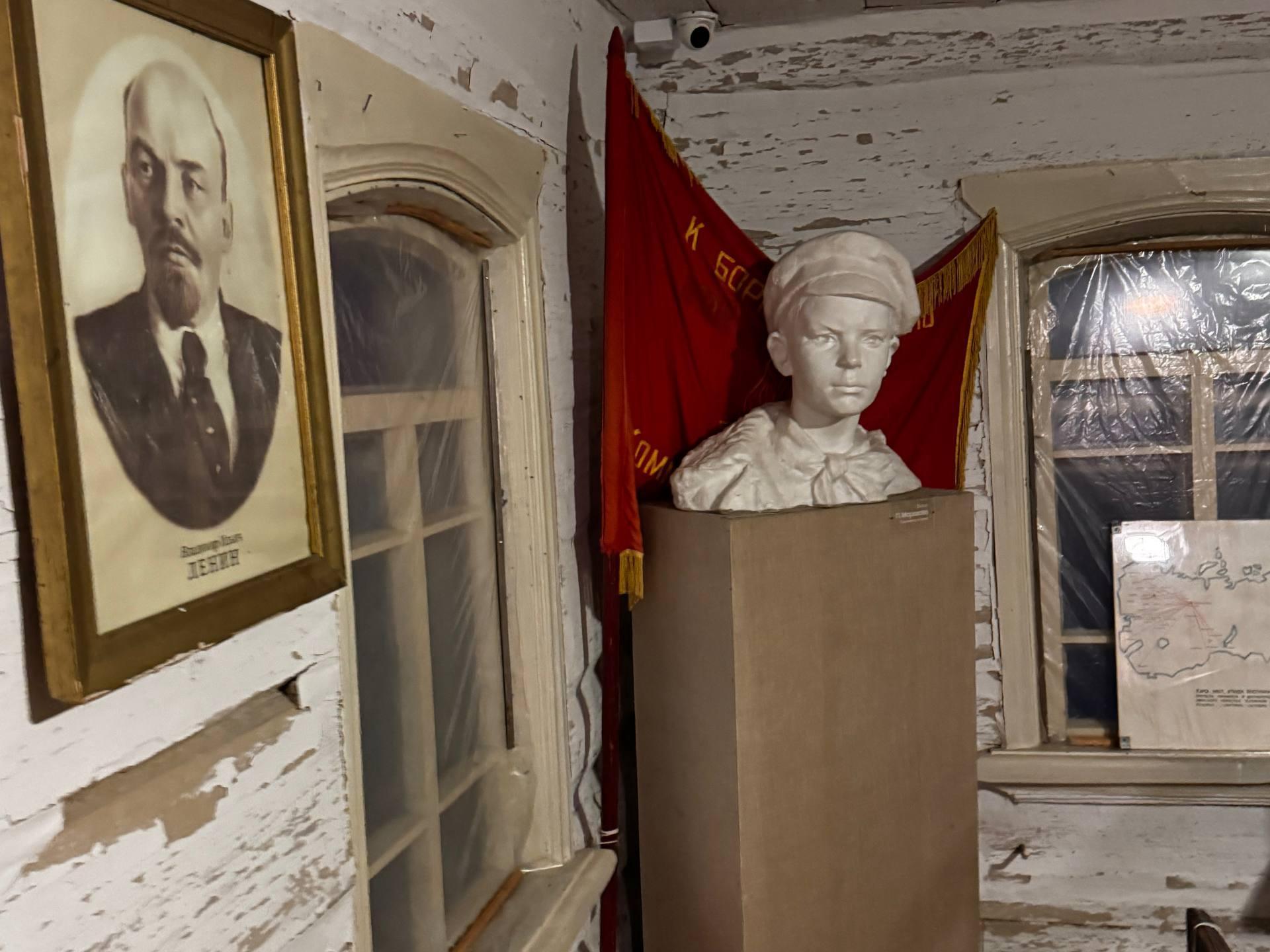
Tatiana had no reason to defend her husband. According to locals again, even when they lived together, her husband beat her in front of the children, and the children also suffered. She gave witness testimony, in official terms — for the prosecution. The son confirmed his mother«s words. Like, he saw, when they lived together, how strangers came to his father… Many years later, a documentary film about those distant events with the detective title »Cherchez la Femme« was made. It is based on the memories of local residents, eyewitnesses who are no longer alive. The director found a court employee who was at that trial. She told the camera how the mother prompted her son on what to say. Later, Soviet fiction would attribute a smooth, politically correct, pathetic speech to the boy: that his father was engaged in obvious counter-revolution, betrayed the ideals of October, and so on.
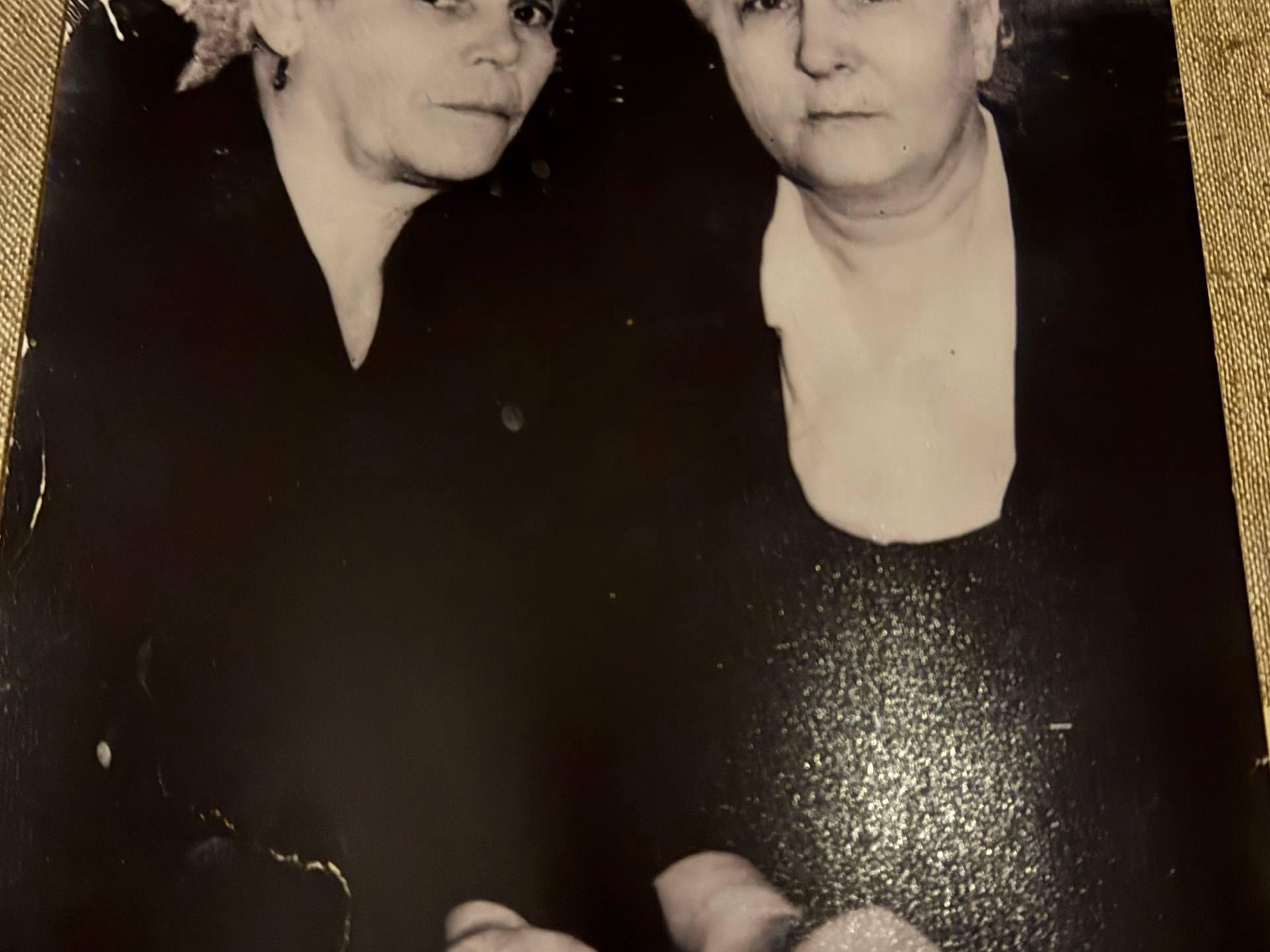
— Pavlik stuttered by nature and did not make such loud statements, he couldn«t have — Nina Ivanovna is sure. — To everyone who accused him, I always said: the child was standing up for his mother, put the situation on yourself, be more merciful.
The Terrorism Accusation
Nina Ivanovna defends not only the memory of Pavlik and Fedya. But also those people who were accused of their murder in 1932. Nina Ivanovna is sure they were not involved in the crime.
Pavlik and Fedya disappeared on 3 September; they went to the forest for cranberries. Their mother had gone to Tavda that day to sell a calf. She returned in the morning, the children were gone, she raised the alarm, and the search began.
The boys« slashed bodies were found three days later, not far from the village. A neighbour, Dmitry Shatrakov, went searching with a dog, and it came across the children. The guy who found the murdered boys became the first suspect: they had had a conflict with the Morozov family the day before. He and his family were arrested. But Dmitry had a solid alibi — he had been at military training camps before being drafted into the army those days.
They immediately began working on the version of a family conflict. The village knew that the grandmother and grandfather, the parents of the convicted Trofim, disliked their daughter-in-law, Pavlik«s mother. Five people were arrested — grandfather Sergei, grandmother Ksenia, their grandson Danil, and two uncles of the murdered children — Arseny Kulukanov and Arseny Silin. The investigation lasted about two months.
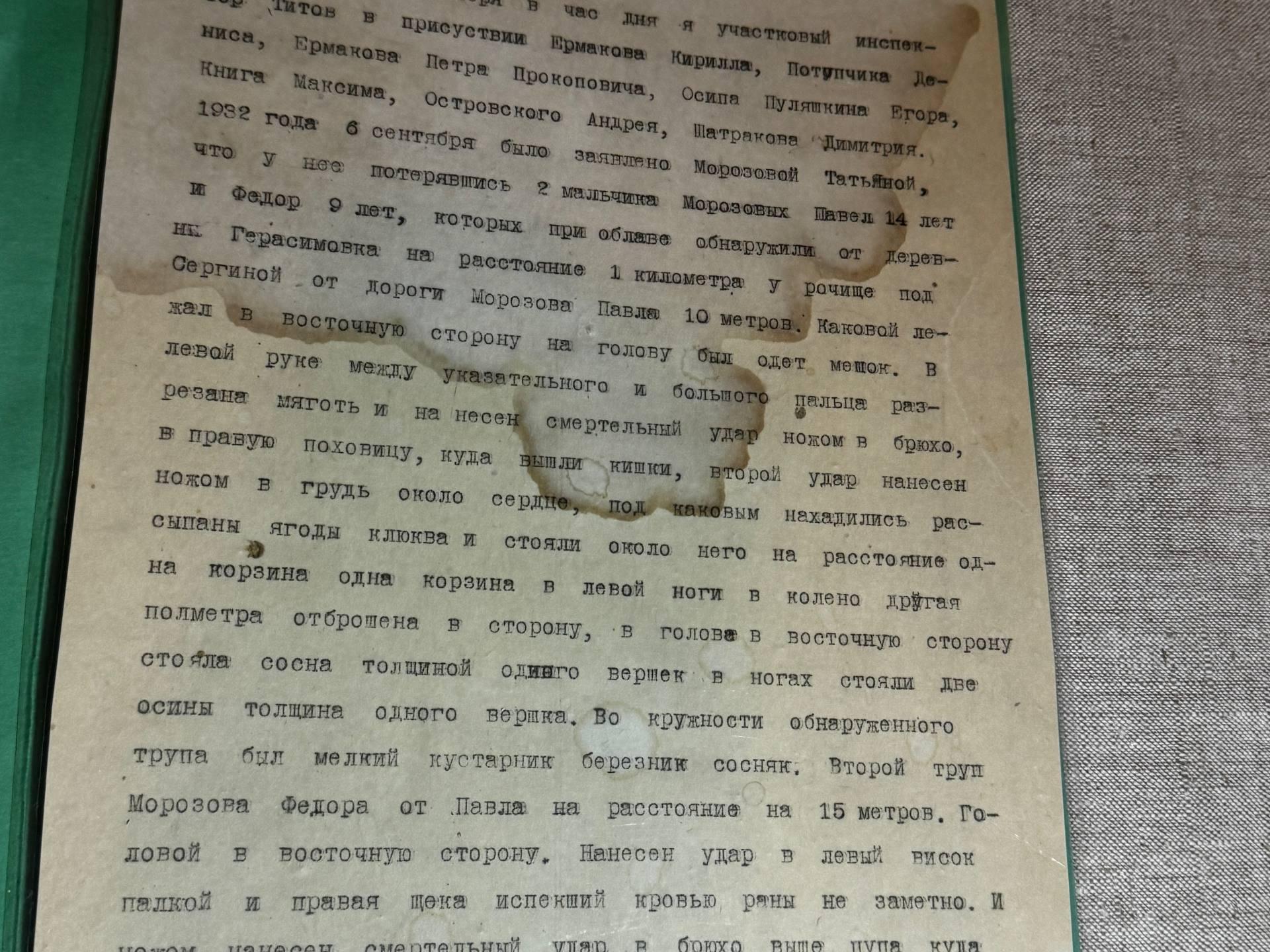
The museum has a copy of a telegram from chief prosecutor Vyshinsky instructing to urgently investigate, find, and punish the murderers.
— Can you imagine, Vyshinsky and our backwater. And so, the investigation was completed in a short time. No fingerprints, no studies — nothing was conducted in this wilderness, — says the director. — The words about bloody clothes and a knife, allegedly behind an icon — that«s all from fiction and village gossip. The entire accusation is based only on confessional testimony — says Nina Ivanovna.
— When did the domestic motives become political?
— Possibly, it immediately reached the regional committee of the Komsomol. Collectivization was stalling…
The relatives were charged with terrorism.
According to the investigation«s version, the murder was committed against a background of class enmity: rich kulaks, harbouring a grudge against Soviet power, sabotaging collectivization, killed a pioneer. They recalled the trial of the father and the teenager»s testimony.
— You know, I don«t accept the word »kulak« at all. There were no kulaks here precisely. Some lived better, if they had a large family and older children were workers. Smaller families lived poorer — fewer workers. Hard workers lived here. And they lived very hard. We have an inventory of the confiscated property of the arrested grandfather: a cup, a fire iron, trousers — what kind of wealth is that, — reflects Nina Ivanovna.
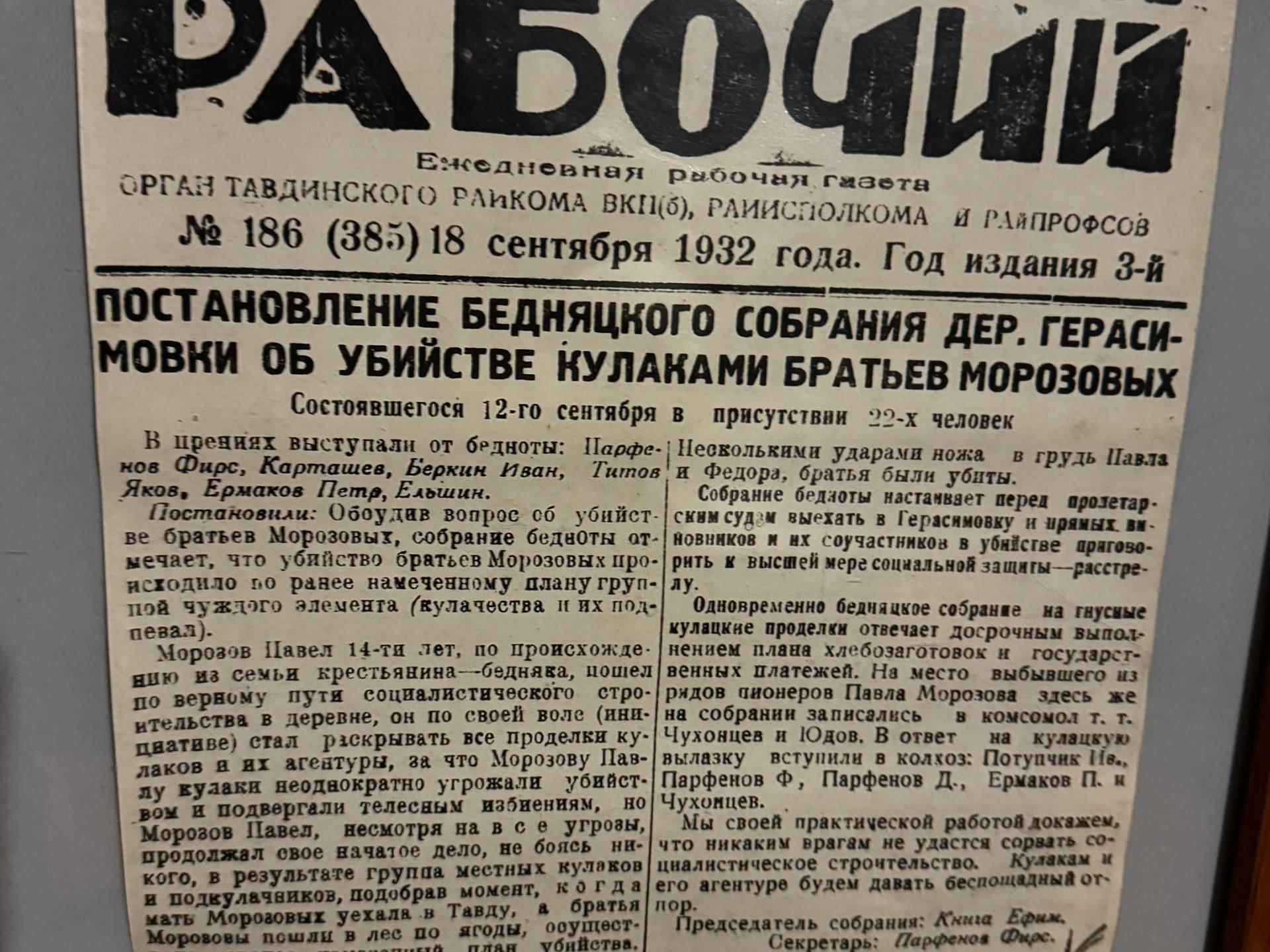
In the end, the court acquitted Arseny Silin. The rest were sentenced to death. 80-year-old Ksenia and 81-year-old Sergei Morozov died in prison before the execution.
The materials of the criminal case are stored in the archives of the FSB. But some researchers have gained access to them and published their works.
Everyone Had Their Own Misfortune
Tatiana Morozova, having buried her children, left the village with her two sons, Alexey and Roman. Later, Krupskaya personally helped her move to Crimea. In Soviet times, she travelled all over the country, spoke to schoolchildren, and came to the Urals. Nina Ivanovna attended her speech and talked to her. But everyone heard only the official version from her. Pavlik«s younger brother died young from illness. Another brother, Alexey, served time in the camps due to a denunciation and was rehabilitated. He died in the 90s; there is an opinion that against the background of the »exposure« of his brother, he had two heart attacks.
The father of the family, Trofim Morozov, served his sentence and lived to an old age in Tyumen Oblast. Nina Ivanovna communicated with his relatives. And a few years ago, she met the great-granddaughter of that very «other woman» Nina Amosova, whom Trofim Morozov left his family for. She passed on the family legend of how 17-year-old Nina was forcibly betrothed to Trofim by her parents to survive, because it was hard to feed all the children.
— Everyone had their own misfortune. The great-granddaughter is also upset about this story. Time has passed, but still…
Once, Nina Ivanovna read another report from Gerasimovka. The journalists then reached the place where the children were killed. A fence with posts is placed there.
— They opened the lid of a post, and there were notes to Pavlik inside, people left them, notes with various requests. Some from children: help pass exams, or someone in the family is sick, help them get better. There was a time of pilgrimage. The journalists took the notes with them, although they weren«t meant for them. Now they don»t write, they don«t leave notes. But every year, on 3 September, I go to Pavlik»s monument, we meet with Gerasimovka residents there, people bring flowers.
In recent years, she has been writing letters to the diocese asking for the names of the two murdered brothers to be remembered in memorial prayers. Recently, Nina Ivanovna received a positive answer.
Read our other report from an old Ural city that they want to erase from the country«s maps.