Russia's Summer Weather Forecast After Harsh Winter: Climatologist Answers

Even in winter, many begin to wonder what the summer will be like — hot or cool? To find out, the editorial board of 76.RU turned to climatologist Vladimir Klimenko. He told in detail what the weather will be like in the summer of 2026 in Russia.
What the Summer Will Be Like
Preliminary picture of summer in European Russia looks quite ordinary. According to Vladimir Klimenko, over most of the territory, temperature anomalies will be about one degree above normal.
Climatic norms change over time. Currently, the prevailing norm worldwide, including Russia, is the interval 1991–2020, from which all calculations are made.
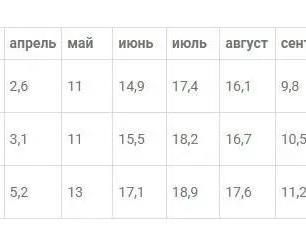
«In 2025, the average temperature in Moscow in June was 16.8 °C (62.2 °F) against a norm of 17.3 °C (63.1 °F), and in July — 21.6 °C (70.9 °F) against a norm of 19.6 °C (67.3 °F), which can be characterized as a very hot month. August was practically within the norm — 17.2 °C (63.0 °F) against an average of 17.6 °C (63.7 °F). As a result, the summer turned out to be moderately warm with a seasonal average anomaly of about one degree above normal. We expect approximately the same picture in the upcoming season», — the expert clarified.
Predicted summer temperature anomalies, according to Vladimir Klimenko, increase in the north of the country — in Arkhangelsk Oblast, Karelia, on the Kola Peninsula, in the European part closer to the Urals, as well as in the Southern Federal District. In the North Caucasus, deviations may reach 1–1.5 °C (33.8–34.7 °F).
«Last summer was exactly one degree above normal, that is, a completely normal warm summer. Despite complaints about a cold June, it was practically within the norm, and July, as has often happened in recent years, turned out to be hot», — the climatologist noted.
Over most of the European territory of Russia, the current forecast maintains the following trend: the magnitude of forecast anomalies increases with advancement to the north and east. In the Asian part of the country, expected anomalies in places multiply, promising the emergence of situations that can be considered extreme.
«There, summer over most of the territory, especially in the north of the Siberian Federal District, is expected to be very hot, with anomalies up to 4 °C (39.2 °F). In these areas, records will fall not only for daily averages but also for monthly average temperatures, which is much more important from the point of view of fixing climate changes», — the expert explained.
With advancement to the south, the magnitude of anomalies decreases, but nevertheless remains positive everywhere. Klimenko emphasized that with anomalies of 3–4 °C (37.4–39.2 °F), the danger of forest fires sharply increases, from which it is impossible to completely protect oneself.
According to the forecast, in the Arctic region the average temperature of the warmest month will be 10–14 °C (50–57.2 °F) instead of the usual 6–10 °C (42.8–50 °F), and on the northernmost islands, for example, on Franz Josef Land or other Arctic islands, it will noticeably exceed the usual zero mark (32 °F) for these latitudes. In more southern cities, such as Tomsk or Krasnoyarsk, summer temperatures will be higher than in Moscow, and with the addition of anomalies of 2–3 °C (35.6–37.4 °F), the summer will turn out to be truly hot. The absolute peak of anomalies (more than 4 °C (39.2 °F)) is expected in the north of Yakutia and Chukotka — here the summer temperature may be 10–12 °C (50–53.6 °F) instead of the usual 6–8 °C (42.8–46.4 °F).
Precipitation and Drought Risk
According to climatologist Vladimir Klimenko, as for precipitation, the summer will be close to normal, but the distribution by month will be contrasting.
«Today«s version of the forecast paints a picture of a moderately wet June with a sharply dry July, especially in the southern regions of the European territory of the country. Today, the greatest danger is the July drought, which creates risks for agriculture and energy», — he explained.
Strong heat and low precipitation worsen the situation for agriculture, and the load on energy systems increases.
Should We Expect Heat Waves
Vladimir Klimenko noted that if the forecast for average temperature comes true, then prolonged heat waves should not be expected in European Russia.
«Last summer, heat waves in Central Russia with an average temperature similar to the expected one were short-lived and rare and occurred mainly in early July. However, in the north of Siberia and the Far East, the situation in the summer of 2026 looks alarming — there, high temperature anomalies create a real danger of forest, steppe, and tundra fires», — emphasized Vladimir Klimenko.