Yekaterinburg to Start Work on Second Metro Line

In 2026, the transport reform started two years ago will continue in Yekaterinburg. Among the good news: the city will continue to update public transport, with the most expensive type — trams.
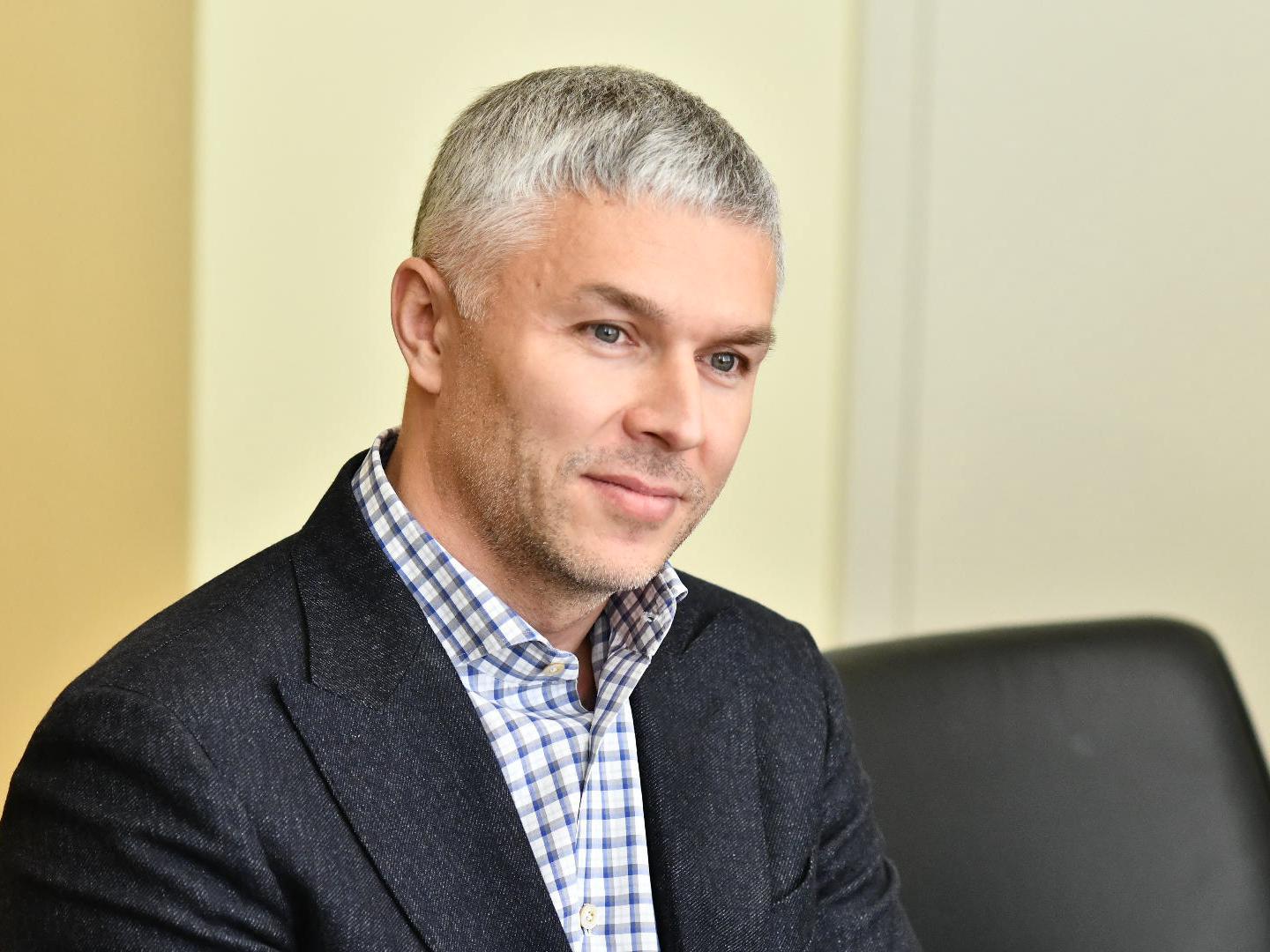
Overseeing the reform, as before, will be Yekaterinburg«s deputy mayor Rustam Gallyamov. In an interview with E1.RU, he spoke about what improvements to expect in route operations, how long children will ride for free, and where new dedicated lanes will appear. Of course, the key transport topic of recent years — the construction of the second metro line — was also raised.
On the new principle of working with carriers
In 2025, the mayor«s office began working with carriers on the principle of so-called gross contracts. According to Rustam Gallyamov, the main goal of switching to this system was to increase the volume of transport work. Previously, buses often returned to depots after rush hour. Now, carriers are required to complete all trips scheduled, including late ones.
“The results, in my opinion, clearly confirm the effectiveness of this step: in January 2025, 66.5% of trips were completed, in February — already 84.7%, in March — 88.9%, and in April a record value of 91.5% was reached.
Now carriers receive a fixed payment for each kilometer traveled (previously they received revenue from tickets. — Ed.), which motivates them to adhere to the schedule and accurately complete trips. In practice, this has resulted in reduced intervals on most routes and stabilized transport operations in the evening and during rush hours.
We see statistics: especially reduced is the number of complaints about long waits for buses and missed trips. This is a factor in improving the quality of transport provision. It is very important that the financial situation of carrier enterprises has begun to improve. The new mileage-based payment system has stabilized revenues, eliminating the dependence of enterprises on ticket sales, and increased their overall stability,” said Rustam Gallyamov.
On long waits at stops
Unfortunately, Yekaterinburg residents continue to complain that they often have to wait a long time for transport. It is especially hard for them in the winter cold. According to Rustam Gallyamov, intervals do not always depend on the number of vehicles on the line:
“As I mentioned, today the number of complaints about public transport congestion has decreased. Mostly, messages concern changes in route schemes and transport passing by stops.
In the list of messages from citizens, I would single out electric transport separately: the specifics of its operation lead to frequent cases of delays for all routes on the line. For example, if a passenger forgets their bag, the tram driver needs to wait for law enforcement officers (the National Guard of Russia, Rosgvardiya) to check for safety.
There are also emergencies on the tracks, which mostly affect tram traffic. With trolleybuses, the situation is now better, including for these purposes we are purchasing vehicles with autonomous running that can travel without wires.
Overall, it can be said that the work of public transport over 2024–2025 has moved from an extremely negative assessment to a neutral one. We try to respond promptly to people«s complaints,” explained the vice mayor.
On small cramped buses and crowding
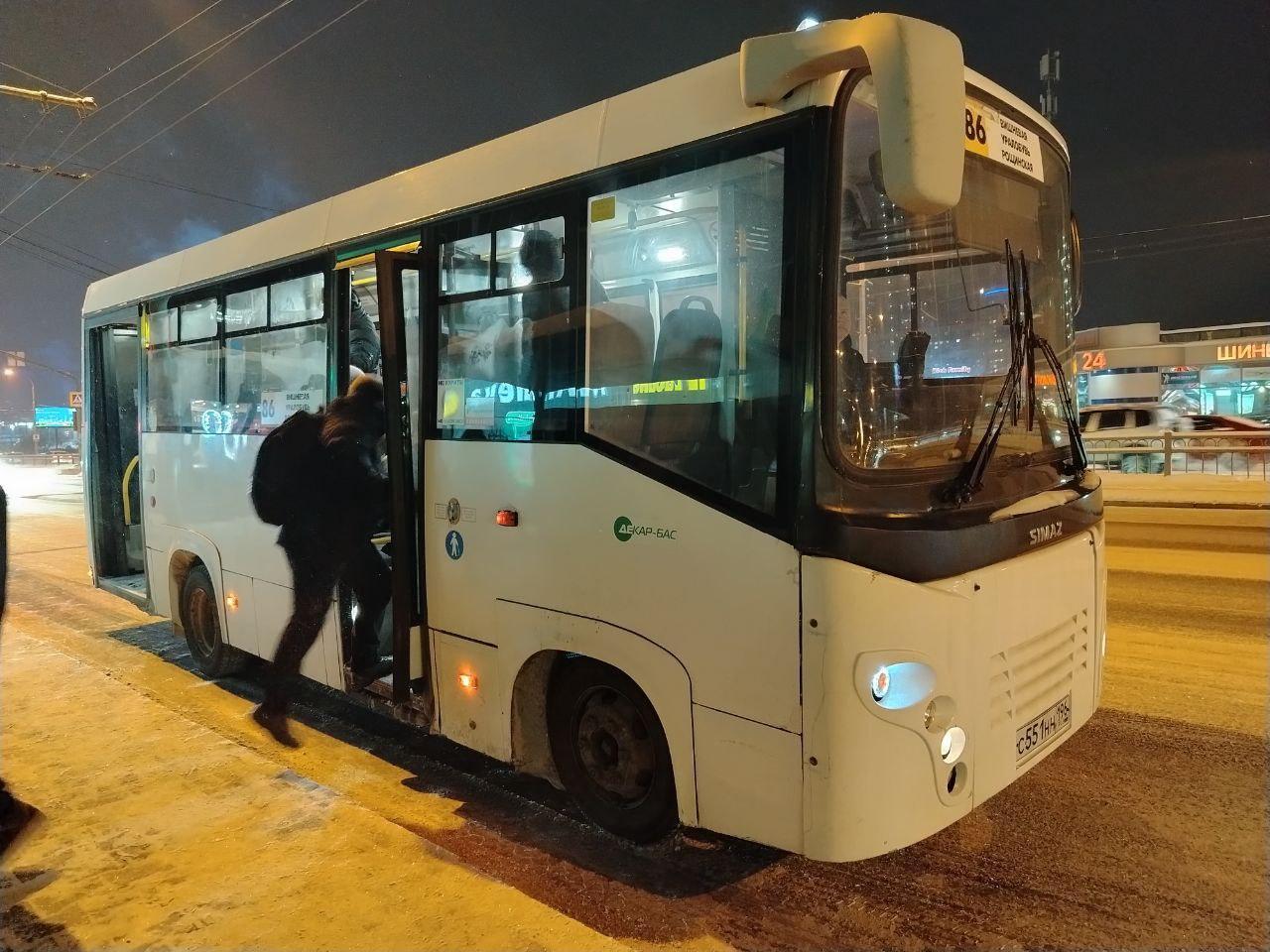
Yekaterinburg residents have long dreamed of spacious transport, but today large vehicles are mainly owned by ‘Gortrans’. Commercial carriers own medium-class buses, and on busy routes, crowding regularly occurs. According to Rustam Gallyamov, in the coming years, the number of capacious buses in Yekaterinburg will grow:
“At the moment, the city already has high-capacity medium-class buses (up to 10 meters long, accommodating up to 70 passengers), which cannot compare with the large class, but it is still better than the old models of the ‘Bogdan’ and PAZ brands.
In 2025, commercial transport enterprises purchased about 200 buses, including through preferential leasing provided by the ‘State Transport Leasing Company’. Some buses are already operating on routes, the remaining ones are undergoing technical adjustment and will start on routes soon.
Replacing medium-class buses with large ones will be done gradually. Today, on many routes, there is a lack of infrastructure necessary for launching large-class buses. For example, not everywhere there are terminal stops with turnaround areas of the required sizes. On some routes, the roads do not meet safety requirements for large-class bus traffic.
Now we are working on providing all necessary conditions. From the second half of the year, I hope, we will begin actively replacing transport.”
On purchasing new trams
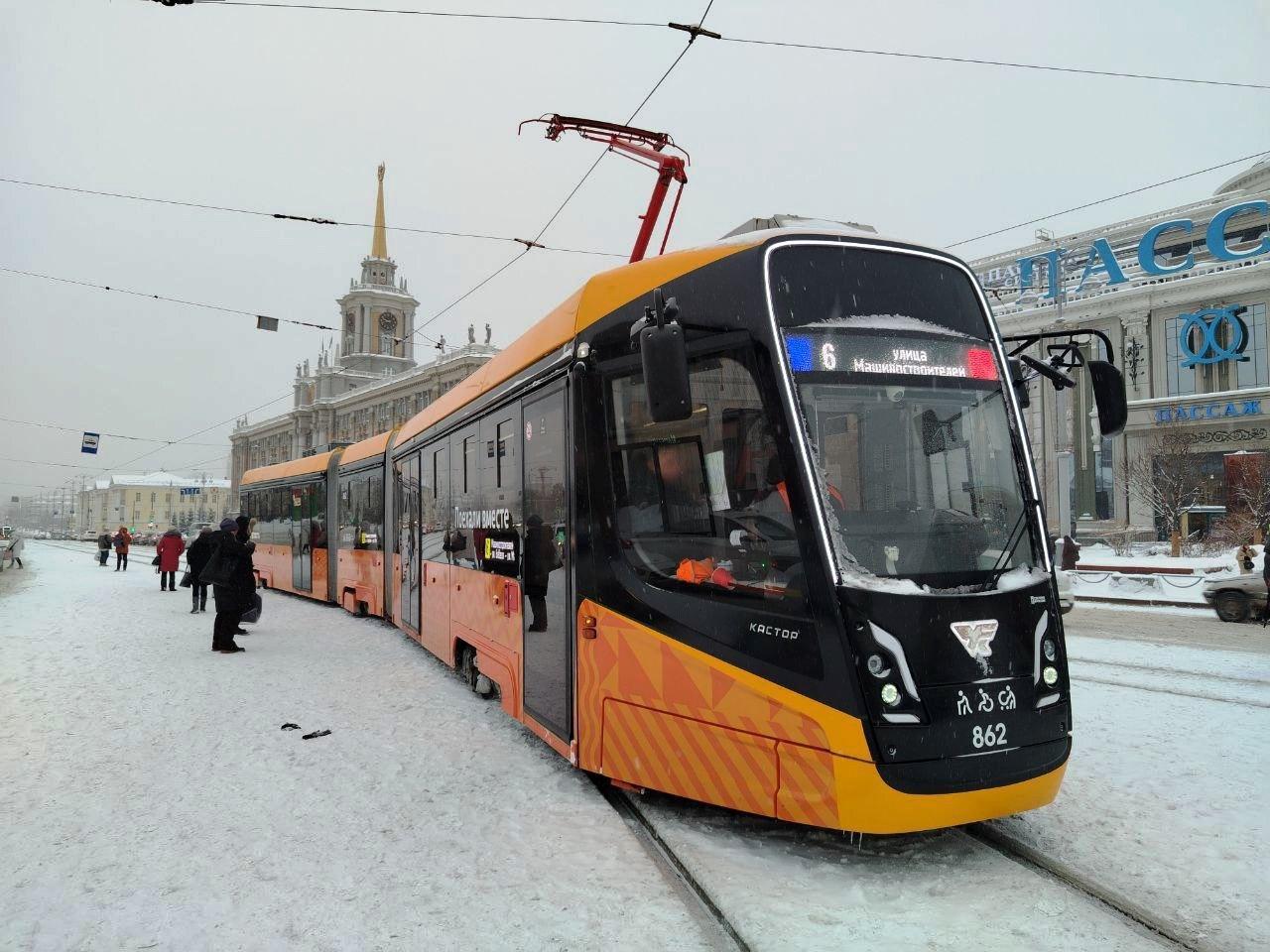
As Rustam Gallyamov noted, Yekaterinburg will purchase new tram cars with the support of regional and federal budgets. This issue is very painful, since the old Tatra trams that run in the city have long needed replacement. These cars were produced back in Soviet times (at least one of them has already become a monument).
“In 2025, we purchased 16 trams. We plan that in 2026 we will purchase another 50 trams.
It is necessary to understand that the renewal of the rolling stock will occur gradually, approximately over a period of about five years. Replacing the entire fleet at once is difficult for several reasons: firstly, these are large financial costs, since the cost of one three-section tram exceeds 180 million rubles (approximately $2 million at current rates), and secondly, the production capacities of factories do not allow producing such a large amount of equipment at once.
But I am confident that purchasing 50 new trams — is a significant step for Yekaterinburg«s transport infrastructure, and this will substantially ease the situation with the worn-out car fleet,” stated the deputy mayor.
On the construction of the second metro line
In the opinion of Rustam Gallyamov, today Yekaterinburg is closer than ever to real work on developing the city«s underground. Very soon, experts will join this topic, who will need to determine where to dig the tunnels. Priority will be given to densely populated areas — for example, ZhBI and Akademichesky.
“Regarding the metro, funds are allocated in the budgets of Sverdlovsk Oblast and Yekaterinburg, and here we must thank the government and governor Denis Pasler for supporting and allocating money for the development of the technical and economic justification. I think we will start this work in the first quarter.
As of today, preparation of the technical assignment for announcing an auction is underway, which will be announced at the end of February or beginning of March. This work will include, among other things, the choice of routing. In the next 2–2.5 years, we will be engaged in this work, designing the second and third metro lines. The development of the technical and economic justification will show which areas to direct the metro to.”
On dedicated lanes for transport
Today in Yekaterinburg, dedicated lanes are arranged on 26 road sections, with a length of approximately 31 kilometers. According to Rustam Gallyamov, in 2026–2027 their length will grow. Thus, about 20 kilometers of dedicated lanes are planned for introduction (approximately 10 km per year).
In 2026, dedicated lanes will be arranged on the following sections:
Amundsen Street, from Akademik Parin to Yekaterinburg Ring Road;
Kosmonavtov Avenue, from Ilyich to Shefskaya;
Kosmonavtov Avenue, from Mashinostroiteley to Melkovsky Lane;
Kosmonavtov Avenue, from Chelyuskintsev to Frontovykh Brigad;
Ordzhonikidze Street, from 40-letiya Oktyabrya to Mashinostroiteley.
Tram tracks will also be separated with delimiters or curb stones on 14 sections:
Radishcheva, from Moskovskaya to Posadskaya — 2 km;
Belorechenskaya, from Shaumyana to Posadskaya — 1.7 km;
8 Marta (the issue of road capacity will be worked out) — 7.1 km;
Lunacharskogo — 8.1 km;
Lenina — 6.5 km;
Entuziastov — 1.8 km;
Donskaya — 0.3 km;
Vikulova — 2.6 km;
Kuibysheva — 2.7 km;
Pobedy — 4.4 km;
Malyseva — 1 km;
Starykh Bol«shevikov — 4.6 km;
Chelyuskintsev — 4.2 km;
Gagarina — 3 km.
On the shortage of drivers and conductors
Staff shortages remain a problem, but the situation is gradually improving. As Rustam Gallyamov noted, in 2024–2025, substantial salary indexation was carried out twice for transport workers.
“Drivers« wages were increased by 30% in 2024, as a result of transitioning to gross contracts in the electric transport sector. And another 30% in 2025 after a similar step on bus routes.
In 2025, the number of drivers who came to work for ‘Gortrans’ exceeded 170 people. In contrast, in 2024 there was an opposite effect: the number of workers decreased monthly. Despite progress, the staffing issue remains a priority. Enterprises still lack employees,” noted the head of transport.
On the new tram route to Akademichesky
According to the vice mayor, the transport department listens to citizens« requests to introduce new city routes. But there are difficulties:
“We work quite closely with people who propose various changes to improve transport operations. Options exist, but everything depends on key resources. If we are actively updating the rolling stock, then hiring personnel — is a more complex process.
For example, electric transport drivers need to be trained for five months. Despite this, we are considering launching a second tram route to Akademichesky already in 2026, after another update of the rolling stock and training a new group of drivers,” announced Rustam Gallyamov.
On free travel for children
In 2025, travel for children on ground transport was made free. The exception was the metro, where students were given a cheap pass for 200 rubles (approximately $2 at current rates). But there is a chance that even this amount will not have to be paid — the mayor«s office is looking for ways to carry children in the underground for free:
“There are technical difficulties, because there is a gate system. But we are not abandoning the idea of free travel for children. Perhaps we will be able to provide free travel in the metro as well.”
Rustam Gallyamov also noted that free travel for children in ground transport will be preserved in the foreseeable future, since this campaign has no time limits.
On paid parking in the center
In the center of Yekaterinburg, there are increasingly more paid parking spaces. City authorities, in accordance with the strategic development plan, plan to bring this space to 16 thousand parking spaces. As Rustam Gallyamov noted, first paid zones will be arranged in the central part of the city, and then — in other districts:
“We believe that the cost of parking in the city should be differentiated. In the center, where there is high demand, parking should be more expensive, in other places — cheaper. At the same time, with a correctly determined tariff, there should always be about 15% of spaces free on paid parking. Today, the parking cost is determined in accordance with the calculation methodology, and in 2026 we do not plan to increase the cost of use.”
Recall that all news about the transport reform we collect in a special topic.