Soviet spy mystery links village near Krasnoyarsk to unsolved case

Soviet spy Richard Sorge is called one of the most outstanding professionals of the 20th century by many researchers. He was the man who gave Stalin the date of the fascists« attack on the USSR and was executed in a Japanese prison. Films are made about him, streets in Russian cities are named after him. It turns out that the seemingly distant name of Richard Sorge is firmly connected to the village of Bolshaya Murta, 100 kilometers from Krasnoyarsk. His wife Ekaterina Maximova served exile there and died in the local hospital. And this is only the beginning of the story. Our correspondent Alexei Taiganaut visited the site.
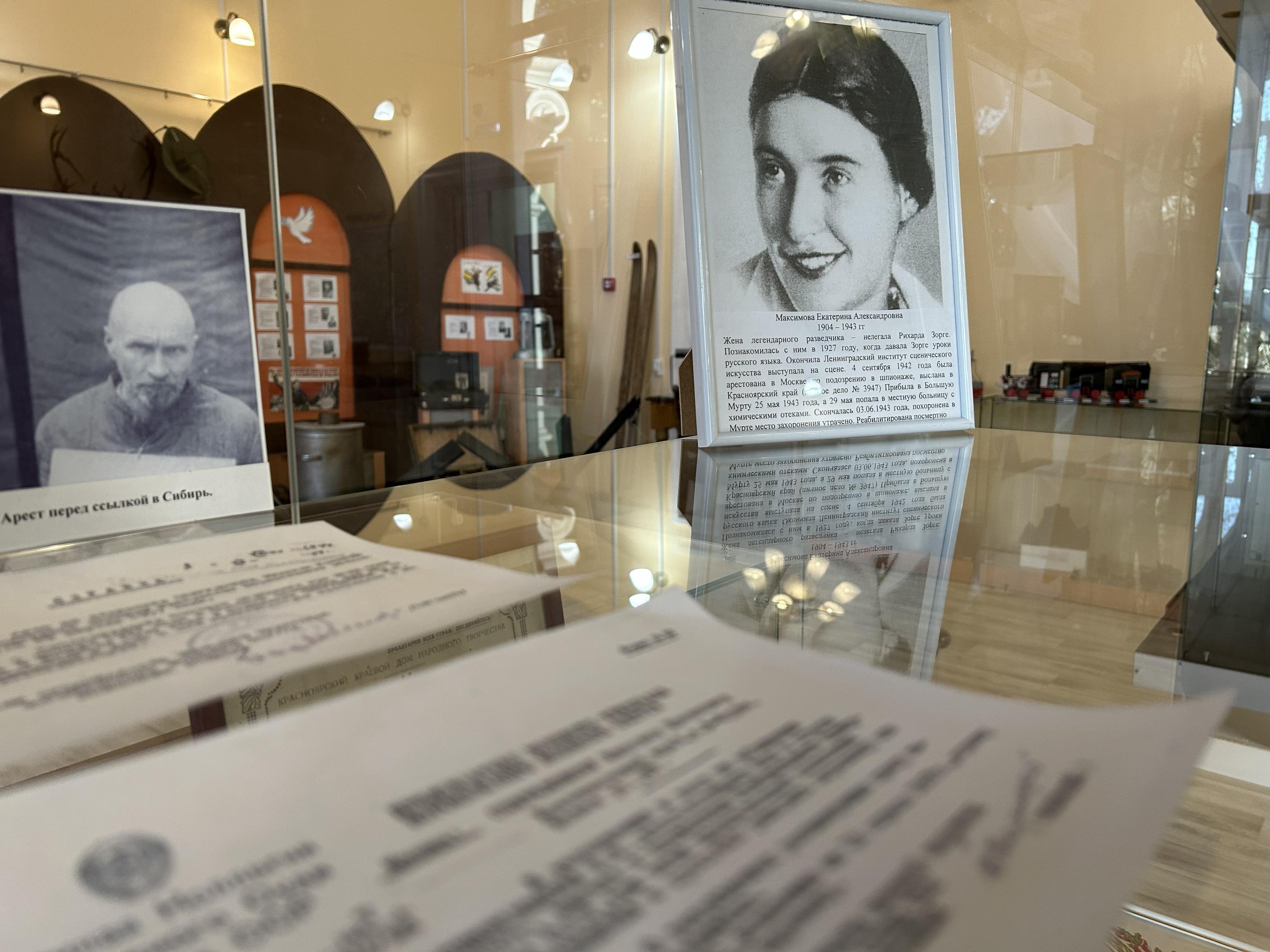
Arrested on suspicion of espionage
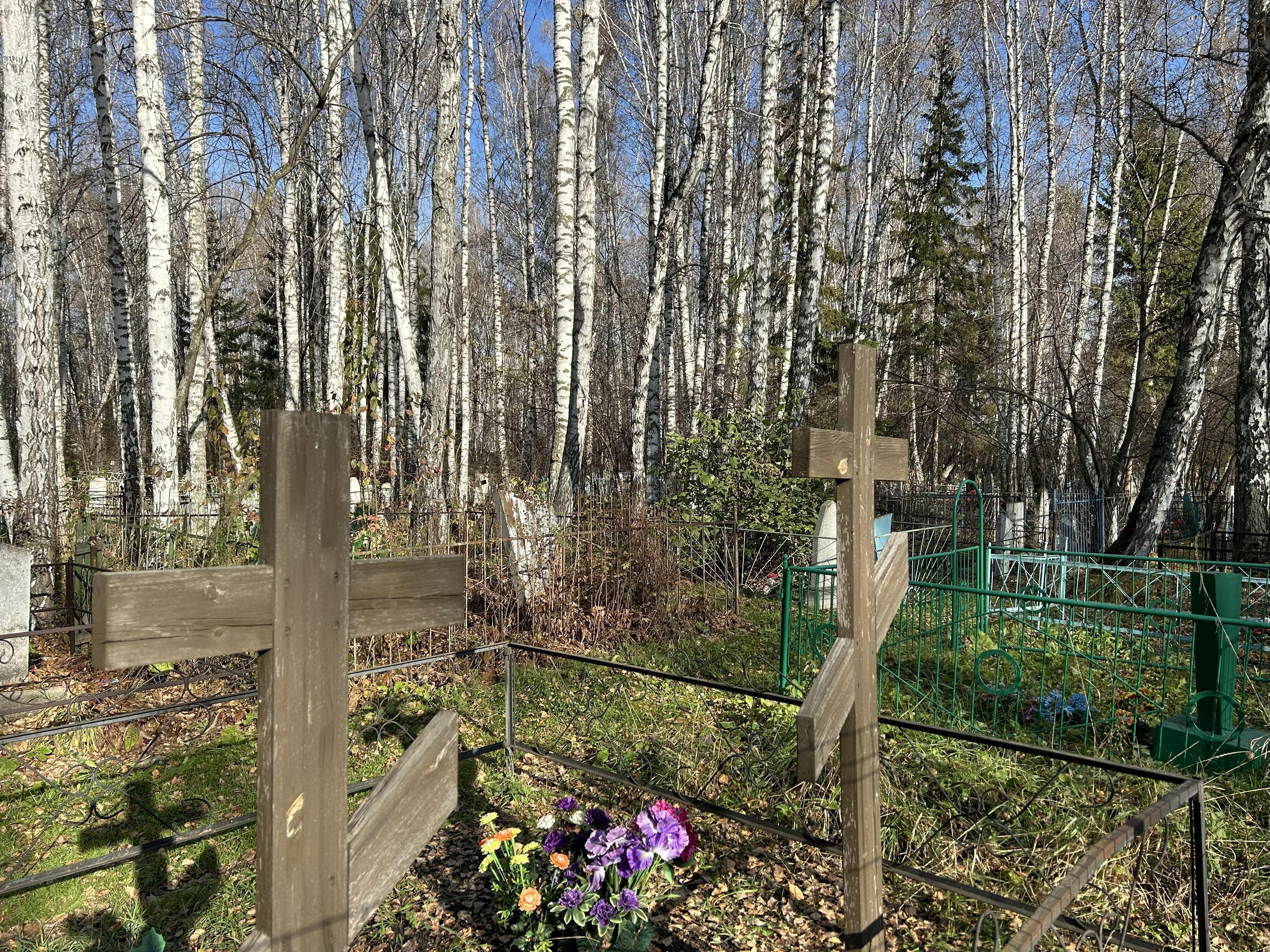
The grave of Ekaterina Maximova was searched for here — in the old, completely birch-overgrown cemetery of Bolshaya Murta. They looked among the dark, almost decayed wooden crosses, on the grass-overgrown burial mounds. Nameless and trampled. But so far, everything is fruitless — the secret of more than half a century ago remains unsolved.
— No one we spoke to can accurately answer why Maximova«s death and burial site were so heavily classified, — says Galina Kilb, director of the Bolshemurtinsky Local History Museum.
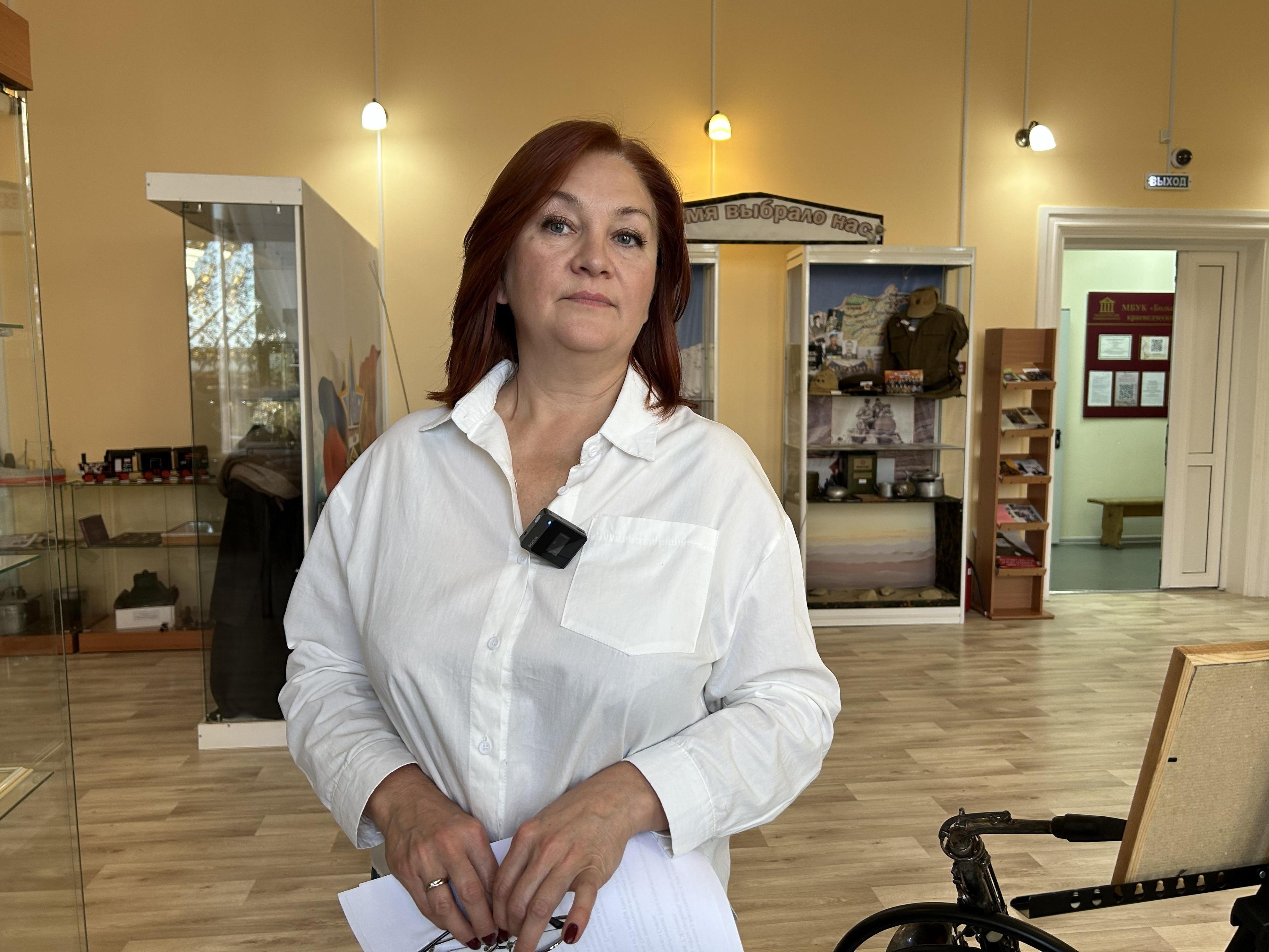
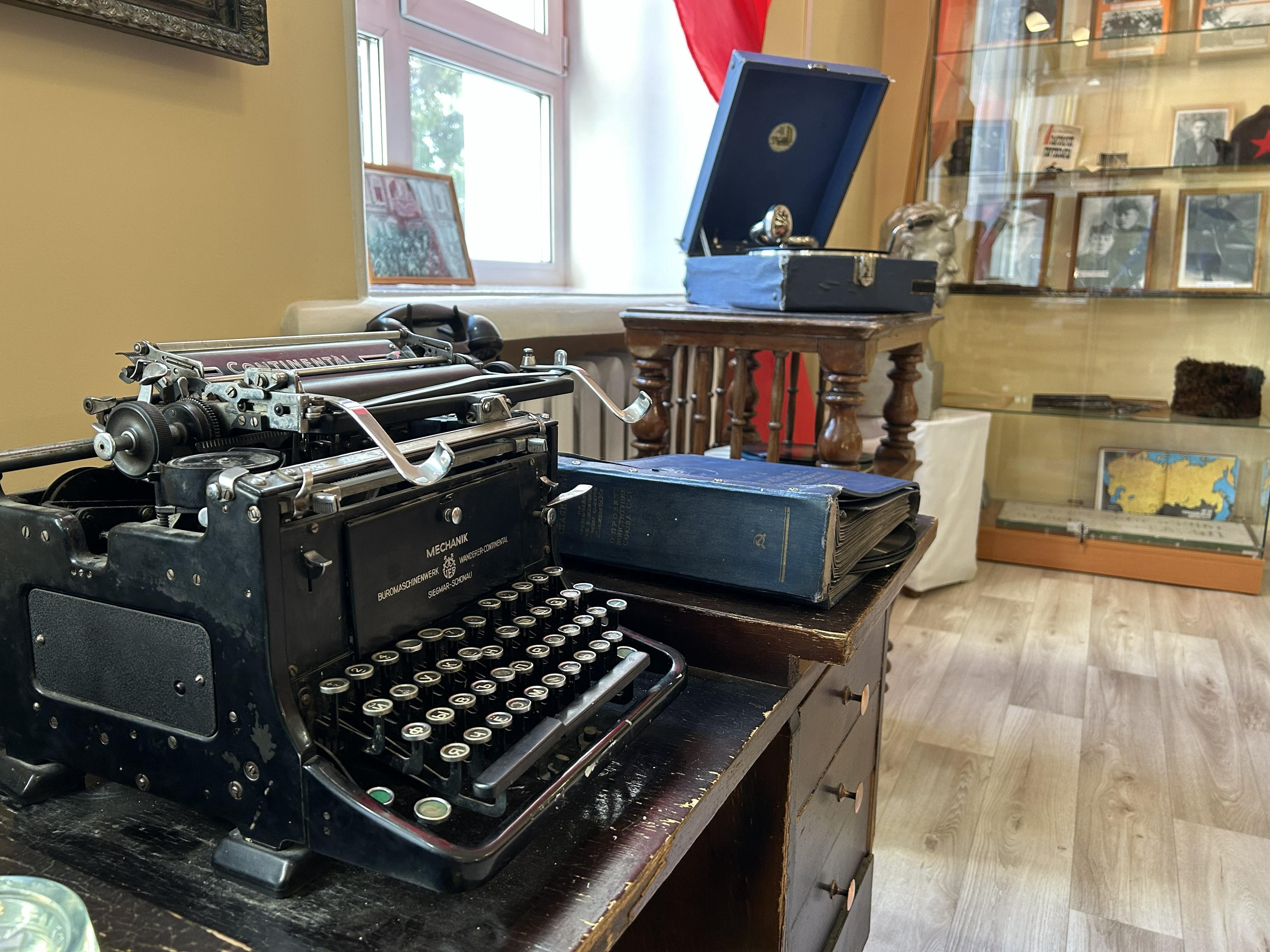
She shows me a spacious museum hall on the second floor of the building, which houses the prosecutor«s office, investigative department, and FSIN (Federal Penitentiary Service).
Antique items of village life, letters, old photos, here is a display about the revolution, next to it — about the Great Patriotic War.
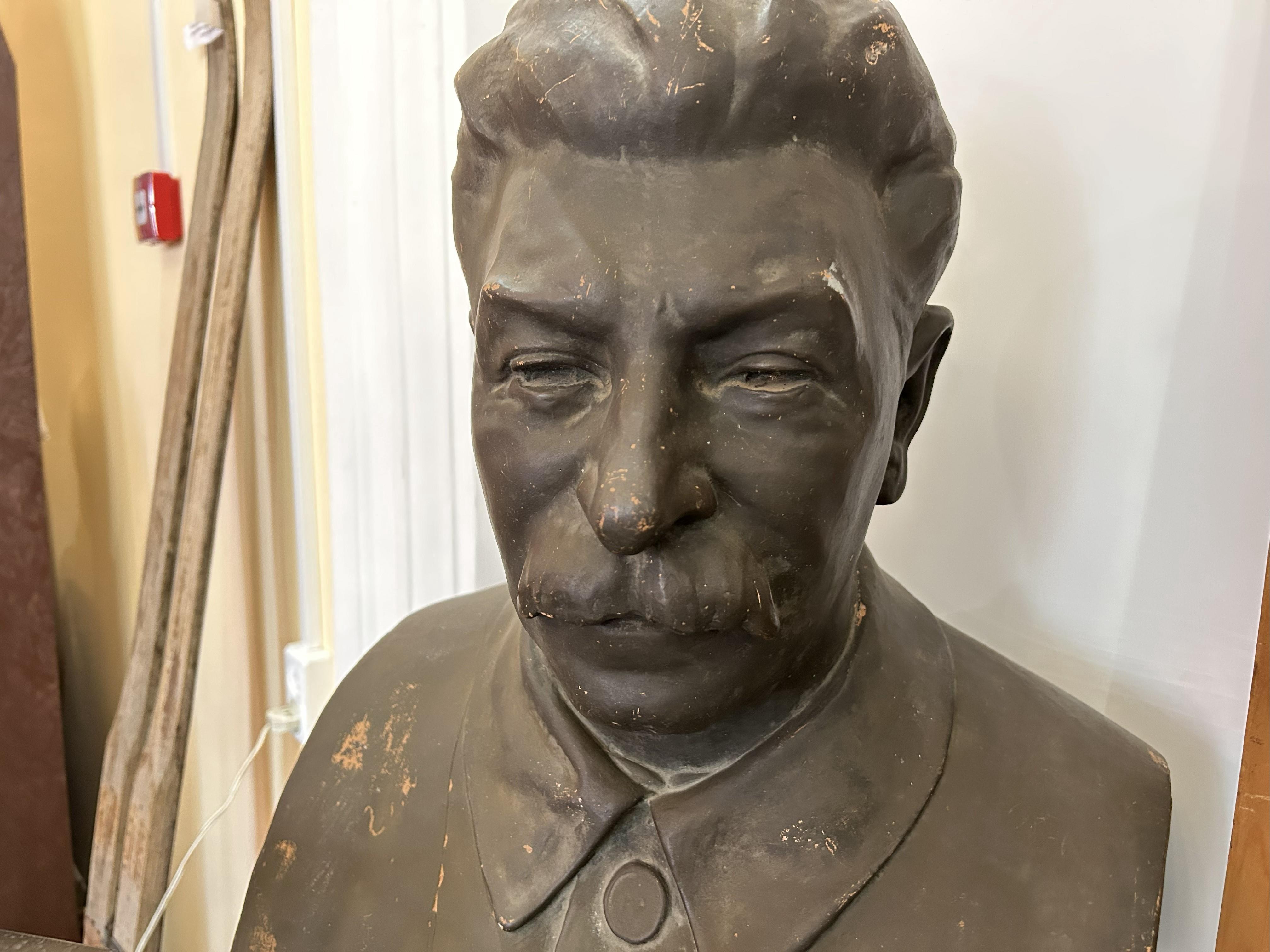
From the corner, a bust of «Comrade Stalin» looks cheerfully into the center of the hall — where glass shelves and exhibits dedicated to the repressed stand. There were many of them in the village. Among the most famous: in Bolshaya Murta, for example, the great surgeon and church figure Saint Luke Voino-Yasenetsky served exile.
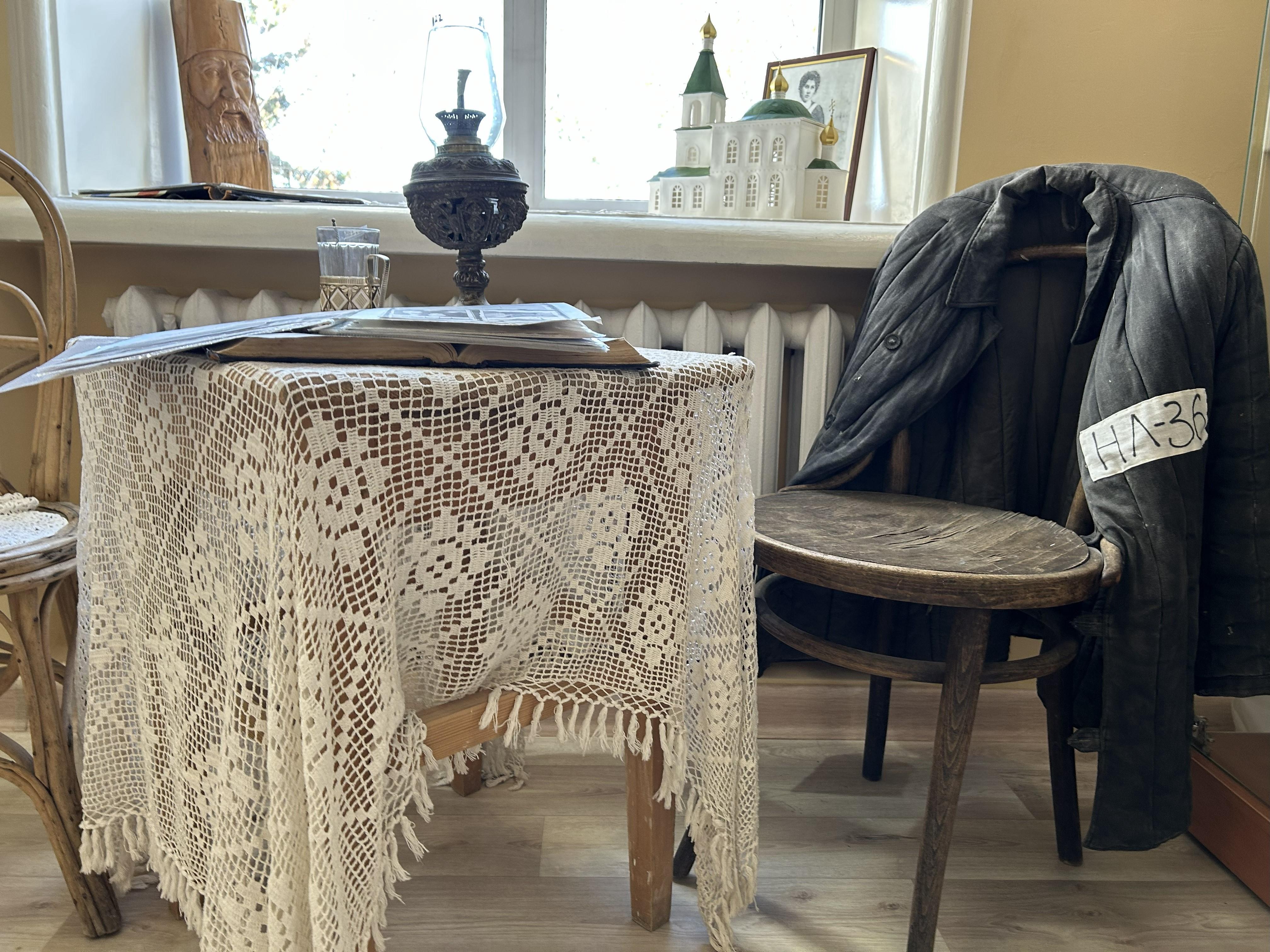
The name of exiled Ekaterina Maximova is inscribed in history thanks to her husband — Soviet illegal intelligence officer Richard Sorge.
Sorge was born in 1895 in the Baku Governorate of the Russian Empire, father — a German engineer. Mother — Russian, from a family of railway workers. Three years after Richard«s birth, his family moved to live in Germany.
He fought in the German army in World War I. He was wounded three times, radically revised his views during the war, became a communist. In the 1920s, he came to Moscow, worked in the Comintern and the Institute of Marxism-Leninism. Wrote analytical articles. Then he moved to work in the Red Army»s intelligence directorate.
From 1933 to 1941, he was a resident of illegal Soviet intelligence in Japan. On site, he created a large spy network that collected data on the plans of Nazi Germany and Japan.
He was one of the first to report to Moscow about the fascists« intention to attack the Soviet Union in 1941. He also reliably established that the Japanese did not plan to attack the USSR. This information allowed the General Staff to transfer troops from the Far East to the western front before the Battle of Moscow.
In the autumn of 1941, Japanese police arrested Richard Sorge, three years later he was executed in a Tokyo prison.
In 1964, he was posthumously awarded the title of Hero of the Soviet Union.
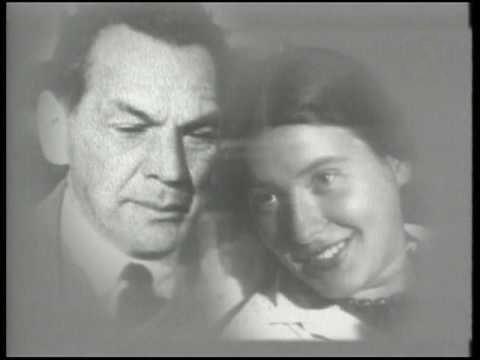
In the Soviet Union, they did not remember intelligence officer Richard Sorge for a long time. Many researchers believe that they started talking about him only after Nikita Khrushchev saw and allowed the screening in the USSR of the film «Who Are You, Dr. Sorge?», made by a French director.
— Richard Sorge was introduced to Ekaterina Maximova in the late 1920s. She gave him Russian lessons. Over time, they developed a relationship, — says Galina Kilb.
— What did she do for work?
— Ekaterina graduated from the Leningrad Institute of Stage Arts. She performed on stage in Petrozavodsk, and then got a job as an operator at the Tochizmeritel plant in Moscow. Interestingly, with her non-core education, she somehow rose too quickly to head of a large workshop. For those times, this is a unique case.
— What happened next?
— As a family, they lived together briefly. Only three months. Then Sorge went on a business trip to Japan. They met only two years later, when Richard came to Moscow. Just for two weeks. Then he left again. There is information that she became pregnant but could not keep the child. So she decided to adopt an orphan.
— Did she know about her husband«s real work?
— Most likely, no. Now we can only guess. In October 1941, Richard Sorge was detained by Japanese police. Ekaterina, by the way, knew nothing about this. And a year later in Moscow, she herself was arrested by the NKVD (People«s Commissariat for Internal Affairs) on suspicion of espionage.
According to historians, Stalin and his entourage did not recognize Richard Sorge and considered him a double agent working for German intelligence. This was the case until his rehabilitation in 1964.
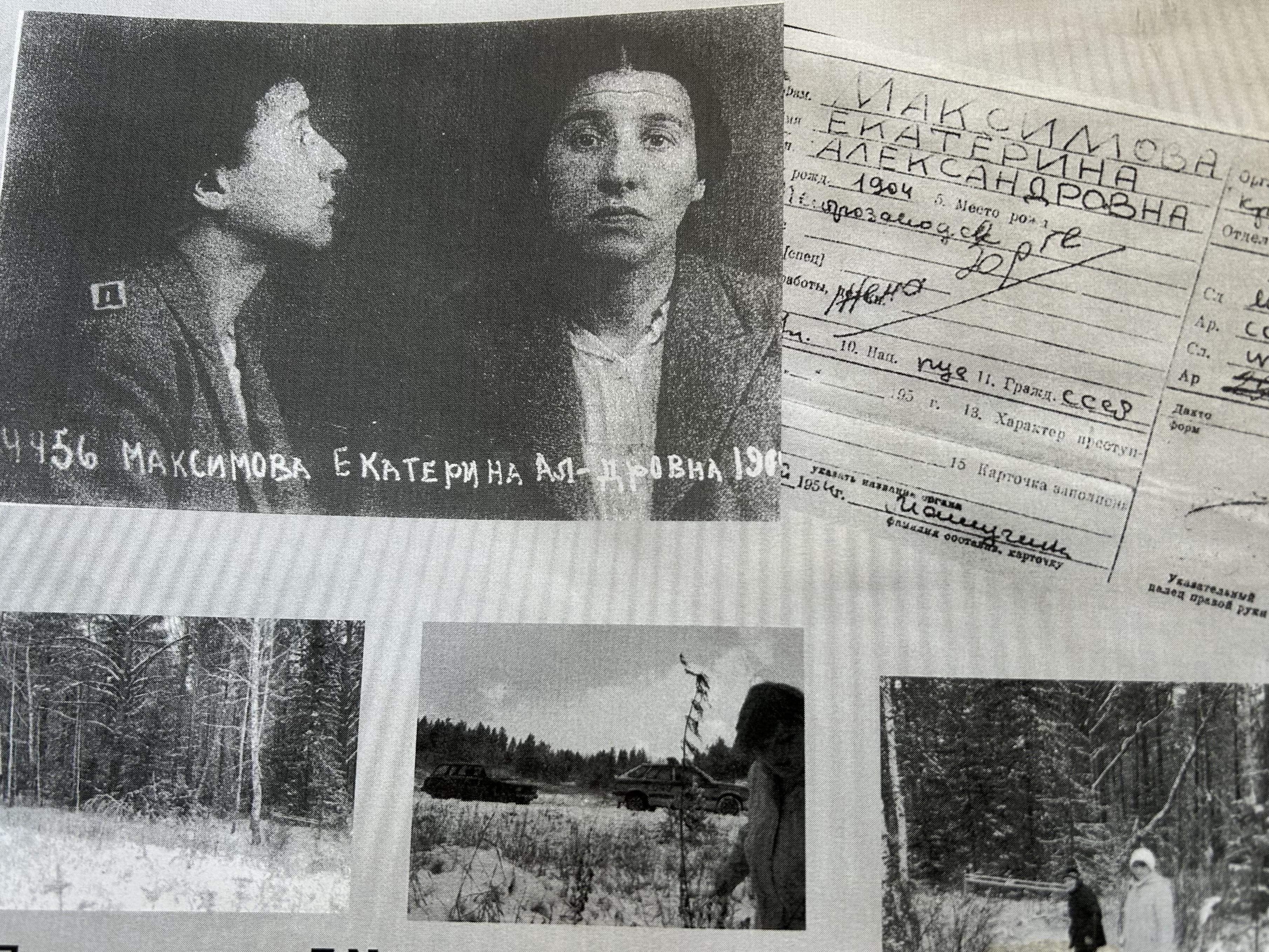
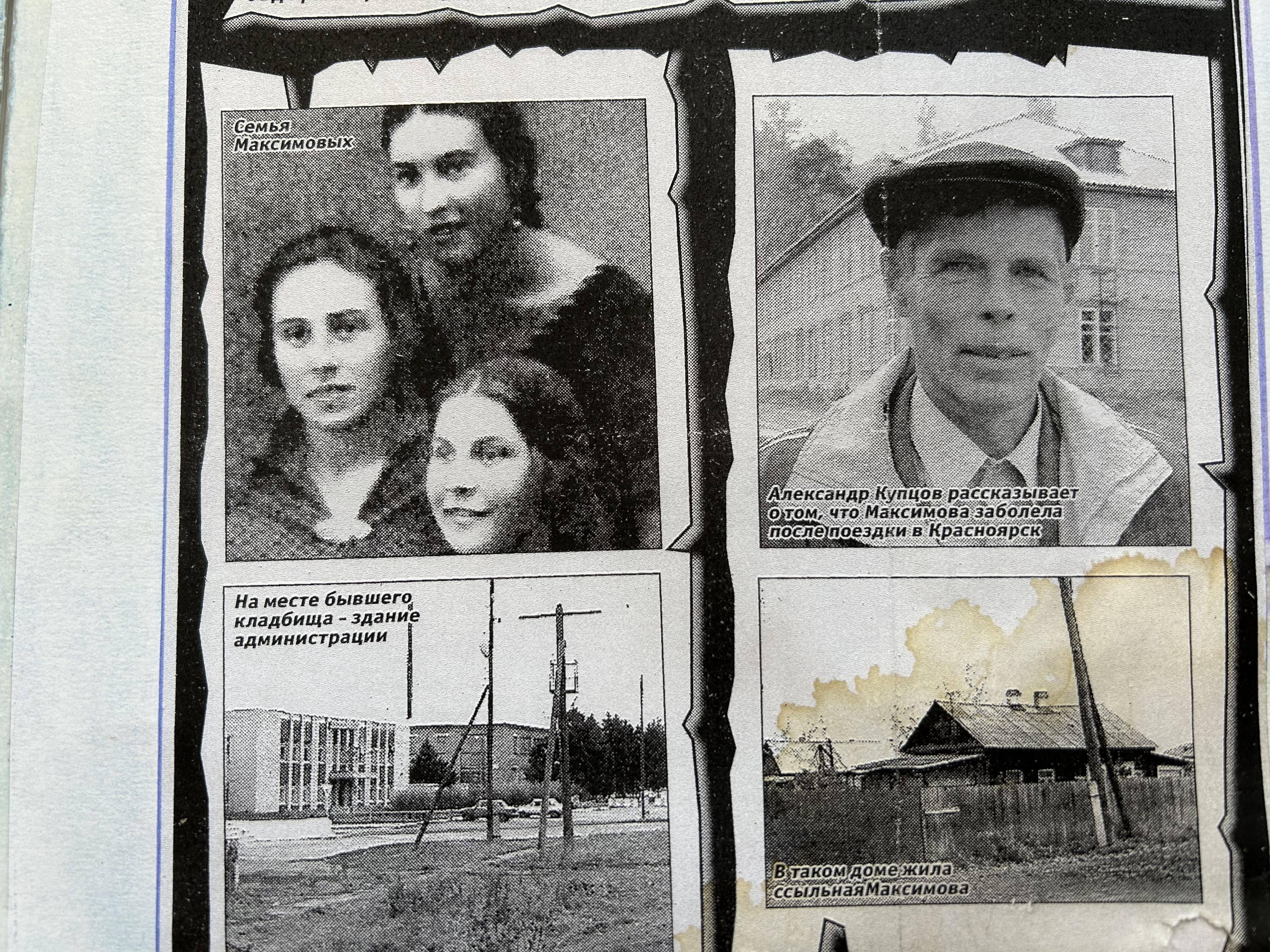
— As it turned out later, Maximova was arrested on suspicion of espionage ties with Willy Stahl, a German anti-fascist, friend of Richard Sorge, who introduced Katya and Richard. Willy Stahl himself was shot back in 1938, — says Galina Kilb. — In March 1943, by decision of the NKVD Special Council, Maximova was exiled to Bolshaya Murta for a term of 5 years.
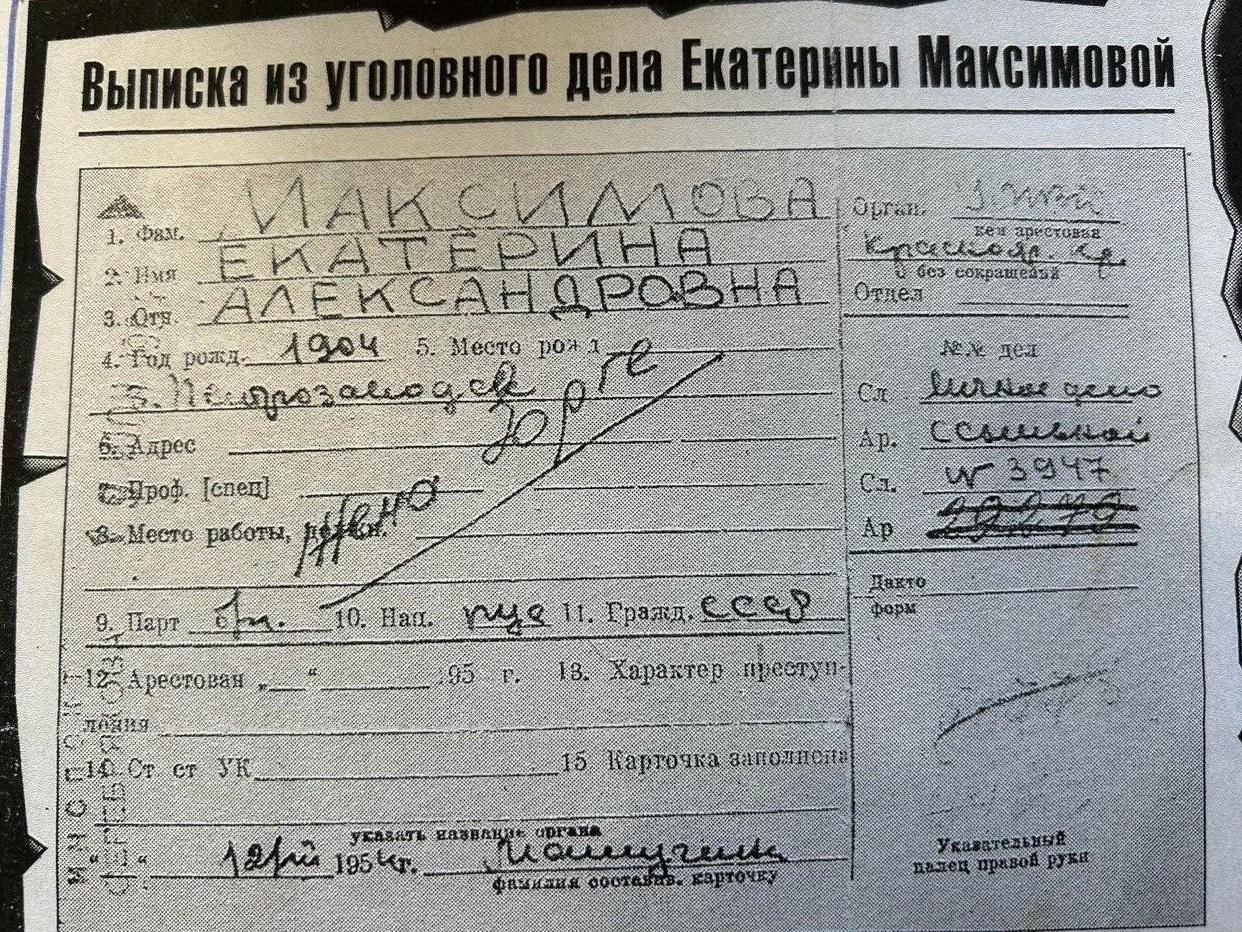
From a letter by Ekaterina Maximova to her mother (sent from B. Murta):
«Dear mother, God, how poor, naked, dirty I am now. Mom, write to me more often, for God«s sake, if you don»t want me to go crazy. After all, I haven«t heard from anyone for so long. Come visit me, I»ll be very glad. I believe that I will be back on my feet, achieve a good life. Right now, somehow not to die and hold on. Get a little nourishment. That«s the main thing».
«She should not have made it here at all»
— She was brought to the district on May 15, and a little less than a month later, doctors declared her death «from cerebral hemorrhage», — says Galina Kilb.
— They say she was poisoned.
— Look: she worked at a hospital in a village not far from Bolshaya Murta. They say she was sent to Krasnoyarsk under guard to pick up an anesthetic drug. She returned from the city already very unwell. There is a suggestion that she was simply made to drink it. Well, not of her own free will, of course. Because it looked like very severe poisoning. Like with vinegar. She burned out instantly.
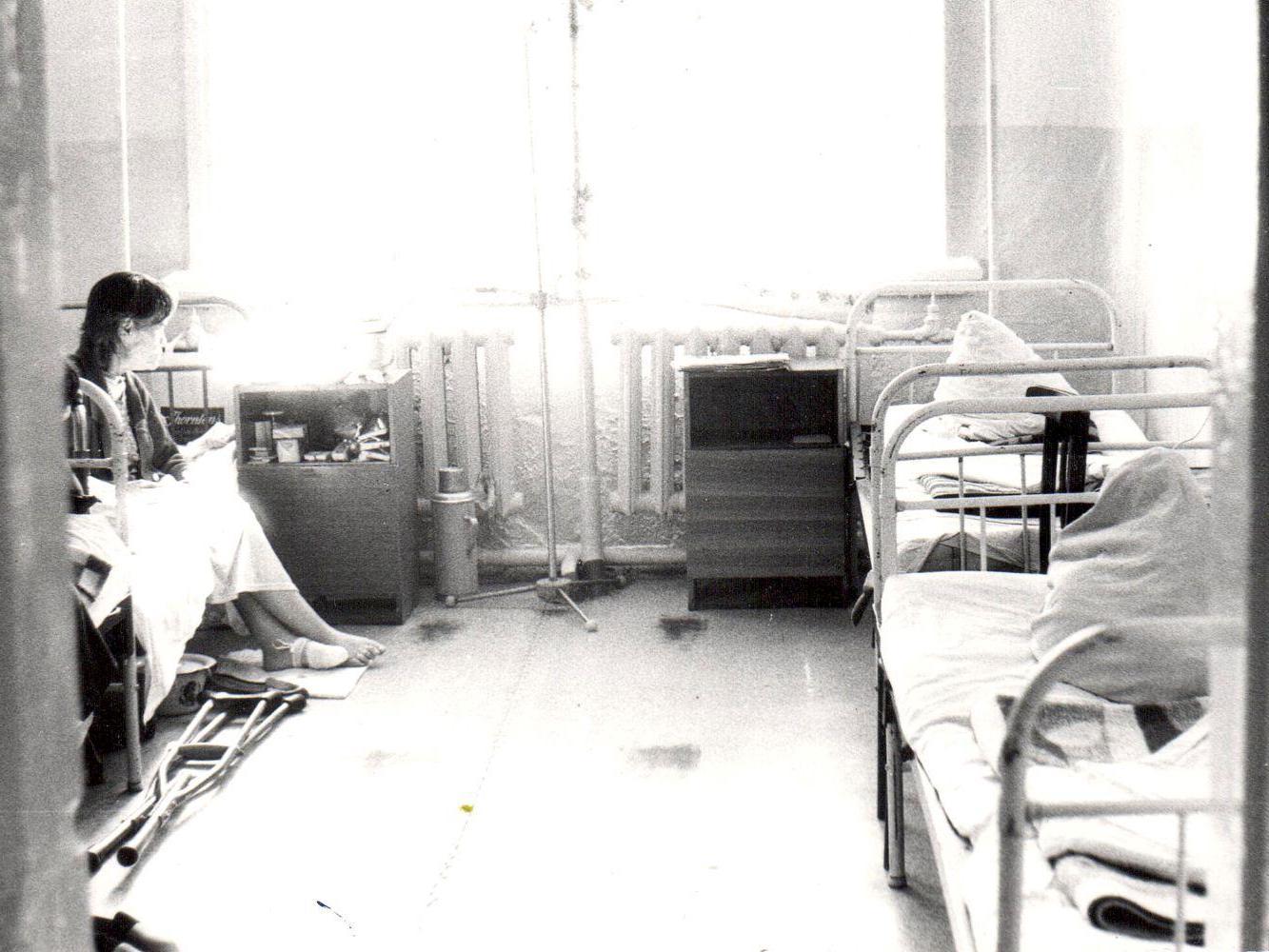
— Yes, I think she should not have made it here at all. Well, since she did, she had to be removed very carefully — maybe they thought she was somehow connected to intelligence. And that it was not for nothing that she taught Russian to Richard Sorge — but in fact, he, so to speak, recruited her, — says Galina Kilb.
In November 1964, the case of Ekaterina Alexandrovna Maximova was reviewed. By the determination of the Military Tribunal of the Moscow Military District of November 23, 1964, Ekaterina Maximova was rehabilitated — due to the absence of corpus delicti in her actions.
«They would hardly have buried her in an ordinary cemetery»
— In the last request we sent from residents of Bolshaya Murta to the Central Archive of the FSB, they replied that they had re-examined Maximova«s case. And they decided to keep part of this case secret, — says Dmitry Kurganov, chairman of the Russian Sorge Society (Moscow). — Why — we don»t know, it«s useless to speculate, but this is a sensation, that the FSB archive still considers part of Maximova»s case classified. Because practically all cases of exiles, even under these articles, have long been declassified.
— Why do you consider it important to find her grave?
— You know, if you study, dissect Sorge«s feat, like the feat of many other military intelligence officers, it becomes obvious that the origins of their feat — are mother, wife, family, relatives, and so on.
Meanwhile, a couple of months ago, on one of the old buildings of the Bolshaya Murta hospital, activists unveiled a memorial plaque in memory of Richard Sorge«s wife.
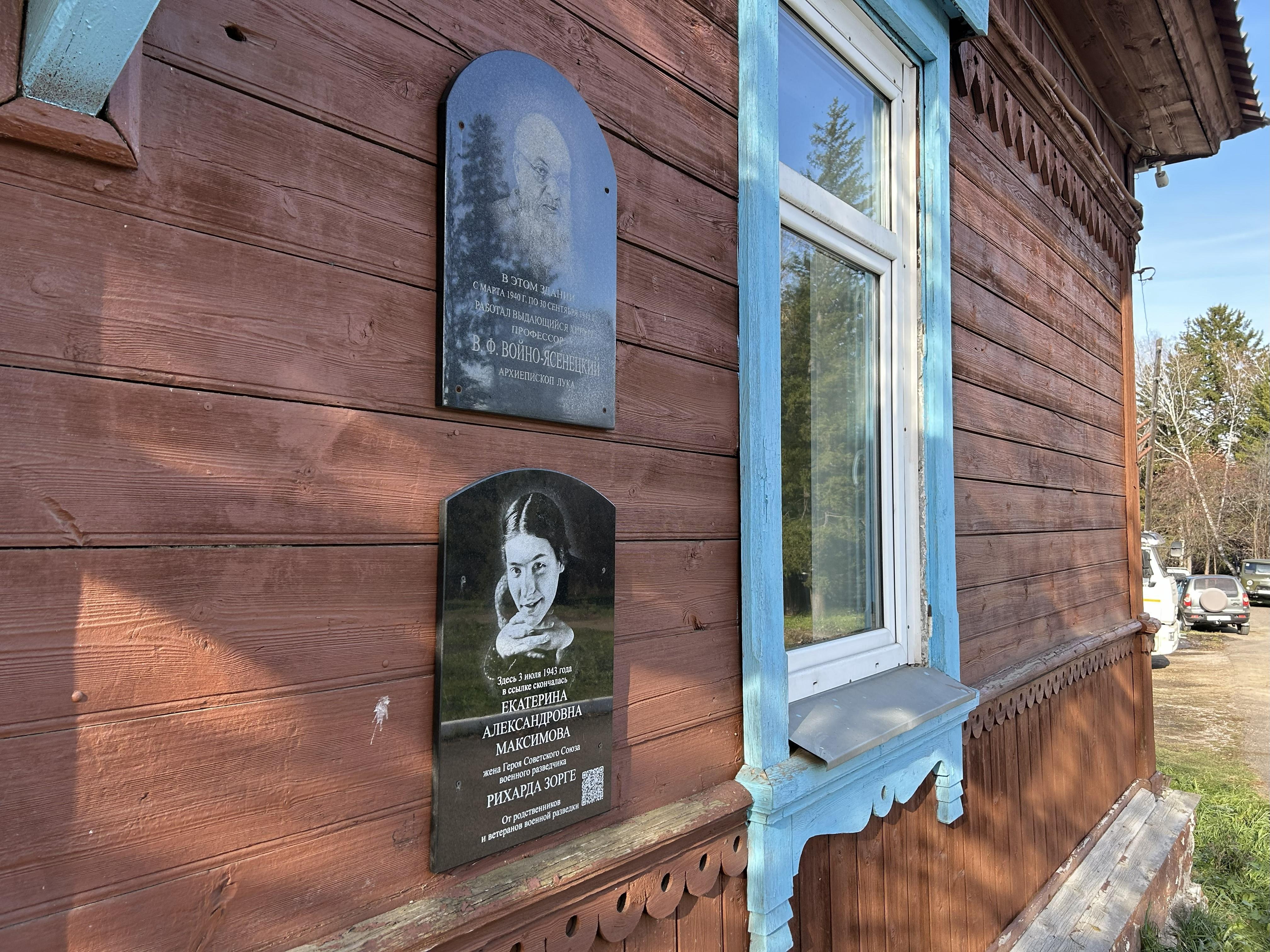
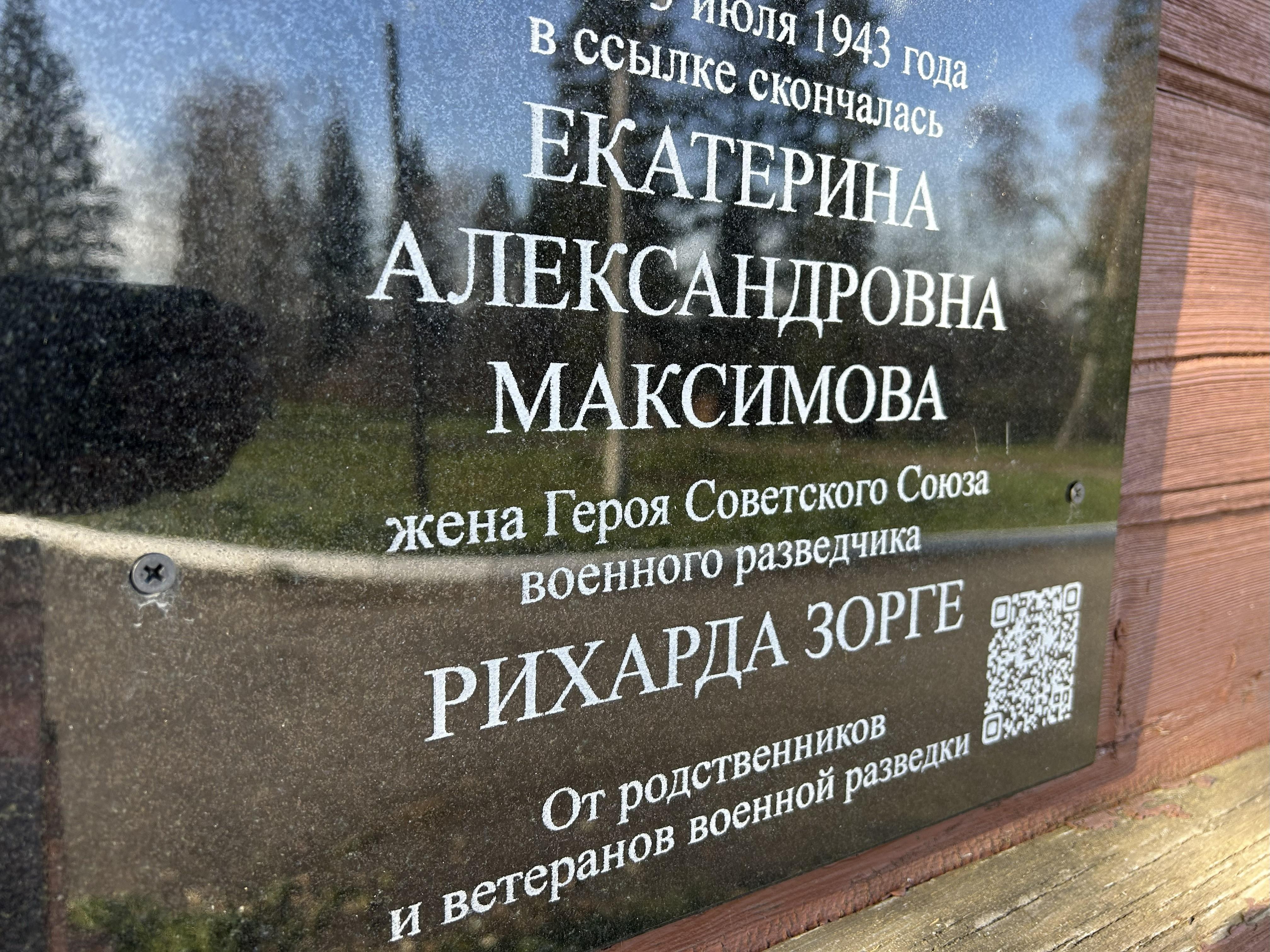
— They still cannot find the place where she is buried, — continues Galina Kilb. — According to one version — in our old cemetery. But considering the laws of wartime, people who were considered traitors, betrayers of the Motherland, would hardly have been buried in an ordinary cemetery. In general, nothing has been found yet. According to another version, her grave — nameless, naturally, may be a couple of dozen kilometers from the district center. In the now non-existent village of Saratovka. According to eyewitness accounts, there are four unidentified burials there.
It is in this place that they intend to concentrate on searching for the grave, the activists say.