2006 Krasnodar Rail Disaster: Bus Hit by Train, 22 Dead
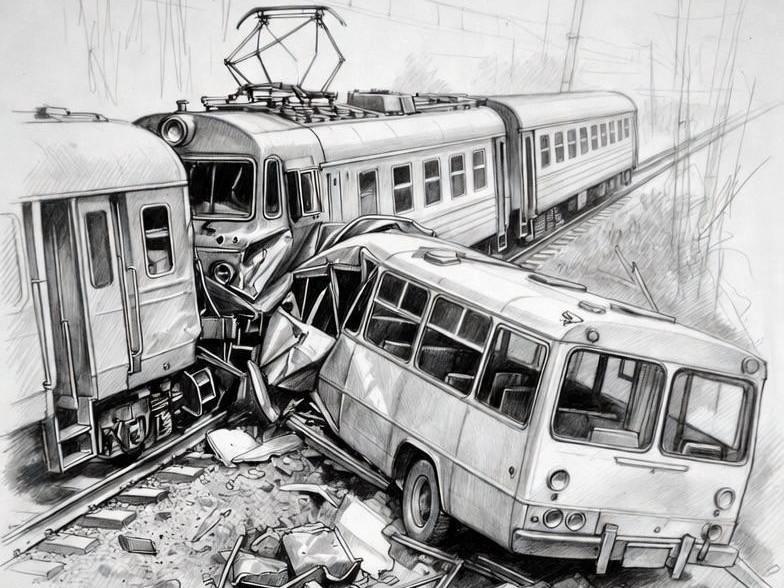

Exactly 20 years ago, in January 2006, at a railway crossing near Krasnodar, a commuter train rammed a bus carrying shift workers. In seconds, a routine morning commute turned into a disaster: 22 people died, and several more were seriously injured.
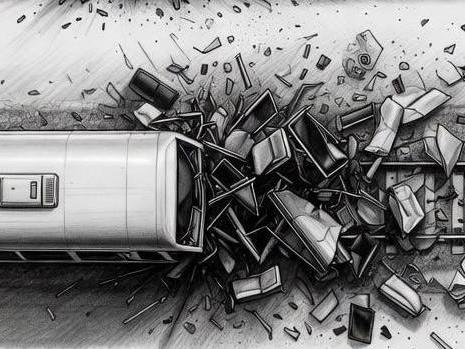
A two-day mourning period was declared in Krasnodar, but years later the tragedy is almost forgotten. Portal 93.RU recalls the largest railway disaster in Kuban.
Bus and Train on the Same Path
The accident occurred around eight in the morning at an unguarded railway crossing near the Voronezhskaya stanitsa (village) in the Ust-Labinsky District, at the 84th kilometer of the Krasnodar–Kropotkin section. It is about 30 kilometers (19 miles) from the current borders of the regional capital.
A commuter train from Krasnodar to the Caucasian Mineral Waters was traveling on this route, having left the station about an hour earlier. At the same time, a shift bus of Soviet production, the KAvZ-3270, was traveling along its usual route from Ust-Labinsk toward the village, carrying workers of the local cannery «Kubansky Standart» (Kuban Standard).
The bus driver, who was 42 at the time, violated the rules and drove onto the railway crossing. The train hit the bus on the side, literally tearing the vehicle apart and throwing it off the road. The bus knocked down a concrete power line pole, and one of the train cars derailed.
Later, the driver died in the hospital, and the local prosecutor«s office immediately began an investigation. The exact number of victims could not be determined immediately — the impact was so strong. On the same day, the Russian Prosecutor General»s Office clarified that 22 people had died, including 20 women. Fragments of the bus were scattered over 100 meters (330 feet).
«As a result of the collision, at least 22 bus passengers died, six were taken to the hospital, and the bodies of 21 dead have been found, as well as body fragments,» the portal Yug.ru quoted the official statement.
There were 90 passengers on the train, and no one was injured. Only the train driver was wounded, but he received medical assistance quickly.
Screams, Silence, and the Struggle for Survivors
Company employee Svetlana Stotsenko got off that bus shortly before the tragedy. The shift bus was taking workers home after the night shift. Her stop was the first — the woman lived near the crossing.
«We got on the shift bus after the night shift. I was the first to get off when the bus stopped. When I entered the yard, I heard a loud crash. Nothing was visible. When I heard the ambulance sirens, I ran to the scene of the tragedy. All my acquaintances died. It»s a miracle that my stop was the first, otherwise…« Stotsenko told journalists.
When the woman ran out into the street, due to the heavy fog, she didn«t even immediately understand what had happened. Then she heard the cries of one of the employees — a young man survived and was screaming in pain that everyone had died.
Rescuers were the first to arrive at the scene. They saw a horrifying sight: the train had derailed, knocked down several contact line poles, and dragged the bus wreckage for about 200 meters (660 feet). Fragments of the vehicle and body parts were scattered for tens of meters along the railway bed.
By noon, relatives of the company«s employees learned about what had happened and began to gather at the crossing to find out about their loved ones. But the area was already cordoned off. The remains of the bodies began to be taken away closer to the evening.
January 14 and 15, 2006, were declared days of mourning in Krasnodar Krai and Adygea. The majority of the deceased passengers were residents of the neighboring republic.
One of the Last Trips
According to Channel One, the bus literally fell apart into pieces. And the crossing was supposed to be closed to traffic: the decision was made back in 2005, but they did not have time to do so due to financial difficulties.
«The shift bus of the cannery was making one of the last scheduled trips on this route. In just a few days, the route was supposed to change,» the correspondent said.
Almost immediately, it became clear that there were no warning road signs «Railway crossing without a barrier» on the road. The crossing itself did not have a level surface, as required by law. Also, the road had not been cleared of compacted snow and had not been treated for black ice.
Even after the accident, the fatal crossing continued to operate for some time, with trains only reducing speed and starting to sound their horns loudly.
The last victim of the disaster was buried in Voronezhskaya stanitsa only on January 16, 2006. By that time, it was already known that the train«s instrument readings confirmed the serviceability of the train»s technical means. The signaling devices at the railway crossing were also working normally. Investigators were finding out whether the plant was legally operating vehicles for passenger transportation.
Violation of Rules and Fog
According to Russian Railways (RZhD), the blame for the accident lies with the bus driver who violated the rules. The bad weather complicated everything: there was heavy fog in the area of the crossing that morning. At the same time, the bus was not equipped for travel on icy roads: at the very least, its tires were worn out.
Ten years after the tragedy, the children of the deceased and close relatives filed lawsuits in court to recover a total of 1 million 507 thousand rubles (about $16,700 at current rates) from the open joint-stock company «Russian Railways» (RZhD) and the limited liability company «Kubansky Standart» (Kuban Standard), bailiffs reported. It is unknown whether they received the payments.
Twenty years later, the accident near Voronezhskaya stanitsa remains one of the most tragic railway disasters in Kuban. It rarely surfaces in the federal agenda, but at the local level it is still remembered as an example of what the combination of human carelessness and systemic shortcomings leads to.
After the tragedy, the North Caucasus Railway strengthened safety requirements at crossings: some dangerous sections were closed, others were equipped with barriers and additional signaling, and targeted modernization programs began. But even years later, almost every winter and spring, reports appear about new collisions of trains and cars at crossings across the country.