AI in Moscow Clinics Now Detects Hidden Osteoporosis

Moscow has begun using artificial intelligence for the early diagnosis of osteoporosis. This disease, in which bones become brittle, often develops for years without symptoms. The new AI service helps find its signs at the earliest stages.
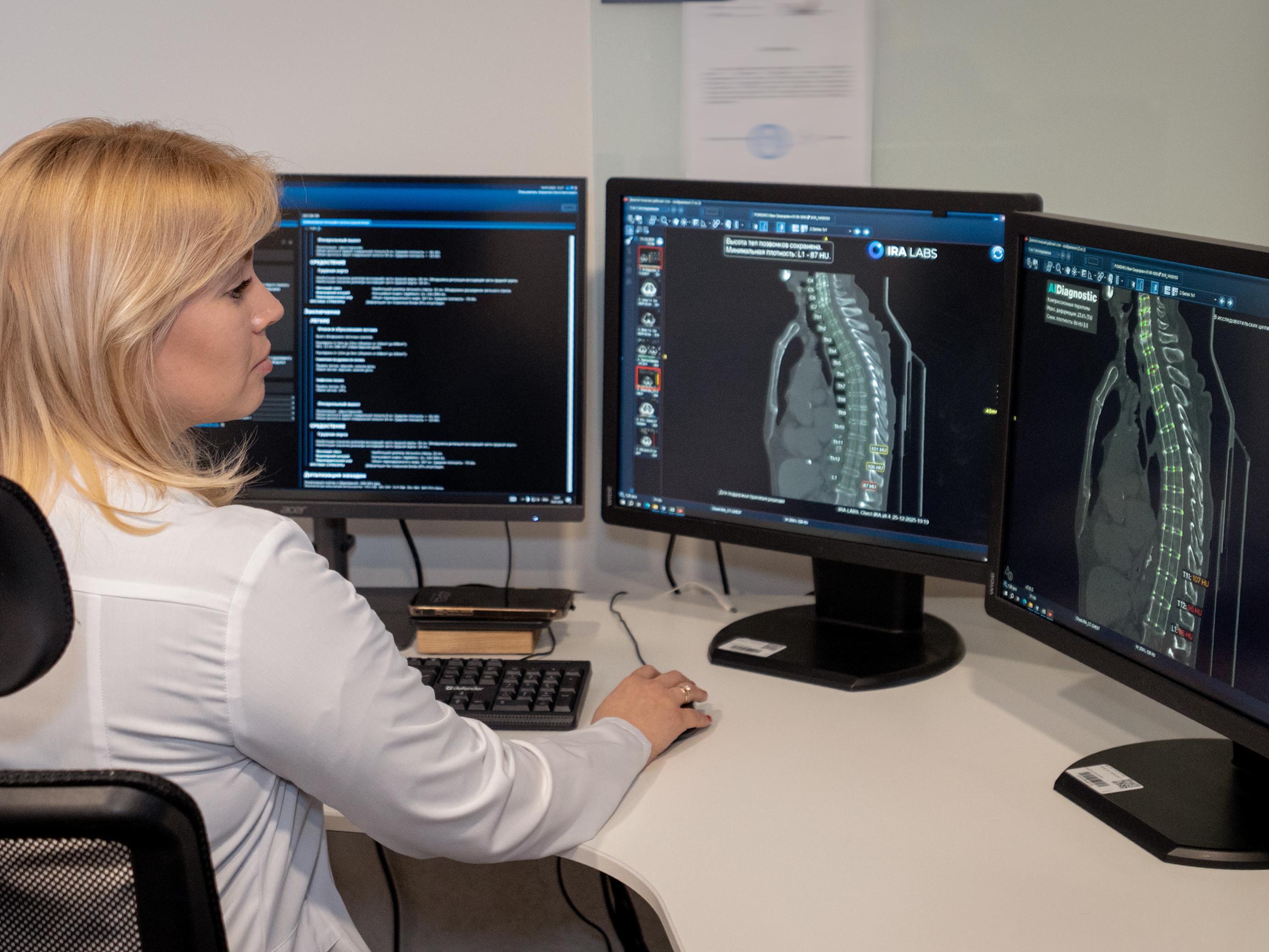
The technology automatically analyzes computed tomography (CT) scans that are taken for other reasons. For example, a person undergoes a routine CT scan of the lungs, and the neural network simultaneously checks the condition of their bone tissue. This allows the problem to be detected before it becomes apparent and avoids additional radiation from a separate examination.
Anastasia Rakova, Deputy Mayor of Moscow for Social Issues, explained in detail the benefits of this approach.
“We are consistently introducing artificial intelligence technologies into everyday practice, for example in the analysis of X-rays for various clinical indications. This approach of additional screening for pathologies allows us to prevent problems in advance, instead of dealing with the consequences. Recently we have implemented automatic osteoporosis screening on CT studies. It detects the disease at early stages, when a person does not even suspect a problem, while it develops without symptoms.”
On the scans, the neural network highlights potentially problematic areas of bones in red or orange. This helps doctors quickly pay attention to dangerous changes. As emphasized by Yuri Vasiliev, the chief physician of the Center for Diagnostics and Telemedicine (CDT), the insidiousness of osteoporosis is that it often goes unnoticed until a serious fracture occurs. AI services work with already completed studies and serve as an additional «safety net», not allowing the disease to be missed.
It is important that the final diagnosis is always made by a radiologist. Artificial intelligence only acts as an assistant that speeds up and makes the analysis of images more accurate.
Today in the capital, doctors are already using more than 60 such AI services for diagnosing diseases in 43 areas. Some comprehensive solutions can detect up to 14 pathologies on a single image. Since 2020, artificial intelligence has helped analyze almost two million studies. This work is part of the strategy to improve the quality and accessibility of medical care for Muscovites.