Repair by Verdict: Mayor Convicted for Housing Fix

At the end of 2025, a court sentenced the head of the city of Borzya, Vladimir Nekhamkin, finding him guilty of exceeding official authority in the repair of municipal apartments.
Investigators determined that in December 2022, the city administration entered into three contracts with an individual entrepreneur totaling 1.6 million rubles (about $17,800 at current rates) for the repair of six apartments in the flexible housing stock. Under the contract terms, the administration was to pay for the work only after its full completion and the signing of corresponding acceptance certificates. However, on December 30, Nekhamkin ordered the sums to be transferred to the entrepreneur. During the preliminary investigation, during which the damage was estimated at 1.6 million rubles, the head of the city did not admit guilt.
The Borzya City Court sentenced him to 3 years and 6 months of probation, and also banned him from holding leadership positions in state bodies for 1 year and 6 months.
The prosecutor«s office appealed the decision, demanding that Vladimir Nekhamkin be sent to a penal colony and that full damages be recovered from him. Following this, the mayor also filed an appeal. We spoke about why it was necessary to rush the transfer of money and why the damage was calculated as the full contract amount despite the repairs being done and a penalty being paid.
Due to the reorganization of Borzinsky District into Borzinsky Municipal Okrug, all administrations of urban and rural settlements were liquidated on January 1. Currently, Vladimir Nekhamkin is no longer the head of Borzya.
— What kind of apartments were these that were repaired? Can you describe their condition and status?
— Eight municipal apartments that the city administration included in the flexible housing stock at the request of the Borzya Prosecutor«s Office.
Since these premises are intended for people who have been forcibly left without their only housing as a result of emergency circumstances, they must be suitable for permanent residence, meet established sanitary and technical rules and regulations, fire safety requirements, and generally be equipped.
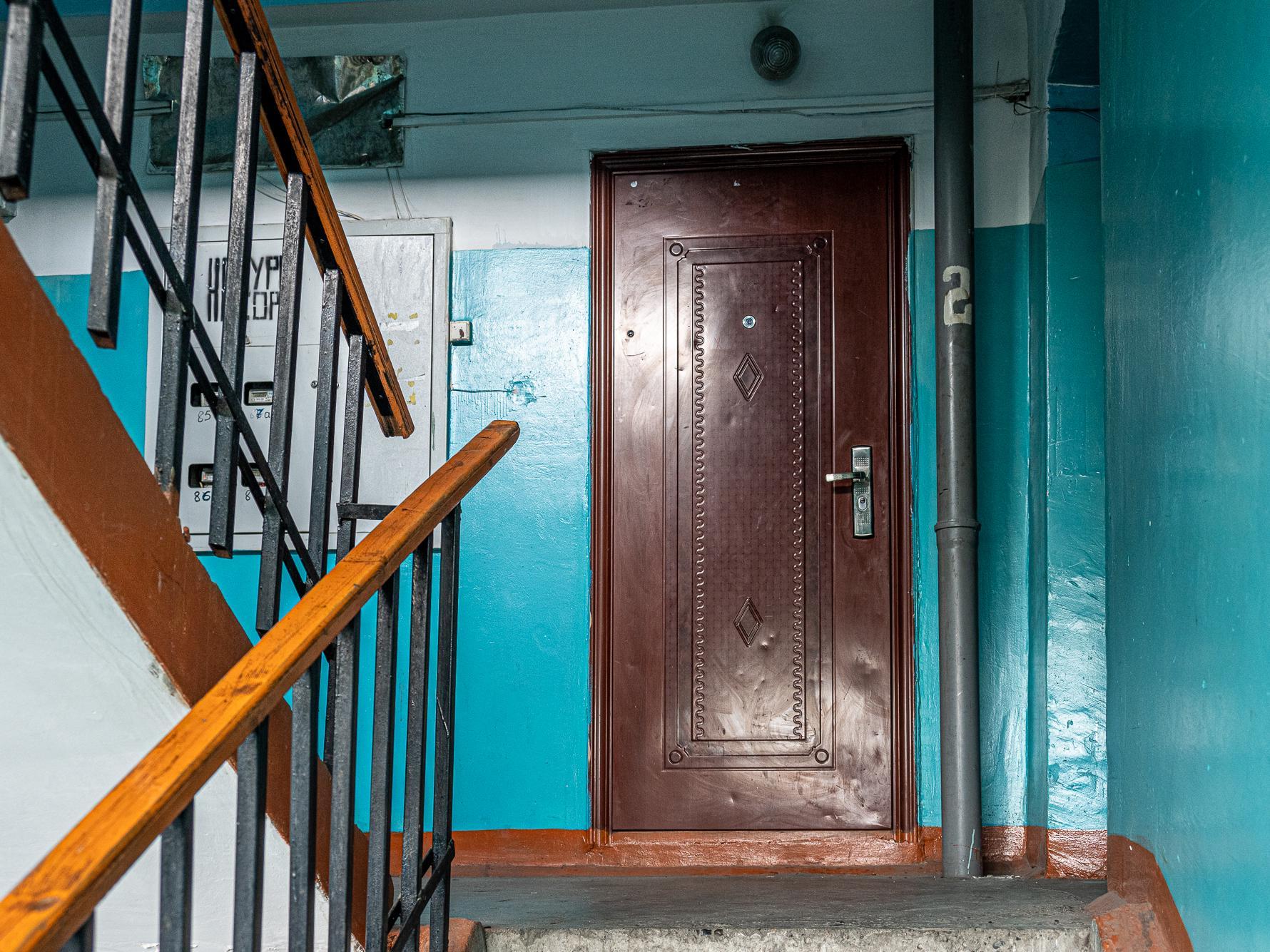
At the time of inclusion in the flexible stock, the Chief State Housing Inspector of the State Inspectorate of Zabaykalsky Krai, after inspecting these apartments, determined that they were in an unfit condition: without entrance doors, electricity, and heating appliances, littered with trash. Two apartments were completely inaccessible: garbage piles reached the ceiling. To draw up a defect report, they entered them from the street through windows.
The inspection materials were handed over to the Borzya City Court, which by its decision recognized the inaction of the city administration as illegal and obligated it to carry out repairs in the apartments.
In total, the court issued two decisions concerning the flexible housing stock, with a detailed list of the types of work to be performed: one dated December 22, 2021 — with an obligation to complete repairs by June 30, 2022, the second dated November 29, 2022 — with an obligation to complete repairs by March 1, 2023.
I assumed the position of head on December 6, 2021, and the city budget for 2022 did not allocate funds for the repair of these apartments. The budgets of previous years also did not, because the administration had never engaged in repairing municipal apartments.
I note that this is far from the only court decision not executed by the administration. Traditionally, on the third day, the newly elected head of the city is handed a stack of writs of execution by the deputy senior bailiff of the Borzinsky Regional Department of Bailiffs.
In my case, there were about 30, the most overdue from 2011, and for each failure to comply, the head faces criminal liability, which the bailiff warned me about.
Since the flexible stock was urgently created for relocating residents from a emergency nine-story building that was under scrutiny by all authorities, including the Prosecutor General«s Office, in July 2022, bailiffs collected an enforcement fee of 50,000 rubles (about $560 at current rates) from the administration. A month later, I was found guilty of committing an administrative offense under Part 1 of Article 17.15 of the Code of Administrative Offenses »Failure by a debtor to comply with the requirements of an executive document,« and fined 30,000 rubles (about $330 at current rates).
The building in Borzya, which had been abandoned since the early 1990s, was completed to relocate people from dilapidated and emergency housing. According to the prosecution, former mayor Nikolai Spiridonov and his deputy Vitaly Parshonov, from 2012 to 2014, without following proper procedures, approved acceptance certificates for residential premises in a building that did not meet safety requirements. The apartments were provided in 2013-2021 to needy orphans and citizens relocated from dilapidated and emergency housing. In 2019, critical defects in the apartment building, caused by redesign planning, led to it being declared emergency. Now, relocating 158 residents requires about 1 billion rubles (about $11.1 million at current rates). The damage to the budget is estimated at 122 million rubles (about $1,356,000 at current rates). We described the situation in this article.
A repeat requirement to repair the flexible stock within seven days was given to me in early December 2022. At that time, the second court decision had already taken effect, and Borzya was experiencing the most severe heating season in recent years.
— From which specific budget were the funds for these works allocated?
— They were financed from the local budget. Although I said that no funds for apartment repairs were included in the budget, in the last ten days of December 2022, finance officials reported that there were unused 1.6 million rubles. This money was allocated for co-financing work under a concession agreement with a resource supply organization in the water supply sector, but it did not fulfill its obligations by the end of the year, so we had leftover limits and funds.
At that time, we already had two court decisions on repairing the flexible stock, as well as significant fines for non-compliance and requirements to complete the work within the coming months.
Therefore, I decided to spend this money on repairs. On December 25, we prepared local cost estimates, drafted municipal contract projects, and began searching for contractors.
— Who lives in these apartments?
— Seven of the eight apartments are located in the Borzya-2 microdistrict, a former military town that was transferred to the municipality in the early 2000s, and one apartment is in the city center.
After repairs, the apartments are fully ready for occupancy, meaning they have doors, windows, water supply, sewerage, heating, electricity, and floors. Currently, three apartments are occupied, including one where the wife of a participant in the special military operation lives with a young child. The remaining repaired apartments are in reserve.
Unfortunately, residents of emergency buildings have so far refused to move there due to the microdistrict«s distance from the city center. Some fear that by receiving an apartment from the flexible stock, they will lose the right to compensation or miss other, more favorable offers.
— What necessitated and what was the legal basis for transferring funds to the contractor before actual completion of work?
— Article 242 of the Budget Code of the Russian Federation determines that all operations for budget execution are completed by December 31.
This means that these 1.6 million rubles could be directed to repairs within the approved limits under the housing and utilities subsection before January 1. If the money had remained on the administration«s accounts at the beginning of the financial year, it would have been transferred to the general account and directed to priority needs. Since in January we have two weeks of holidays and revenue receipts are always delayed that month, the money would have gone to paying advances to employees, insurance premiums, and taxes.
Reinstating these limits into the already adopted budget of the new year was practically impossible for two reasons. First, acute budget deficit: salaries for both the administration and five city municipal institutions were only provided for 9-10 months. Plus, we have an overdue budget loan from 2011 of 40 million rubles (about $444,000 at current rates) with annual interest payments of 6 million rubles (about $66,700 at current rates).
Second, the winter of 2022-2023 was remembered by Borzya residents for endless waves of utility accidents. More than 70 incidents occurred, and 9 out of 14 boilers failed. We did not expect that, in the conditions of a utility apocalypse, the city council — and only they can approve budget changes — would approve allocating any funds for repairing municipal apartments.
Also, all budget changes are subject to approval by the district Control and Accounts Chamber (KSP), and without its approval, the deputies have never once positively accepted such issues.
The Chair of the KSP continues to argue to investigators and the court that the money could have been spent on more important purposes, including preparation for the heating season.
I cannot agree with her, because now, with hindsight, it is obvious to everyone that such piecemeal applications cannot resolve the systemic crisis of the city«s municipal utilities. Only a comprehensive approach involving the administration, the resource supplier, the Ministry of Housing and Utilities (MinZhKKh), and the Capital Repair Fund ultimately achieved the necessary result for Borzya residents.
In short, there were five days left until the end of the financial year, and we prepared two contracts for three apartments each and one for two, totaling eight apartments.
At that time, we were completing the acceptance of work from three contractors who were engaged in landscaping and repairing a dormitory. We expected each of them to take one contract.
But in the end, two Chita-based firms refused, and a local individual entrepreneur agreed, and all three contracts were signed with him on December 29, 2022.
— What specific work was completed at the time of the money transfer?
— At the time of the money transfer, no work had been completed. The contracts were signed on December 29, 2022, and December 30 was the last working day of the Federal Treasury Department for Zabaykalsky Krai, and payment was made based on invoices submitted by the contractor.
Treasury workers always check municipal contracts for compliance with the registered budget obligation regarding the contract price, subject matter, and payment procedure, and they had no issues with the payment.
We did not invent this scheme specifically for these contracts, because two months earlier, under the same conditions, we ordered the manufacture of seamless boiler tubes from a factory in Yekaterinburg and cast iron plates for repairing the boiler furnace at the Central Boiler House from a factory in Barnaul. Transport companies delivered everything to us on the same terms: «money up front, delivery later.»
Of course, if there had not been the urgency demanded by the judicial and supervisory authorities, such contracts would be better concluded under standard conditions.
— Are all works under the contract fully completed now and have they been accepted by the customer?
— Currently, the work is finished. During acceptance, a number of deficiencies and comments were identified; the commission did not accept this work, and before any investigative actions, the administration issued a claim to the contractor for 370,000 rubles (about $4,100 at current rates), which he voluntarily returned to the city budget.
I emphasize that the administration had never previously repaired municipal apartments, and unfortunately, we were not able to devote particular attention to this process this time.
First, immediately after the heating emergency, the head of the housing and utilities department was fired, and a replacement was never found, and it was he who was supposed to interact daily with the contractor during apartment repairs. Second, on May 1, 2023, we had a new emergency — a fire. There were no casualties, but the material damage was huge for us — about 50 million rubles (about $556,000 at current rates); three houses, a store, a vehicle depot, and dozens of garden plots were affected. At that time, despite the storm wind, the governor arrived by helicopter, held an emergency headquarters, assigned tasks, and gave each their due. In July, a flood occurred; the Borzyanka River entered the northern part of the city, leaving more than a hundred households without crops.
Between the fire and the flood, we managed, albeit with difficulty, to get rid of ZabTEK JSC, changing the resource supply organization in the city«s heat supply sector. And of course, all the administration»s efforts were directed at preparing for the heating season. Despite the tense conditions, the administration conducted commission inspections of apartment repairs on an ongoing basis.
And today, all apartments are ready for occupancy, meaning they have doors, windows, water supply, sewerage, heating, electricity, and floors. Plus, the 370,000 rubles that the contractor returned to the city budget at the administration«s request. If necessary, these funds can also be used for any additional repair work.
— Do you believe that the damage caused to the budget was assessed correctly and objectively?
— I disagree with the damage assessment. First, it was 600,000 rubles based on expert reports. In April, it grew to 1.6 million rubles, i.e., the full contract amount.
From the case materials, it appears that this growth is linked to one phrase from an expert during his interview with the investigator, that «everything there needs to be redone.» To determine whether it is really necessary to remove new doors, windows, floorboards, electrical wiring, plumbing and radiators, plaster and paint, the defense commissioned an expert assessment to determine the quality and cost of the work actually performed.
Vladimir Nekhamkin claims that the expert«s quote is in the case file. However, he does not have a copy of the protocol for the journalist.
Of course, we surprised the expert community with our municipal contracts. If 1.6 million rubles had been spent on repairing one apartment and we proved that that«s what it costs, everything would have been clear.
Here, on average, 200,000 rubles (about $2,200 at current rates) was spent on repairing an apartment officially deemed unfit for habitation by the court.
The most interesting thing is that it turned out that the cost of materials in all three municipal contracts did not include VAT, meaning the estimated cost of all materials was 20% lower than the actual market price.
Therefore, the experts determined the cost of unperformed work at 358,500 rubles (about $3,980 at current rates), and the construction and repair work actually performed at 1,508,000 rubles (about $16,760 at current rates).
Let me remind you that the total contract amount was 1.6 million rubles, and the contractor returned 370,000 rubles to the budget for identified deficiencies.
The experts who drew up the reports during the preliminary investigation confirmed in court that they also identified the absence of value-added tax, but did not apply it in their calculations because «they were tasked with finding what increases the damage, not what decreases it.»
Vladimir Nekhamkin claims that this quote from the experts was heard during the court session and is recorded in the minutes. However, he does not have a copy of the minutes for the journalist.
The whole story with VAT would not seem so stark if, at the same time, Vladimir Putin himself had not explained to the people on a direct line that an increase of just 2 percent is a forced and temporary measure. Against this background, the prosecution«s statement in court pleadings that their expert report is correct because their experts were warned in writing about giving false testimony, and that the defense»s expert report should not be considered because there is no such receipt, sounds more than absurd.
So what if this payment is indicated on all the merchandise checks and invoices submitted by the contractor for examination? Who cares if materials are 20% cheaper or more expensive?! If they said that purchases can be made without VAT, then so be it. And everyone is obliged to believe this «damage» because only their experts know what giving false testimony is.
— Was the contractor held to any liability — administrative, civil, or criminal — for unfulfilled obligations?
— To date, I am not aware of any liability being imposed on the contractor.