Pregnant student survives aneurysm, saved by Perm neurosurgeons
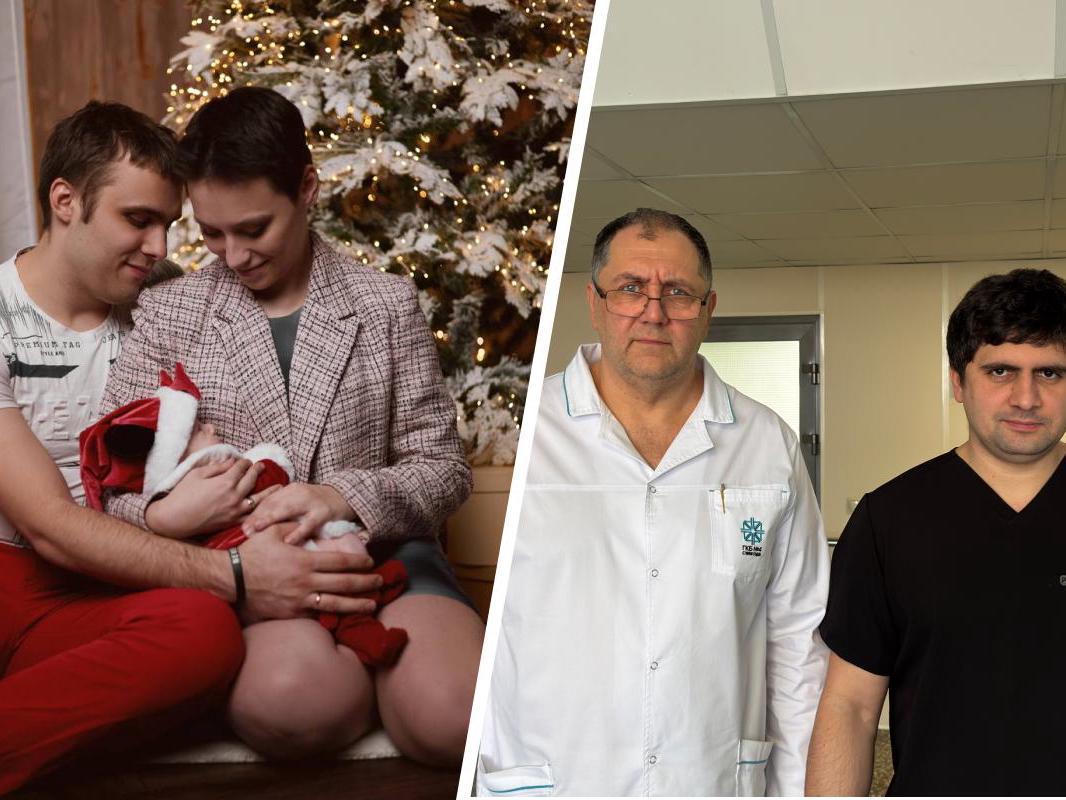

Unfortunately, we don«t often receive such letters. »Hello, I would like to express my gratitude to Hospital No. 4 in Perm for saving my life and my baby«s; there was a ruptured aneurysm during pregnancy,» wrote a Perm resident to the editorial office and attached a short video that her mother compiled from various clips. We spoke with the patient and the neurosurgeons to learn more about the miraculous rescue story.
Marina is 22 years old and a student. In June, she was 25 weeks pregnant and preparing to defend her diploma at a vocational school and to enter a higher education institution. On June 12 at nine in the evening, Marina had a severe headache and called an ambulance. Upon arrival, medics suspected that Marina had a drug overdose, after which they took her for further examination. Marina does not and has never used drugs; the real cause of the pain was discovered at the hospital.
«While I was in the ambulance, I lost consciousness and was connected to a ventilator,» says Marina. «They took me to City Clinical Hospital No. 2, where they did a CT scan and realized that I had a ruptured aneurysm.»
Doctors from «No. 2» contacted City Clinical Hospital No. 4, and neurosurgeon Dmitry Shtadler agreed to operate on pregnant Marina. The neurosurgeons began their work at night.

«My husband told me, the doctor came out and said, »There«s a 20% chance she»ll survive,«» shares Marina. «And at that time, they said nothing about the child.»
The operation was successful, and the child was also saved. Marina was relearning to walk, and she was recovering. They were already planning to discharge her, but a second operation was needed.
«Something didn»t take in my head,« says Marina. »Cerebrospinal fluid started leaking, and I was operated on again, but this operation was coordinated with Moscow.«
Rehabilitation began in July, and in August, the girl was transferred to a regional hospital, where they simply monitored her condition.
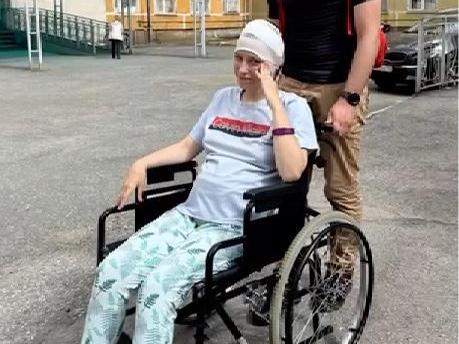
«After the regional hospital, I was transferred to a perinatal center, and from September I was already there,» says Marina. «There, they even assigned me a physical therapy instructor. I gave birth to a healthy baby girl on October 10, and everything ended well.»

Marina searched online for similar cases, but they are few and far between — it«s a rarity. The operations were performed by the head of the department, neurosurgeon Dmitry Shtadler, together with his son Vladislav Shtadler.
«The doctors are very good,» shares the girl. «They gave me a lot of attention and monitored my condition, and the head of the department was very interested in my health and even came back from vacation to check on me.»
A correspondent from 59.RU visited the hospital and spoke with Dmitry Shtadler. Upon learning about the patient«s excellent condition and her gratitude, the doctor smiled and was very happy.
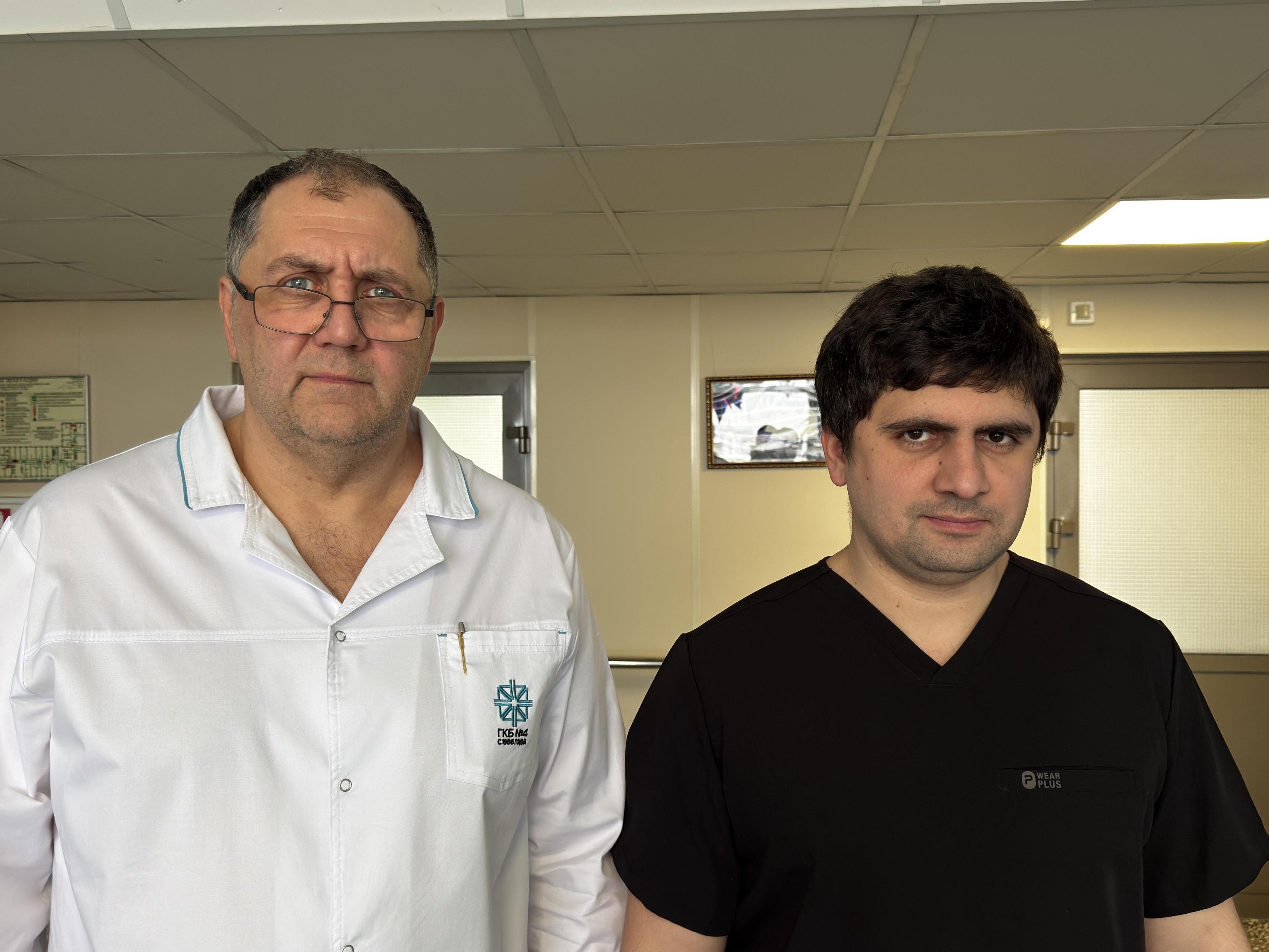
«The patient was in serious condition; without going into details, it can be characterized as a vascular catastrophe of the brain, which with high probability would lead to the death of a young pregnant woman,» says the head of the department. «The pathology is quite rare and extremely complex for surgical treatment. It requires surgeons» skill, deep fundamental knowledge, the ability to think outside the box when necessary, and consequently, the ability to form a personalized surgical strategy for the patient. It also requires the highest level of equipment in the medical institution. And I am very glad, first, that everything worked out, and second, that this difficult task was handled by young, promising specialists: neurosurgeon Vladislav Shtadler and endovascular surgeon Artyom Karakulov.«
When asked how complex the operation was, Shtadler compared the work of doctors to that of an orchestra. But with one «but».
«The success of an operation is the fusion of the skills, abilities, and knowledge of surgeons, anesthesiologists, neurophysiologists, and many other specialists, the highest level of equipment in the neurosurgical service, and the coordination, like in an orchestra, of all participants in the surgical intervention, where the »conductor« is the surgeon,» says Dmitry. «I»m sure that performing works by Brahms or F. Liszt is no less difficult, perhaps even more so. Only the problem is different: even if musicians make a mistake, or even if the orchestra stops, nothing will ultimately happen, at most, the mood will be spoiled. If a surgeon makes a mistake, it will lead to the patient«s death. This is what makes the profession of any doctor difficult, especially a surgeon or neurosurgeon or interventional surgeon; the list could go on.»