Kerzhak elder on life in funny-named, roadless Perm village
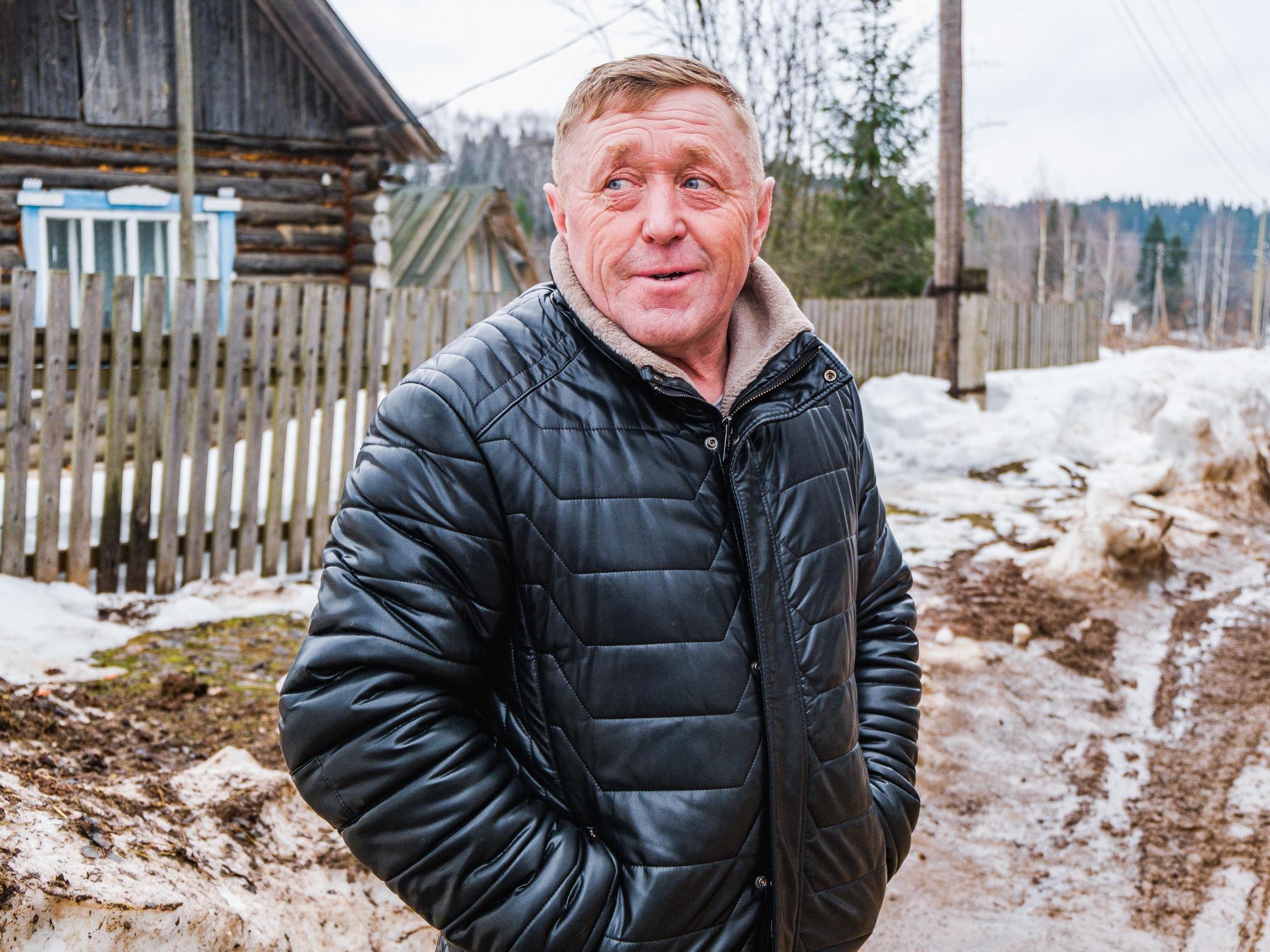

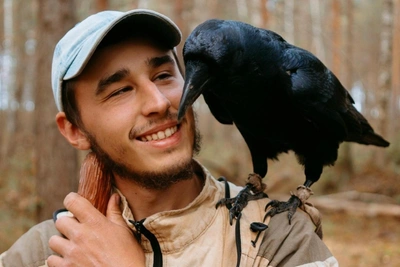
A standard apartment building entrance would be enough to house all the residents of the village of Zenki in Nytvensky District: there are fewer than fifty people. However, not every native of the village is willing to move to the city, even though there are no restaurants or theaters, fitness centers or pools. What«s more: there isn»t even a shabby shop or a medical post! To see how life is in such conditions, 59.RU visited Zenki. Our «guide» was the village elder — farmer Sergei Gulyaev.
This is home, how can you change it?
Sergei Gulyaev was born and raised in Zenki — just like his father, grandfather, and great-grandfather. His brothers have long lived in Perm, and he himself only left his native village for his military service. Together with his wife, also a local, they raised a daughter and two sons. The younger son lived in Zenki until recently and helped his father the farmer, but then moved to Perm to attend college.
“Grandfather said, ‘Seryozha, if you leave for foreign lands, you’ll get bored and sick.’ And that’s it — these words have stuck in my head ever since,” explains Sergei Gulyaev his reluctance to leave Zenki. “It might be a small village, it might be muddy, but it’s still home. How can you change it? First, you can’t change it anyhow, and second… and second, you can’t change it anyhow.”
We talk while walking in rubber boots along Zenki«s streets, or more accurately — through impassable mud that locals call »liquid asphalt.« The squelching of soles sticking with each step drowns out other sounds. The photographer forgot his boots; he is in sneakers, so he tries to pick drier spots. However, unsuccessfully: by the end of our conversation-walk, his shoes turn into clumps of mud.
The village elder, looking at this mess, remarks that our coming during such mud season is even good. It«s a chance to feel the village and understand what it breathes.
Kerzhaks-Old Believers
The village«s name is not related to the expression »puchit« zenki,» meaning to goggle one«s eyes. Moreover, Zenki is pronounced with the stress on »i.« It is derived from the surname Zinkov (also with stress on the second syllable and with »i«). The village was first mentioned in documents back in the 18th century.
Zenki was known as an Old Believer village. Sergei Gulyaev still considers himself a Kerzhak and rarely visits the official church.
Kerzhaks are Old Believers who fled to the Urals after the church reform of the mid-17th century and the subsequent schism. They got their name from a tributary of the Volga — the Kerzhenets River, where in the late 17th century there were many Old Believer settlements.
“I was baptized in the old faith, the Kerzhak one. And my brothers too,” says Sergei Gulyaev. “I remember well how my younger brother was baptized. A priest came to the village of Shilonosovo, about three kilometers from us. They dipped my brother in a tub, and I received him. So, I was his godfather. And not only for him, but for my cousins as well. But, figuratively speaking, it was like an underground operation. We weren«t baptized in a church, but in an ordinary house where believers lived — a husband and wife.”
Now, there are almost no Kerzhaks among the local residents. The three Gulyaev brothers still consider themselves Old Believers, but they all baptized their children in the regular Orthodox church.
How it was before
The elder admits that Zenki was most interesting in his childhood and youth, when the village still lived a full life and there were many people of different ages.
“My brother and I, on some holiday, have a little drink and start reminiscing about how we spent our childhood,” he says. “Today«s youth don»t have such a childhood. I judge by my grandchildren: they come — and immediately dive into their phones. But my mother used to chase me with a switch to drive me home! We had our own headquarters, we played war games: village against village with bows. Volleyball, football, lapta (a Russian bat-and-ball game), chizh (a traditional game) — you probably don«t even know what that is. It was fun!”
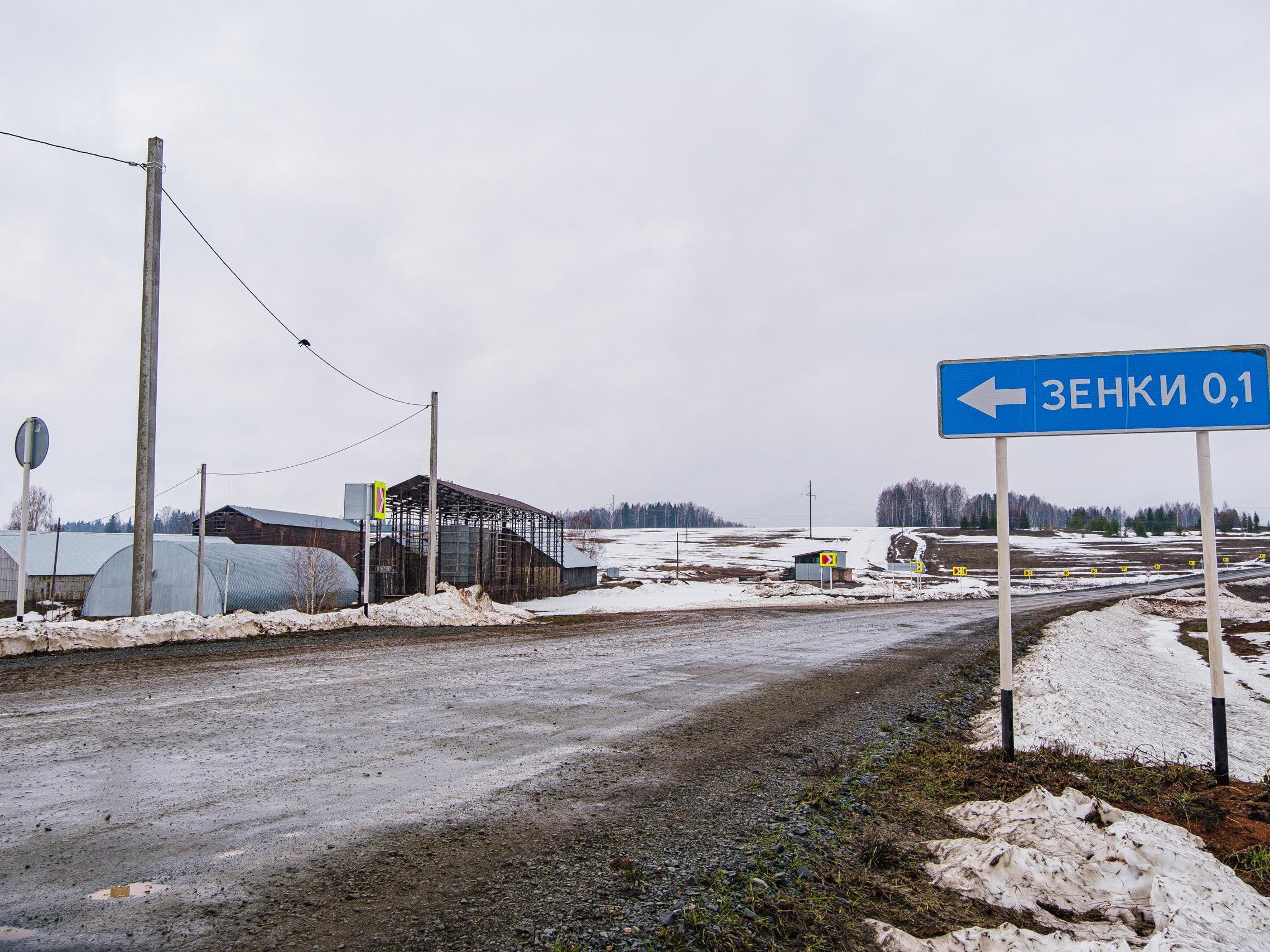
In the 80s, boys and girls willingly stayed in Zenki and neighboring Postanogi: there was plenty of work, and housing was provided.
“I came back from the army in «87, they gave me a settling-in allowance — 500 rubles (about $5 at current rates). And I deliberately lived with my mom and dad for three years so that they would build me a house at the farm»s expense. Then I privatized it, of course,” explains Sergei Gulyaev. “Mainly, that«s how it was: those who worked well and wanted to live here got houses built at the farm»s expense.”
The farmer notes another distinctive feature of that time: neighbors communicated much more with each other, didn«t isolate themselves from others.
“Now people live on their own, but before everyone lived together,” he recalls. “We visited each other, had fun together, celebrated holidays. And now everyone is on their own. The opportunities are there in principle, but no one wants to anymore. Even those we used to socialize with. Everyone is closed off with their own concerns.”
How the village lives now
Today, only 49 people live in Zenki. In the late 80s, there were about three times as many, but some drank themselves to death, some got sick and died, some just died… There are also those who moved to the city, choosing a more comfortable life.
“No one moves to us,” comments Sergei Gulyaev. “The village, to be honest, is simply dying out, that«s all. In the mid-80s, there was a club here, a kindergarten — right on this spot, which is now overgrown. There was a wooden shop. Today, except for the bus stops that are way over there — nothing.”
Our “guide” through Zenki stretches the word “over” for a reason: buses stop not in the village itself, but on the main road. At dusk, the way home turns into an adventure the residents could do without: proper lighting is only directly at the stops. In autumn and spring, an added “bonus” for those walking to the village is impassable mud, in winter — snowdrifts.
“Initially, they said the road was supposed to come down here (into the village — ed.). And the bus stop was supposed to be around here,” specifies Sergei Gulyaev. “But they built the road up there — and that was it. Although we argued that from the turn to the stop it«s still a long walk.”
For groceries and medicine, everyone goes to the neighboring village of Postanogi, where the post office and club are also located. Most adult villagers work in the former cooperative farm “Uralets” — it«s also in Postanogi.
The main problem of Zenki, according not only to Sergei Gulyaev but other residents, is the condition of the main village road. It was slightly covered with gravel, but that didn«t change the situation globally.
“Officials from the administration came, I said, ‘Let«s drive into the village of Zenki.’ They replied, ‘We won»t go.’ They parked the car on the hill and didn«t drive down,” recounts the elder. “At least it»s good that ambulances on UAZ bases — they can get through. You know, they say that in Russia there are two woes — fools and roads? I don«t agree about fools, but roads — definitely.”
Zenki has problems with mobile network and internet, regardless of provider: the village is in a lowland, so the signal is intermittent. And putting up a separate tower for fifty people is too expensive. We and the photographer felt this well: as soon as we entered Zenki, mobile connection disappeared, even though we had different operators. In the end, we couldn«t call the elder; we had to find his house and knock on the window.
“No one wants to pay attention to villages,” sighs Sergei Gulyaev. “When we had the Postanogovskoye rural settlement, then there was planning of budget money for improving such-and-such street, water supply… Now I can«t even say what movement there is in terms of funding. You knock about the road, about lighting, and the next time you»re already tired of knocking.”
Despite all the listed difficulties, the elder couldn«t name even a hypothetical reason for which he would decide to leave Zenki.
“Well, what could happen globally — an earthquake or war? The meaning doesn«t change, it»s still mine,” he answers a clarifying question at the end of the conversation. “How many years to live — and leave? That«s not for me.”
Earlier we told about a couple from Perm who created and are developing a mushroom farm.