Exiled Forever: Visiting Salavat Yulayev's Birthplace and Tracing His Life
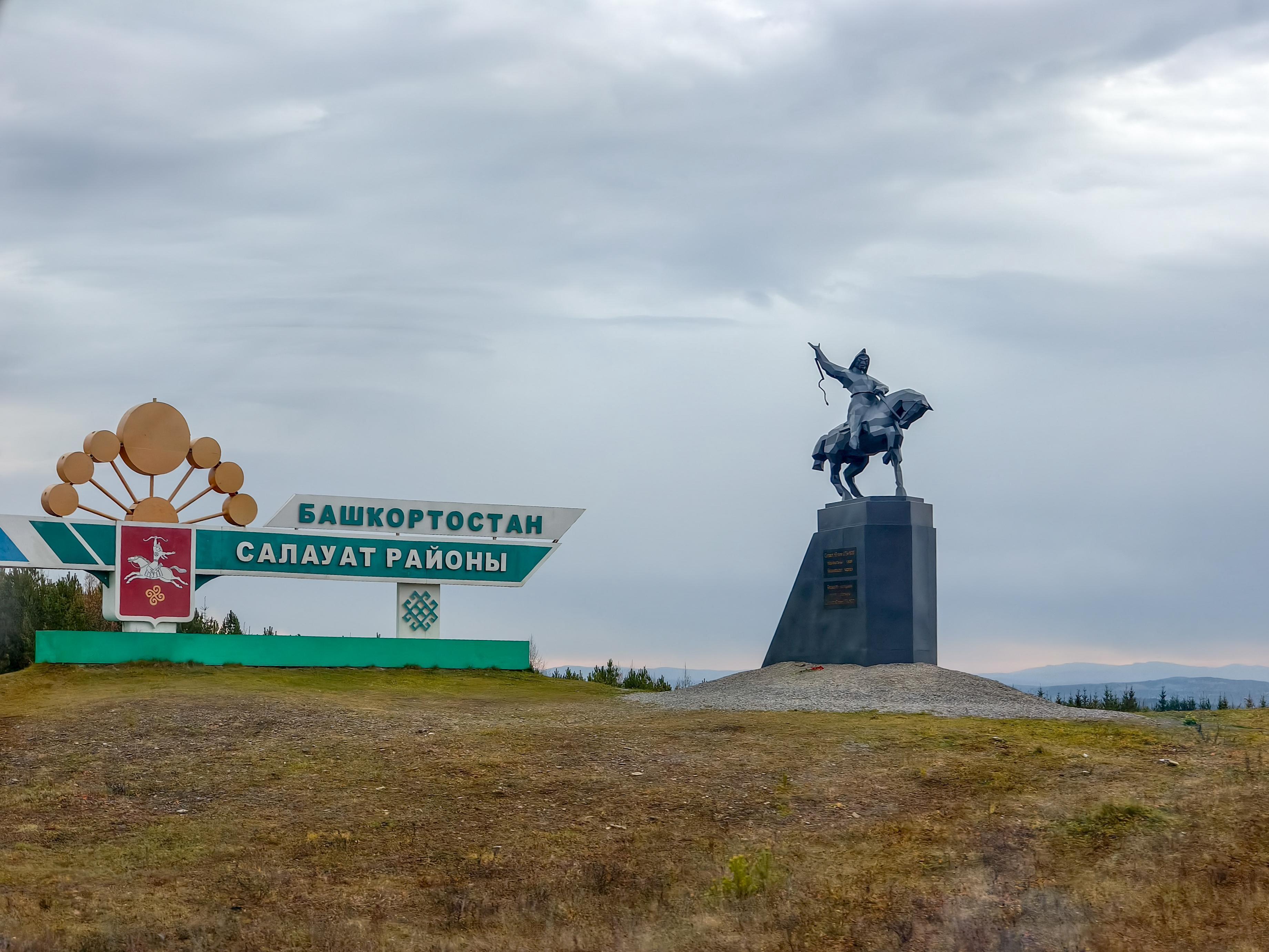

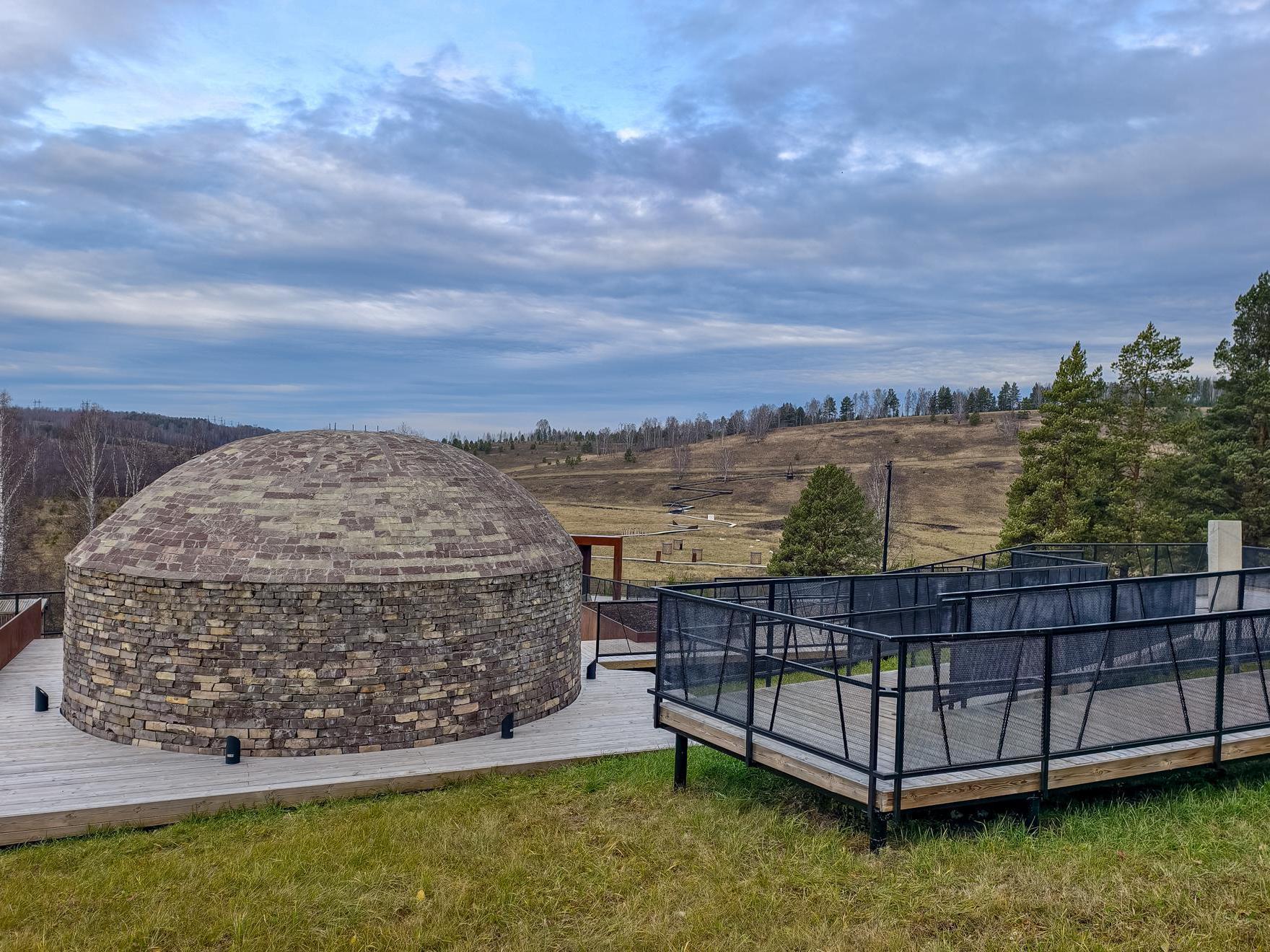
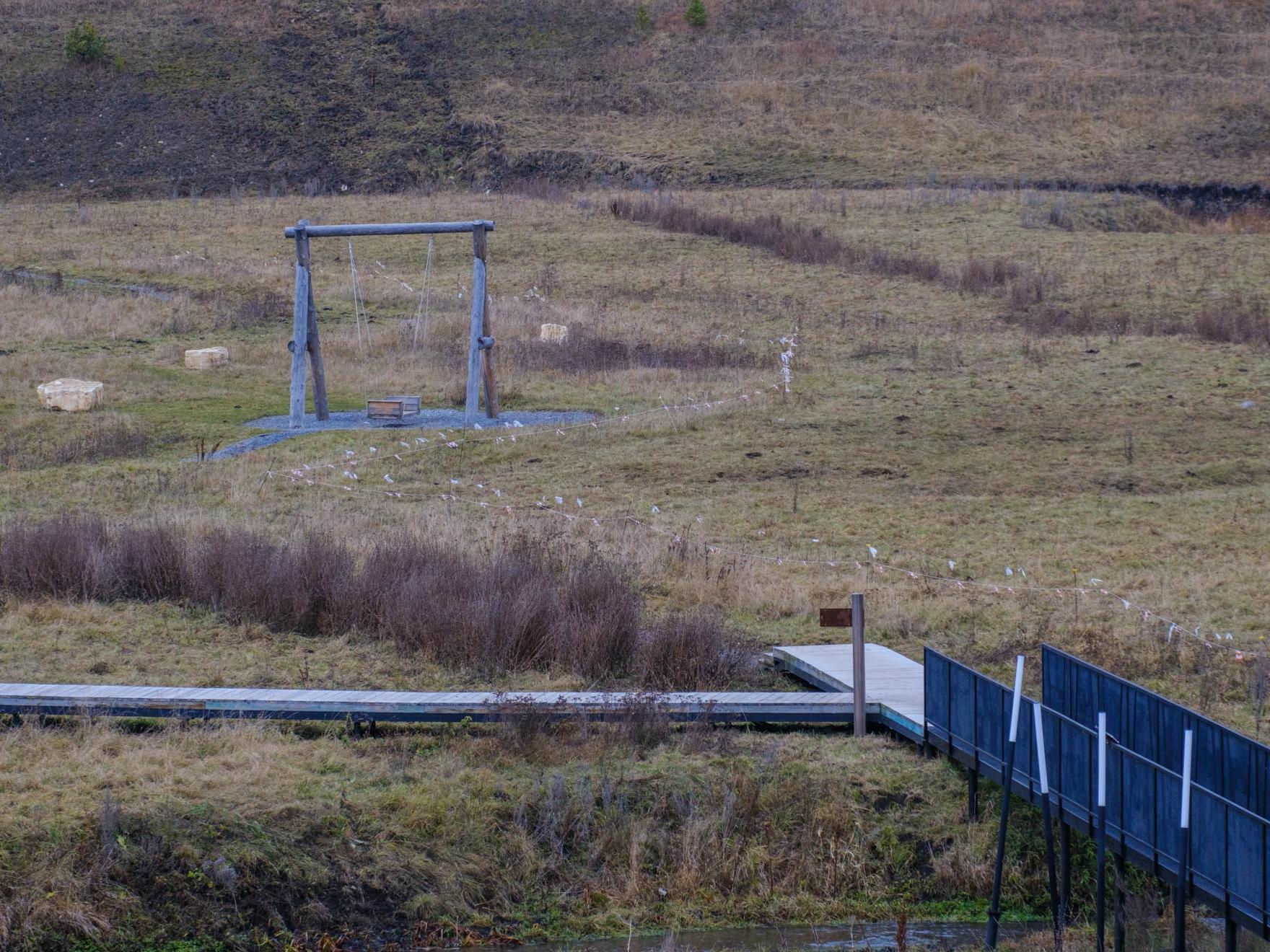
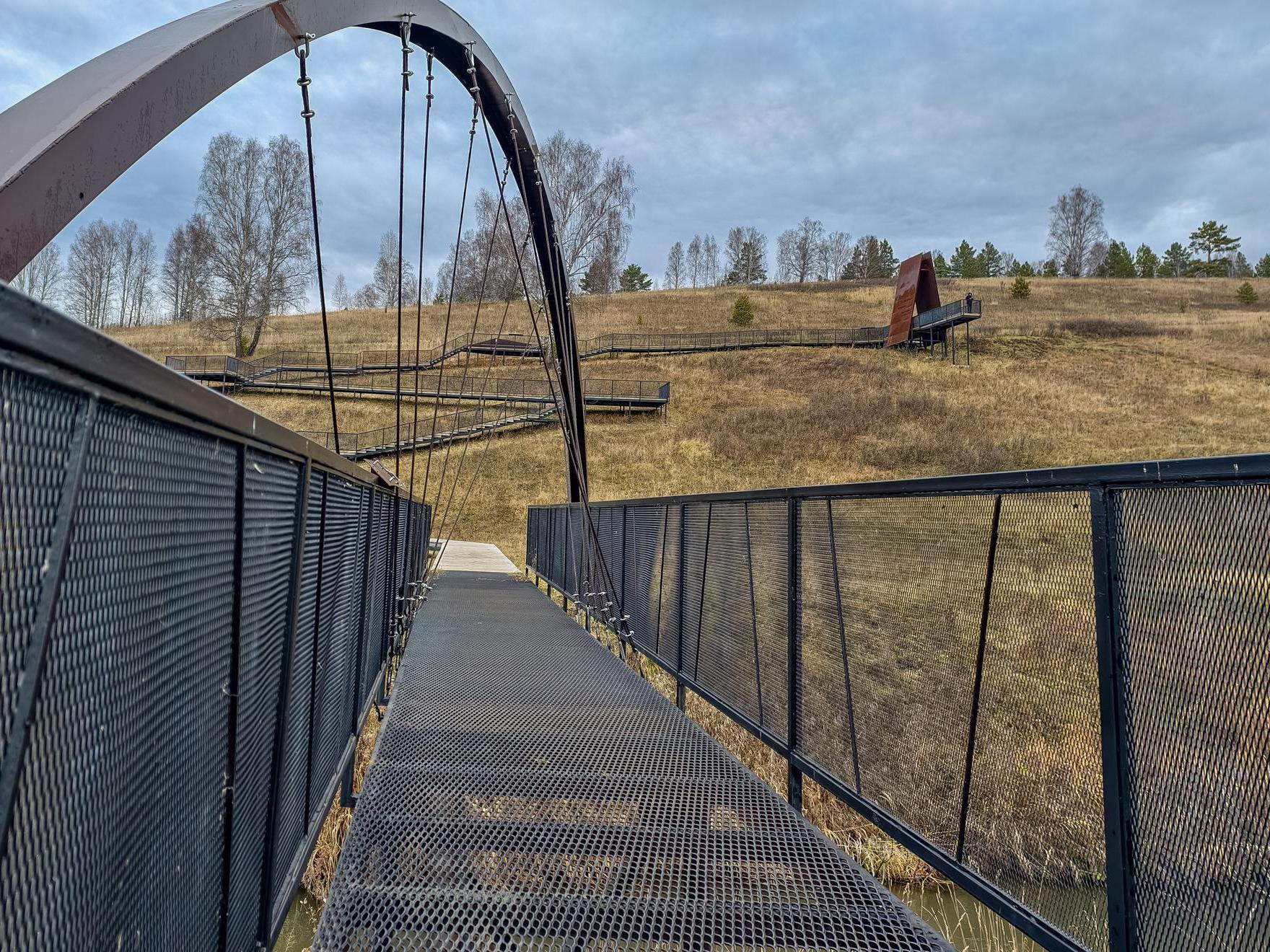
Imagine autumn, a vast empty field with boards laid out in zigzags, hills, forest, and somewhere in the distance, horses grazing, with no civilization around. But this place attracts those who want to see the birthplace of Bashkortostan«s national hero — Salavat Yulayev. Although not only he showed character, but also the residents who stood up against the wealthy factory owners. In the end, everyone paid the price — not a trace remains of their villages. But the memory is still alive. UFA1.RU embarked on an exciting journey to the complex »Salawat Yere«, also known as »Land of Salavat«, and traveled back hundreds of years to tell the history of these places.
Father as an Example of Struggle
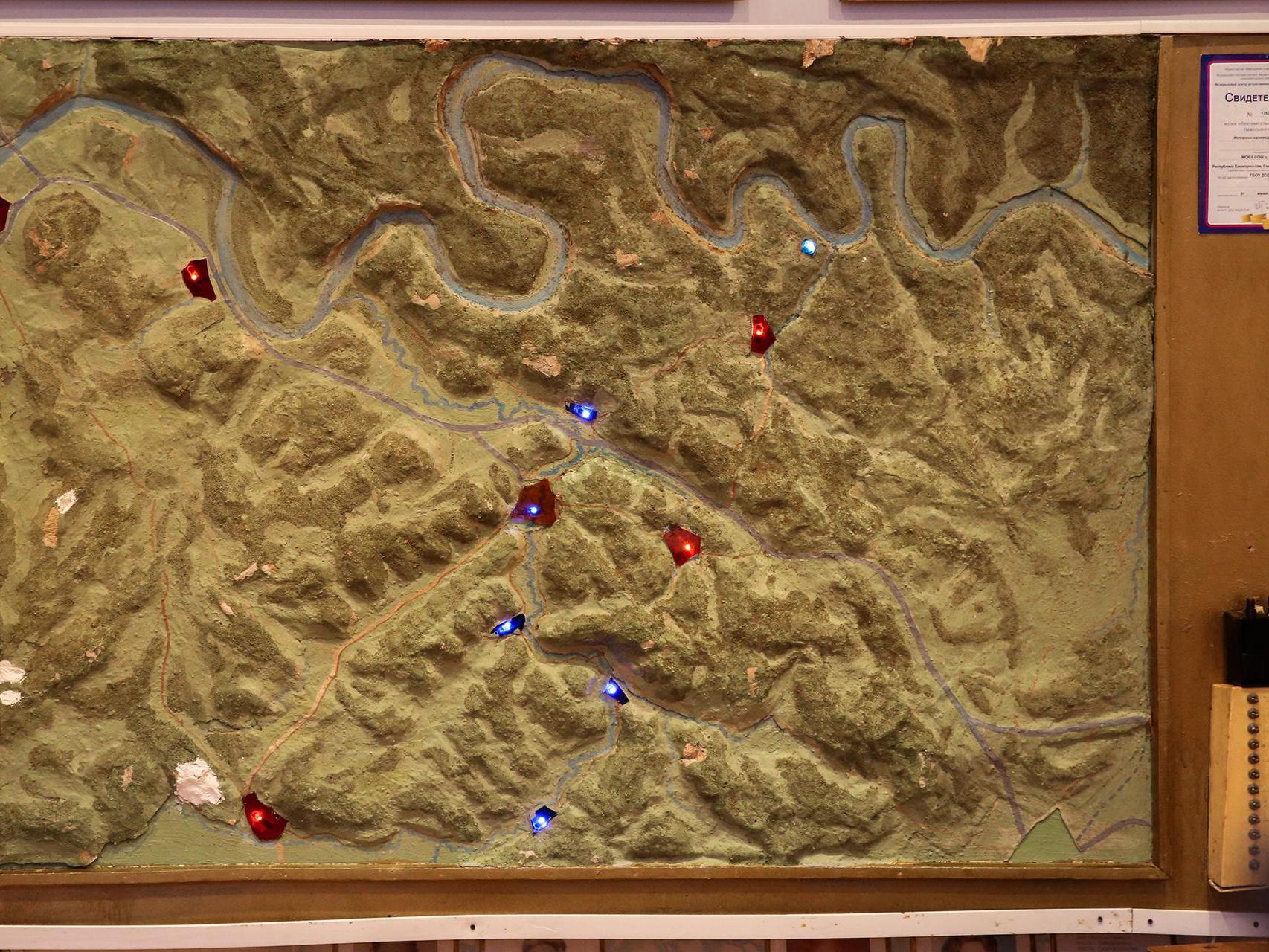
In the 1700s, there was no Bashkortostan as such. Bashkirs lived in various territories, including modern Chelyabinsk Oblast and Orenburg Region. But here, near the city of Asha, there were several villages, all part of Orenburg Governorate. Some of them, like Idrisovo, exist to this day. But Tekeyevo, where Salavat«s father Yulay Aznalin lived, was destroyed.
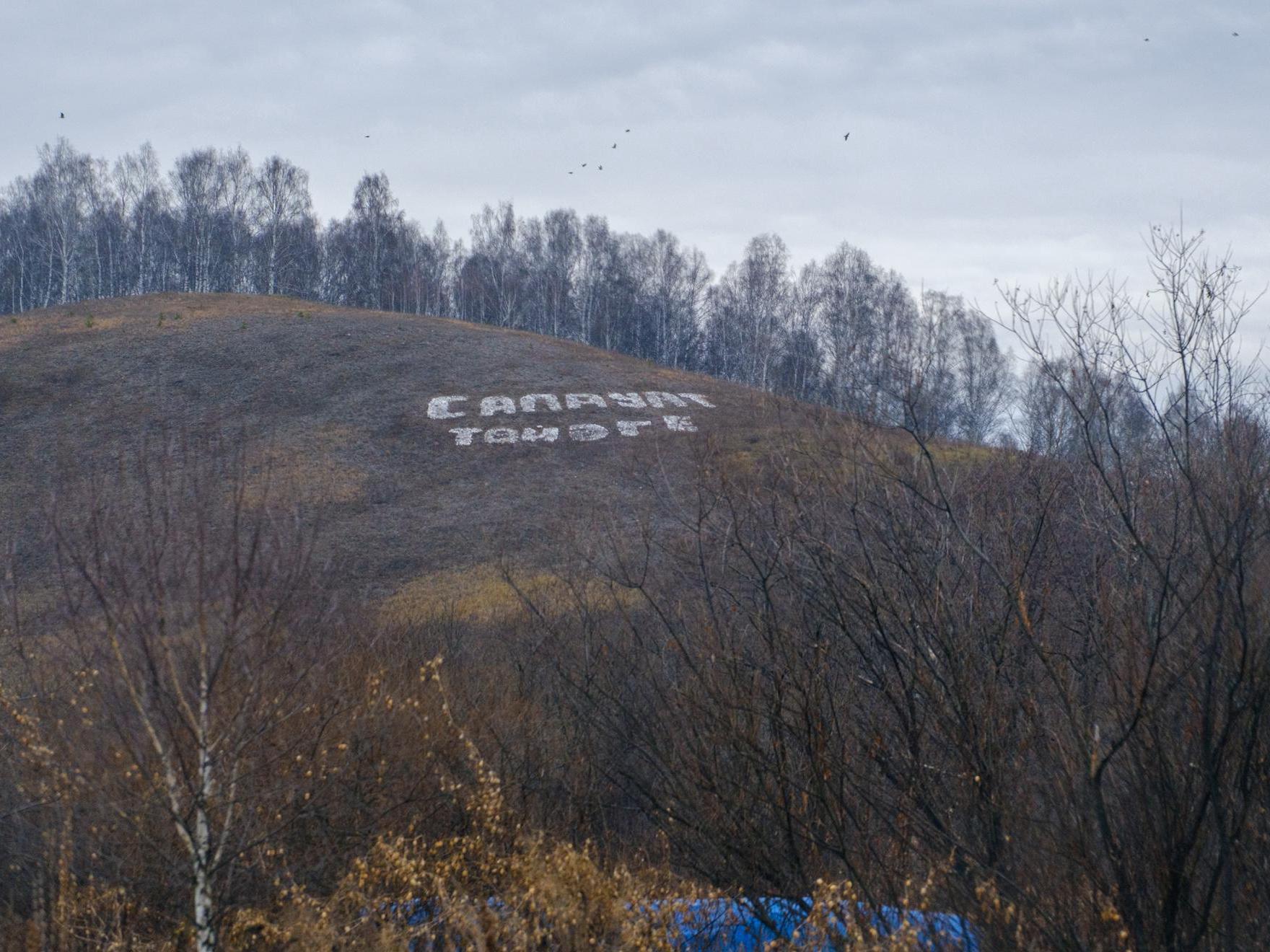
Yulay Aznalin served in the imperial army and participated in battles. For this, he was allocated land (without auctions), where the village of Tekeyevo was located. As indicated by the encyclopedic portal «Bashkortostan», it was founded by Bashkirs in 1755. They came from the village of Aznalino — founded in 1737 and named after Yulay«s grandfather. Here, one can trace that Bashkirs used their father»s name as a surname.
In their book «From the History of the South Ural Mining Plants of the 18th–19th Centuries» (published in 1985), local historians Grigory and Zinaida Gudkov write that there was such a person in the Urals, «owner of newspapers, plants, and steamships» — Yakov Tverdyshev. He was one of the owners of the Simsky and Katav-Ivanovsky plants (40 and 60 kilometers away, respectively).
In the 1750s, Tverdyshev decided to buy new lands for his enterprises. He thought that Tekeyevo and adjacent villages were very suitable for this. He appealed to the governorate, which in 1760 summoned Yulay Aznalin for a reprimand: officials explained that there was a request for the Bashkirs« land. The latter did not agree, but they were still obliged to go to the Katav-Ivanovsky plant and resolve everything personally with Tverdyshev.
Incidentally, Yulay apparently slightly changed his mind — and agreed only to a small territory. The factory owner did not like this.
Tverdyshev, as the book authors say, bribed officials. The governorate«s chancellery sent military personnel after Yulay to deliver him to Orenburg. But for some reason, they never managed to do so. A couple of years later, Yulay Aznalin was caught and delivered to Katav-Ivanovsk, where the chancellery»s order was read to him — he was required to immediately resolve the land issue.
Further, simplifying, some Bashkirs switched to Tverdyshev«s side, he got what he wanted, and Yulay sued him.
Salavat Yulayev, as now established, was born in 1754 (what a play of numbers — Ufa was founded in 1574). At the time of the legal disputes, he was a child, but he saw how his father fought for their land and home. It must be assumed that Yulay became an example for Salavat — a person willing to fight for his land.

The False Peter
In Russian history, there were cases when power fell into the hands of those who should not have had it. For example, there were the False Dmitrys, with one of whom Ufa«s founder Mikhail Nagoy worked. In the story of Salavat Yulayev, there was a similar character — Yemelyan Pugachev.
A Don Cossack, who also participated in wars, was a skilled and charismatic man. Greatly simplifying, in 1762, Peter III ruled Russia, but not for long. After six months, he was overthrown by his wife — Catherine II. In the hinterlands of the country, the new empress was not recognized, and it was believed that Peter was alive, just in hiding somewhere. Moreover, the new empress«s German roots did not inspire trust.
Yemelyan, likely using personal ambitions and knowing how bad things were in the Volga region and the Urals, took advantage of rumors and declared himself Peter III. He told the people that Catherine was a German and a usurper, while he was their own, Russian, come to liberate them from landowners and officials. He promised freedom — and thus united many different peoples against the empress«s power. Bashkirs, Tatars, Mari, and others — they rallied for Yemelyan.
Salavat and Yulay swore allegiance to Pugachev. And other Bashkirs followed them. The troops began capturing cities and plants, and Catherine sent troops to the Urals to suppress the uprising. Thus began the Peasant War, during which Salavat Yulayev gained fame.
Colonel Michelson was sent against Salavat«s detachment, advancing on the opponent with troops.
«The punitive forces launched an offensive on the positions of Salavat Yulayev, who already had over 1,500 people in his detachment. The rebels rushed to meet them and, according to Michelson, offered »such resistance« as he did not expect,» write the local historians Gudkov.
But the battle did not go in Salavat«s favor, so he and his army hid for some time. It is said that the Idrisovskaya Cave served as a refuge, but modern guides admit that this is not true.
In May 1774, Salavat Yulayev gathered an army and attacked the Simsky plant, captured it, and burned it down along with the settlement. By autumn, the Bashkir forces were almost completely defeated — the imperial army had technical superiority, at least the weapons of Catherine«s troops were newer.
In early autumn 1774, Salavat was offered to resolve the issue amicably; military figure Pavel Potemkin (brother of Grigory Potemkin, the empress«s husband) asked for his surrender, but the Bashkir warrior rejected all offers. Even despite promises of pardon. Perhaps he understood that hard labor awaited him in any case — so it was better to go as a hero than a traitor.
In November 1774, Catherine«s troops caught up with the Bashkirs on the Karatau Ridge. Where exactly — is not known precisely, but the ridge passes through Nurimanovsky, Beloretsky, and Salavatsky districts. A year later, Salavat and Aznalin were sent in stages to hard labor in modern Estonia.
It is believed that while in captivity, Salavat Yulayev wrote poetry there. Some of them are quoted at the «Salawat Yere» complex.
«From my native land
Exiled forever,
In my sorrowful fate
I still dream of you,
My bright land,
Copper stream of rivers»
This is an excerpt from the poem «Tyugan ilem» — «Homeland» (or «Native Country»). According to the encyclopedia «Bashkortostan», Salavat wrote the work during his studies, which took place away from his native lands. But it very much suits the time when the warrior was in captivity — exiled forever in a sorrowful fate.
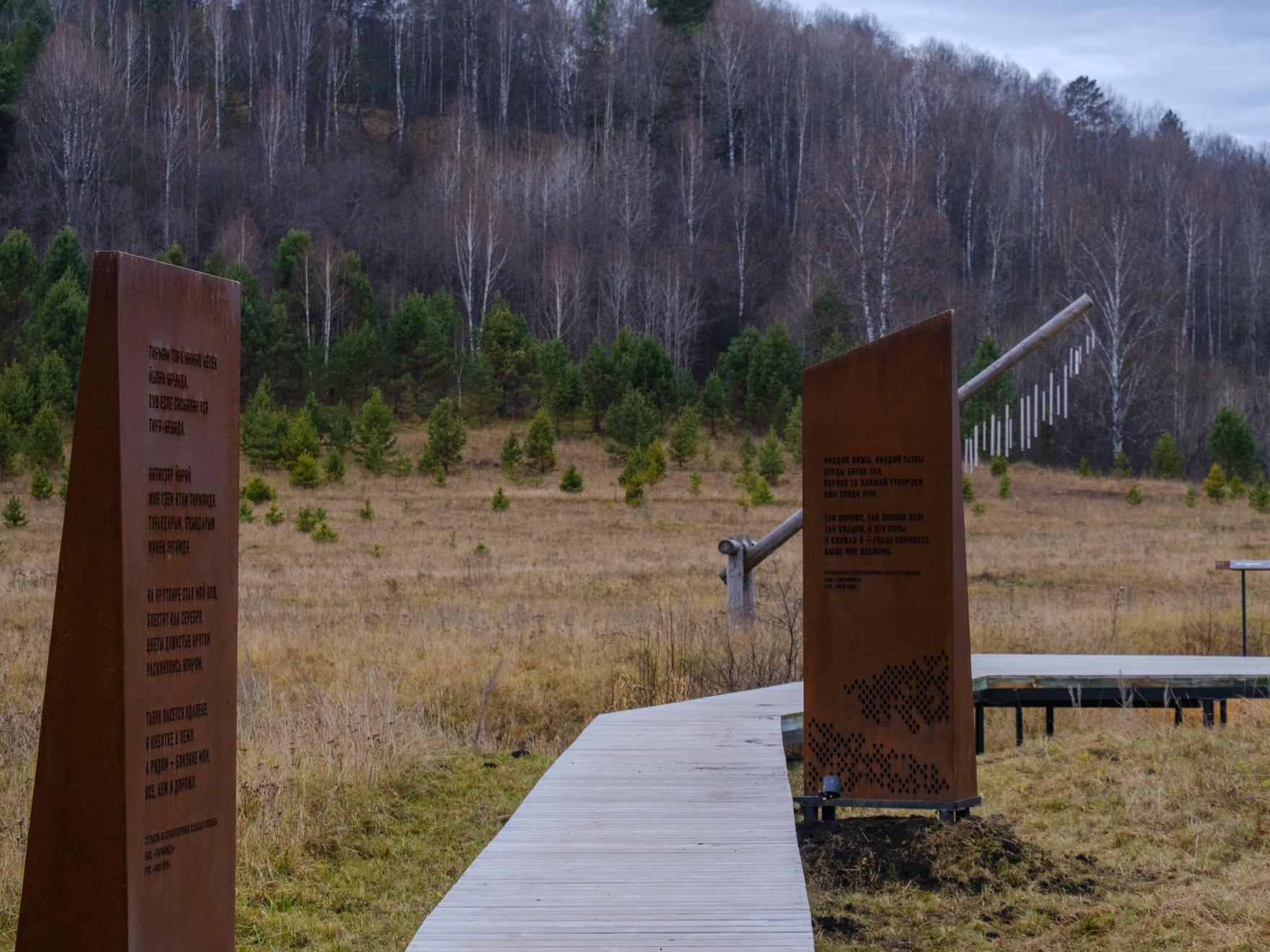
So well, so loudly he sang!
So sweetly, on this night!
And listening — I could not
Close my eyes.
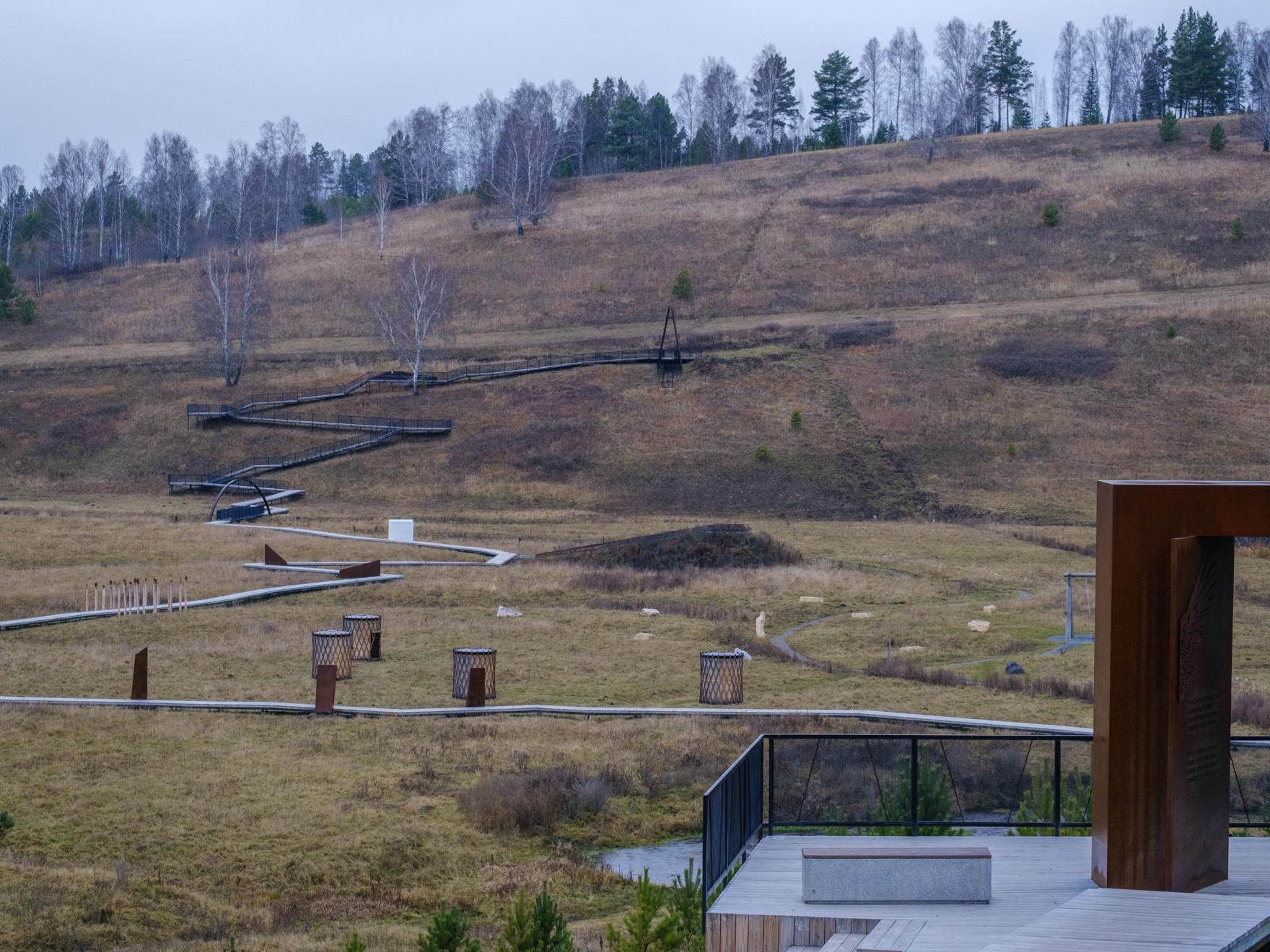
This is an excerpt from the poem «My Kosh». Probably, here «kosh» is a type of dwelling among Bashkirs who lived in the steppes. It was made of felt. Just such ones stood on the territory of the «Salawat Yere» complex.
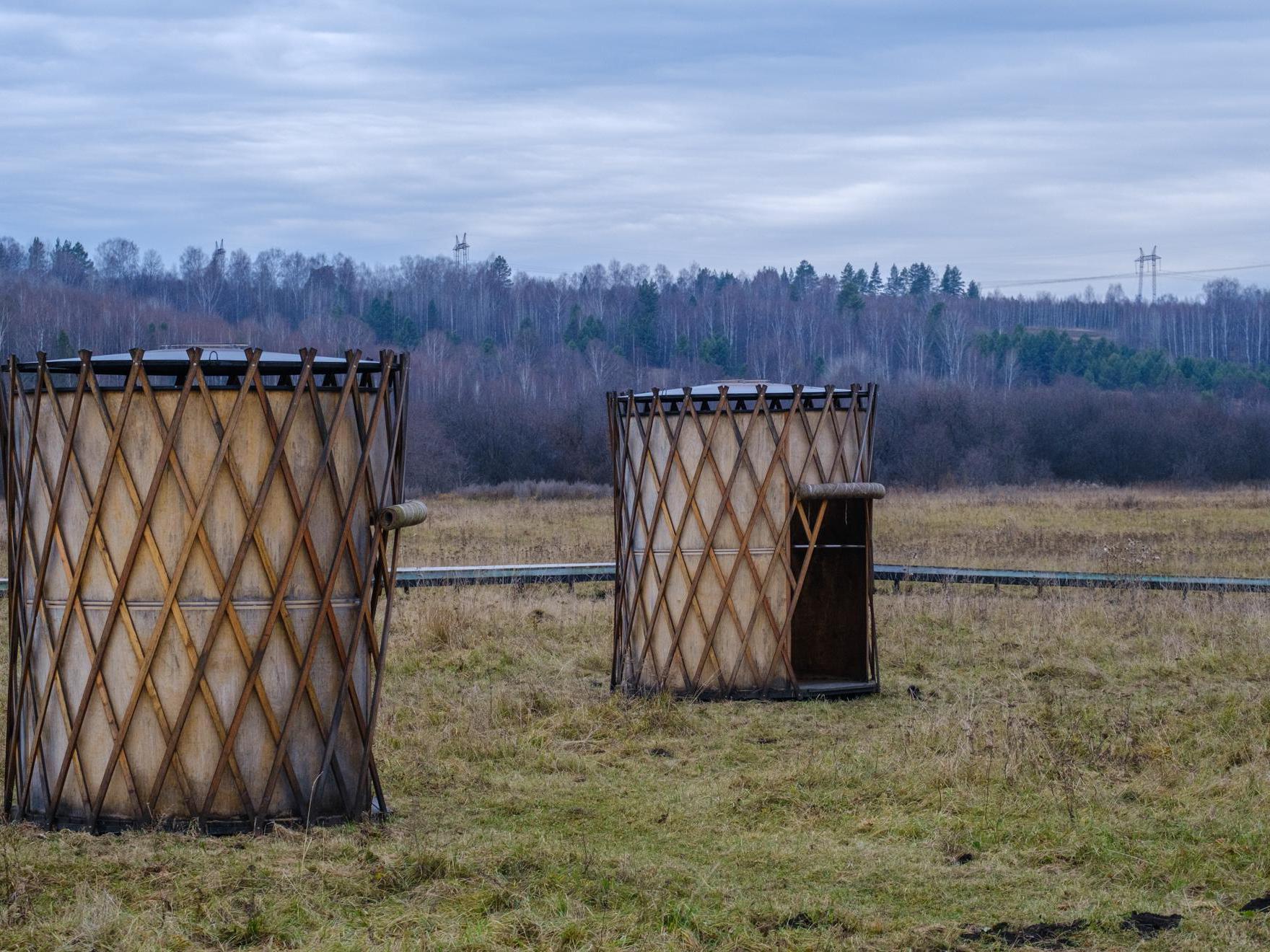
The same poem continues:
Fragrant flowers all around
Spread out like a carpet.
A herd grazes in the distance.
I lie in the yurt.
And nearby — my dear ones,
All whom I cherish.
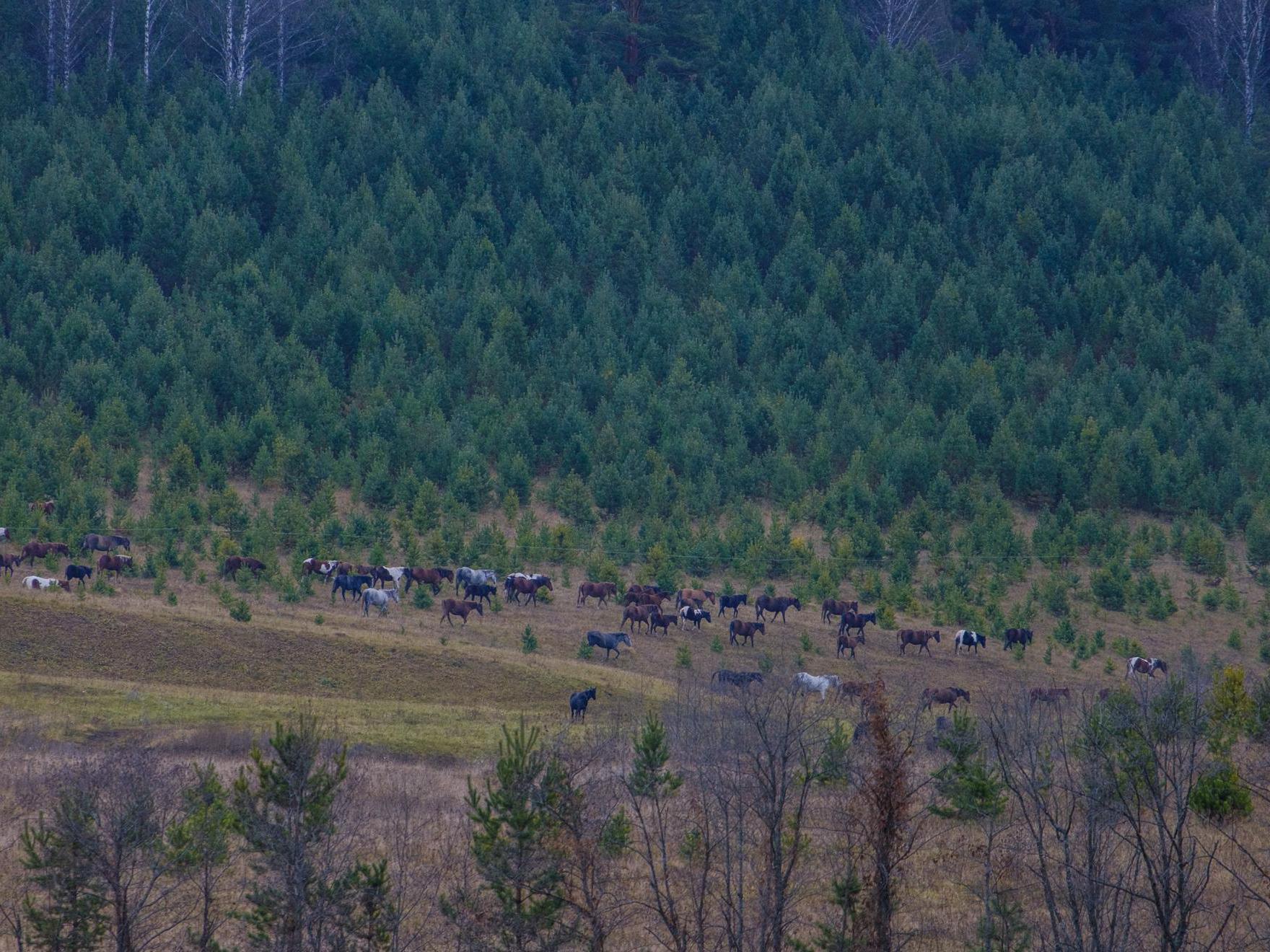
«Yurt» — a portable dwelling among nomadic Turkic peoples. Essentially, a home.
Why Salavat Became a Hero
After the Bashkirs« defeat in the Peasant War, Russian troops came to Salavat»s homeland to burn all these villages: Tekeyevo, Yulay, Aznalino, Yakup, Ismail, Bikbulat, Kasay, Mrat. They thought that nothing would remind them of the «bandit» from the Urals.
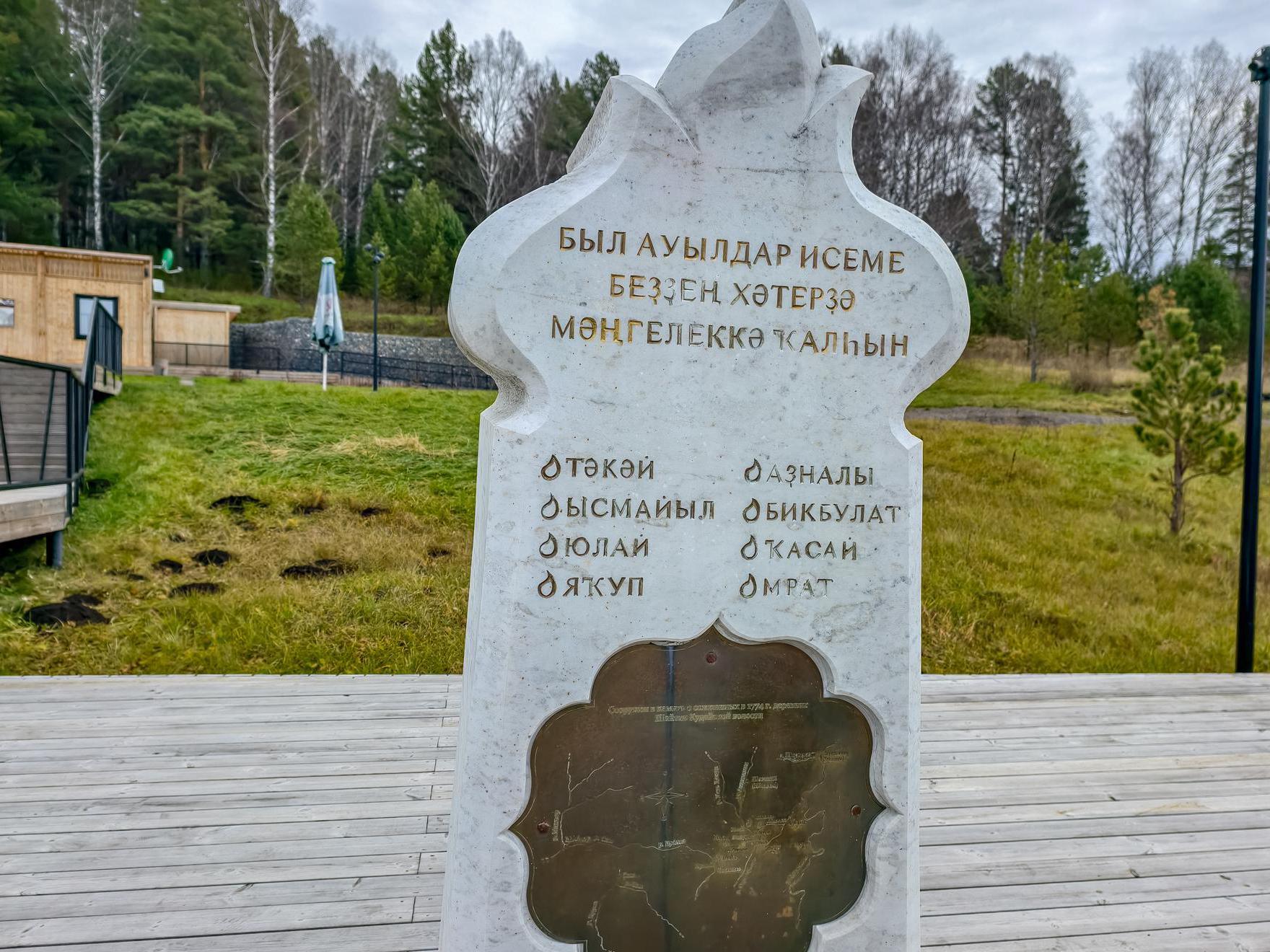
However, they were mistaken. Salavat was remembered even in tsarist times: the poem «Native Country» was published in 1893. Although there is an alternative view that Salavat was invented as a hero during Soviet times. Allegedly, someone needed to impose some kind of cult.
Nevertheless, according to the opinion of historian Airat Galiev, Salavat, unlike even his father, was «pure», had no sins behind him. Therefore, he became a national favorite, even though Bashkortostan had plenty of heroes without him.
«Moreover, desperate courage combined with poetic talent stirred dreams of a better lot, and many people of different nationalities and faiths joined Salavat»s banners. After all, songs and legends about Salavat exist not only among Bashkirs. One Russian folk song begins with the words: «Salavat our was a hero». The capture of Salavat and his exile to eternal hard labor only fueled the people«s love for him,» said the historian.
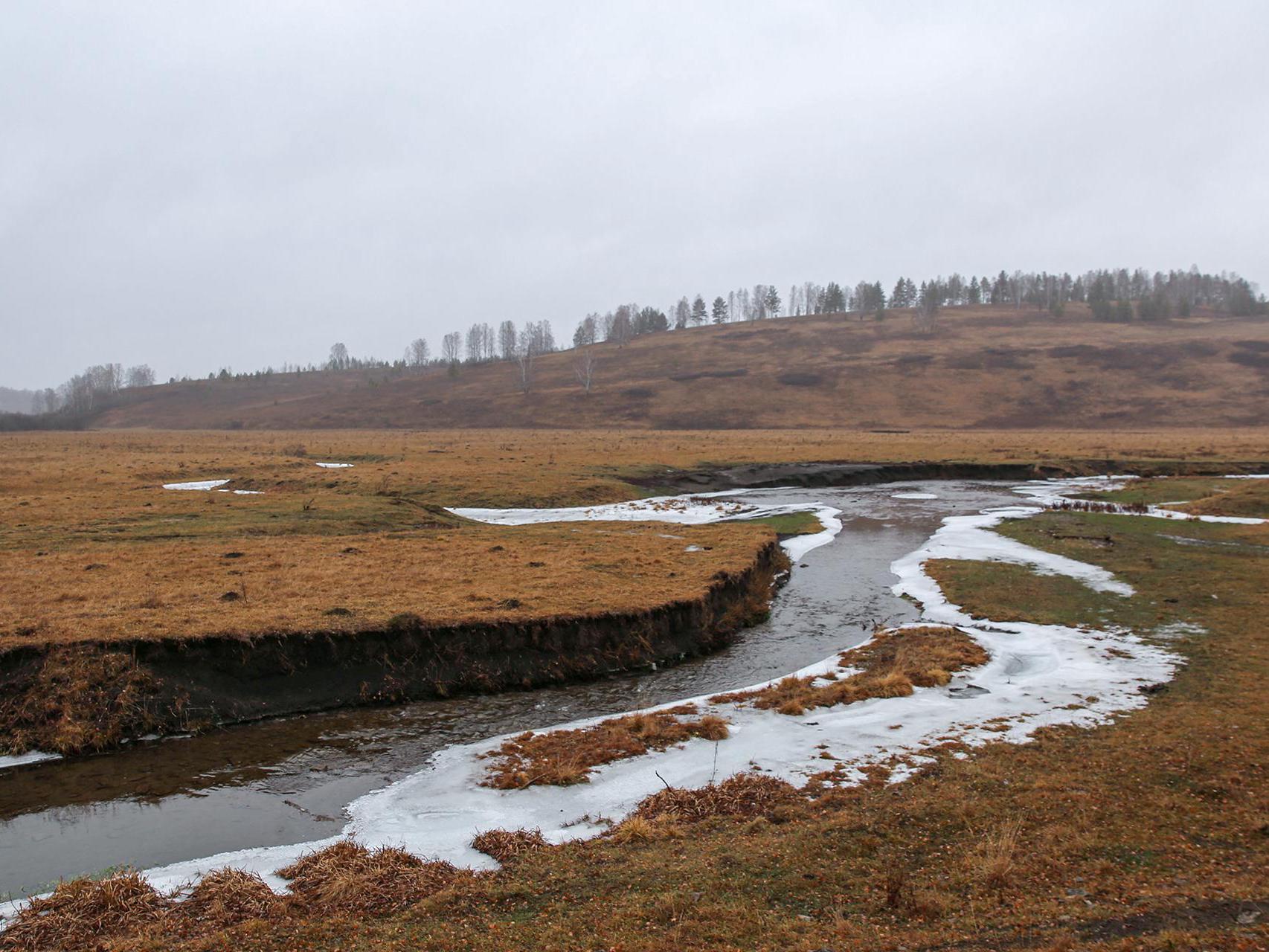
As recently as 2021, the place where Salavat Yulayev«s village was located lay empty.
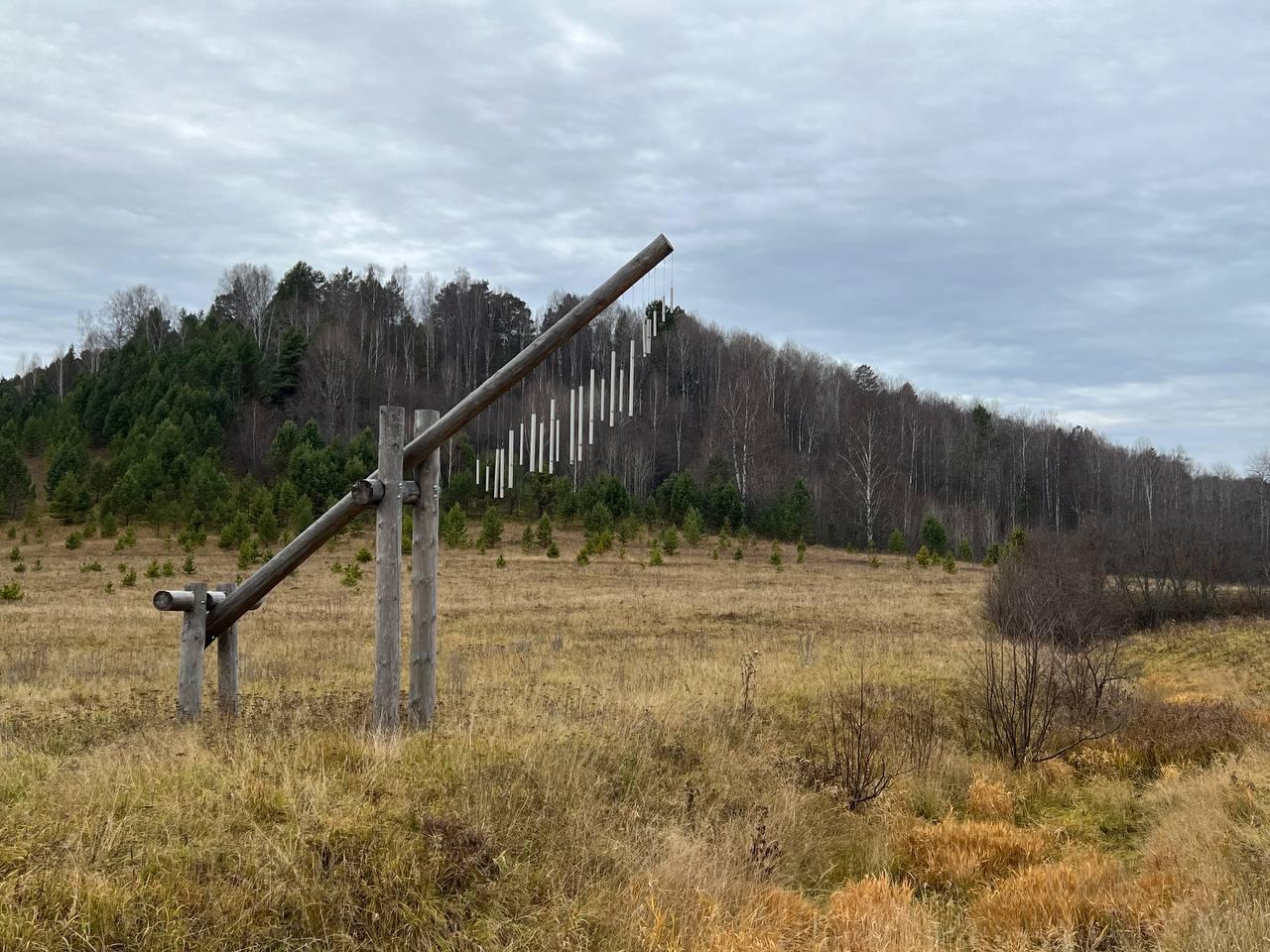
The only thing is that since the late 1990s, some improvements began: a memorial to the settlements was erected, then a yurt, inside which stands a tombstone. There is a legend that the warrior rests exactly there, although the actual monument states that it is Baltic soil where Salavat was buried.

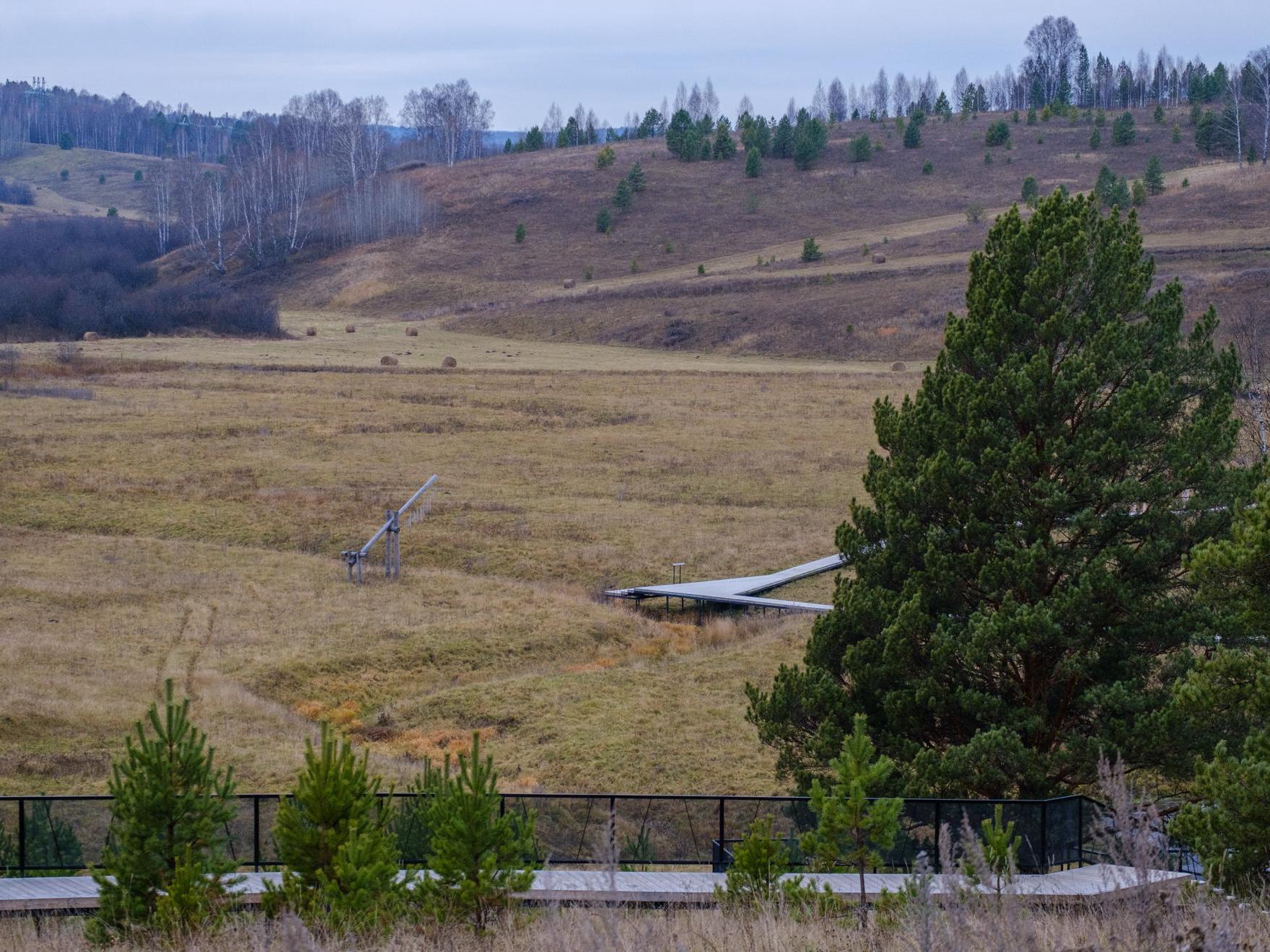
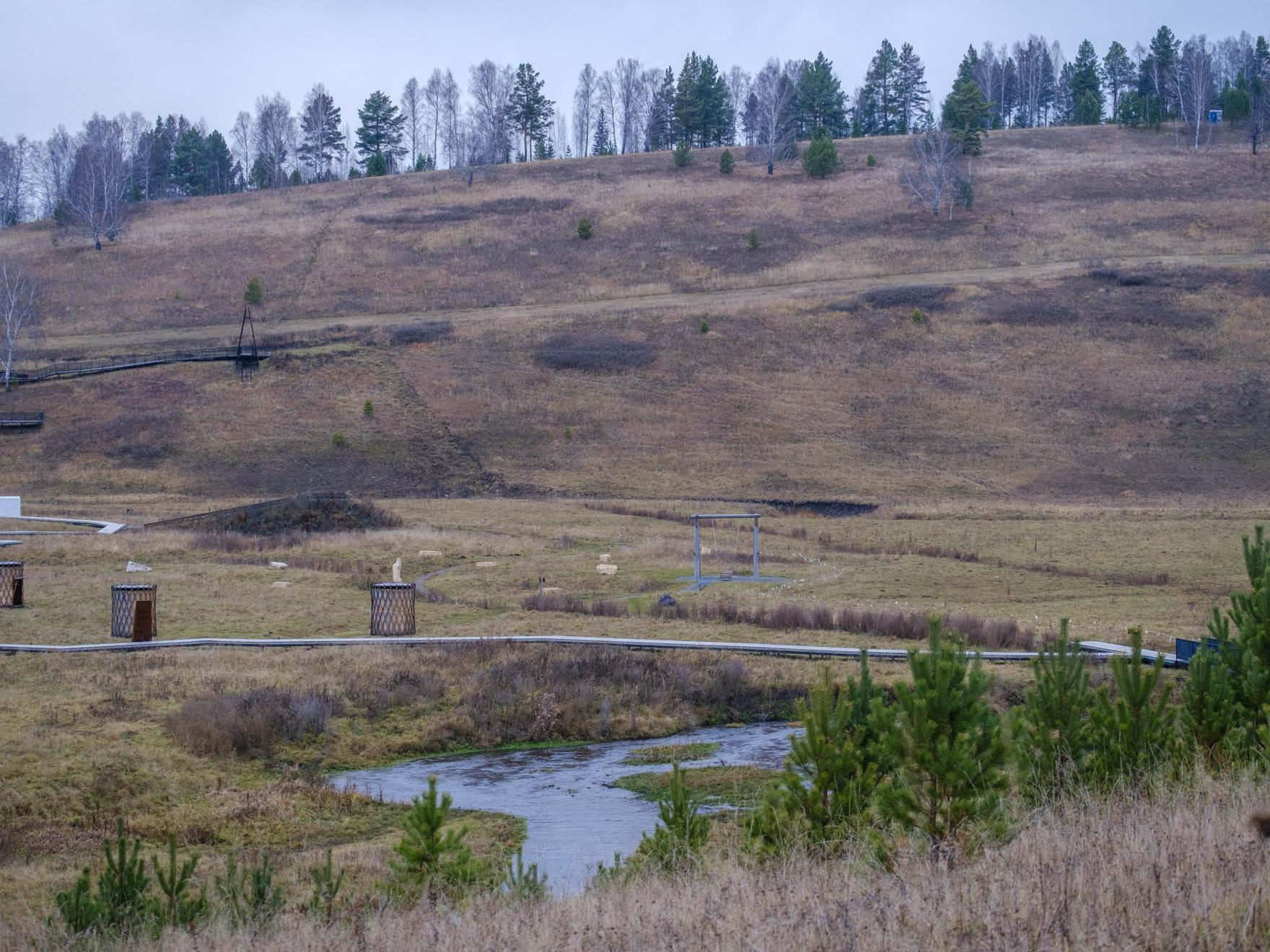
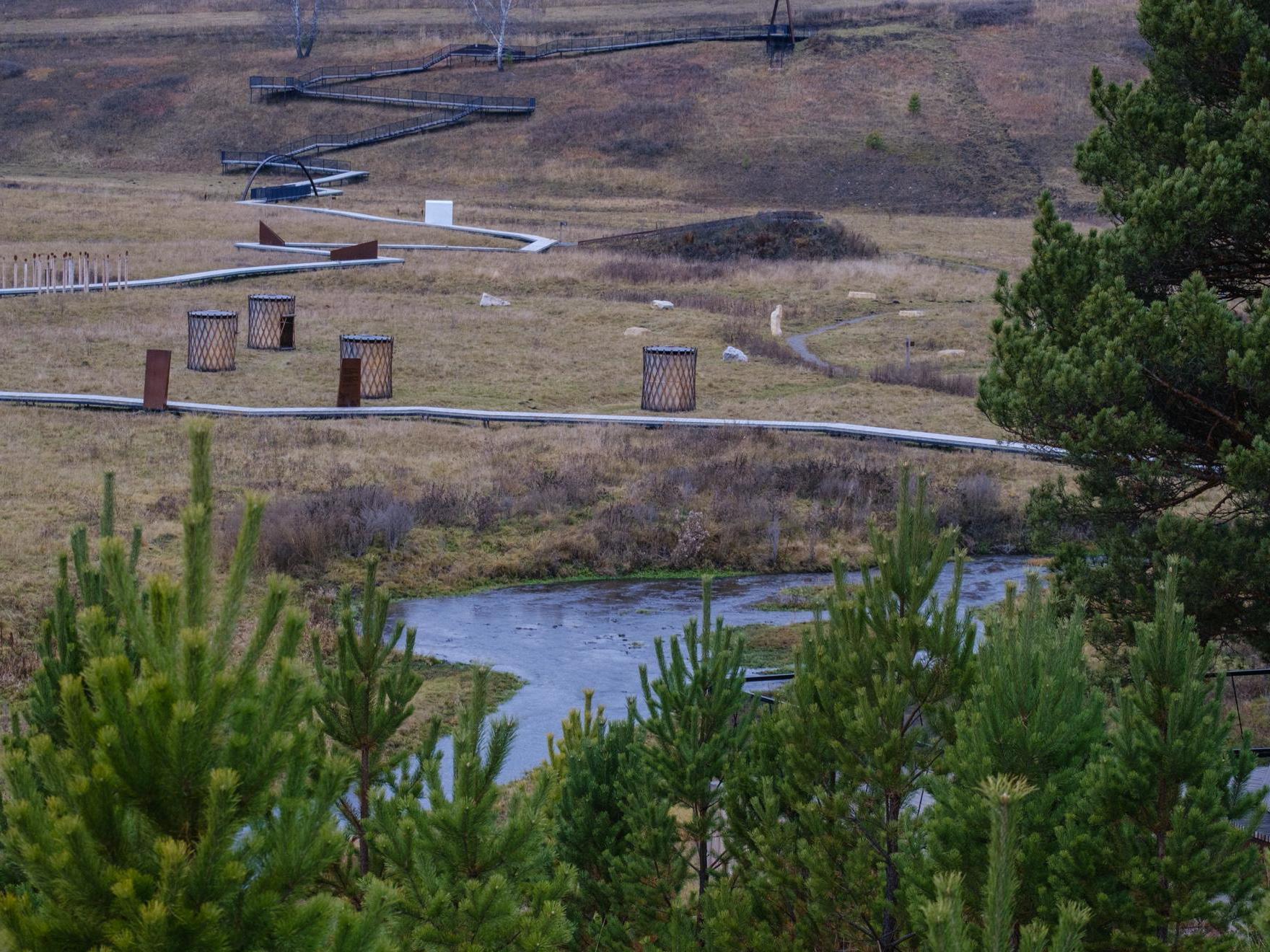
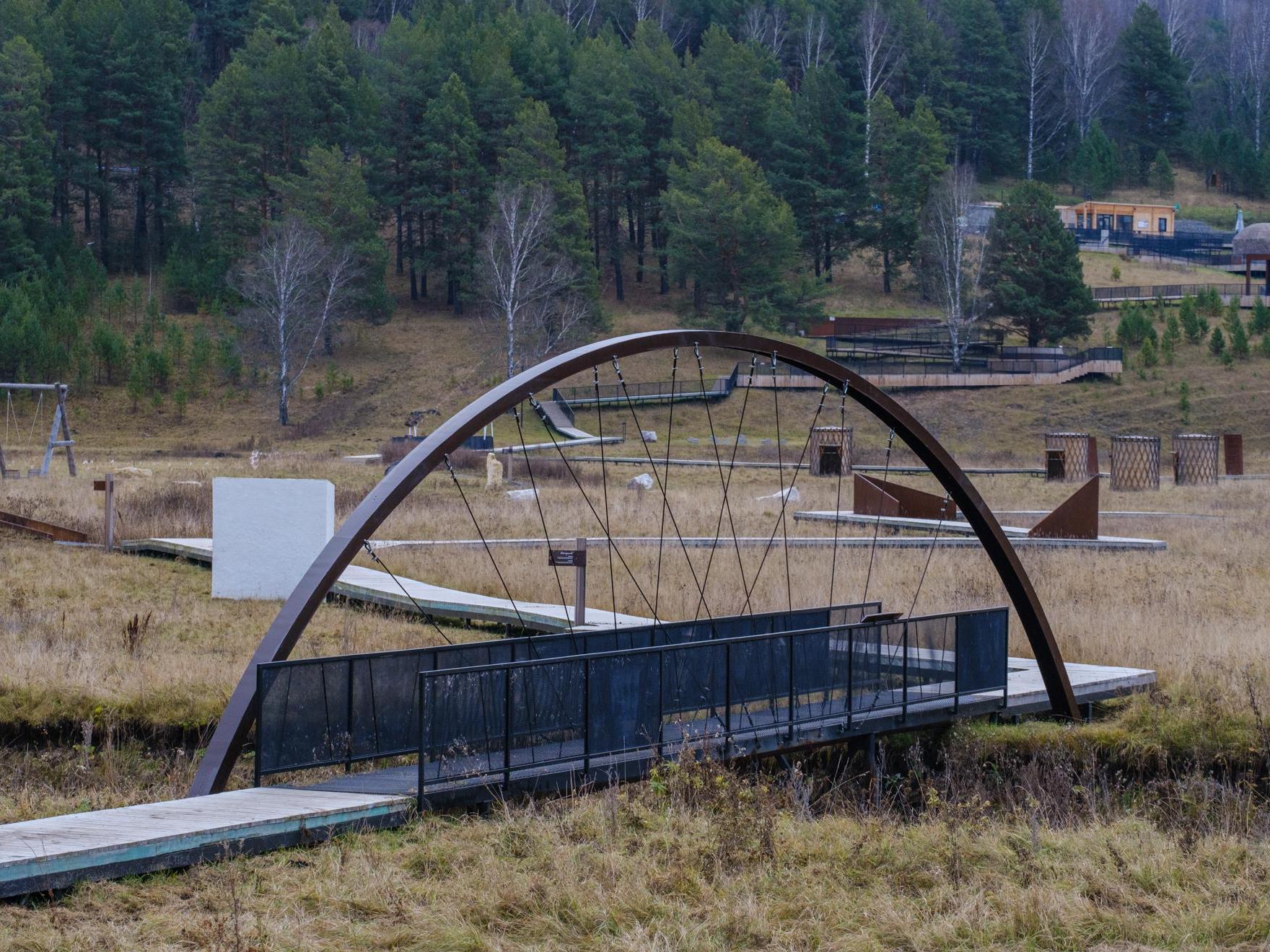
The historical and cultural complex on the site of the village opened in 2024: here, amid the fields, wooden paths were laid, reflected in zigzags to show Salavat«s life path and the main stages of his life.
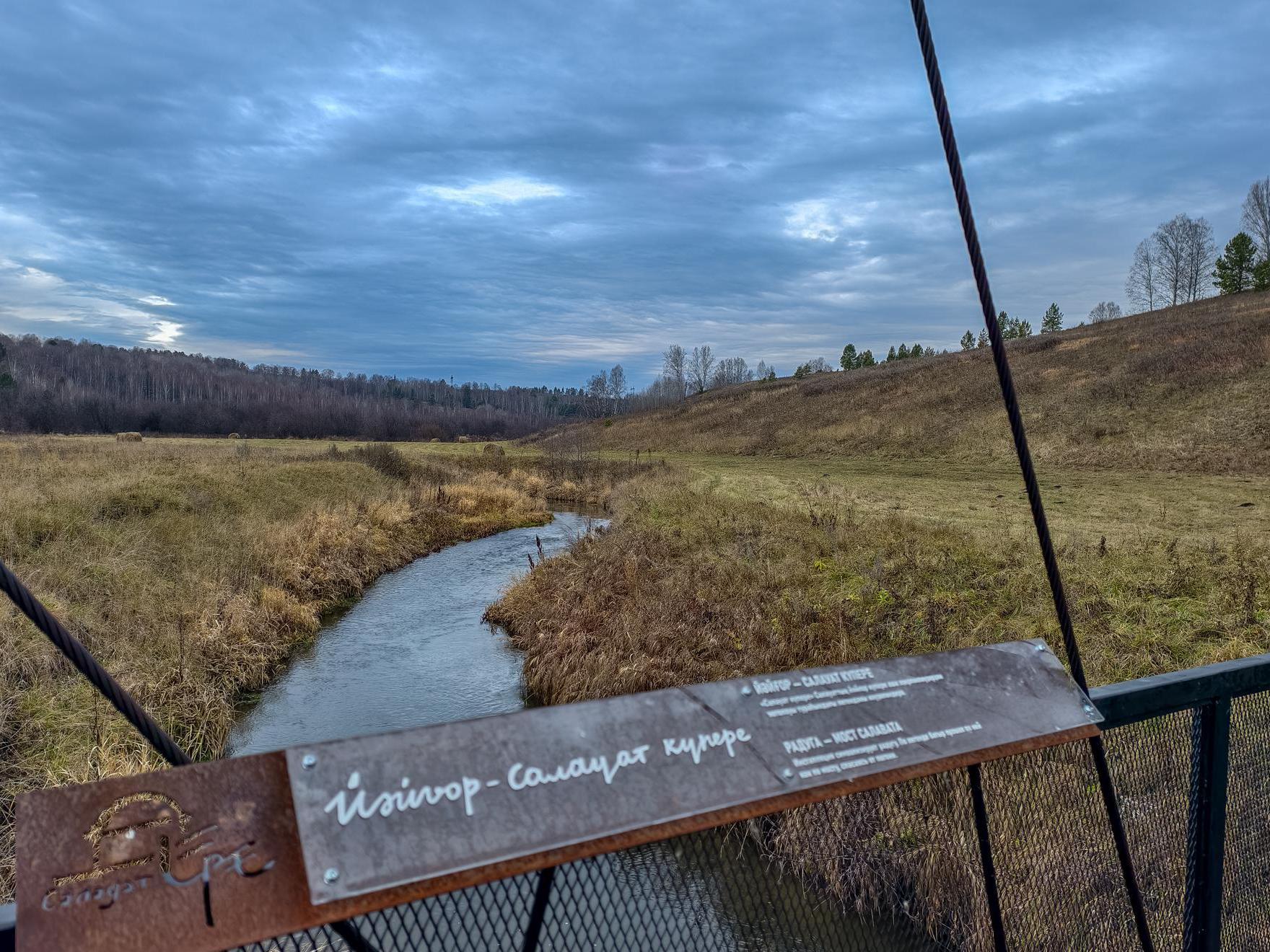
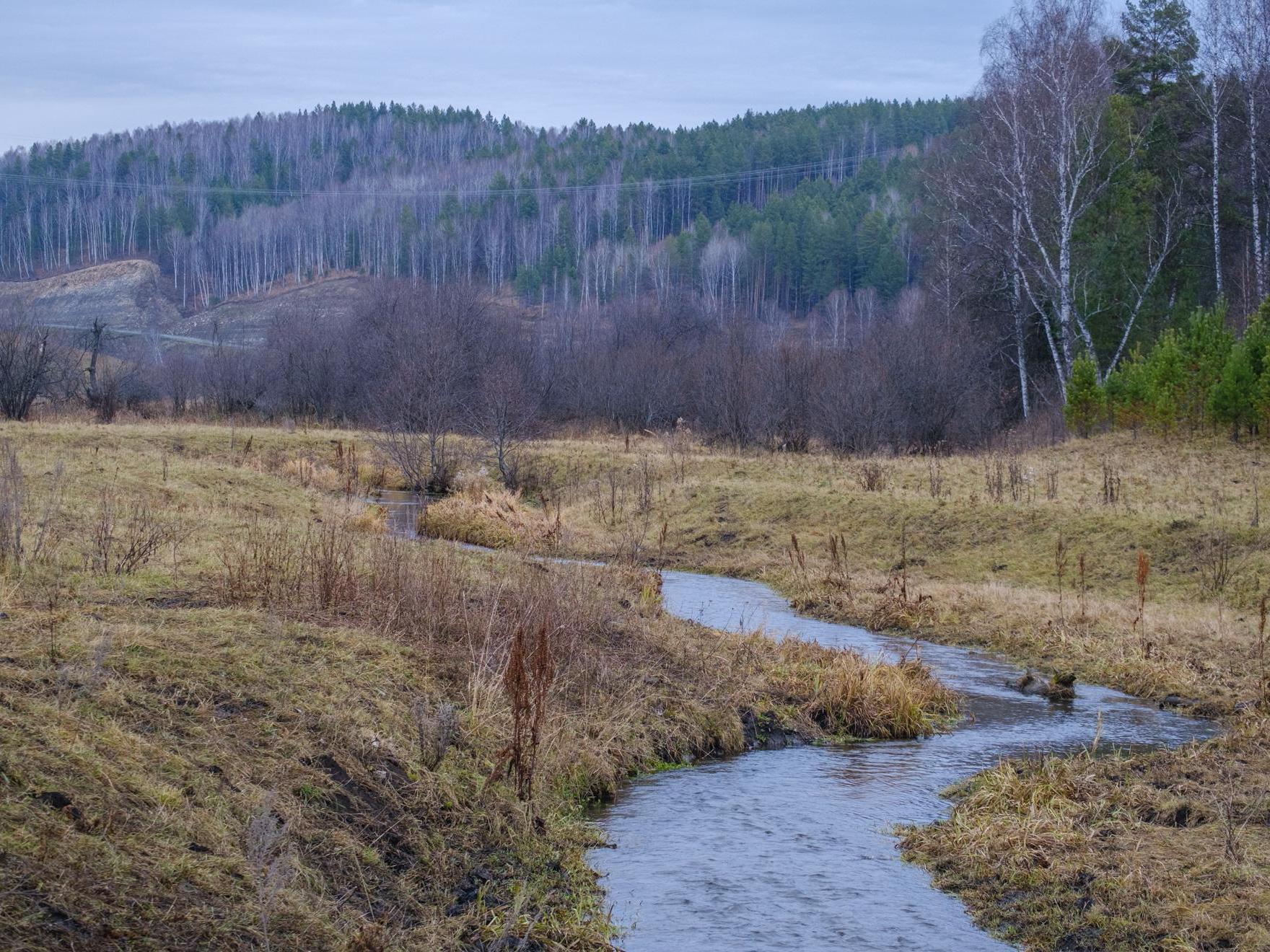
In less than a year after opening, according to the head of Bashkortostan, 42,000 people visited here. This place may not convey the spirit of the village as a living place, but it gives peace. Because around is that very silence and emptiness: roads are far away, cars are not heard, the nearest village is three kilometers away.
Six kilometers away is the railway — the Samara-Zlatoust Railway, passing through Ufa, Asha, Kropachyovo, Sim, and, in fact, Zlatoust. It is not visible from the pedestrian paths, but sometimes you can hear trains rushing by somewhere in the distance.
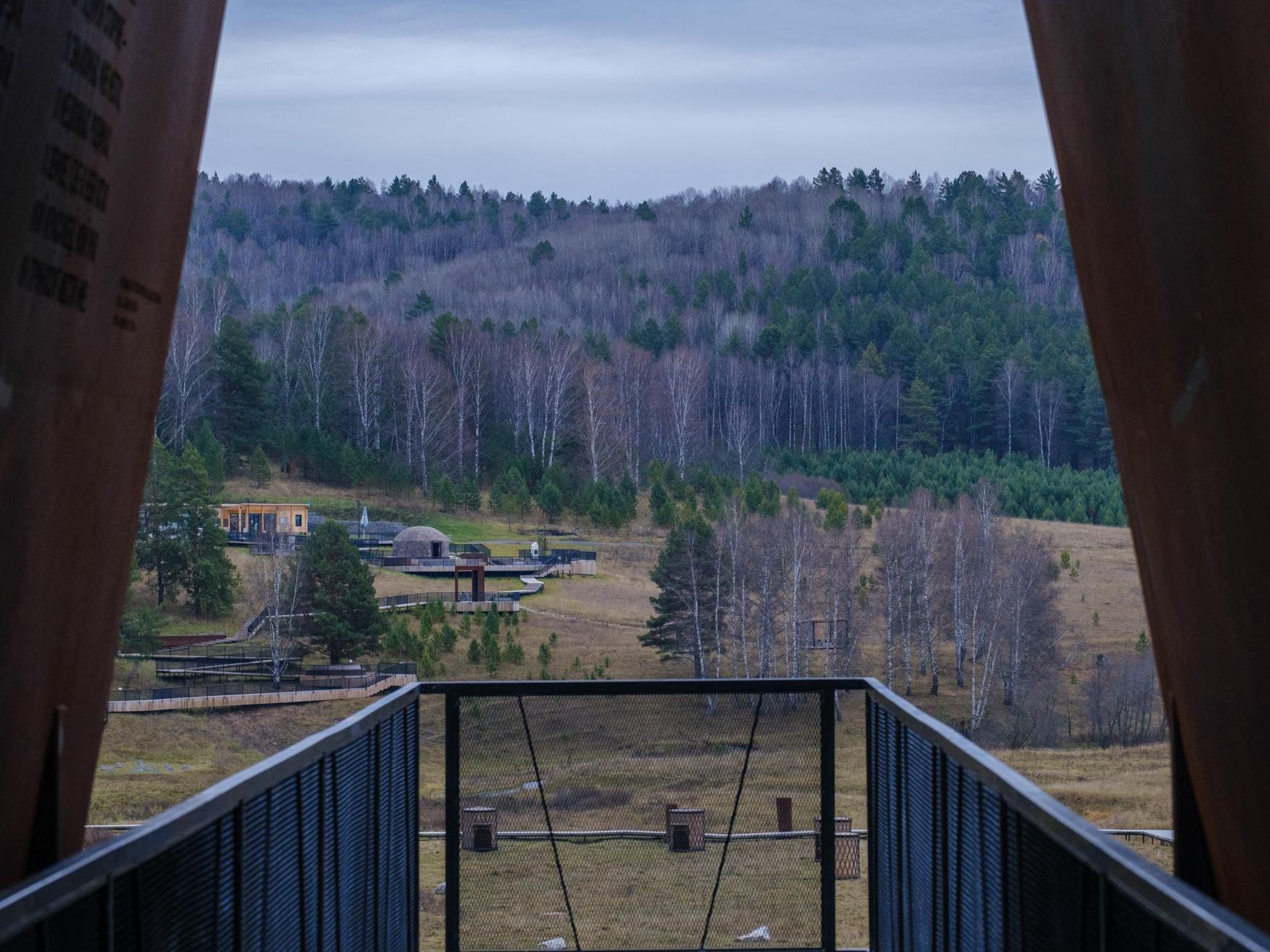
All around — not a soul, but sometimes snakes are encountered. After all, this is mostly wild nature, where factories were never built.
So in this respect, Salavat, Yulay, and the Bashkirs won their battle.