Where Salads Are Made in Down Jackets: Inside Food Production

There probably isn«t a single resident of Krasnoyarsk who hasn»t bought a salad, pizza, or sandwich from a supermarket at least once. But have you ever seen how they are made?
The NGS24.RU editorial team visited the production facility of one of the city«s most popular grocery stores and saw how ready-made food is prepared, while also asking uncomfortable questions about expired ingredients in salads — is it true or not?
Precautions Like in a Chemistry Lab
The «kitchen» we were invited to is located right in the premises of one of the chain«s stores — the »Sibirsky Gorodok« trade complex in the Oktyabrsky District. Here, they prepare products for dozens of »Krasny Yar« outlets in the city.
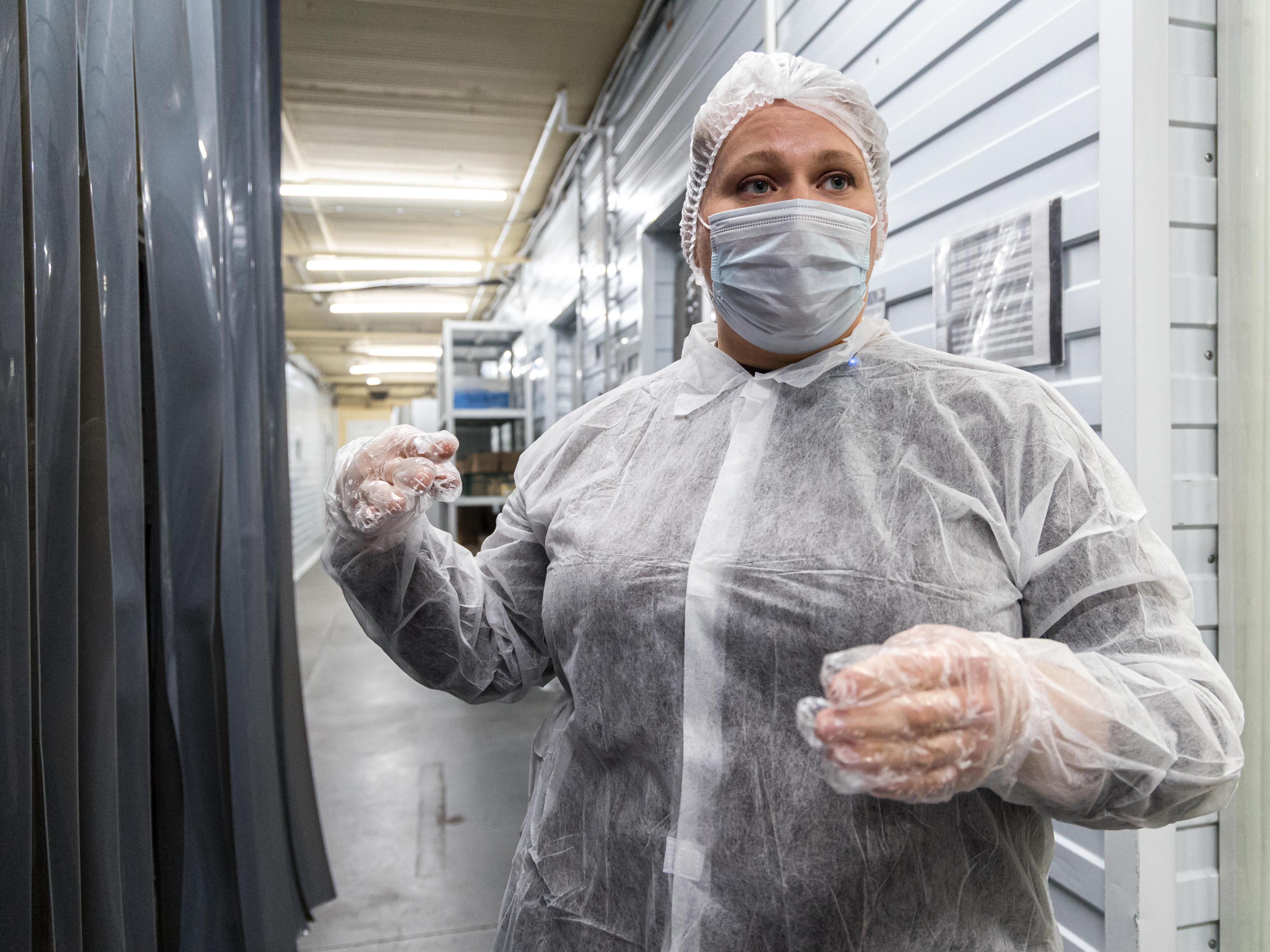
The entrance to the workshop is through a multi-section changing room. In the first room where outer clothing is removed, a bulky wet mat lies on the floor. It«s impossible to avoid this »obstacle,« and while taking off your jacket, you inevitably step on it — soapy water starts oozing from the mat.
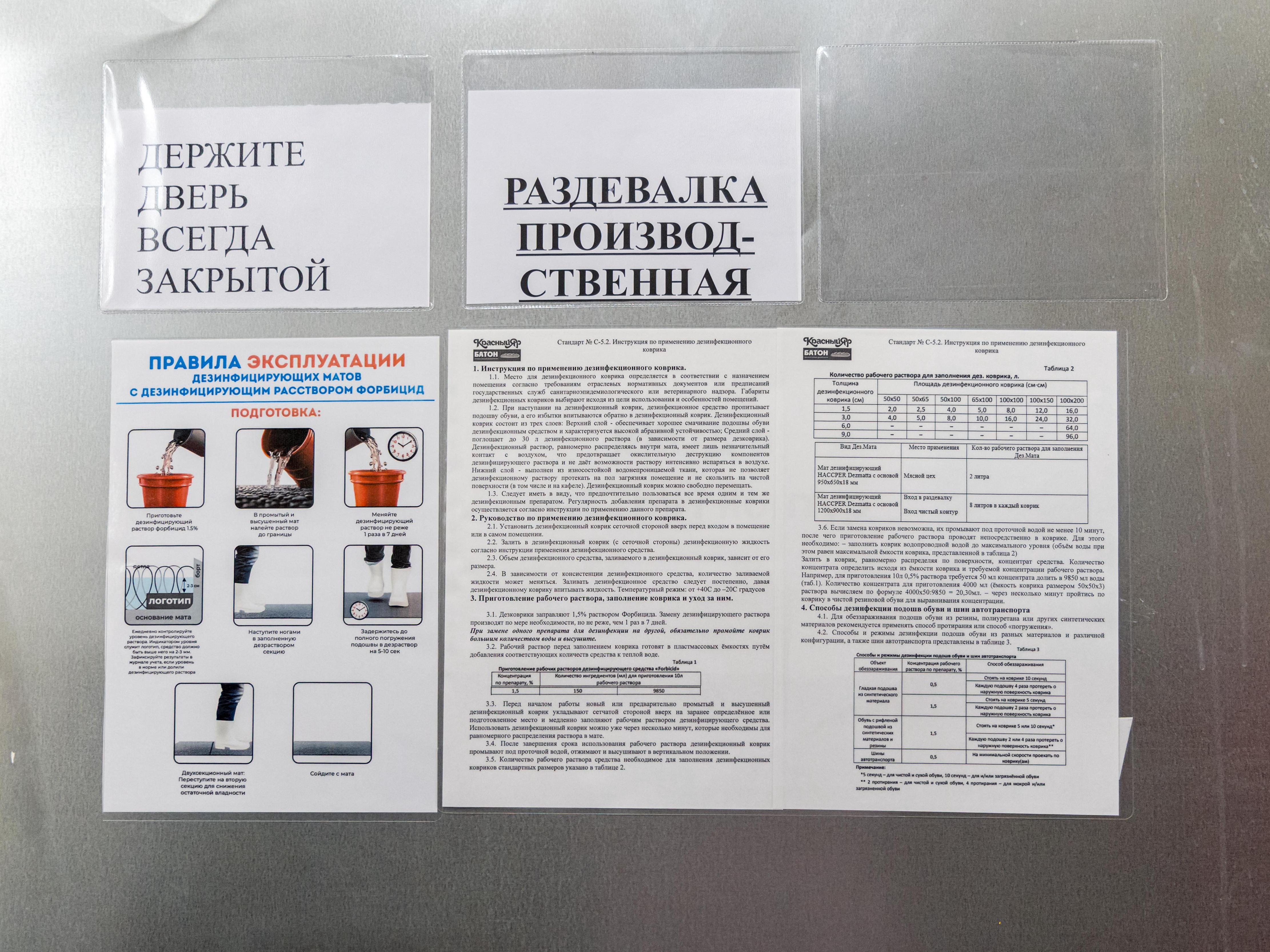
This is a special disinfectant solution. A few seconds are enough to treat the soles of shoes against bacteria. Only after that can you sanitize your hands and proceed to the next room — the changing area.
Here, each employee has two lockers right away — one for clean and one for dirty clothes. People undress to their underwear, leaving personal clothing and accessories behind. After putting on work clothes, they can proceed to the next section, simultaneously donning masks, gloves, elbow pads, hair protection, and even beard protection for men.
— We have everything divided into lockers. Clean and dirty clothes. That is, I come in my own clothes, take them off, [put them] in the dirty locker, open the clean [locker], put on my clean uniform in which I will work, — explains Elena Sechkina, head of the «Culinary» direction for the «Krasny Yar» and «Baton» retail chains.
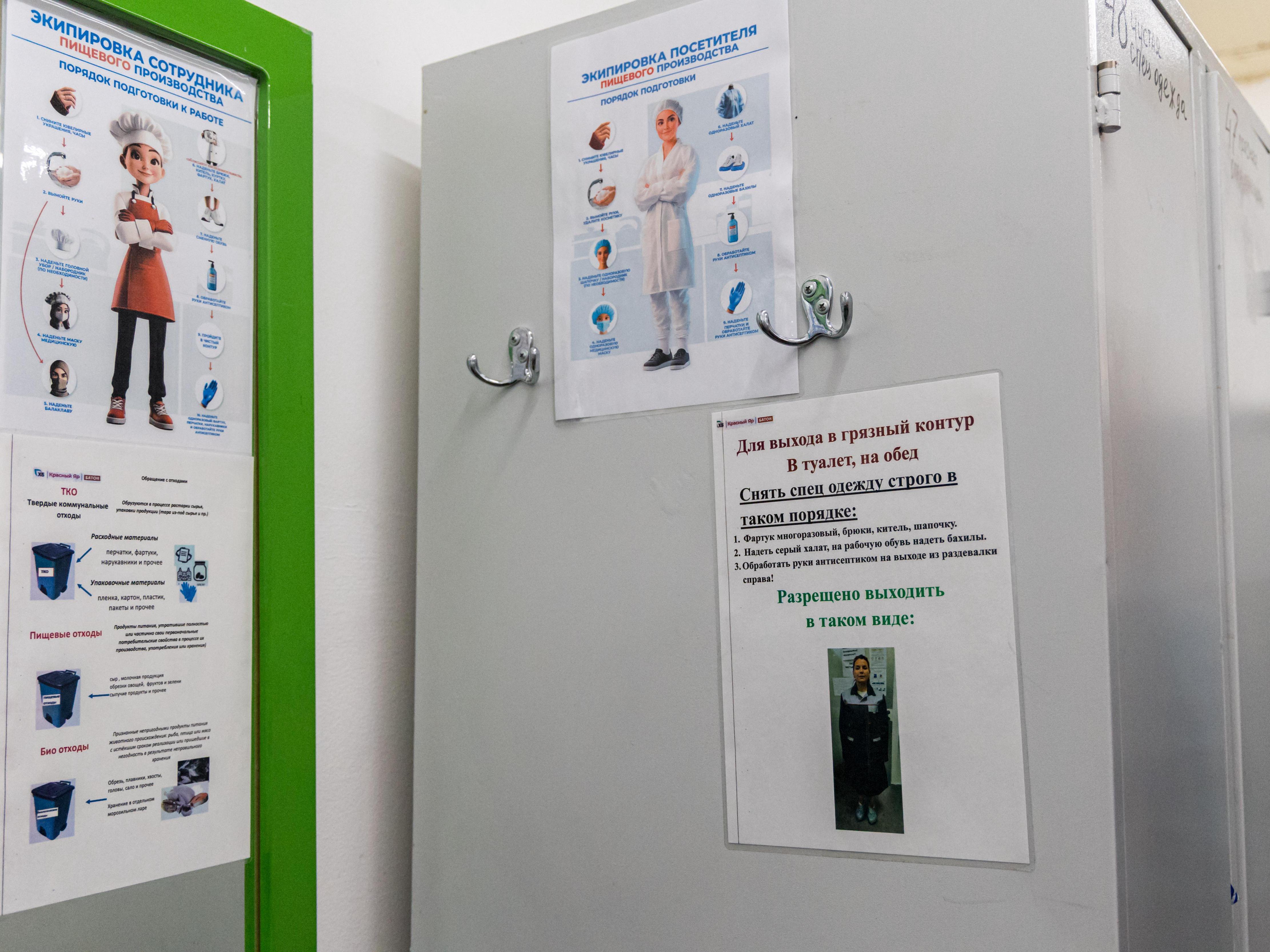
Next, the staff steps on the disinfectant mat again, but now in changeable shoes, sanitizes their gloves, and only then enters the production workshop. This way, a minimum of «external» bacteria that people bring with them to work remains.
Hot Cooking with a Cool Head
Behind a thick curtain is the food production workshop. Dozens of machines and people chopping vegetables are not immediately visible here. All work is divided into sections depending on the product category — everyone is busy with their own task.
Like in other «factories,» it«s cold here — the room temperature is no more than 15 degrees Celsius (59°F). And they explained why:
— The temperature in the chilled product should be four to six degrees Celsius (39-43°F). Microflora multiplication occurs at temperatures from 15 degrees Celsius (59°F). Why cold workshops need to be built — from 15 degrees, it«s already the »critical point,« bacteria multiply exponentially, — explains Elena Sechkina.
One of the first rooms we look into is the section where pizza is made. The very same pizza that will later be sold by the slice in stores.
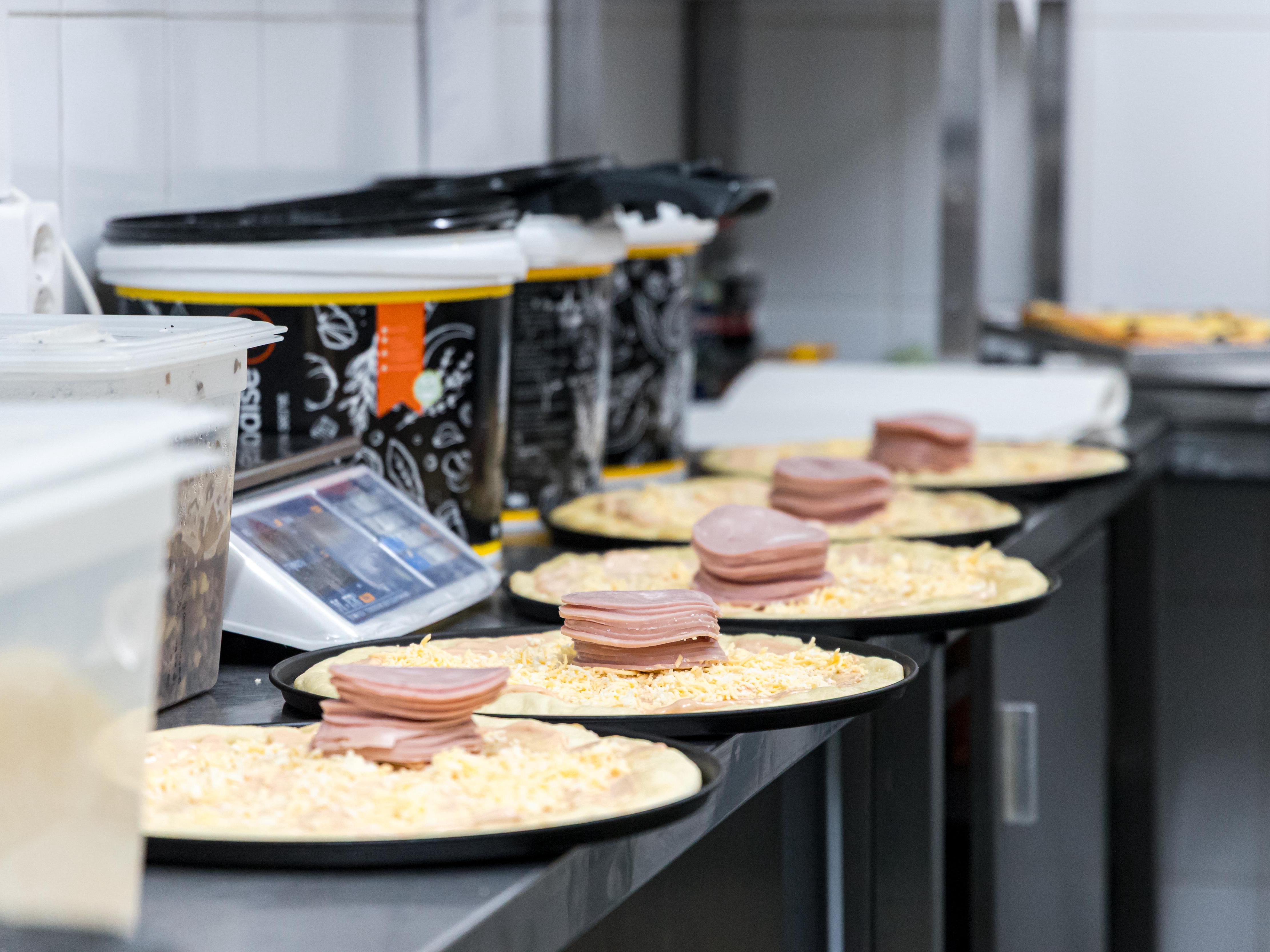
Only one person makes pizza here: they receive an order for the number of pizzas, get pre-prepared ingredients, and assemble it like a constructor. A technologist oversees the quality of the «assembly.»
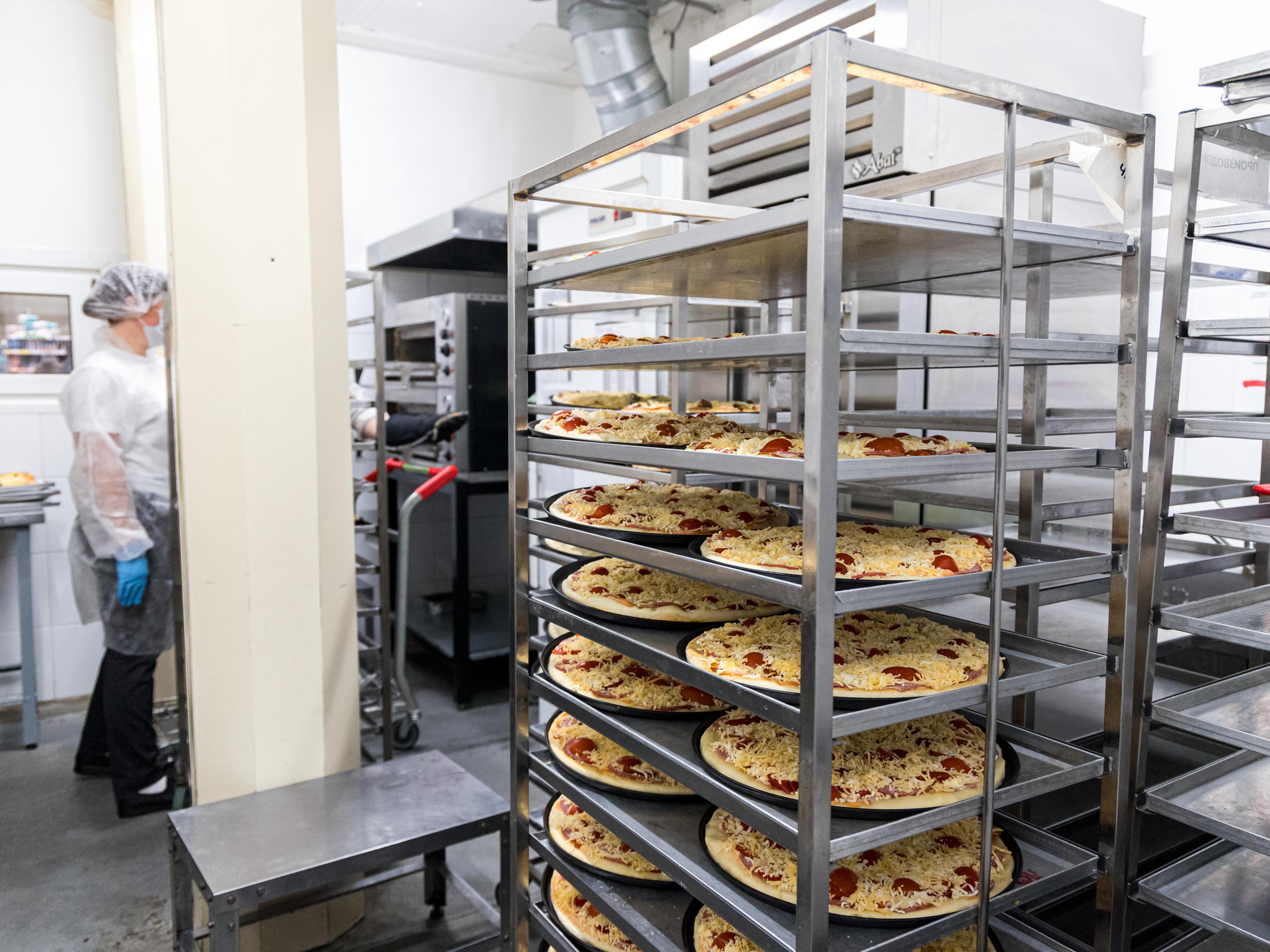
Then the pizza is sent to the oven, cooked, frozen, and after that, sent to stores. Sandwiches are also made in this same department.
In another department, a «skillet» is at work — that«s what they call a large oven, more resembling a smart pot with a lid.
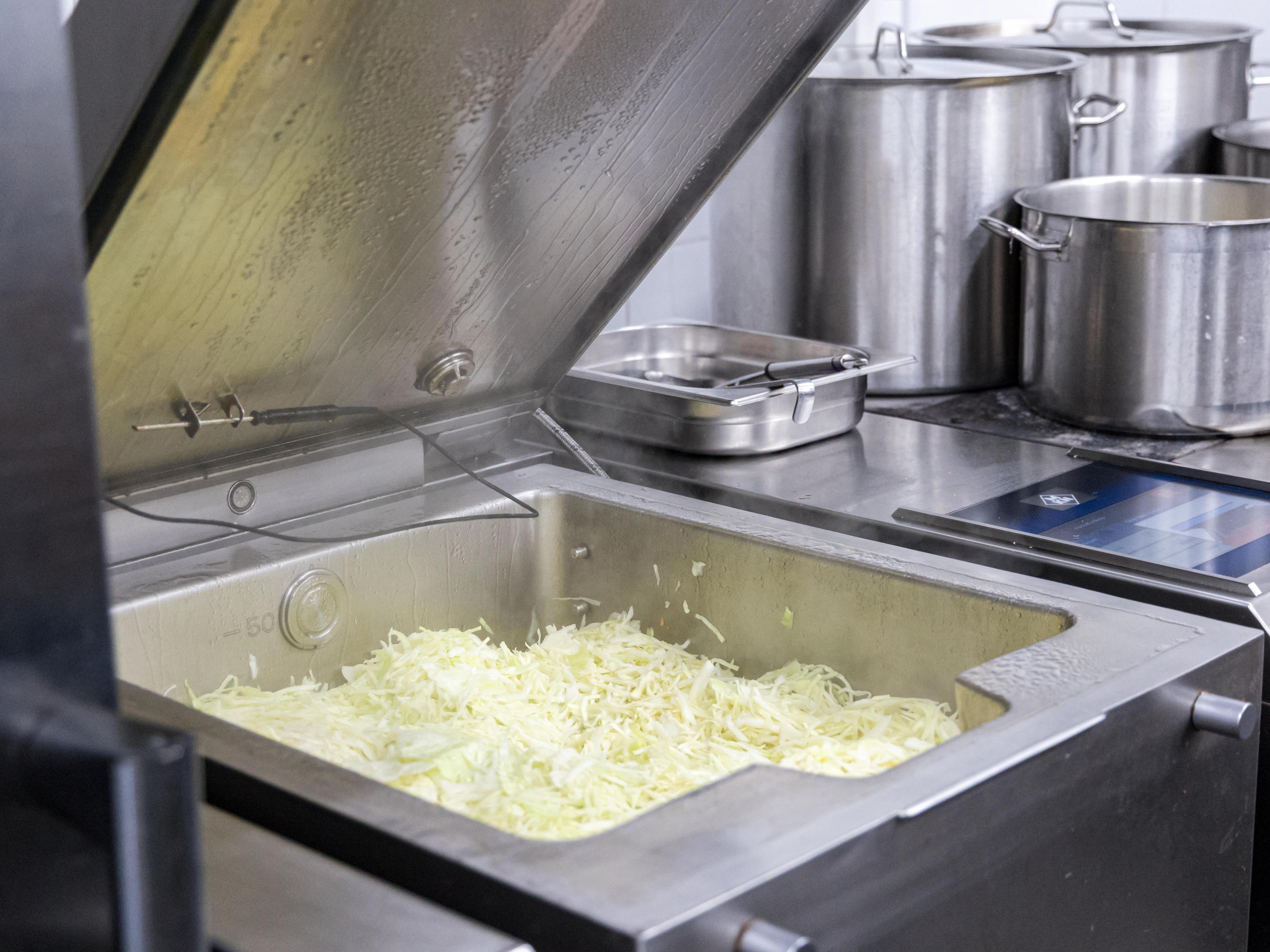
At neighboring tables, several people are shredding cabbage and cutting meat.
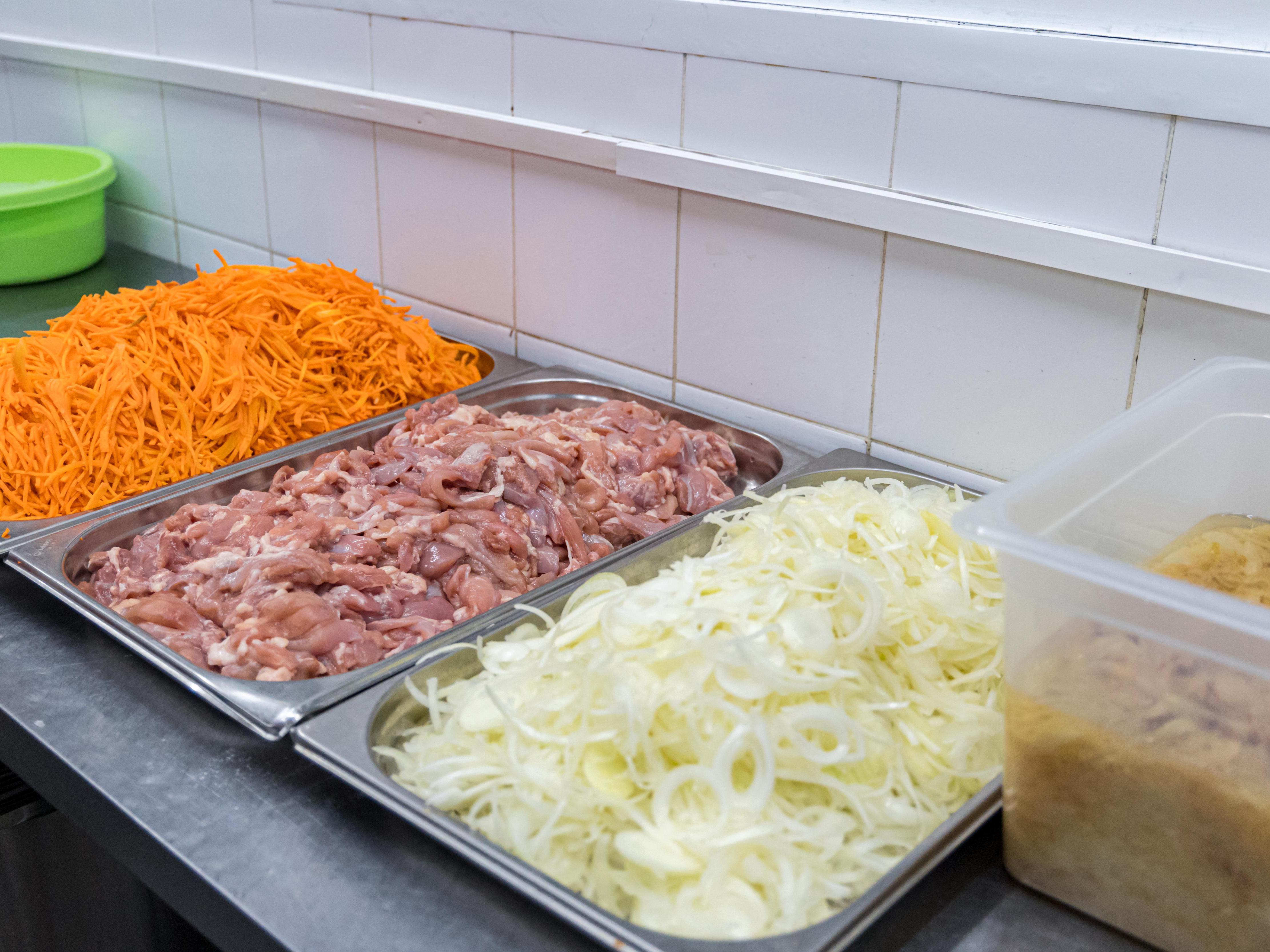
Then this is sent to the large «skillet,» where the food will cook on an «accelerated» mode. Nearby is another oven where meat is baked. The cheese that will garnish it is prepared next door.
After cooking, the food is cooled and sent for packaging. The machines that will do this are waiting in another section.
All production departments have protection against insects. Special devices lure and catch them, and only a specific person can clean the «trap» — they come on call and are not part of the kitchen staff.
Not Only Oil Workers Wear Down Jackets
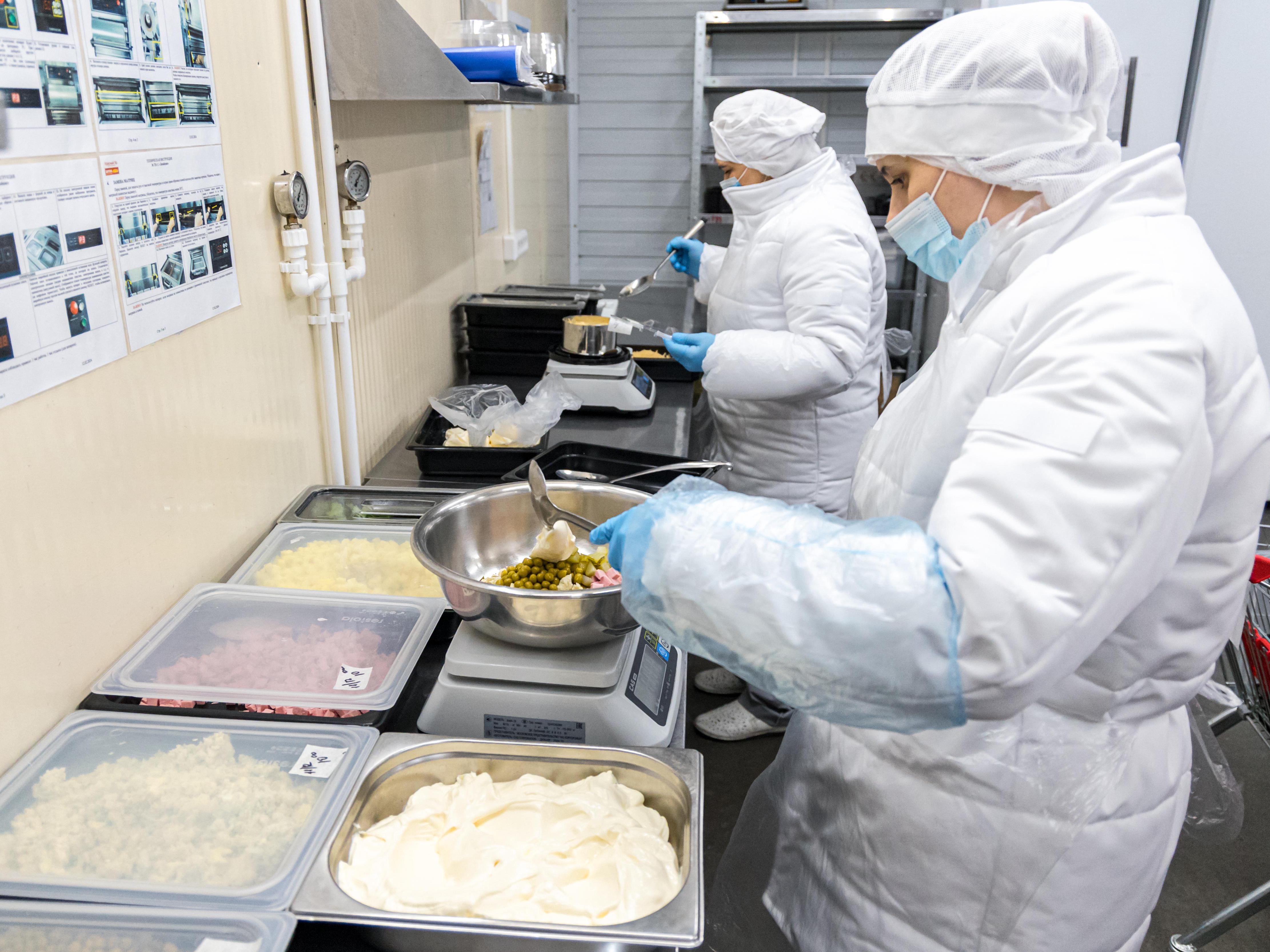
Have you ever seen salads being made in down jackets? In a cool, bright room, two people in snow-white jackets are shredding, mixing, and packaging salads. Dressing warmer was necessary because the entire workday passes at 14 degrees Celsius (57°F).
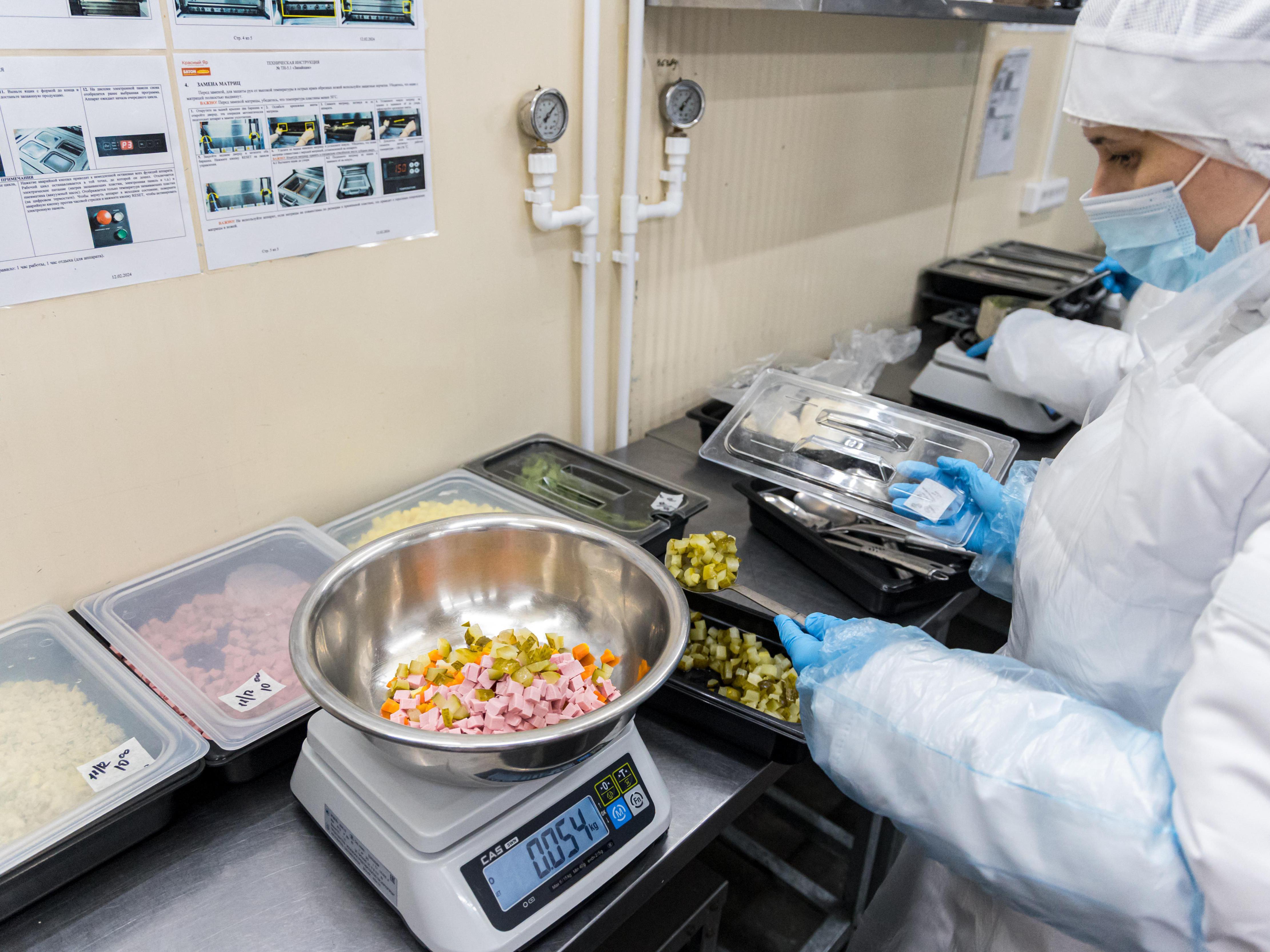
The staff works 12-hour shifts, but production never stops here — food and preparations are made 24 hours a day.
— Training staff to work in these conditions, to work in jackets — it«s hard. We went through all the stages of denial, acceptance. That»s it, this is how it will be and there«s definitely no other way, — recalls Sechkina.
If in this department, for example, the door is left open, the entire batch will have to be recalled. And that has been done.
In this same room, already cooked food is sealed. This is done on special equipment.
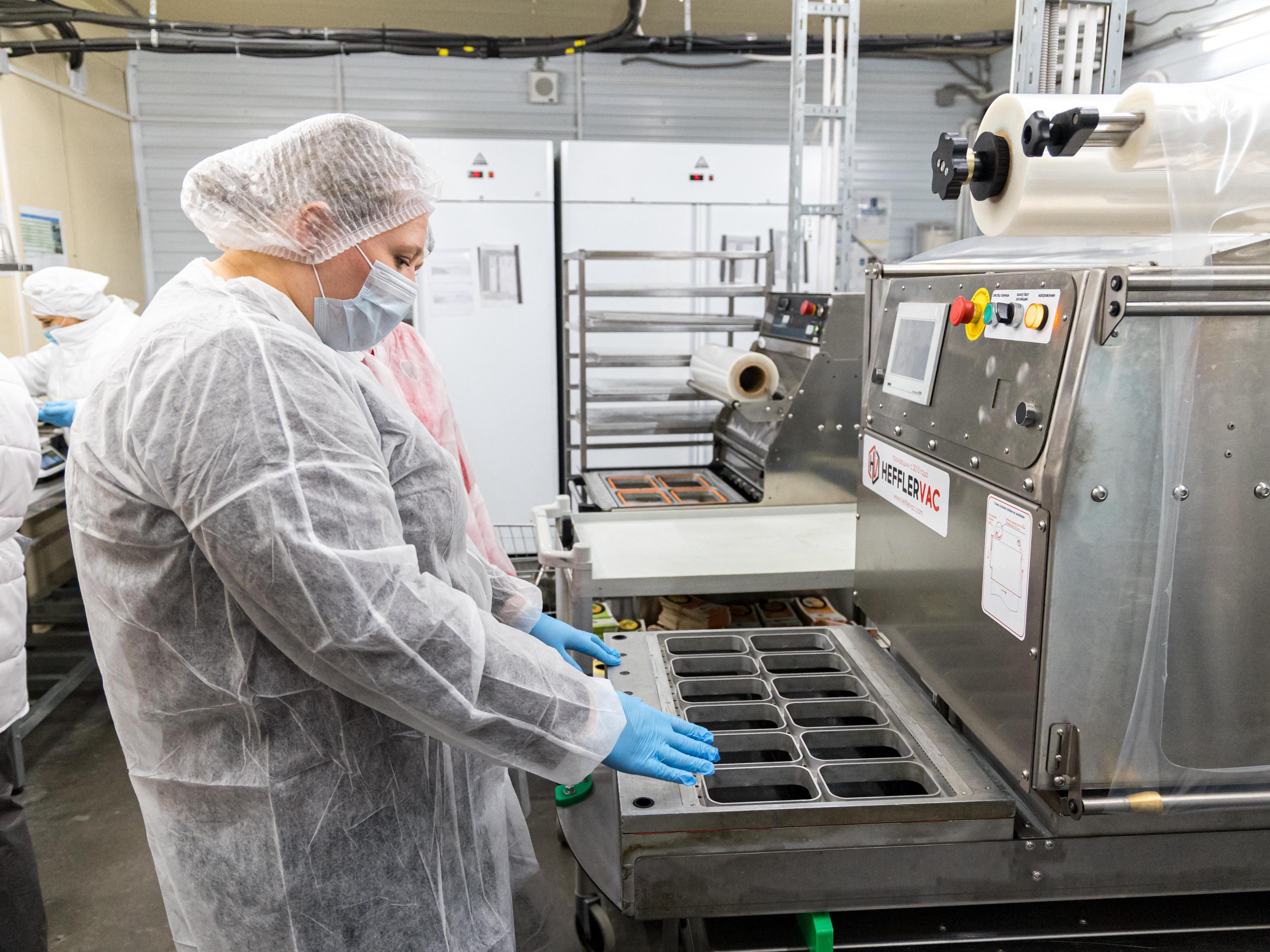
The product is placed into containers, and then the device seals it with airtight film. Moreover, there is no air inside the sealed container — the food is stored in a special gas that allows it to «live» longer.
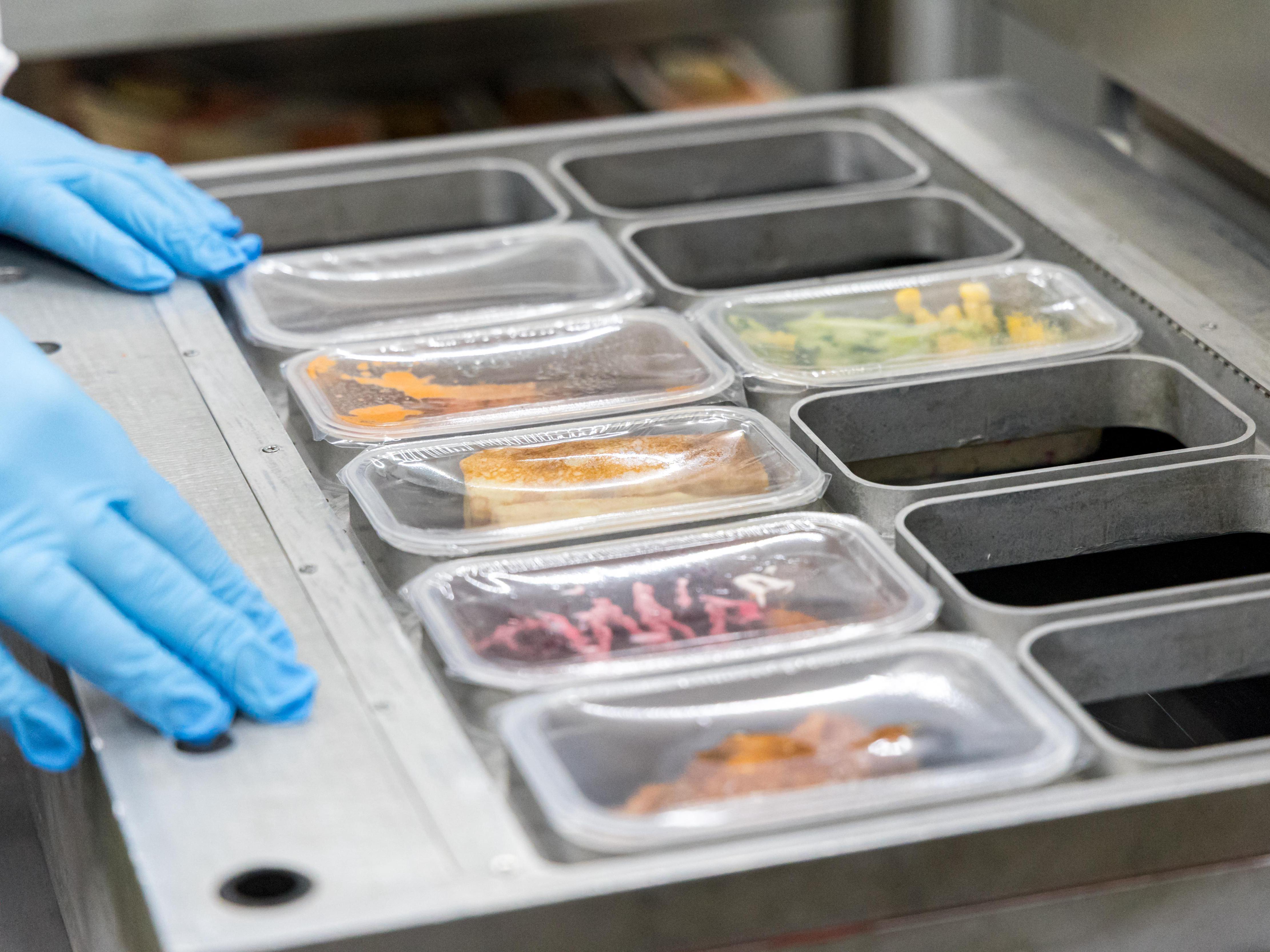
Additionally, representatives of «Krasny Yar» add that if a product«s shelf life is 72 hours — this is the time it can be sold in the store, the actual storage time is two days longer. Such a time buffer is set specifically for safety.
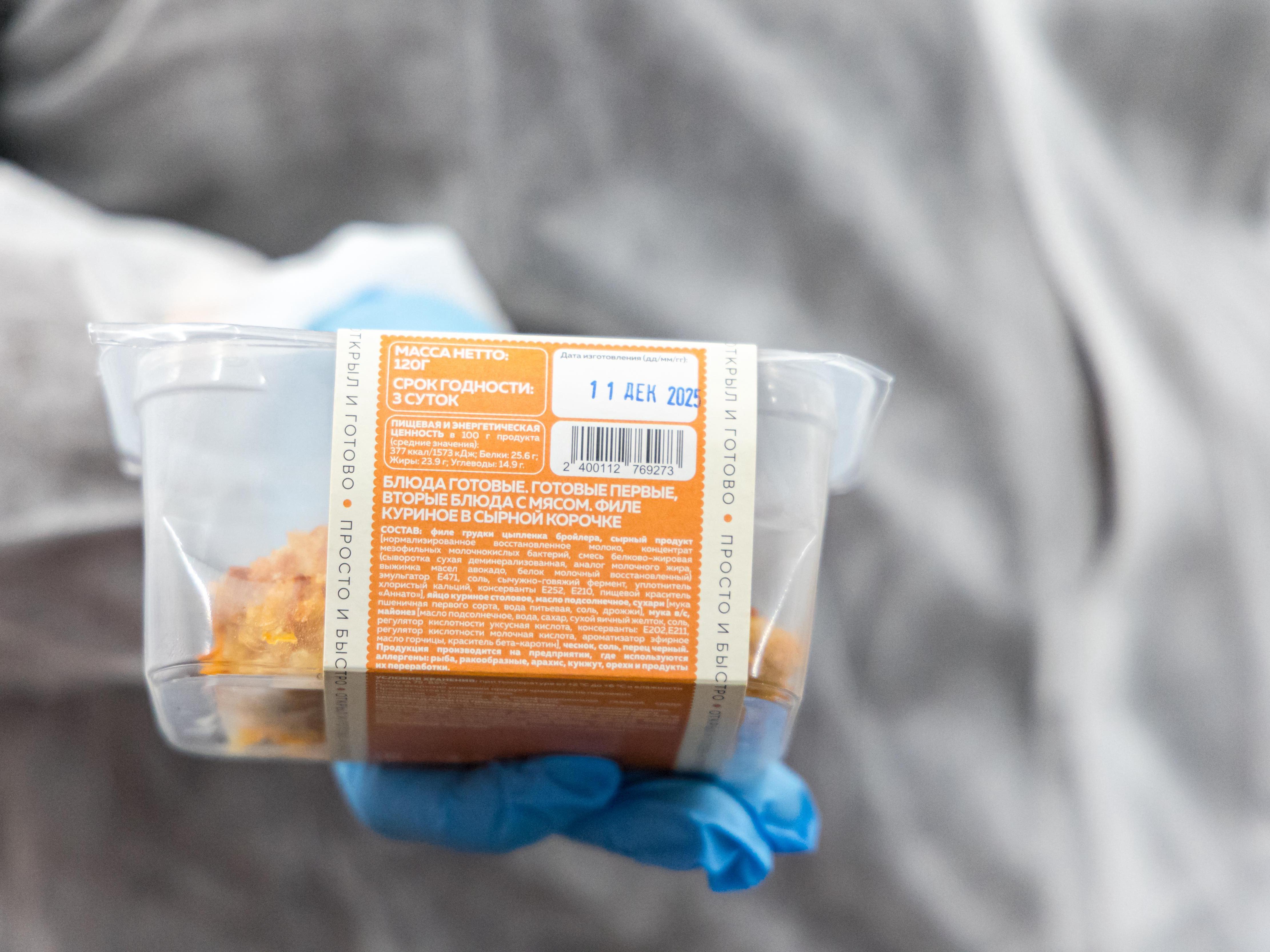
Some stores in the chain have their own culinary departments, but for most, products are prepared here. Soon, the company plans to launch a new large-scale production that will also be able to meet the needs of external networks.
The Myth of Expired Ingredients in Salads and Baked Goods
When talking about ready-made food, one of the most common fears is that it is made from products that are about to spoil or are already expired.
— The amount of food we prepare per shift — no store could provide us with that much expired product, — production staff laugh at the question.
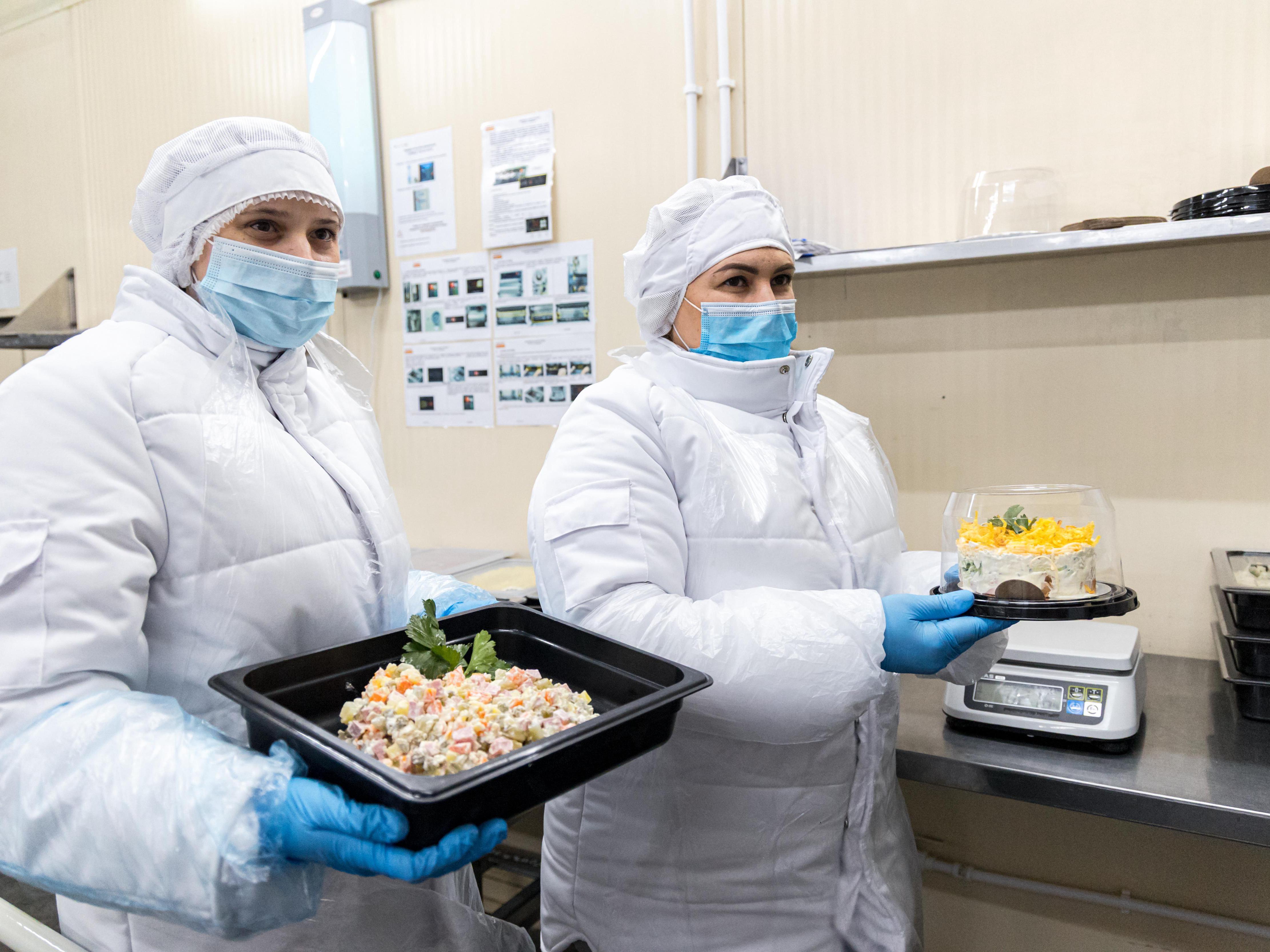
It«s also impossible because customers would definitely notice and wouldn»t eat such things. This very criterion is the main one they focus on when developing products.
As an example, management tells about how they improved ready-made mashed potatoes. And now they prepare it only from potatoes of a specific variety.
— [We say] that we only take this variety and no other, please, don«t even bring it, we»ll turn you away, — recounts Sechkina the conversation with suppliers.
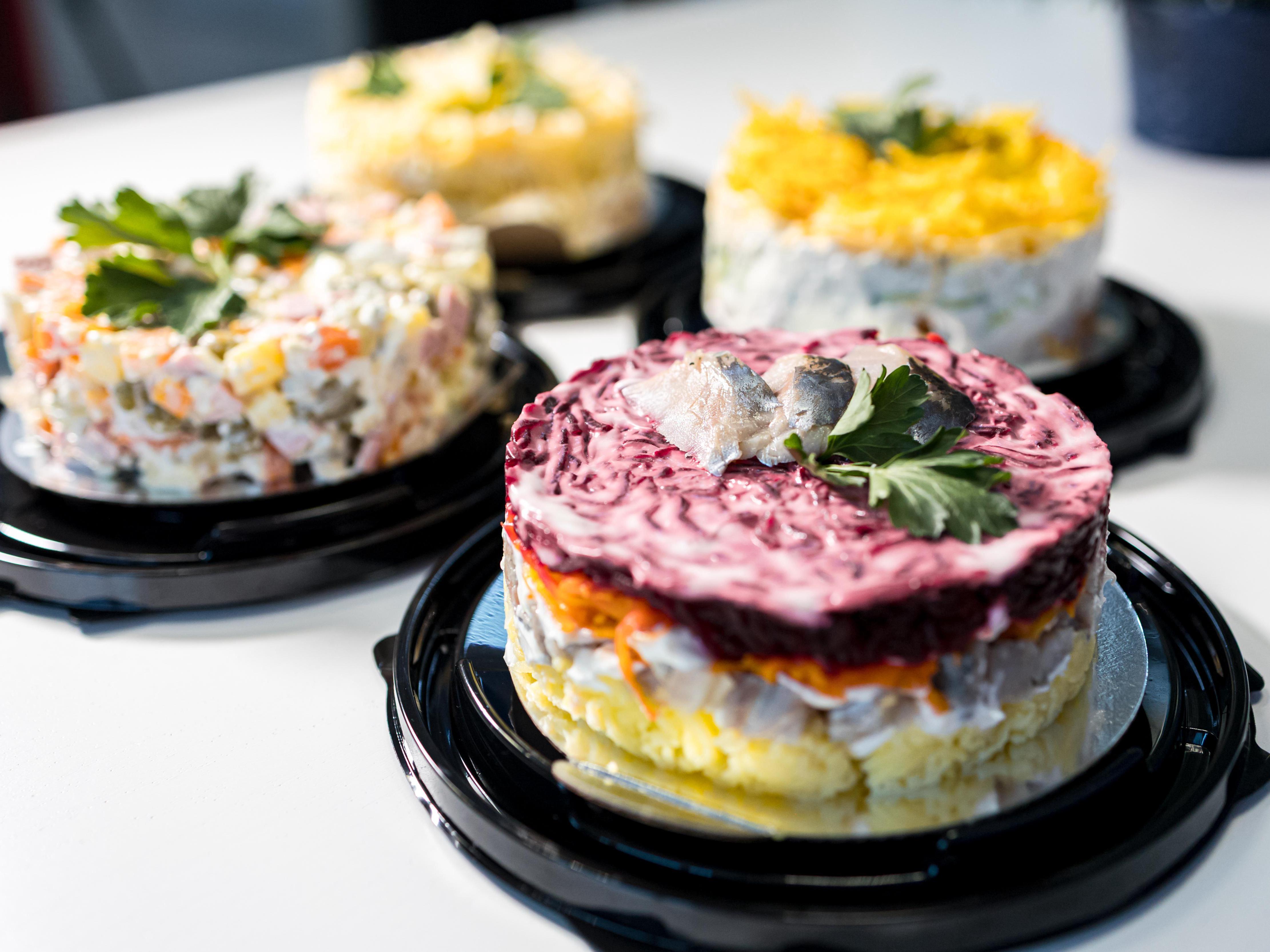
And using the example of the salad «herring under a fur coat.»
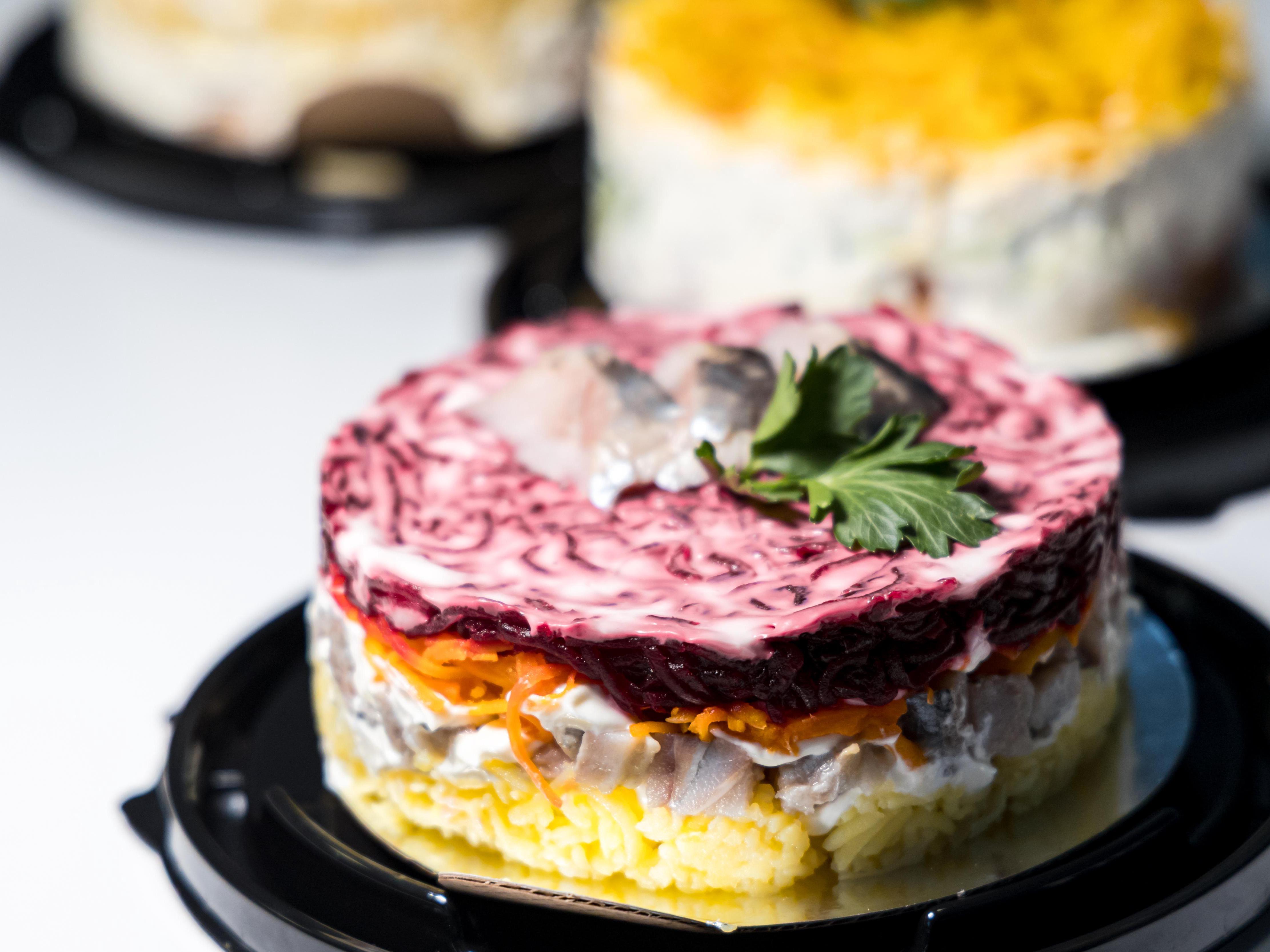
— «There»s not enough herring for me« — those were the complaints. We refined the recipe, increased the herring content by 30%, removed the onion. Blanched, marinated — we tried everything, nothing fits. We conducted a large comparative tasting [of competitors» salads], — adds the manager.
Moreover, the taste of future salads and other dishes is determined not only by the «market,» but also by the personal preferences of the staff. The company conducts «blind tastings» to choose the product that will be used in production. Then it undergoes additional checks.
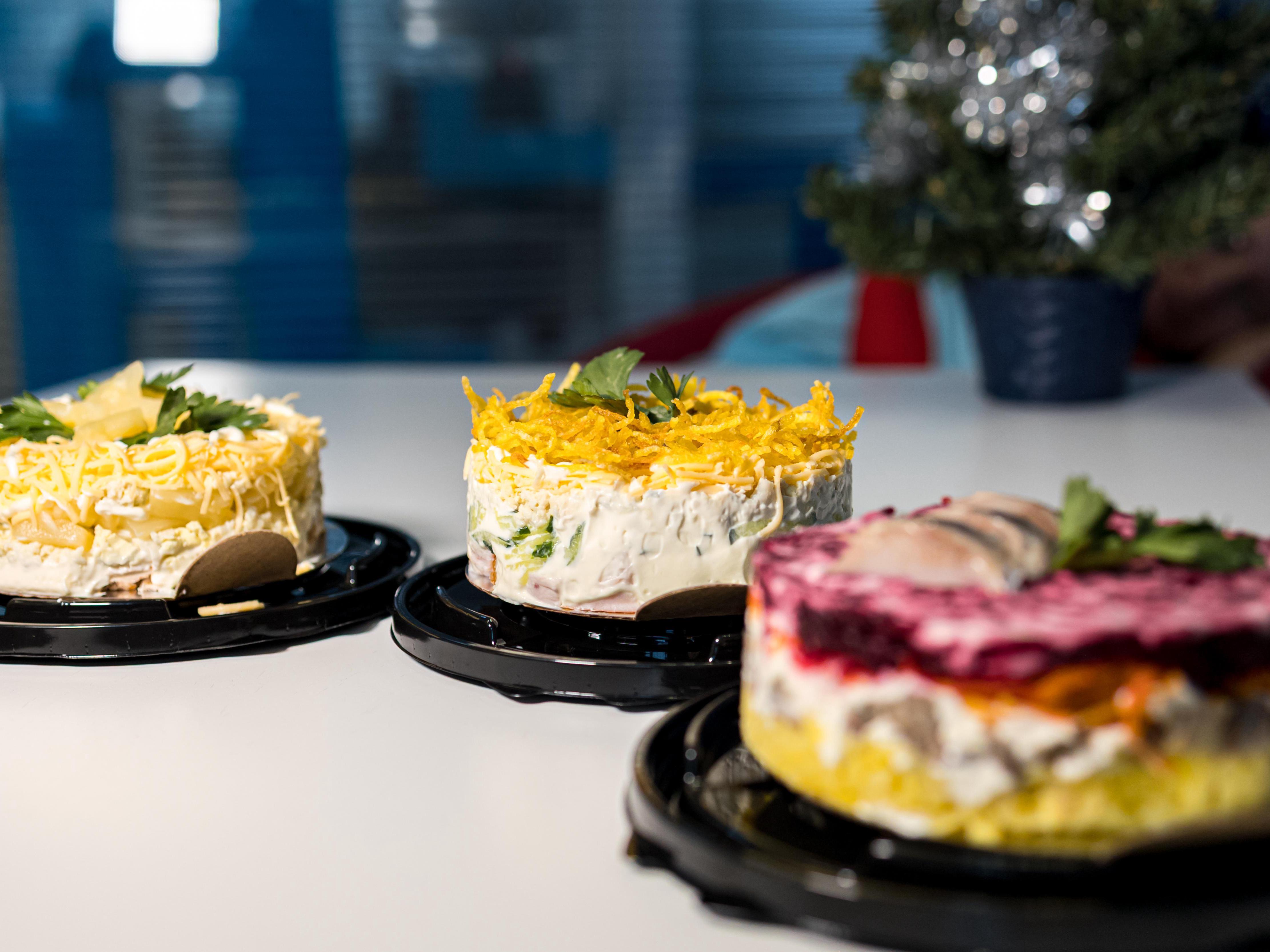
What is delivered to the «kitchen»s« warehouse also undergoes a clever check:
— We take a stick [of sausage] that was delivered to us, set it aside. It has a shelf life of 45 days, on the 44th day we replace the stick, open this [old] one, check that it matches the current one. This is important, — gives one example Elena Sechkina.
In cases where product quality deteriorates, the company changes suppliers. One such case was with sausage when the manufacturer delivered product with metal shavings.
Fan fact: if mayonnaise runs out at the production facility, which is located next to the «Krasny Yar» itself, they cannot simply take it from the sales floor or store warehouse. The culinary department has its own warehouse where products are supplied.
They also arrived at the option of reliable salad packaging through their own experience.
— I fell in winter, everything fell apart. I was upset. I think this needs to be taken into account, — says Elena Sechkina.
Now salads are reinforced more firmly, and you can shake the packaging with it in your hand — nothing will fall apart.
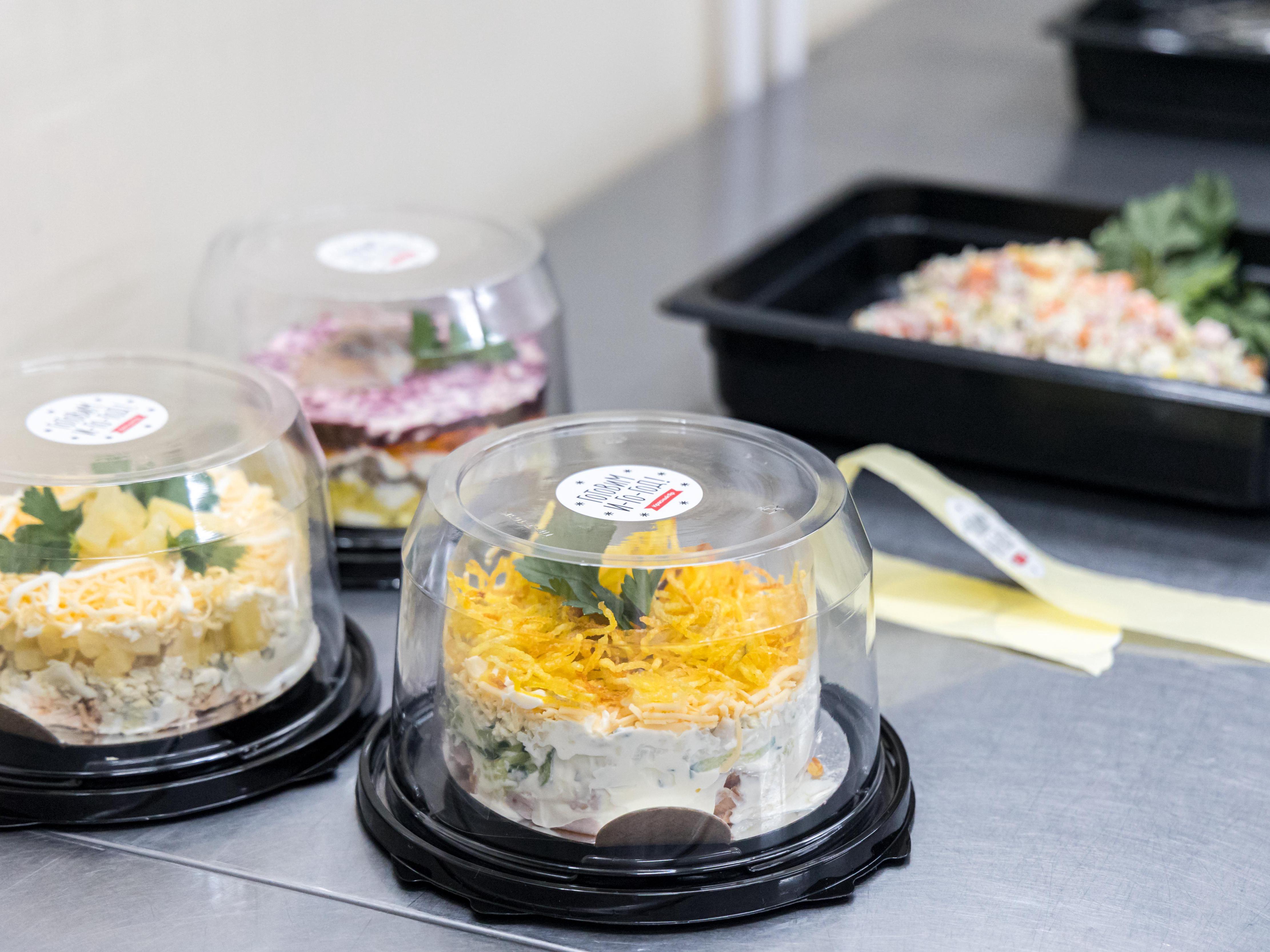
Besides «Krasny Yar,» the chains «Kalina-Malina» and «Komandor» can boast of their own culinary offerings in Krasnoyarsk. NGS24.RU previously studied the production of baked goods for the latter — they are made in a large «European» factory.
And ready-made food in Krasnoyarsk can also be bought at «Lenta,» «Magnit,» «Pyaterochka,» «Alleya,» «O»Key,« Rosa, and other city supermarkets.
Right now, in the NGS24.RU Telegram channel, Krasnoyarsk residents are choosing the best ready-made food store. Suggest your options here.