Doctors Explain When to Avoid Cottage Cheese

We have all heard that cottage cheese is good for bones because it is rich in calcium. But that’s not its only benefit. And even that benefit is somewhat exaggerated. Why calcium alone is not enough, what else is good about cottage cheese, and who should avoid it — we examine these questions with doctors.
What Are the Benefits of Cottage Cheese?

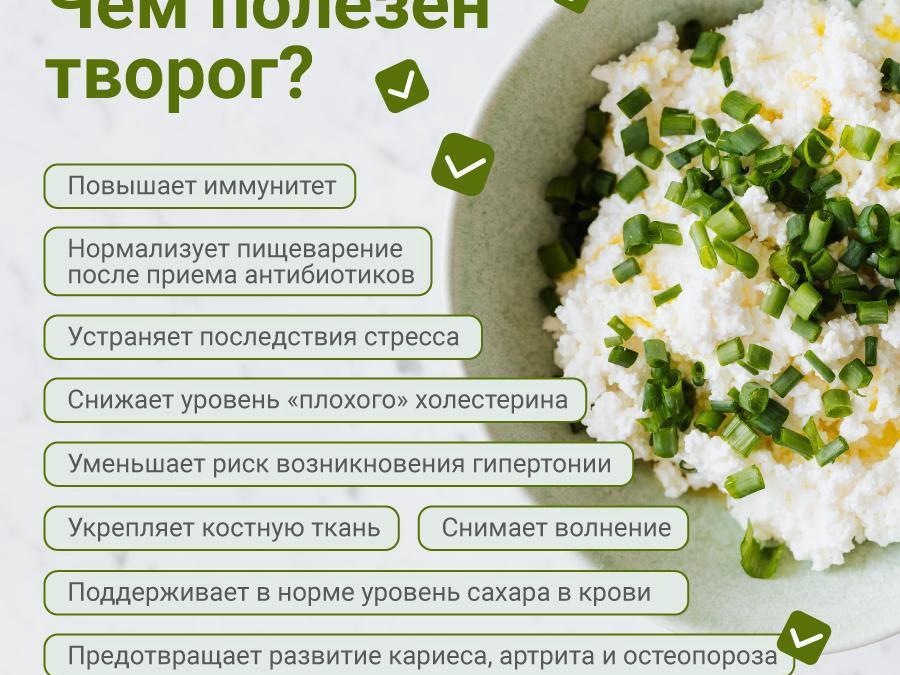
First of all, cottage cheese provides protein, calcium, and amino acids. Secondly, it contains vitamins, macro- and microelements. All this helps strengthen bone tissue and prevents liver diseases. Moreover, cottage cheese has an ideal combination of calcium and phosphorus, which is why it is recommended for expectant and nursing mothers. The lactic acid bacteria in cottage cheese normalize intestinal peristalsis and improve digestive tract function.
«If you eat cottage cheese regularly, you can reduce the risk of coronary heart disease, lower cholesterol, and strengthen blood vessels,» says dietitian-nutritionist Tamara Kramcheninova. «With systematic consumption, blood hemoglobin increases and the nervous system improves. Low-fat cottage cheese is often included in many diets. It also contains even more protein than the classic 9% fat product. In terms of protein content, it rivals fish or meat, but is much easier for the body to digest. Since it is a fermented product, people with lactose intolerance can eat it.»
Tamara Kramcheninova is a dietitian-nutritionist, sports medicine and physical therapy doctor, nutrition consultant, author of courses on nutraceuticals, sports nutrition, hemomonitoring, and detox, and a master of sports in deadlifting.
«With regular consumption, cottage cheese provides considerable benefits: it normalizes metabolic processes, improves memory and concentration, strengthens bone tissue, protects the liver from fatty hepatosis, prevents osteoporosis, improves intestinal peristalsis, and has a beneficial effect on hair and nails,» adds psychotherapist-dietitian Anna Ivashkevich.
Anna Ivashkevich is a psychotherapist-dietitian, consultant for healthy eating services and comprehensive human health assessment services.
Should You Eat Cottage Cheese for Bone Health?
If you have skeletal problems, extra cottage cheese won’t hurt, but it’s not the only solution. Simply because calcium is not the only trace element that affects bone health.
«Calcium is generally found in the foods we eat: cottage cheese, meat, milk, and various other products,» explains traumatologist Alexey Bazhenov. «Overall, it is not a deficient trace element that our food lacks. The question is whether it is absorbed. It is well absorbed when there is an adequate level of vitamin D in the body. Without vitamin D, you can eat any calcium — whether in tablets or cottage cheese — it is unlikely to reach the skeletal system in sufficient amounts.»
Alexey Bazhenov is a traumatologist-orthopedist of the highest qualification category, candidate of medical sciences, and head of the department of traumatology, orthopedics, and neurosurgery.
Why Does Cottage Cheese Cause Swelling?
Swelling after cottage cheese usually occurs in people on a diet, doctors note, especially on a carb-free or salt-free diet. This is because the product is high in sodium, which retains water. If this applies to you, stop these experiments on yourself.
When Is It Best to Eat Cottage Cheese — for Breakfast or Dinner?
The best time for cottage cheese is the first half of the day, and there is scientific evidence for this. Fermented dairy products have a high insulin index, meaning they strongly stimulate insulin synthesis, leading to increased hunger. In the morning, our insulin receptors are not as sensitive as in the evening. Eating cottage cheese at night can greatly stimulate appetite, and then you’re done for. Experts also advise eating cottage cheese with slow carbohydrates — vegetables and bread. This way, you turn a snack into a full meal and won’t stimulate the hunger center.
Can You Eat Cottage Cheese with Tea?
Nothing terrible will happen from this combination, but don’t expect any benefits either. The thing is, tea contains tannin, known for its ability to bind many beneficial substances, rendering them useless.
«So it’s better to wait at least an hour. Or understand that during this meal you were just enjoying your syrniki (cottage cheese pancakes) and will get your calcium next time. But I don’t recommend using this loophole too often. Take care of your body,» advises endocrinologist Zukhra Pavlova.
Zukhra Pavlova is an endocrinologist-andrologist, candidate of medical sciences.
Who Is Contraindicated from Eating Cottage Cheese?
There are few contraindications for cottage cheese. Mainly personal intolerance, allergy to milk protein, and kidney disease (due to high protein content, cottage cheese stresses the excretory system). Also, be careful with cottage cheese if you are obese or have atherosclerosis.
Full-Fat or Low-Fat?
It all depends on your needs. If you want to lose weight, it’s better to choose full-fat cottage cheese. If that seems strange, consider this: first, we risk eating more low-fat cottage cheese because we believe it’s «harmless,» and second, it’s harder to feel full from it, so we need larger portions. Thus, it’s even easier to gain weight on low-fat products than on regular ones.
Moreover, low-fat cottage cheese is not the tastiest product on its own. And if you think you’ve never eaten anything tastier, check the ingredients — there might be a lot of interesting things in there.
But there is nothing harmful about low-fat cottage cheese.
At the same time, it’s worth taking a closer look at full-fat cottage cheese as well.
«If cottage cheese contains vegetable fat, some of the calcium may turn into insoluble calcium soaps, and thus become completely useless for our health,» says Zukhra Pavlova.
How to Choose Cottage Cheese?
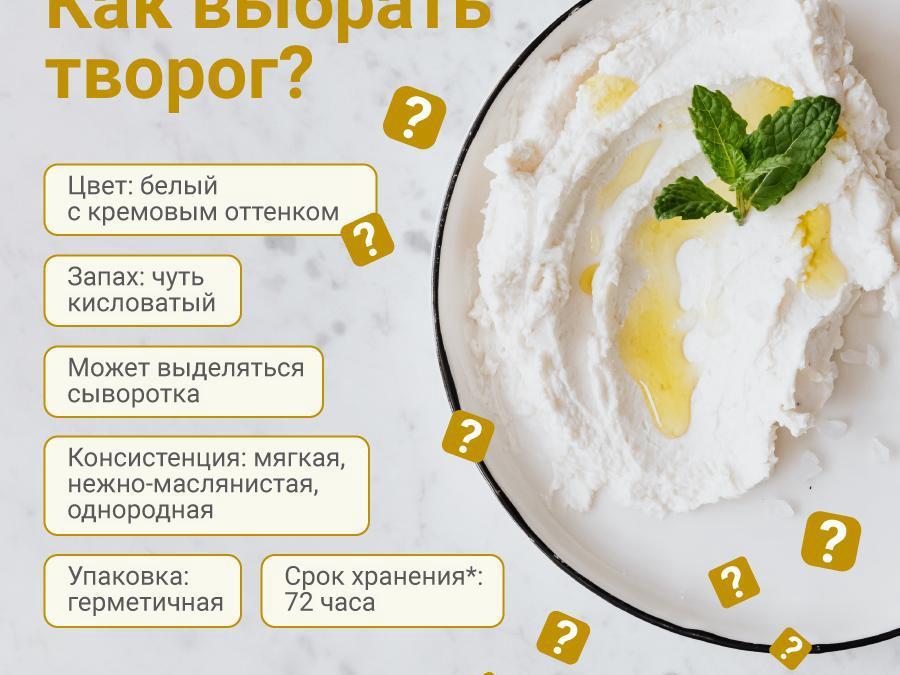
The quality, taste, color, and smell of cottage cheese directly depend on production technology, fat content, and the use of fillers and additives. Quality cottage cheese is always white with a creamy tint and has a slightly sour smell. Low-fat cottage cheese may release whey, but only in small amounts. The consistency is soft, tenderly oily, and uniform.
Cottage cheese is a perishable product, and even at low temperatures (0–+2 °C / 32–35.6 °F), its quality quickly deteriorates. According to sanitary regulations, cottage cheese can be stored in the refrigerator at +2–+6 °C (35.6–42.8 °F) for 72 hours, but modern technology and packaging can extend the shelf life up to a month.
«A good product will have only milk, starter culture, and possibly calcium chloride in its ingredients,» says Zukhra Pavlova. «The ones not recommended contain vegetable fats, starch, and other things. Also check the expiration date: if it’s 3–5 days, the product is natural. Longer — questions arise.»
Doctors advise throwing away expired cottage cheese immediately. It is a favorite environment for yeast and mold to multiply. You might get lucky a few times, but once you get poisoned by fermented milk, you’ll never forget it.