Stirling Castle: The Fortress That Shaped Scotland's Fate
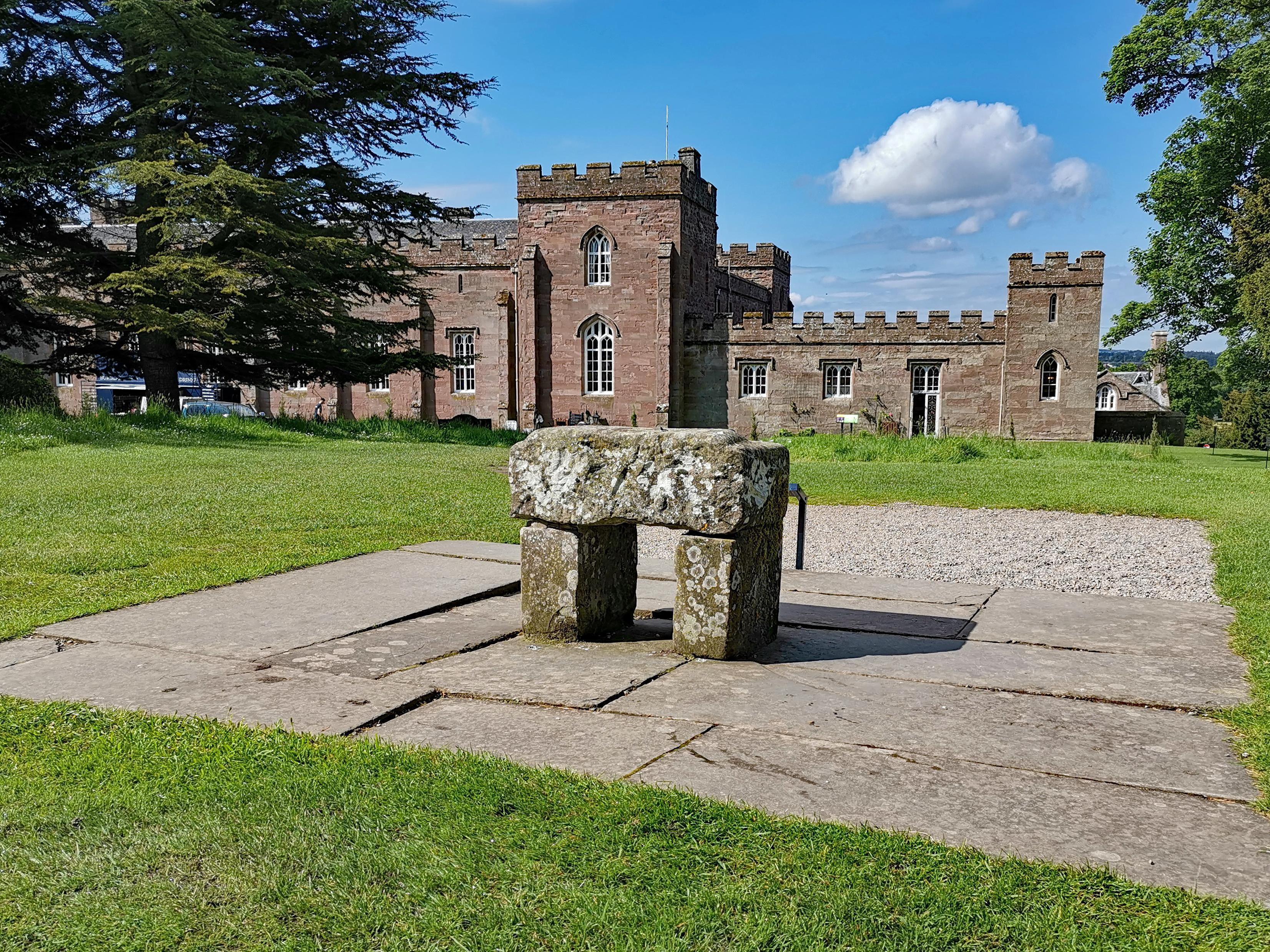

A copy of the Stone of Destiny at Scone Palace. The original ancient relic, used for Scottish coronations, was returned to Scotland in 1996 after many vicissitudes.
The fate of Scotland was decided more than once at the walls of Stirling Castle. A Hollywood film played a special role in its recent history. Mel Gibson«s film Braveheart, released in 1995, though guilty of historical inaccuracies, vividly reminded the world and the Scots themselves of the 1297 Battle of Stirling Bridge and stirred a wave of national consciousness.
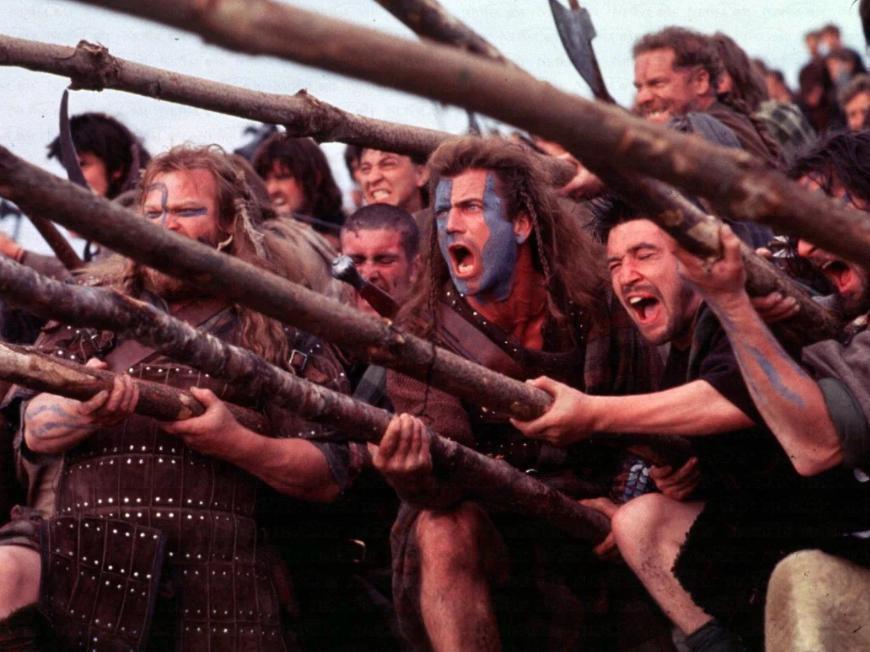
The battle for Stirling in Hollywood interpretation: a still from Mel Gibson«s film Braveheart, which, despite historical liberties, awakened great interest in Scottish history.
This revival of spirit materialized a few years later. In July 1999, Queen Elizabeth II officially opened the first session of the restored Scottish Parliament, which had not been convened since 1707, after the formation of the United Kingdom. Its revival was a direct consequence of the 1997 referendum.
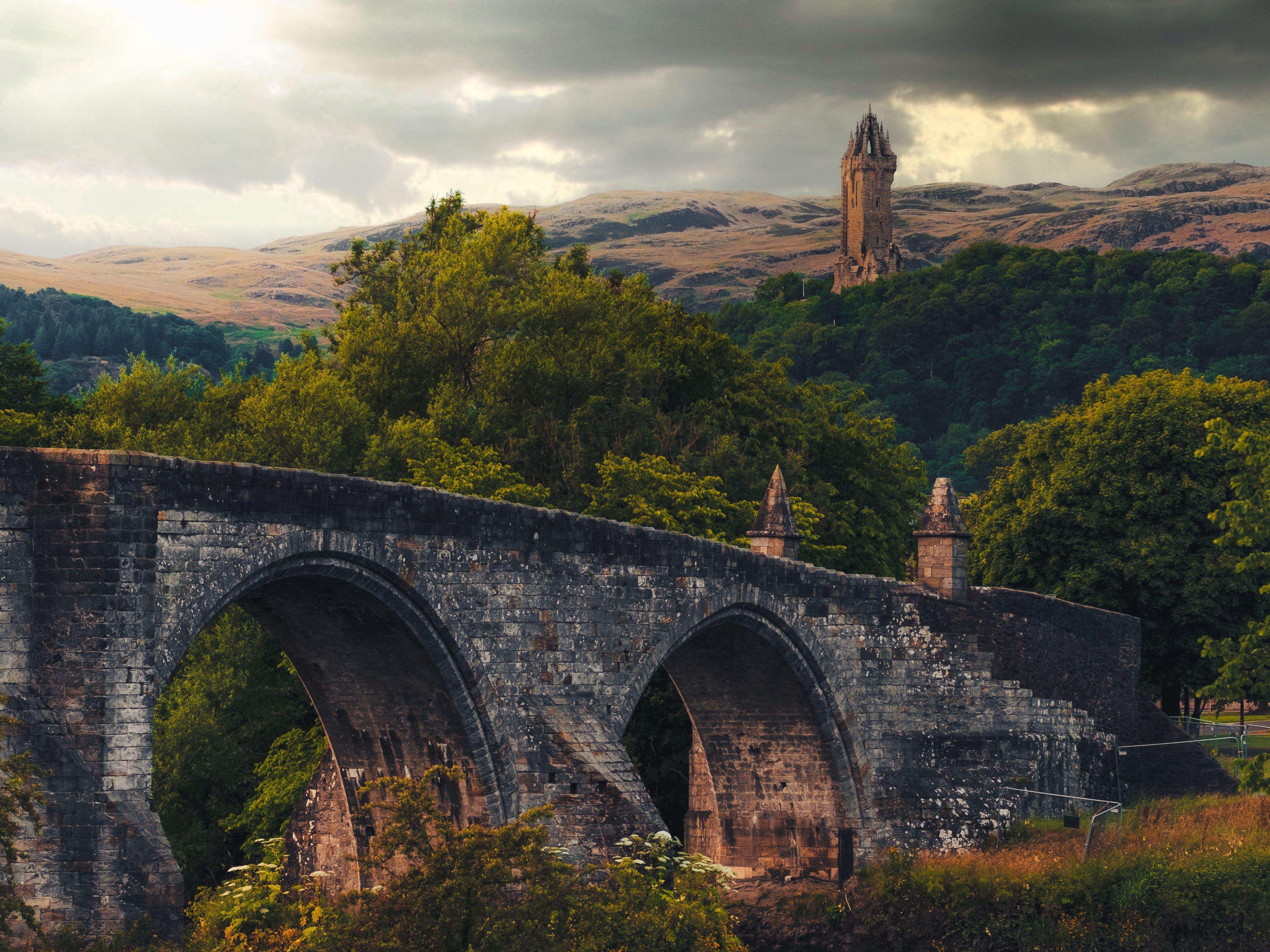
The Wallace Monument—a memorial tower overlooking the fields of Stirling and commemorating the 1297 victory.
A Castle Needed by All
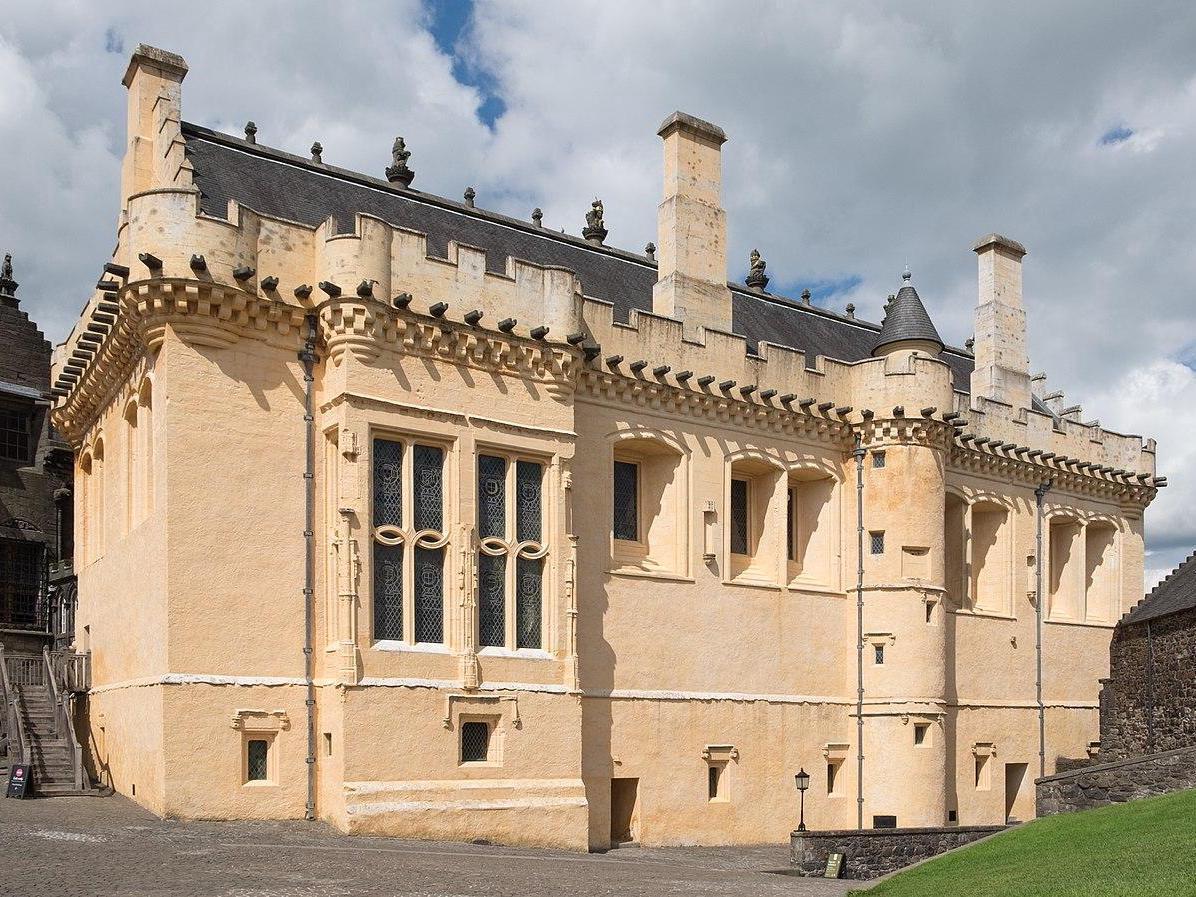
The Great Hall of James IV after restoration. Royal receptions and parliamentary sessions were once held here.
The written history of Stirling begins in the 11th century. The chronicles of King Malcolm III Canmore mention the fortress as an important Scottish stronghold. In 1072, the troops of William the Conqueror and the army of Malcolm III met here. A battle did not occur, but its threat forced Scotland to agree to pay tribute to the English crown.
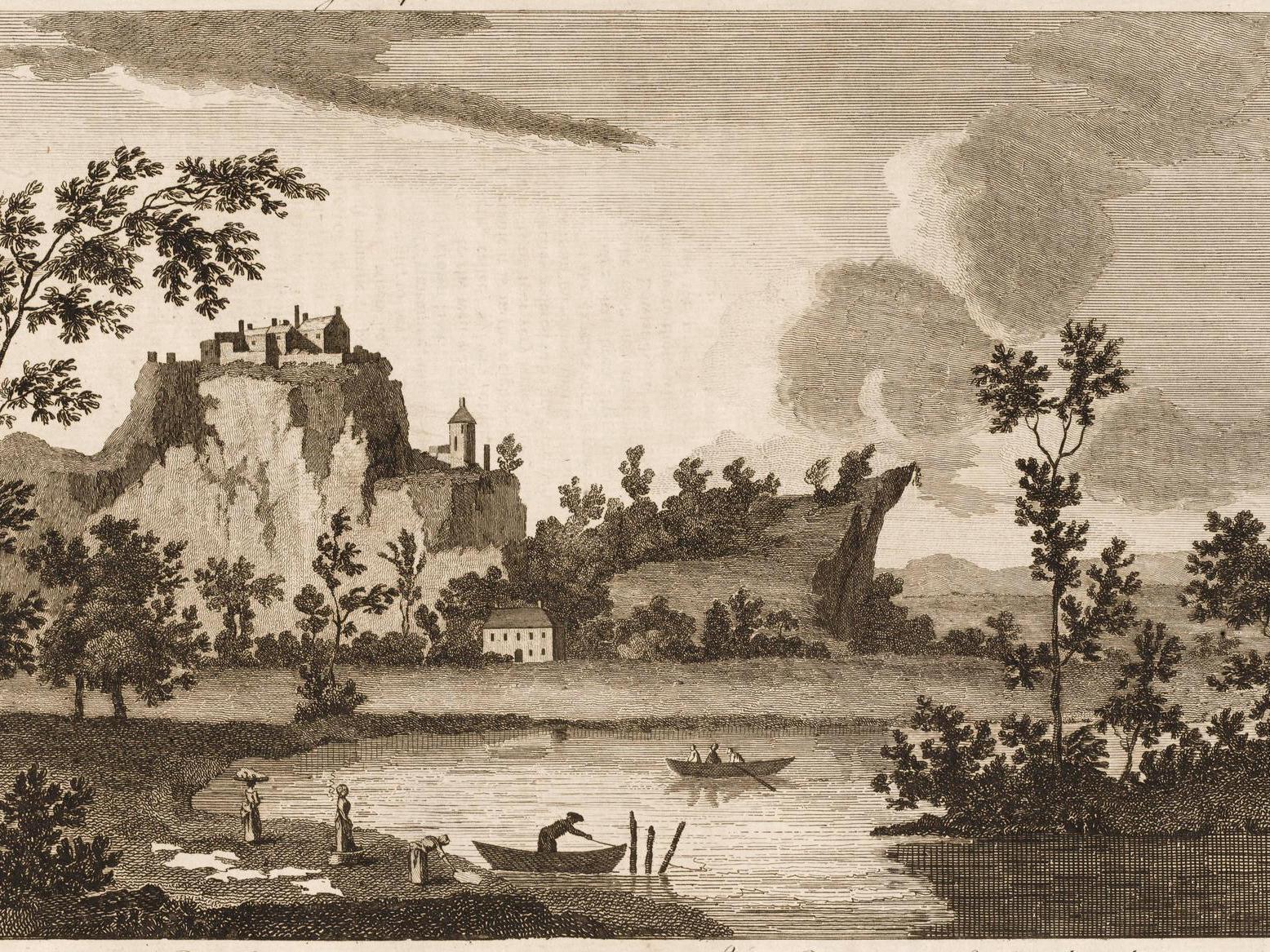
Stirling Castle on an engraving from 1779, captured during its period of decline and neglect.
Centuries later, in 1295, the Scottish King John Balliol refused to support the English monarch Edward I in a war with France. In response, in the spring of 1296, Edward invaded Scotland, deposed Balliol, and took the sacred relic—the Stone of Scone, or Stone of Destiny, on which rulers had been crowned for centuries—to London. The practically defenseless Stirling Castle was also captured at that time.
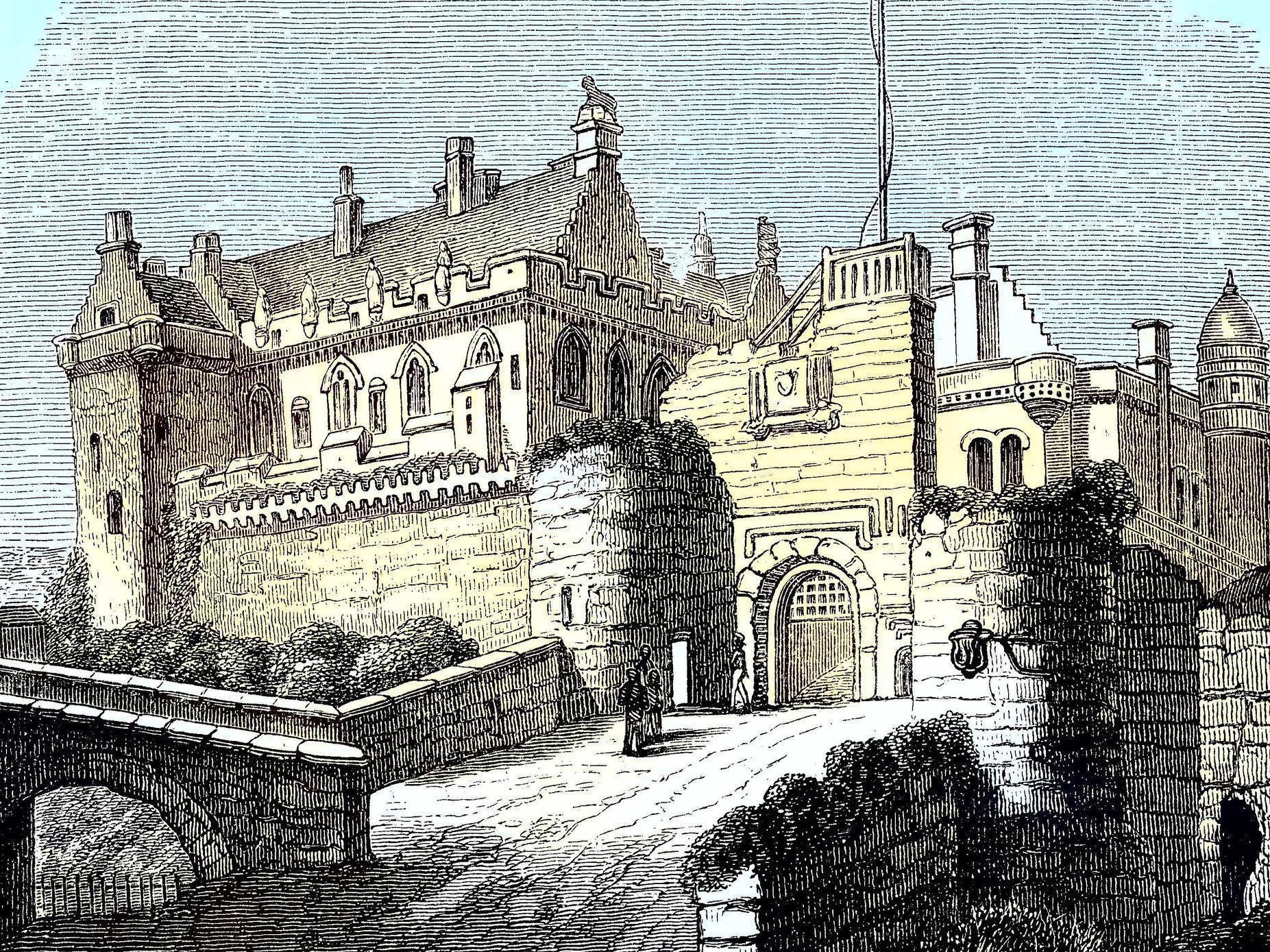
View of Stirling Castle in 1880. By this time, awareness of its historical value and the first steps toward its preservation had begun.
The Braveheart of William Wallace
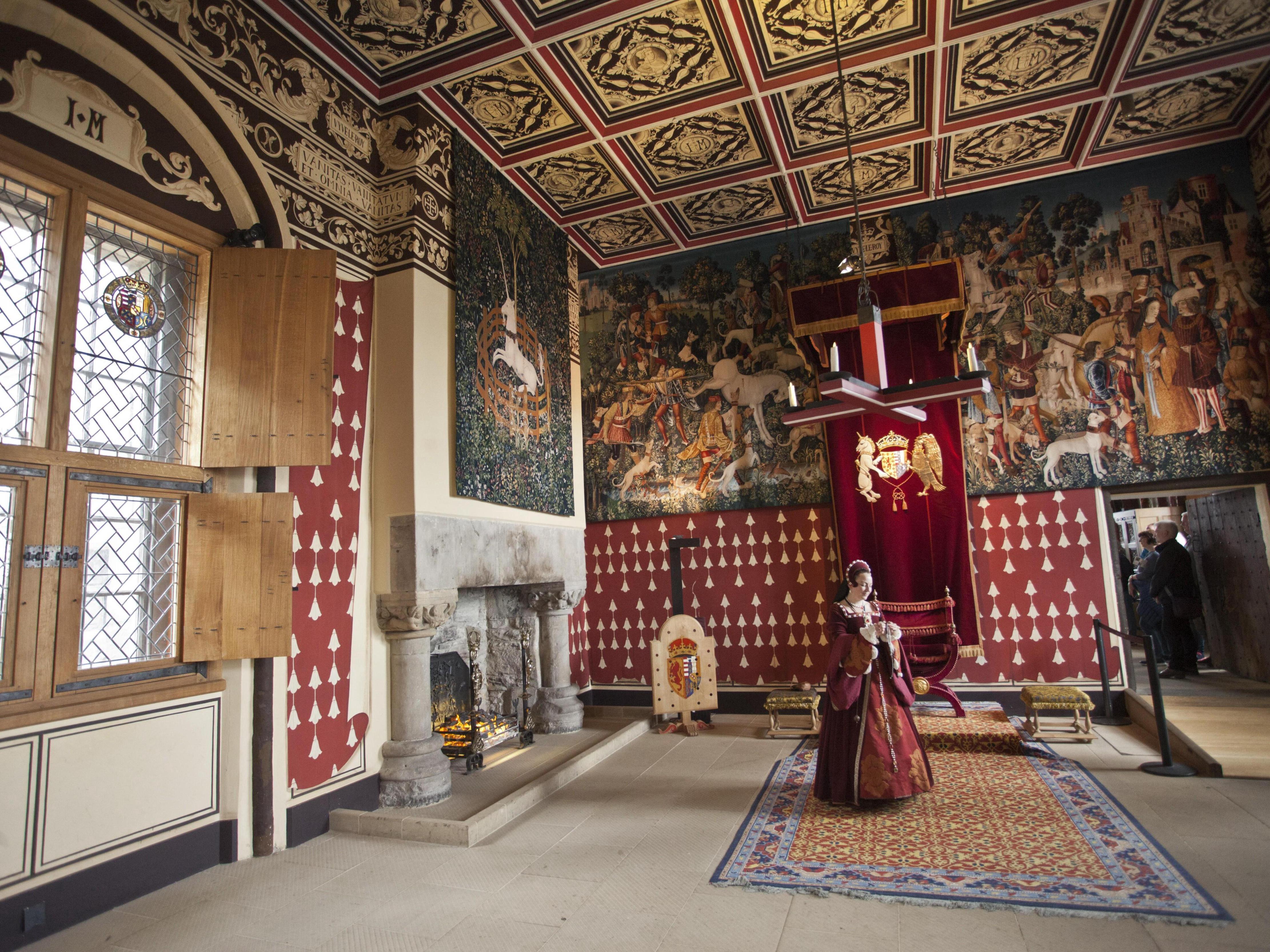
The restored chambers of Queen Mary of Guise, decorated with precise replicas of the Renaissance tapestries The Hunt of the Unicorn.
William Wallace entered history as a folk hero, though only two battles with his participation are documented. Over seven centuries, his life became shrouded in legends, and his image became the embodiment of the struggle for freedom. A new wave of interest in him began in the 19th century, largely thanks to the literary talent of Walter Scott.
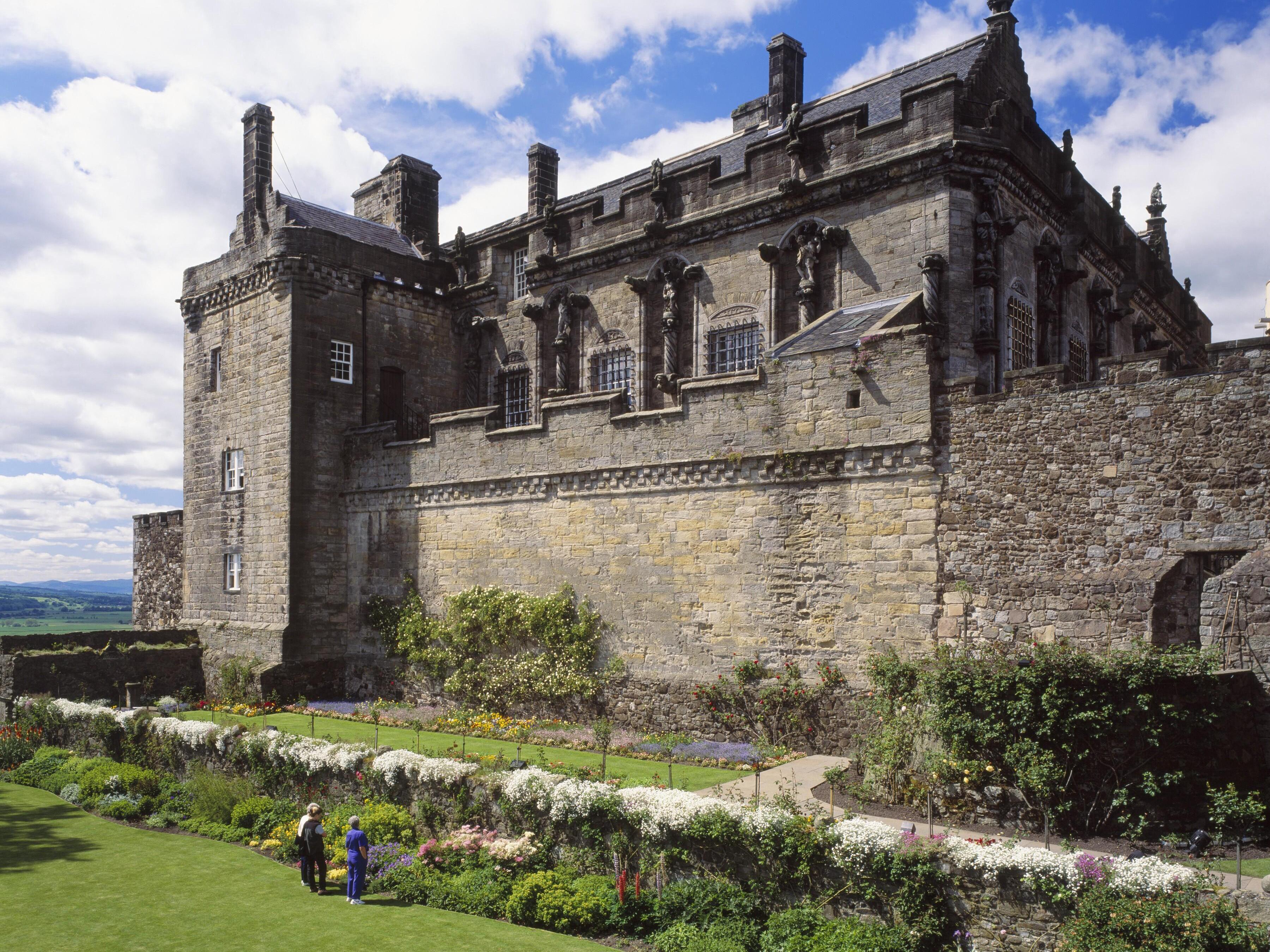
The palace facade and the manicured garden in front of it. The green lawn provides a contrasting highlight to the power of the stone walls.
In 1869, after lengthy fundraising and searching for a site, the Wallace Monument was opened two miles north of the castle—a five-tiered tower about 70 meters (230 ft) high, crowned with a stylized Scottish crown. From the observation platform at the top, reached by 246 steps, a panorama of all the surroundings of Stirling opens up. It is believed that it was from this hill that Wallace commanded his troops in the famous battle at the bridge.
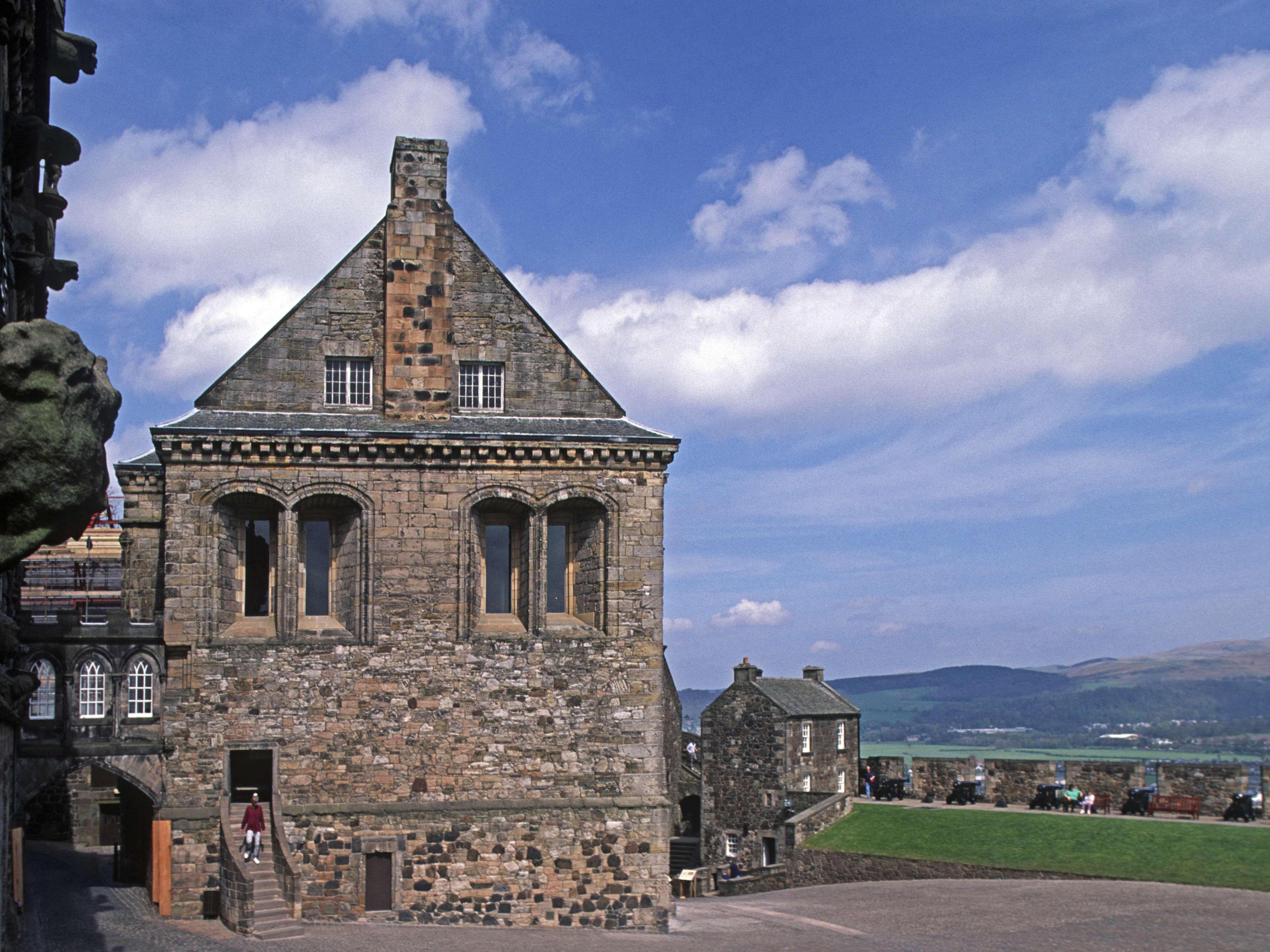
A panoramic view from the castle walls overlooking the River Forth and the surrounding lands—the very ones where key events in Scottish history unfolded.
Inside the tower, information panels tell about the life and tragic death of the hero. Among the exhibits is a huge two-handed «Wallace Sword» measuring 178 centimeters (5 ft 10 in). However, radiological analysis showed that the blade was made after Wallace«s lifetime. In 1305, the legendary fighter for independence was captured, taken to London, convicted of treason, and subjected to a torturous execution—being hanged, drawn and quartered—having refused to beg for mercy from the English king.
Residence of Kings
In the Middle Ages, the fortress constantly changed hands. It was endlessly rebuilt, fortified, and destroyed according to the needs of new owners and changing military tactics. To this day, mainly the outlines of the fortifications laid down in the late 14th century by Robert Stewart, the founder of the famous dynasty, have survived.
The heyday came in the 15th–16th centuries, when Stirling became a full-fledged royal residence. Under James III, an impressive Great Hall was built here. James IV erected fortification walls and a luxurious Renaissance-style palace, turning the castle into a residence worthy of monarchs.
James IV, a patron of sciences and arts, attracted a wide variety of people to his court, including alchemists. One of them was the Italian monk John Damian, appointed abbot and given the opportunity to conduct experiments right in the fortress. In September 1507, confident he had solved the problem of flight, he jumped from the castle wall, hoping to fly to France. The landing was hard. Later, the alchemist complained that he had used chicken feathers, not eagle feathers, which was the cause of the failure. History does not record any new attempts.
A Stronghold in Decline
After a series of battles and sieges, the castle fell into disrepair. By 1681, when it was visited by the future King James II, Stirling was in a deplorable state. Soon the fortress officially became a military base: artillery warehouses were placed here, and later a garrison.
In the 18th century, during the Jacobite uprisings, the castle was hastily restored for defense, but little care was given to its historical value. In 1746, the garrison repelled the last Jacobite attack, after which the citadel began to slowly decay. In 1787, Stirling was visited by the poet Robert Burns. The sight of the decaying buildings, including the roofless Great Hall where Parliament once sat, saddened him as a supporter of the Stuarts.
Ironically, the lack of funds for repairs saved the castle«s authenticity: fashionable trends of the 18th–19th centuries did not invade its architecture. The premises were adapted into barracks for a Highland regiment, which was quartered here until 1964.
Interest in Stirling as a royal heritage returned in the 19th century. After Queen Victoria«s visit in 1849 and a devastating fire in 1855, the first restoration work began. A turning point was 1906, when the future King Edward VII attempted to remove the military from the castle, beginning its transformation into a museum.
The Museum Regained
After the troops left in 1964, large-scale restoration work began at Stirling. The Royal Chapel and the fortress walls were restored, and in 1999 Elizabeth II officially reopened the Great Hall. The palace of James V was restored with particular care, returning its Renaissance splendor.
To recreate the historical atmosphere, weaving workshops were even opened in the castle. Modern craftsmen, using 16th-century technology, recreated the famous series of tapestries The Hunt of the Unicorn, which might have adorned the royal chambers in the heyday.
Today, approaching Stirling, tourists see the stern fortress walls, towers, and gates. The oldest buildings inside date from the late 15th–16th centuries, and the outer 18th-century fortifications stand on older foundations.
The palace consists of six state rooms—three for the king and three for the queen. Secret passages to the inner courtyard, known as the Lion«s Den, have been preserved: legend has it that a live lion, brought by James V from France, was once kept here.
The Great Hall of James IV makes a special impression—the largest in Scotland, surpassing even the halls of the Edinburgh palace. Its complex wooden roof, restored from ancient drawings, is a masterpiece of medieval architecture.
They say that in the Main Inner Courtyard, among the oldest buildings, the ghost of an old soldier still roams. From the castle walls, where ancient cannons stand, all the fields of past battles are visible, the winding River Forth, and the Wallace Monument reaching for the sky.
The medieval spirit has also been preserved in the town of Stirling itself. The streets leading from the castle are built up with houses whose architecture carefully reproduces the style of the 16th–17th centuries. Modern signs and cars here seem like only fleeting guests in a world of stone and history.