Sacred White Elephants of Burma: The Argument for Power
In the 19th century, Burmese kings justified their right to the throne with white elephants. These rare animals were seen as living proof of divine favor and political legitimacy.
Apr 16, 2026 0
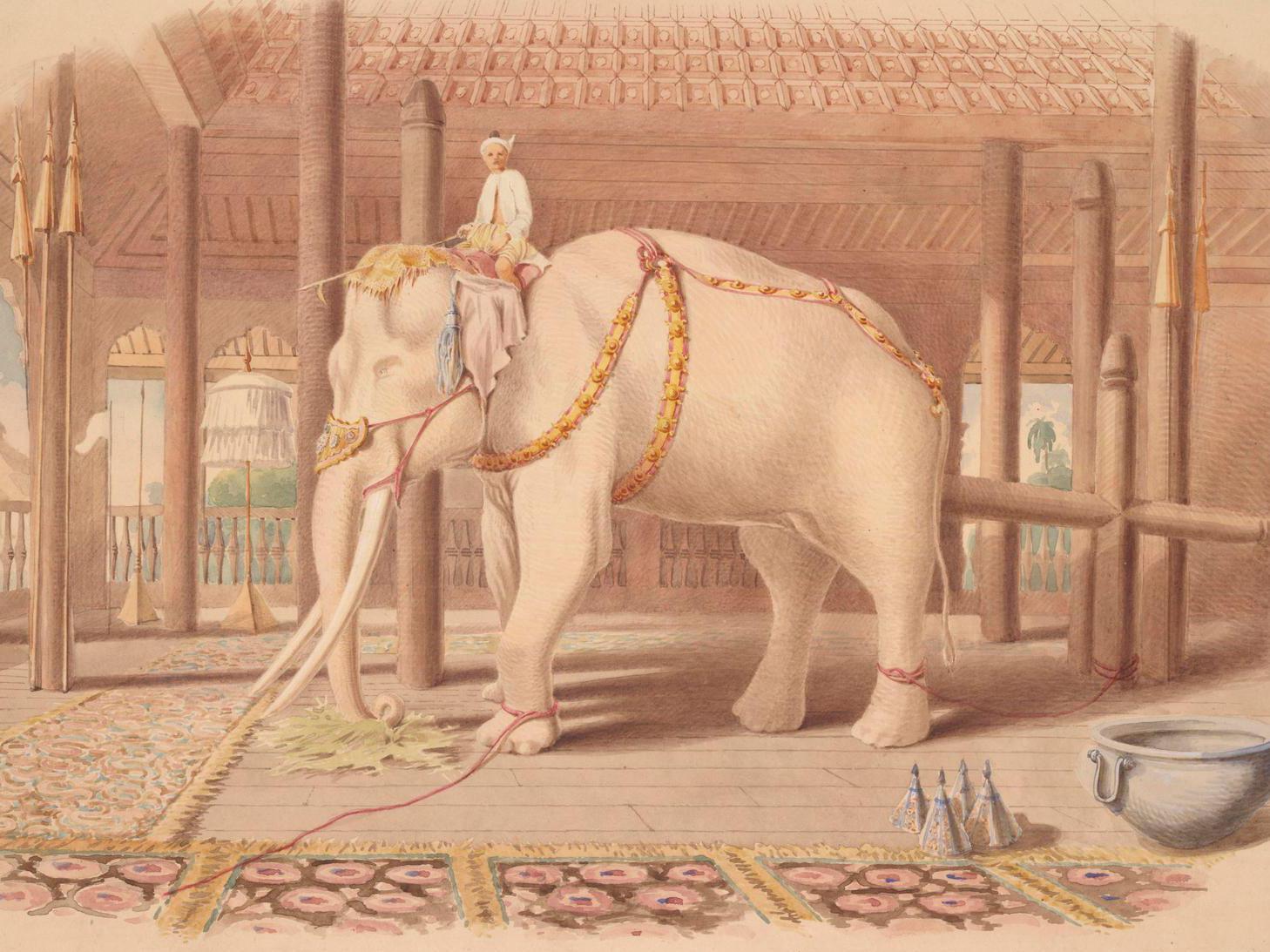

An archival image from the British Library shows the white elephant or its palace in 19th century Burma.
Source:
The legitimacy of power is an eternal concern for rulers. Some rely on elections and ratings, others on economic successes. For the kings of Burma (modern Myanmar), such proof was provided by the white elephant—a sacred animal, about which the magazine «Vokrug Sveta» (Around the World) wrote in detail in 1865.
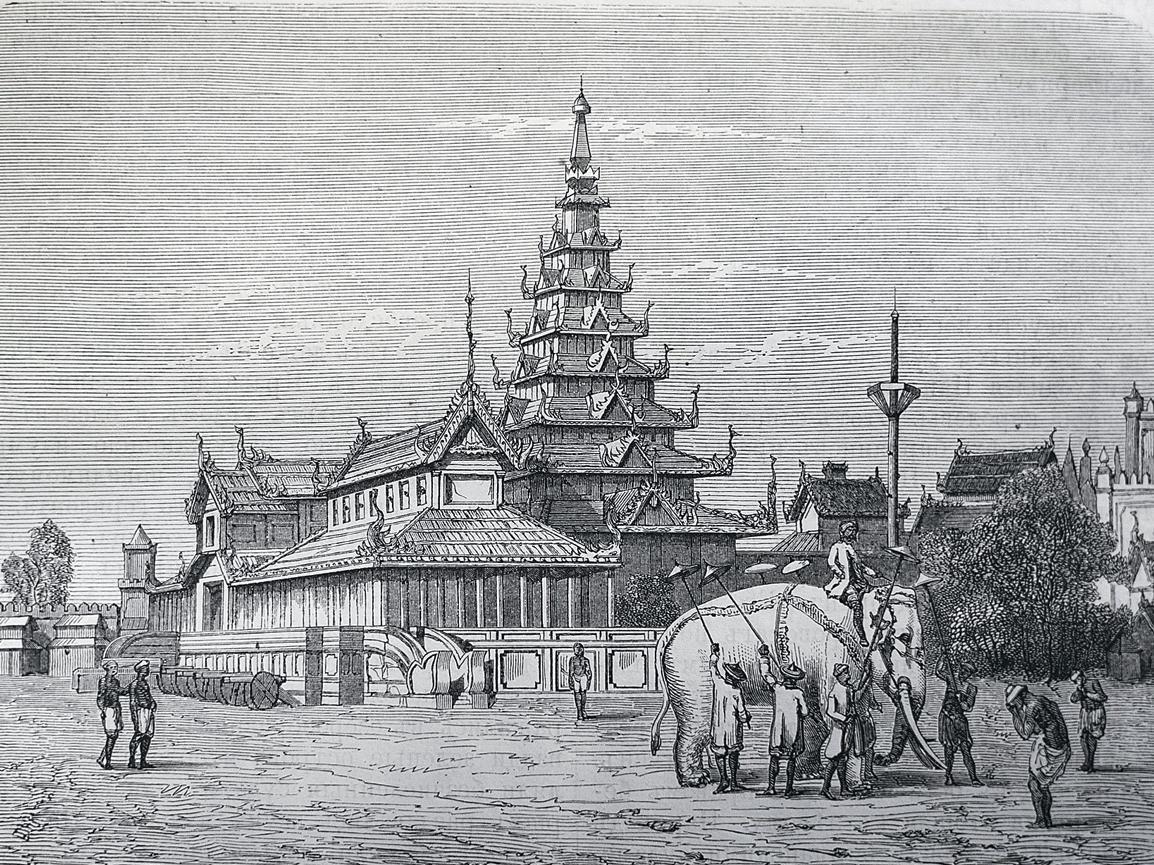
This 1865 illustration depicts the Amarapura pagoda and the sacred white elephant in ceremonial regalia.
Source:
The article described the palace in Amarapura (then Amerapura), surrounded by three walls and a stockade of teak wood. In the center was the «meye-nan»—the «earth palace,» built on compacted earth. The building itself was wooden, with gilding, and in the reception hall, which was 60 feet long, stood the royal throne.
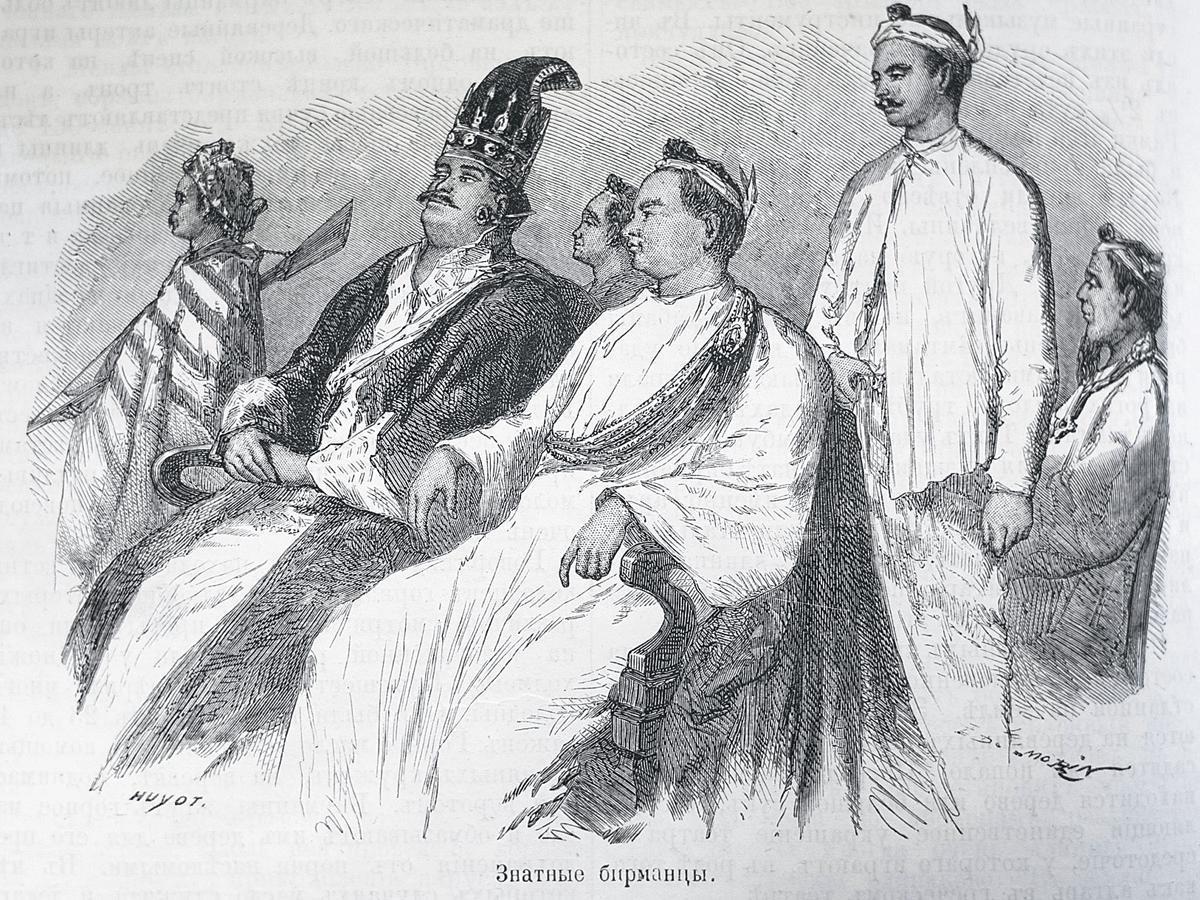
An 1865 magazine illustration features noble Burmese figures as described in the contemporary account.
Source:
To the north of the royal chambers was a special palace for the lord white elephant. Ordinary elephants were kept in other places. The white elephant that the authors of the article saw was caught back in 1806—so by 1865, it had lived in the palace for more than half a century. The animal, about 10 feet (3 meters) tall, looked rather skinny and, in the observers« opinion, unhealthy; its eyes seemed »treacherous,« and even the attendants advised not to approach its head.
However, during ceremonies, the elephant was dressed in luxurious harness. The goad (ankusha), used to control the animal, was studded with pearls and rubies. The headdress resembled a crown made of red cloth with diamonds and rubies. On its forehead was attached a golden plate with the elephant«s titles, between its eyes shone a crescent moon of precious stones, and in its ears hung massive earrings. The entire harness was embroidered with gold and silk.
The white elephant had its own estates, its own minister, four golden umbrellas, and a staff of 30 people. Entering its palace, Burmese had to remove their shoes—as in a temple.
The discovery of a new white elephant was always an event. However, not every light-skinned animal was recognized as truly «white»—this required a whole set of characteristics (for example, a brownish-yellow color, special markings). For the king, finding such an elephant was a matter of prestige: it meant that the heavens confirmed his right to the throne. Especially in need of this was a ruler who had overthrown his brother—exactly the case of the monarch of that time.
In 1831, an elephant was caught that fully met all the strict criteria. The state pledged to allocate maintenance for it, but the treasury was empty: under the peace treaty with the English, Burma had to pay a million pounds sterling in indemnity. The money intended for the elephant had to be used to pay the debt.
The king sent a solemn delegation to the elephant with a letter on palm leaves. In the message, the monarch apologized to the animal for the seizure of its income, necessary for settling accounts with «foreigners,» and promised to compensate for it in the future.
And today in Myanmar, the white elephant is considered a symbol of prosperity. For example, in 2010, on the eve of the first parliamentary elections in 20 years, the country again announced the appearance of a white elephant—which was perceived as a good sign.
And into the English language from the Burmese tradition came the idiom «white elephant»—«white elephant.» Receiving such an elephant from the king was considered an honor, but maintaining the sacred animal was incredibly costly, and getting rid of it was not allowed. Thus, the expression came to mean «an expensive burden that does not justify the costs»—roughly like the Russian «a suitcase without a handle: inconvenient to carry, but a pity to throw away.»
Read more