How Concert Halls Are Designed and What They Reveal About Cities

Public concerts in their familiar form originated in the 17th century. In 1672, the London pub Whitefriars Tavern, advertising «all the joys of life for a shilling,» became the first venue where violinist and composer John Banister held paid performances of instrumental music, receiving a royal patent from Charles II.
The first specialized concert hall—Holywell Music Room—opened in Oxford in 1748. Interestingly, it still operates today: on Sundays, Oxford Coffee Concerts are held here, where a ticket guarantees a cup of coffee at one of the neighboring cafes.
This tradition is rooted in history: as early as the 18th century, concert tickets in England were sold in coffeehouses for the aristocracy and in pubs for the common public, reflecting social differences through leisure culture.
Symphonic Orchestra: From Classicism to Romanticism
Today, entering a concert hall, we see an orchestra ready to perform. After tuning and applause, the conductor begins to lead the musicians, whose placement on stage is not accidental but a thoughtful system honed over centuries.
Historically, symphonic orchestras are divided into two main types: classical (double) and romantic (triple). The names come from the number of performers on woodwind instruments: in a double orchestra, there are two each, in a triple—three each.
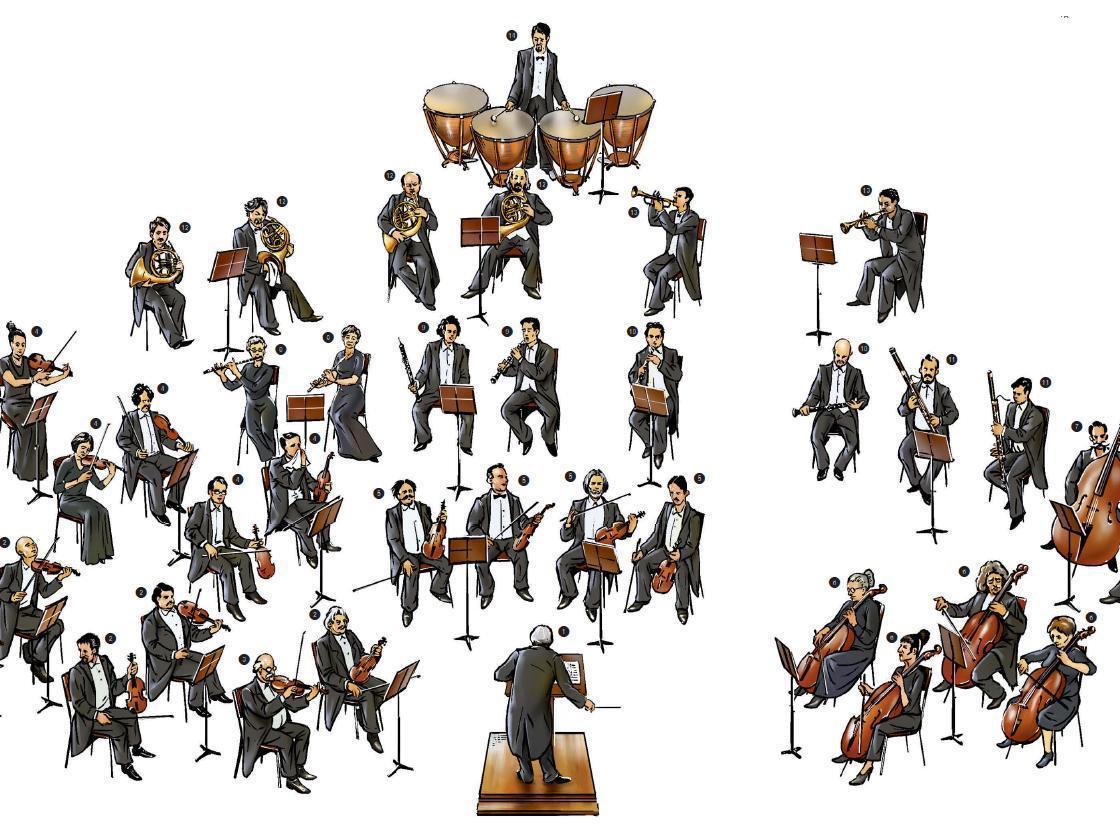
The composition of a classical orchestra includes:
- a conductor;
- a string section (first and second violins, violas, cellos, double basses);
- woodwinds (flutes, oboes, clarinets, bassoons);
- brass (horns, trumpets);
- percussion, represented by timpani.
A triple orchestra expands this composition: in the woodwind group, additional instruments like the piccolo flute or English horn appear, trombones and tuba are added, the number of trumpets and horns increases, and percussion becomes more numerous. The number of strings also grows, and the repertoire includes harp and piano.
The seating of musicians follows the principle of three planes for sound balance. In the foreground—the conductor and soloists, on the sides—strings. The middle plane is occupied by the remaining strings and woodwinds, and in the background—brass and percussion.
The scheme established in the 19th century has variations: German (violins on both sides, cellos in the center) and American, or Bostonian (all violins on the left, cellos and double basses on the right). Today, composers or conductors often determine the seating themselves, adapting it to the specific piece.
The Art of Acoustics
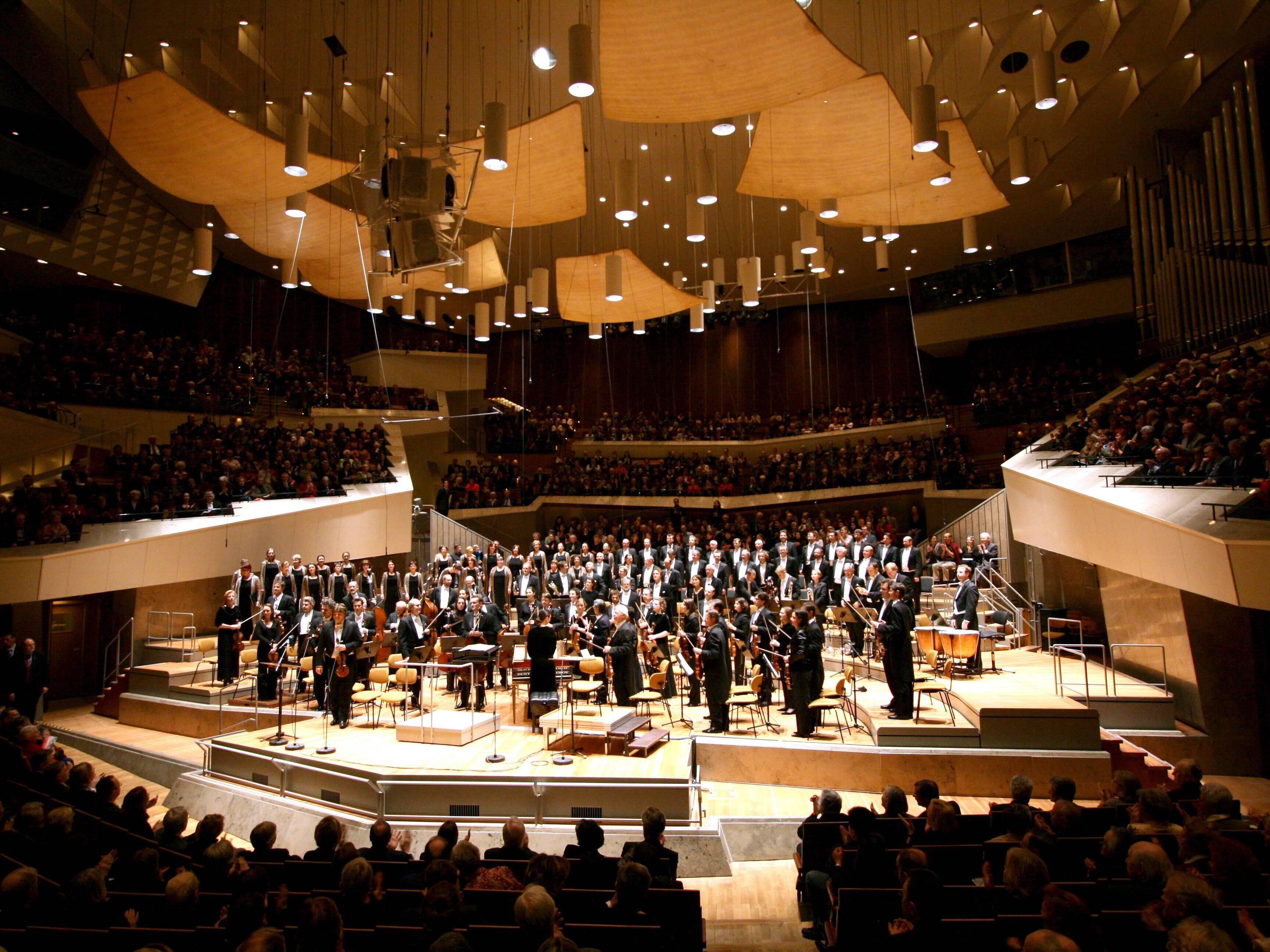
The key element of a hall is acoustics. Specialists say that a good hall is one where the sound is natural and clear. This is achieved by a mix of direct sound from the instruments and reflected sound from the walls and ceiling.
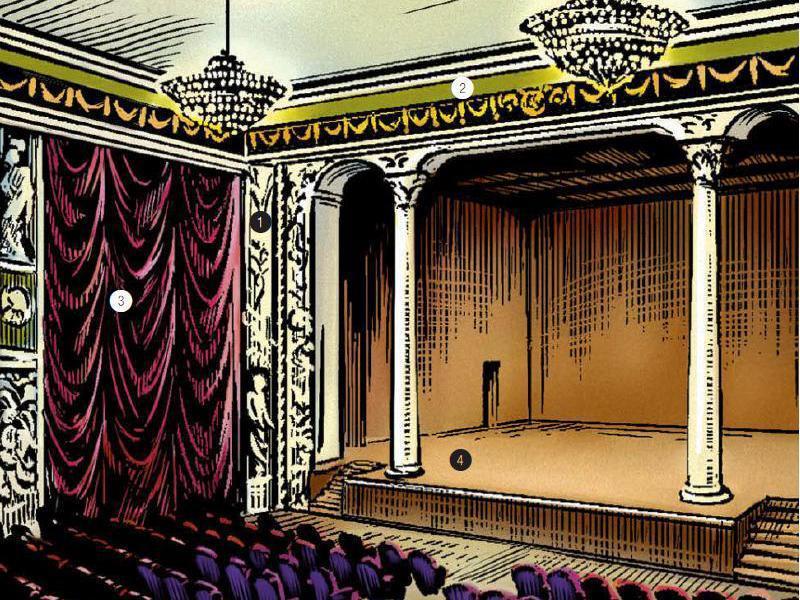
Acoustics are harmed by architectural obstacles: columns, stucco, sharp angles, smooth curvilinear surfaces, stained glass, massive chandeliers, abundant draperies, and niches. They fragment or absorb sound, creating «dead zones» for listeners.
Typology of Concert Halls
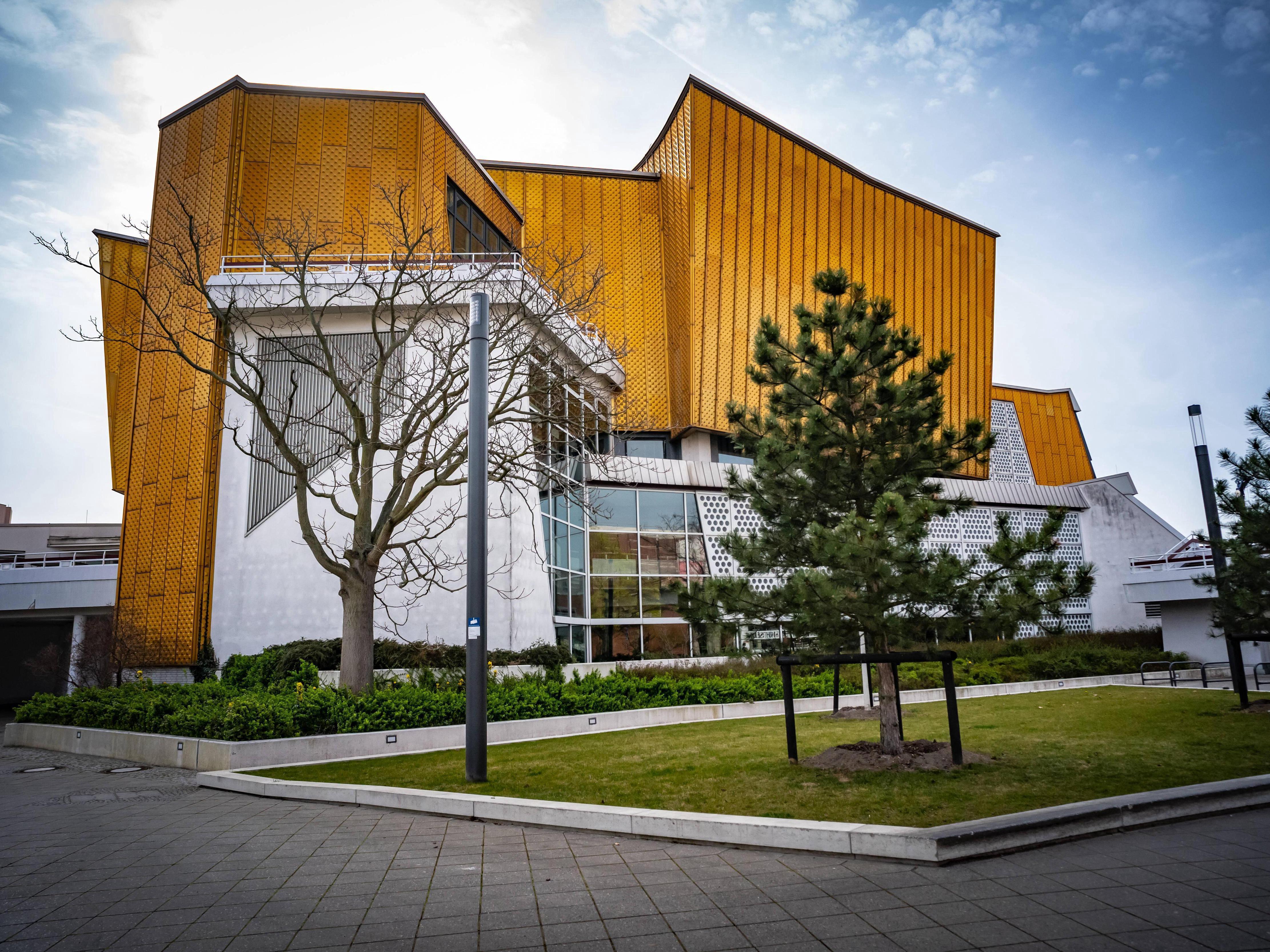
Modern concert halls, or «architectural spaces for concert spectacles,» are classified by purpose: specialized (e.g., for symphonic music), universal concert halls, universal spectacle halls (for sports or circus), and multipurpose, like the Culture and Congress Centre in Lucerne.
By acoustics, halls are divided into those with natural sound and those using artificial amplification. By capacity: chamber (up to 200 people), small (up to 600), large with natural acoustics (up to 2600), and without limits for halls with artificial acoustics.
Concert Hall as a Mirror of the City
The presence of a concert hall says a lot about a city. First, it is a sign of a cultural center with artistically educated audiences, educational institutions, and stable traditions of attending theaters and concerts.
Second, the city is likely a scientific center, as building a hall requires high technology and deep knowledge in acoustics, engineering, and design.
Third, a developed transport network and tourist infrastructure, since such cities regularly host touring performers and attract travelers.
Finally, it is an indicator of financial well-being: residents have incomes to buy tickets, and in the business environment, there are patrons and sponsors willing to invest in cultural development.
Thus, a concert hall is more than architecture; it reflects the cultural level, technological advancement, and economic viability of the city, becoming its sounding symbol.