AI Model 'Lana' with Facial Burn Scar Captivates Social Media


Models with unusual appearances are taking over social media. They tell followers touching stories about self-acceptance. Girls share deeply personal memories: how they were humiliated in school and how boys dumped them because of their looks, but despite the problems, they aren«t afraid to speak out and start blogs. In the comments, influencers are supported by readers who say they»ll overcome all problems. However, in reality, these models don«t exist. They are characters generated by neural networks, created to tell heart-wrenching stories to a gullible audience.
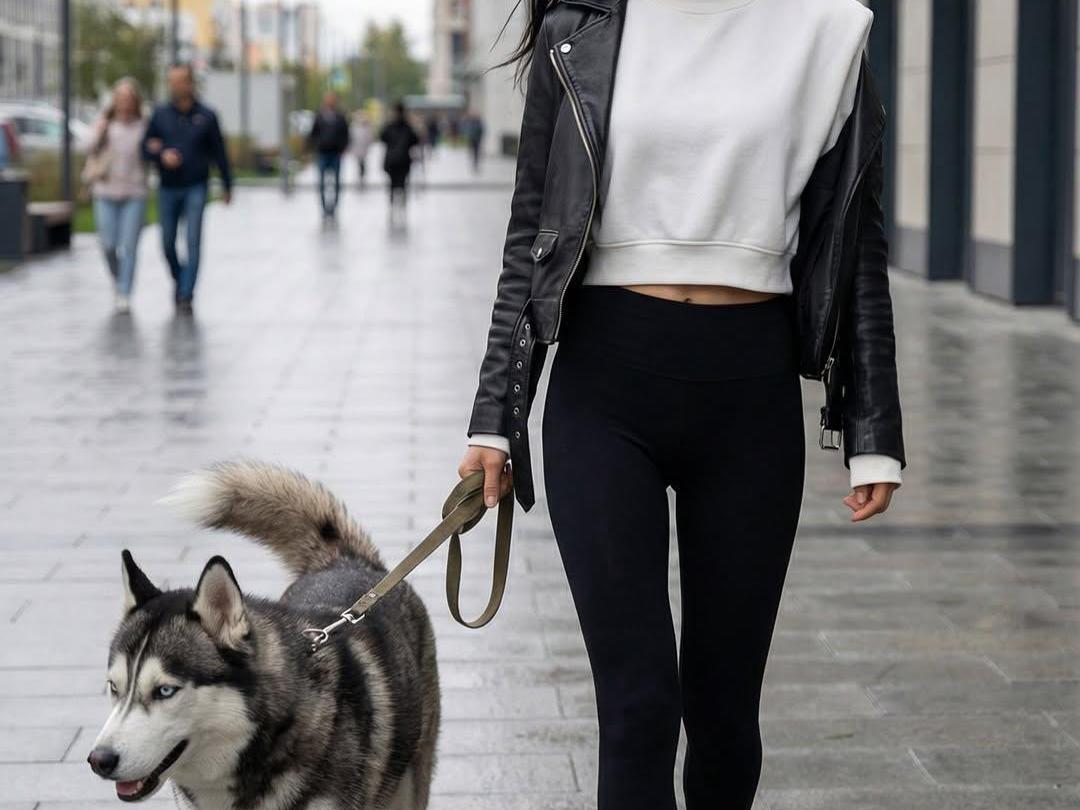
One popular account is 25-year-old AI model Lana from Yekaterinburg. Her profile was created on January 4, and now it has over 100 thousand subscribers. Videos about the difficult fate of the beauty with a burn on her face gather millions of views. And many don«t even suspect that the character is fictional, despite the fact that the profile indicates »ai model«.
Lana«s story is truly inspiring. The girl says she is from Nyagan (in the Khanty-Mansi Autonomous Okrug, Russia). Her childhood was happy until something terrible happened. Details are in the material by E1.RU.
«In 2006, I had an accident that I still find difficult to talk about. In 2007, I started school, and they started calling me Terminator. That»s when I began to develop big complexes. At age 11, I really closed myself off, wore a mask, cut my bangs so people wouldn«t see my scars,» shares the blogger.
Lana«s only friend in her youth was the husky MacQueen. After finishing school, the girl moved to Yekaterinburg and faced severe depression. But now she has decided to run a blog and receives a lot of support, and her story motivates subscribers.
Lana«s creators are artists from Ai-studio MAKVIN, Makar Vinokurov and Lina Shaybakova. Lina started learning to create videos using neural networks just a couple of months ago. The idea to create a separate account with an AI model came to the artists as soon as the trend appeared.
«One night, Makar came up with two models (Lana and Eva) and created the first »snaps« (natural photos of the model. — Ed.) for them, to create content and develop stories. We were in a big hurry and wanted to launch as quickly as possible, so Lana»s personality was created on the fly. We didn«t have a pre-written character or detailed script. Initially, we only knew one key detail: Lana has a burn that appeared in childhood due to some tragic situation. At the same time, we still haven»t revealed how exactly the scar appeared — it«s important for us to maintain the intrigue,» explained Lina Shaybakova.
It«s hard not to notice the external similarity between the model and her creator. Similar names (Lina and Lana), both are from Yekaterinburg, Asian appearance type.
«We chose Yekaterinburg not by chance: I»m from Yekaterinburg, it«s easier for me to build scenes and surroundings, I can make the content more realistic. Also, I have a dog too, but a different breed. As for appearance — we noticed that among AI models, there aren»t many girls with Eastern, Asian looks. I myself am roughly that type, and it was interesting to choose this image.
One of my childhood photos served as the idea for creating Lana«s childhood photo, which other AI bloggers are now copying. I think we»ll continue to use such life hacks, but at the same time, my personal photos (as an adult) and videos weren«t used as a basis. We worked through prompts, references, visual selections (including from Pinterest), so the image was created almost independently of me,» explained the artist.
Developing the project took four days — we started work from the New Year and launched the account on January 4. The artists say they work practically around the clock, with breaks for sleep, to promote the account. The authors not only come up with ideas for videos themselves but also analyze competitors. So far, the model hasn«t brought profit, but many advertising offers are coming in.
«Some create a model and profit from the first audience, going the way of fraud or selling cheap advertising on the hype, we chose a different strategy. Many advertising offers come in, but they don»t fit the blog«s concept. Our task is to make Lana the largest AI blogger and influencer, possibly launch our own product and make her an ambassador, or collaborate with major brands, other bloggers, or even stars. Lana can convey many interesting and positive things through the prism of our beliefs,» added Lina.
So far, Lana has no haters — according to her creators, 95% of comments under posts are positive.
«Many major bloggers leave comments in support of Lana, fan services appear, people who are ready to marry her and write about it daily, but there are also those 5% of people who write hate, claiming we are deceiving people. However, every publication has a note that the content is created using neural networks. The profile itself indicates that this is an AI blogger. We never hid from the start that this is not a real person, we don»t deny it. So what exactly is the deception?« responded the artist to the negativity.
The artists confirmed that among neuromodels, there is huge competition. The trend appeared literally at the end of December, and in the authors« opinion, it has great potential. But only those who have worked out the entire concept and put effort into the project will »survive«.
Can a Non-Existent Model Earn Real Money?
AI creative designer from Yekaterinburg Alexander Tsarapkin explained that such models usually have two paths: the first is advertising for brands, collaborations (what influencers typically earn from). The second is running various platforms with donations, where social media only provides reach and directs to the desired platform. Donations are generally ready to be given for more personalized and unique content.
«Profit from the first and second methods will depend on the marketing component: how you promote your model and how unusual, unique it is (and realistic, of course). In the first case, prices for advertising and collaborations are comparable or 20–50% lower than those of real influencers. The price for a post in an account with 50–100 thousand subscribers varies from $300 to $500 per post. For large accounts (500 thousand — a million subscribers), the cost can reach $100,000.
In the second option, the earning logic is the same as for live models. Demand and check are limited only by audience psychology. But on average, the price is also 20–50% lower than for real accounts. A small profile, which most are, can earn from $100 to $1,000 per month provided regular posting and active communication. Medium accounts (1,000–2,000 paid subscribers) can potentially earn up to $80,000. There is also monetization of content from the social networks themselves, but this is a much smaller share of revenue,« explained the designer.
At the same time, simply coming up with an AI character is not enough. You need to repeat its appearance in every generation, and according to the designer, this is a complex process, especially when it comes to high-quality models that are hard to distinguish from real people. To create them, you need to train the neural network to repeat the appearance from generation to generation.
Alexander added that the popularity of such accounts consists of several factors. Besides quality, the uniqueness of appearance is important. For example, currently popular are pigmented models, with mixed skin color or unusual scars and defects. Also, the model«s story and the ability to tell it play their role.
Moreover, according to the designer, it is the older audience that is now unable to distinguish neuromodels from real ones. At the same time, Alexander believes that the trend for artificial characters is long-term.
«No ageism, but young people identify such content more easily. People who work with AI, in visuals, see neural network patterns in photos or videos, as well as small generation flaws,» explained the designer. «Neural networks develop every day, but content on social media also develops. People already have a demand for more »messy,« natural style, which is hard for neural networks to repeat because AI isn»t trained on such content. The value of naturalness will continue to grow. Perhaps over time neural networks will learn, but people will develop a need for something else. This is a kind of race where AI will always be catching up.«
Are Neuromodels Here to Stay?
Marketer Tamara Pospelova noted that the fashion for unusual appearance is a way to hook the viewer.
«People now strive to be like each other, to meet standards. And when in the general flow of autopilot perception of information a model appears that stands out strongly, of course, it catches the eye: pay attention, what if it»s dangerous? That«s how the psyche works. Also, advertisements are created with unexpected shapes, elements, colors. The way to attract attention is to be unlike everyone else,» she added.
The marketer also explained that models now face less hate thanks to the audience«s exposure. Society, especially the younger generation, thanks to film culture, mass media, is getting used to diversity, learning to accept different people.
«When accounts gain popularity, become more mass — hate will surely come. When content begins to penetrate conservative society, which does not accept innovations, changes, other views, then negativity and criticism appear, because for them, from a psychological point of view, it can be dangerous,» explained the marketer.
The expert added that AI models are popular as a new trend, but within about six months, viewers will learn to distinguish them from real ones much better.
«A huge number of examples appear, the brain learns to compare. Remember how it was with auto-dialers, chat bots? We also didn»t immediately learn to distinguish them from real interlocutors. As for the longevity of this phenomenon, I believe that the audience and brands have greater demand for naturalness, we want to see real people — the mass market is oriented towards them. Marketers from various analytical agencies also predict that content with real models, actors will be more expensive because it will be more complex in production, and it will be more in demand by expensive, quality brands,« thinks Tamara Pospelova.
Lately, social media users have become so vigilant that even real content is suspected of being created by AI. Thus, singer Klava Koka had to justify herself that the new music video was filmed live.
Earlier, an AI specialist answered naive questions about neural networks.
* The social network is banned in the territory of the Russian Federation.