Accuracy: The Art of Hitting the Target
Accuracy is a complex skill that depends on more than just eyesight. Any healthy person can develop it through training, as shown by historical figures and practical exercises.
Jan 21, 2026 0
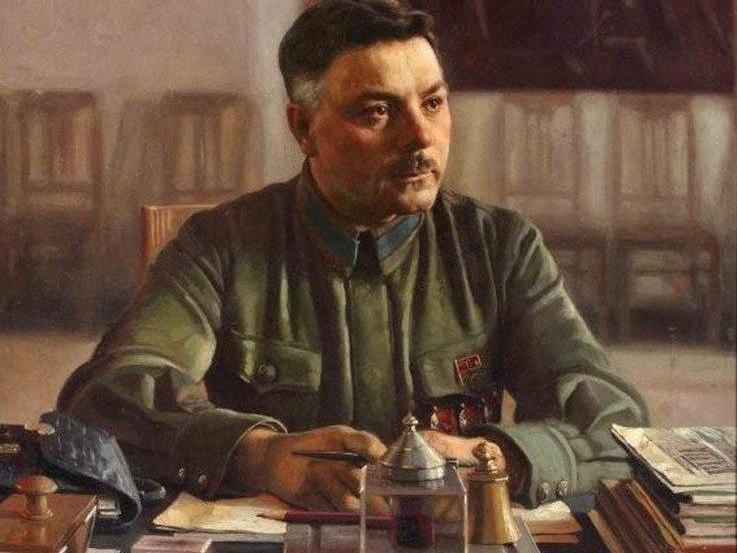

A 1929 portrait of Soviet Marshal Kliment Voroshilov painted by Isaac Brodsky.
Source:
In the history of marksmanship, there are iconic figures, one of whom is the Soviet Marshal Kliment Voroshilov. His name became a symbol for an entire generation of shooters, and the title of «Voroshilov Sharpshooter» was the standard of mastery for many years.

The Legend of the Voroshilov Sharpshooter
Legend has it that Voroshilov demonstrated outstanding results on the shooting range. The painting by Vasily Svarog, «Comrades K.E. Voroshilov and A.M. Gorky at the Central House of the Red Army Shooting Range,» portrayed the marshal as the winner, although in reality, the writer Maxim Gorky often scored higher. This image was created within the context of the militarization of society in anticipation of a possible war.
However, Voroshilov was indeed an excellent marksman. In 1932, at a commanders« shooting competition, he took a pistol that someone considered defective and scored 59 out of 70 points. It is believed that it was then he uttered the phrase: »There is no such thing as a bad weapon, only bad shooters.« This saying became famous, and the renowned title soon followed.
Similar legends surround many folk heroes, such as the Swiss William Tell, who was credited with the ability to shoot an apple off his son«s head. Tell»s historicity is disputed, but the myth itself shows how marksmanship turns into a symbol of courage and skill.
How to Develop Accuracy: Practical Exercises
Accuracy is a skill that can be trained. Even if you don«t hit the basket with the ball on the first try, regular practice can improve your results. Here are a few simple techniques.
1. Concentration. The ability to focus is the foundation of accuracy. Try this exercise: say aloud the colors in which words that denote other colors are written. For example, the word «red» is written in blue. Concentrate on the meaning of the color, not the word.
2. Vestibular System Training. Fill a glass to the brim with water, place it on your palm, and, with your arm extended, raise it to eye level. Try to hold the container so that the water does not spill. Start with 30 seconds, gradually increasing the time to five minutes for each arm.
3. Strengthening Arm Muscles. Sit up straight, extend your arm to the side at shoulder level, palm down. Hold the position, trying to avoid trembling. Turn your head and look at your fingertips. Hold your arm for as long as possible, working up to five minutes for each arm.
4. Hand Development. Make a fist, place it on a table, and slowly extend your fingers one by one: first the thumb, then the index finger, and so on. Follow the tips of your fingers with your eyes. After that, slowly curl your fingers back into a fist. Repeat with the other hand.
What Science Says: Why Accuracy Is a Complex Quality
«Often, accurate people are said to have a »sharp eye,« but in fact, accuracy is an integral quality,» explains Yulia Pavlinova, a neurologist. «It depends on the coordinated work of many systems: the vestibular apparatus, the cerebellum, proprioceptors in the muscles and tendons, sensory organs, and the entire muscular system. A person must assess the distance to the target, the weight of the object, calculate the trajectory, and account for external factors like wind.»
Furthermore, posture plays an important role. Spinal curvature or foot deformities can cause muscle imbalance, restricted movement, and even tension in the eye muscles, which reduces accuracy.
Kliment Voroshilov, like many Red Army soldiers of his time, had excellent physical training: he engaged in horseback riding, skiing, rowing, swimming, and gorodki (a traditional Russian game). Developed muscles and a trained vestibular system helped him achieve high results in shooting.
Today, accuracy is important not only in shooting or sports but also in everyday tasks requiring coordination and precision, such as in team sports or even when using gadgets. Regular training with the described exercises can significantly improve these skills.
Thus, becoming an accurate shooter is an entirely achievable goal. As with Voroshilov, success comes through physical conditioning, concentration, and persistent practice.
Read more