A Fairy Tale of the Enchanted Bolshoi Drama Theatre

After a closed screening on January 22 and before the premiere on the 23rd, for which all 800 tickets sold out in less than a day, the author of the piece met with director Roman Mikhailov. He was very nervous during the long rehearsals and just before the performance.
When asked how to describe what he saw, Mikhailov smiled slightly and offered, «Do you want me to write it for you?» This led to his personal text for the publication, in which he revealed thoughts that, he said, he had not previously been aware of.
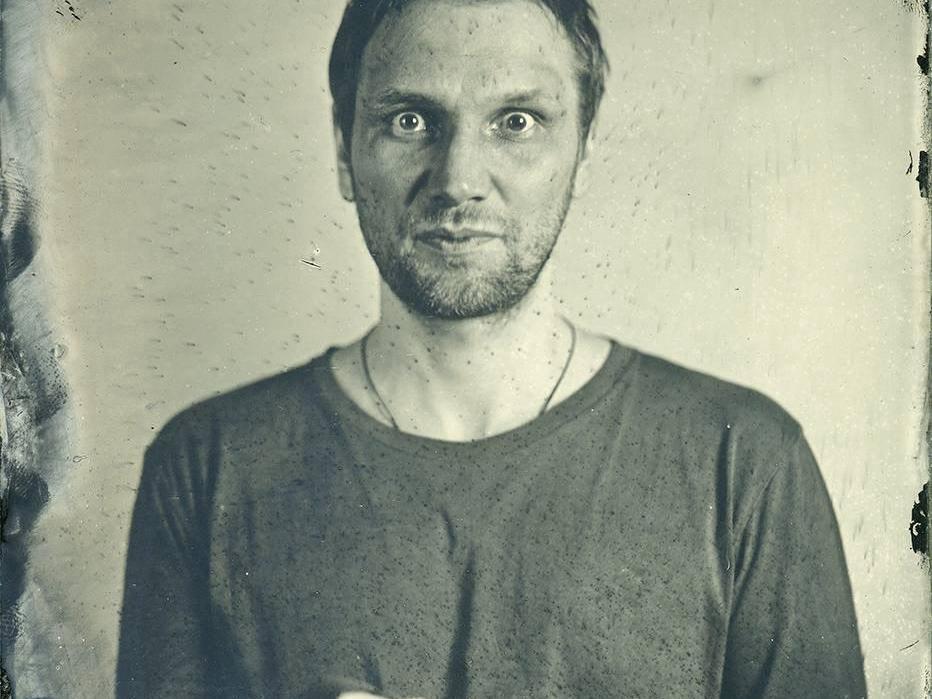
Roman Mikhailov is a cult figure. He grew up in a provincial Baltic town, was raised by a waitress, worked as a disc jockey, and then became a mathematician of Harvard caliber. However, he left science for cinema and theater.
The director lives on Vasilievsky Island in St. Petersburg, practices Orthodoxy, often wears a tracksuit, and does not take fees for his theater work. He has about twenty productions and ten films to his name, the first of which is called «A Tale for the Old.»
The new play at the BDT is «The Tale of Tsar Saltan» or, more precisely, an authorial work based on its morphology. Mikhailov has deeply immersed himself in Pushkin«s philology; he is still puzzled by why the fairy tale specifically mentions »thirty-three bogatyrs« (Russian epic heroes). During one rehearsal, he unexpectedly demonstrated his skill with nunchaku, explaining, »They«ve saved me a couple of times.»
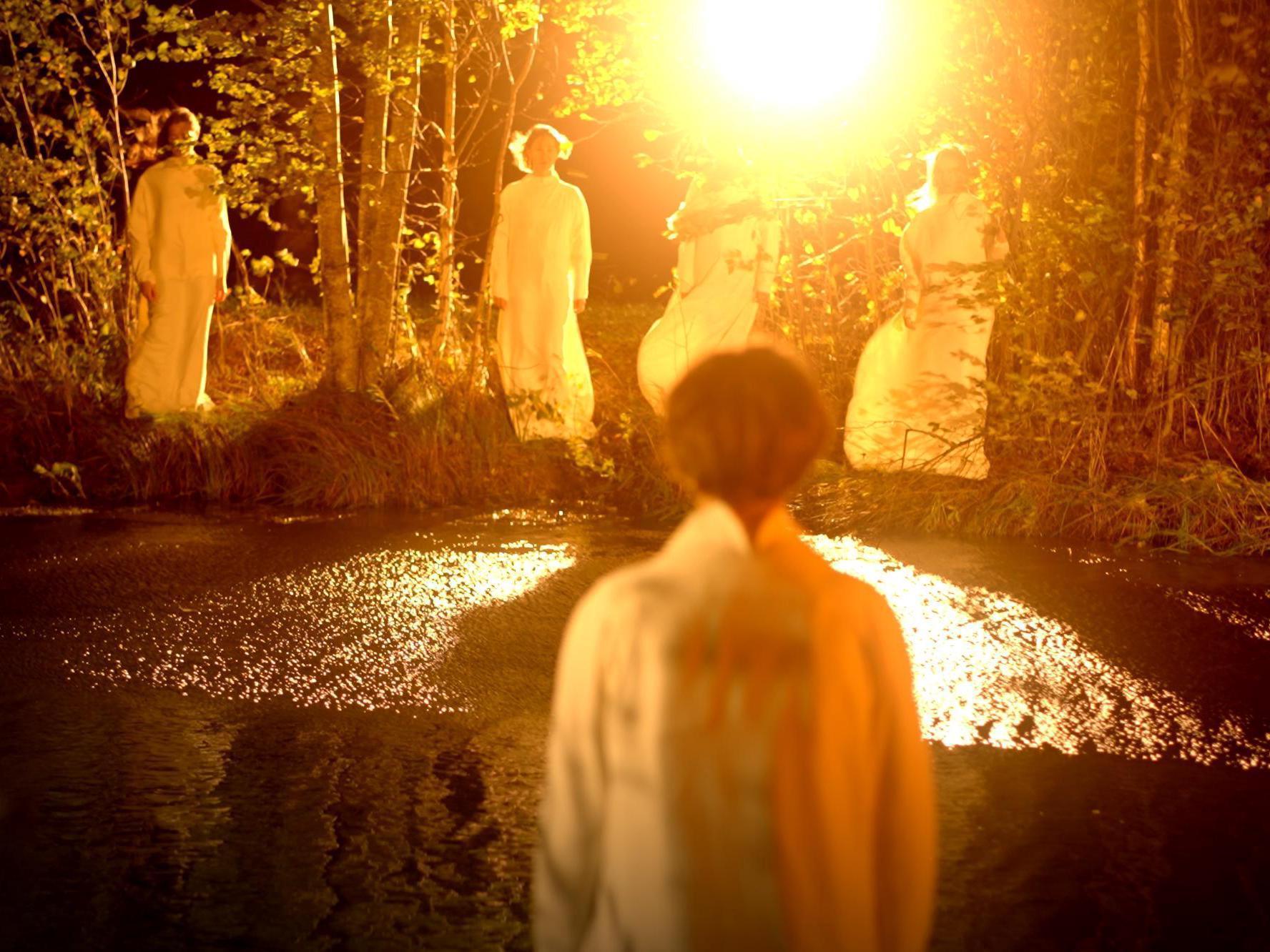
The action begins in a dark hall with three screens, where images of train stations, railways, prisons, drifting ice floes, ships, and burning wooden horses flicker. Singers in bird costumes create a beautiful sound accompaniment, turning the play into light painting. The plot is ambiguous and resembles a dream about fairy tales, in which a lecturer reveals the symbols and triple repetitions of Pushkin«s text.
The viewer is immersed in a state akin to childish delirium: as if a grandmother is reading a fairy tale, and vivid, intimate images rush before closed eyes. The beginning of the play is symbolic: a black room, the time before birth, where one is invited to gather impressions into an avoska (a string bag).
To discuss the multi-layered nature of the production is like wandering in a mirror labyrinth. The author recalls how once, together with Mikhailov, he visited the «Kresty» prison in St. Petersburg. At that time, Mikhailov envisioned a scene where a prison warden in love and a prostitute find themselves under a rain of flowers.
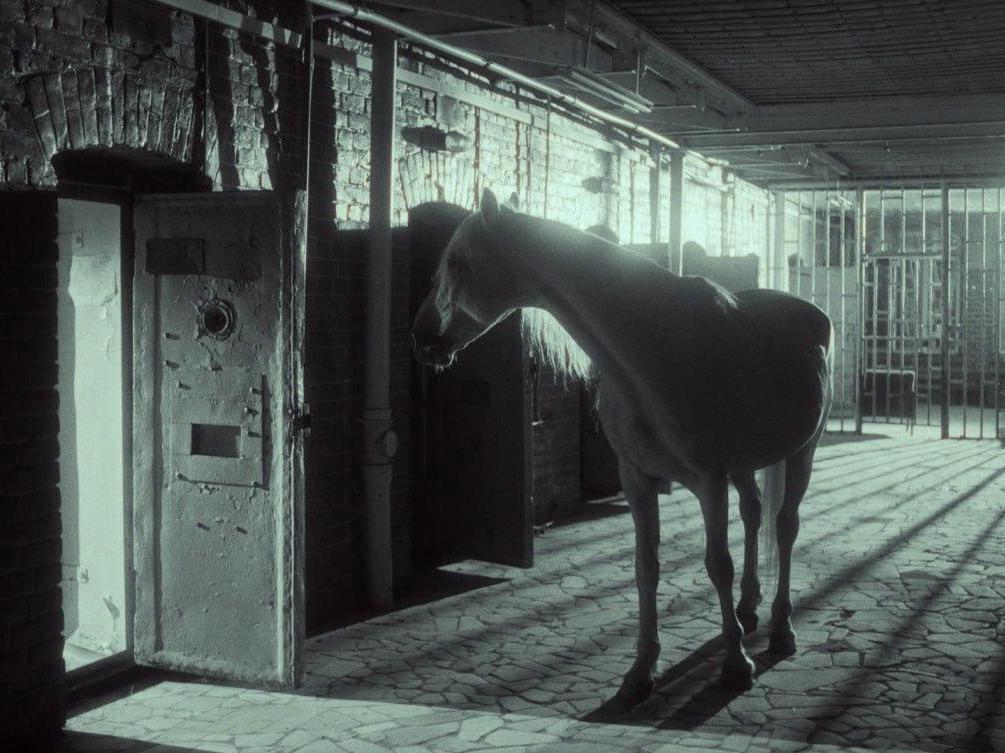
At the end of 2025, the director realized this idea during filming at «Kresty,» where a live white horse appeared. According to the concept, the horse was to walk through the cells, collect the damned souls, and carry them away. «The horse will walk, look into the cells, gather the damned souls, and take them away forever,» Mikhailov explained.
The same horse appears on the screens in the BDT play, gazing at the hall for a long time with a huge eye. Actor Yevgeny Tkachuk brought the animal to the filming, but it stubbornly refused to go inside. After advice to lead it through the exit from the death row wing, the horse entered without problems and behaved calmly.
For Mikhailov, this event became symbolic: for the first time in many years, art and magic penetrated the gloomy walls of «Kresty,» as if scraping off accumulated pain. The artistic director of the BDT, Andrey Moguchy, who attended the run-through, compared the impression from the play to a symphony: «...as if someone stroked your hair, and the headache went away.»
In a final conversation in the kitchen, Roman Mikhailov simply formulated the essence of his work: «The world has gone off the rails, it is bewitched. And only love can disenchant it. All fairy tales are about this. Paternal, maternal love, only this feeling disenchants. »The Tale of Tsar Saltan« is about forgiveness.» When asked what is important for the viewer, he answered, «It is important that the viewer leaves with a bright feeling.»