Stepa Learns by Touch, Liliya Dances in Half-Light: A Day at a School for the Blind
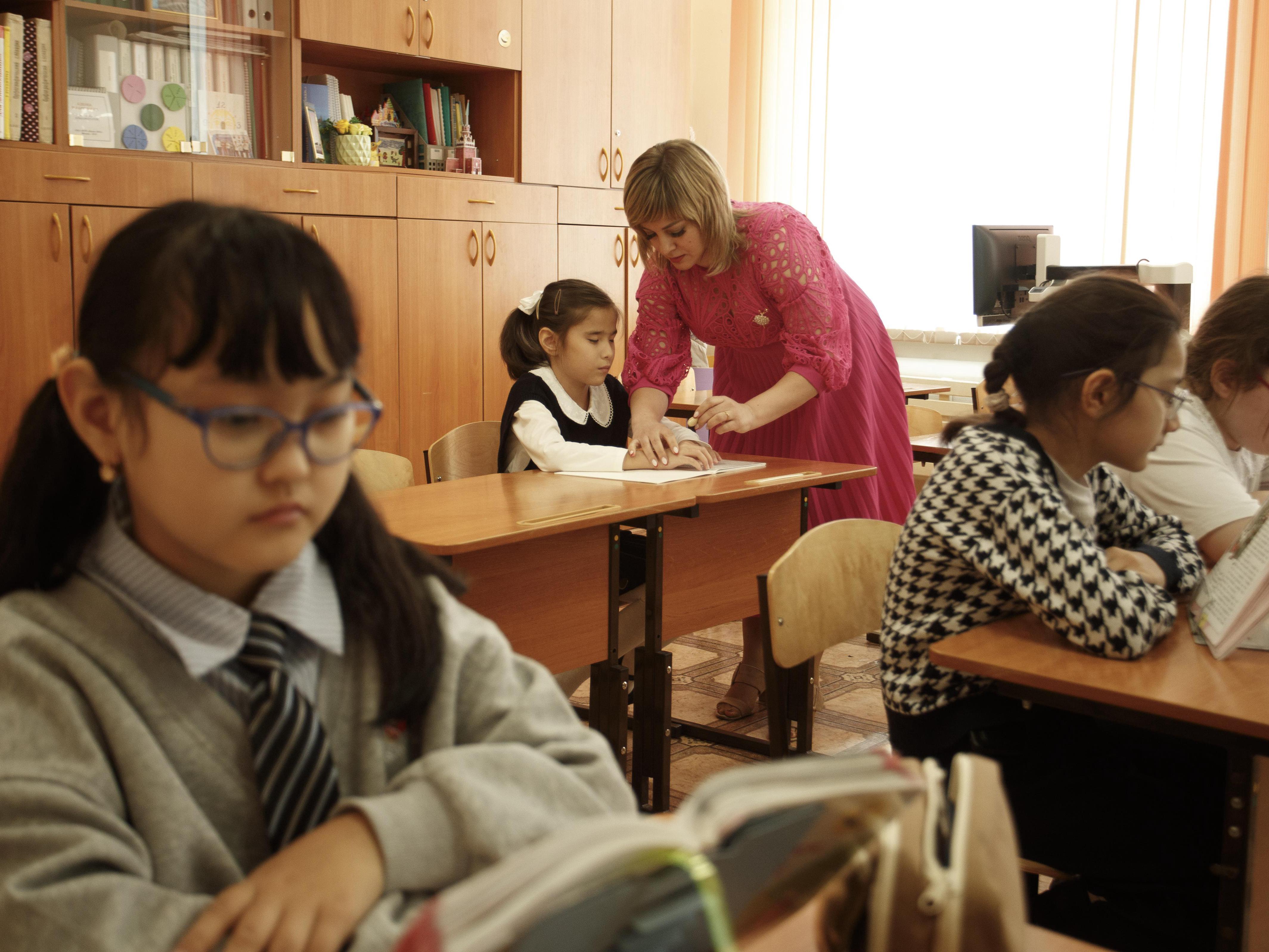

In Novosibirsk, there is a special school that teaches children with visual impairments. It is the only one in the entire region, and it is not easy to get into. The school operates as a boarding school, so for the young residents of towns, villages, and hamlets, its walls become a second home, and teachers and classmates become family. The curriculum is the same as in other schools, but with its own nuances. NGS visited the classes — we tell about the students and the specifics of the educational process.
Outwardly, the special correctional boarding school No. 39 looks the same as all typical district schools, but once inside, you find yourself in a completely different, quiet world. During breaks, no one runs here; they walk carefully along the tactile path or along the wall. Schoolchildren guide each other by the hand, heading to class for lessons.
The school teaches partially sighted and completely blind children. The reasons for vision loss are different for everyone — some were born with visual impairments, others have acquired blindness. Enrollment is only possible with an ophthalmologist«s conclusion. The school operates as a boarding school, which allows students from remote areas of the region to live here on a permanent basis and receive not only education but also treatment.
«Learning Hand in Hand»
The main task of the teachers is to teach children not only mathematics, Russian language, and other compulsory subjects, but also to help them adapt to real life. The school emphasizes the defectology department: children work with typhlopedagogues (specialists in teaching the visually impaired).
First-grader Stepa sees nothing at all: the boy needs the teacher«s help to understand the typhlo device — on it, he learns the alphabet using Louis Braille»s script.
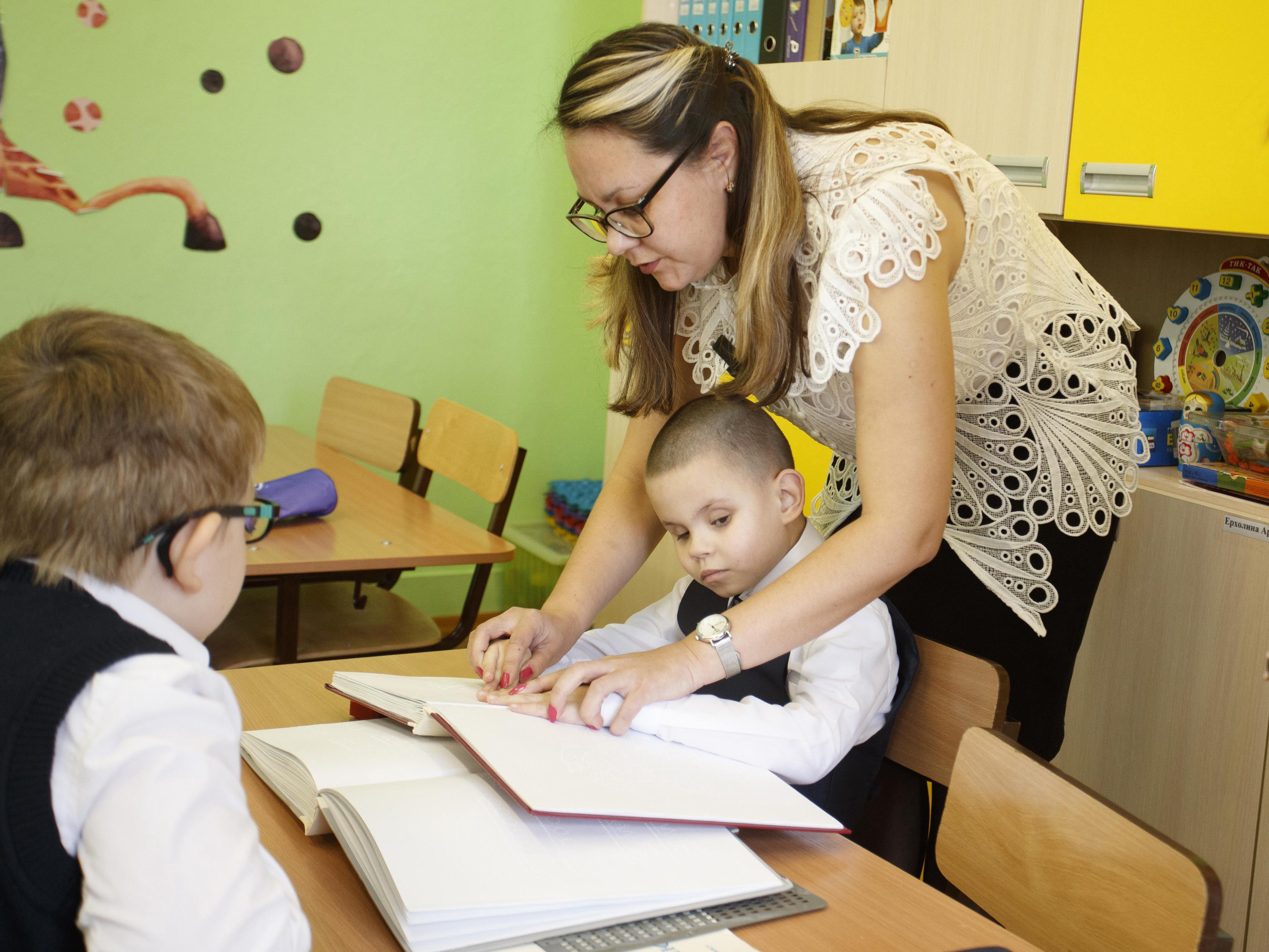
«This is called a slate, and this is a stylus,» explains primary school teacher Natalya Kondratyeva during a writing lesson. «Learning happens hand in hand. The slate consists of six dots, each representing a letter. First, we master the material on the slate, then we move to a notebook and write with a stylus on a special device.»
Stepa is left-handed, which caused him difficulties at first, but now the child deftly handles the stylus, actively writing letters in his notebook. The boy«s textbooks are also in Braille — by touch, Stepa studies the school curriculum with them. They are not like the usual ones, being too heavy and voluminous.
Typhlo Devices and Visual Aids
Teachers have an arsenal of various visual aids that children use to learn about the world by touch. For the little ones, these are educational toys, puzzles, construction sets, and cubes. Middle school students work with more serious objects: relief maps, three-dimensional globes — that«s how engaging geography is. In a biology lesson, we were shown models of parasitic fungi and other plants: they all feel completely different — in volume and texture.
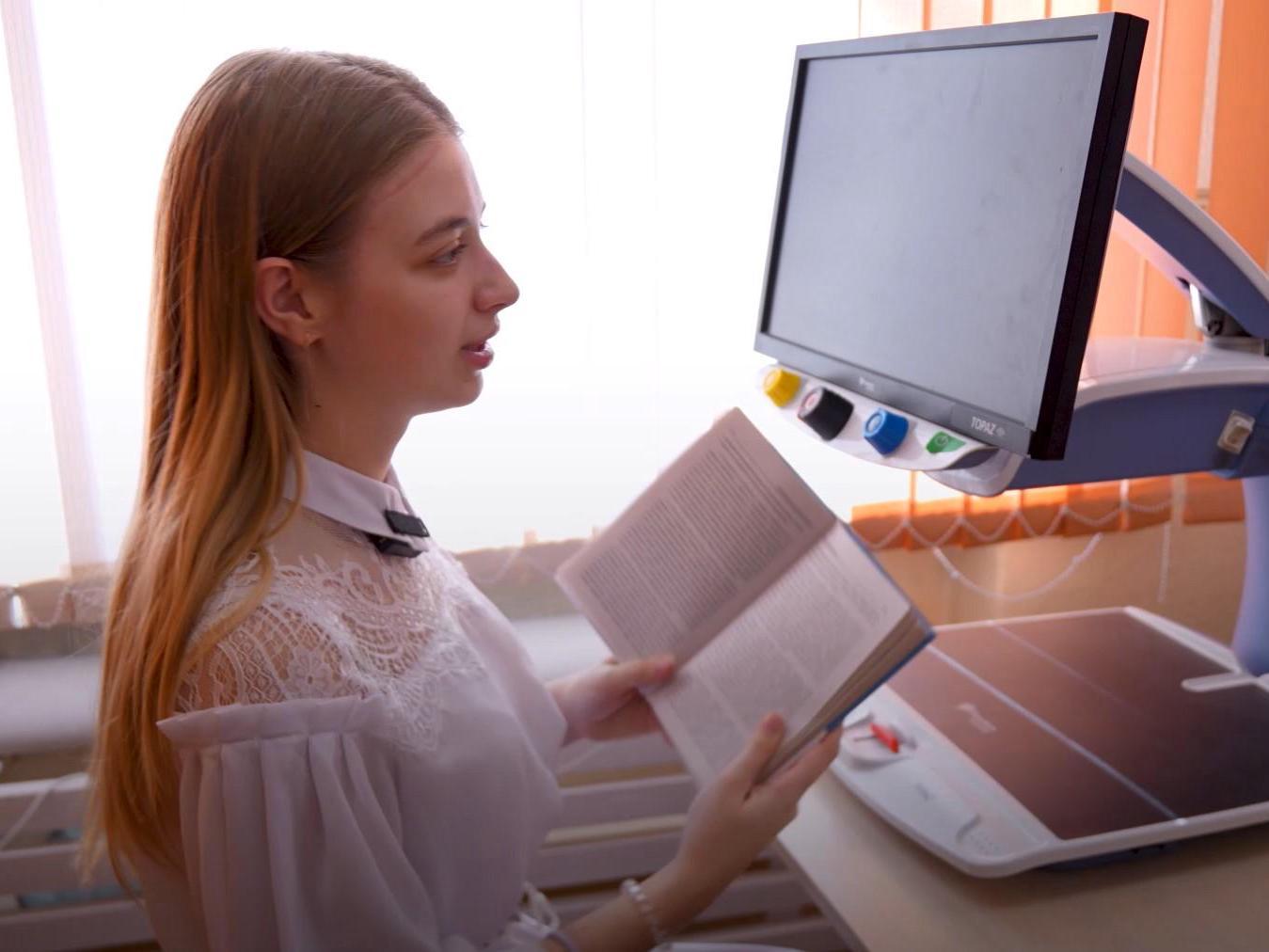
11th-grade student Liliya Malyutina studies with the help of a video magnifier. With it, Liliya can read small print in textbooks — the girl practically cannot see, and over the years her vision will only worsen.
«I use it constantly,» the student tells us and shows how the device works. «The book is placed here, you can adjust it: raise it, lower it — to suit a person»s height. You can increase the brightness or decrease it. Everyone has their own visual peculiarities, and it«s more comfortable for me when the screen is darker.»
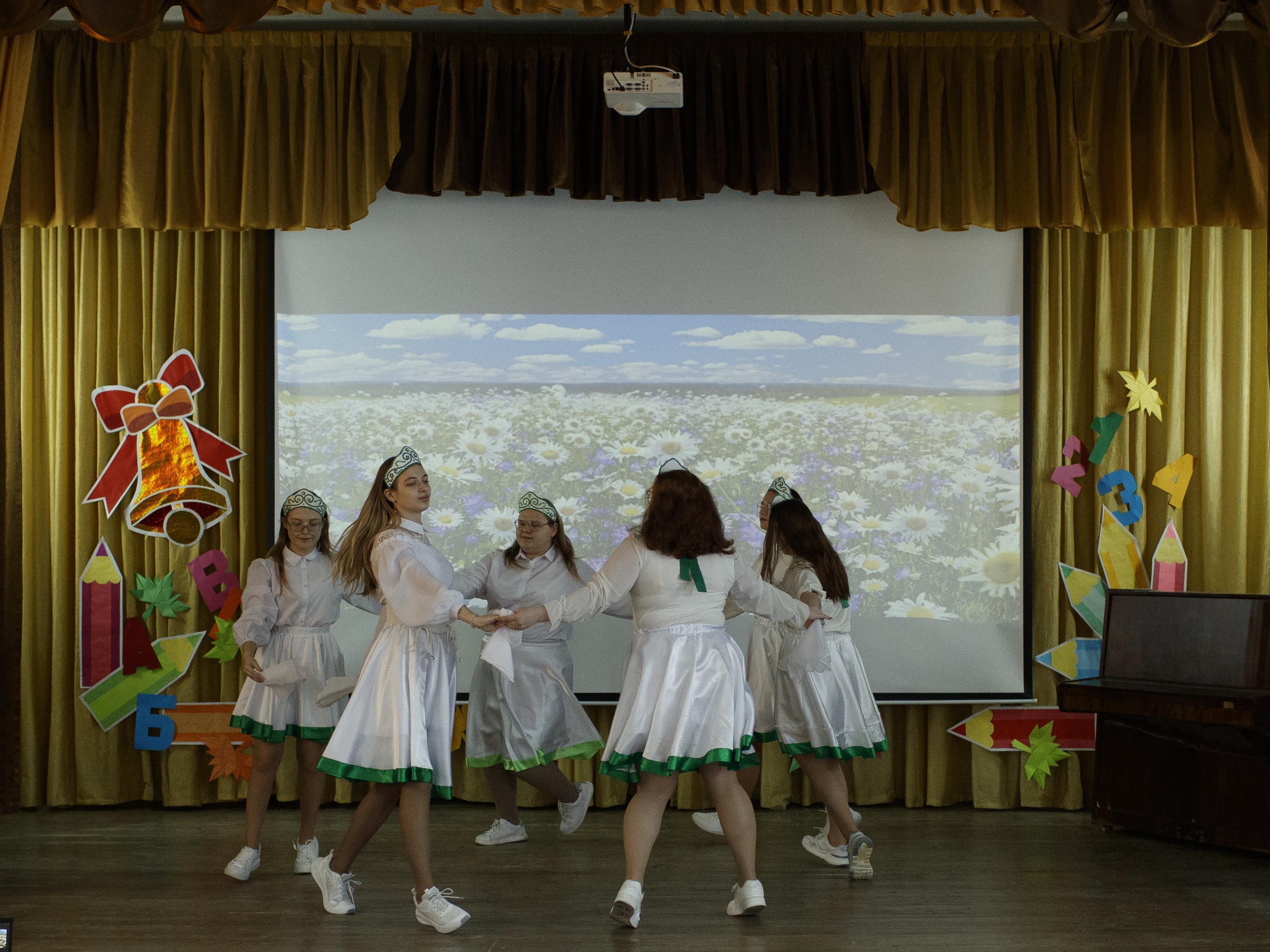
Liliya often uses the video magnifier after classes when doing homework. Among extracurricular activities, Liliya prefers dancing: together with the choreography teacher, she prepares performances for other students.
Dancing in the dark is not easy, but when you have practically not seen since birth, you cannot imagine how it could be otherwise. Therefore, for Liliya, dancing in the half-dark is a common thing. The main thing is to do it in comfortable shoes.
Special Tennis and Complex Music
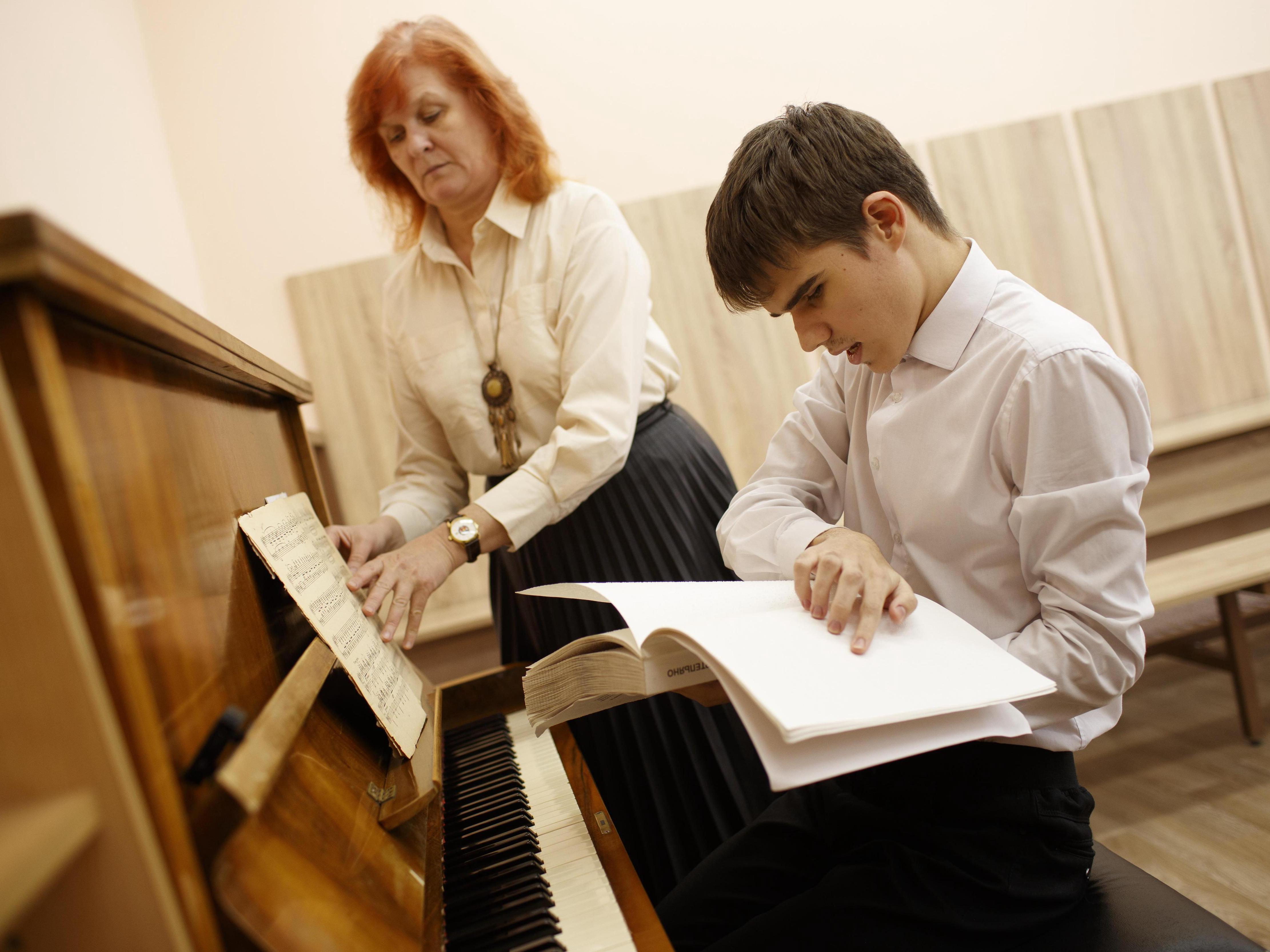
Many schoolchildren have excellent hearing and voice — as if compensation for the complete or partial absence of sight. Schoolchildren take part in musical and vocal competitions and win prizes. 11th-grader Ilya Nikitin can read a score in Braille and plays the piano. The schoolboy, a little embarrassed, performed a rather difficult part from a work by Sergei Rachmaninoff.
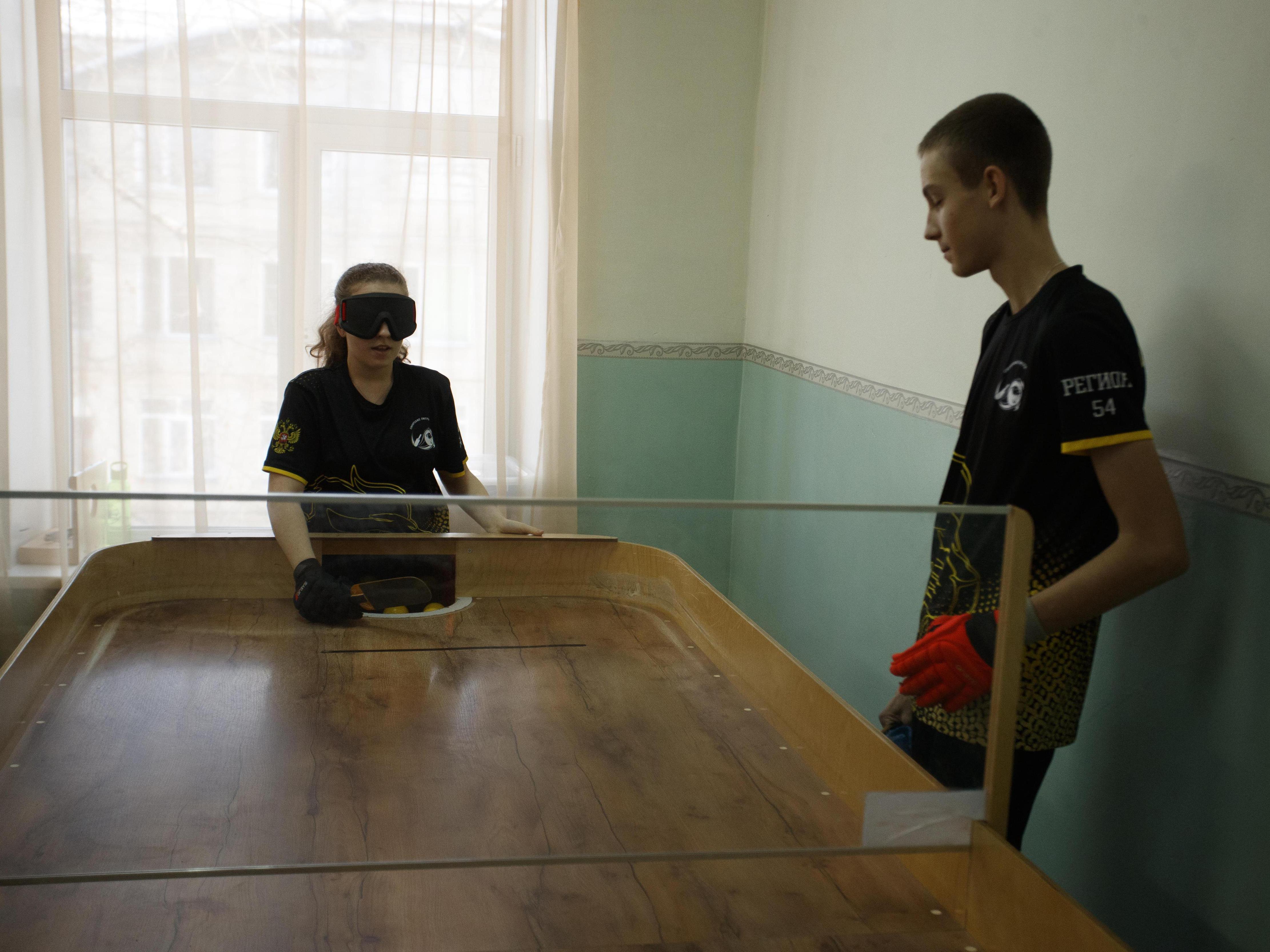
The school also has sports sections — among students, showdown or tennis for the blind is popular. It is an adaptive sport that combines elements of table tennis and air hockey. It is played on a special table with pockets on the edges and a transparent screen in the middle, using ringing balls, rackets, and lightproof masks to equalize conditions. The game develops dexterity, coordination, and tactical thinking.
«Many think it»s easy, which is far from the case, but it«s very interesting,» schoolboy Artyom tells us, showing the sports equipment.
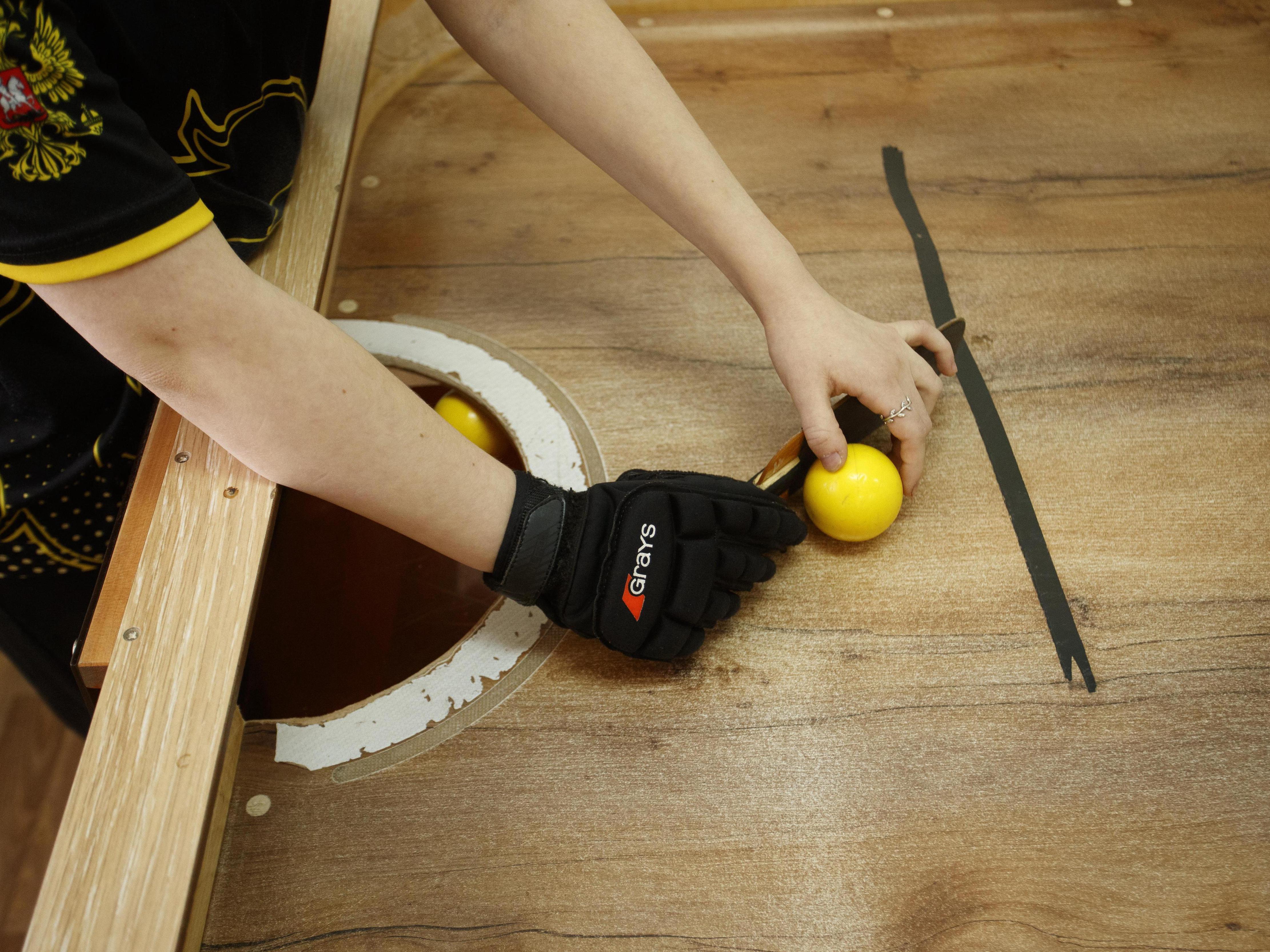
«Try it, let»s play a game,« Artyom»s classmate smiled and gave us a dense black mask that does not let light through, and a racket.
For the first few seconds in pitch darkness, you lose your bearings, your head starts spinning. After a couple of breaths, the swaying from side to side stops — we play.
It«s not that easy: to orient by hearing, understand where the ball is flying, and hit it with the racket without missing. The outcome was predetermined: a dry loss, 5:0.
What Else to Read
«So strange: you are being led by another creature.» A day in the life of blind Kristina and her guide dog — Bright was trained in the Moscow region.
«It»s not about pity.« In the center of Novosibirsk, they opened a workshop for people with challenges: why it is needed and for whom.
«I left the house with Gera as if going to war»: a blind massage therapist with a dog worth a million conquered social media. Video.