Structural Compression: Why Retail Assortments Are Shrinking
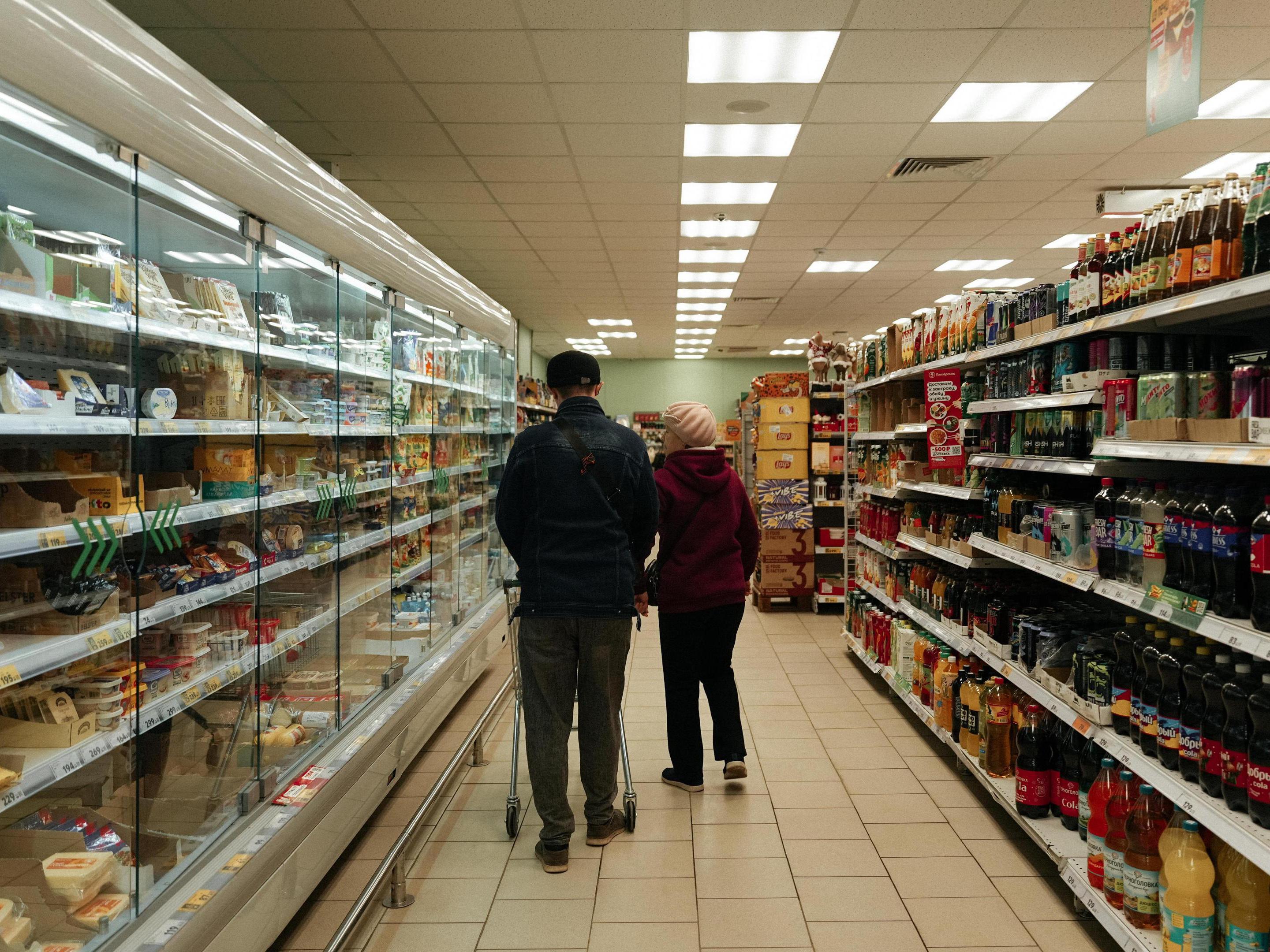

Consumers are opting for fewer purchases but focusing on higher quality amidst shrinking retail options.
Experts use the term «structural compression» to describe what is happening in the consumer market. Simply put, it means a reduction in retail assortments. Stores are increasingly giving up on wide selections in favor of manageability and predictable demand, all to ensure guaranteed profits. The reasons for this process are obvious: declining purchasing power, slower product turnover, and falling real incomes among the population.
Analysis by Nielsen shows that optimization of product lines has affected almost all food categories. The only exception is dairy desserts—a segment that continues to show steady demand even under economic pressure. Otherwise, retailers are consistently «cleaning» shelves, getting rid of niche, experimental, and slow-moving items. So, apparently, we will soon have to forget about «craft» and «farm» products. Details are in the article by MSK1.RU.
At Least Something to Cheer Ourselves Up: Dairy Desserts
As noted in a conversation with MSK1.RU by business analyst Vitaly Lavrinovich, «thinning» the assortment of even the most popular goods is not a managerial whim or a temporary measure, but a direct consequence of the worsening financial situation of consumers. When incomes fall, people increasingly choose basic, understandable products and refuse to buy items «to try.» In such a situation, a wide assortment ceases to be a competitive advantage and, on the contrary, becomes a source of costs—warehouse, logistics, and marketing.
According to Lavrinovich«s assessment, the market is gradually shifting from a »choice« model to an »accessibility« model. Retail stores are increasingly leaving only items with predictable demand on sale, sacrificing assortment depth for their own financial stability. The seemingly strange exception of dairy desserts is explained by Lavrinovich as their familiarity, relatively low price, and emotional value for the buyer: you have to find some inexpensive way to cheer yourself up.
In a broader context, according to Lavrinovich, what is happening reflects a fundamental difference between the current consumer model and the situation in the 2000s. Then, income growth automatically led to assortment expansion and more complex shelves. Now, the key factor is cost control, and even with possible income recovery, assortments will likely expand selectively and much more cautiously than before.
Buying Less Often but More Expensively: Paradoxes of New Consumption
However, with store shelves, things are not as straightforward as they seem at first glance, looks deeper marketer Alexander Azar: the number of purchases is decreasing, but the average check is growing. This is especially evident in the food service segment. According to his observations, the number of people buying something outside the home is decreasing in quantitative terms, but the average check of each customer who comes remains.
In projects that Azar oversees as marketing director, revenue overall remains stable, and with a correctly built marketing strategy, it even shows growth. This, in essence, reflects new consumer psychology: people buy less often but allow themselves to spend more at one time.
In the service sector, the picture is different, according to Azar. Here, the very logic of purchase is changing: clients are moving from one-time expensive services to cheaper but regular formats.
«Clients are less and less willing to pay a high average check for one service, but are more willing to agree to constant payments with a smaller volume. I note a growing request from clients for internal installment plans for main services (without banks, simply splitting the payment),» shares Azar«s observations.
No Other Choice But to Buy Chinese
«The networks and brands that win are those that act quickly, relying on analytics, preserve the customer experience in key categories, and shift focus from »width« to »quality of offers,«» says sales increase specialist Evgeny Kolotilov.
Of course, the import factor deserves special attention. Founder of the company «VseIzKitaya» Andrey Kogan in a conversation with MSK1.RU notes that for part of the Chinese business, current fluctuations in demand on the Russian market are not critical at all. Companies with long planning horizons, which have consciously decided to establish themselves in Russia, are ready to «tighten their belts» and continue working in hopes of improved situations.
At the same time, Kogan points to the reverse side: a number of Chinese companies entered the Russian market, considering it as additional, but not key. If demand significantly decreases and growth prospects disappear, such players may exit the country, deeming the market unpromising. That is, such a «luxury» as simply «cutting» the assortment line (as with Russian producers) is simply not available to Chinese importers.
But what will not be affected by the decrease in consumer demand is the cheap goods on marketplaces, says Kogan. Low rates of import substitution mean that a significant part of products will continue to be purchased from China, regardless of current income dynamics. After all, there is simply no other choice!
Salvation in Small Stores?
«A new trend—small stores near home or in business centers, where on the shelves only the most popular items: ready-made lunches, baked goods, coffee—goods that maximally satisfy immediate needs, take up minimal space, and turn over quickly. And wide selection in the future will concentrate primarily in the premium segment and in the online environment, so things like household chemicals will probably gradually move to delivery and hypermarkets,» predicts development director of production Mr.Food (ready-made food) Lilit Sharoyan.