Russia's Reliance on Cheap Labor: Indian and Central Asian Migrants
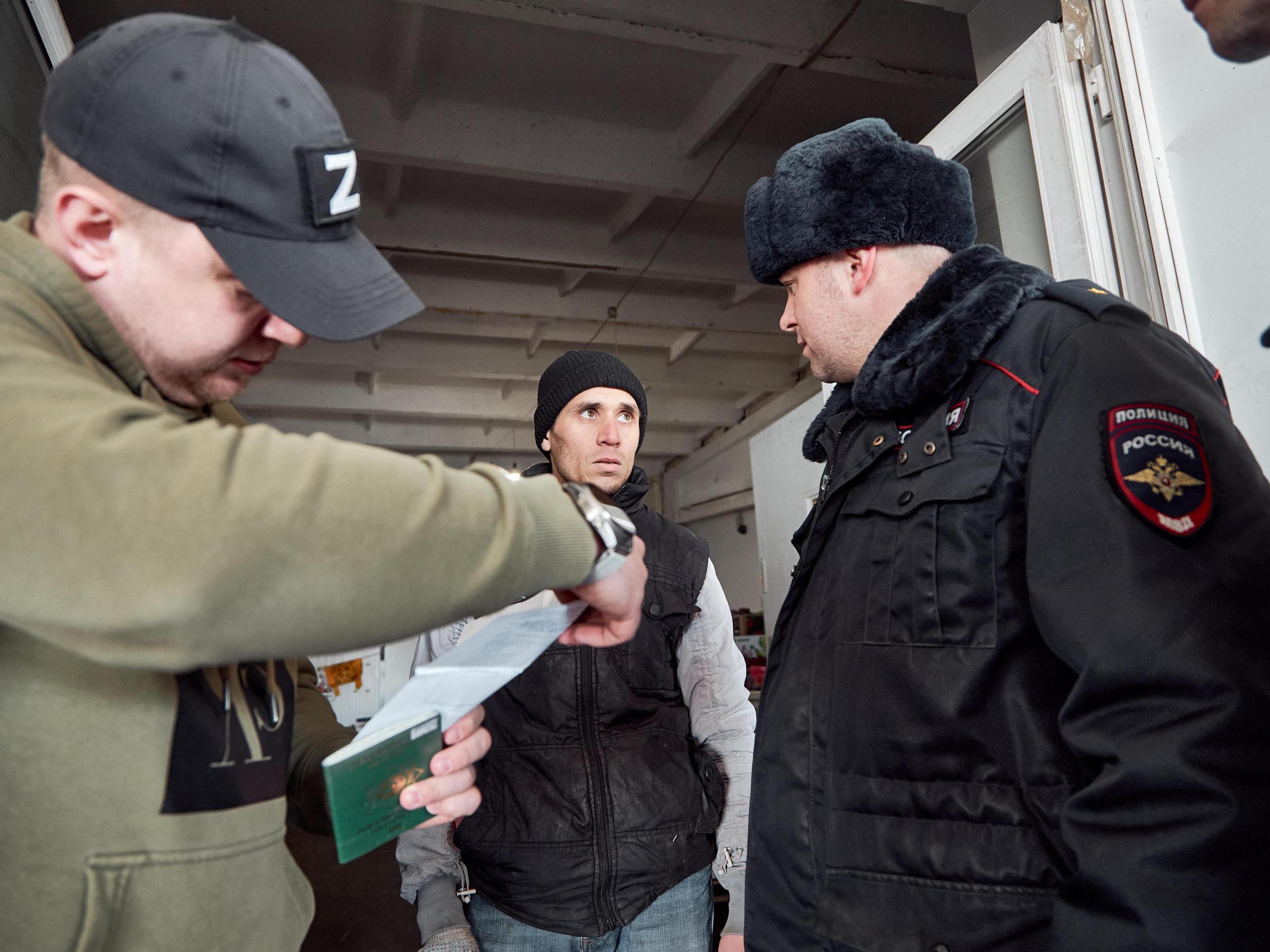

In 2025, Russia issued a record number of work permits in the past nine years to citizens of India and Bangladesh, according to Interior Ministry statistics. Specifically, 56.5 thousand Indian citizens were invited to work in Russia, up from 36.2 thousand the previous year. From Bangladesh, 9.3 thousand workers came, compared to 2.8 thousand in 2024. Both figures are the highest since at least 2017.
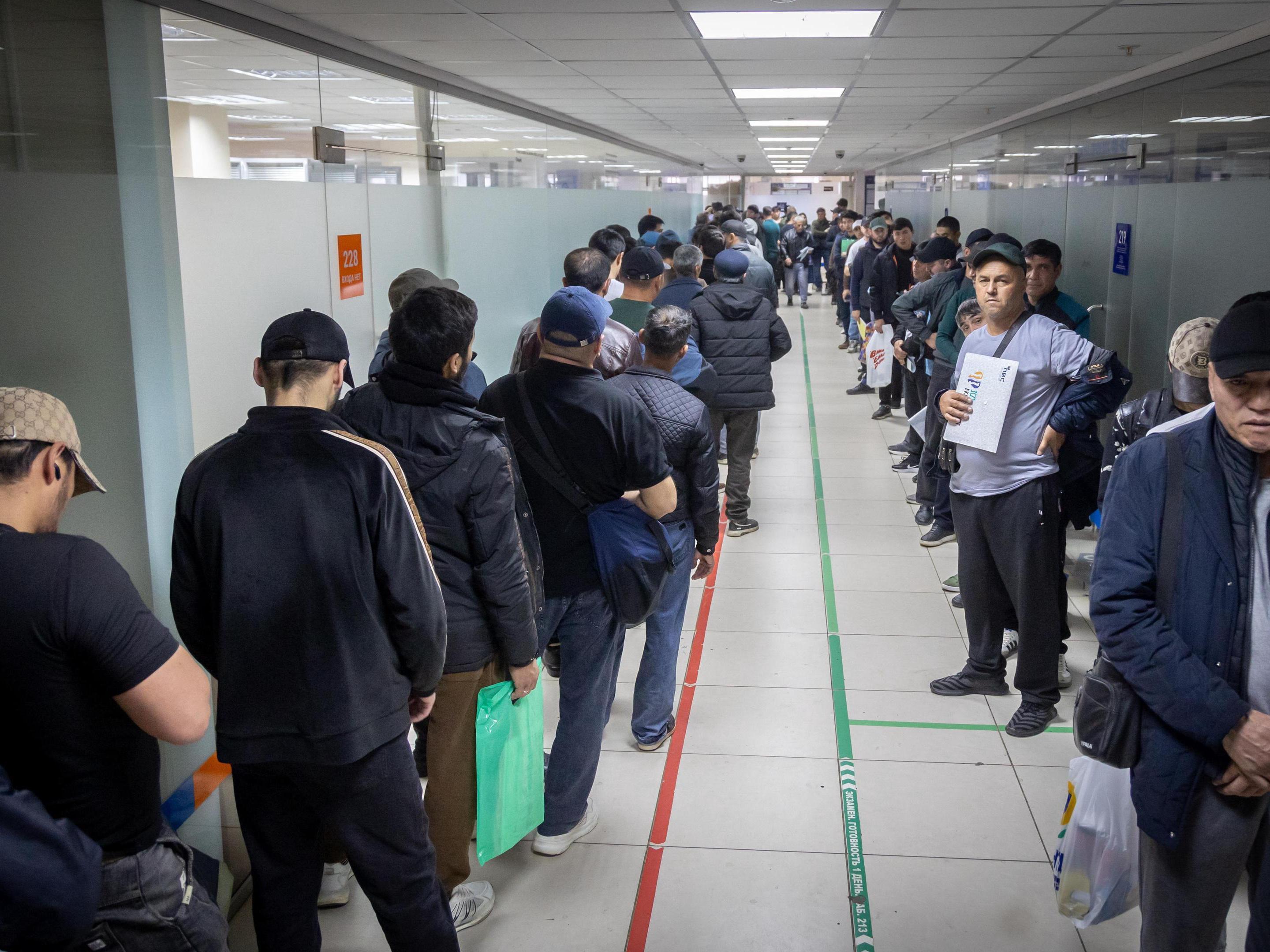
The growth affected other countries as well. Work permits for Turkmenistan citizens increased more than 2.5 times to 25 thousand, and fivefold to 2.3 thousand for Uzbekistan citizens. The number of Chinese citizens receiving work permits in Russia also rose by about 50%, to 92 thousand.
In total, in 2025, the number of work permits issued to foreigners reached 240 thousand, also an absolute record since 2017. Over the year, the figure grew by almost 42%.
Against this backdrop, the government has already announced further expansion of attracting foreign labor. In 2026, the quota for labor migrants from India, China, Malaysia, Bangladesh, and African countries could reach 279 thousand people — 20% more than this year. The Ministry of Labor explained that 92% of the quota will go to skilled workers for industrial enterprises and infrastructure projects.
Here is how analysts interviewed by MSK1.RU — Olga Chudinovskikh from Moscow State University (MSU) and Yulia Levina from the «Labor Market Experts» partnership — assess the situation.
‘We Lack Our Own Labor’
— How do you think, can we already talk about a sharp increase in labor migration from India in the coming years?
— So far, all this is, frankly, at the level of talk. I wouldn«t speak of any significant growth. In 2024, Indian citizens received about 56 thousand work permits. These are completely different scales compared to, for example, Uzbekistan and Tajikistan, from where almost two million people came and obtained patents, — says Olga Chudinovskikh, head of the Laboratory of Population Economics and Demography at the Faculty of Economics of Moscow State University (MSU).
These are different orders of magnitude. And I don«t really understand why we»re talking about replacing migrants from Central Asia. Migration trajectories are already established there, there are jobs, people more or less know the language. What«s the ultimate goal here — to replace historically close migration flows with migrants from India, whom we know mainly from movies?
Moreover, Deputy Prime Minister Manturov even spoke about the possibility of accepting a million people from India. Here, my imagination simply refuses to comprehend it.
— Why? Won«t it be possible in the coming years to replace labor migrants from visa-free Central Asian countries?
— It«s impossible to talk about that yet. Beyond agreements, no infrastructure has been created. For the current year, it»s planned to accept about 70 thousand people from India, but against the backdrop of one and a half million migrants from Uzbekistan and almost a million from Tajikistan, this is a drop in the ocean.
In the coming years, in my opinion, this isn«t on the table at all. Only if special resources are thrown in to artificially form this flow. But it still needs to be created. India has a large population, but organizing visa-based hiring for specific employers — it»s not as simple as it seems.
It«s easy to say this, easy to sign an agreement. We have many such agreements, and most of them remain framework agreements. Perhaps over time it will manifest itself somehow, but for now I view what»s happening as statements of intent.
— Well, what in general will happen with Russia«s labor market in the coming years, given the government»s plans to more actively attract migrants not only from India but also other exotic countries — from Myanmar to North Korea?
— Nothing will change globally. Only if they don«t start artificially breaking the established system and building a new one with different participants. And that requires significant resources, which, in my opinion, aren»t available now.
The most logical thing — is to talk not about replacement, but about supplementing labor migrants. At the same time, the proportions will most likely remain and change very slowly.
And with all this, we maintain a high demand for foreign labor. No matter what people with xenophobic views say, we lack our own labor. Increasing labor productivity doesn«t work quickly — this is evident even in more developed countries, which still import foreign labor.
‘I Don«t See an Economy That Needs Millions of Workers’
— How do you assess the plans to expand migration from, let«s say, very distant abroad, such as India for Russia?
— Looking at the state of our economy and the rare news of its growth, I don«t see such an economic sector that would require millions of newcomers. The coal industry is shrinking, we»re selling less oil, small businesses, given taxation, are on their last legs, — reflects Yulia Levina, a member of the non-commercial partnership «Labor Market Experts». — According to official data, economic growth is expected to be about 1.3% per year. This isn«t giant growth that absorbs labor resources in huge volumes. If we continue to bet on cheap unskilled labor, and not on technological development, nothing good will come in the future.
Even China, with a population of 1.4 billion, is actively robotizing and automating. And we«re discussing importing labor. What»s the logic?!
— And indeed, what is it? Officials, apparently, just want to replace migrants from Central Asia with migrants from India and other countries?
— They won«t replace them for one simple reason. The new labor migrants aren»t Russian-speaking. Migrants from Central Asia mostly know Russian. Therefore, Indian workers can only be brought in targeted — for example, to specific enterprises.
But the question arises: why bring people if our own factories are closing? I, for example, have seen reports from Ivanovo, where sewing workshops are closing due to competition with China. So why bring workers here?
Overall, this looks like a rather strange story to me. I don«t think Indian migrants can seriously replace those from Central Asia. The language barrier is too strong.
— You mentioned that migrants should be brought in targeted to specific enterprises. Do you think this is the optimal format?
— Yes, only organized recruitment. The enterprise brought in people — from any country — they worked out their contract and left back at the employer«s expense. Without the possibility to stay. There are examples — the same Malta, where the entire economy is built on temporary migration, but obtaining citizenship is practically impossible. It»s a conscious choice.
The whole island lives on migration. In summer, students, tourists, workers, in winter everyone leaves. But obtaining citizenship is impossible. First, they are few, and second, there«s something valuable within the nation that must be preserved. Some self-identity.
It«s enough to look at Europe»s experience: where people come from, how they assimilate, and what happens when there are too many of them. They don«t assimilate — they start to assimilate the indigenous population. I wouldn»t want us to come to the same result.