No Tax on Rental Apartments? It's a Trap!
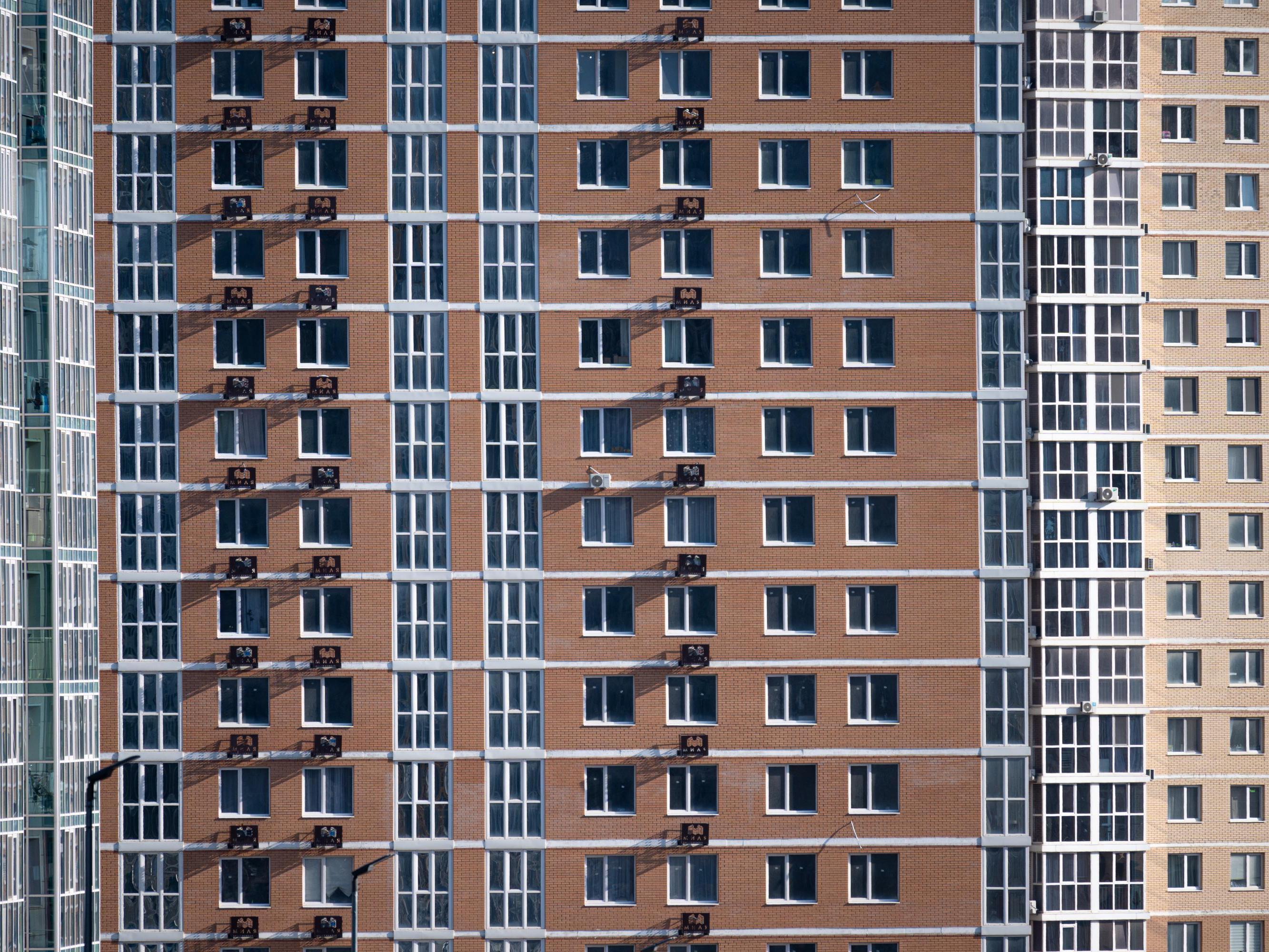

The tax exemption primarily covers those renting out apartments and studio apartments.
Individual entrepreneurs have been offered not to pay tax on their real estate. This week, the Federal Tax Service (FNS) published official clarifications on how to do this and what is needed. It sounds attractive. But the meager savings can turn into many times larger expenses or unpleasant disputes with the fiscal service. Details are in the material of Fontanka.
The benefits are provided to entrepreneurs using special tax regimes — simplified (USN), including automated, and patent. But only if the property is used for business activities. This primarily concerns those who rent out their apartments and studio apartments. Simple arithmetic says: do not sit down to play cards with the state for money. It will be much cheaper to simply pay an honest 13% tax as an individual.
The End Justifies the Means
The clarification makes it all sound simple and clear. You just need to ask, and the property tax will be cancelled almost instantly. According to the Federal Tax Service, many businessmen are granted benefits even automatically — on an unrequested basis. This applies if the inspectorate has data on the purposes of property use.
«For example, a current lease agreement, a patent indicating the address of the building as the place of business activity, etc.», the agency«s statement notes.
If the FNS does not yet know that you are renting out an apartment, you are recommended to submit an application for the benefit by the end of March, attaching supporting documents.
The preferential regime does not affect owners of administrative, business and shopping centers, as well as non-residential premises included in special lists compiled by regional authorities. For example, the St. Petersburg Property Control Committee on December 26 approved such a list of 9,167 properties.
Even More Discounts!
At the same time, property tax rates are low. The Tax Code of the Russian Federation provides for 0.1% of cadastral value for residential houses and premises, and 0.5% for other real estate (including non-residential premises — the same studio apartments, buildings, etc.). Regional authorities have the right to reduce and increase rates, but no more than three times. For example, the owner of an apartment or house in St. Petersburg with a cadastral value of 10 million rubles ($111,100 at current rates) must pay annually 15 thousand rubles ($167) for them, and for similar studio apartments — 30 thousand rubles ($333). Numerous social benefits are also established; in the city, almost 60% of owners use them.
Also, citizens who honestly rent out housing have been able to apply the so-called professional tax deduction for two years now. It allows them to reduce current rental income by related expenses: repairs, utilities (if paid by the landlord), mortgage interest, insurance, and so on. Without documented expenses, a deduction in the amount of 20% of income is allowed.
But these amounts are also insignificant. For example, having bought a two-room apartment for 20 million rubles ($222,200) and renting it out for 70 thousand rubles ($778) per month, the owner will save no more than 22 thousand rubles ($244) per year through the deduction (about one-tenth of a percent of the price).
The Stake Is Bigger Than Life
However, as Fontanka calculated, by saving on paying a paltry property tax and applying the professional deduction, entrepreneurs can lose much larger sums in the future. The fact is that the very fact of using a house, apartment or room for profit deprives the owner of a number of preferences. The most important is the tax deduction when selling real estate.
For example: an apartment purchased for the same 20 million rubles ($222,200) is resold within three years for 24 million rubles ($266,700). If a private owner lived in it himself with his family, then the personal income tax on the sale will be 390 thousand rubles ($4,300), property tax for the entire time — approximately another 90 thousand rubles ($1,000), and the professional deduction will allow saving 66 thousand rubles ($733). If the apartment was the only housing, or was inherited, gifted by close relatives, and in a number of other cases, the personal income tax is zeroed out.
But if you honestly tell the tax office that you used the apartment for commercial purposes and asked for a property tax benefit, you will have to pay at least 3.5 million rubles ($38,900), whereas, renting out the apartment as an individual (at 70 thousand rubles ($778) per month) and paying an honest 13% tax, you will give the state only 110 thousand rubles ($1,200) per year.
When selling the same apartment after a longer time (it must be more than five years), say, after eight years, for 35 million rubles ($388,900), the individual«s income is not taxed. During this time, he will pay property tax of approximately 300 thousand rubles ($3,300). Plus a 13% tax for eight years — 880 thousand rubles ($9,800). But if you confessed to the tax authorities about commercial use and saved those 300 thousand rubles ($3,300), and also instead of 13% as an individual paid only 6% as a self-employed person or individual entrepreneur, then the personal income tax upon sale will be simply astronomical — almost 5.2 million rubles ($57,800).
Business and Nothing Personal
An alternative option is to consider the same apartment exclusively as a business asset. Using the simplified tax system allows you to pay only 6% of total income or 15% of profit (income minus expenses). And no property tax.
The simplified system can also be used when selling real estate, regardless of its category (residential, non-residential) and period of use. In the above example, with income of 24 million rubles ($266,700), the single tax will be 1.44 million rubles ($16,000); with 35 million rubles ($388,900) — 2.1 million rubles ($23,300). And if you take into account the costs of acquiring the property and the 7% rate provided for, in particular, by St. Petersburg law, then you will have to pay only 280 thousand rubles ($3,100) or 1 million rubles ($11,100) respectively.
However, this obvious savings is absorbed by the introduced VAT, which from this year must be paid by all entrepreneurs with annual revenue exceeding 20 million rubles ($222,200). The cost of many real estate properties exceeds this amount. Their owners cannot claim any deductions (there was no input VAT on purchase a priori). Accordingly, from 24 million rubles ($266,700) you will have to pay an additional 1.2 million rubles ($13,300), and from 35 million ($388,900) — 1.75 million rubles ($19,400). Not as bad as personal income tax on the full amount, but all the advantages of the simplified system have practically been devalued.
Partly, the solution to the issue will be the closure of the individual entrepreneur: «If at the time of sale the citizen has ceased business activities, personal income tax is calculated according to the general rules regardless of the circumstances of renting out the same apartment or other commercial use. In addition, from this year such citizens have the right to use a tax deduction in the amount of the cost of purchased housing and other expenses, even if they have already been taken into account in the simplified tax system declaration,» notes partner of the law firm «Pravy Bereg» Anton Nikulin.
The main problem, interviewed experts believe, is the uncertainty of the situation. «The definition of property used in business activities is not enshrined in legislation. In practice, the key criteria are the systematic receipt of profit from its operation, the presence of lease agreements, licenses, employment contracts indicating the address of the workplace and other documents,» explains Maryana Kolesnikova from the law firm Maxima Legal. She is convinced that taxes on the sale of an apartment after five years of ownership will not be subject to personal income tax, even if it was used in business activities.
According to private practice lawyer Yuliana Bychkova, the commercial purpose of real estate, including residential, is evidenced by its use in business activities (rental, catering, offices, production, warehouses, etc.), receipt of income to the individual entrepreneur«s current account, as well as inclusion of such income in the simplified tax system declaration.
«Or the businessman himself indicates the object in the application for a patent. In this case, the owner is exempt from property tax. But in case of sale of housing, he loses the right to exemption from personal income tax. Therefore, I believe that most often it is more profitable for the owner to rent out residential real estate as an individual and pay a 13% tax, but get an exemption from personal income tax upon sale. As for non-residential real estate used for commercial purposes, everything is clear: you pay taxes on income as an individual entrepreneur, you are exempt from property tax,» states Yuliana Bychkova.
Anton Nikulin does not rule out that commercial use could even include organizing a museum, art gallery or other culturally and socially significant business with paid access in one«s own apartment.
Tax consultant Tatyana Makurova considers the criteria for entrepreneurial activity to be long-term rental of an apartment specifically as an individual entrepreneur or systematic resale transactions of residential real estate. «The indication in the Unified State Register of Individual Entrepreneurs (EGRIP) of the corresponding OKVED code (sale of own real estate) most often does not matter. But in the absence of a unified approach, local tax authorities often play by the rules to suit their tasks of increasing budget revenues. For example, they may charge personal income tax even if you have individual entrepreneur status. And if more than five years have passed and such an owner has the right not to pay tax as a private individual, the inspectorate may insist on including the income in the simplified tax system declaration,» warns Tatyana Makurova.
According to the latest data from the Federal Tax Service, 115.9 thousand individual entrepreneurs took advantage of property tax benefits, including 70.7 thousand using the simplified system and 37.6 thousand using the patent taxation system. In St. Petersburg, 6.4 thousand individual entrepreneurs claimed benefits.