Gold Hits Record Highs: Should Arkhangelsk Residents Jump on the Bandwagon?
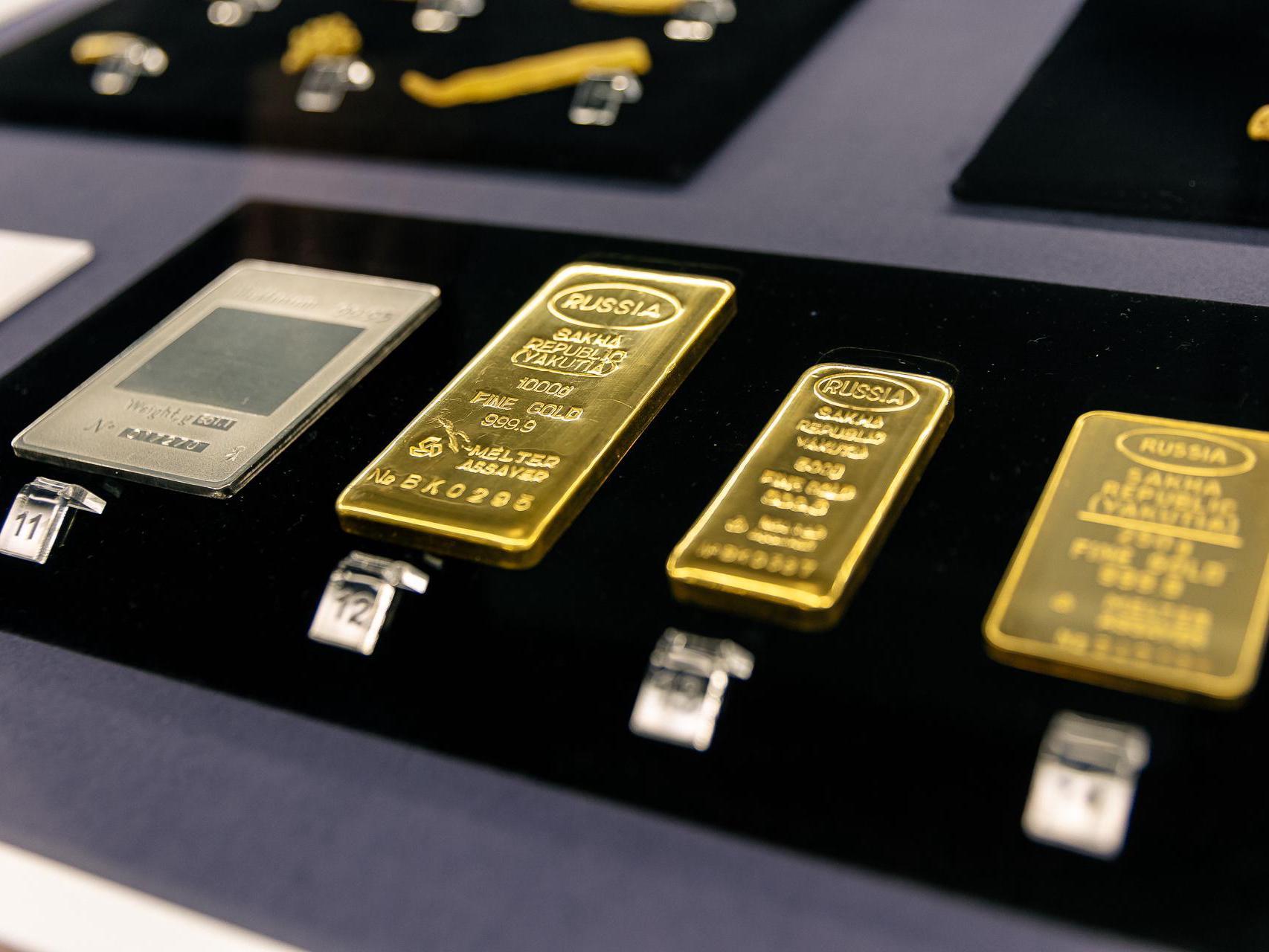

Global gold prices have exceeded $5,000 per troy ounce (31.1 grams), setting a new record. Since the start of 2026, the precious metal has already risen by more than 17%, and leading analysts forecast the price per ounce could reach $5,400. Other precious metals are also breaking records. Our colleagues at Fontanka explain this global trend and how to get involved.
Why Gold Is Getting More Expensive
As early as September, experts were debating whether the market price of gold would break the $4,000 record. Ultimately, in 2025 it grew by 64%. In early 2026, the growth accelerated. This is linked to a lack of global stability, which is being furthered by the policies of US President Donald Trump and the chaotic communication from his administration regarding the country«s trade and foreign policy. Against this backdrop, currency risks associated with the US dollar are rising.
First, the world«s central banks have begun reducing dollar-denominated assets in their reserves, purchasing gold instead. By the end of 2024, central bank gold reserves amounted to almost 36,200 tonnes, corresponding to 18.3% of official reserves compared to 15% a year earlier. Russia maintained its fifth place in the world for gold reserves, and the metal»s rising value has almost compensated it for losses from frozen assets in the EU in 2022. At that time, gold cost $1,800 per ounce, and since then the price has increased 2.8-fold.
Second, major private investors are also buying gold, some—in volumes comparable to central banks. For example, Tether, the issuer of the world«s largest cryptocurrency stablecoin USDT, whose value is pegged to the US dollar, was buying 26–27 tonnes of gold per quarter at the end of 2025, building reserves to back its tokens.
Additional demand is being fueled by retail investors, whose behavior shows speculative sentiment and the FOMO (fear of missing out) effect. This is the fear of missing a good opportunity, like making a lot of money.
Are We Facing a New Global Crisis?
There is a theory that the reasons for gold«s appreciation are much deeper and we are witnessing a harbinger of a global crisis. It was described in detail in his Telegram channel by Yaroslav Kabakov, Director of Strategy at FINAM Investment Company and a lecturer at the Higher School of Economics (HSE). In his opinion, the 50% rise in gold prices since August 2025 is an alarming signal of a global debt crisis: investors see gold as a salvation from a system collapse when governments cannot pay their huge debts without sparking inflation, financial repression, or currency devaluation, particularly of the dollar.
Countries with low debt, which the economist includes Sweden, Norway, and Switzerland, now appear to investors as «islands of relative stability.» Countries with large debts are facing problems. «The key example is Japan. For decades, it served as proof that national debt could grow almost indefinitely without immediate consequences. Today, this thesis is beginning to crumble. The volatility of the Japanese debt market has become a reminder: debt sustainability is a matter of trust, not arithmetic,» writes Kabakov.
Even with high interest rates in the US, gold is breaking records because the market does not believe that the high nominal yield of government bonds will protect against accelerating inflation and other troubles. In 2026, the dollar weakened sharply, confirming the scenario of devaluation as a way out of the debt hole.
However, for now, experts interviewed by Fontanka maintain the view that the main contributors to rising gold prices are central banks, the specific features of the asset itself, and geopolitical tensions.
«The version of demand from central banks and major investors is supported by data. Central banks have been buying more than 800 tonnes of gold for the fourth consecutive year. Additional growth factors: the easing of US Federal Reserve policy, a physical supply deficit—reserves in the ground could be exhausted in 17 years—and geopolitical tensions, including US trade disputes with Europe over the situation around Greenland,» says Dmitry Vishnevsky, an analyst at Tsifra Broker.
What Happens Next with Gold Prices?
Analysts believe gold will continue to grow rapidly but note that at any moment the growth could stop and be replaced by a decline. Demand for the metal is unstable and difficult to forecast. A correction is considered likely, but when—is unknown.
According to estimates by Goldman Sachs, gold will cost $5,400 per ounce at the end of 2026. Leading analyst at Freedom Finance Global Natalia Milchakova considers a level of $5,500–$5,600 per ounce by year-end achievable. The author of the bestseller «Rich Dad Poor Dad,» Robert Kiyosaki, who predicted a rise to $5,000 per ounce and was off by a year, now prophesies gold will rise to $27,000. However, the world-famous business coach did not specify by which year to expect such fantastic figures.
«Gold continues to be perceived by the market as a safe-haven asset amid risks of rising inflation, a weakening dollar, geopolitical tensions, and fears of deteriorating conditions in the global economy. In the short term, price growth may continue, and considering previous rallies in the 1980s and 2010s, quotes could approach $6,000 per troy ounce,» notes Alina Poptzova, stock market analyst at Alfa-Capital Management Company.
However, according to her, it is purely a speculative asset whose value is determined by expectations. Large volumes of metal in circulation and developed investment infrastructure reduce its volatility compared to other precious metals but do not exclude corrections. Therefore, the analyst believes that in a baseline scenario, by the end of 2026, quotes will return to $4,400 per ounce.
«At the moment, the asset looks overbought. For an unqualified investor, buying at current peaks is associated with the risk of getting caught in a technical correction—the expected decline could be 5–10%,» warns Dmitry Vishnevsky. «The optimal strategy is to wait for a price pullback.»
What Type of Gold Investment to Choose
Even though the price of gold currently looks inflated, the metal is good for diversifying investments, meaning splitting them across different assets to reduce risk. This provides protection during difficult economic periods.
So, if you really want to, physical gold can be bought in bars or investment coins. For this, you need to contact banks. To acquire non-physical gold, you need to open an unallocated metal account. This can also easily be done through a bank«s app.
«Of the proposed options, we believe the most optimal are still investments in non-physical gold. Investing in physical gold can reduce the final financial result of such investments due to additional costs, for example, for renting a bank safe deposit box for storage or purchasing an insurance policy for force majeure circumstances, if the investor, of course, plans to store the metal at home,» says Nikolay Dudchenko, an analyst at FG FINAM.
Non-physical gold carries other risks. Unallocated metal accounts are not insured, so an investor must carefully choose the bank where such an account will be opened to avoid losing their investment. The spreads for buying and selling metal vary among banks. They are structured so that part of the income is «eaten up» upon sale. The same applies to physical gold.
For example, on 27 January last year, you could buy a 1-gram bar at Sberbank for 10,033 rubles (approx. $135 at current rates). Exactly a year later, the purchase price rose to 13,708 rubles, but you cannot sell at that price. A different price is available for selling—11,693 rubles. Thus, despite a 37% price increase, over a year of owning a gram of gold, the investor would have earned only 1,660 rubles (+17%).
An investor can also buy non-physical gold in the form of exchange-traded instruments: futures, specialized exchange-traded funds, or shares of gold mining companies. This is a more complex path that requires independent study of a large amount of information about exchange-traded products and their issuers.
«If an investor does not have time to understand the aspects of working with stocks and bonds, then it is indeed better to limit oneself to opening an unallocated metal account (UMA),» advises Dudchenko.
Is It Worth Investing in Other Precious Metals?
Other precious metals are also breaking price records. Silver increased in price by 141% in 2025 and by 65% since the start of 2026. Recently, it rose to over $117 per ounce, setting a new historical record. Platinum and palladium also renewed their historical highs, reaching $2,925 and $2,180 per ounce respectively.
Fontanka asked experts whether an unqualified investor (the majority in the country) should consider other precious metals and received a warning that with them, everything is somewhat more complicated. Unlike gold, these metals are used more extensively in industry, and their value depends on production factors, i.e., supply and demand.
«Silver reached $116–117 per ounce due to colossal demand in solar energy, electric vehicle production, and AI. Platinum is rising in price against a backdrop of structural supply deficit and demand from data centers,» explains Dmitry Vishnevsky. He recommends considering these metals only for long-term diversification and during correction periods when their prices fall, as they fluctuate more strongly than gold.
Increasing your investment by adding such metals to your portfolio is a challenging task, suitable for an advanced investor. «For an investor who is not too interested in the situation in the global economy and industry, it may be worth limiting their choice exclusively to gold,» believes Nikolay Dudchenko.
More on the Economy
«Maintaining exports is a second front»: read about how the Arkhangelsk region is coping with sanctions.
The director of AGD Diamonds told where precious stones from the Arkhangelsk region are sold and how this industry affects the region«s economy.
«They go to work in shops»: why schools in the Arkhangelsk region lack teachers.
«The down payment is not enough»: how much money is needed to get a mortgage in Arkhangelsk.