Experts Forecast for Russian Economy in 2026
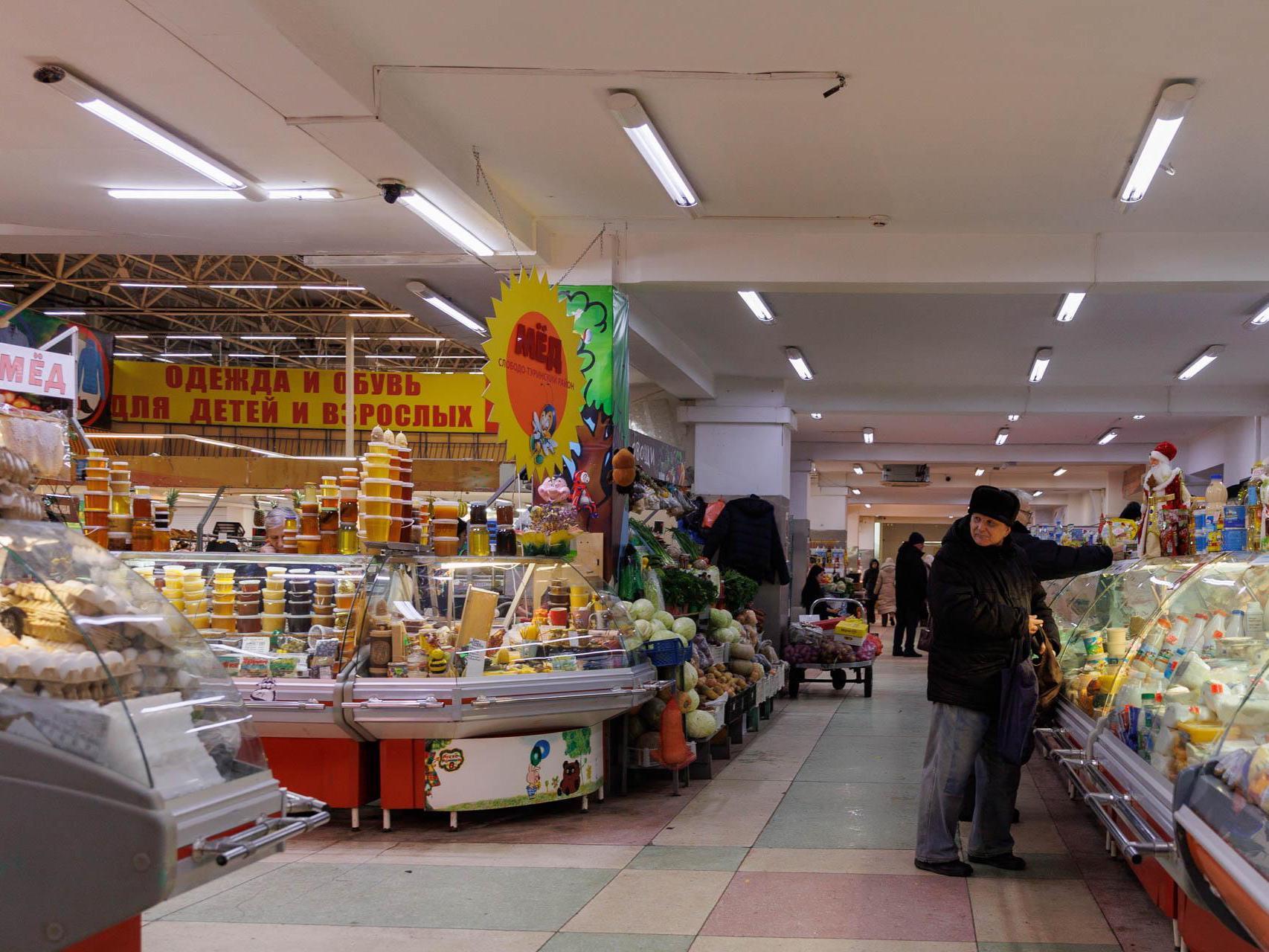

The Russian economy has endured another year under the special military operation. Sanctions remain in place, people continue to save money, and the ruble has not collapsed. Much in 2026 will depend on geopolitics. Our colleagues at 72.RU spoke with experts about what awaits the Russian economy.
What will happen to the Russian economy in 2026?
«Maximum uncertainty, which will depend solely on geopolitics,» is the forecast given in a conversation with a 72.RU commentator by Alexey Krichevsky, a financial expert and author of the Telegram channel «Economism».
«The horizon for what will happen without any breakthroughs is clear. More or less the same as in 2025: in some places, a strengthening of sanctions, nationalizations, shifts in fiscal matters, recalculations of benchmarks for the dollar exchange rate and the price per barrel,» the interlocutor suggests.
According to his assumption, positive developments may come when the issue of a peace agreement is resolved. At the same time, he doubts that one should expect global positive shifts specifically in 2026. Companies that left Russia will return with great caution against the backdrop of nationalizations and through intermediaries, which will affect the retail prices of goods, products, and services, Krichevsky adds.
«It is extremely unlikely that, conditionally, the day after a peace agreement is signed, everyone will herd back to Russia. We all understand that this will not happen. By estimates, the average time for companies to return to full operation will be from three months to half a year. And even then, only if there is political will for it. And from both sides,» the interlocutor believes.
The expert considers two options.
«Globally, we get two forks in the road: either everything ends in 2026, and ideally, of course, earlier, or it doesn»t end, and we move more or less the same as in 2025,« Krichevsky states.
What will happen with the ruble? Opinions are divided here
The interlocutors gave different forecasts regarding the ruble«s fate in 2026. Konstantin Selyanin, Candidate of Economic Sciences, assumes that the ruble will not be allowed to collapse for the sake of social calm.
«Perhaps, by the end of 2026 in this scenario, it will be 90, for example, not 80. Everyone will take it calmly. If they return to filling the budget again through devaluation, it will be the notorious 110–120–130,» the economist says.
Vasily Koltashov, an economist, director of the Institute of New Society, thinks that the national currency will continue to strengthen.
«I believe that strengthening the ruble in this situation is necessary. And it is possible due to the way trade is conducted now. All budgetary rules, artificial weakening of the ruble—as far as I understand, they were not doing all this in 2025,» the expert reasons.
If the dollar ends up in the 70–75 zone, that would be good, Koltashov continues. If the rate does not change at all and stays around 80, then this can be considered a positive result, the economist added.
Krichevsky thinks that by the end of the year, the dollar will be around 90 rubles, and if something supernatural happens, it could exceed the 100 mark.
«If we proceed from more or less reasonable figures, I would say that by the end of the year it will definitely be around 85–90. If something truly supernatural hits, then, of course, there will be a global reassessment, and we could easily fly past 100,» Krichevsky assumes.
What about the key rate?
The Central Bank (Bank of Russia) set a trend for lowering the key rate since last summer. During this time, it has lowered the indicator from 21% to 16%. Experts suggest the trend will continue.
«There is a changed trend towards reduction. They are unlikely to slow it down. Especially since the Central Bank believes that inflation has been reined in. There are questions about that too, but let it be so. For the key rate—12–13% by the end of the year, I think. In the worst case—13%, in the best—somewhere around 12%–11.5%. If there are no harsh »black swans.« If there are, we could easily fly back to 20%,» says Krichevsky.
The Central Bank intends to lower the rate further but shows it will do so slowly, says Koltashov. He does not rule out that by summer the rate will be around 15%.
«We now have 16% after two reductions of half a percentage point each. The Central Bank will take the same pace, despite the fact that analysts and industrialists actively urged it throughout at least the second half of 2025 to lower the rate more actively, faster, normalize loans, and as a result give additional incentives to industry. The president said this is state policy and they deliberately went for keeping the rate high,» notes Koltashov.
The expert explains: there is an accumulation of the government«s monetary expenditures in the form of people»s savings. Koltashov explains this by the fact that a lot of money is being poured into the economy through military spending, but it is needed not for daily consumption but for accumulation and then buying real estate.
«The Central Bank apparently has a plan to change the behavior of Russians, re-educate them—to turn French aristocrats into Puritans. Russians were long accustomed to the idea that it doesn»t matter how much you earn, you must spend significantly more. For this, there are credit cards, microfinance organizations, consumer loans, and you can also take out a loan for a car and housing. When you accumulate loans and if you haven«t gone bankrupt—well done. Now figure it out. There are tens of millions of such situations,» he reasons.
In the first model of behavior, the economist continues, only spending without savings is implied. This model, the interlocutor assures, has reached a dead end, as has always happened in history, particularly with the Russian nobility after the abolition of serfdom.
The other model of behavior assumes that you must buy everything with your own money and save.
«A high rate is needed so that people save money in deposits. And at this stage, this is slowing down sales in the real estate market and the construction sector, which is why it howled all through 2025,» the economist added.
What will become more expensive?
Krichevsky says, everything. According to him, the fiscal spiral will continue to press. Every link in production will add a percentage to the retail price so as not to lose margin.
«Absolutely everything will become more expensive. This will be reflected quite strongly in cars and appliances because of the recycling fee. And in everything else where the recycling fee will be introduced. And it will also be introduced on imported goods. They will also become more expensive,» added Krichevsky.
Prices will correspond to official inflation, says Konstantin Selyanin. This means, he explains, that real inflation will decrease.
«Goods will continue to become more expensive, but significantly slower than they did in previous years,» the economist suggested.
What will happen with salaries and incomes?
They have nothing to grow from, Selyanin states. He explains it as follows. Previously, the driver was demand from the military industry and the need for civilian production to adapt to rising wages. Now that is gone. In his opinion, it is now impossible to significantly and sharply increase wages in military production or for state employees, which means, he continues, there is no need for wages to grow in other areas.
«Wages will grow at the level of official inflation—slightly above or slightly below. But the real incomes of the population, purchasing power, will decline,» added Selyanin.
The nominal incomes of Russians will continue to grow, forecasts Vasily Koltashov, but in the same disproportion in which they exist. According to him, this concerns those who are needed, who are few, for example, engineers, delivery drivers.
«Why did delivery drivers start earning so sharply compared to everyone else? Because the deal is made in the current mode. If you don»t pay them the current market price, tomorrow you won«t have them. And in many other fields where people work, their salaries can remain unchanged for years. And let them try to find themselves another place, the employer thinks,» says the economist.
Should we expect tax increases?
Experts suggest that property tax may increase in Russia. Selyanin and Krichevsky give such a forecast.
«I don»t think it will be launched before 2027. Because you can really raise it quite a bit there. And for the budget, it will be almost half a trillion a year in plus just at the snap of a finger,« said Krichevsky.