Embracing Gen Z Economy Over Fear in Russia
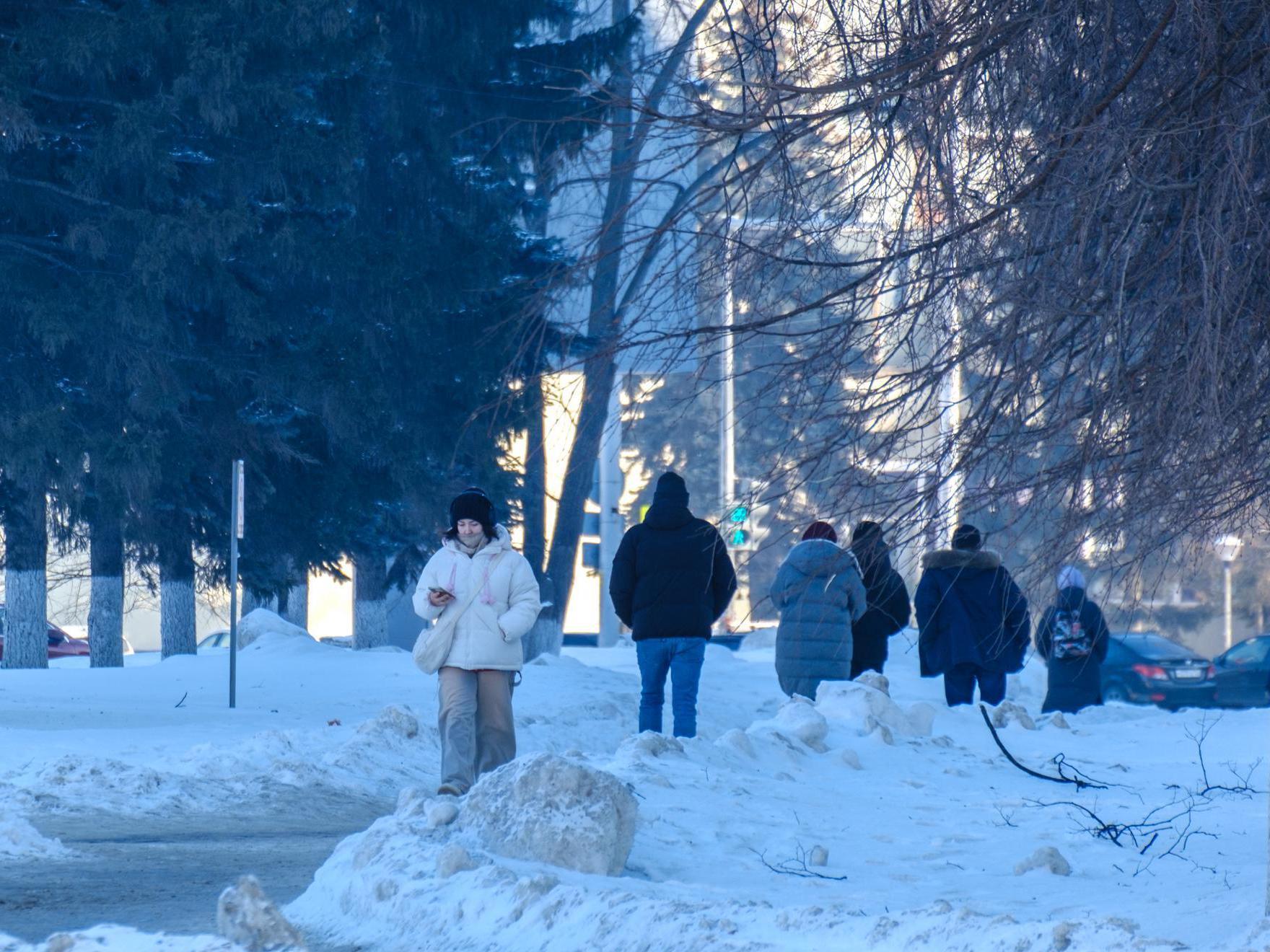

Zoomers — the generation born roughly from the mid-1990s to the early 2010s — are a demographic and economic force capable of influencing labor markets, consumption, and social policy. And they are also capable of greatly irritating State Duma deputies.
In Russia, the number of zoomers is about 15 million, or 10% of the population. For comparison: in Germany, the share of zoomers reaches 15%, in the UK — about 18%, and in the US, they make up about 20%.
Zoomers are also characterized by the NEET category — youth not in education, employment, or training. In Russia, they account for approximately 17.8% of all zoomers, which is higher than the average in the European Union (11.7%) and the US (12.4%). At the other extreme are countries in the Middle East and North Africa, where the NEET share reaches 30–36%.
In Russia, deputies are seriously discussing a possible «economic crash» precisely because of NEET zoomers. The main argument is simple. Youth«s refusal to study and work is not yet noticeable for the economy. Digital overload and uncertainty about the future are just excuses for young people. The Russian economy could face a crisis due to youth. They don»t want to work and strain themselves, and parents don«t teach them independence, believes Deputy Chairman of the State Duma Committee on Youth Policy Alexander Tolmachev.
The people«s elected representative probably isn»t aware that many zoomers already earn above average or have access to parental capital, but are formally classified as NEET.
Serious Challenges
— This zoomer approach to work is not just a protest against the system, but a reflection of deep socio-economic changes. It arose in response to the crisis of the «social contract,» when promises of stability and success did not materialize for many generations, — MSK1.RU candidate of economic sciences Said Gafurov, a member of the Central Council of the independent trade union «New Labor,» says.
— And didn«t this start with banal remote work, which, in turn, appeared during the pandemic?
— That«s too simplistic. The emergence of remote work only provided the opportunity to choose alternative forms of employment. The zoomer approach was also influenced by a shift in values with an emphasis on mental health, work-life balance, ecology, and self-realization. In conditions of instability, long-term planning has become difficult, which has reinforced the desire to live »here and now.«
— But do you agree with Deputy Tolmachev that sooner or later, fatal problems for the economy are possible due to zoomers?
— Serious challenges for the economy are inevitable in the absence of adaptation. If we take the generational dimension, the aging of millennials will lead to a shortage of middle and senior managers.
The transition from a solidarity-based to an accumulation model could cause social tension due to the increase in the retirement age. Frequent career changes reduce the level of specialization and accumulated knowledge, which will slow down the development of key industries. Employers lose interest in training employees, which reduces workforce qualification and could lead to the relocation of productions. Consumer demand also becomes unstable: people without stable incomes and savings become unreliable borrowers.
— But to put it very simply: it turns out that when not only zoomers but younger generations grow up, social priorities and values in Russia will simply change?
— Yes, social priorities will shift from material indicators of success towards quality of life, self-expression, and social contribution. And this transition will be painful for inertial institutions: the state, pension funds, large corporations of the old type, the banking system. They will be forced to change under the new worker and consumer.
— Apparently, in the State Duma, it«s the changes, as usual, that they fear. But perhaps it»s right if they will be extremely painful.
— The main question here is: will states (not only Russia) and global institutions be able to carry out a smooth reform of social systems — pensions, healthcare, taxation — before demographic pressure and changes in work ethics, like an avalanche, crash down on society, causing a crisis. This determines whether humanity will manage to make a transition, like the smooth flow of a river, or whether society will face painful shocks, similar to strong tsunami waves that will destroy the lives of many generations.
Risk of Disappointment
Leading expert at the Center for Political Technologies, economist Nikita Maslennikov does not share the pessimism of Deputy Tolmachev. He believes that alarming forecasts are not yet confirmed by reality.
According to the expert, more than two-thirds of 9th-grade graduates are already oriented towards entering colleges. This indicates that young people are consciously choosing the path of obtaining a specific working specialty.
However, as Maslennikov notes, the education system faces many problems that have not yet been solved. «Young people may not find enough application for their efforts, talents, skills, and, in fact, they are not even formed for many within this professional framework,» the expert emphasizes. This means that current programs may not keep up with the demands of the changing labor market, and schoolchildren themselves are not yet ready for a conscious choice of future profession.
Against this background, there is a real risk of disappointment and lack of demand for the profession that a zoomer will receive. The zoomer economy could face serious challenges if educational programs do not meet employer demands. In Maslennikov«s opinion, earlier professional adaptation and broader familiarity of schoolchildren with possible types of application of their efforts are required here.
Maslennikov says that everyone should work on adapting zoomers to future working life. The family — to guide children. The state — to build systemic policy and create legislative frameworks. Employers, that is, businesses — to attract students and colleges to production practices, including through financial supplements.
Maslennikov insists that adapting the new generation to the labor market is a complex task, not reducible only to education or salary. It is necessary to create such a favorable socio-psychological environment where young specialists would feel in demand and supported. And this is not only high salaries but also a guarantee of future career, social package. And, of course, the prestige of the chosen profession.
It turns out that political reactions in the State Duma look impressive but simplify the complex picture. Real challenges require adaptation of institutions, the labor market, and social protection so that «Generation Z» becomes not a threat but a catalyst for change in Russia.