Ryazan Students' Rituals: From Popov's Resurrection to Mosquito Funerals

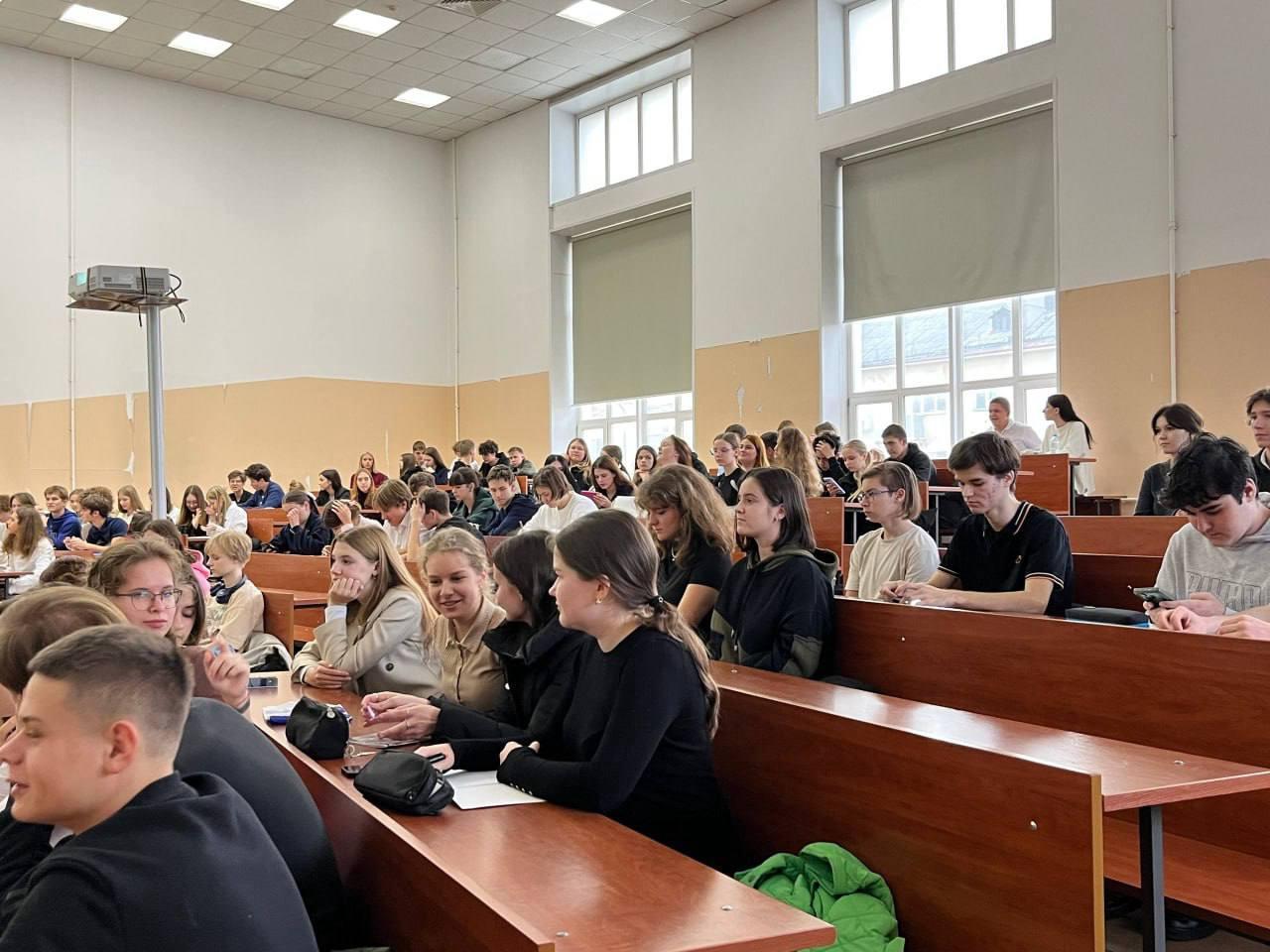
Throwing pianos out of windows, shouting curses in the street to relieve stress, organizing cat concerts and nude runs—these are student traditions from different countries and eras, passed down from generation to generation and devoutly observed in some cases for centuries. Ryazan students have their own rituals and traditions too. A YA62.RU correspondent investigates what they are.
How about in Moscow?
Historically, Russian student traditions originated in Moscow along with the student community itself, and they were, to put it mildly, far from notions of decent behavior. On January 25, 1755 (New Style), on the Day of the Holy Martyr Tatyana, Chamberlain Ivan Shuvalov submitted a petition to Empress Elizabeth Petrovna for the establishment of Moscow University. She approved it.
At first, there were few students, but by the 19th century, they gained increasing influence in society. And during the Great Reforms of Alexander II, students received unprecedented freedom, the election of rectors and professors, and autonomy in resolving internal issues. In these years, students let loose completely, including in matters of tradition. The main tradition of Russian students is the wide celebration of Tatyana«s Day (Russian Students» Day).
Of course, it all began sedately and decorously, with a service in the house church of Saint Tatyana. But then the revelry began, with both students and professors taking part. There were also quite original amusements, such as cat concerts. At the corner of Bolshaya Dmitrovka and Strastnoy Boulevard, where the university printing house was located, a crowd of students would gather and start meowing long and drawn-out. It is said that after the concert, some would break windows in the building. Fortunately, on this day, all mischief was forgiven students, even such, to put it mildly, not harmless ones.
And what about in Ryazan? In Ryazan, the student community flourished already in Soviet times, so many traditions were adopted from Muscovites. Fortunately, they didn«t meow in the street, but Tatyana»s Day was celebrated in a similar way. At RSU, for example, it still begins with a traditional service in honor of Saint Tatyana. But Ryazan residents also have their own authentic rituals that no one else can boast of.
Ryazan State University named after Yesenin—historical balls, charity fairs, and student superstitions
It«s difficult to talk about Ryazan State University named after Yesenin because there are many faculties and all have different traditions. I studied in the late 2000s in the political science department of the law faculty, and back then the unofficial Political Scientist»s Day was widely celebrated. It was celebrated for some reason on September 13, and in those years, graduates from previous years would come to the gathering. A huge crowd of political scientists would gather in the Lower City Garden, which in those years looked simpler and was colloquially called simply—the Drunk Park. The event«s purpose justified its name: mostly everyone socialized, got acquainted, and drank weak alcoholic beverages. The tradition died—now, probably, no one even remembers Political Scientist»s Day.
Also at RSU, Tatyana«s Day has always been traditionally celebrated merrily and heartily. Events took place and still take place near the main building—competitions, a fair, tea from a samovar. In my time, they even served mead to students there. I remember that after one such holiday, I returned to the dorm in Kalnoye and found a string of bagels around my neck in front of the mirror. How it got there, I still can»t recall.
It is also customary at RSU to go to the «Gorizont» and «Polyanka» camps, bake pancakes for Maslenitsa near the main building, organize historical balls in December, choose Mr. and Miss RSU annually, and arrange «Secret Santa» before New Year, when gifts are given anonymously.
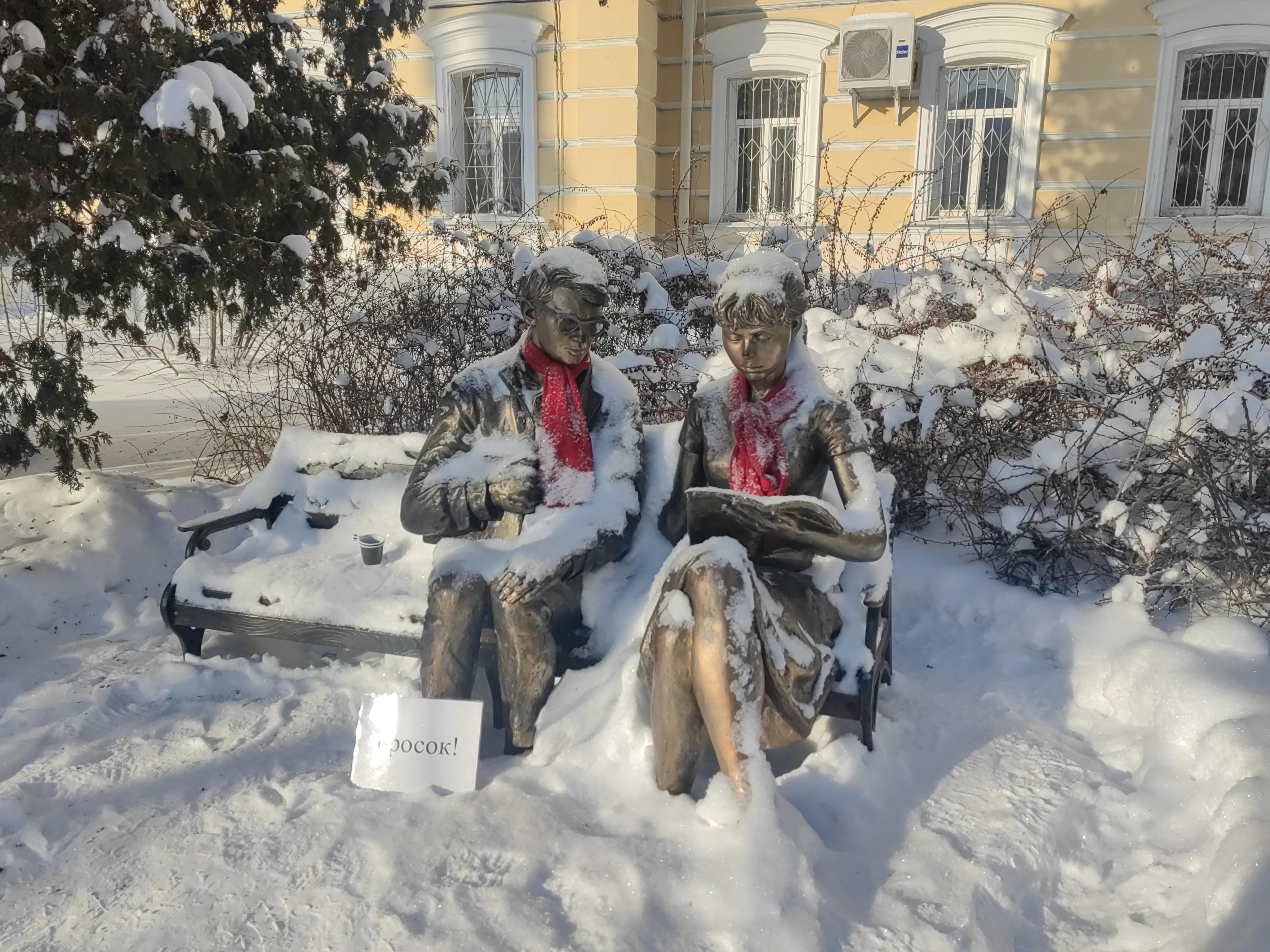
There are also student omens. In RSU dorms before exams, they always tried to catch «freebies» (khlyava). You had to loudly shout from the balcony at night: «Khlyava, be caught!» A good sign for historians was to unearth pottery on archaeological practice, and before exams, you need to touch the gradebook in the hands of Shurik (there is a sculpture of Shurik and Lida in the main building of RSU). RSU also has traditional conferences that are many years old. For example, the Power Point Party conference, where historical facts must be presented in an unconventional way with jokes in the style of the era.
Ryazan Medical University: a history of selfless volunteering and Greek mysteries
The traditions of medical university students were told to me by the head of the department of specialized hygienic disciplines of Ryazan State Medical University, Valery Kiryushin.
«At the turn of the 1970s, our university conducted student initiation very solemnly. It took place at the Palace of Trade Unions in the style of a Greek mystery, with goddesses of medicine—goddesses of therapeutic medicine, preventive medicine, pharmaceutical medicine. Their costumes expressed the features of the profession,» recalls Valery Anatolyevich.
In 1950, by government decision, the Moscow Medical Institute was transferred to Ryazan and renamed the Ryazan Medical Institute named after Academician I.P. Pavlov. The students brought the song from Moscow but adapted it to the Ryazan style:
The ribbons of Ryazan streets recede into the distance,
And the heart beats so excitedly.
Today we, today we are still students,
But tomorrow—we are real doctors!
In his student years, Valery Anatolyevich actively participated in construction brigades. And he believes this tradition should be revived and supported.
«This year, about a hundred of our students went to various bases in Sochi, Arkhangelsk, Kasimov, Shilovo. Second- and third-year students can already work as medical orderlies or paramedics. And these traditions of selfless labor, volunteering, the ability to help people without any benefit are inherent in many young people today. Our student community is on the rise,» he is sure.
Traditions of brotherhood in Ryazan Airborne Forces
Regional Duma deputy Sergei Lukyanov graduated from the Ryazan Airborne Forces School in 1992. But he still maintains the traditions of paratroopers—organizes meetings, celebrates all holidays.
«We gather for alumni meetings once every five years. Some have 5 years after graduation, some 10, some 20, 30, 40. Some are already generals, colonels, some majors, each has their own service, and our graduates live all over the country. And at these meetings, we all line up just the same, march, sing songs. It doesn»t matter whose graduation it is. And what unites us? It is, of course, the special spirit of the airborne troops, the element of the sky. We all used to enroll after watching the Soviet film «In the Zone of Special Attention.» And after the film was released, there was a queue for enrollment. When I enrolled, there were 29 people for one spot. Well, and of course, the Airborne Forces have always been considered the elite,« says Lukyanov.
In Ryazan, the main songs of the Airborne Forces are «Ryazan—Capital of the Airborne Forces,» «Red Banner Airborne,» and each course has its own. «We, for example, also sing »Mother-in-Law«: »Listen, mother-in-law, dear friend, help.« And now they also stand in formation and on the parade ground sing Shaman»s song «We Will Rise,»« says Sergei Lukyanov.
In the Airborne Forces, there are no superstitions or omens, but there is strict discipline. «I have almost 9,000 parachute jumps during my service. But for someone to meditate before a jump, I haven»t noticed anyone doing that. Everyone knows that you need to pack parachutes quality. Be confident in your technique. When you are confident in your technique, everything is always fine. Now we read the news when they tangled each other«s lines, and we can»t imagine how that is possible, in our time no one would even think of such a thing. It is a disgrace for the Airborne Forces,« says Lukyanov.
Among mandatory traditions—celebrating holidays significant for the airborne troops. This is primarily Margelov«s birthday on December 27, August 2, and February 23. On these days, it is customary to commemorate fallen comrades, bring flowers to their graves, lay flowers at Margelov»s monument.
«Well, and naturally, on holidays we can sit down for a heartfelt chat. We have a common alumni chat, we communicate daily. There are people from Vladivostok, from Moscow. And if someone has grief, someone was buried, we help. We also arrange meetings there. This year, I had 50 people at my dacha. And we brought our teachers, who are already 80 years old, from the school by car, at the table outside we sang military and airborne songs, danced, grilled shashlik. Many came with families, with wives. We discuss all topics at such meetings: what is happening in the world, how the modernization of the Airborne Forces is going,» says the deputy.
Other military schools also had their own traditions. For example, signalmen would bury a mosquito—they made a dummy and held a funeral ceremony at night. But Sergei Lukyanov does not know the meaning of the tradition. «We always feuded with each other, fought between schools,» he explains.
Also, among Ryazan cadets, it was honorable to remain serving in Ryazan, many tried to settle here, put down roots, marry local girls. «Our Ryazan 137th regiment was always considered privileged, it was called the »mother-in-law« regiment, everyone wanted to stay here,» says Lukyanov.
First things first, airplanes
For cadets of the Sasovo Flight School, the main tradition is related to flights.
«We toss a cadet into the air after he completes his first solo flight. The first solo flight—it is, in large part, also the last, because cadets don»t fly alone afterwards. But it is a significant event in every pilot«s life: if a cadet is allowed to make his first solo flight, it means he is worth something,» says pilot-instructor and former cadet of the Sasovo Flight School Ivan Kalamarchuk.
Many pilots have their personal omens. «When I was a flight attendant, we had a tradition: before boarding the plane, to knock on it, as if to greet it, because the technology is complex and you need to be friends with it, treat it with love. Well, and in speech, some professionalisms are present: for example, we pronounce »landing gear« with stress on the last syllable, say not »last« but »extreme«,» explains Ivan.
There is no tradition of gathering as a graduating class, like the paratroopers, among pilots. There are those who come for the school«s anniversary, but it is not a mass phenomenon.
Popov has risen! Truly Popov.
If I were compiling a rating of typical student traditions, I would put Ryazan Radio University with its «cross procession» in first place due to the tradition«s vitality, mass scale, and authenticity—I have never seen anything like it anywhere else. »Radik« (Radio University students) would be envied by medieval students with their debauchery and masquerades, and Moscow revelers who frightened prudent young ladies of their time with wild antics.
On the night of May 7—the day of the invention of radio by Alexander Popov—the spacious courtyard of the Radio University fills with people. Here are experienced, gray-haired graduates, and callow freshmen. People, people, people, and not a single free spot. Everyone comes not just like that, but well-prepared: many carry flags, some state flags, some pirate or even invented ones, many dress up, some as robots with glowing light bulbs, some simply draped with New Year«s garlands. In people»s hands are posters and banners with funny inscriptions in the spirit of «A five-year plan in 55 years.»
As in the heyday of Moscow student life, there is no subordination on this day. Teachers participate in the celebration together with students, and grandfather-scientists behave carefree like children. This whole mass of people goes with flags, candles, and posters in a «radio procession» around Popov. And afterwards, they disperse into dark corners of the Central Park of Culture and Rest in separate groups to revel until morning. They say that in the past, old radio equipment was thrown out of university windows—allegedly for the idea of renewal and progress, because new must replace the old that has served its purpose. But, most likely, just for mischief.
Local historian and great patriot of Gorroshchi Igor Kanaev did not study at «Radik,» but absorbed the tradition virtually with his mother«s milk, as she worked there in the 70s. He does not know where the tradition originates, but recalls that on Radio Day, masses of people always came.
«Crowds gathered up to several thousand people. All restaurants, cafes, canteens were occupied by »Radiks« from Prioksky to, say, Pesochnya. Can you imagine how great it was? This is, perhaps, the most united university in the whole city, the most romantically inclined. »Radiks« are also very witty people, as a rule, yes. If other universities are so strict and proper, then »Radiks« humor always sparkled and darted. But, most importantly, the humor was always kind,» says Kanaev.
Maybe not everyone in Ryazan has been to the Radio Day celebration, but certainly every Ryazan resident knows what to answer when told: «Popov has risen.» The correct answer is—«Truly Popov.» Also, modern Radio University students have their own unofficial song—the hooligan «Syphilitic Girl» by the Ryazhsk group «Diversion.» It used to be sung everywhere in Ryazan Oblast—in parks, on commuter trains, in dorms. It was popular in the 2000s, and I thought no one knows it now, but not so. My colleague Masha Borzeva, who recently graduated from «Radik,» says about it: «My song.» «We definitely all sang it and know it, we were told about it already in the first year,» she says.