From Matrossky Club to Basement: PORTart Gallery's Plight
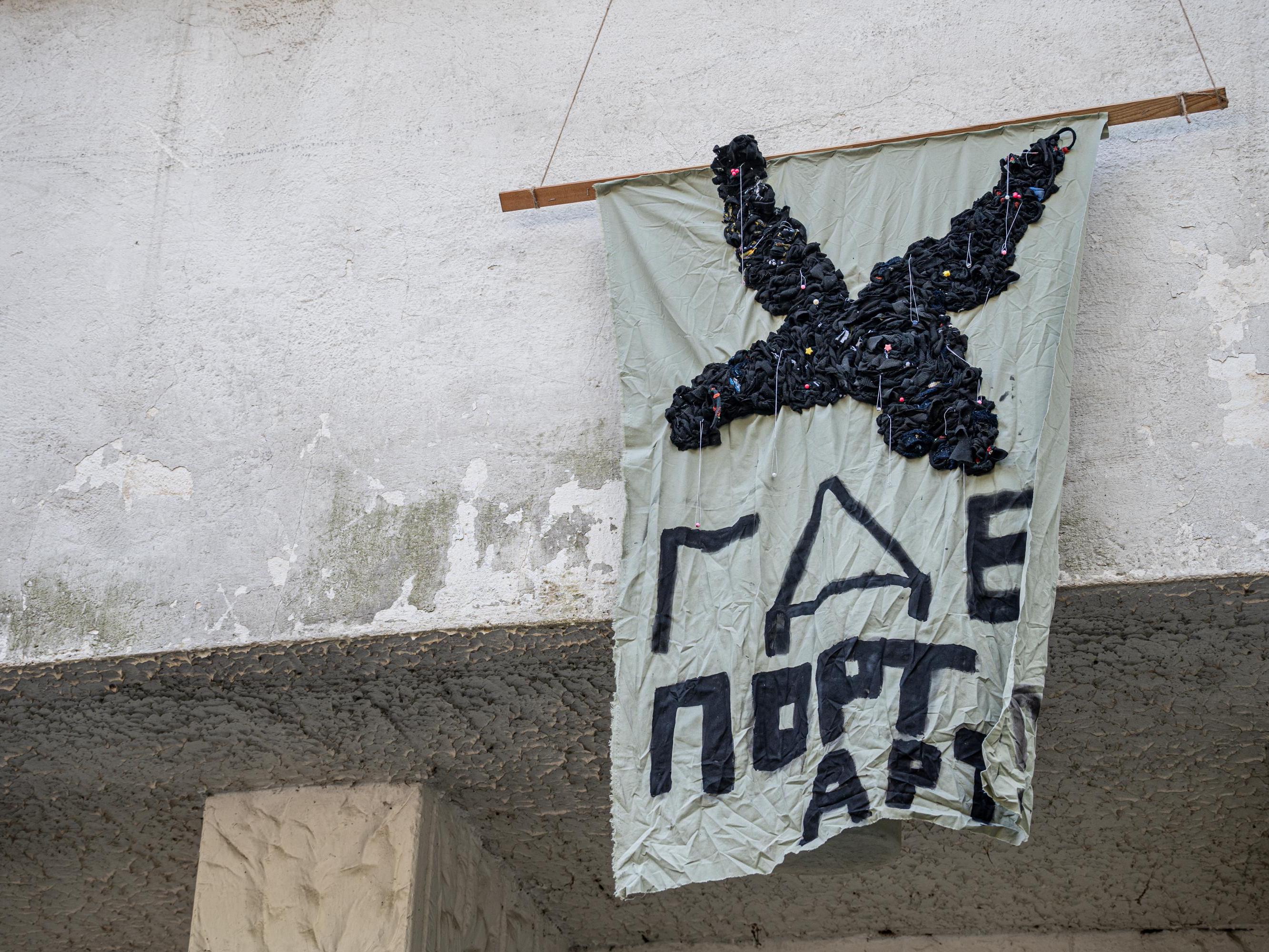

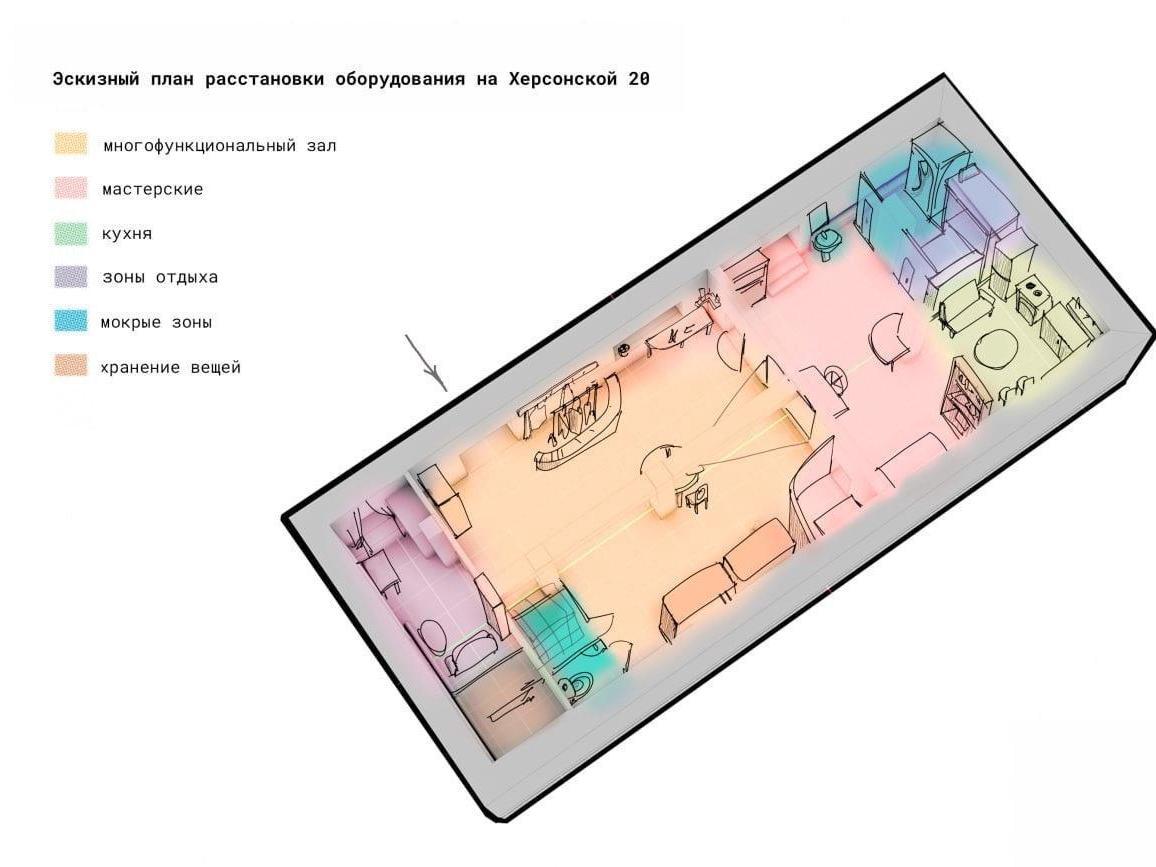
More than a year has passed since artists from Vladivostok, evicted from the Matrossky Club, were offered a move to a semi-basement in one of the houses on Churkin. This refers to the youth gallery «PORTart»: in 2024, when the old building began to be remodeled into a creative cluster, it turned out that there was no space for the creators in the new area. They were allocated a basement floor of a residential building built in 1961 at 20 Khersonskaya Street, even though initially there were no plans to offer anything.
The Matrossky Club building appeared in 1947. Its total area is more than 4,000 square meters. It is located on the Tsesarevich Embankment. It housed several art studios, an art gallery, and various dance studios. Once, the club served as Vladivostok«s main concert venue. In 2024, the city administration found a contractor for the building»s restoration for 818 million rubles (about $9.6 million at current rates). All organizations that worked there were evicted, including the artists of the «PORTart» gallery. They opposed the reconstruction, believing the building was to be turned into a revenue-generating property.
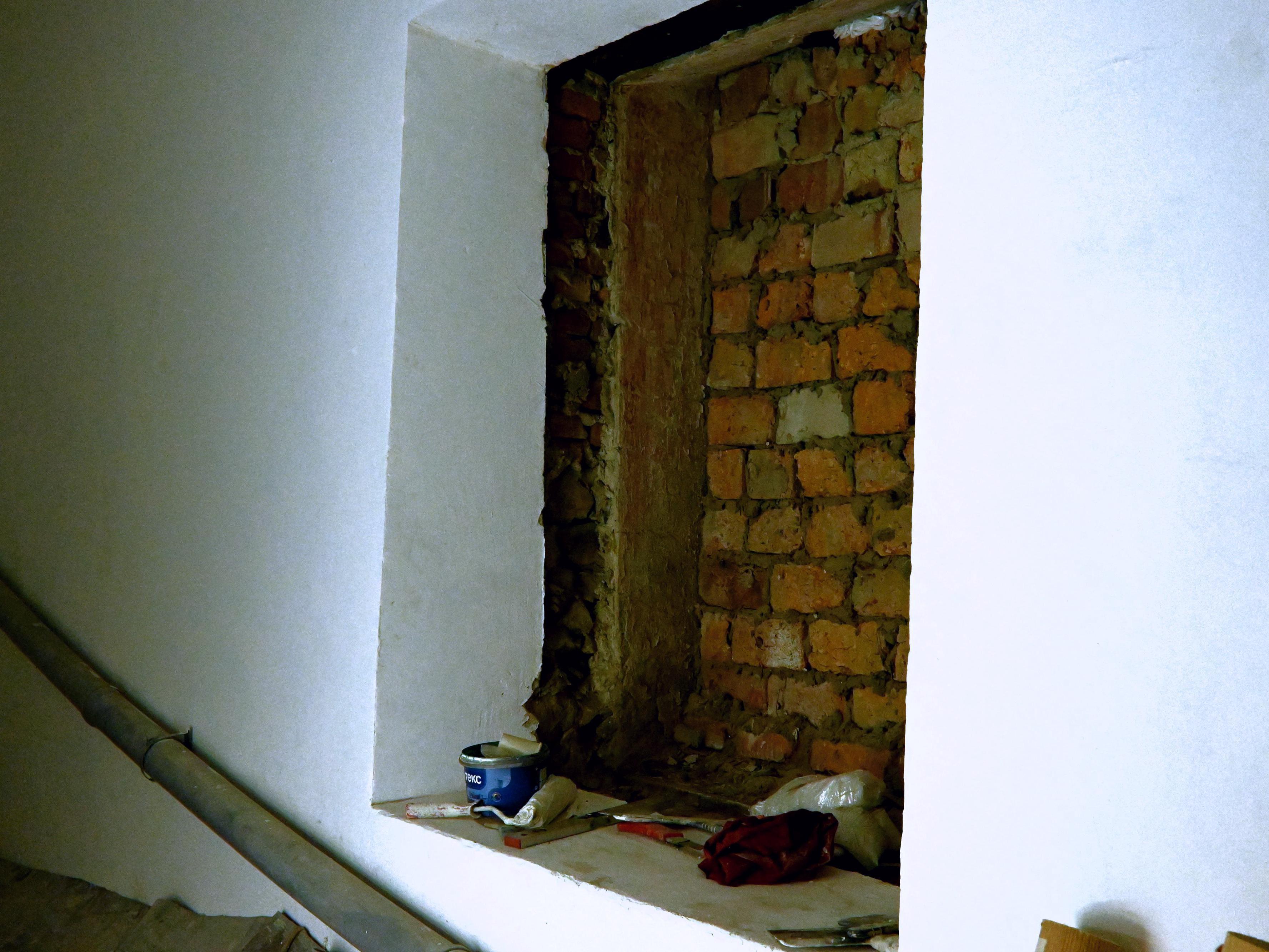
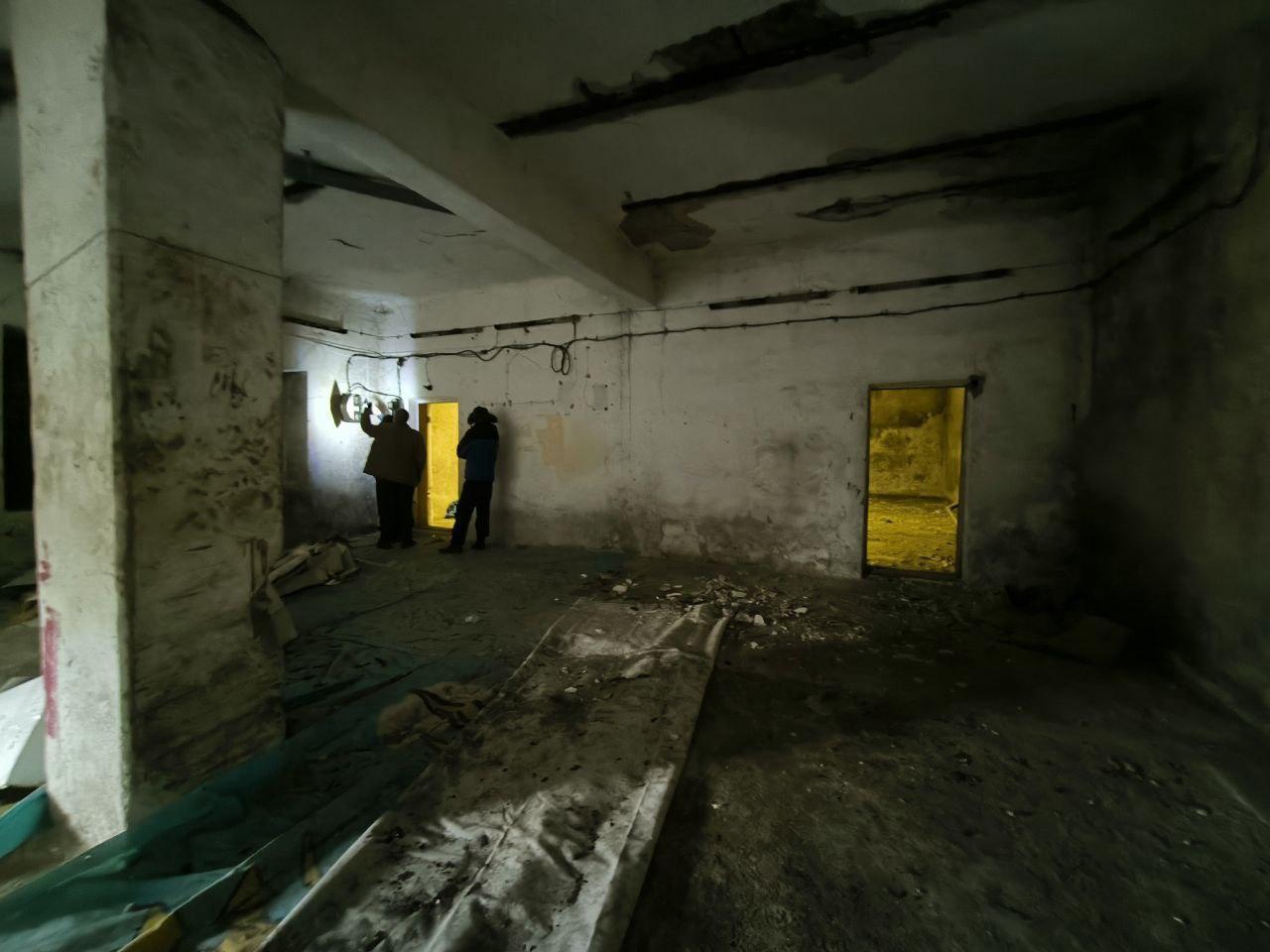
When the gallery director and chairman of the Creative Union of Artists of Russia, Gorazda Lunenkova, was given the new space, it turned out that there was no light, heating, or water supply — no basic human amenities. The walls were covered with mold, and the air was damp. The windows were bricked up, and the door resembled a garage door. But apparently, the authorities had no other options, and they had to move out.
Gorazda Lunenkova is among the top 100 creative leaders of the Far East; she is also a well-known art historian in Vladivostok and a member of the Association of Art Historians (AIS).
In the former Matrossky Club building, things were also far from perfect. When the city handed over the second floor in 2019 to the Primorsky regional branch of the Creative Union of Artists of Russia (TSKhR), the walls, floor, ceiling, and bathroom were all dilapidated and extremely neglected, but at least there was heat and water. The Matrossky Square was also a sorry sight.
The team did their own repairs in the space, equipped it for exhibitions and concerts, and set up workstations for artists. The only problem was the old utilities, which the gallery could not replace on its own.
The new place inside was more like a tomb: black walls, water on the floor, neighbors« sewer pipes on the ceiling — you could tell when they were home by the noise. Moreover, there is not only no square but also no paved road: the asphalt ends about 300–400 meters before the house at 20 Khersonskaya Street.
Now it is possible to stay here without health risks, though over the summer mold completely «ate» two sofas and many small items. The artists even managed to unblock one window and let in sunlight. Creating in the dark under lamps and flashlights is not the best idea.
In spring 2025, «PORTart» held a charity online auction where artists« works were offered for a symbolic 1 ruble, and people donated any convenient amount for repairs to the Khersonskaya space in exchange for a chosen painting. The auction raised about 180,000 rubles (about $2,118), and another 230,000 rubles (about $2,706) came in as simple donations — with this money, some important steps were taken.
«We cleaned and painted a bit, installed one large window, and bought two others to install later. We purchased dehumidifiers, which are necessary here, and some other things. When it gets warmer, we will continue working and use the remaining auction funds to buy more building materials,» said art historian Gorazda Lunenkova.
The «PORTart» gallery settled into the Matrossky Club five years ago as a member of the Union of Artists of Russia. There they held exhibitions, master classes, performances, raves, plays, creative meetings, holidays, film screenings, and live music concerts, and now they believe they can do the same in the new place — all without any funding from the authorities.
At Khersonskaya, they not only had to clean the walls but also now need to figure out what to do about the wiring and how to bring water into the space, which artists need. Comfortable restrooms are out of the question. For now, everyone in the nearby houses, not just the gallery, uses a communal outdoor toilet. In such conditions, doing anything in winter is almost impossible: in just one hour, our correspondent«s feet froze in winter boots.
Lunenkova has noted several times that the Matrossky Club building itself, before the idea of its reconstruction, was sturdy and there was no point in demolishing it completely. This especially applies to the hangar — a Japanese legacy of Vladivostok. She believes they should have taken what they had, fixed it, and turned history into an artistic asset.
«It could have stood for another 100 years, its metal structure was so high quality; all it needed was a roof patch-up and renovation of the legendary concert hall inside — a part of the city«s creative history,» she added.
The hangar, which was demolished first as soon as reconstruction began, was a trophy Japanese aviation hangar from World War II. This unique structure with a metal frame housed a wooden stage and auditorium, was part of the club, and previously hosted events.
Now there is nowhere to create and be oneself on Khersonskaya. The artists have managed to create a space that can be occupied, but it is hardly conducive to creativity. Heating is by stove, but due to a blocked chimney, the stove cannot be used: smoke goes into the neighbors« apartments. The bricked-up windows let in no light, so one room is lit by a lamp, while another has no light at all — that part is just storage.
«I believe it is very important for Vladivostok to develop a creative economy. For this, the city and regional government need to understand what it is and what needs to be done to make it happen.»
«The activities of our youth gallery have shown that the city has great youth creative potential, but it needs a space where one can express oneself and be oneself: a «PORTart» is needed, as are personal art workshops of the TSKhR,» the woman shared.
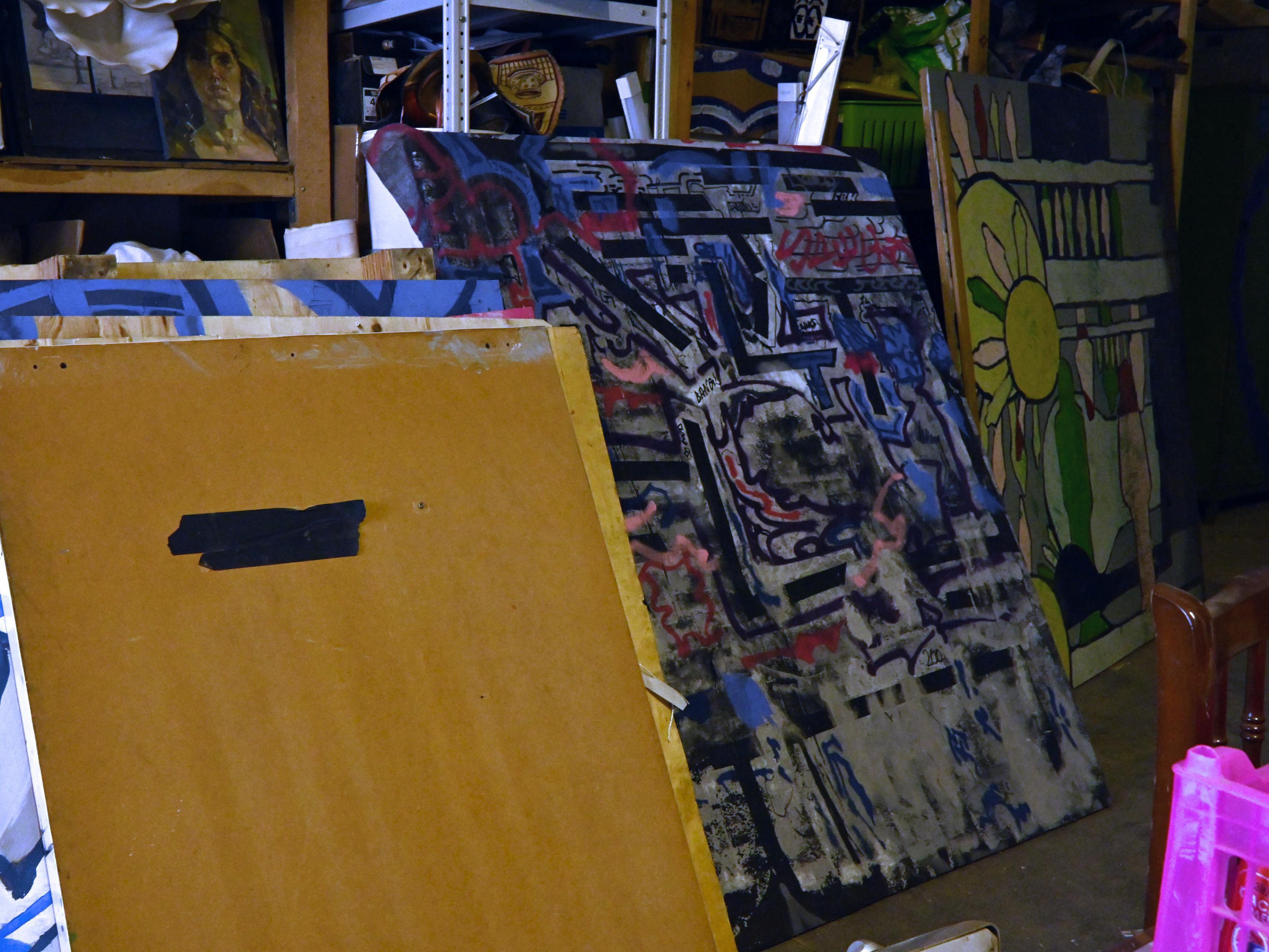
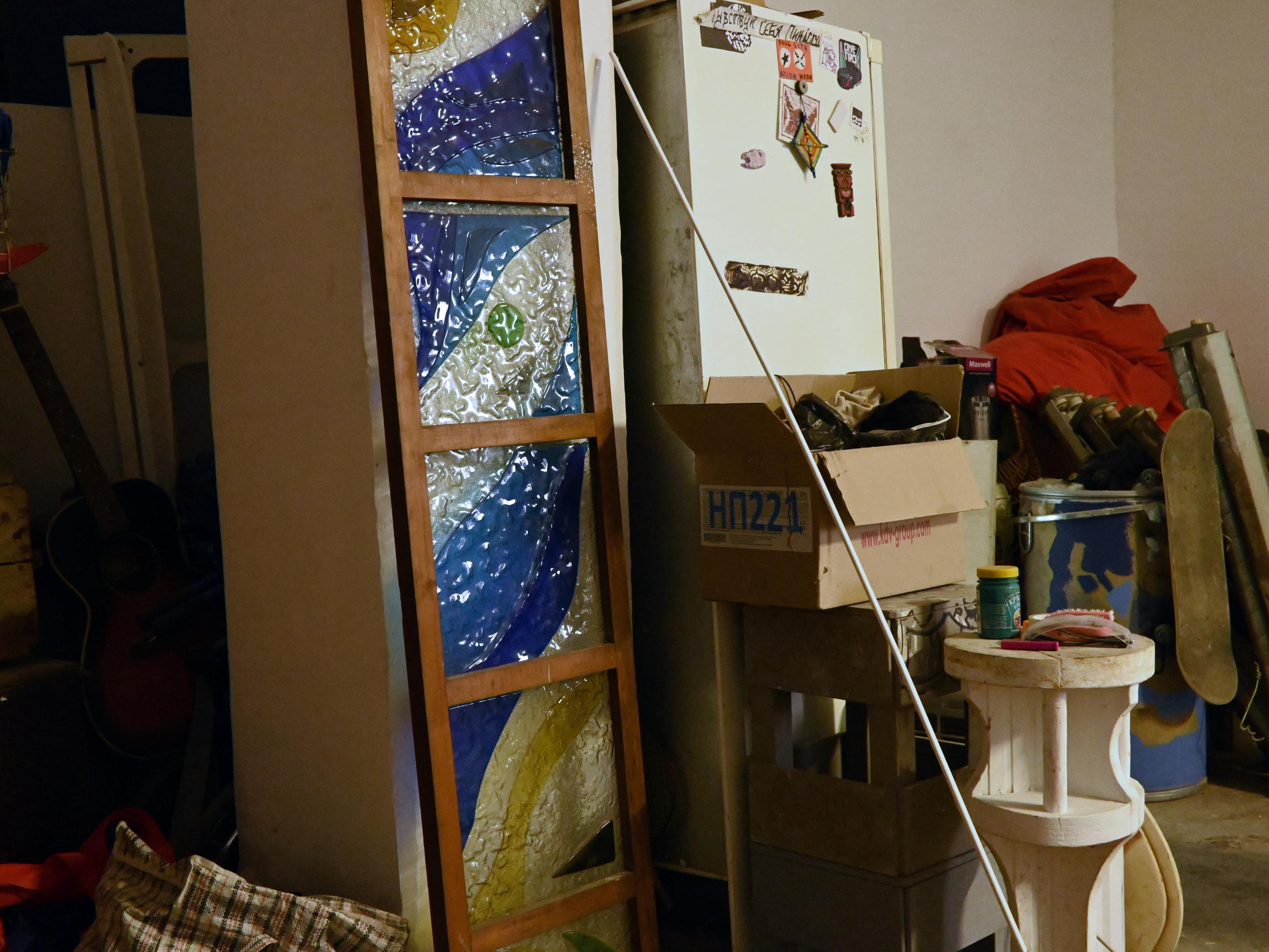
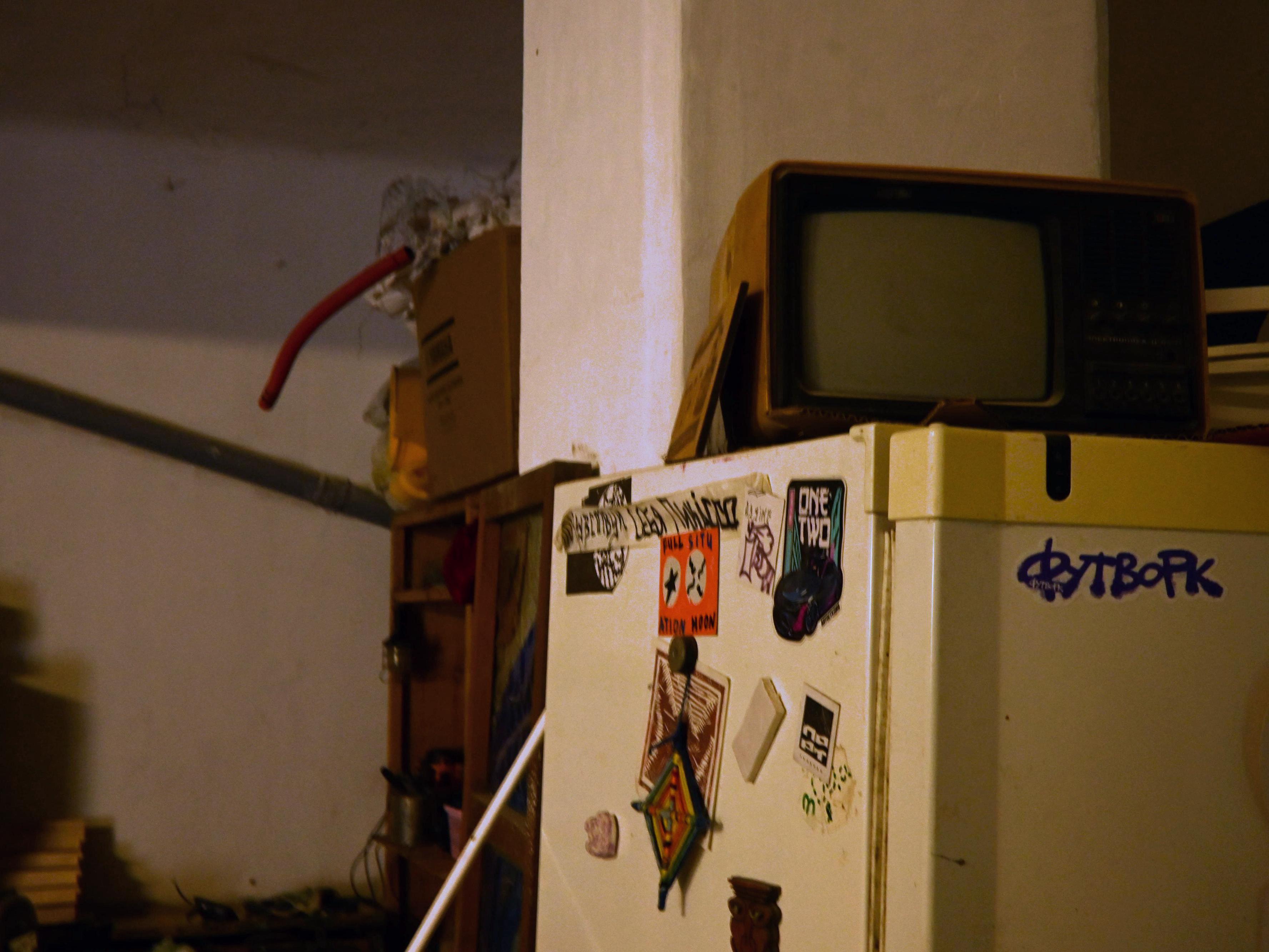
The question lingers: is this all the city could offer? Now the space on Khersonskaya is somewhat cozy: the bare concrete is filled with shelves of paint, paintings, works, dolls, and many other things. You want to examine the items, though they are far from an exhibition layout. According to Lunenkova, the association has over 50 members who need art workshops, but they have nowhere to settle.
«We moved here and discovered that there are no cultural or creative facilities in the Khersonskaya area. There are no children«s classes, poetry evenings, film screenings, or other events. Local residents are all for having an art workshop in the area. We have the potential to implement the project. If the city helps us arrange everything necessary, that would be wonderful,» noted Gorazda Lunenkova.
Currently, the development of a creative economy is one of the country«s key directions, as mandated by President Vladimir Putin. But few understand how to implement it in a way that benefits the economy. Lunenkova emphasizes that it is not enough to create an ordinary space with food and sales offices.
«From my observations, not many people understand what a creative economy is and what the sought-after creative product is, and how it is created. For any understanding, it is important to refer to the experience of those who have already achieved what you are trying to comprehend. In our case, that is Europe, the USA, and modern China. What is most important in this experience, besides money? It is understanding!» the interlocutor explained.
She cited the example of European countries, where there are grants or scholarships for 1–3 years, and the creator receives money monthly but is not obliged to do anything in return.
«That is, you can create or not. But the trick is that if he is a true creator, he cannot help but create, and having the opportunity not to think about material things, he will certainly create something immaterial — that very creative product that did not exist before,» added Gorazda Petrovna.
According to Gorazda Lunenkova, who is among the top 100 creative leaders of the Far East, the level of creative potential in Vladivostok and the Primorsky Krai overall is high, but it is both underestimated and unknown how to use effectively. The authorities do not understand how artists can contribute to economic development, since they pay minimal taxes.
«To create a work just like that, you need free time and a place to create. Unfortunately, this is not only not realized, but even the opposite: technical specifications for any creative activity are formed solely as imitation of others« examples. For instance, the idea of making a tiger from scrap metal was wonderful, but the figure was placed referencing a European artist, and it turned out worse than his — why?» the woman noted.
She believes that officials do not see the connection between creativity and economic benefits; they do not understand that the main value is the idea born by an artist, which is then used by other industries: fashion, design, cinema, music. This misunderstanding leads to the state not only failing to build art workshops but also repurposing those that were created in Soviet times.
«An example of such misunderstanding is the reconstruction of the Matrossky Club. When asked who the architect of the presented creative cluster building based on the Matrossky Club is, neither the regional economy minister nor the representative of the Regional Expert Group from the Agency for Strategic Initiatives (ASI) could answer. Why? Because it is not obvious to them that the most important thing for creating a creative product is who creates it, and that «who» is the most important actor in the creative economy.»
«After all, if we announce the creation of something creative, it is logical to expect that the very appearance of the creative cluster will inspire admiration for its architectural solutions. And this is possible only if there is an author — the one who created the work of architectural art,» concluded the art historian.
In the authorities« new project — the Center for Creative Industries — the collective of artists is not seen by the authorities; they have never officially mentioned it. The fact is that the restored building is supposed to house small spaces that will be leased out. The director of the «PORTart» gallery said back in 2024 that they had already proposed their concept — a space where creative people could work in different directions. But the expert group did not take their opinion into account.
«The plan is currently built on a very conditional scheme without specific room specializations. Also concerning is the financial model of the new Matrossky Club — it is rental of spaces. This approach does not align with the main task of the creative economy: to identify, package, present, and earn income from a creative product to be proud of,» Lunenkova noted in 2024.
Currently, the reconstruction of the Matrossky Club is frozen; the Primorsky prosecutor«s office obtained a contract termination through court. The reason was an inspection by the Federal Antimonopoly Service (FAS) following a complaint from a local entrepreneur. The result showed that the contractor — Amkon-DV LLC — did not have sufficient experience to perform such work, which was a mandatory condition.
According to Kontur.Fokus, Amkon-DV LLC was registered in Vladivostok in 2015 and founded by Artyom Milyutin. He was previously the founder and director of the protective clothing manufacturer Amurteks and the travel agency Sante Group. Both companies operated in Khabarovsk and were liquidated in 2015 and 2018, respectively. The main activity of Amkon-DV is construction; its largest contract was for 9 million rubles (about $105,900) for eliminating the consequences of a domestic gas explosion in a residential building in the village of Voznesenka, Khorolsky District.
Meanwhile, the paintings, works, materials, including paints and canvases of the «PORTart» artists, are stored on Khersonskaya. The team does what they can to create comfort in the cold gray basement, despite its high ceilings. It is gratifying that they have found common ground with the neighbors; locals support the group and always come to talk if the gallery needs to coordinate any repair work.
A new auction to find a contractor to continue the reconstruction of the Matrossky Club will be announced within the year, likely in its first half. The project and work plan will remain the same — to create a place that unites several directions:
Film and video production;
Music and sound design;
Art industry;
Museums and galleries;
Education in creative industries;
IT and GameDev;
Fashion;
Architecture and urban planning;
Gastronomy.
According to authorities, the Center for Creative Industries aims to train personnel in creative professions, establish studios, and help local companies expand beyond Primorye. Little has been said about other directions. Gastronomy holds a special place. Judging by the project, it will be a food court with the best dishes of the region. A detailed plan and references for the future Matrossky Club can be seen via the link.
About what the building was like and who worked there was told in a short article, and all news on this topic can be read in a special section.