Dolgorukov Princes' Siberian Exile

Today we know Berezovo as a quiet village in the north of Yugra. But 300 years ago, by the will of Peter I, these lands became a prison for many noblemen. One of the first prisoners of the Berezovo stockade was His Serene Highness Prince Alexander Menshikov. He and his eldest daughter Maria did not survive the exile. The younger children, Alexander and Alexandra, were pardoned by Anna Ioannovna in 1731 and returned to court with their former titles.
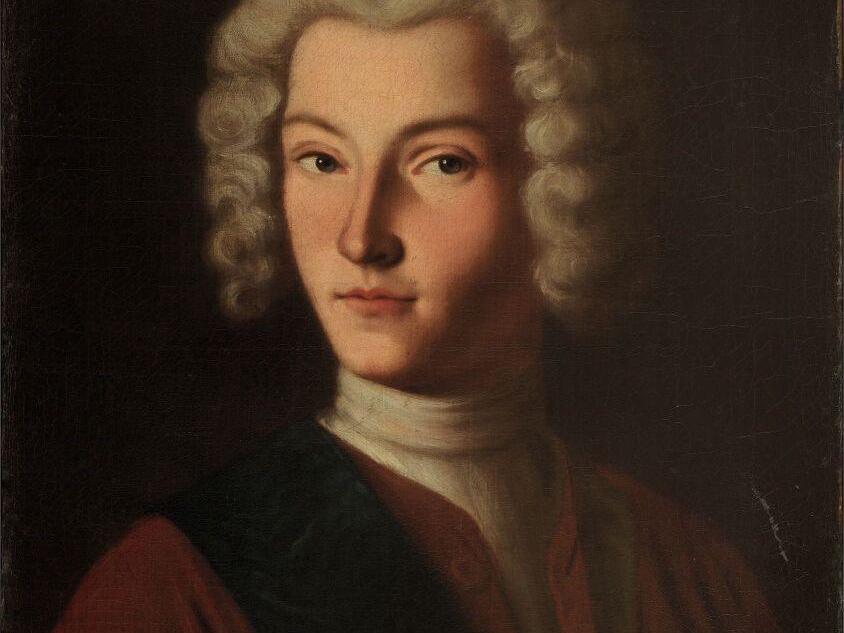
The same Anna Ioannovna sent a new family of prisoners to Berezovo — the Dolgorukov princes. By a twist of fate, the people who had contributed immensely to the fall of Menshikov soon followed him.
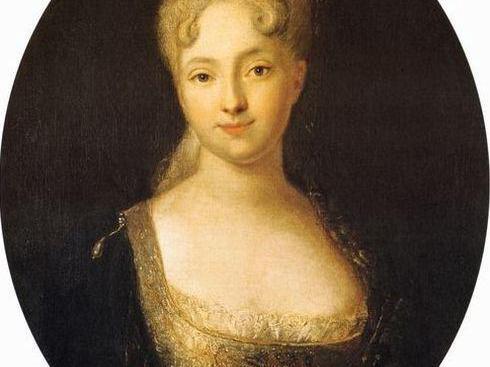
Struggle for the Heart of the Juvenile Peter II and the Fall of the Dolgorukovs
After the exile of Menshikov, Prince Alexey Grigorievich Dolgorukov — Ober-Hofmeister and member of the Supreme Privy Council — tried to follow the same path. Menshikov, to maintain power, had betrothed his eldest daughter Maria to the young Peter II. When the bride was sent along with her father to Siberia, Dolgorukov hastened to replace her with one of his own daughters. The choice fell on the 18-year-old beauty Ekaterina. The maid of honor, in fact, harbored a passionate and mutual love for Count Milesimo of the House of Del Carretto, but she did not dare to defy her father. The 14-year-old emperor, however, preferred to spend time with his cheerful 19-year-old aunt Elizabeth Petrovna. Nevertheless, in the autumn of 1729, Peter II and Ekaterina Dolgorukova were betrothed.
At the same time, the prince«s eldest son, Ivan Alexeyevich, was betrothed to «the wealthiest bride in Russia», Natalya Sheremeteva. Wags said the marriage was one of convenience. History, however, showed it to be a powerful true love — but more on that later.
The Dolgorukovs began preparing for two weddings. But the plans collapsed like a house of cards: on the night of 18–19 January 1730, the day of the scheduled wedding, the young emperor died of smallpox.
Without Peter II, whose trust the Dolgorukovs had ingratiated themselves into, the princely family quickly lost influence at court. A forged will, supposedly from Peter, bequeathing all power after his death to his bride Ekaterina, did not help them retain power. The princes« scheme did not pass the Supreme Privy Council. The grandees planned to give the throne to the Duchess of Courland, Anna Ioannovna, intending to make her a «decorative» tsarina.
That scheme came to nothing: Anna, upon coming to power, abolished the Supreme Privy Council and began to rule independently. And she did not forgive Alexey Dolgorukov for being the only member of the Privy Council who voted against her accession. Soon the Dolgorukovs were accused of appropriating valuables from the treasury, and then — of high treason.
Harsh Life in Siberia
First, the princes were exiled to their Penza estate, but halfway there they were turned back with orders to proceed to Siberia. Thus Alexey Grigorievich set off for Berezovo together with his wife, four sons, three daughters, and his son Ivan«s wife Natalya, daughter of Count Sheremetev. Despite everything, the latter had become Ivan Dolgorukov»s wife, even though after the young prince fell into disfavor, influential relatives had tried their utmost to dissuade Natalya from the marriage.
The princes were allowed to take two servants with them. The Dolgorukovs had to travel to Berezovo under the harshest conditions: sometimes by water on riverboats, sometimes on carts. For an entire month the exiles sailed from Tobolsk to Berezovo on a muddy, leaky flatboat. Their entire journey lasted six months.
The Dolgorukovs were transported under strict escort, which treated them harshly and arrogantly. It should be noted that, according to some accounts, the family did not even know where they were being taken. When they saw the place of their future exile — the same one that Menshikov had vacated for them — Natalya emotionally wrote in her personal diary:
«A small town situated on an island, surrounded by water; its inhabitants are the basest of people, they eat raw fish, ride dogs, wear deerskins: they strip the skin off without slitting the belly and put it on with the front legs as sleeves. The huts are of cedar, windows are of ice instead of glass. Winter lasts 10 months or 8, the frosts are unbearable, nothing grows, no bread, no fruit, not even cabbage...».
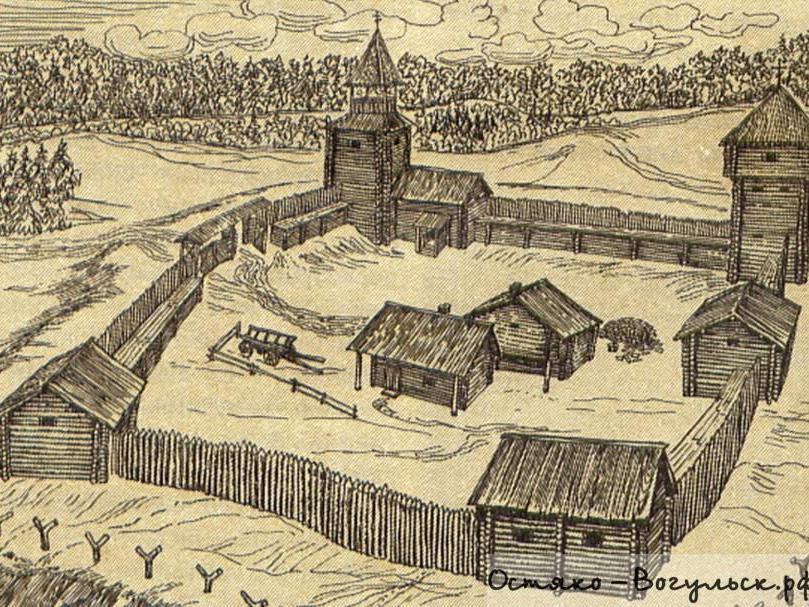
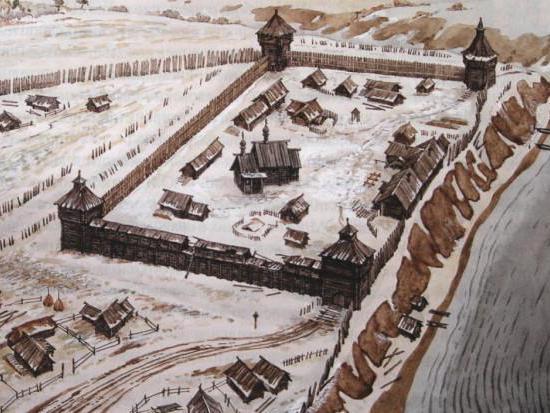
The family was housed in the wooden stockade where Menshikov had been held shortly before. Accustomed to luxury, the Dolgorukovs had to eke out a miserable existence, enduring hunger and the winter cold. They were under constant surveillance by soldiers, even in church.
There was not enough space, so the couple Ivan and Natalya were given a woodshed for living quarters, hastily equipped with two stoves. By a special decree of Anna Ioannovna, the exiles were forbidden to have paper and ink, to communicate with locals, or to leave the stockade — they could only go to church and only under escort.
In Berezovo, the Dolgorukovs were despondent. The men amused themselves by hunting ducks, geese, and swans that swam in the pond; the women passed the time drawing and embroidering icons.
Surveillance of the exiles was entrusted to Major Petrov, specially sent from Tobolsk, and the Berezovo voivode Bobrovsky. Unlike the strict escorts who had accompanied the family from the Urals, Petrov and Bobrovsky proved to be kind-hearted men. Moved by sympathy for the Dolgorukovs, they violated the empress«s decree by allowing them to receive guests, walk around town, and even visit local officials. Bobrovsky and his wife sent the exiled princes «various provisions» and gave them arctic fox and other furs.
How the Dolgorukovs Died
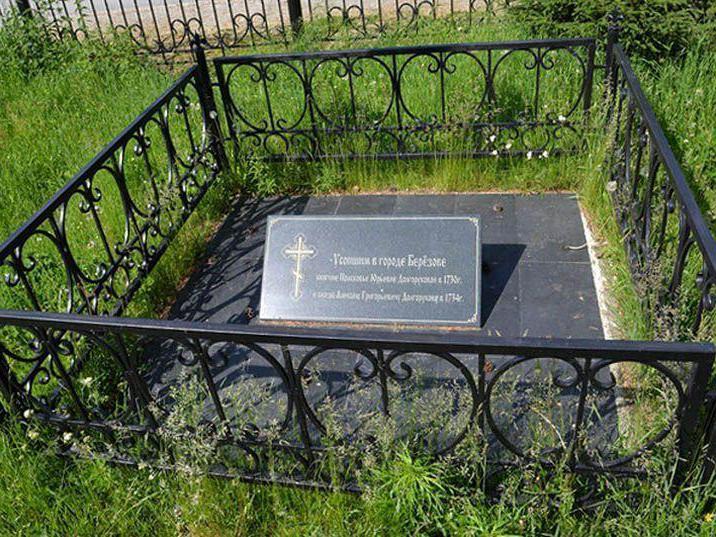
The first to die, just a few weeks into exile, was Princess Praskovya Yuryevna, wife of Alexey Dolgorukov. She had arrived in Siberia already very ill. Four years later, the prince himself passed away, crushed by years of misfortune and the severity of the Siberian climate. The children buried them near the Church of the Nativity, which legend says was built by Alexander Menshikov, and erected a wooden chapel over the graves. It burned down in 1764, and over time the location of the graves of both Menshikov and Dolgorukov was lost.
After the prince«s death, his children remained in exile. Ivan became the head of the family, but contemporaries described him as weak and greedy, with no authority among his siblings. Lamenting his lost wealth and titles, Ivan drowned his sorrows in alcohol. Even the entreaties of Natalya, who loved her husband deeply and had given up her high position and comfortable life for marriage to him, did not help. The woman herself spent the exile in prayer. Her solace came from two sons born in Berezovo.
Ekaterina Dolgorukova, the former bride of Peter II, grew close in Berezovo to officer Dmitry Ovtsyn. At the same time, Tobolsk clerk Osip Tishin, who often visited those parts, began to pay attention to the disgraced princess. According to rumors, he did so in a way that was highly insulting to her. When Ovtsyn learned of this, he beat Tishin.
The clerk harbored a grudge and, historians believe, became the author of a fateful denunciation of the Dolgorukovs sent to St. Petersburg. Finding a pretext was easy: Ivan liked to speak insolently about Empress Anna Ioannovna and her favorite Biron. After the denunciation, a secret investigation began, during which the lenient treatment of the exiles by Major Petrov and Voivode Bobrovsky also came to light.
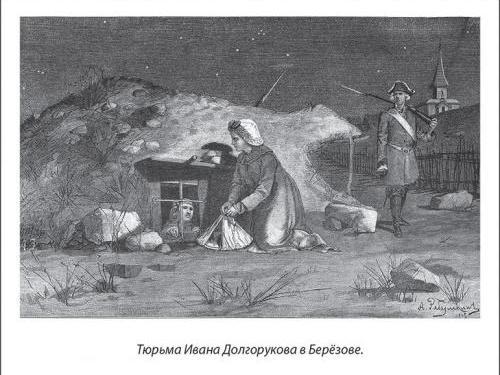
As punishment, Ivan Dolgorukov was separated from his family and put in a dugout, where he was meagerly fed. At night, his weeping wife secretly passed him food through a window.
In September 1738, a ship arrived in Berezovo. On board were put Prince Ivan Alexeyevich, Voivode Bobrovsky, Major Petrov, Lieutenant Ovtsyn, and several other residents. They were taken to Tobolsk, where they were interrogated and brutally tortured.
Prince Ivan Alexeyevich was so tormented that he fell into delirium. In his confused state, he told them about the forged will of Emperor Peter II. The prince was sentenced to death and broken on the wheel in Novgorod together with his uncles, Sergey and Ivan Grigorievich.
Dolgorukov«s brothers, Alexander and Nikolai, were flogged with a knout, had their tongues cut out, and were then sent to hard labor. The sisters were confined to various convents. Only the unfortunate wife of Ivan Dolgorukov, Natalya, remained in Berezovo with her two young sons. For a long time she knew nothing of her husband»s fate.
In early December 1741 (according to the New Style), Elizabeth Petrovna ascended the throne. Shortly thereafter, she issued a decree pardoning the remaining Dolgorukovs. The princesses were released from their monastic vows, and the brothers were brought back from exile.
Natalya received permission to return to Moscow with her two children born in exile. In 1758, the princess took monastic vows at the Florovsky Monastery in Kiev under the name Nektaria.
Earlier we told about the fall of Menshikov: how the gray eminence of the Russian Empire and friend of Peter I spent his last days in a Yugra village. The church built by the prince«s hands burned down, and his grave was washed away by the Severnaya Sosva River.