Why Nizhny Has So Many Pigeons and the Rules on Feeding Them
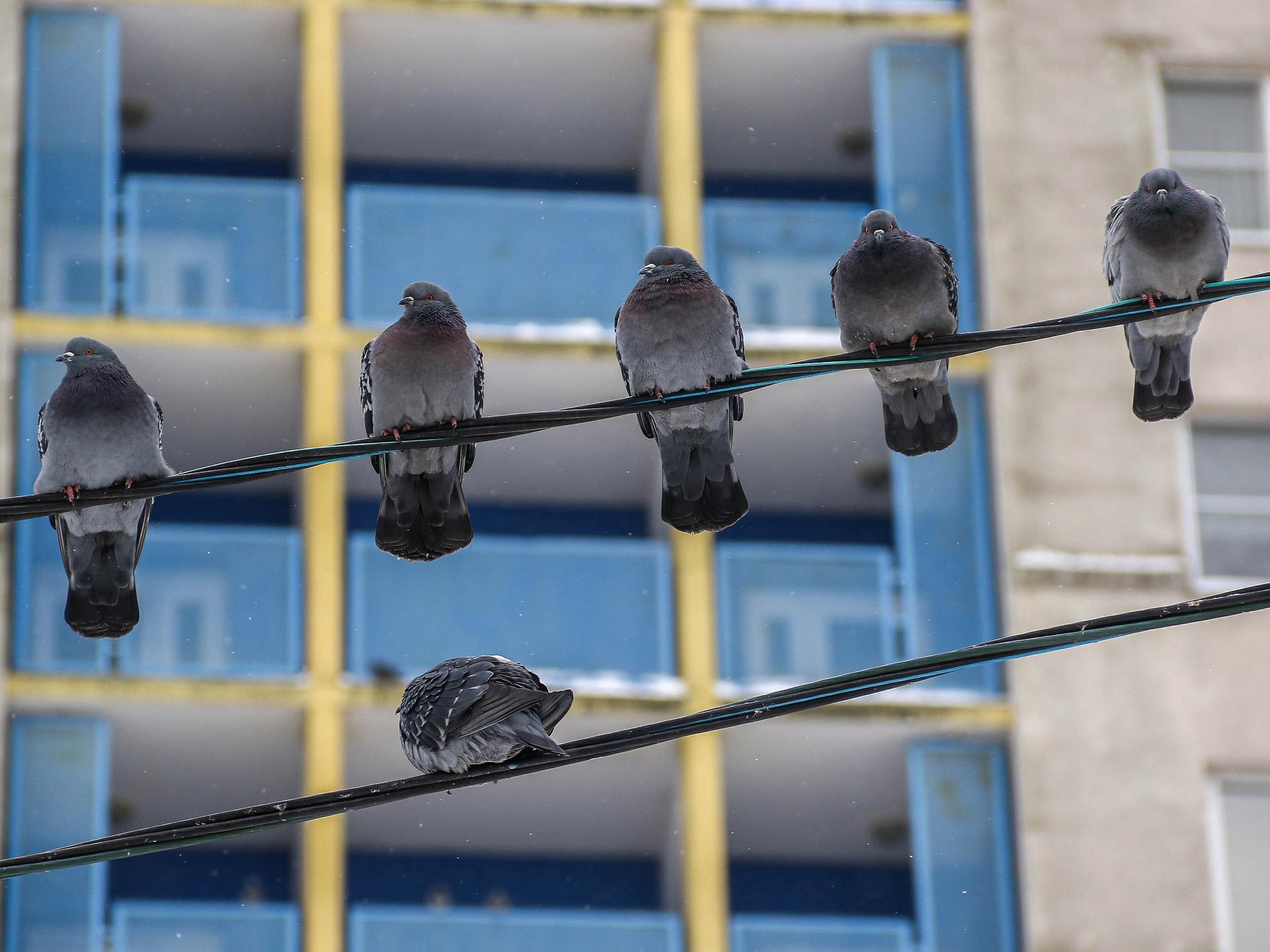

All conditions for pigeons exist in the urban environment, from nesting sites to abundant food.
Few birds evoke as many conflicting feelings in people as pigeons. Due to their abundance, they constantly become the subject of disputes and neighborly wars: while some scatter food for the feathered creatures, others get angry at the dirt they leave behind. There are plenty of pigeons in Nizhny Novgorod, and complaints about them periodically surface on social media.
To find out if it«s possible to hold accountable those who like to feed the birds in courtyards and public spaces, NN.RU contacted the city»s Department of Urban Amenities. We also spoke with Andrey Lebedinsky, Candidate of Biological Sciences and associate professor at the Department of Botany and Zoology of the Institute of Biology and Biomedicine of Lobachevsky State University of Nizhny Novgorod, about the history of pigeon distribution in our region and whether these birds are really as stupid as they«re commonly thought to be.
Where pigeons came from in our region
Before discussing the abilities and intelligence of pigeons, we need to figure out exactly who we«re talking about. After all, Columbidae is an entire family that includes several dozen species. Wood pigeons, European turtle doves, stock doves—they have lived in Russia for millennia, but intersect with humans much less often than urban birds do.
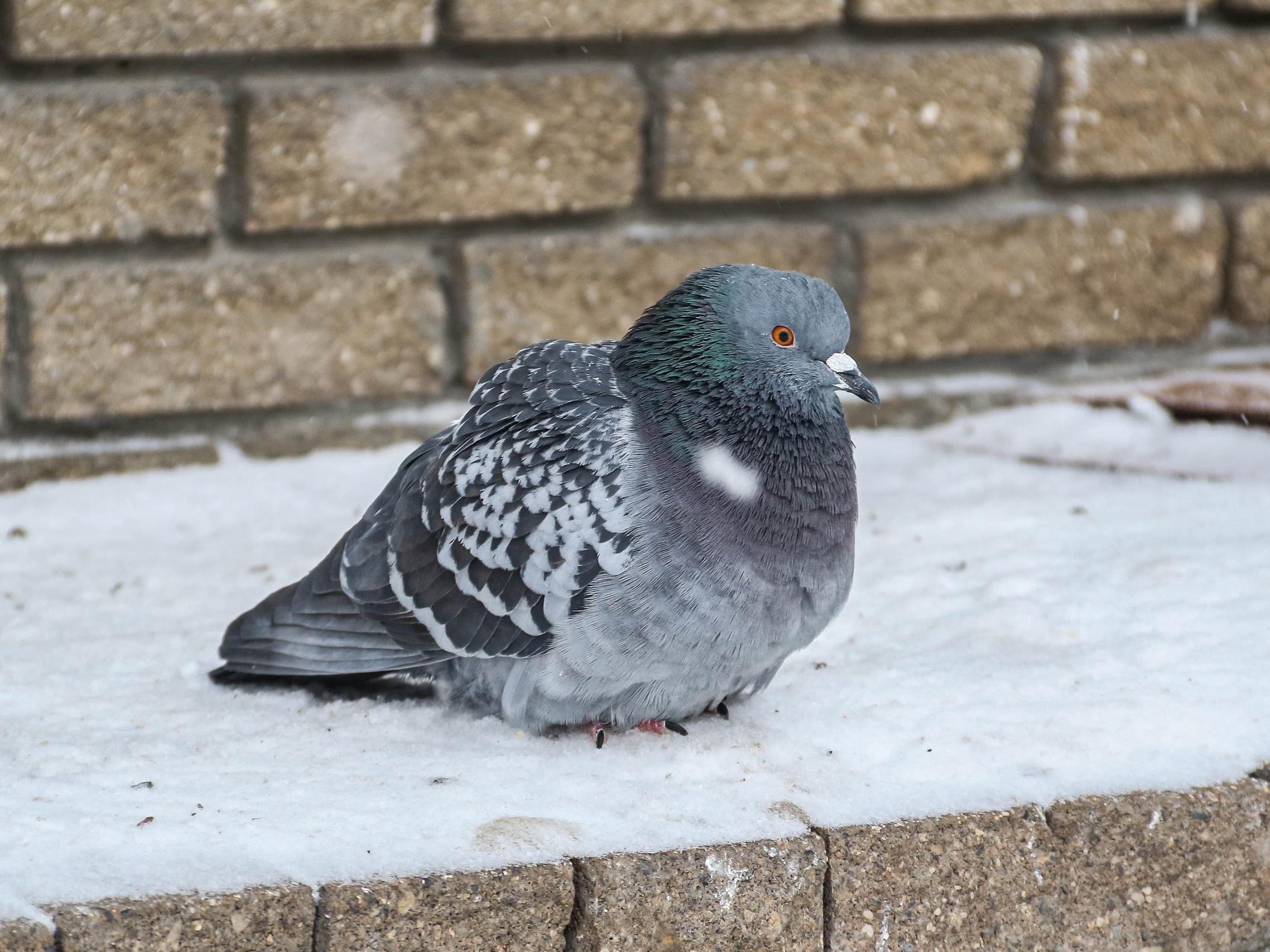
In metropolises, among concrete panel buildings and high-rises, we most often encounter rock doves (Columba livia), which in the wild inhabit coastal cliffs and mountain gorges (the formation of some breeds also involved the rock pigeon). Their original homeland is the Mediterranean, that is, southern Europe, North Africa, and Western Asia. In the distant past, when people began farming and growing grain, the birds started settling nearby. They were even bred for food: lured with feed, domesticated, and eaten when necessary. The well-fed, if not always long, life appealed to the pigeons, and eventually they became synanthropes. Such species benefit from proximity to humans and prefer to live near them rather than in the wild.
“Now we have no wild population of rock doves—they settle precisely next to humans. In the city, all conditions are created for the birds: there are nesting sites—houses that resemble cliffs to them—and an abundance of food. Although pigeons are suitable for eating, the tradition of eating them has already disappeared, so they don«t perceive humans as enemies,” notes Andrey Lebedinsky.
But people themselves often treat pigeons at least warily. The birds are blamed for spreading dangerous diseases and unsanitary conditions, called stupid and useless, and sometimes compared to rats. Online, people laugh at pigeon nests, which sometimes consist of just a few sticks, and, of course, wonder where the birds hide their chicks.
How pigeons make nests and hatch chicks
The primitive nests of pigeons are a legacy of their past life among cliffs. In the wild, they raised their young in crevices or caves, which themselves function as full-fledged shelters. The birds didn«t require much effort in construction—just piling a few sticks and blades of grass to keep the eggs from rolling off the edge of a cliff. In cities, they “build” nests in places that remind them of natural landscapes: in attics, abandoned buildings, spaces under roofs.
“Pigeons have only two eggs in a clutch, so such a small nest is quite enough for them. They are monogamous birds, forming stable pairs and sharing the care of the chicks. Males, in principle, also incubate the eggs, but more often they bring food. And one cannot fail to mention the ‘crop milk’ with which pigeons feed their chicks. Essentially, it«s regurgitation. During the incubation period, the mucous membrane in the birds» crop softens and grows, and a secretion begins to be produced, which becomes a sufficiently nutritious feed high in protein. And they regurgitate this mass into the chicks« mouths, which both the female and the male can do,” the biologist explains.
Are pigeons stupid birds?
As for the intelligence of pigeons, calling these birds stupid is rather incorrect. At the very least, they develop reflexes quite well and have a highly developed homing ability—the ability to return home.
“Generally, the definitions ‘smart’ and ‘stupid’ are not very applicable to animals; after all, these are more human measures. Perhaps corvids—crows, jackdaws—are more advanced and can do more, but I wouldn«t say pigeons are stupid. They remember their owners and the place where they are kept, follow commands well, and navigate terrain excellently. They are quite normally developed, intellectual birds,” emphasizes Andrey Lebedinsky.
It«s no coincidence that pigeons have been used to deliver letters since ancient times. Their ability to return home from unfamiliar places is much better developed than that of many others. Scientists believe pigeons determine their flight direction by a whole set of factors—from visual landmarks on the ground to the position of the sun.
“According to one version, they use the Earth«s electromagnetic field—detecting it thanks to small amounts of metals contained in the body. Moreover, pigeons remember the surroundings on the ground quite well: buildings, rivers, roads. They can navigate by the position of the sun during the day and stars at night, so it»s a kind of complex ability. And also pigeons fly very well and can cover hundreds of kilometers in a day. That«s why they were used as postal carriers until the invention of the telegraph and the advent of telephone communication,” notes the Nizhny Novgorod scientist.
Pigeons and diseases
As for diseases dangerous to humans, pigeons do indeed spread them, though so do other birds. One of the most well-known is psittacosis, or parrot fever (from the Latin psittacus—‘parrot,’ as it was first known from them). The disease is characterized by high fever, headache, weakness, and cough.
According to Rospotrebnadzor (the Federal Service for Surveillance on Consumer Rights Protection and Human Wellbeing), one can become infected with psittacosis through contact with the droppings or respiratory secretions of infected birds. This most often happens by inhaling dust containing particles of these substances. At risk are workers at poultry farms, zoos, and pet stores, veterinarians, owners of domestic and ornamental birds, as well as those who like to feed pigeons on the streets. Sick individuals with psittacosis are not dangerous to others.
“Recently, there have been no recorded outbreaks of psittacosis, and one can more often get infected from domestic birds, but better safe than sorry. If you see a clearly sick pigeon on the street—it isn«t flying, looks lethargic—of course you can try to feed it, but don»t pick it up and take it home. And if for some reason you did, you should wash your hands thoroughly with soap and then monitor your condition. In the vast majority of cases, everything turns out fine, but psittacosis is a very nasty disease; it progresses quite severely,” says the biologist.
What to feed pigeons
According to Lebedinsky, in Nizhny Novgorod, the population density of pigeons is higher in the Zarechnaya (Transriver) part. Probably, there are simply more places with food there—for example, the Sormovskiy bread factory. In the Nagornaya (Upland) part, conditions for the birds are slightly worse, especially in the center: there are fewer feeding spots, and the streets are cleaned more thoroughly.
In nature, pigeons feed on seeds, berries, and fruits, but in the urban environment they don«t disdain waste either. By treating the birds to bread, sweet, spicy, or salty food, people cause irreparable harm to their bodies.
“If you want to feed pigeons, it«s better to give them raw, unsalted seeds, hulled oats, wheat, millet—things that are close to their natural food. You shouldn»t feed them bread or buns because they contain fermentation elements that can negatively affect digestion.”
Can you be held accountable for feeding pigeons?
To prevent pigeon colonies from dirtying the streets and bothering others, it«s recommended to scatter feed for them away from houses and public places. However, at the legislative level, there are no restrictions on feeding birds in public spaces, NN.RU was informed by the city»s Department of Urban Amenities.
Requirements for maintaining cleanliness while feeding pigeons are also not written into the law. In Russia, the practice of regulating this area has not become widespread in principle, the department noted. This means that it«s impossible to directly hold a person accountable for feeding the birds.
Nevertheless, Nizhny Novgorod Oblast has a regional law No. 144-Z ‘On Ensuring Cleanliness and Order,’ as well as rules for the improvement of municipal territories. According to Article 12 of this law, legal entities and individuals must maintain cleanliness and order in the areas of their presence and activity. How realistic it is to punish those who like to feed birds near houses under this article is an open question.
“The Department of Urban Amenities does not have information on holding anyone administratively liable for violating sanitary norms when feeding pigeons,” the agency stated.
TASS, citing State Duma Committee on Housing and Utilities Deputy Chairman Sergey Kolunov, reported that one can be held liable for feeding pigeons and other birds in residential areas under Article 8.2 of the Code of Administrative Offenses for non-compliance with environmental protection requirements when handling industrial and consumer waste. However, this is only possible if there is a threat to sanitary and epidemiological well-being. In such a case, an individual can be fined 2,000–3,000 rubles (about $22–33 at current rates), officials—10,000–30,000 rubles (about $111–333), and legal entities—100,000–250,000 rubles (about $1,100–2,800).
To hold someone accountable, it«s necessary to provide evidence of violations: photos, videos, or witness testimony. And before going to the police or Rospotrebnadzor, it»s better to first contact the housing maintenance office (DUK) or homeowners association (TСZh) with a request to conduct explanatory work.