Drone Strike Kills Four at Krasnodar Teen Center
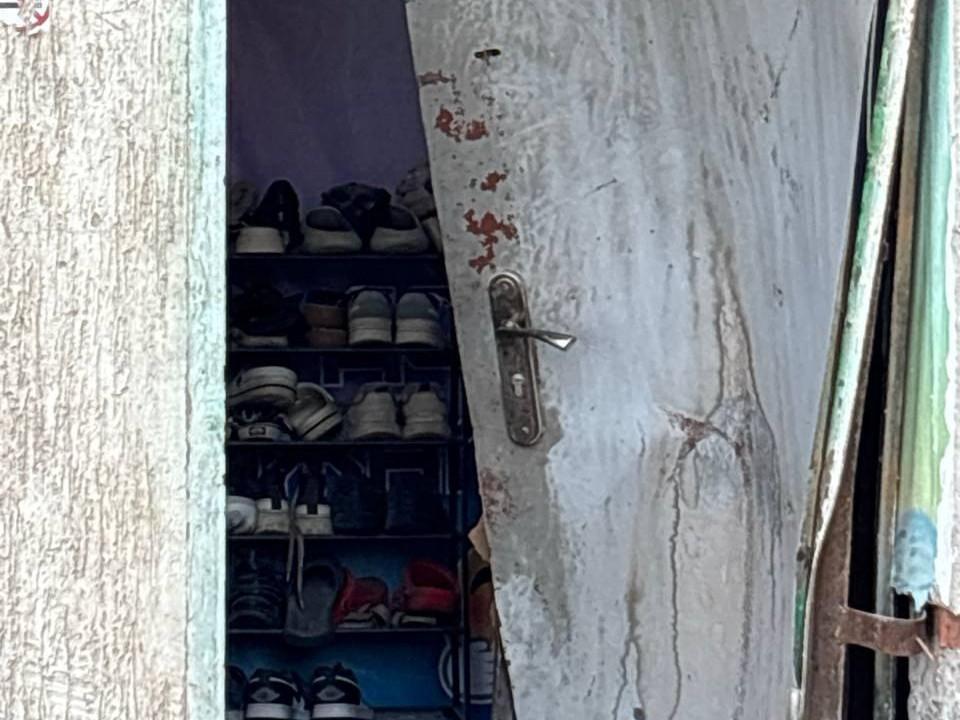

What happened at the teen center in Krasnodar, where four children died
A drone fell on a two-story house in the middle of a private residential area in Krasnodar on the night of 24 August. Regional authorities said a “private children«s center” was located there. Two adults — employees of the center who remain in serious condition — and seven teenagers were injured in the explosion. Two children died at the scene. By morning it would become known that another female resident of the center had died in hospital. And on 26 August, Presidential Commissioner for Children»s Rights Maria Lvova-Belova would report a fourth victim. The girl«s body was found under the rubble of the house.
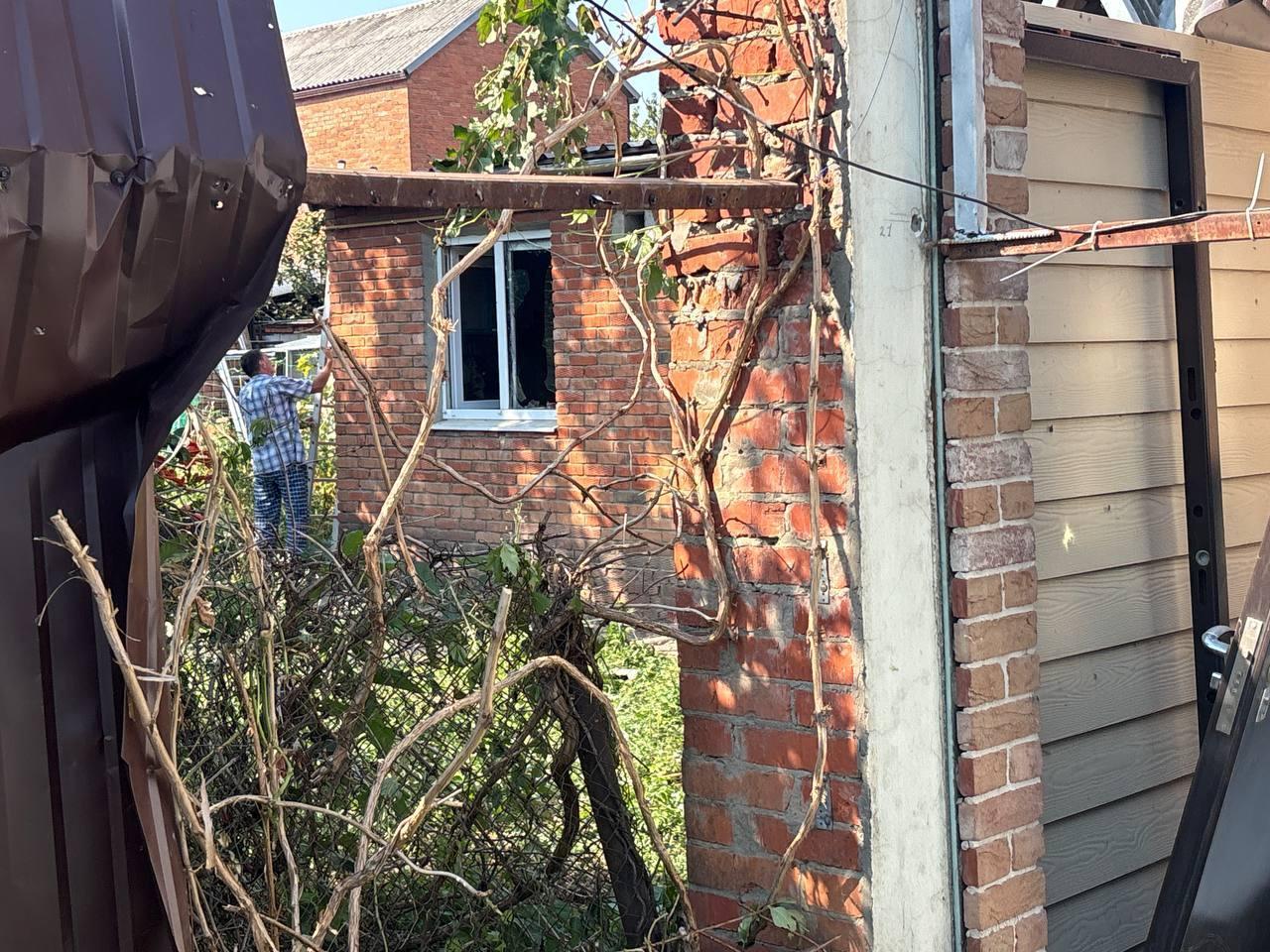
The neighboring plot was also damaged
The site had originally housed a private kindergarten, whose staff told the 93.RU portal that they “left the premises about a year ago.” There were no signs bearing a name on the center«s brown metal fence. At any rate, none remained after the explosion. And rumors began appearing online that it was a “children»s rehab for drug addicts.”
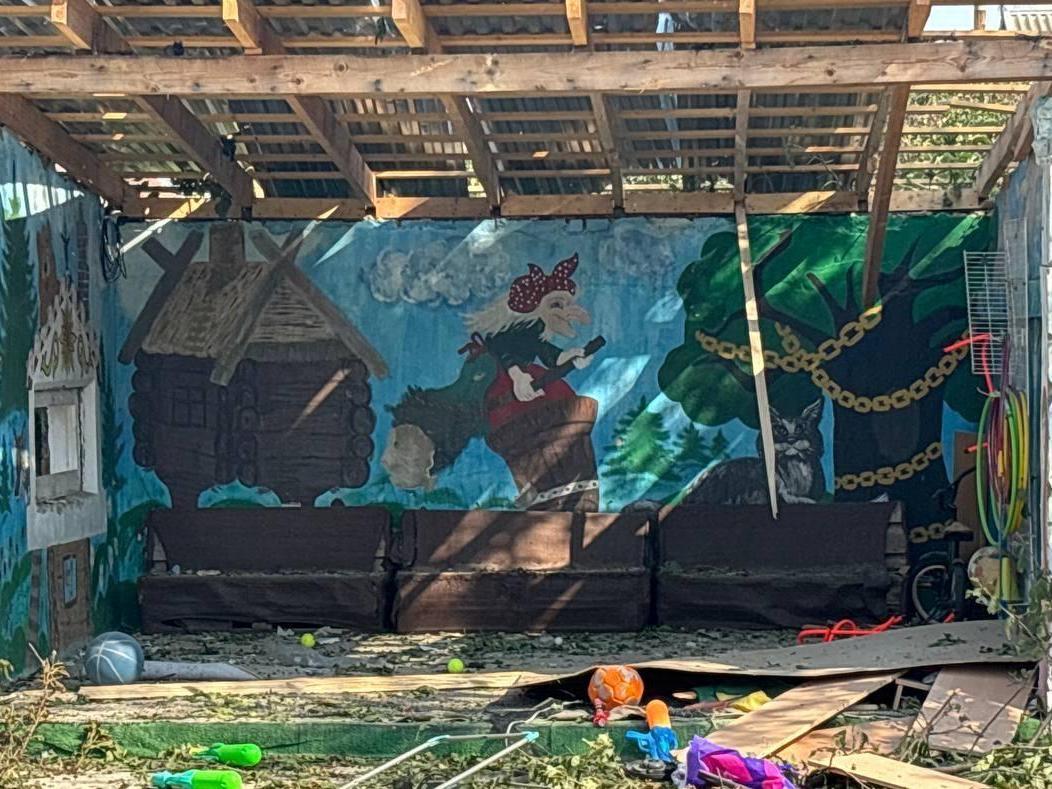
The children«s veranda on the center»s grounds
As the information spread, relatives themselves began contacting the media to describe what had happened to their children while they were at the center. The 93.RU portal spoke with parents of the center«s residents. One of them had celebrated his birthday shortly before the incident. In the evening the children gathered in the common room and congratulated their peer. An hour later a drone flew into the house.
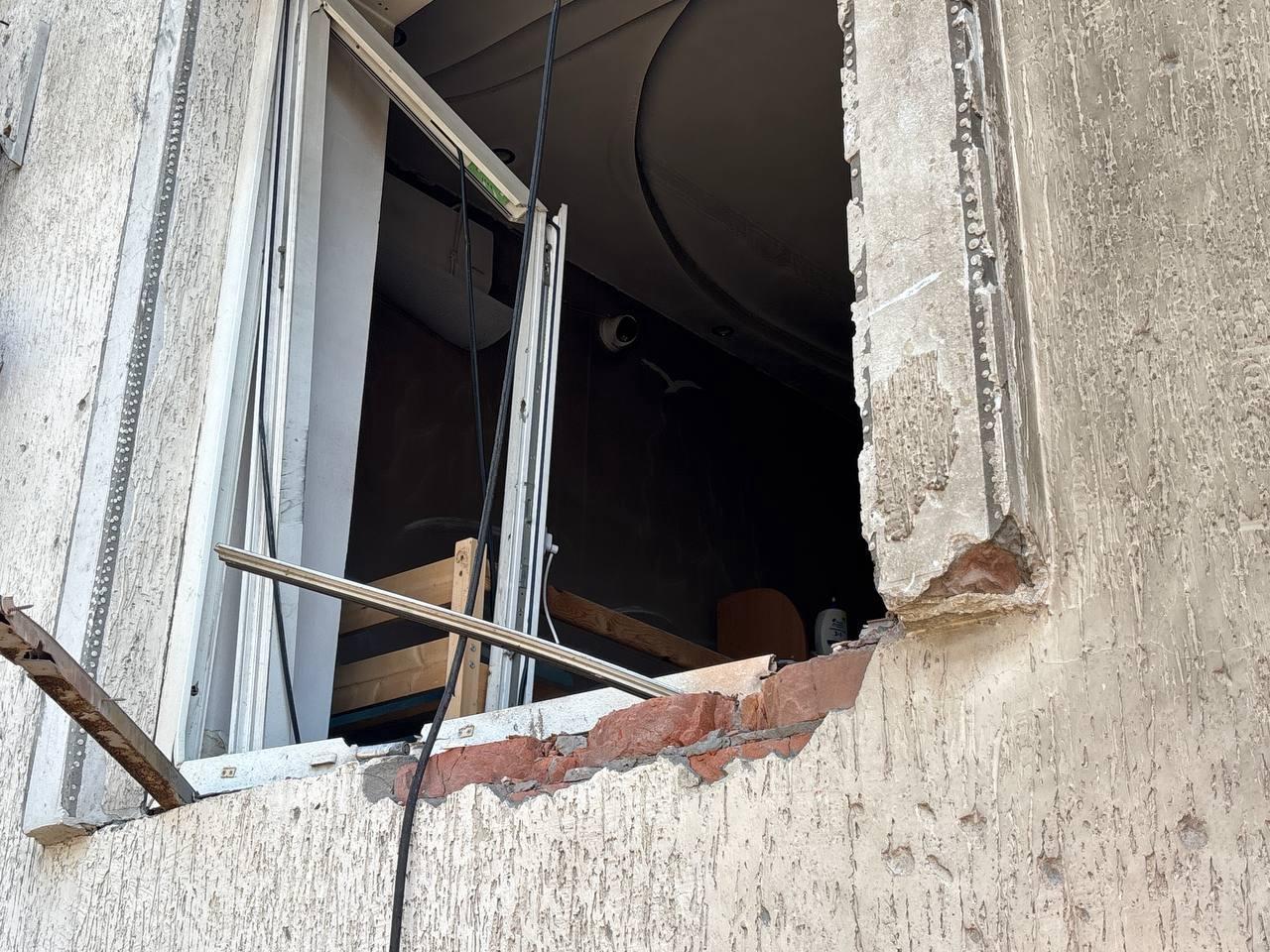
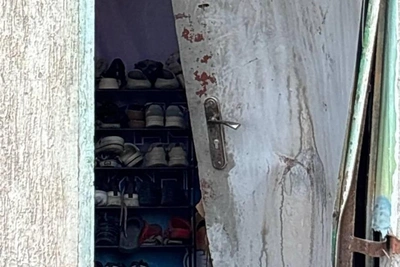
The room where the boys lived. There were no cameras in the girls« rooms
The adults remain in shock, while the children probably do not yet fully realize that they literally “celebrated their second birthday.”
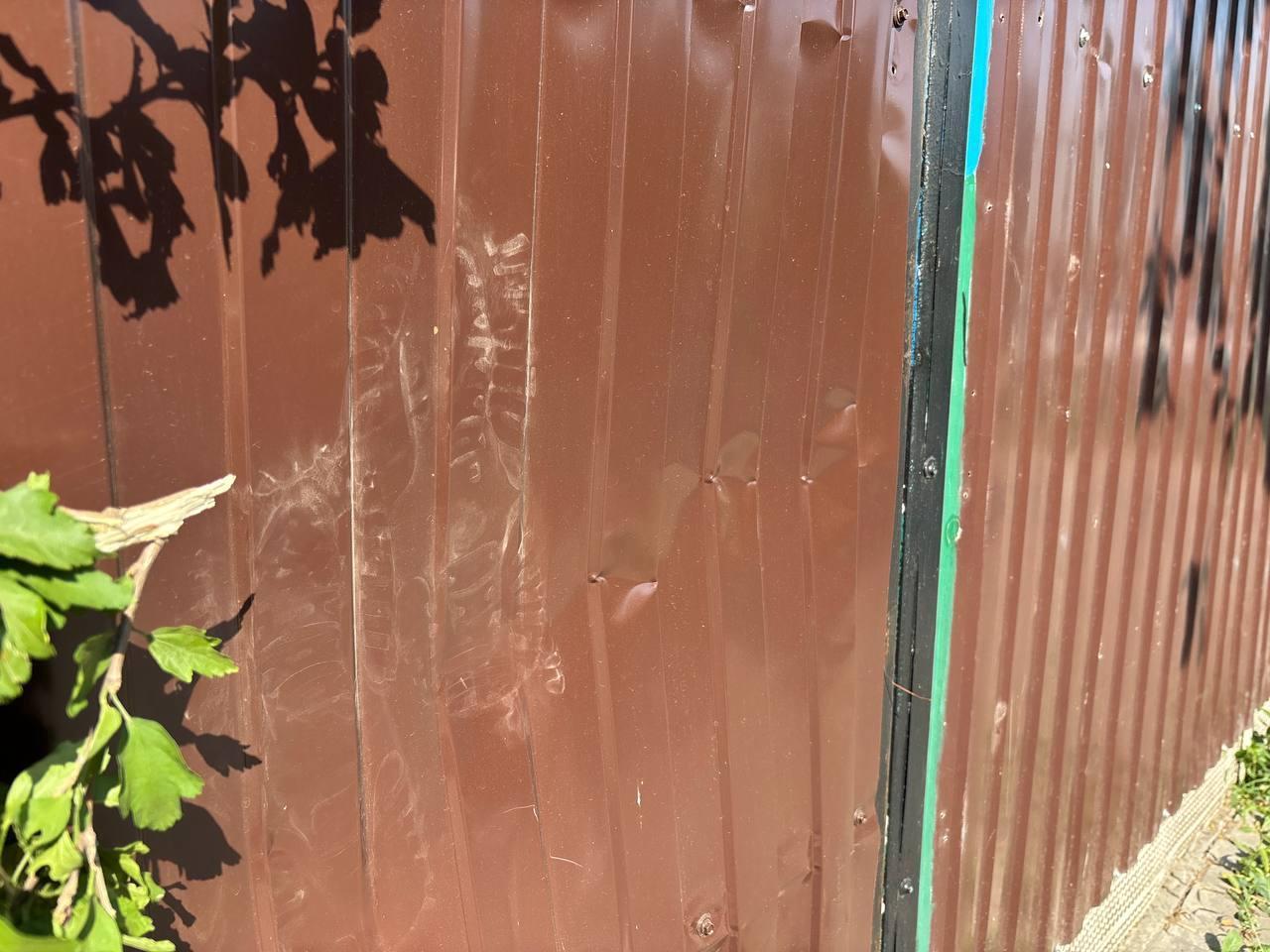
Neighbors tried to kick the gate open to get onto the grounds
“A terrible tragedy has happened to our children”
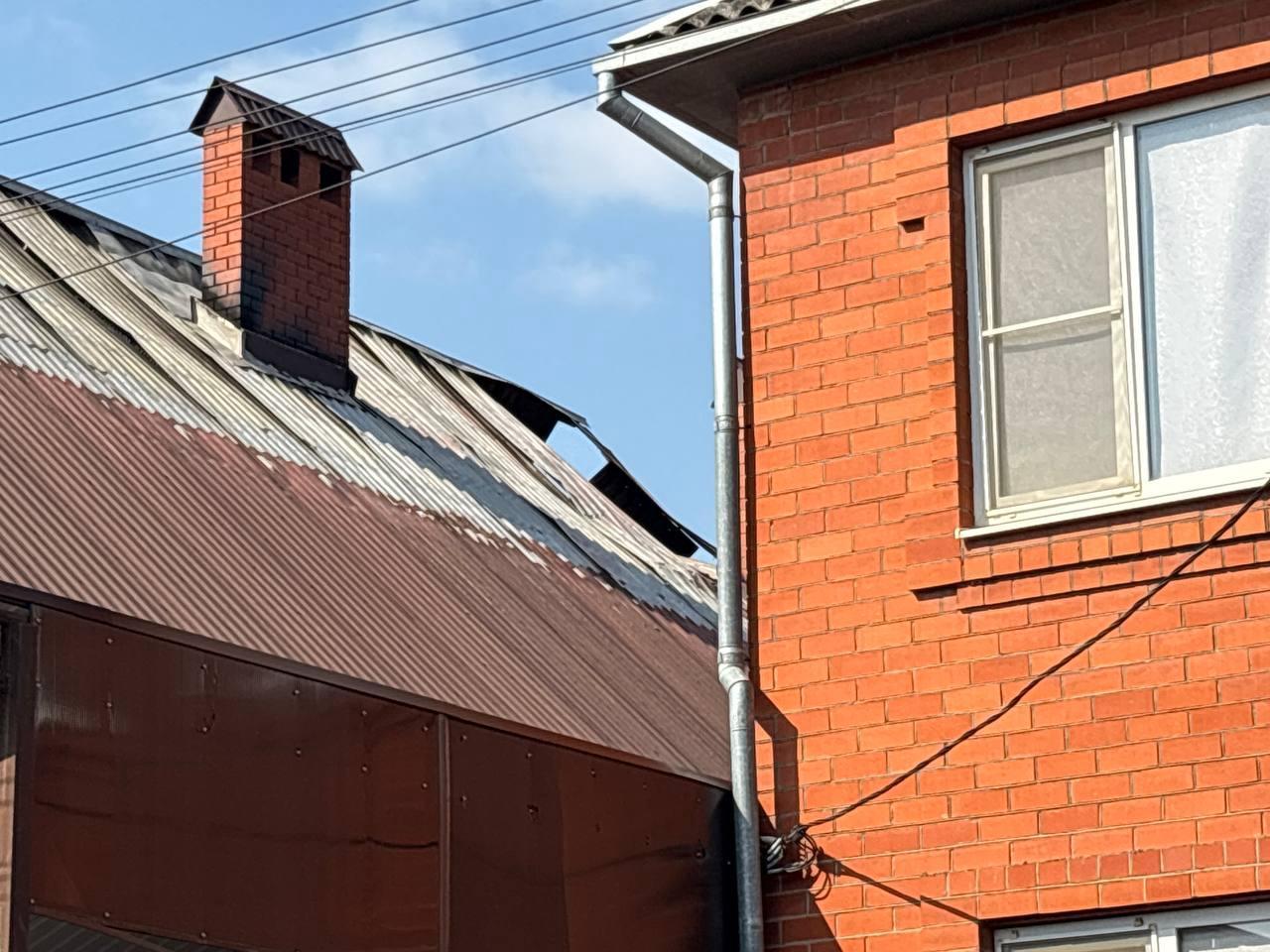
The site where the drone struck
Small by the standards of neighboring buildings, the two-story house with an attic floor under a pitched roof looks through its shattered windows onto a dirt road from behind a two-meter fence. On the gate, located right under two apple trees, there is an impressive dent and two distinct dusty footprints from a boot sole. Neighbors tried to break the door down as they rushed to help after the explosion. According to eyewitnesses, a woman was screaming from the burning house at that moment. The attic floor was already ablaze. The screams of girls were coming from there.
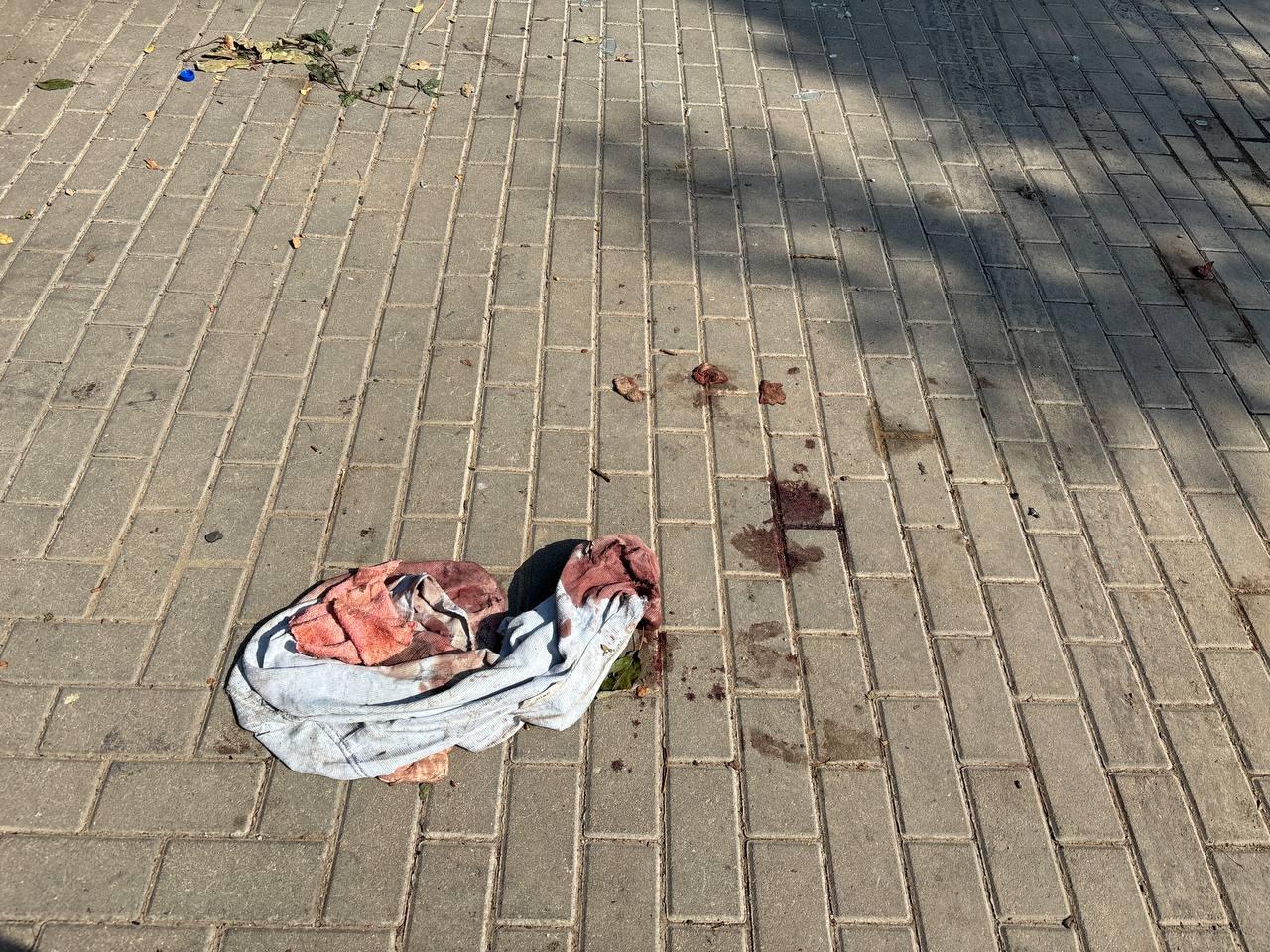
Where the injured received assistance
“A terrible tragedy has happened to our children. They saw their friends dead, with their heads smashed in, on fire,” says Ekaterina (name changed).
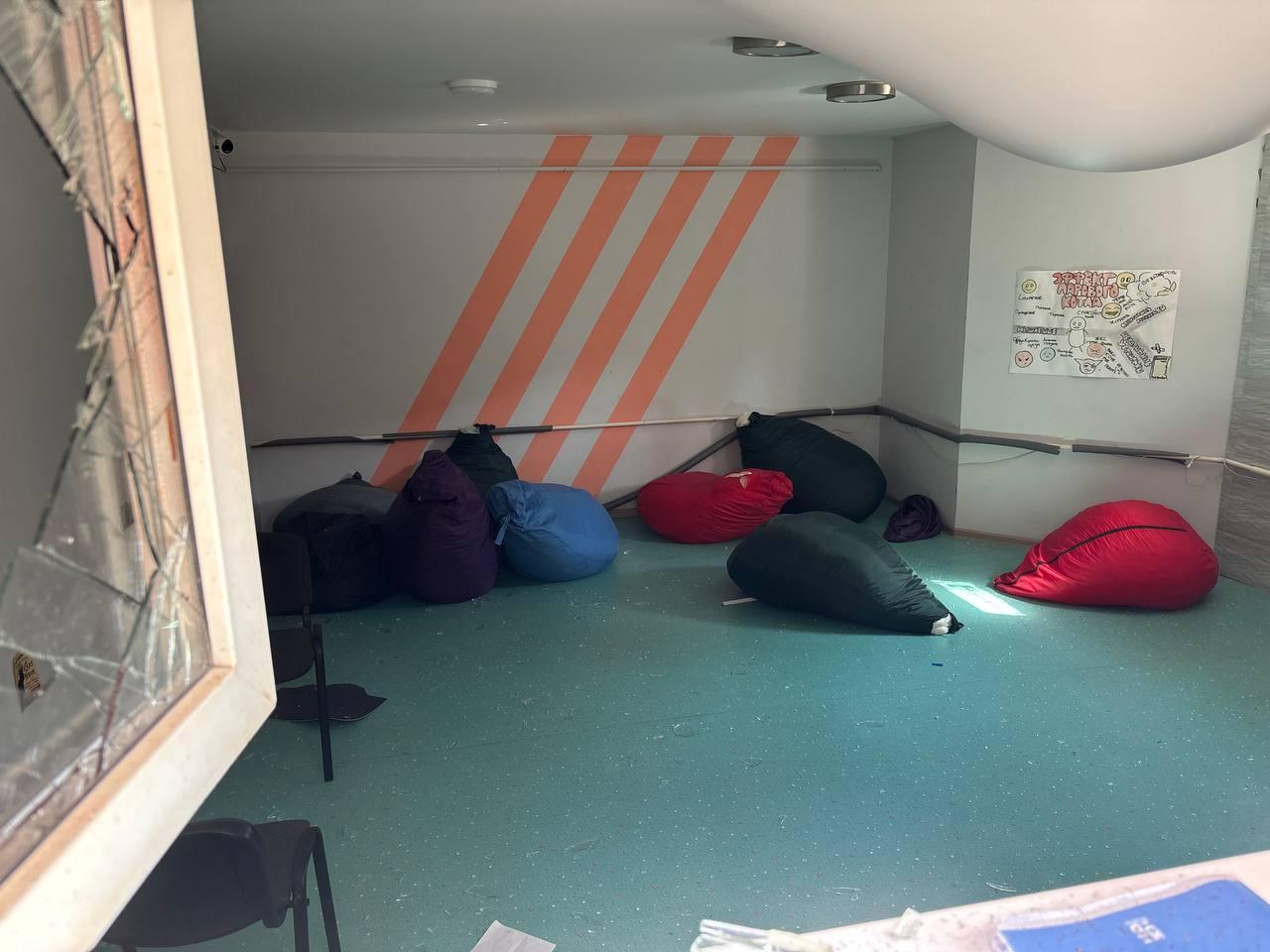
The room where classes were held
Ekaterina is the mother of one of the teenagers, Semyon, who had spent almost two months at the center. The teenagers had ended up there not from a good life, though a fairly well-off one. A month of keeping a child at the center cost parents about 140,000 rubles (about $1,700 at current rates).
Aftermath of the drone attack published by the authorities
“Some had behavioral problems, some suffered from computer addiction. Some dragged their mother by the hair or ran away from home and were searched for by police for three or four days. Others had already tried in their young years what they should not have tried at all. This is not a rehab, as it is now being called online. This is a center for troubled teenagers who either face problems with the law if no one deals with them, or are brought to such centers,” says Olesya, a psychologist who worked with the children at the center.
Olesya is a medical psychologist. She previously helped seriously ill people in a hospice.
“They [the children] have, you know, traumatic life experience. It is not always connected with parents. Sometimes with external factors too. Somewhere parents pressed a bit too hard in raising their children, somewhere they failed to keep an eye on them. But you can«t make an omelet without breaking eggs. One of the residents ended up at the center precisely because of an external factor. The girl who died after the strike on the center — she was being bullied. She was bullied at two schools. That is how she ended up here,” says Olesya.
Could not come to terms with the move
On the eight-hundred-square-meter plot, most of which is a backyard, there is a small lawn of artificial grass. Previously there were chairs made from pallets arranged in a rectangle. Children could gather there, tell each other about their emotions, and socialize. In the right corner of the plot stands a small concrete veranda painted with scenes from Alexander Pushkin«s fairy tales. The veranda probably remained from the previous occupants of the house — the private kindergarten. Here the children sometimes grilled shashlik (kebabs), did yoga, physical exercise, and creative work. From the outside it looks very much like a summer camp for teenagers.
“Parents send their children to places like this when they realize they can«t cope,” continues Ekaterina, Semyon»s mother. The boy had a computer addiction. He also could not come to terms with the family«s move to another country.
For Semyon, this was not the first such center. Until the fifth grade Semyon attended a regular school. Then he was transferred to family education. The boy had problems with behavior and academic performance.
So Ekaterina began looking for a center for her son with psychological help. She traveled to various Russian cities for several months. And she found a boarding house for troubled teenagers in Sverdlovsk Region. She says she placed the child there “on the advice of an acquaintance.” And she took him out “because of the abuse of my son.”
“When I found out what was happening there, I took Semyon out of there. It was the worst thing I have done to my son. They essentially abused the children there. They could shackle a child, wrap him in a blanket, and leave him alone in a room for several days. To keep him from asking to go to the toilet, they put diapers on him. They locked him in the basement, poured cold water on him, but not as a form of hardening… It looked like some kind of punitive psychiatry. I can«t find any other words,” the woman says.
At the same time, parents paid 105,000 rubles (about $1,300 at current rates) for just keeping a child at the Ural center. Education was paid for separately — 30,000 rubles (about $370). Additional expenses were charged for various services, such as buying stationery. And in general, the woman says, they had to pay “for every sneeze.”
After she learned about the abuse, Ekaterina took her son out of the boarding school, and in the summer of 2022 the family left Russia and obtained a residence permit in another country. The boy would spend almost a year abroad, but could not adapt to the new conditions. Although his parents tried to enroll him in a school for foreigners and a football club. But he could not make friends, and he refused to learn the language because he “did not see himself here.”
“He literally began doing bad things that are punished severely in that country. Together with other teenagers he hacked computers in large shopping malls. He drew graffiti and wrote very bad things on walls. We learned about all this after the fact, when we saw videos on YouTube… He had no real friends. There were acquaintances — in the emigrant community. But sooner or later they left for other cities and countries. And he refused to learn the language. At some point we realized that because of his escapades we could all simply be kicked out of the country… And we have two more children in the family. So we took that step,” says Ekaterina.
They never even raised their voices
When the young man was being taken to the second troubled-teen center of his adolescence, he was afraid. He said he feared the abuse that had happened at the Sverdlovsk boarding school. He said this both to his parents and to the psychologists who worked with him at the Krasnodar center.
“When he first arrived, he was like a hedgehog. He thought he would be bullied and punished for misdeeds. I know what he faced at the previous center. But there was nothing like that here. They never even raised their voices at the children. They spoke to them respectfully,” says psychologist Olesya.
Semyon«s mother was also initially worried about the new place.
“I see what is now being written online about this center, that it operated without documents. But that does not bother me; my child was helped here. He never complained. I could call the center at any time and they answered any question. And my child tells me that this is completely different from what was at the previous center,” Ekaterina continues.
Over two months the family had no complaints about the correctional center«s work. Children there were taught independence. Initially they arrived withdrawn and completely unprepared for life without their parents. At the center, other parents say, the children had a clear division of duties. Some cooked, some cleaned, did laundry and so on — “like in a normal, good family.”
The children kept diaries. A journalist saw one of them at the site of the explosion. It belonged to one of the girls. In it the residents described their emotions, learned to express their thoughts, and resolved disputes together. Despite the holidays, they had lessons in the school curriculum, because there were also those who lagged behind their peers.
“What the troubled teenagers could not say aloud, they wrote in this diary. And then psychologists reviewed these diaries and talked with the child. Everything written there was also discussed with the parents… In total, at the time of the strike, there were 22 troubled teenagers at the center. Very few from Krasnodar Region. Mostly St. Petersburg, Moscow, and other Russian regions. Girls and boys were roughly equal in number. They lived separately, on different floors,” says the mother of one of the teenagers.
“A drone hit our house”
On the night of 24 August, when sirens wailed in the city and explosions could be heard, parents of the residents began receiving calls from the organizer of the correctional center. Not everyone could be reached. A little later a message appeared in the parents« social media group: “A drone hit our house. There are casualties, contact us urgently.”
“After the explosion all the children were taken somewhere. No one was even notified where. If not for the head of the center, who actually did more for the parents than the state agencies, no one would have known,” says a woman whose child was also at the center at the time of the strike.
At the time of the explosion there were two counselors at the center working the night shift. Mentor Stanislav and psychologist Artashes received serious injuries.
“Stanislav has practically lost his sight. The flash and explosion happened right in front of him. Artashes is also in serious condition,” says psychologist Olesya.
The children who were not injured were loaded onto a bus and taken to a municipal rehabilitation center.
“We received no help from the authorities themselves. They did not even tell us what to do or where to go. Thanks to our center«s head. He was the only one who tried to coordinate us and find out where our children were and what to do next,” Ekaterina says, agreeing with the other parents.
“Where did the drone even come from?”
“Now people on social media are trying to say that our children are drug addicts. Information is coming from somewhere that the parents of the residents are drug addicts too. What kind of drug addict, tell me, would be willing to pay 140,000 rubles (about $1,700 at current rates) a month to keep their child at a center? We are also accused of supposedly not checking the safety of our children and abandoning them «in some center without a license.» I am not a lawyer, and it does not shake me whether there is a license or not. The main thing is that my child was helped there. What safety, if a drone flew into the house that should not have been there at all? Where it came from, no one can say,” says the mother of one of the residents.
Almost all the parents complain about the confusion on the day after the explosion.
“When we came to the hospital to see our daughters, their scrapes and shallow cuts had not even been treated; they were covered in dirt. I ran after the nurses and begged: «Please treat them.» But the doctors rolled their eyes and said: «Oh, these mothers,»” says one of the mothers of the residents.
Now Olesya, a psychologist from the center hit by the drone, is working with the injured children who remain in hospitals awaiting surgery. In one of the hospitals, she says, she had to talk with the children in a corridor. In another they were given a separate room.
“Relatively intact”
The woman says she was not asleep at the time of the attack on the night of 24 August. She was scrolling through chats, trying to find out what was happening and where.
“It was probably a sixth sense, let«s call it that. I just went into some group chat and started reading what people were writing. Then I wrote to the center»s program director. He said: «Yes, it hit our house.» I did not sleep for the rest of the night,” says Olesya.
The next day she herself had to seek a psychologist«s consultation.
“Surprisingly, the children are (psychologically) intact. All the children and parents are coping with what happened in different ways. But parents needed to see their children now. Any trauma, if it is worked through within 72 hours, does not turn into PTSD. It, the syndrome, never develops immediately,” says Olesya.
According to her, some children have a terrible image frozen before their eyes, while others cannot sleep and are afraid of noise.
“But then state psychologists, forgive me, came to the children and started frightening them with PTSD. Why do they do that? It is too early to talk about this now. This syndrome has a delayed effect. One can talk about the formation of the syndrome only after 3–4 months. In any case, I recommend that all parents work with a psychologist after discharge,” says Olesya.
“Now they understand”
Asked whether this center helps, Olesya says:
“You know, to hear from a child who dragged his mother by the hair, who ran away from home and disappeared for a long time. To hear from such a child: «I now understand what I was doing at home and how I treated my parents.» And now he understands. What do you think — does this center help?”
According to the psychologist, positive progress in raising troubled children at this center “began after about a month and a half.”
“The head of this center is himself a psychiatrist by training. He understands perfectly the processes that happen with children. He always makes contact. Honestly, a good man. And a good person. I would not have gone there if there had been a different head,” says the psychologist.
At the center itself Olesya worked with the children four hours a week.
“When I came to the center, I saw a family there,” says Olesya. “We adults would do well to behave like that in our everyday communication. Everything would be just fine in the world.”