Woman accuses doctors of negligence after losing baby and ability to conceive
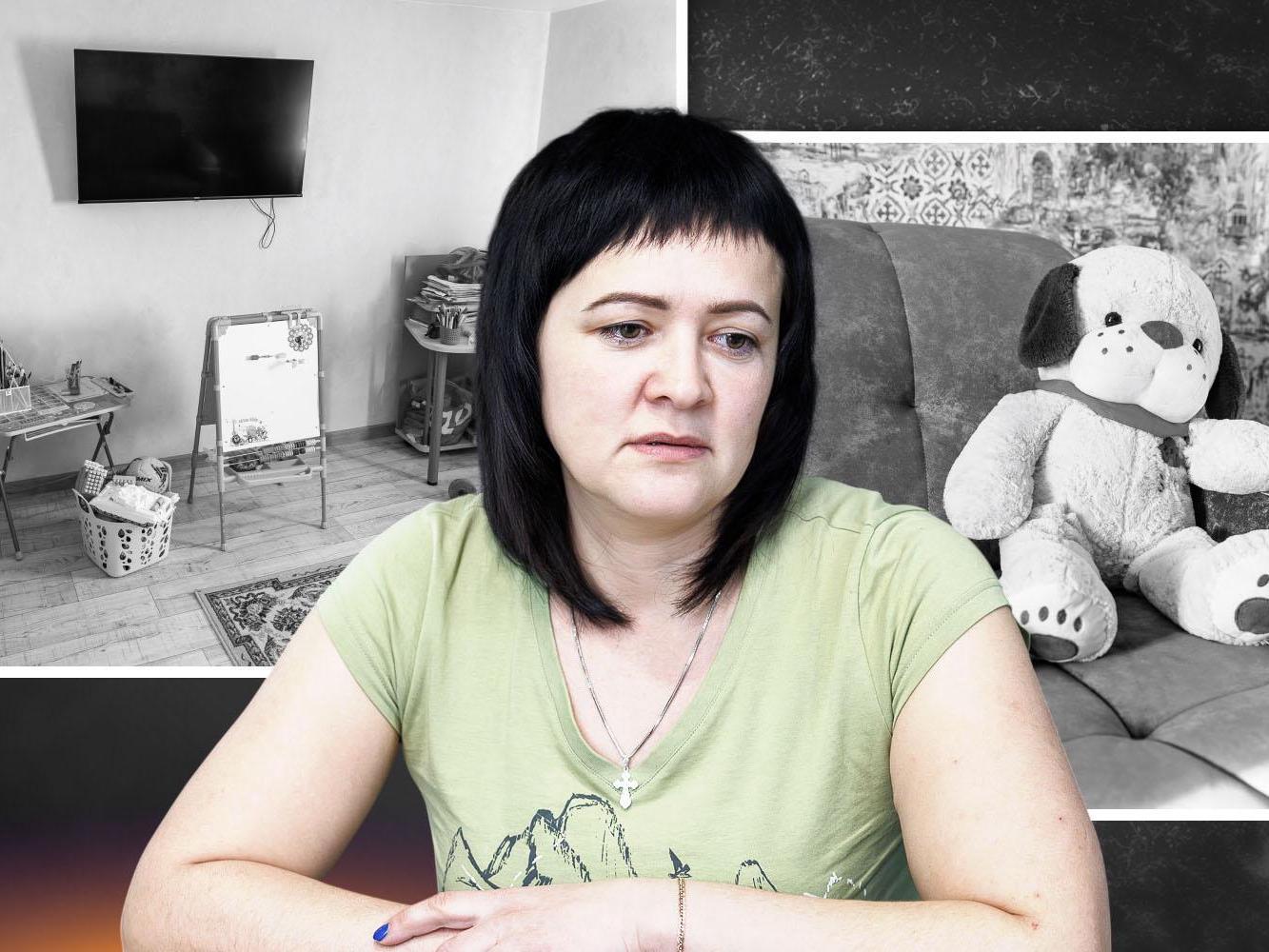

Former prosecutor Lyubov Merkulova lives in the small village of Kolobovka in the Leninsky district, about 70 kilometers from Volgograd. Nearly three years ago, she miraculously survived a severe operation, but her unborn daughter literally drowned due to internal bleeding. Lyubov herself might not have been saved. ‘Thank God the head doctor was on duty; we usually don’t save such cases,’ they told her in the intensive care unit. But after that operation, 37-year-old Lyubov will never be able to give birth again.
All these years, Lyubov has been trying to achieve justice, but the investigation still cannot find those responsible for the death of her unborn daughter and the harm to her health. On 21 May 2023, Lyubov Merkulova shared her view of the personal tragedy with a correspondent from V1.RU.
‘There were complaints. They weren’t interested’
Throughout her pregnancy, Lyubov lived with her son in her parents« house in the village of Kolobovka. Her relationship with the father of her first child didn’t work out, and the father of the second didn’t want a family. ‘He decided that you have to live first and foremost for yourself,’ Lyubov recalls.
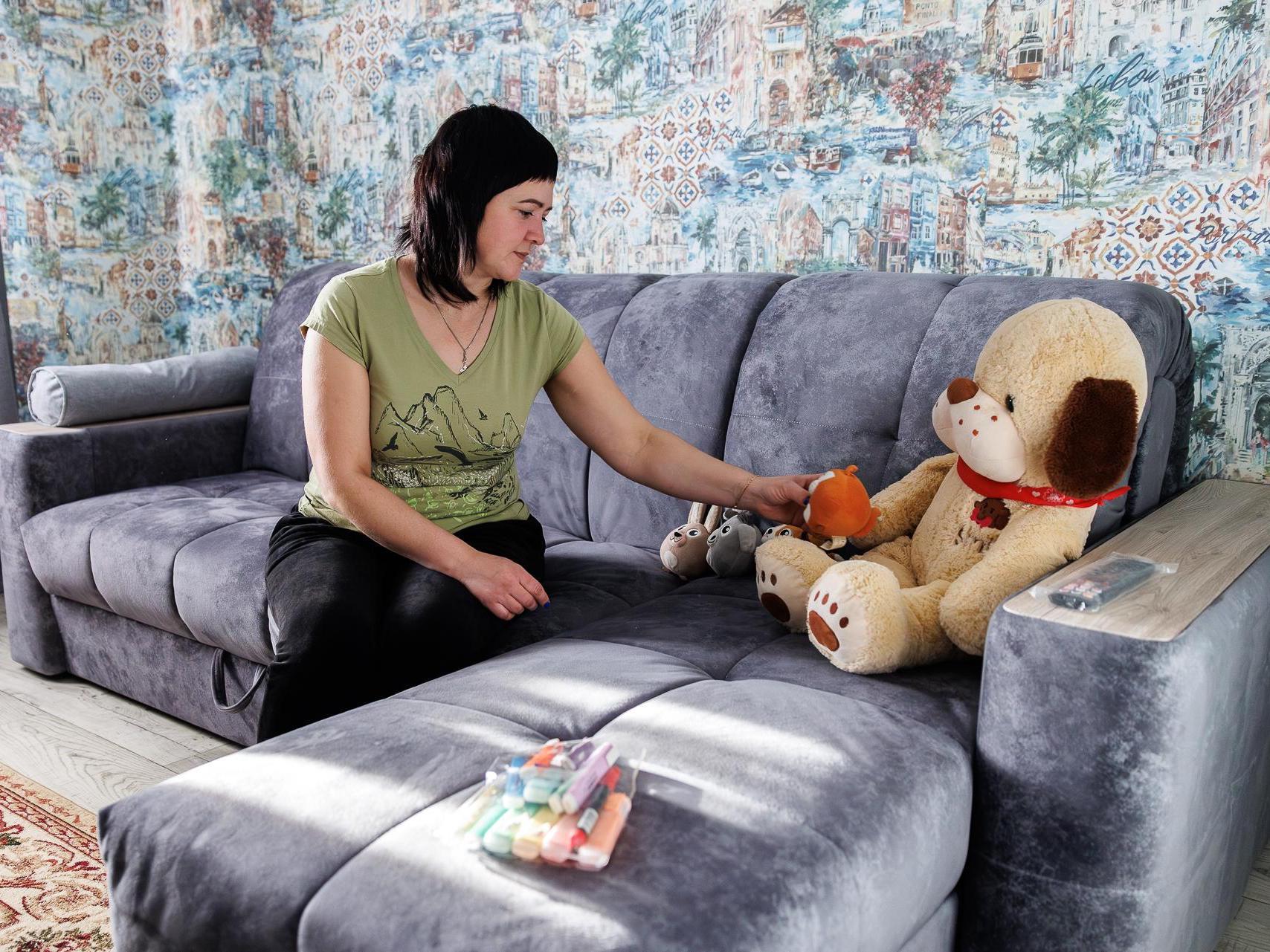
— When I found out about the second pregnancy, I registered at the antenatal clinic of City Clinical Hospital No. 3 in Volzhsky, — Lyubov says. — I thought it would be better, and I didn’t register in Leninsk: after all, due to optimization, we essentially have no medical care here. The antenatal clinic was only fully opened this year, and for all tests and examinations, I had to go to the city.
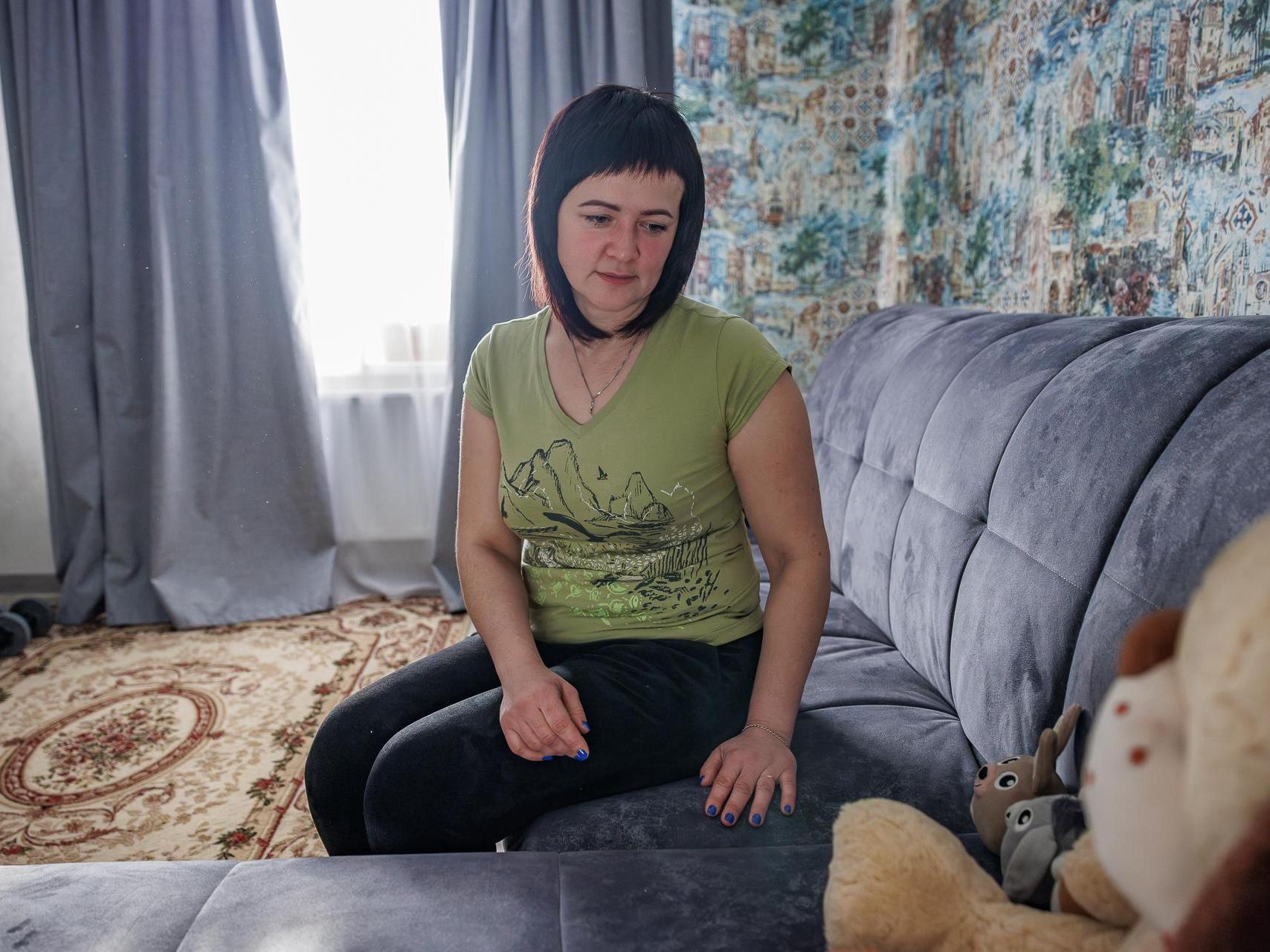
Her first pregnancy, for which Lyubov was registered at the same antenatal clinic, didn’t go too smoothly: according to her, she had increased uterine tone, but she wasn’t offered hospitalization or given any injections.
— The child was born at full term but underweight — 2.5 kilograms (5.5 pounds), — Lyubov recalls. — At the time, the doctors were concerned, but they didn’t tell me the true reason — they just promised to monitor it. It later turned out that this should have been given importance. I didn’t have any particular health problems: I went to the hospital on schedule, followed all recommendations, underwent examinations, took tests, and came to the gynecologist on time.

During the second pregnancy, Lyubov had certain health complaints that, she says, were not recorded anywhere, even though she mentioned them to the doctor.
— From the very early stages, my pelvic bones hurt a lot, although it shouldn’t be like that, but I was told it was normal. During morning sickness, I was advised to eat rye crackers. On the day of the gynecologist appointment, I said the baby was moving too actively, and I was told that was normal too. There were complaints of back and abdominal pain — they simply seemed uninterested.
At 34 weeks of pregnancy, Lyubov came for fetal cardiotocography (CTG), and then she was supposed to see the gynecologist.
— The nurse, when she received the CTG results, looked at them strangely, was surprised, said I needed to see the gynecologist urgently, and handed me the conclusion, — Lyubov recalls. — Now they say they couldn’t give me such things. But, unfortunately, that’s a lie: while I was waiting for the gynecologist in the corridor, I took a photo of that conclusion. The gynecologist took it somewhere for about 10 minutes, then she returned and said everything was fine. She conducted an examination: weighing, blood pressure check, and that’s it.
From the video in the TV show ‘Beyond the Limit’
Lyubov. I said: ‘Are you sure?’ I asked her three times. She told me: ‘No, everything’s fine, the pregnancy is proceeding normally, everything’s okay, you can go home, no reason to worry.’
Host. Did you have any complaints yourself?
Lyubov. Yes. I said I had a complaint that the baby was moving a lot. She says: ‘No, the baby should move. If she went quiet, then yes, that’s bad.’ I said she had some strange movements, she was kicking very hard. And there should be periods when the fetus is active and when it rests, but this was…
Host. Was it constant for you?
Lyubov. Constantly, yes. It happened often. Especially that day and the next. But I was assured everything was fine.
Lyubov admits: the doctors’ attitude seemed strange to her even then, but she had no reason not to trust them. The doctors said not to worry and go home — which she did.
‘I couldn’t feel my body. Only severe pain below’
Lyubov recalls how sick she felt three days later. On 21 May, her abdomen hurt unbearably. Over the phone, a midwife said to go urgently ‘to the city.’ That is, to the maternity hospital, to the city — Volzhsky, a satellite of Volgograd.
— I could barely walk through the emergency room. And they made me go up to the third floor. When the head doctor saw this, she immediately shouted, like, why not on a gurney and ‘she has placental abruption.’ I don’t know, maybe she determined it from the shape of my abdomen. Everyone panicked. They connected me to an ultrasound machine and showed that the baby had died: I saw that he was already floating in fluid. Everything inside was filled with blood. They decided to do an emergency operation, and at that moment I was, so to speak, passing away — I couldn’t even feel my limbs. They were shoving some papers at me, ‘you need to sign’…
In that short period while Lyubov was being prepared for emergency surgery, the only thing she worried about was that her mother would worry if something happened to her.
— I woke up the next day in the ICU, — Lyubov recalls. — I didn’t understand what was happening, and no one really talked to me. I couldn’t feel my body. Only severe pain below. The next day, doctors came to me. They were all concerned. Of course, I didn’t understand the true scale of what had happened. Later I learned that a council of doctors had been convened at that time. I was, one might say, near death because I lost a lot of blood. It turned out to be a Couvelaire uterus — internal bleeding.
From the video in the TV show ‘Beyond the Limit’
Vladimir Sursyakov (gynecologist, Candidate of Medical Sciences). With placental abruption, a condition like Couvelaire uterus develops. This is when the uterus becomes saturated with blood and can no longer contract. And without contractions, bleeding continues. And you have a maximum of 2 minutes to run to the operating room, open up, and stop this bleeding. It’s a catastrophe.
Host. After those two minutes, if it’s not done, the patient dies?
Vladimir Sursyakov. Absolutely right. So it’s truly a miracle that she was saved. They really had no chance of saving the uterus. 90%.
Anna Mgoyan (reproductologist). If colleagues could have done something, they would have, of course, helped the patient. But when the choice is between losing a life or removing the reproductive organ, we, of course, do the most important thing — save the patient’s life.
Cases like Lyubov’s are extremely dangerous for women giving birth and pregnant women. Often, the uterus has to be removed. That’s what happened to Lyubov.
— On the very first day, someone from the medical staff came to me and said: ‘Thank God that on this day the head doctor was on duty. Usually we don’t save such cases,’ — Lyubov recalls. — In Moscow, I was later told that it’s simply a miracle — to survive. With gynecological bleeding, women mostly die. I really came back from the other side.
Lyubov lost a lot of blood — ‘almost all of it,’ as she says. Transfusions were done during the operation and the next day as well.
— I can’t give birth to children on my own, but I was only told this on the third day by the head doctor. It was devastating for me. They were also shoving papers at me, something had to be done with the baby. I couldn’t even bury her myself because by law she wasn’t yet a person. Naturally, no one issued a birth certificate. They asked about disposal… I couldn’t say anything, and the pressure was very strong.
The recovery path was difficult, and Lyubov still doesn’t know the cause of the placental abruption and Couvelaire uterus.
— At that time, I was swollen, about twice my usual size. I had to learn to walk again — there was immense pain, I couldn’t even step on my feet, and they rushed me with walking because there would be consequences if I lay all the time. The head of the maternity hospital studied my documentation, the exchange card. Then she said: ‘We don’t understand why this happened. Your health is good.’ But I think they know: they let slip about some vessels and all that.
‘Are you really alive?’
It took Lyubov several months to come to her senses. She tried not to show her distress, but inside she was tormented by the question: ‘Why?’
— After I started dealing with this case, I began to find people who are exactly like me. That is, they are also sent home even though complaints are expressed, — Lyubov says. — If it’s open bleeding, you can save them in time, but when it’s closed, you don’t even know what’s happening inside. One girl told me that after such a thing, her child is disabled. I was also told that if they had operated on 18 May, the baby could have been disabled.
Lyubov recalls how in August she went to see the head doctor at the hospital.
— She even said to me: ‘Are you really alive?’, hugged me — didn’t expect it, in general. Then I didn’t appear: I was dealing with my health, coming to myself. It was very difficult to sort out this situation, understand the reasons… In September, I requested my documents, the exchange card. And, to my surprise, I discovered that the documentation included an ultrasound protocol dated 15 May, which didn’t exist, nor was there an appointment for it. The investigation later established that the document was falsified. They simply pasted it in when I was lying there, dying. On 15 May, I wasn’t even at the hospital; I came the next day to take tests.
Not only that surprised Lyubov in the medical documentation returned to her, but also the record of her first pregnancy, which, recall, was under the supervision of doctors from the same hospital.
— It turns out that in the medical record, there’s a document about the pathological autopsy of the placenta after the birth of the first child, — Lyubov says. — Problems were indicated: during the first pregnancy, the utero-placental blood flow was impaired, which could also have led to the child’s death.
However, she had the most questions about that CTG which caused unclear emotions in the nurse a few days before the fateful day.
— Many who looked at that CTG said there is a problem, but we won’t say it: they allegedly have professional solidarity. Medical cases are all difficult because it’s hard to find someone who will help you and go against their colleague. One told me: ‘Just don’t name us, but go fight’ — and showed what the problem was. It turns out that on that day (18 May, 3 days before the tragedy. — Ed.) I had signs of the onset of labor.
From the video:
Host. What most often causes placental abruption?
Vladimir Sursyakov. Some chronic diseases, inflammatory ones. Trauma, that’s why they asked [about it]. It’s a frequent situation, like what happened after an accident during first births. Some changes, disorders in vascular systems, such as connective tissue dysplasia, which provokes vessel bleeding — they just burst quickly. So abruption occurs.
Host. Can this be noticed on ultrasound?
Vladimir Sursyakov. Only when it has started.
Host. On CTG?
Vladimir Sursyakov. The same. We see signs that may correspond to the onset [of abruption], or there may be exactly the same signs in a completely normal pregnancy.
It’s worth noting that the show’s expert Vladimir Sursyakov, after reviewing the CTG results, stated that he sees no signs of the onset of labor. However, they could have been seen if an ultrasound had been performed that day.
‘The investigator was so angry when I called’
On 26 October 2023, Lyubov Merkulova filed a complaint with law enforcement agencies asking to hold doctors accountable for negligence. A month later, on 27 November, a criminal case was opened in the investigative department for Volzhsky.
— It was difficult for me to get a criminal case opened. It was opened only after I appealed to Alexander Bastrykin, — Lyubov explains. — Then it was hard to get a forensic medical examination started. It was appointed only after I went on a TV show. Then the documents were sent, and silence: deadlines unknown, nothing is being done. Again, I recorded a video appeal to Alexander Bastrykin — the process speeds up.
The medical examination appointed by the Investigative Committee, according to Lyubov, might not have taken place for a year.
— The examination was scheduled in 2024 and by deadlines should be conducted only in 2027. It turns out that all medical examinations appointed by the Investigative Committee go like this, — Lyubov explains. — So, even if guilt is established based on the examination results, these people still won’t answer for anything because the statute of limitations expires. If, for example, the court appoints an examination, it’s conducted, say, within a month. Here it doesn’t work like that — they drag it out for years.
The examination results surprised Lyubov in a bad way.
— The experts didn’t consider it necessary to answer my questions and partially didn’t answer the investigator’s questions. They established defects in medical care, but found no connection with harm to health, and didn’t make a conclusion about who is to blame. There’s even an indication that on 17 May there were no pathologies. How can that be if I wasn’t even at an appointment that day? I point out these errors in the examination to the investigator, but he rejects everything and points out that the experts have 15 years of experience. And what does that experience mean if they conducted the examination, in my opinion, poorly and unconscientiously? If they have experience, does that mean they will always be right?
Over nearly 2.5 years since the criminal case was opened, three investigators responsible for the investigation have changed. The first responded to Lyubov’s calls and letters, the second resigned before starting the case, and the third…
— He cut off contact with me. Probably annoys him, — Lyubov says. — He was so angry yesterday. I called from another number. As soon as he heard ‘Merkulova,’ immediately: ‘I can’t talk to you.’ In such an angry voice. And that’s it, hung up. Didn’t answer anymore. I wrote to the management too, but I was advised to personally go to Volgograd for an appointment with the head of the Investigative Directorate of the Investigative Committee for Volgograd Oblast, Vasily Semyonov. And what will a personal appointment give me? I just want to see results, for a proper examination to be appointed, for the case to move forward.
‘One way or another, you live with it and never forget’
Now Lyubov lives with her son in the same village of Kolobovka, literally in the house next to her parents’, where she experienced the tragedy. She has to fight not only for justice but also for her health.
— After such operations, the body gets a shock, — Lyubov admits. — Blood pressure rises and then drops sharply. Unclear ailments. Last year, I felt so bad that I went to the hospital. They explained it as hormonal changes. I, for example, will age faster than an ordinary woman. Over time, eggs will stop being produced, so they rush me with surrogacy. Menopause will come prematurely. Within three years, problems with kidneys will likely start. Health has been taken away, and there’s no way to assess it.
The only thing Lyubov has wanted all these years is to achieve a logical conclusion to the investigation.
— I’m not seeking fame. I don’t need it. I want people to answer for this, especially since real harm was done to me. Morally, I return to this situation every day. There’s no day when I don’t remember it. And you never forget it. One way or another, you live with it. For some reason, it doesn’t go away; you can’t forget. Especially when you start writing to them again, you return to all these events. We even recorded video appeals only on the second try: the first time, I shook.
— All my relatives say: ‘How can this be? You went to give life, and in the end lost both yourself and the child,’ — Lyubov says. — I said goodbye to life back at that moment when I was going to the hospital because I felt I was dying. My mother told me: ‘It can’t be’ — and kept calming me down. But I felt I was dying, understand? I feel I’m leaving. But no one believed me, although at that moment I really had one foot ‘there.’ Maybe there is a God in the world, and something saved me.
Investigation is ongoing
Note that the chairman of the Investigative Committee of Russia, Alexander Bastrykin, has paid attention to Lyubov’s case at least four times. The earliest mention found by a V1.RU correspondent dates to 1 November 2023. Then, according to the information center of the Investigative Committee, a procedural check was organized — it was also put under control in the central apparatus of the department.
The next mention — 1 June 2024: Alexander Bastrykin demanded a report on the criminal case.
Further, on 31 March 2025, Alexander Bastrykin gave a number of instructions on the case. The message from the information center of the Investigative Committee also notes Lyubov’s complaint about the ‘protracted nature of the investigation.’ Instructions were given to present a report on the progress and results of the investigation, to open a criminal case on the falsification of medical documents. Bastrykin also instructed the Forensic Expert Center of the Investigative Committee to speed up the medical examination.
— In the Investigative Directorate of the Investigative Committee of Russia for Volgograd Oblast, a criminal case is being investigated regarding improper medical care provided to the applicant, for which A. I. Bastrykin had previously instructed to present a report, — it was said then in the message from the information center. — A commission forensic medical examination is being conducted at the Federal State Institution ‘Forensic Expert Center of the Investigative Committee of the Russian Federation.’ Moreover, a procedural check was conducted in the regional investigative department on the report of falsification of medical documentation.
Very recently, on 14 January, Bastrykin again instructed to present a report on the progress of the investigation, the results of the examination, and on Lyubov Merkulova’s arguments.
The V1.RU editorial office sent an official written inquiry to the Investigative Directorate of the Investigative Committee of Russia for Volgograd Oblast asking to comment on Lyubov’s words about the protracted investigation and to clarify at what stage the investigation is now. At the time of publication, no response had been received.