Volgograd Warned of Dangerous Temperature Swings
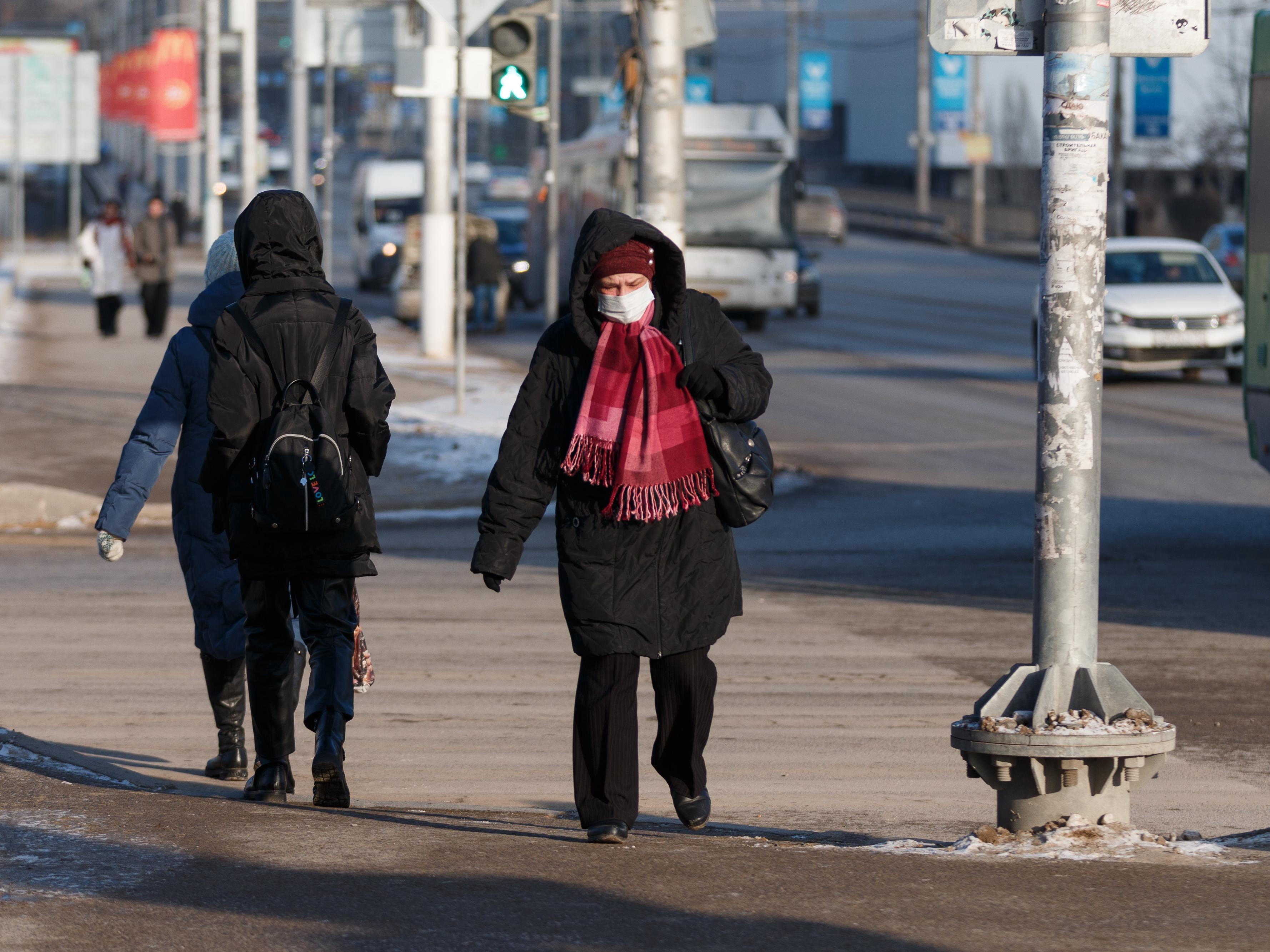

After the January frosts, Volgograd Oblast has temporarily come under the influence of warming. However, meteorologists warn that cold weather will return in early February, and for now, residents can expect foggy days with precipitation.
On Friday, 30 January, the region will experience light precipitation in places, in the form of rain mixed with snow and sleet. Some areas may encounter fog, black ice, and wet snow sticking to wires and trees. Nighttime temperatures will range from +1 to -4 degrees Celsius (33.8 to 24.8°F), daytime from -1 to +4 degrees (30.2 to 39.2°F).
On Saturday, 31 January, at night, rain, rain mixed with snow, or sleet is possible in places, and during the day, precipitation intensity in some areas will increase to moderate. The likelihood of fog, black ice, and wet snow sticking will persist. Roads will be slippery. At night, thermometers will show from 0 to -5 degrees (32 to 23°F), during the day from +2 to -3 degrees (35.6 to 26.6°F).
On Sunday, 1 February, precipitation will continue, with heavy snow expected in places at night and in the morning. In some areas, fog, black ice, wet snow sticking, and icy conditions are forecast. The wind will change direction from southerly to northwesterly, and the temperature will begin to fall. At night from 0 to -5 degrees (32 to 23°F), in the north of the region from -8 to -13 degrees (17.6 to 8.6°F); during the day from +3 to -2 degrees (37.4 to 28.4°F), in the north from -5 to -10 degrees (23 to 14°F).
Specifically in Volgograd, on Friday, 30 January, no precipitation is expected, but fog and black ice are possible. Nighttime temperature -1 degree (30.2°F), daytime +1 degree (33.8°F). On 31 January, no precipitation at night, during the day possible rain mixed with snow, sleet, occasional fog, black ice, and icy conditions. Nighttime -2 degrees (28.4°F), daytime around zero (32°F). On 1 February, precipitation in the form of rain mixed with snow and sleet is expected, with occasional fog, black ice, wet snow sticking to wires and trees, and icy conditions on roads. Nighttime -1 degree (30.2°F), daytime +1 degree (33.8°F).
A sharp cold snap will begin on Monday, 2 February. Nighttime temperature will drop to -17 degrees (1.4°F), and by the night of Wednesday, 4 February, it will reach -22 degrees (-7.6°F). During the day, it will also be frosty: a maximum of -16 degrees (3.2°F).
Doctor of Medical Sciences, Head of the Department of Outpatient and Emergency Medical Care at Volgograd State Medical University, Maria Derevyanchenko, cautions that such temperature fluctuations can pose a mortal danger. This especially concerns people with diseases of the cardiovascular system.
“First and foremost, such temperature spikes affect the condition of patients with pathology of the cardiovascular system, as they provoke vasospasm,” explains Doctor Derevyanchenko. “This leads to an increase in blood pressure, and if a patient is diagnosed with atherosclerosis, ischemic heart disease, and vessels are already narrowed due to atherosclerotic plaques, then additional narrowing due to spasm will lead to an even smaller blood flow through these vessels and to a state of hypoxia, that is, insufficient blood supply. Accordingly, the risks of vascular catastrophes, including myocardial infarction and strokes, will increase. Primarily, elderly and senile patients are vulnerable here.”
The doctor recommends that people with such pathologies, if possible, stay home during sharp temperature swings, avoid hypothermia. Especially dangerous is the inhalation of cold air for patients with ischemic heart disease and angina pectoris, as it can cause spasm.
“If possible, we stay home; if there is no such opportunity, we dress warmly with natural fabrics on the principle of «cabbage,» that is, layering in clothing. In case of warming, you can remove excess to avoid overheating,” explains Maria Derevyanchenko. “A person can overheat, sweat, and, finding themselves in cold air, risks contracting acute respiratory viral infections and other colds.”