Universities Get State-Funded Slots for 2026 Academic Year
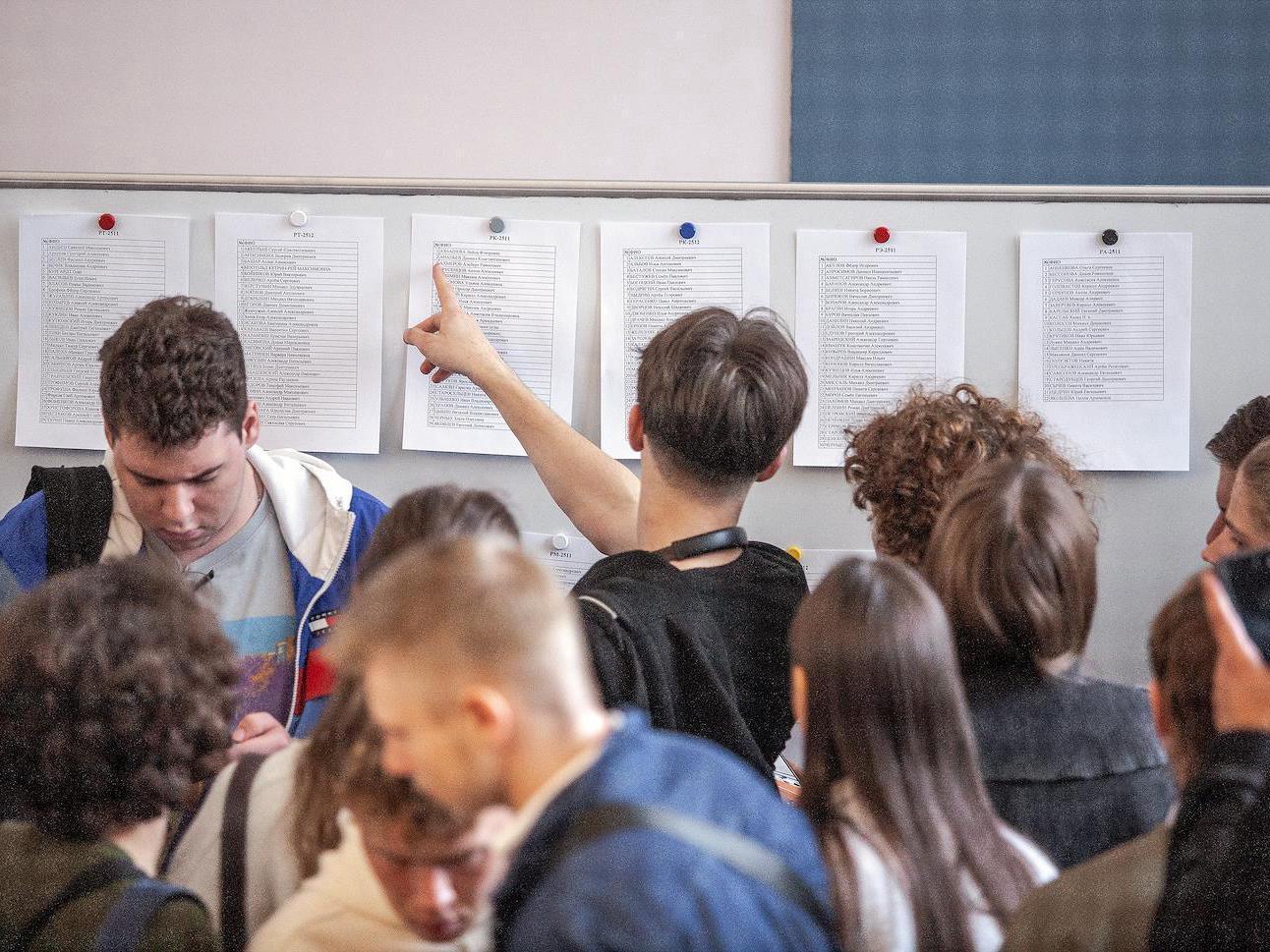

For the 2026–2027 academic year, Russian universities have been allocated 620.5 thousand state-funded places, which is 1.5 thousand more than last year. Of these, 371 thousand places are intended for bachelor«s and specialist full-time programs.
At a government meeting, Minister of Science and Higher Education Valery Falkov called on universities to align requests for state-funded places with the needs of the regional labor market. «This alignment is not close in some cases,» he noted.
The structure of place distribution has changed: engineering fields received an increase (+1,169 places), agricultural (+594), and medical (+166). Simultaneously, a reduction in enrollment for humanities, arts, and culture is planned.
The minister paid special attention to the training of lawyers and economists in non-core universities. «We have a large number of students studying law and economics in technical, medical, agricultural, and pedagogical institutions,» Falkov added.
In St. Petersburg, for 2026, more than 34,300 state-funded places will be available for admission, which is almost 10% higher than last year«s figure.
- Polytechnical University (about 3,400 places)
- St. Petersburg State University (control figures increased by 7%)
- Mining University (+8%)
- Technological Institute (+69%)
- Pushkin Leningrad State University (+26%)
- Almazov National Medical Research Center (+15%)
- Marine Technical University (+11%)
In 18 universities in the city, state-funded admission was reduced. The greatest decline was noted in branches of Moscow universities: Financial University (-62%) and RANEPA (-13%). Enrollment also decreased at the Institute of Psychology and Social Work (-20%).
- «Pediatrics» at the Pediatric University (583 places)
- «General Medicine» at the First Medical University
- «Sports» at Lesgaft University
- Many places are also available in engineering specialties at Petersburg State Transport University, «Shipbuilding» at the Marine Technical University, and «Electronics» at Saint Petersburg Electrotechnical University «LETI».
Paid enrollment in a number of universities has decreased by 25–40%, which is linked to the system of state regulation of fee-based admission. This particularly affected humanities, socio-economic fields, as well as economics and law programs in technical universities.
A number of popular programs remain exclusively fee-based. For example, at St. Petersburg State University, there are no state-funded places for creative fields (acting, vocals) and «International Management». At the State Architectural and Construction University, more than ten full-time programs (from IT to management) are offered only on a contract basis, and at the Polytechnic University, programs like «Asian Studies» and «Bioengineering» are not taught for free.