Tyarlovsky Overpass in Pushkin: Layout Plan Presented
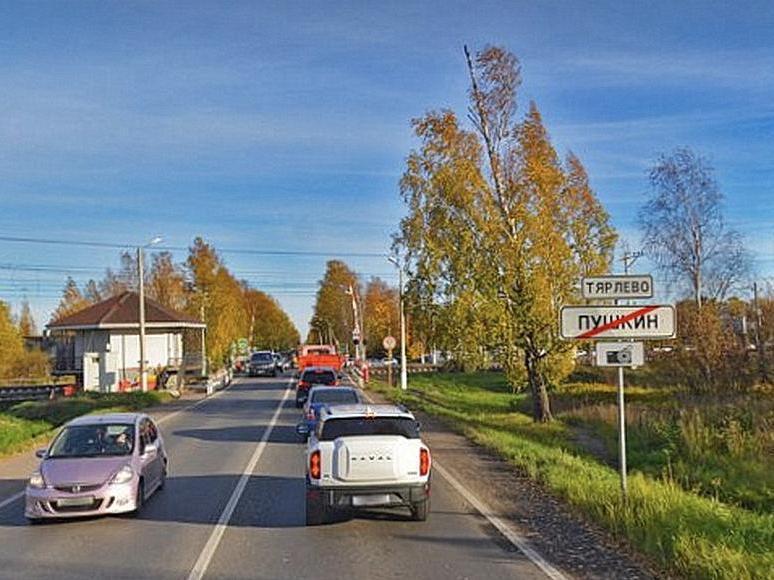

Project documents became publicly available on 28 January. The Tyarlovsky Overpass is planned for the alignment of Moskovskoye Highway (Moscow Highway) across the Vitebsk direction railway line. It was initially considered as a toll crossing but was later removed from the list. More than ten years ago, residents of the Tyarlevo settlement opposed it, suggesting moving the construction further north. Authorities see the overpass as a solution to congestion at the crossing and an opportunity to launch Lastochka (Swallow) express trains to Pushkin and Pavlovsk. Furthermore, the project is included in the transport scheme for the campus of St. Petersburg State University (SPbU).
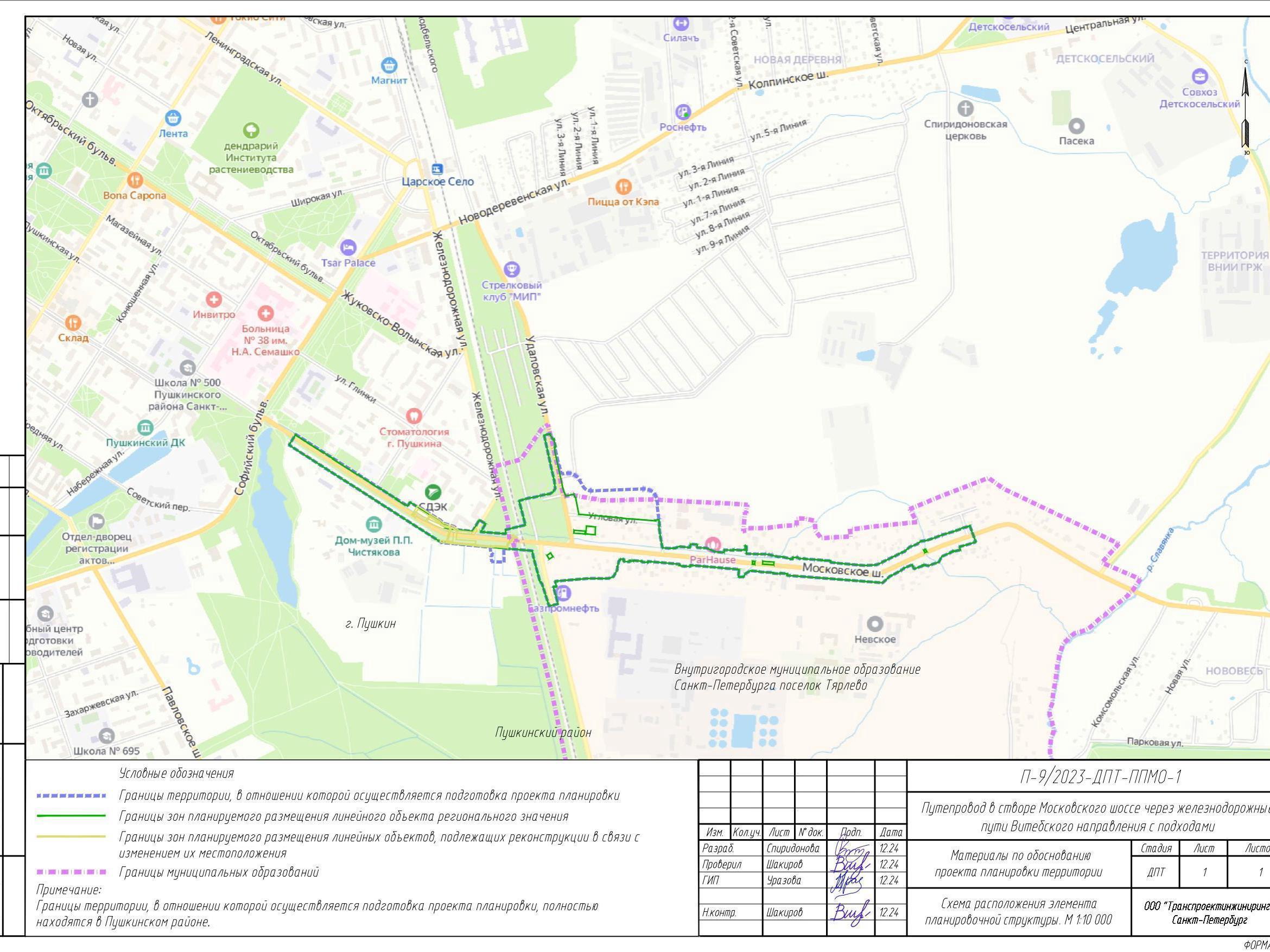
What exactly will be built here
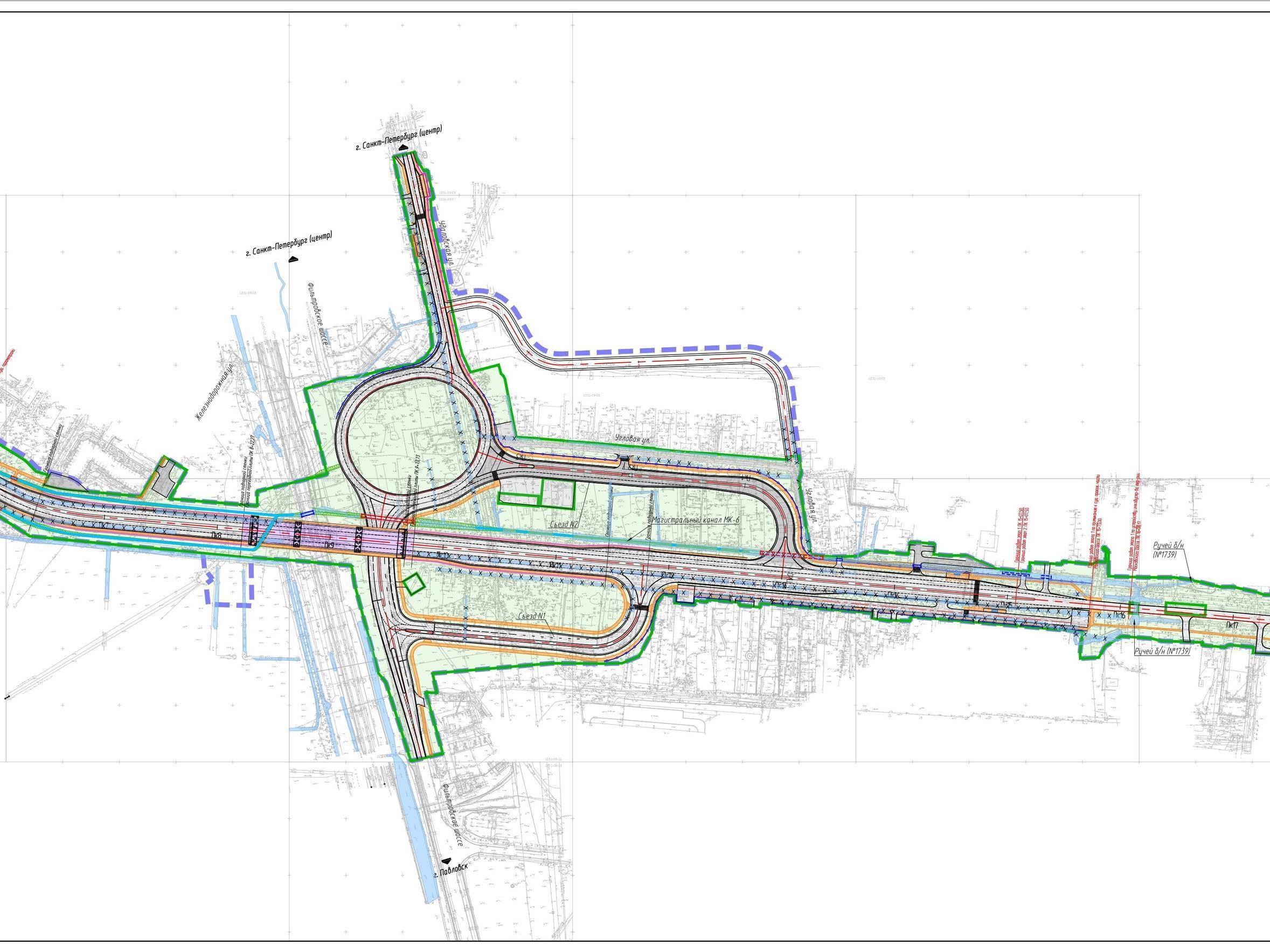
The project includes several elements. In addition to the overpass itself, two exit ramps are planned:
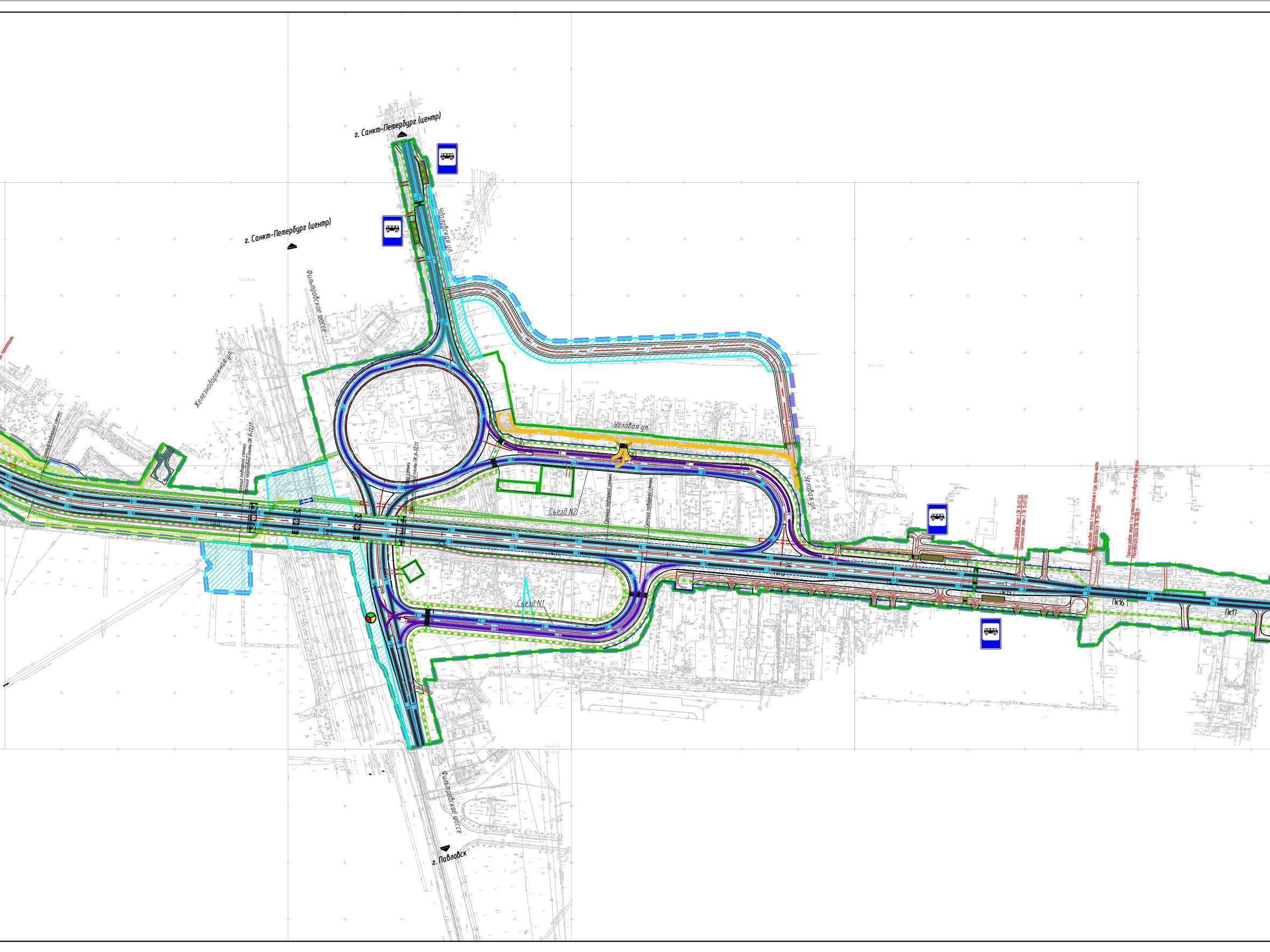
- Exit Ramp No. 1 will provide a left turn from Moskovskoye Highway onto Filtrovskoye Highway and a right turn from Filtrovskoye onto Moskovskoye.
- Exit Ramp No. 2 will allow a left turn from Moskovskoye Highway onto a roundabout intersection, then onto Filtrovskoye Highway and Udalovskaya Street, as well as a right turn from the roundabout onto Moskovskoye Highway.
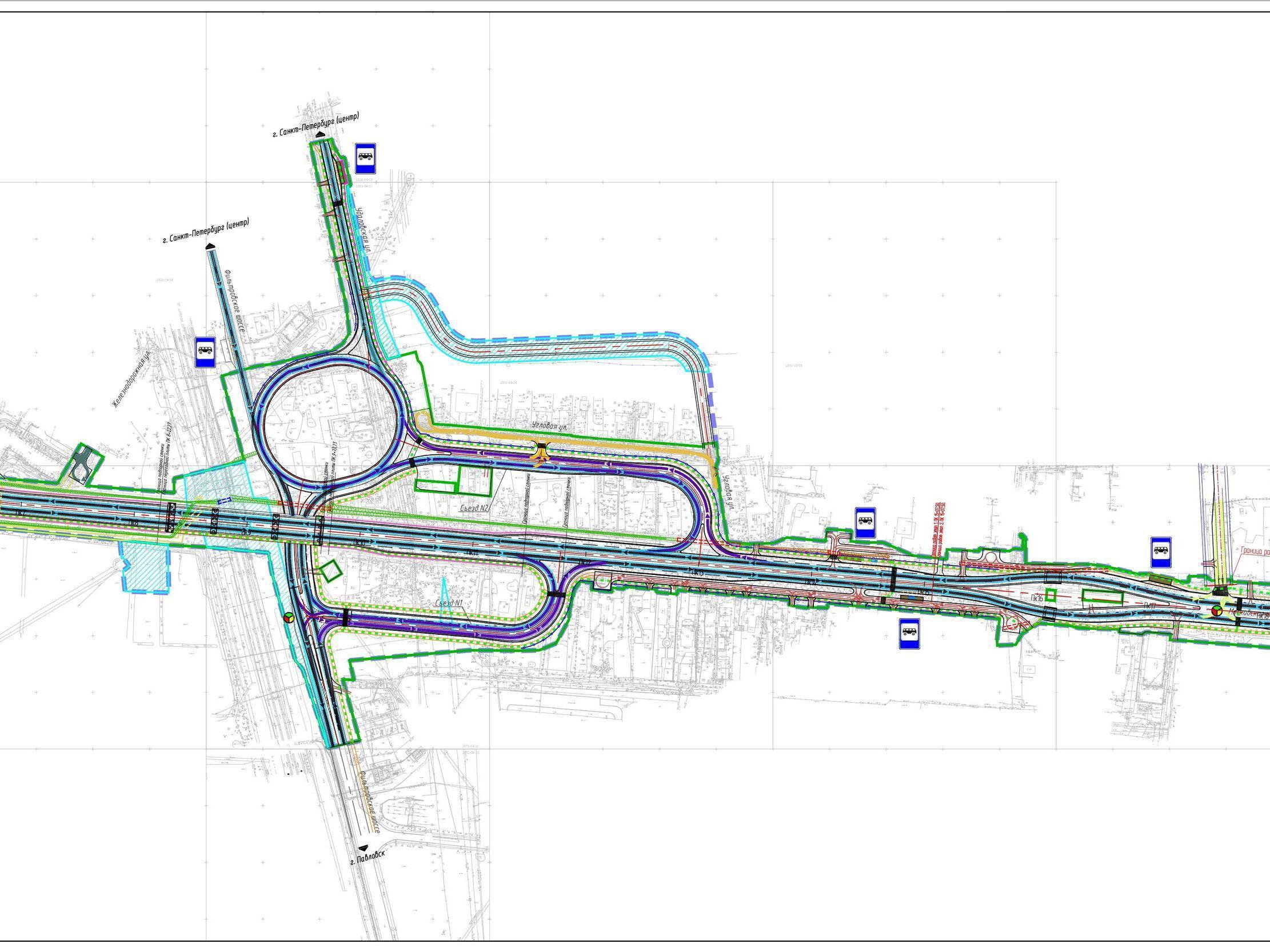
The roundabout intersection will connect Moskovskoye Highway, Filtrovskoye Highway, and Udalovskaya Street. These roads will be reconstructed and widened.
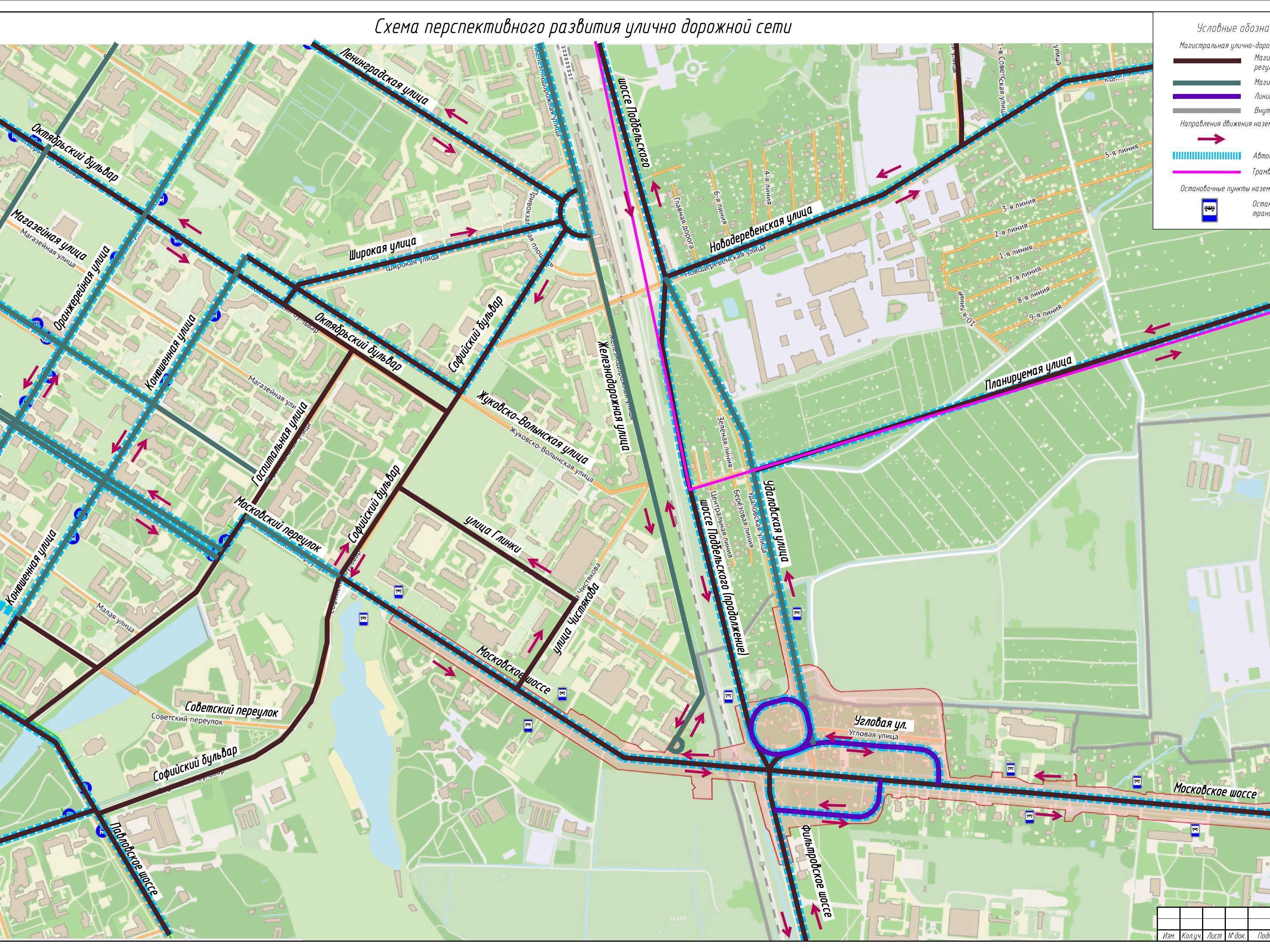
New sidewalks 2.5 meters wide and pedestrian crossings will also appear: signal-controlled ones across Moskovskoye Highway and Exit Ramp No.1, and uncontrolled ones across Udalovskaya Street and Exit Ramp No.2.
A question arises: why widen the road and increase traffic flow if Moskovskoye Highway ends at the Moscow Gates—a monument that allows only one lane in each direction. The designers explain: «In the prospective development of the section… one-way traffic will be provided from Sofia Boulevard to Chistyakova Street (that is, from the gates — ed.), part of the traffic flow will be directed to Glinka Street. This solution is due to the fact that Moskovskoye Highway cannot be brought to standard parameters because of the presence of the cultural heritage site of federal significance »Moscow Gates with Guardhouses.«»
What about the monuments
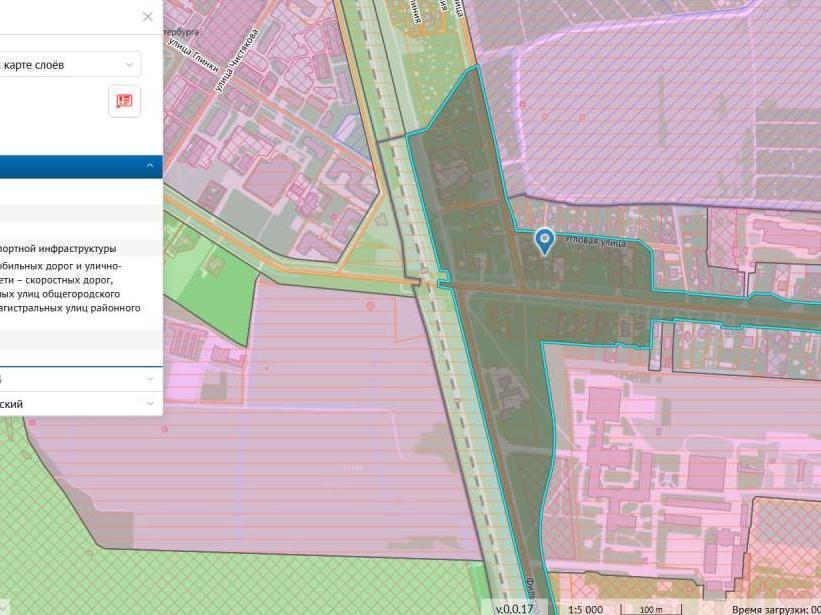
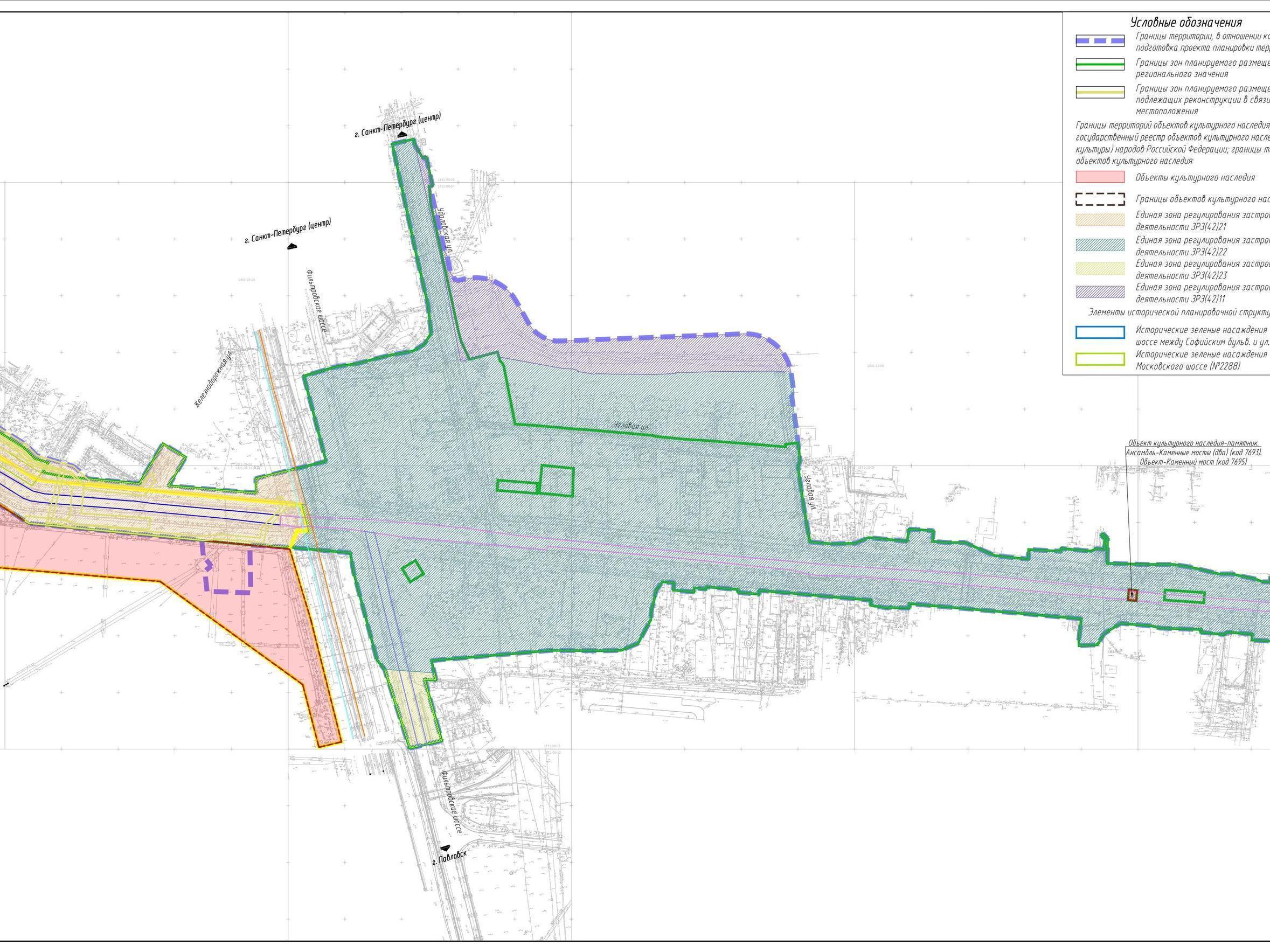
The historical route of Moskovskoye Highway in this location has not been recognized as a cultural heritage site. However, the Moscow Gates remain protected. Two more sites fall within the construction zone: the former buildings of the Fridentalskaya Colony at Moskovskoye Highway, 16 (recently restored) and two stone Bazhenov bridges over a stream near houses No. 47 and 67. The bridges have the status of identified cultural heritage sites, and they will either be included in the register or lose their protected status. The documentation states that construction will not affect the bridges, but their preservation must be ensured. Meanwhile, a draft order to refuse their recognition as monuments has recently appeared.
Construction in Pushkin is associated with numerous protective regimes. The historical structure must be preserved here: the building lines, the railway branch, and the visual axis of the real school building. The overpass height is limited to 10 meters, which, according to the authors, will allow these conditions to be met.
What about the trees?
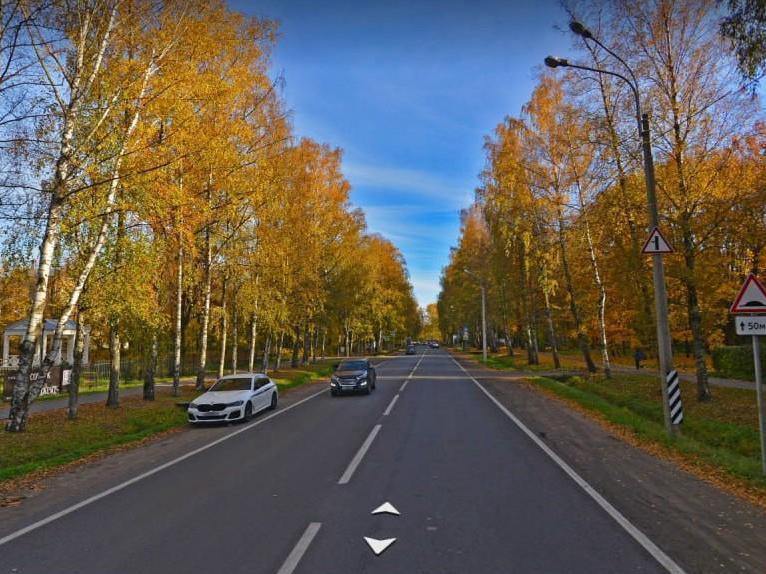
The situation with green spaces is problematic. Widening Moskovskoye Highway to four lanes will require cutting down part of the trees of historical landscaping. The documents note: «The design solutions provide for partial cutting of trees falling within the boundaries of historical green spaces. This decision is forced, as transplantation is impossible for several reasons.»
First, effective transplantation is possible only for young trees up to 5–7 years old, while here the age reaches 52 years. Second, the trees grow too close to each other. According to standards, transplanting a tree with a diameter of 30–66 cm requires a root ball of 3.2–7 meters. However, the distance between trunks does not exceed 5 meters, making the operation impossible without damaging the roots. Therefore, compensatory planting of the same number of trees of the same species is planned.
The designers emphasize: although the area is considered historical, the trees themselves were planted no earlier than 1972 and are not historical objects.
What about the houses?
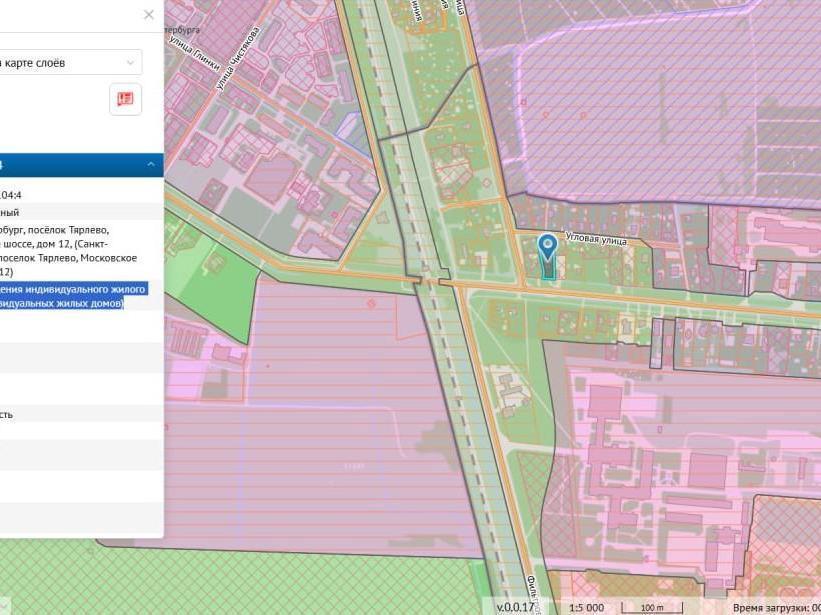
Construction will directly affect residents. The list of objects slated for demolition includes about thirty private houses along Moskovskoye Highway in Tyarlevo. The plots under these houses are subject to seizure. According to land use rules, the territory is classified as a road zone, where residential development is not provided. At the same time, the register for each plot records the permitted use—for individual residential construction.