Technology, psychology, and love: Restoring amputees to full life


Ten years ago, the phrase “bionic prosthesis” sounded like science fiction. Today, microprocessor knee modules, 3D modeling and digital design have become part of the daily work of Russian prosthetists. Mikhail Ishkov, general director of the Bez Barierov (No Barriers) group of companies — one of Russia’s leading prosthetic manufacturers — told us how the prosthetics field currently works. Why is the main goal not just to make a prosthesis, but to restore a person’s usual life? What really determines the success of rehabilitation? And why can a multi-million-ruble bionic prosthesis sometimes yield to a simpler design?

The Bez Barierov group of companies has been operating since 2014. Today the network unites 15 centers in 12 Russian regions — Moscow, St. Petersburg, Krasnodar, Sochi, Rostov-on-Don, Yekaterinburg, Orenburg, Sevastopol, Simferopol, Stavropol, Vologda, Samara, Kirov, and Yoshkar-Ola.

A prosthesis is only the beginning

In 2025 alone, the enterprises of the Bez Barierov group manufactured more than 6,000 prostheses. Among the patients were over 1,500 participants in the special military operation and about 3,500 civilians. In the first half of 2026, the company has already produced more than 4,000 prostheses, confirming a steady increase in workload. But far more important than the number of devices made is the quality of rehabilitation.

— We never work on the principle of “made a prosthesis — goodbye,” says Mikhail Ishkov. — A traumatologist-orthopedist, a prosthetist engineer, a physical rehabilitation physician, an exercise therapy instructor, a physiotherapist and a psychologist all work with the person simultaneously. This is necessary because a person who has lost a limb typically needs to solve several tasks at once: restore physical fitness, relieve pain, overcome the psychological fear of “verticalization” — and start walking again.

Therefore, teamwork of specialists becomes one of the main factors in recovery. Another, no less important factor is the correct choice of prosthesis.

When the conversation turns to modern technology, most people imagine bionic hands or microprocessor-controlled knee modules. Such solutions do exist and are actively developing. But Mikhail Ishkov suggests looking at innovations differently.
— The best prosthesis is not always one that costs several million rubles, but a solution that truly suits the person and helps them live a full life.
Sometimes mastering a complex bionic system turns out to be so difficult that the person almost stops using the device. A simpler mechanical design allows quick adaptation, returning to work, simple household tasks and ordinary life.
That is why the selection of a prosthesis must always be individual. It is important to consider not only the nature of the amputation, but also the person’s lifestyle, physical condition, profession, age and psychological readiness for rehabilitation.
Why 3D technologies are changing the industry
But progress does not stand still, and modern digital technologies have already become part of the daily work of specialists.
At the Bez Barierov centers, they actively use 3D scanning and computer modeling, which allows them to manufacture prostheses faster, more accurately account for the patient’s anatomical features, and reduce the number of adjustments.
Digital design is especially effective in manufacturing upper limb prostheses. For leg prostheses, the task is much more difficult: it is necessary to model the distribution of load when walking, which requires highly qualified engineers.
— We understand that the future lies with these technologies. There are few specialists at this level now, but gradually digital manufacturing will become the standard for the entire industry, says Mikhail Ishkov.
Even severe amputation is not a death sentence
In recent years, the possibilities of modern rehabilitation for people facing amputation have expanded significantly.
Today, specialists work with patients even after paired amputations, combined trauma1 and high thigh amputations. Not long ago, such cases were considered extremely difficult.
But perhaps more important than all the technology and achievements of modern medicine is the person’s inner readiness to overcome the moral trauma of losing a limb and to work day after day to regain lost skills.
— A great deal depends on the person’s psychological state, their motivation and desire to become independent again. People often think that as soon as they are given a prosthesis, they will immediately be able to stand up and walk. And when it turns out that this is not the case, and they literally need to learn to walk again day by day — and this can be physically painful and difficult — some prefer to give up and move around in a wheelchair. To prevent this, they need not only the help of a whole team of our specialists, but also enormous motivation from the person themselves and, of course, the support and love of their loved ones.
According to Mikhail Ishkov, the path from the first visit to confident walking can take from several weeks to two months. But there are exceptions, when patients begin to move independently just a few days after receiving the prosthesis.
Sometimes it is harder for a person to take the first step psychologically than physically, so the work of psychologists at Bez Barierov begins even before the prosthesis is made and continues throughout rehabilitation.
— It happens that the prosthesis is already completely ready, but the person cannot yet allow themselves to stand on their feet again. Until internal fears are overcome, we continue to work precisely with them.
That is why the centers pay special attention not only to medical care, but also to emotional support for patients.
Return to society begins with meeting those who have already walked this path
Even after mastering the prosthesis at the level of a confident user, rehabilitation cannot be stopped, says Mikhail Ishkov. It is no less important for the person to feel like part of society again — and this is another task that the Bez Barierov centers address.
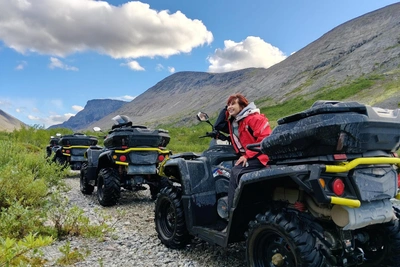
The company has long been developing its own patient community. In every city where the centers operate, joint outings into nature, family holidays, master classes and sports events are regularly held.
The largest project is the “Sport Without Barriers” festival, which takes place annually and gathers about 250 participants from different regions of the country. Patients come in entire teams representing their cities, and with them — doctors, prosthetist engineers and rehabilitation specialists.
— For a person after amputation, it is very important to see that there are people nearby who have already walked this path. When they see others running, traveling, playing sports, working, they begin to look at their own capabilities differently.
At the same time, the competitions are not for sports records, but for the same training of everyday skills that become a difficult task for a person with a prosthesis. For example, people with upper limb prostheses perform tasks to practice precision of movements: pick up an object, hold it, identify the shape of an object by touch. For participants with leg prostheses, courses of varying difficulty are prepared so that everyone can test their abilities in safe conditions.
During the festival, patients can not only communicate with each other, but also test new components. For instance, try a different foot or knee module and, together with specialists, evaluate how suitable such a solution would be for them.
According to Mikhail Ishkov, it is precisely such meetings that often become the decisive moment in rehabilitation. When a person stops perceiving themselves as a patient and begins to see people around them who are already living an active life, the return to a normal routine happens much faster.
Quality matters more than scale
Despite an extensive network across the country’s regions, today the Bez Barierov group is focusing not so much on opening new centers as on improving the quality of work.
The company has created its own internal audit system, improved quality control of prosthetics, and developed specialist training.
At the same time, the company is expanding its own production of medical devices and components for prostheses.
— Our goal is not simply to replace imports. We want every person in need of a prosthesis to have the opportunity to receive truly reliable, safe and convenient devices. In our work, behind every technical solution is a human life. That is why quality always remains the top priority.
The Bez Barierov center for prosthetics and rehabilitation in Samara is located at 189 Chapaevskaya St. Contact phone: +7 (846) 211-12-80.
bezbarierov.org
1 Combined trauma — simultaneous damage to organs in two or more anatomical areas of the body.
License registration number: L041-01126-23/00363661 of 28.09.2021.