St. Petersburg chooses 58 addresses for greening restoration
The authorities of St. Petersburg have preliminarily identified 58 locations in the city's historical center where lost green spaces are planned to be restored. This was announced by the head of the environmental committee, Kirill Soloveychik.
Feb 1, 2026 0
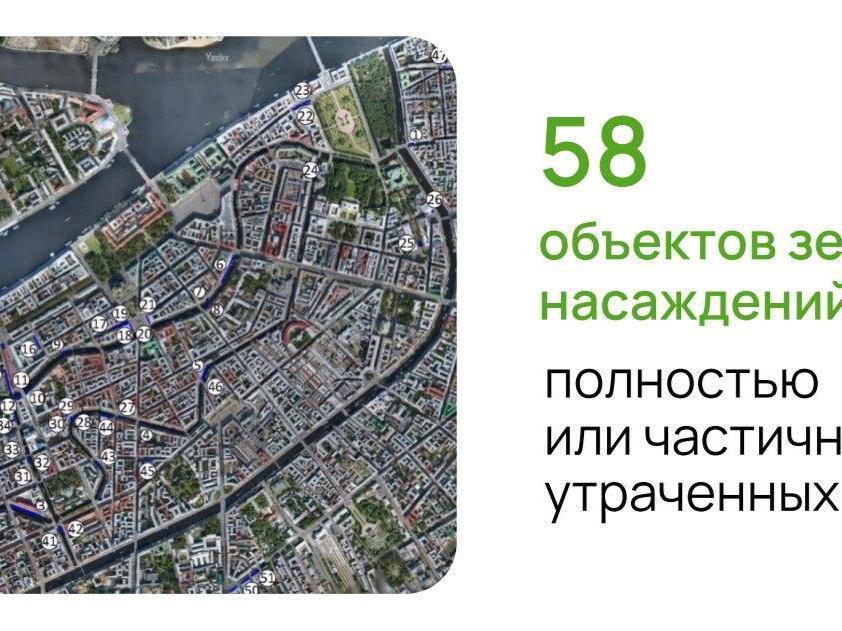

The environmental committee has identified preliminary locations in St. Petersburg«s historic center for restoring lost greenery.
Source:
The concept for the development of St. Petersburg«s urban ecological framework was presented on January 22 at a TASS press conference by the head of the environmental committee, Kirill Soloveychik. The document was prepared jointly with researchers and contains a preliminary list of 58 addresses in the historical center where lost greening is planned to be restored.
Soloveychik detailed the work carried out: «In 2025, we conducted extensive work with scientists, identifying elements of the urban ecological framework in St. Petersburg with the formation of cores, buffer zones, and local elements. Using modern digital technologies, we determined the connectivity of all these elements, and thus arrived at address-specific plans for greening restoration in both the historical and overall city center. Together with colleagues from KGIOP and KGA, we compiled a similar list for the development of greenery on embankments.»
Specific addresses are not yet being disclosed, and the compiled list may be changed. The program covers both the creation of tree groups and the planting of individual solitary trees. Additionally, as part of the ecological development of embankments, 19 water bodies have been taken into account.
Implementing these plans will require combining the efforts of several committees of the city administration.
Earlier, the head of the improvement committee, Sergey Petričenko, stated that to revive greening lost since Soviet times, containers and special structures are expected to be used. He explained that engineering utilities often hinder the direct planting of trees.
Read more