'People and Media Must Track Funds' in Volgograd Capital Repair Fee Clash
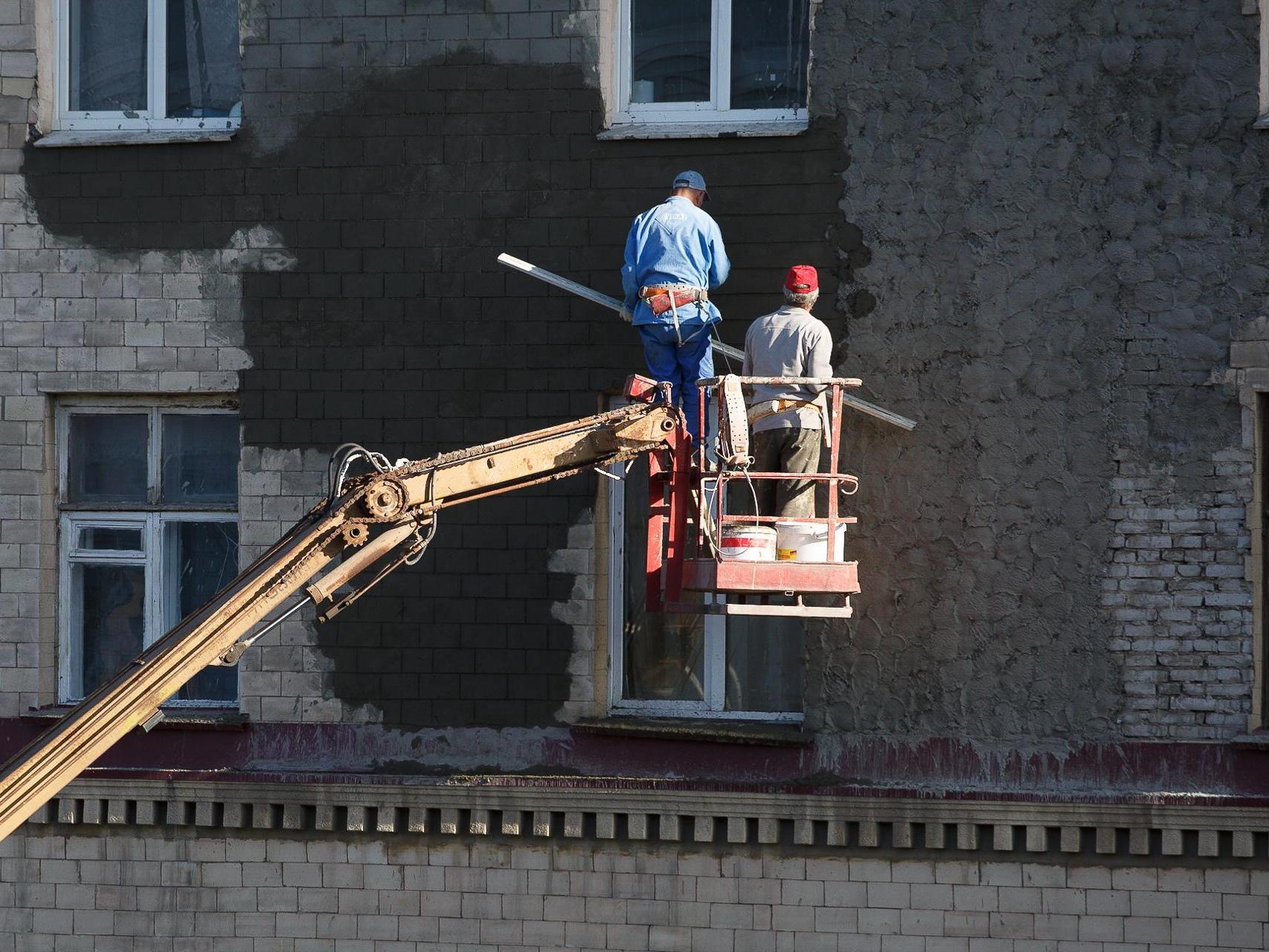

The article features a debate over the justification for sharp increases in capital repair fees in Volgograd.
At the beginning of 2026, capital repair fees officially surged sharply. According to economists, the astronomical rise in tariffs is completely unjustified, while officials claim the fee increase was a necessary measure. Meanwhile, an expert in urban planning criticized the very concept of the capital repair fund.
Capital Repair Fees Shouldn«t Outpace Inflation
From January, the minimum capital repair fee, according to a decree by the Volgograd Region administration, amounted to 13.66 rubles per square meter of total living space (approximately $0.15 at current rates), while in 2025 this figure was 10.93 rubles (about $0.12). Compared to last year, the tariff grew by 25%, even though, according to official data, the inflation rate in 2025 was only 6%.
“Inflation was set by federal Rosstat at 5.59%! And the tariff increase is almost 25%, almost five times higher! Economically, such growth is completely unjustified,” says Doctor of Economic Sciences Igor Belskikh. “Neither goods nor services in the construction sector have risen in price as sharply as capital repair fees. There is even stagnation in wages, which makes one think even more about the situation. Paying capital repair fees for an apartment with an area of, for example, 80 square meters will already amount to more than 1000 rubles per month (about $11 at current rates), which is a fairly significant sum for a large part of the population.”
Tariffs for 2026 and the following year, 2027, were determined by a regional decree issued back in 2024.
“Back then, there was a different economic situation, a different inflation indicator. Perhaps such tariffs were justified then, but it is always necessary to take into account the current economic situation and make adjustments. Why not publicly check the justification for such a tariff increase and take measures to reduce the new tariff to the inflation level based on the results of 2025?”
Capital Repair Has Become 50% More Expensive
Meanwhile, the housing and utilities committee of Volgograd Region believes that the tariff increase fully corresponds to the current economic situation.
“According to information from the UNO «Regional Capital Repair Fund,» the calculation of the tariff is based on the actual cost of capital repair work. Among other objective factors are a shortage of contracting organizations, rising material costs, and so on. Over the past three years, the cost of capital repair has increased by more than 50% — the previous tariff did not cover actual expenses, so a planned increase in the minimum fee amount became a necessary measure,” the officials« response stated.
The authorities also note that currently, the minimum capital repair fee in Volgograd Region remains one of the lowest in the Southern Federal District.
The tariff regulation committee stated that the calculation of capital repair fees completely corresponds to the modern economic situation, contrary to the economist«s opinion:
“Planning for the growth of the capital repair tariff is carried out taking into account the current economic situation,” the committee responded. “Given the social significance of the issue, a phased transition to increasing the minimum fee to the necessary amount is applied, as provided for by the current federal norm. The key principle in approving the fee amount remains its affordability for citizens, taking into account their total housing and utilities payments.”
The Public Should Be Given the Right to Monitor Where Money Goes
Igor Belskikh offers several solutions to the highly controversial issue of financing capital repairs:
“The problem of housing stock repair is not a private problem of specific owners; it is a common problem for people, city and regional authorities, and it must be solved together. Why doesn«t the regional administration allocate funds from the budget for capital repair? Not only to support low-income groups but all owners, so that people and authorities pay 50-50? We only value what we pay for with our own ruble. If authorities pay for capital repair, they will better monitor how funds are collected and spent,” the professor says.
Igor Belskikh also proposes introducing control over the finances of the capital repair fund on the principle of the private sector:
“The regional administration controls the capital repair fund; ordinary people are not included there, they don«t check where everything is spent. In modern joint-stock companies, there is always a board of directors, which includes not only directors from the organization but also invited directors, that is, independent experts who monitor how work and spending proceed. When the capital repair fund is organized on the principle of the private sector, that is, when people, the public, experts, and the media control its work, perhaps trust in it will increase,” the economics professor says.
The State Should Issue Loans for Capital Repair
Andrey Kuprikov, General Director of ZAO «Volgograd Civil Project Institute,» believes that the capital repair fund tariff is calculated according to real inflation, which significantly exceeds the official rate.
“In reality, both materials and the services of workers and design organizations — everything has indeed risen sharply in price by 18–21% over the last two to three years,” says Andrey Kuprikov. “In this regard, the tariff increase is justified.”
At the same time, the expert views the very concept of capital repair funds with undisguised skepticism.
“Yes, these organizations are established by the state, there is a federal law on capital repair, but the very idea of creating a capital repair fund seems impractical to me, as enormous money is accumulated, and its expenditure and implementation are questionable. Just look at how many criminal cases are initiated against capital repair managers, how many scandals over spending, fulfillment of capital repair obligations, and so on,” the designer believes.
The expert is convinced that the existing system for organizing and conducting capital repairs has serious shortcomings:
“Without protesting against the law on capital repair at all, I reserve the right to question its practicality, the efficiency of using the huge funds collected by the fund,” says Andrey Kuprikov. “In my subjective view, the capital repair fund carries a huge corruption component; the money is practically uncontrolled.”
The interlocutor believes that the organization and conduct of capital repairs should be arranged as follows:
“Homeowners through homeowners« associations (HOA) should themselves organize the preparation and conduct of capital repairs. First, they invite specialists who assess the necessary work, create a project, draw up a real estimate for today, prepare a list of works and determine their cost. Then the state provides a loan, like under a preferential mortgage, at a small interest rate, for example 2–3%, allocates these funds to the homeowners» association, the association itself hires organizations to carry out all the work and uses this money to conduct capital repairs. Then, over a certain period, it repays this loan to the state,” proposes Andrey Kuprikov.
The expert is convinced that such an approach would help avoid many conflicts related to the quality of capital repairs and the issue of its financing.
“People pay money for years, decades, making contributions, but they don«t know how this money is later realized. Perhaps a person will even sell the housing and no longer need capital repair, and the money they paid for years, not small amounts, will not be returned to them. Moreover, the money lying in the account is »eaten up« by inflation — whether it will be preserved until the time of capital repair is a big question. Why does the state say: »You give it to us, and we will repair it for you?« No, I propose the opposite — you give it to us, and we will return it to you later. Or does the state not trust us, its citizens?” asks Andrey Kuprikov.