How echolocation evolved from horns to lasers
A hundred years ago, giant listening horns were used to detect aircraft. Today, the principle of echolocation helps drones navigate oceans and roads.
Apr 25, 2026 0
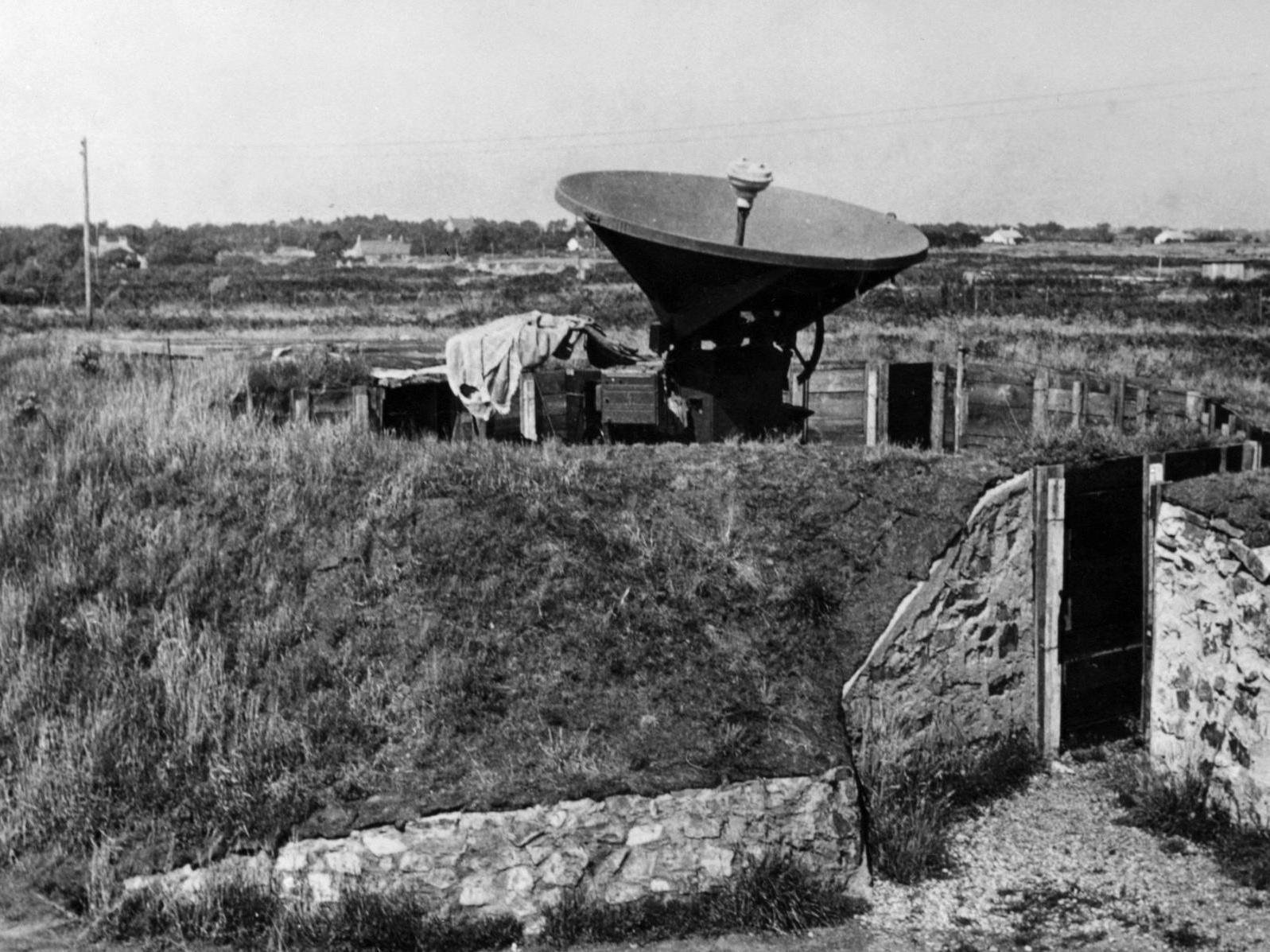

A giant acoustic horn sound locator from the 1920s, used for detecting approaching aircraft.
Source:
In the 1920s, as military aviation rapidly developed, aircraft speeds approached 200 km/h. The threat from the air demanded means capable of detecting the enemy in advance. Thus appeared sound locators — bizarre acoustic devices designed to pick up the noise of engines and propellers from many kilometers away.
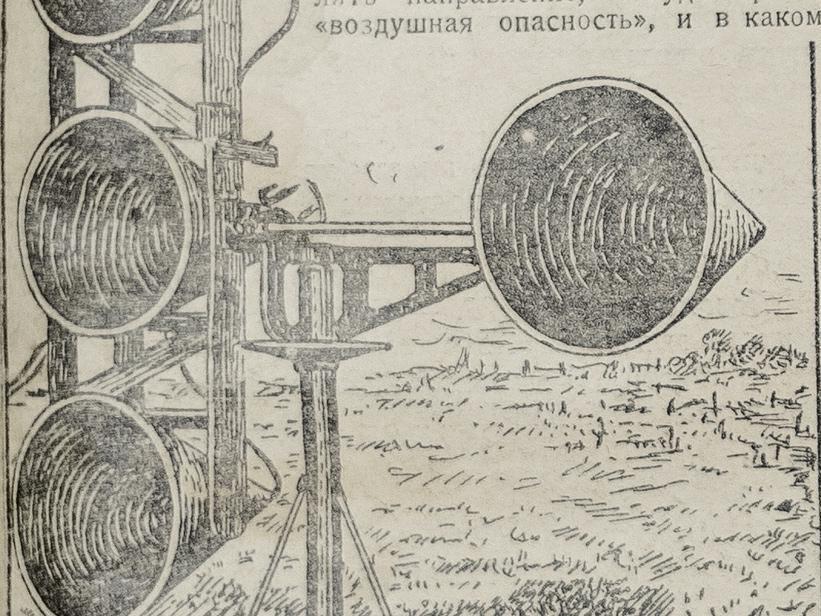
An acoustic goniometer with two pairs of horn receivers mounted on pivots, used in the 1920s.
Source:
These devices became the «ears» of air defense. Their task was not only to hear the aircraft, but also to accurately determine its direction and approximate distance. This bought time for preparing anti-aircraft guns and fighters.
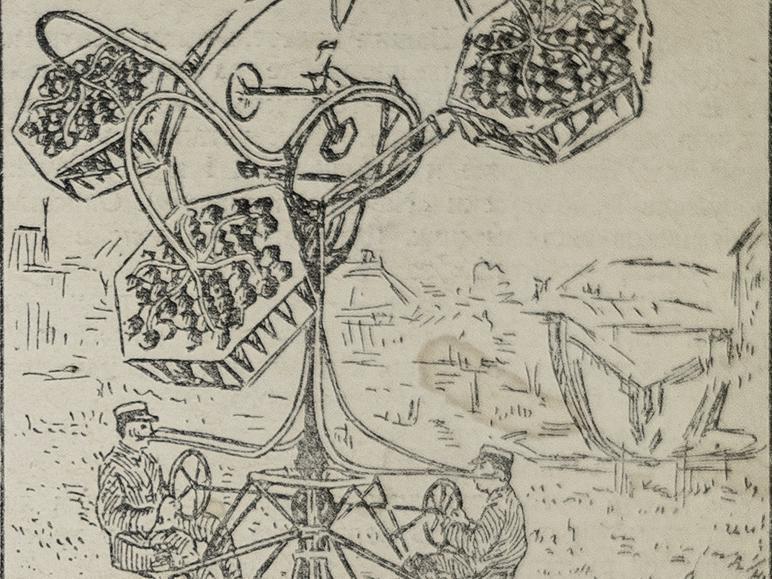
A sound locator of the Perrin system featuring many small horn receivers arranged like a honeycomb.
Source:
The simplest type was the acoustic goniometer. It consisted of two pairs of large horns mounted on pivots. Two operators turned these horns to catch the sound. When the volume reached its maximum, the axes of the horns pointed directly at the target, and the tilt angles were used to calculate the aircraft«s coordinates.
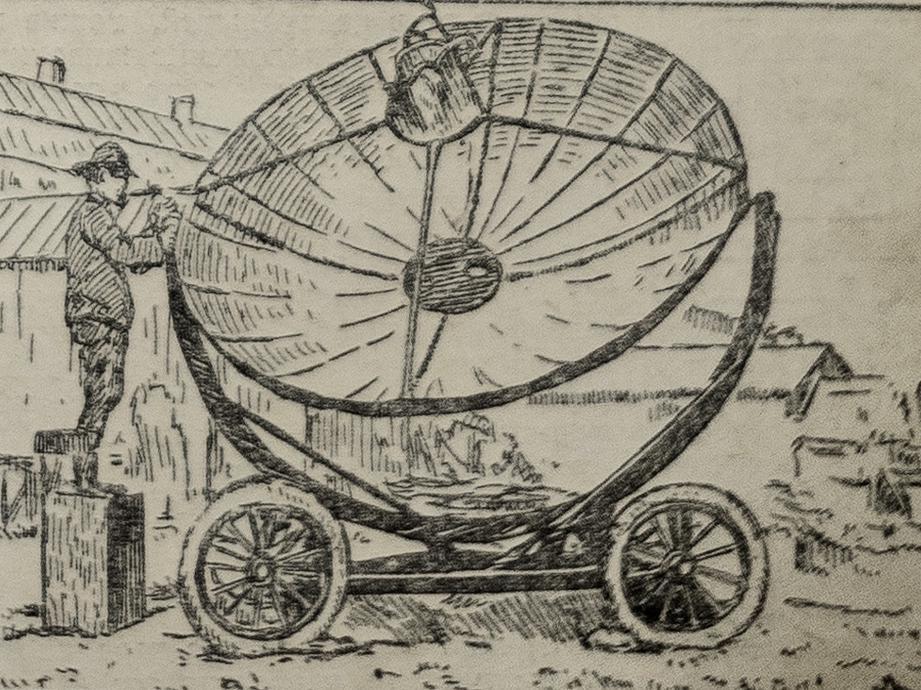
A parabolic sound locator, or paraboloid, that focused sound waves using a mirrored surface.
Source:
A more complex system, invented by Perrin, resembled a honeycomb: many small horns collected sound. Operators, sitting opposite each other, turned wheels like in a car, directing the receivers. Through special listening tubes they could hear the faintest noises.
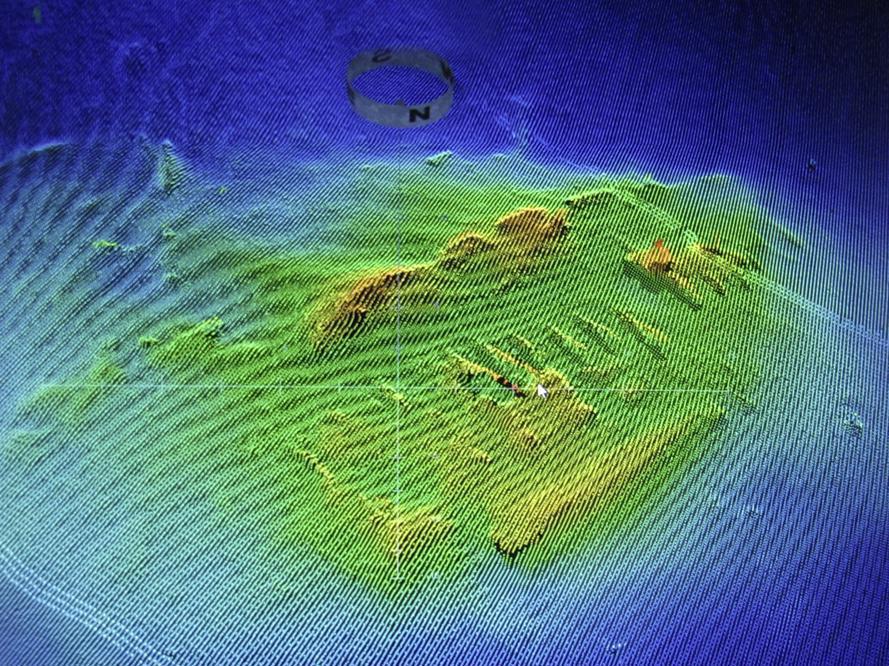
Sonar image of the USS Cumberland, which sank during the American Civil War.
Source:
The third type, the paraboloid, used the principle of a mirror. A wooden or metal parabolic mirror focused sound waves at a single point. Even the roar of nearby artillery did not interfere with operation, because the device was tuned only to sounds from a specific direction.
These mechanical «ears» were the pinnacle of technology of their time. But with the development of radar and electronics, the principle of location by reflected waves did not disappear — it transformed. Sound was replaced by ultrasound, radio waves and laser beams, leading to the birth of modern echolocation.
Today, echolocation, or sonar, remains critically important for the military. It allows detection of submarines, aircraft and missiles at distances inaccessible to visual observation. Only now, instead of the human ear, sensitive sensors and complex algorithms do the work.
In civilian applications, echolocation has stepped far beyond the military domain. In seismic exploration, elastic waves sent deep into the Earth reflect from layer boundaries, helping to search for oil, gas and other minerals. It is the same idea — send a signal and analyze the echo.
Underwater, autonomous unmanned vehicles use sonar for navigation and object detection. They avoid obstacles, survey the seabed, find sunken ships or sections of pipelines that require repair. Sonar, for example, allowed detailed study of the wreckage of the USS Cumberland from the American Civil War.
On land, a similar principle, but using light, is embodied in the lidars of self-driving cars. Laser pulses reflected from surrounding objects create a three-dimensional map of the area, allowing the car to «see» the road and make decisions.
From the giant horns of the 1920s to today«s compact electronic sensors, echolocation has come a long way. It has transformed from a means of detecting enemy aircraft into a universal tool that helps peer into the Earth»s interior, explore ocean depths, and create autonomous transport.
Read more