Boguchanskaya HPP Unaffected by Prolonged Frosts
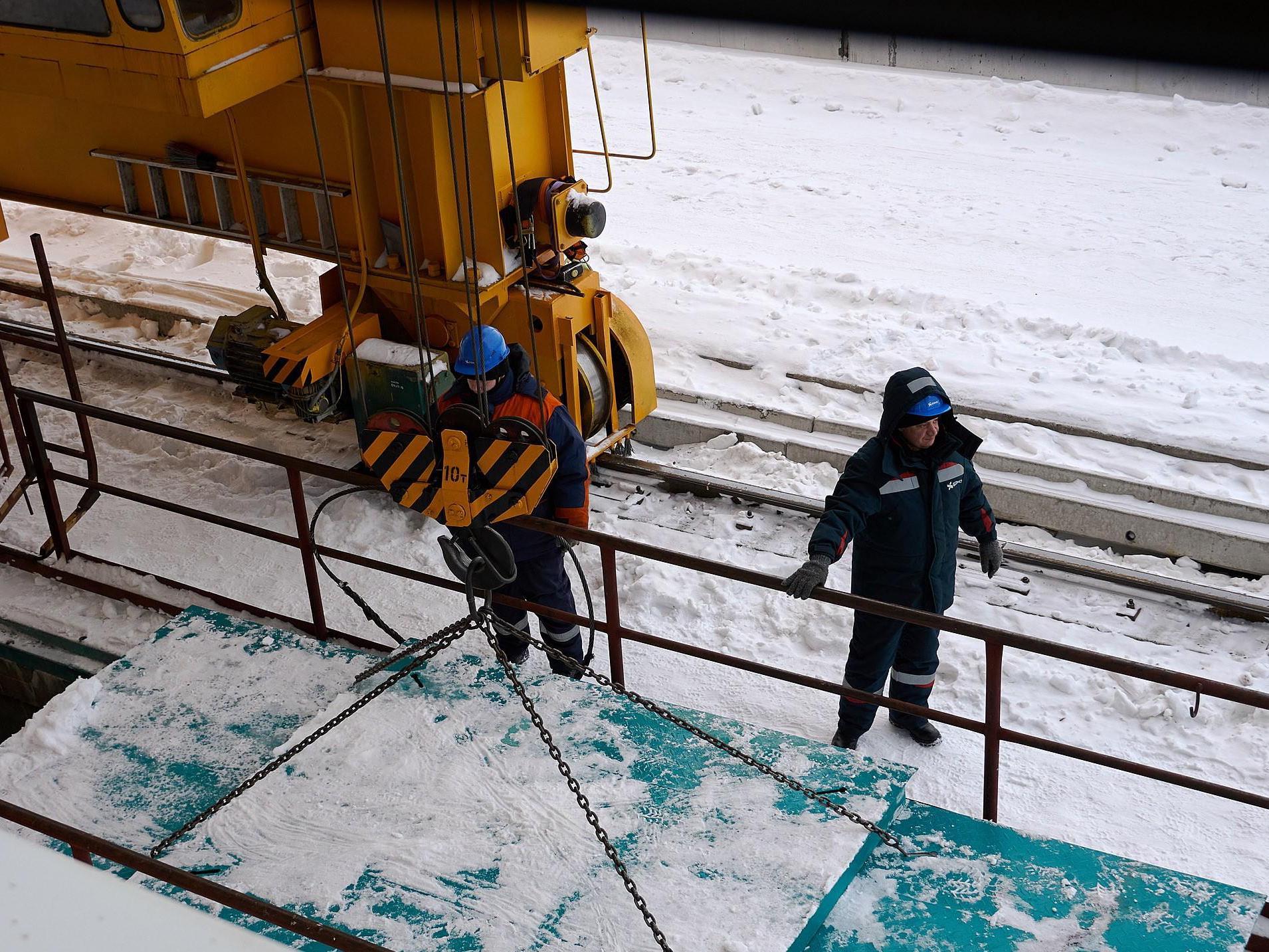

The personnel of the Boguchanskaya HPP during the summer and autumn of 2025 prepared the equipment and buildings for the 2025/2026 heating season.
In the second half of January 2026, in the area of the Boguchanskaya Hydroelectric Power Plant (HPP) under the influence of the Siberian anticyclone, prolonged frosts set in: air temperature from January 14 to 29 was below -32 °C (-26°F), on some days down to -39 °C (-38°F). Thanks to high-quality and timely preparation for the upcoming heating season, there were no disruptions in the HPP«s operation. The station produced 1 billion 451 million kWh of environmentally clean electricity and successfully fulfilled the tasks of the Siberian United Dispatch Office to ensure consumers. The average water flow through the station»s units in January was about 3090 cubic meters per second.
According to long-term observations, the average January temperature in the area of the Boguchanskaya HPP is -22.5 °C (-8°F), the minimum temperature over the entire period of regular observations of -55 °C (-67°F) was recorded on January 30, 2006. In 2026, the average January temperature was -29 °C (-20°F), and the coldest was January 15, when the temperature dropped to -39.8 °C (-40°F). For comparison: in January 2025, the average air temperature in the station area was -15.9 °C (3°F), and the minimum was -31 °C (-24°F).
The personnel of the Boguchanskaya HPP during the summer and autumn of 2025 prepared the equipment and buildings for the 2025/2026 heating season, all work was carried out as planned. The program of capital and current repairs of hydro units was fully completed, station anti-accident drills for eliminating accidents in low temperature conditions were conducted. A non-reducible stock of material and technical resources has been formed and maintained.
On the eve of the heating season, the station personnel underwent additional briefings on the features of equipment operation and labor safety in winter conditions. All buildings, structures, and premises were checked—first of all, the operability of electrical equipment, the serviceability of boiler houses, heating and fire extinguishing systems. Particular attention was paid to the integrity of the thermal envelope and roofs of buildings. On spillways No. 1 and 2, cranes of various types, lifting and sliding gates, the necessary seasonal work was performed.
At the end of January, the Yenisei Basin Water Authority, in accordance with the order of the Federal Agency for Water Resources, established the operating mode for the Boguchanskaya HPP for the upcoming month: from February 1 to March 6, average flows through the hydro units will be 3100–3300 cubic meters per second. The mode may be changed in accordance with the hydrological situation on the Angara-Yenisei cascade and the requests of electricity consumers.
The modes of filling and drawdown of reservoirs, flood passage at HPPs are established by the Federal Agency for Water Resources taking into account the recommendations of the interdepartmental working group, which includes representatives of the Russian Ministry of Emergency Situations (EMERCOM of Russia), the Russian Ministry of Agriculture, the Federal Agency for Fishery (Rosrybolovstvo), the Federal Agency for Maritime and River Transport (Rosmorrechflot), Joint Stock Company «System Operator of the Unified Energy System» (SO UES), executive authorities of federal subjects, etc.
Information on the hydrological situation of HPPs, which are part of RusHydro, is presented in the form of a daily updated infographic (16+).