'Thai Means Die': Volunteer on Thailand Dangers

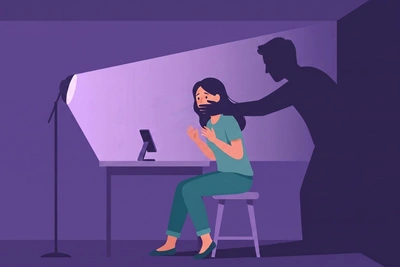
News about missing Russian tourists in Thailand frequently appears in the media and social networks. Vacationers from various regions of Russia lose their documents, fall under the influence of others, and some even end up in slavery.
Getting out of such a situation can be not just difficult, but impossible without outside help, and public figures have to get involved. One of the most well-known volunteers involved in searching for missing Russians is Svetlana Sherstoboyeva, a native of Omsk who has lived in Thailand for more than 13 years and runs the group «Pattaya from A to Z» on Facebook (owned by Meta Inc., whose activities are recognized as extremist and banned in the Russian Federation) and Telegram.
She has covered high-profile cases such as the death of a Vladivostok official in Thailand and the disappearance of Erika V., who left her daughter in a hotel, and also searched for relatives of a sailor who lost his memory, and information about veterinarian Daria from Artyom who had stopped making contact.
A correspondent for VLADIVOSTOK1.RU spoke with Svetlana Sherstoboyeva to find out how she got into volunteer work, the most horrifying situations she has encountered, and what Russians planning a trip to Thailand need to know.

«No Other Country Has Struck a Chord Like Thailand»
Svetlana Sherstoboyeva was born in Omsk, spent her childhood in Berdsk, Novosibirsk Oblast (Russia), where she graduated from school. Later she entered the Faculty of Journalism at Chisinau State University (Moldavian SSR) but transferred to Tomsk State University, and it was in that city that she blossomed as a journalist.
Svetlana«s move to Thailand is a separate story that resembles a TV series script. In 2012, she quit her job, personal problems arose, and she moved from Tomsk to Novosibirsk.
“In Tomsk, I worked as a chief editor and startup manager at «Russia 24. Tomsk.» I headed that channel, but due to some political reasons, there was no place for me there, and I moved to Novosibirsk for a wonderful position at VGTRK. There, too, I was an editor. I sold my apartment in Tomsk and bought an apartment in Novosibirsk,” Svetlana said.
Svetlana met her current husband Alexander completely by chance. He turned out to be the head of the building she moved into, and she approached him because she wanted to install a garage.
The structure did not last long: officials from the city administration quickly appeared and sealed it, and then Svetlana turned to Alexander again. On April 21, 2012, he invited her to his dacha to discuss all matters and spend the evening together, and on November 14 they got married, and a week later they set off on their honeymoon to none other than Thailand.
— Why did you decide to fly to Thailand in particular? Had you been to other countries before?
— At that time I had visited many countries on business trips and vacations, but no other country struck a chord like Thailand. I didn«t want to live in any other country, and my husband was there for the first time. We went there and stayed.
We sold our apartments, cars, bought a house here, and started a new life.
— An interesting contrast: you are a Siberian, from a cold place. Why did a country with the opposite climate catch your attention so much?
— That«s exactly why it caught my attention. Probably there are no such wonderful countries where the climate is comfortable and it is summer all year round. You can swim here always, and I love swimming with fins, I adore snorkeling. There was no acclimatization; we immediately started enjoying ourselves.
— Do you live in Bangkok?
— No, we didn«t consider the capital because you can»t swim there. We live in Pattaya.
‘I Started a Blog and People Began Asking for Help’
— How did you get into volunteer work? Did you have any experience?
— Since I had been in journalism all my life, after moving I started a group, something like a blog. I already knew Thai at that time, and at first there were small requests, like helping to get a deposit back.
Then the first big task appeared, which we solved — finding a mother for a girl named Siam with Thai roots, who participated in the show ‘You«re Super! Dancing’ (6+) on NTV. That girl was 15 years old, and she had always wanted to find her biological mother, but all she had was her birth certificate issued at a Bangkok maternity hospital. It wasn»t even a certificate but a worn-out old piece of paper.
Taking that paper and setting out to search, I found her Thai mother, who was in Sweden at the time. After that, I think people began to understand that if I could handle such a task, they could turn to me.
Now we have a lot of lost people; we can no longer even identify them by name and give them nicknames.
— You mentioned in your posts that your husband worked in law enforcement.
— Yes, he was in operational work and state security, and I worked in the investigations department and was an editor. We worked for a newspaper, investigated, found things, but of course it was nowhere near the kind of activity I do now.
— Does your husband«s work experience help in finding missing people?
— We do everything together, brainstorming when we hit a dead end. We think about where to go next, although sometimes there is nowhere to go. Unfortunately, there is one person we still haven«t found, and we don»t know where he is. The assumption arises that he is no longer in Thailand, because anyone leaves traces, but he has not been found.
— So your husband is fully involved in the searches?
— Yes. The only thing is, if a trip to Bangkok is required, my husband doesn«t really like going there and searching. Then I take a taxi and go. If I need advice or I don»t know what to do, I call him on the phone, we quickly discuss it and develop a further plan.
Svetlana and her husband periodically return to Russia; for example, they took part in one of the recent episodes of the talk show ‘Pust Govoryat’ (Let Them Talk, 16+), dedicated to Russians who escaped from slavery.
‘No Two Searches Are Alike’
— What do you do first when you learn about the disappearance of a Russian tourist? What is the action plan?
— No two searches are alike. In one case, it is known where the person was; in another, there is no information at all, so there is no specific algorithm; each time it is a new scheme. I give the relatives of the missing person the consulate«s email address so they can write a letter, but the consulate does not conduct search operations; they don»t have a team. The police also do not accept reports without the personal presence of relatives, so the only way to find the person is probably me.
Every month there are more volunteers in other cities. Translators appear, but their work must be paid for, and relatives must pay if someone goes to the police. Sometimes there are cases where I personally request or pay for the services.
— Speaking of that. In your posts you sometimes mention that you can pay for flights or legal expenses free of charge. Where do you get the money?
— We have a small fund that I can manage, but I have to report to the readers. If we need to buy a ticket for citizen Ivanova, who is in a deportation center, but she has no relatives, we announce a fundraiser. People can send 100,000 rubles (about $1,100 at current rates), and the ticket costs 83,000 rubles ($922). We don«t give that 17,000 rubles ($189) to the person but keep it in the fund. The money is mainly collected from leftovers; we call it a »savings nest egg.«
— What determines whether you will help a person financially or not?
— If the person has relatives, we don«t take money from the fund. Because of this, some find it strange when a person is behind bars and I start asking where his mom and dad work. We conduct a cross-interview with the parents to understand whether they can buy a ticket or not. It is very difficult to deceive us; we look into social networks and use other verification methods.
— Have there been cases where people tried to deceive you?
— No, I don«t recall such a thing. Usually, if a person has money, they buy tickets without a word.
— How do people react to free help? Have there been those who saw a catch or tried to repay the money?
— Very rarely do people return the money. Usually, people who end up in such a situation and have no relatives or ability to get a loan are troubled individuals. They were troubled and remain troubled. We got them out of prison, they came to Russia, but their situation hasn«t improved. Some say, »Lend me money,« but we don»t lend; we give it outright. If the person later has the opportunity, they return it.
— But you have never asked for the money back?
— Many people disappear altogether when they leave. We are not going to run after them demanding money; we have enough to do. This is charity money.
— Are there people you will not help financially?
— We have a rule: we do not spend money on drug addicts and alcoholics under any circumstances.
— Are you talking about those with a long-term addiction, or does this also apply to a careless tourist who was drawn into something?
— «A careless tourist drawn into something» – that doesn«t happen. I am not going to check cameras to see if someone was drawn into drugs or used them voluntarily. It is impossible to find out.
— But informational support will be provided?
— Yes, we also look for relatives and friends. For example, there was a girl in Phuket who was going crazy on drugs, but I found both her grandmother and friends. They are worried and ready to buy her a ticket. Helping in that way – yes, with money – no.
— You have a large group on Facebook (owned by Meta Inc., whose activities are recognized as extremist and banned in the Russian Federation). Has it become more difficult to communicate with people and find relatives since the social network was blocked in Russia?
— I don«t experience any particular difficulty. I have Max, and even if the parents don»t have it, they can call me from Russia. It«s a paid call, but if a child has disappeared, probably no amount of money is too much.
‘Nine Out of Ten Relatives Are Dissatisfied’
— Have there been people who behaved strangely or even ungratefully after being rescued?
— Yes. The most ungrateful lately were the friends of veterinarian Daria from Artyom. She responded the same day I made the post, but they considered it a coincidence. They tried to convince me not to write that she had been found. I did not do that and wrote when she was found and under what circumstances. After that, they took offense and stopped communicating with me, but they used all the contacts I gave them to get her out.
A very strange case now. I can«t say it»s ingratitude, but a request came to my group about a missing girl; her mother is looking for her. I got the mother«s phone number, we talked – it turned out the daughter disappeared six months ago under strange circumstances. I said, »Listen, your daughter has been missing for six months, no news from her, but you haven«t written to the consulate, taken any action.»
I wrote to her everything that needed to be done: send a full-length photo, face, and so on. Usually, when a child goes missing, parents send this information within 3–5 minutes, but after that she stopped answering the phone and sent nothing. I have two options: either something happened to the mother, or there is some dark story and she doesn«t want to expose her daughter, but without publicity it is impossible to find the person. I can»t run all over Thailand; it«s a huge country.
But of course, I worry about both the girl and the mother. We often have situations where the actions of children cause stress for their mothers, leading to strokes. Once they wanted to turn a plane around because a mother had a stroke on board. Another ended up in the hospital when her son was in a hopeless situation: he needed blood, but there was none. She got upset and immediately ended up in the next ward.
Another time, a girl ended up in the hospital and forgot who she was. We found her name and surname, relatives, but when she recovered and flew home, she immediately went to her mother«s funeral: her mother could not handle the stress.
— Have there been moments when you wanted to quit what you are doing? Perhaps because of such cases?
— Probably not. My whole life is in journalism, although there have been lawsuits and dissatisfied people, but we have a resilience and a healthy irony about everything. Everything I do, I don«t do with a serious face and a sense of special importance. I find a way to laugh at the situation in everything; it relaxes me and prevents me from getting too deeply immersed.
— Speaking of humor. In your groups, you not only have dry posts about searches, but entire stories, sometimes seasoned with irony and sarcasm. How do people react to that? Are there many dissatisfied people?
— Probably nine out of ten relatives are dissatisfied with my style. They think that I should, like LizaAlert, post photos, height, weight, and that«s it. Who will search for people based on those small announcements without knowing the story? There was a situation where two very similar cases occurred: two different groups of girls and guys said they were going to one country but actually went to another – and disappeared. Even Sasha and I couldn»t figure out who was who, so what would a reader understand?
We call this the «paired case theory,» when similar situations happen to different people, and it occurs quite often.
— And how do people react if some discrediting information about their loved ones appears? For example, about drug involvement?
— I can say that if we are looking for an alcoholic, we need to look near liquor stores. If a person is a drug addict, we need to look near cannabis shops. So I am not going to hide that information; no pleas not to write something work on me. I will do what is needed to find the person.
— Are there people you still communicate well with, are friends with?
— Yes, there are people who have become our friends. Just a week ago, Alexander and I again talked to some crazy mother; it amazed us, but later I called another woman who had buried her son in Thailand, and I told her, «You are our best mom.»
‘No Other Country Has So Many Missing People’
— Many discuss the stories you cover on forums and social networks. Some users admit they have become cautious about holidays in Thailand because they have the impression that it is dangerous there. Is that really the case, or is Thailand demonized, and the impression mistaken?
— Thailand is not being demonized. I think that no other country has as many missing people as here, but thank God they are found.
— What is that connected with?
— I think it is connected with the legalization of marijuana. People not only go missing but also end up in psychiatric hospitals. Clinics are already overcrowded; it is very difficult for a farang to get in.
Farang is a word used in Thailand, Laos, and some other Asian countries to refer to white tourists and foreigners of European origin.
— What should a tourist do to be safe in Thailand? How to prepare properly?
— You must definitely take out medical insurance, and if you are going to ride a motorbike or a water scooter, you must take an extension with extreme sports coverage. Then, if you get into trouble, everything will be paid for. There is also an extension for alcohol: if you are drunk, everything will also be covered. It is more expensive, but you absolutely need to get it.
Also, you need to know that if you have a negative blood type, first, second, third, or God forbid fourth, do not leave major cities: Bangkok, Pattaya, Phuket. You have a rare blood type, and if something happens, no one will find it. Thailand does not have a blood exchange fund; you cannot donate blood in Bangkok to have it delivered somewhere to Koh Samui.
— Can you describe a typical tourist who is potentially in danger in Thailand? Maybe it«s a girl who arrived alone?
— It«s guys aged 19 to 47 and girls aged about 20 to 38, often looking young. These are the people who usually use drugs that alter consciousness. They end up in hospitals tied by all limbs to beds, rubbing their arms and legs down to the bone, or in police stations, naked and tied to the bars. This is a common occurrence when a person under the influence of drugs undresses, and no one will dress them.
Of course, it«s all terrible. I have seen it all personally, and these are powerful images that stay in your head for life. You realize that these are your fellow countrymen, someone»s children.
— If a person realizes they are in danger but has means of communication, what should they do?
— Such people do not realize they are in danger. Parents must understand that if a child stops contacting at the usual frequency, becomes distant, rude, insolent, this could be a sign that they are going crazy from drugs.
Also, many parents do not have a scanned copy of the passport, and we have to obtain them through various means. It doesn«t matter if the child is 20 or 43; there should be a scanned copy of the passport.
— What is the most horrifying story you remember?
— The most horrifying story is about a wealthy, I would even say rich, couple. They came to Thailand to open a cannabis farm and a shop, but while sampling, both got addicted.
They had a wonderful life, looked good, stayed in luxury rooms, the man gave the girl 30,000–40,000 baht per night at the hotel, but one day she ended up in the hospital because she went crazy, did insane things. She was tied to a bed, no one visited her. I found her mother, and later her husband started visiting her. She needed to continue treatment, but he insisted on her discharge, and literally half an hour later she fell out of a window on the 17th floor. Nothing was left of her.
Another resident of Vladivostok flew to Pattaya on vacation, left his belongings, got a massage, and the same day fell from a roof. He ended up in a narrow well and went all the way in. We still cannot get his belongings and phone. I think we never will; too much time has passed.
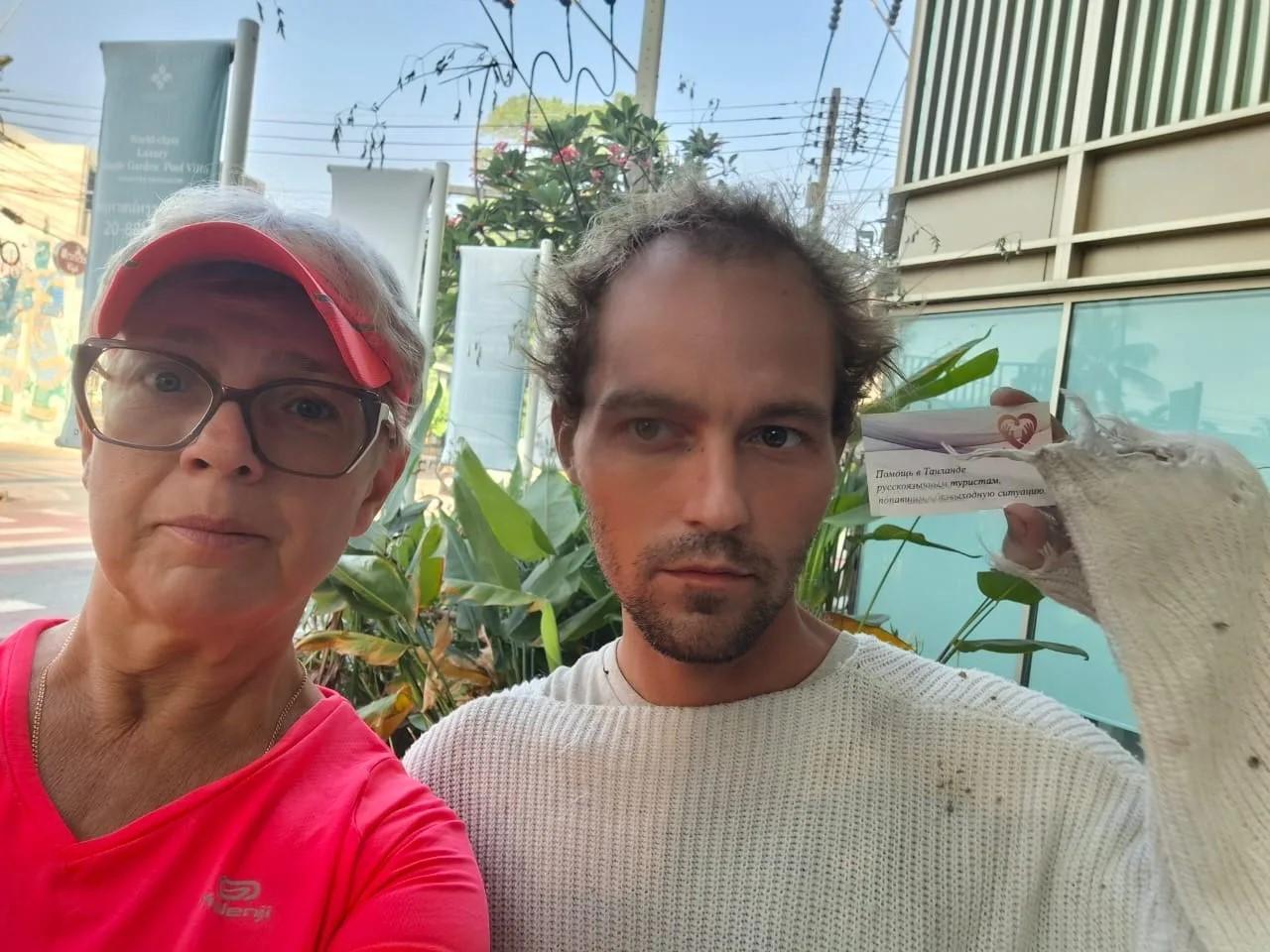
There was another case. The common-law wife of a 60-year-old resident of Magadan contacted us. He went to Thailand and was supposed to return but stopped communicating. I went to the airport and asked everyone who matched the description, «Are you Igor?» Then I asked one man, he confirmed it was him. He had been sitting watching planes take off for four days; someone had given him something to drink.
— People from which regions of Russia go missing most often?
— I cannot say; there is no regional statistics.
Svetlana has also written and is selling the book ‘Thai Means Die,’ which she describes as an ironic thriller and a collection of real-life romantic stories based on unhappy love for Thai women.